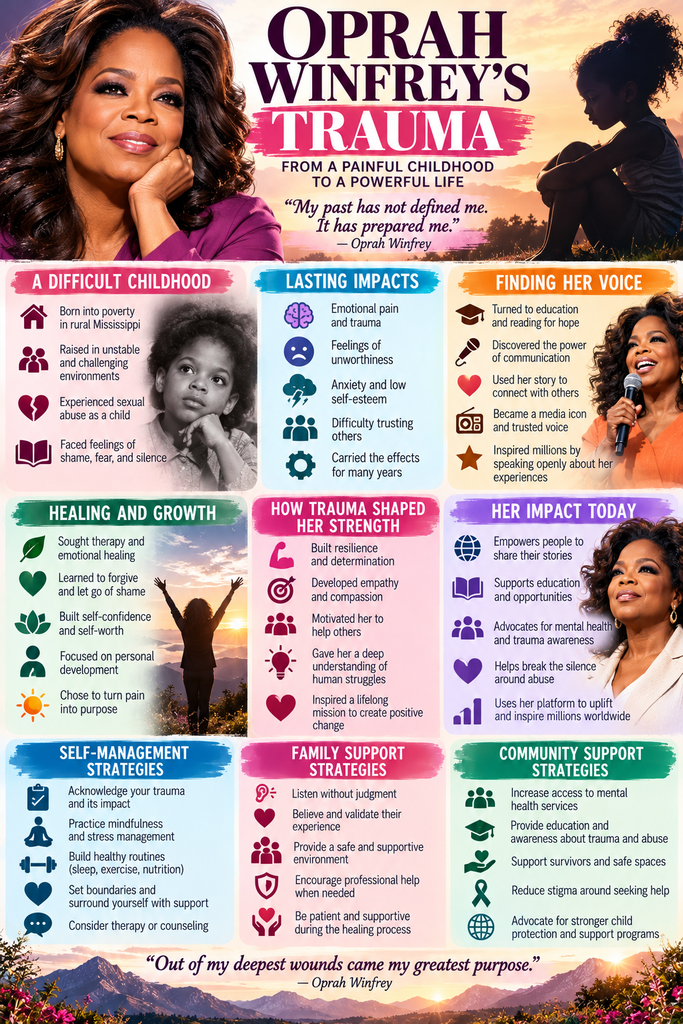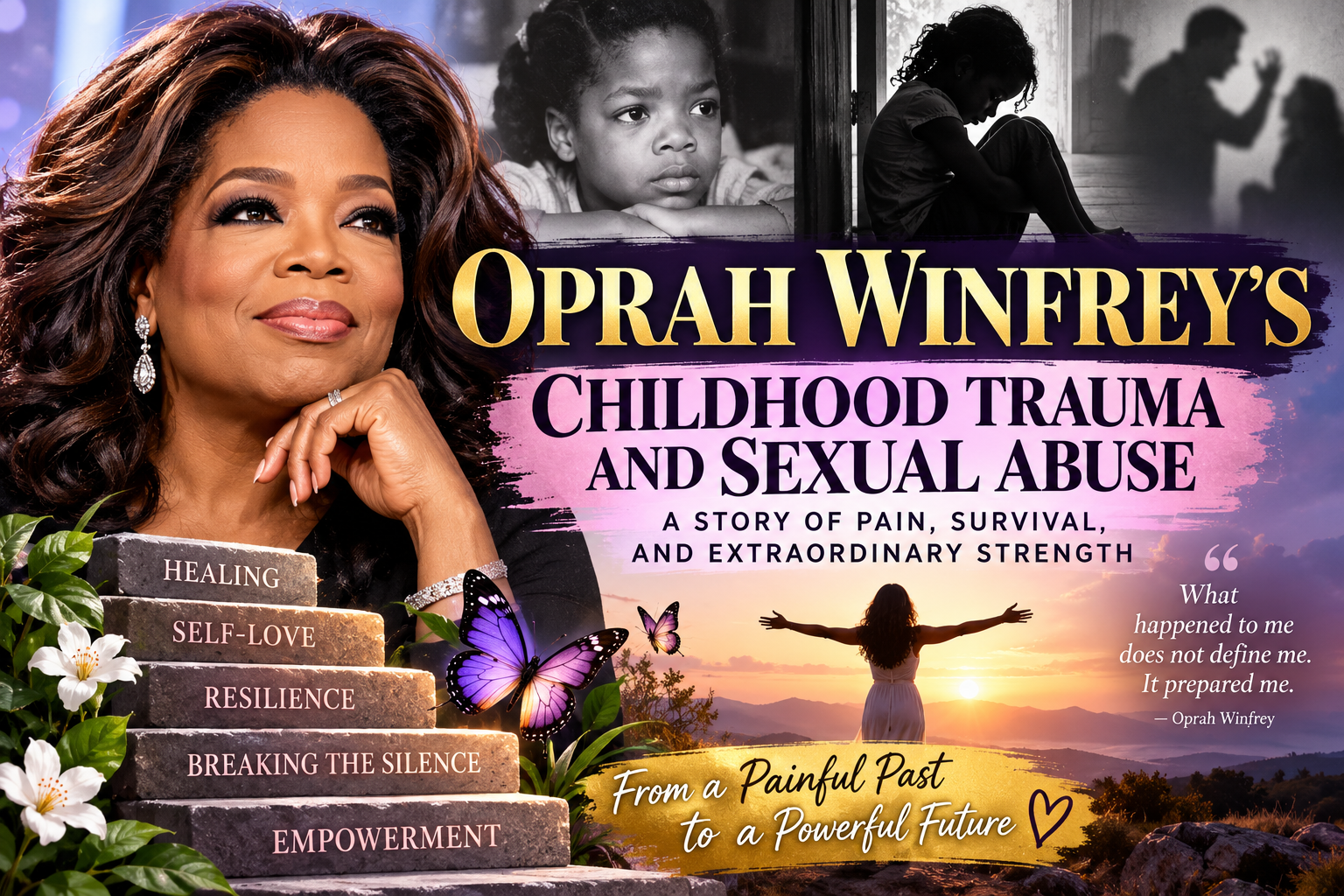
Oprah Winfrey is widely recognized as a television host, producer, philanthropist, and media leader, but behind her extraordinary professional success is a childhood marked by poverty, instability, and sexual abuse. Winfrey has publicly spoken about being sexually abused beginning at age nine and about the emotional consequences that followed. Her experiences offer an opportunity to understand how childhood sexual trauma can affect emotional development while emphasizing the importance of self-management, supportive families, professional treatment, and strong community resources.
A Childhood Marked by Trauma
Oprah Winfrey was born in Mississippi in 1954 and spent portions of her childhood living with different family members. She has publicly described experiencing sexual abuse by relatives and another person known to her family beginning when she was nine years old.
Like many children experiencing abuse, she initially kept what was happening secret. Children may remain silent because they are frightened, ashamed, confused, threatened, manipulated, or concerned that adults will not believe them. Importantly, a child is never responsible for sexual abuse committed against them.
Winfrey has discussed how these experiences affected her self-esteem, relationships, behavior, and emotional well-being. Her story demonstrates why childhood sexual abuse should not be viewed as something that simply ends when the abuse stops. Its psychological effects can continue into adolescence and adulthood.
Understanding the Effects of Childhood Sexual Trauma
Sexual abuse can disrupt a child’s fundamental sense of safety and trust. When the person causing harm is a relative, caregiver, or trusted adult, the psychological consequences can be particularly complicated because someone who should represent safety becomes associated with danger.
Survivors may experience anxiety, depression, shame, anger, difficulty trusting people, problems establishing boundaries, intrusive memories, or unhealthy coping behaviors. Some people develop post-traumatic stress symptoms, while others may experience difficulties that do not fit a single diagnosis.
Possible effects include:
- Feelings of shame, guilt, or worthlessness
- Anxiety, depression, or persistent fear
- Difficulty trusting other people
- Problems developing healthy boundaries
- Emotional numbness or difficulty expressing feelings
- Hypervigilance and feeling constantly “on guard”
- Difficulties with intimacy and relationships
- Unhealthy attempts to cope with overwhelming emotions
- Problems with self-esteem and identity
Not every survivor experiences the same symptoms. Trauma responses vary considerably, and experiencing childhood abuse does not determine what a person’s adult life will become.
Finding Her Voice
An important theme in Winfrey’s public story is eventually finding the ability to talk about experiences once surrounded by secrecy and shame.
Throughout her media career, she brought subjects such as childhood sexual abuse, domestic violence, addiction, mental health, and trauma into conversations with millions of viewers. By discussing her own experiences, she helped challenge the idea that survivors should remain silent about what happened to them.
Speaking publicly is not necessary for recovery, however. Survivors should decide for themselves when, how, and with whom they share their experiences. Healing does not require telling one’s story publicly.
Self-Management Strategies for Trauma Survivors
Self-management strategies can help survivors regulate difficult emotions and develop a greater sense of safety. They complement rather than replace professional trauma treatment when treatment is needed.
- Recognize triggers. Understanding situations, memories, smells, sounds, or interactions that trigger intense emotional reactions can make those reactions easier to manage.
- Practice grounding techniques. Deep breathing, mindfulness, physical movement, and focusing on the immediate environment can help during periods of distress.
- Develop healthy boundaries. Survivors can learn that they have the right to say no, limit contact, and decide who has access to their personal lives.
- Challenge shame and self-blame. Responsibility for childhood sexual abuse always belongs to the person who committed the abuse—not the child.
- Use healthy forms of expression. Journaling, art, music, spirituality, exercise, and creative activities may provide constructive ways to process emotions.
- Build supportive relationships. Safe relationships can gradually help restore trust.
- Consider trauma-focused therapy. Evidence-based approaches can help people understand and manage trauma-related symptoms.
Healing does not mean forgetting what happened. It means developing ways to prevent the trauma from controlling present-day thoughts, relationships, and decisions.
Family Support Strategies
Families can significantly influence how a child or adult survivor responds after disclosing sexual abuse. Being believed can be especially important because survivors sometimes fear rejection or blame.
Supportive family members can:
- Listen calmly without interrogating the survivor.
- Tell the survivor that they believe them.
- Reinforce that the abuse was not their fault.
- Avoid blaming the survivor for waiting to disclose.
- Respect the person’s boundaries and privacy.
- Never pressure someone to forgive or reconcile with an abuser.
- Help the survivor access appropriate medical and mental health services.
- Protect children from further contact with individuals who may pose a danger.
- Learn about trauma to better understand emotional reactions.
Family members may also need counseling themselves. Supporting someone who has experienced severe trauma can produce grief, anger, guilt, and helplessness. Professional guidance can help families respond without placing those emotions onto the survivor.
Community Support Strategies
Childhood sexual abuse is not only an individual or family problem. Communities have a responsibility to create environments where children are protected, and survivors can safely seek help.
Effective community strategies include:
- Providing accessible trauma-informed mental health services.
- Training teachers, healthcare professionals, coaches, and youth workers to recognize warning signs.
- Maintaining confidential sexual-assault and child-protection resources.
- Teaching children developmentally appropriate information about body boundaries and identifying trusted adults.
- Educating parents about grooming behaviors and online safety.
- Providing survivor support groups and advocacy programs.
- Establishing clear reporting and safeguarding procedures in organizations serving children.
- Reducing stigma surrounding sexual abuse and mental health treatment.
- Holding offenders accountable while prioritizing survivor safety.
Prevention should focus on the behavior and responsibility of adults rather than expecting children to protect themselves from abuse.
Turning Trauma Into Advocacy
Winfrey’s experiences later influenced her advocacy for children and survivors. She has repeatedly used her public platform to discuss childhood abuse and trauma. Her work has helped bring conversations once hidden behind closed doors into mainstream public discussion.
Her story should not be interpreted to mean that trauma automatically makes someone stronger. Abuse can cause profound harm, and survivors should never have been required to endure traumatic experiences in order to develop resilience.
Instead, her journey shows that a person’s history can be acknowledged without becoming the sole definition of who they are.
Breaking the Cycle of Silence
Sexual abuse often survives through secrecy. Children may fear that they will not be believed, that their families will fall apart, or that they somehow caused what happened.
Adults can help break this cycle by creating environments where children know they can disclose uncomfortable or frightening experiences without being blamed.
One of the most important messages adults can give children is simple: If someone hurts you or touches you in a way that makes you uncomfortable, you can tell me, and I will listen.
For adult survivors, breaking silence can look very different. It might mean talking with a therapist, confiding in one trusted person, participating in a confidential support group, or privately acknowledging what happened. Survivors have the right to decide what feels safe.
Understanding Oprah Winfrey’s Journey
Oprah Winfrey’s journey demonstrates the complexity of surviving childhood sexual trauma. Her later achievements do not erase what happened to her, and her success should not become the standard by which other survivors measure their recovery.
Recovery is individual.
For one survivor, progress may mean sleeping through the night without nightmares. For another, it may mean establishing a healthy relationship, attending therapy, setting a boundary with a family member, returning to school, or simply recognizing: What happened to me was not my fault.
These seemingly small changes can represent significant steps toward healing.
Conclusion
Oprah Winfrey’s public discussions of childhood sexual abuse have helped bring attention to experiences that many survivors once felt compelled to hide. Her journey illustrates how childhood trauma can influence self-esteem, relationships, trust, and emotional health, while also demonstrating that trauma does not have to define a person’s entire future.
Recovery can involve self-management strategies, trauma-informed professional care, supportive families, safe relationships, and community resources that protect children and empower survivors.
Most importantly, responsibility for childhood sexual abuse always belongs to the person who committed the abuse. Children deserve protection, survivors deserve to be believed, and people affected by trauma deserve opportunities to heal at their own pace and in their own way.
Frequently Asked Questions and Answers
1. Did Oprah Winfrey experience sexual abuse as a child?
Yes. Oprah Winfrey has publicly stated that she was sexually abused beginning at age nine. She has described abuse by people she knew, including relatives. Her disclosures have become an important part of her advocacy for survivors of childhood sexual abuse.
2. How old was Oprah when the sexual abuse began?
Winfrey has said that she was nine years old when she was first sexually abused. The abuse continued during her childhood and early adolescence.
3. Why did Oprah remain silent about the abuse?
Like many children who experience sexual abuse, Winfrey struggled with fear, shame, confusion, and secrecy. Children may also worry that adults will not believe them or that disclosure will cause problems within their families. A child’s silence never makes the child responsible for the abuse.
4. How did childhood trauma affect Oprah emotionally?
Winfrey has discussed experiencing shame, low self-worth, difficulties with relationships, and emotional struggles associated with her childhood experiences. Trauma affects every survivor differently, so her experience should not be assumed to represent all survivors.
5. Did Oprah blame herself for what happened?
Winfrey has spoken about carrying shame connected with her childhood experiences. Self-blame is unfortunately common among survivors, particularly when abuse begins at a young age. However, responsibility always belongs to the person who committed the abuse.
6. Can childhood sexual abuse cause problems later in adulthood?
Yes. Some survivors experience anxiety, depression, PTSD symptoms, difficulty trusting others, relationship problems, unhealthy coping behaviors, problems with boundaries, or persistent feelings of shame. Others may experience different or fewer long-term effects.
7. How did Oprah begin healing from her childhood trauma?
Winfrey has described healing as a long process of better understanding her childhood, discussing her experiences, examining emotional patterns, and developing self-awareness. There is no single path to trauma recovery, and professional therapy can be particularly valuable for survivors experiencing persistent symptoms.
8. Did talking about the abuse help Oprah?
Speaking about her experiences became part of Winfrey’s personal journey and public advocacy. However, survivors should never feel pressured to disclose trauma publicly. Sharing with a therapist or trusted person—or maintaining privacy—can be a valid choice.
9. What self-management strategies may help survivors of childhood sexual abuse?
Helpful strategies may include identifying triggers, practicing grounding and mindfulness, journaling, exercising, maintaining routines, establishing healthy boundaries, developing supportive relationships, and practicing self-compassion. Trauma-focused professional treatment may also be important.
10. How can family members support a survivor?
Families can listen without judgment, believe the survivor, avoid blaming or interrogating them, respect their privacy and boundaries, reinforce that the abuse was not their fault, and help them obtain professional support when desired.
11. Should survivors be encouraged to forgive the person who abused them?
Forgiveness should never be required as part of recovery. Survivors have the right to determine whether forgiveness, reconciliation, limited contact, or no contact is appropriate for them. Safety and emotional well-being should remain priorities.
12. How can communities help prevent childhood sexual abuse?
Communities can strengthen child-protection policies, train adults to recognize warning signs and grooming behaviors, provide trauma-informed mental health services, establish clear reporting procedures, educate families about healthy boundaries, and ensure survivors have access to confidential support.
13. Did Oprah use her experiences to advocate for other survivors?
Yes. Throughout her career, Winfrey has brought attention to childhood abuse, trauma, mental health, and survivor experiences. Her television programs and advocacy helped create public conversations around subjects that were historically surrounded by considerable stigma and silence.
14. Does becoming successful mean someone has completely recovered from trauma?
No. Career success and trauma recovery are different things. A person can be highly accomplished while continuing to work through emotional consequences of earlier experiences. Recovery is better understood as an ongoing process rather than proof that the trauma has disappeared.
15. What is an important lesson from Oprah Winfrey’s journey?
Her story demonstrates that childhood trauma can have profound effects without having to determine a survivor’s entire future. With safety, supportive relationships, appropriate treatment, self-understanding, and opportunities for empowerment, survivors can build meaningful lives while acknowledging what happened to them.
16. Where can survivors of sexual abuse find help?
In the United States, the RAINN National Sexual Assault Hotline provides confidential support and resources. Survivors can also seek assistance from trauma-informed therapists, healthcare professionals, sexual-assault programs, and local advocacy organizations.
Video: