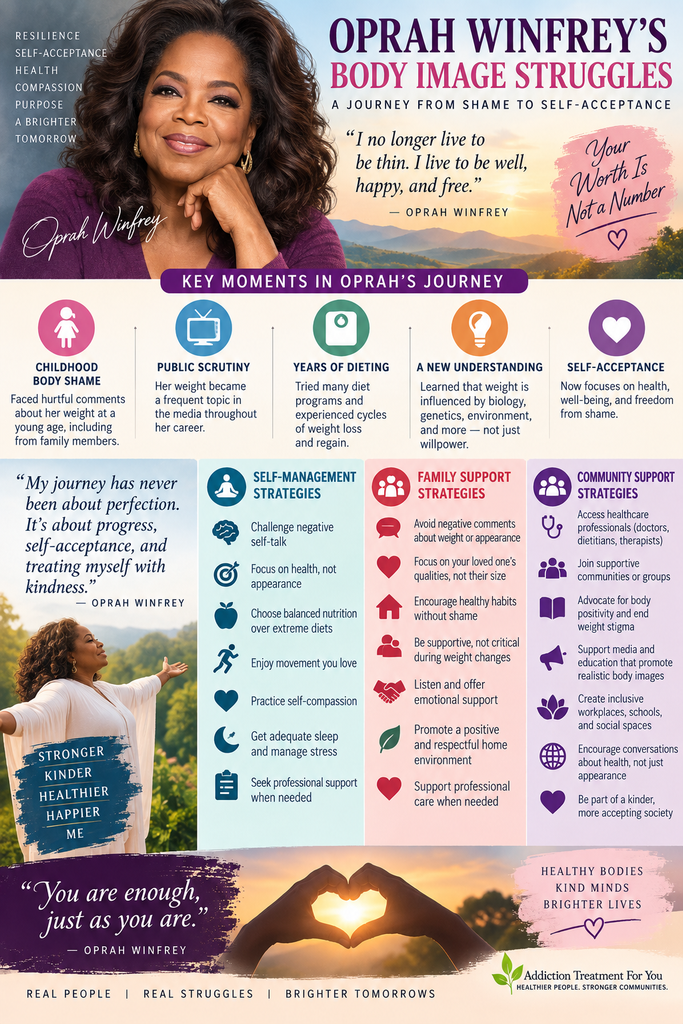
For decades, Oprah Winfrey has lived with something millions of people understand: the emotional burden of struggling with weight while feeling judged for the size and appearance of your body. The difference was that Oprah experienced much of that struggle in front of a worldwide audience.
Her changing weight became entertainment-news material, magazine headlines, jokes, and public commentary. Behind those conversations was a woman who has acknowledged blaming herself and believing that greater discipline and willpower should have allowed her to control her weight. In recent years, Oprah has reframed her experience, speaking more openly about obesity, weight stigma, shame, and the importance of separating a person’s worth from body size.
Growing Up With Body Shame
Oprah has revealed that her feelings about weight began long before international fame. In 2026, she recalled an early experience of embarrassment while standing on a scale at Kmart. Her father made a painful comment predicting that she would always be large because of the bodies of women in her family.
She said those words stayed with her for decades, resurfacing when she tried another diet or regained weight.
Experiences like these demonstrate how body-image struggles can begin early. Comments from parents, relatives, classmates, healthcare professionals, or peers may become part of a person’s internal dialogue.
Eventually, someone may no longer need another person to criticize their body—they begin criticizing themselves.
Living Under Public Scrutiny
As The Oprah Winfrey Show became enormously successful, Oprah’s body remained a frequent subject of public discussion.
Her weight loss and regain were repeatedly examined, and she has described spending years believing that weight management was primarily about having enough willpower.
This cycle can have consequences beyond physical appearance.
Persistent body dissatisfaction may influence:
- Self-esteem and confidence
- Social relationships
- Eating behaviors
- Exercise habits
- Anxiety surrounding food
- Avoidance of photographs or social situations
- Feelings of guilt and shame
- Willingness to seek healthcare
A person’s appearance should never become the measure of their intelligence, character, discipline, or worth.
The Emotional Weight of Shame
One of the most important themes in Oprah’s more recent discussions is shame.
For years, she believed she should have been able to solve her weight struggles through personal determination. Learning more about the biological complexity of obesity helped change how she viewed herself.
In 2023, she wrote that people need the freedom to manage their health without judgment—including self-judgment.
In 2024, she expanded that conversation through Shame, Blame and the Weight Loss Revolution, explaining that one of her goals was to challenge the shaming and blaming surrounding obesity.
This represents an important change in perspective:
Health does not have to begin with hating your body.
Understanding That Weight Is Complex
Oprah has described learning about obesity as a major turning point in her thinking. She came to understand that body weight is influenced by more than motivation or discipline.
Weight regulation can involve genetics, biology, environment, medications, health conditions, psychological factors, sleep, stress, eating patterns, activity, and other influences.
That understanding helped her reconsider years of self-blame.
The lesson is not that lifestyle behaviors are irrelevant. Nutrition, movement, sleep, stress management, and other behaviors remain important aspects of health.
Rather, the lesson is that body size is not a simple report card for willpower.
Self-Management Strategies for Body Image
Oprah’s experience can encourage a broader conversation about developing a healthier relationship with the body. These strategies are general recommendations rather than a description of everything Oprah personally used.
Helpful self-management approaches may include:
- Notice negative self-talk. Pay attention to thoughts such as “I hate my body” or “I have no self-control” and question whether they are accurate or helpful.
- Separate weight from personal worth. A number on a scale does not determine intelligence, kindness, success, attractiveness, or value.
- Set health-focused goals. Consider strength, mobility, sleep, energy, laboratory values, emotional well-being, and quality of life rather than appearance alone.
- Reduce unhealthy comparisons. Social media and edited images can create unrealistic expectations.
- Choose movement you enjoy. Physical activity does not have to be punishment for eating.
- Avoid extreme dieting. Repeated cycles of severe restriction may contribute to an unhealthy relationship with food.
- Practice self-compassion. Speak to yourself with the same respect you would offer someone you care about.
- Seek professional support when needed. Persistent body-image distress or disordered eating deserves appropriate professional attention.
Family Support Strategies
Families have tremendous influence over how people learn to think about their bodies.
Even comments intended as jokes or encouragement can stay with someone for years. Oprah’s recollection of an early family comment about her expected body size demonstrates how powerful those experiences can become.
Families can create healthier environments by:
- Avoiding jokes about someone’s weight or appearance
- Not comparing children’s or relatives’ bodies
- Complimenting qualities beyond physical appearance
- Avoiding labeling foods as morally “good” or “bad”
- Encouraging enjoyable physical activity
- Modeling balanced attitudes toward food
- Listening when someone discusses body-image concerns
- Supporting appropriate medical or psychological care
- Avoiding unsolicited comments after weight gain or loss
- Focusing conversations on health rather than appearance
A supportive family does not need to constantly reassure someone that they look thin. A healthier message may be that their value was never dependent on being thin in the first place.
Community Support Strategies
Body image does not develop in isolation. Schools, workplaces, healthcare systems, advertising, entertainment, and social media all influence how people think bodies are “supposed” to look.
Oprah has increasingly used her platform to challenge weight stigma and encourage conversations about the science of obesity. Her 2024 discussions addressed diet culture, shame, body standards, and the idea that body weight reflects personal worth.
Community support can include:
- Mental health counseling
- Registered dietitians experienced in body-image concerns and eating disorders
- Primary care and obesity-medicine professionals
- Evidence-based weight-management programs when medically appropriate
- Eating-disorder treatment services when needed
- Body-neutrality or body-acceptance support groups
- School education about bullying and weight stigma
- Workplace wellness programs that avoid body shaming
- Online communities that promote realistic and diverse representations of bodies
Healthcare professionals can also help by discussing weight respectfully and recognizing that stigma may cause people to delay or avoid medical care.
Moving From Appearance to Health
One useful concept in improving body image is shifting the focus from “How does my body look?” to “What does my body need?”
That could mean asking:
- Am I sleeping adequately?
- Am I eating foods that nourish me?
- Can I move comfortably?
- How are my blood pressure and other health indicators?
- Am I constantly anxious about food?
- Do I avoid activities because I am embarrassed about my body?
- Am I treating myself with dignity?
These questions encourage health without requiring body hatred as motivation.
Medical Treatment and Body Acceptance Can Coexist
Oprah has also publicly discussed using prescription medication as part of managing her weight. She has described the availability of medical treatment as liberating after decades of believing she should control her weight entirely through willpower.
This introduces an important distinction.
Accepting your body does not mean refusing medical care.
Someone can respect their body while pursuing treatment for obesity, diabetes, hypertension, an eating disorder, or another health concern. Likewise, choosing medical weight management does not mean someone must dislike their current body.
Treatment decisions should be individualized and made with qualified healthcare professionals rather than based on celebrity experiences or social-media trends.
What Families Can Learn From Oprah’s Experience
Perhaps one of the strongest lessons from Oprah’s journey is how long words about someone’s body can remain with them.
Families may believe they are motivating someone when they say:
“You would look better if you lost weight.”
“You’ve gained weight again.”
“You shouldn’t be eating that.”
“You’re the big one in the family.”
But repeated messages like these can become a source of shame rather than motivation.
A more supportive family environment emphasizes health, connection, respect, and appropriate professional care without making someone’s body the center of their identity.
From Self-Blame to Understanding
Oprah’s evolving perspective reflects a broader shift from viewing weight exclusively as a personal failure toward understanding the complex biological, psychological, behavioral, and environmental influences involved.
She has also become increasingly outspoken about ending weight-related shame. In 2026, she described wanting people to experience freedom not only from cycles of weight loss and regain but also from the shame surrounding those experiences.
That may be one of the most valuable lessons from her story.
A person can pursue better health without declaring war on their body.
Final Thoughts
Oprah Winfrey’s body-image journey demonstrates how deeply weight stigma can affect even someone who appears extraordinarily successful and confident. Money, fame, intelligence, and professional achievement do not automatically protect someone from body shame.
Her experience has evolved from decades of dieting, public scrutiny, and self-blame toward a more compassionate understanding of weight, biology, health, and individual treatment choices.
For individuals struggling with body image, the goal does not have to be learning to love every part of your appearance every day. A realistic beginning may simply be learning to treat your body with respect rather than as something to punish.
For families, the message is equally important: speak carefully about bodies, encourage health without shame, recognize the emotional impact of weight stigma, and support professional care when it is needed.
And for communities, we can create environments where people are encouraged to become healthier without first being made to feel ashamed of who they are.
Your body may change throughout your life. Your worth does not need to change with it.
Frequently Asked Questions
Here are some common questions:
1. Has Oprah Winfrey struggled with body image and weight?
Yes. Oprah Winfrey has publicly discussed struggling with her weight throughout much of her adult life. Her changing body size was also scrutinized by tabloids and television programs for decades, contributing to feelings of shame and self-blame.
2. When did Oprah’s body-image struggles begin?
Oprah has recalled experiencing weight-related embarrassment when she was young. In 2026, she described an incident in which her father made a painful comment about her expected body size while she was standing on a scale. She said those words remained with her for decades.
3. How did public criticism affect Oprah’s body image?
Oprah has said that her weight was mocked publicly for approximately 25 years. In her 2024 television special, she described absorbing the shame directed at her and recalled hurtful headlines about her appearance.
4. Did Oprah repeatedly diet to lose weight?
Yes. Oprah has described trying numerous diets and interventions over the years. One particularly dramatic example occurred in 1988, when she followed a restrictive liquid diet and famously appeared on her television show with a wagon representing the 67 pounds she had lost. She later regained weight.
5. Did Oprah blame herself for her weight?
Yes. She has explained that she spent years believing weight control was primarily a matter of willpower. Learning more about the biological complexity of obesity changed her perspective and helped her reconsider years of self-blame.
6. What changed Oprah’s understanding of her weight struggles?
A major turning point occurred when she participated in conversations with obesity specialists and learned more about obesity as a chronic disease influenced by biology and other factors—not simply a lack of discipline. She has described this realization as liberating.
7. What has Oprah said about weight shame?
She has become increasingly outspoken against weight stigma. Her message emphasizes allowing people to make individualized health decisions without judgment and reducing the shame people direct toward themselves.
8. Has Oprah used medication as part of her weight management?
Yes. Oprah has publicly discussed using doctor-prescribed medication as part of managing her weight. She has described medical treatment as one component of her health journey rather than a substitute for every other healthy behavior.
9. Does using weight-management medication mean someone does not accept their body?
No. Body acceptance and medical treatment do not have to be at odds. Someone can respect their current body while also working with healthcare professionals to address obesity or other medical conditions. Oprah’s evolving perspective illustrates how health management can shift from punishment to individualized care.
10. What self-management strategies can help someone struggling with body image?
Helpful approaches include challenging harsh self-talk, limiting unhealthy comparisons, focusing on health rather than appearance, choosing enjoyable physical activity, getting adequate sleep, managing stress, and seeking professional support when body dissatisfaction begins to interfere with everyday life.
11. How can families support someone experiencing body-image difficulties?
Families can avoid jokes and criticism about weight, stop comparing people’s bodies, compliment qualities unrelated to appearance, encourage healthy behaviors without shame, listen to concerns, and support professional care when appropriate. Oprah’s recollection of an early family comment demonstrates how words about a person’s body can remain emotionally significant for decades.
12. Should families comment when someone gains or loses weight?
Usually, it is better not to make someone’s body the focus of the conversation unless they invite it. Even apparently positive comments about weight loss can unintentionally reinforce the idea that thinner automatically means healthier, happier, or more valuable.
13. How can communities reduce weight stigma?
Schools, workplaces, healthcare organizations, families, and media can promote realistic body diversity, address weight-based bullying, provide respectful healthcare, and avoid portraying body size as evidence of someone’s character or discipline. Oprah has increasingly used her platform to encourage conversations about obesity without shame and blame.
14. Can social media make body-image problems worse?
It can. Constant exposure to highly edited, filtered, or carefully selected images may encourage unrealistic comparisons. People struggling with body image may benefit from limiting accounts that trigger negative self-comparison and following content that emphasizes health, diversity, and realistic bodies.
15. What is the biggest lesson from Oprah Winfrey’s body-image journey?
One important lesson is that health does not have to begin with shame. Oprah’s perspective has evolved from decades of dieting, public criticism, and self-blame toward greater understanding of biology, individualized treatment, and freedom from weight stigma. In 2026, she described wanting people to experience freedom from both repeated weight struggles and the shame surrounding them.
16. What message can families take from Oprah’s experience?
Words about someone’s body can have lasting effects. Families can replace criticism with compassion, focus on overall health rather than appearance, and reinforce a simple but powerful message: a person’s weight may change, but their worth does not.
Video: Why willpower isn’t the secret to Oprah’s weight loss #oprah #biology #health