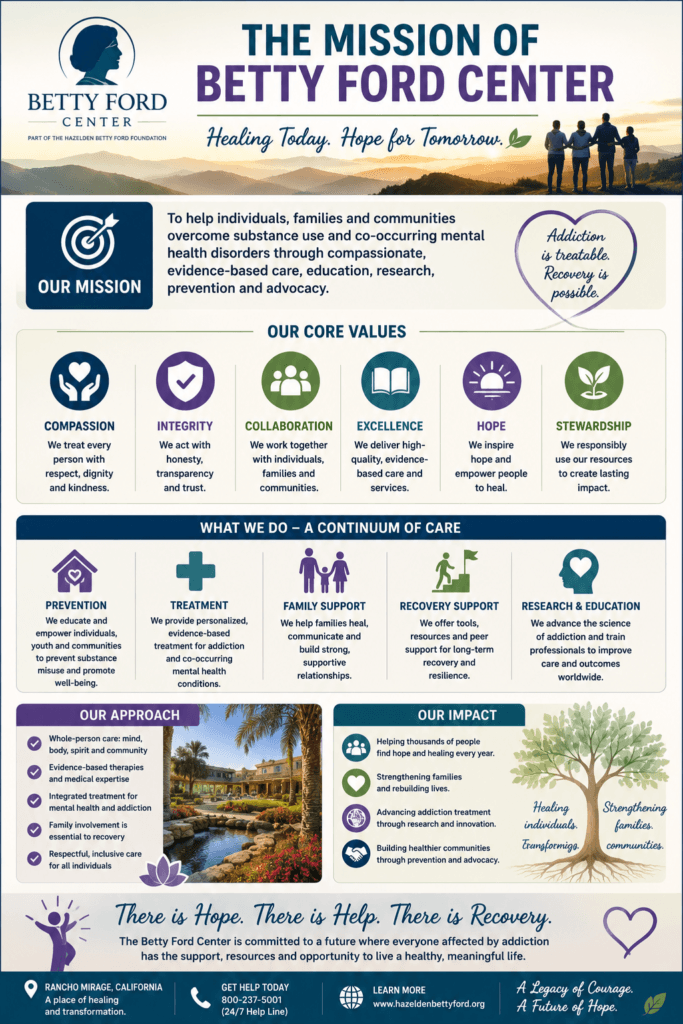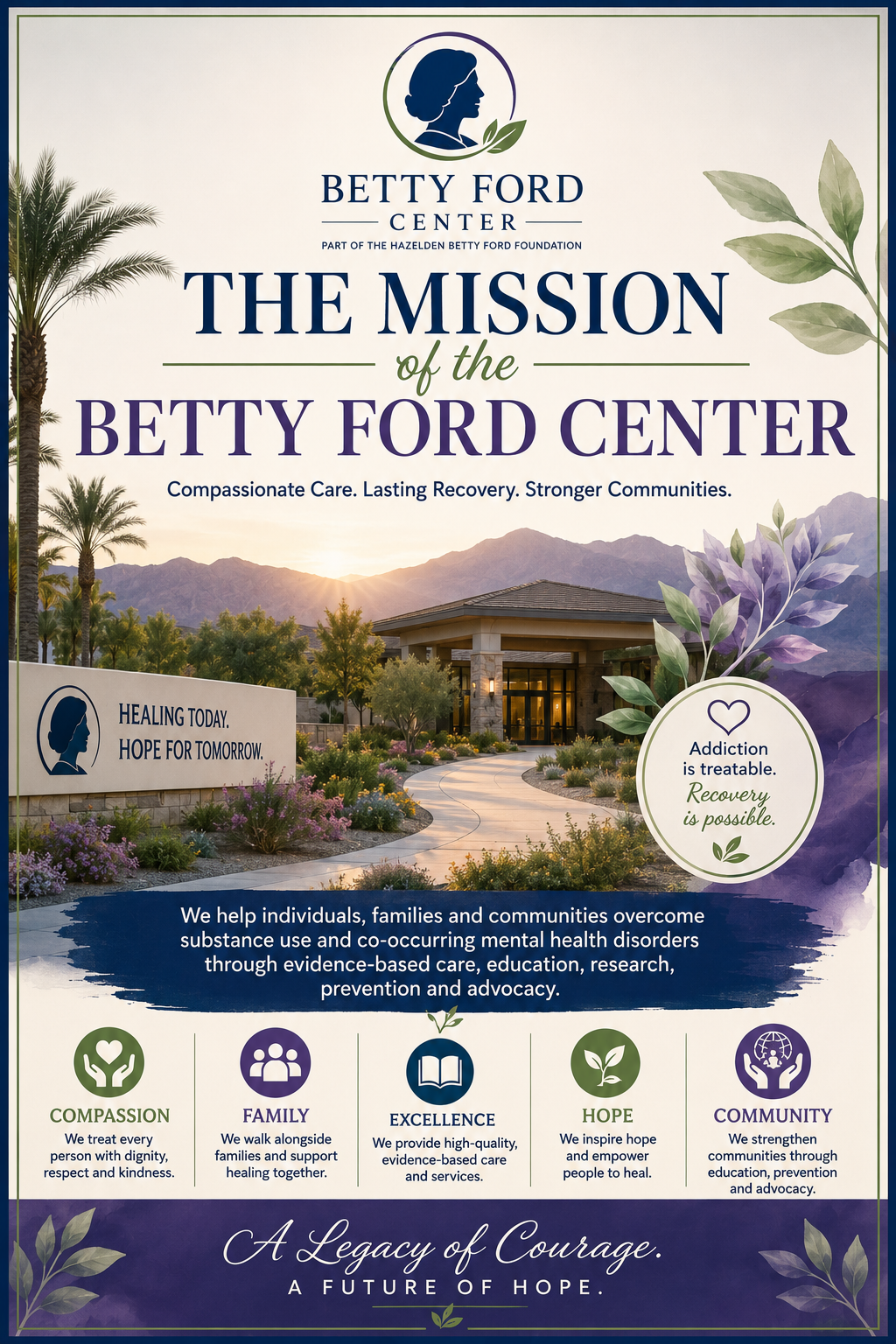
The mission of the Betty Ford Center, now part of the Hazelden Betty Ford Foundation, is to provide compassionate, evidence-based care that helps individuals, families, and communities overcome substance use and co-occurring mental health disorders. Founded on the belief that addiction is a chronic but treatable medical condition, the organization strives to reduce stigma, promote hope, and improve lives through comprehensive treatment, education, prevention, research, and advocacy. Its mission extends beyond helping individuals achieve sobriety by emphasizing whole-person wellness, family involvement, and lifelong recovery. By combining scientific knowledge with compassionate care, the Betty Ford Center has become a national leader in addiction treatment and an enduring symbol of hope for those affected by substance use disorders.
Betty Ford Center
The Betty Ford Center is one of the most well-known addiction treatment centers in the United States. Founded in 1982 in Rancho Mirage, California, by former First Lady Betty Ford and Dr. James West, the center helped transform public attitudes toward addiction by treating substance use disorders as medical conditions rather than moral failings. Betty Ford’s openness about her own recovery from alcohol and prescription medication dependence significantly reduced stigma and encouraged many people to seek treatment.
In 2014, the Betty Ford Center merged with the Hazelden Foundation (founded in 1949) to create the Hazelden Betty Ford Foundation, now recognized as one of the nation’s largest nonprofit providers of addiction and mental health treatment. The organization combines decades of clinical experience with research, education, prevention, and advocacy.
Mission and Philosophy
The foundation’s mission is to help individuals, families, and communities overcome substance use and mental health disorders through compassionate, evidence-based care. Its treatment philosophy combines scientific research, clinical expertise, and the lived experience of recovery, emphasizing that healing involves the body, mind, and spirit.
Core principles include:
- Patient-centered care
- Compassion and dignity
- Evidence-based treatment
- Family involvement
- Long-term recovery support
- Reducing stigma surrounding addiction
Conditions Treated
The Betty Ford Center provides treatment for a wide range of conditions, including:
- Alcohol use disorder
- Opioid use disorder
- Stimulant addiction
- Prescription drug misuse
- Cannabis use disorder
- Co-occurring mental health disorders
- Depression
- Anxiety disorders
- Trauma-related conditions
Integrated care addresses both addiction and mental health simultaneously whenever appropriate.
Treatment Services
The Betty Ford Center offers a continuum of care that may include:
Medical Assessment and Detoxification
Patients receive comprehensive medical evaluations and, when necessary, medically supervised withdrawal management to improve safety and comfort.
Residential Treatment
Residential programs provide structured, around-the-clock care that includes:
- Individual counseling
- Group therapy
- Family therapy
- Educational sessions
- Relapse prevention
- Wellness activities
Outpatient Programs
Outpatient services allow individuals to continue treatment while living at home and may include intensive outpatient programs (IOPs), standard outpatient counseling, and telehealth options.
Medication-Assisted Treatment (MAT)
When clinically appropriate, medications may be combined with counseling for opioid and alcohol use disorders to reduce cravings and support recovery.
Therapeutic Approaches
The Betty Ford Center incorporates multiple evidence-based therapies, including:
- Cognitive Behavioral Therapy (CBT)
- Motivational Interviewing
- Dialectical Behavior Therapy (DBT) skills when indicated
- Trauma-informed care
- Family counseling
- Relapse prevention planning
- Psychoeducation
- Twelve Step facilitation as one component of care
The center integrates Twelve Step principles with individualized treatment plans and modern behavioral therapies rather than relying solely on a Twelve Step approach.
Family Programs
Recognizing that addiction affects entire families, the center offers programs designed to help loved ones:
- Learn about addiction as a chronic disease
- Improve communication
- Establish healthy boundaries
- Support recovery without enabling
- Heal from the emotional effects of addiction
Family participation is considered an important component of long-term recovery.
Research and Education
A distinguishing feature of the Hazelden Betty Ford Foundation is its commitment to advancing addiction treatment through:
- Clinical research
- Professional education
- Graduate education in addiction studies
- Publications and recovery resources
- Prevention programs for schools and communities
Its research initiatives help improve treatment practices and promote evidence-based care.
Continuing Care
Recovery does not end after formal treatment. Continuing-care services may include:
- Alumni recovery programs
- Peer support
- Recovery coaching
- Ongoing counseling
- Support groups
- Relapse prevention planning
These services help individuals maintain recovery and reduce the risk of relapse.
Strengths of the Betty Ford Center
The center is widely recognized for:
- More than four decades of addiction treatment experience
- Comprehensive, multidisciplinary care
- Integration of addiction and mental health treatment
- Strong family education programs
- Commitment to research and innovation
- Nationwide treatment network and telehealth services
- Nonprofit mission focused on patient care and education rather than shareholder profit
Limitations
As with any treatment program, there are considerations:
- Residential treatment may not be necessary or appropriate for everyone.
- Cost and insurance coverage can vary depending on the program and individual insurance plan.
- Recovery outcomes depend on many factors, including patient engagement, aftercare participation, and ongoing community support.
- No single treatment model is effective for every individual, so personalized care planning is essential.
Key Takeaway
The Betty Ford Center has played a major role in changing how addiction is understood and treated in the United States. By combining evidence-based medical care, behavioral therapies, family involvement, research, education, and long-term recovery support, it has helped establish addiction as a treatable chronic health condition. Today, as part of the Hazelden Betty Ford Foundation, it continues to provide comprehensive care while advancing research, reducing stigma, and promoting recovery for individuals and families affected by substance use and co-occurring mental health disorders. For more information about programs and services, visit Hazelden Betty Ford Foundation
History of the Betty Ford Center
The Betty Ford Center is one of the most influential addiction treatment centers in the United States. Its history reflects a major shift in how addiction is viewed—from a condition often surrounded by shame and stigma to a chronic, treatable medical disorder. Since opening its doors in 1982, the center has helped shape modern addiction treatment through clinical care, public advocacy, family education, research, and professional training.
Betty Ford’s Personal Recovery
The origins of the Betty Ford Center are closely tied to Betty Ford’s personal recovery journey. After leaving the White House in 1977, she sought treatment for dependence on alcohol and prescription medications. Unlike many public figures of her time, she spoke openly about her recovery, helping millions of Americans understand that addiction can affect anyone regardless of social status or profession.
Her willingness to share her experiences significantly reduced the stigma surrounding addiction and inspired many people to seek treatment.
Founding of the Betty Ford Center (1982)
In 1982, Betty Ford joined with physician Dr. James West and businessman Leonard Firestone to establish the Betty Ford Center in Rancho Mirage, California. Their vision was to create a treatment center where individuals with substance use disorders could receive compassionate, evidence-based care in a respectful and supportive environment.
The center emphasized that addiction should be treated as a disease requiring comprehensive medical, psychological, and social care rather than punishment or moral judgment. This philosophy represented an important advance in addiction medicine.
Changing Public Perceptions
During the early 1980s, many people still viewed addiction as a personal weakness rather than a health condition. Betty Ford’s openness changed public attitudes by demonstrating that recovery was possible and that seeking treatment was a sign of courage rather than failure.
The center quickly became nationally recognized for:
- Promoting addiction as a treatable disease
- Reducing stigma through public education
- Encouraging family participation in recovery
- Supporting long-term recovery rather than short-term detoxification
Its national visibility helped increase awareness of addiction treatment across the United States.
Growth and Expansion
As demand for treatment increased, the Betty Ford Center expanded its services beyond residential care to include:
- Medical detoxification
- Outpatient treatment
- Intensive outpatient programs (IOPs)
- Family education programs
- Children’s support services
- Continuing care and alumni programs
- Professional education
The organization also became known for integrating evidence-based therapies with recovery support and family-centered care.
Merger with the Hazelden Foundation
A major milestone occurred in 2014, when the Betty Ford Center merged with the Hazelden Foundation, a nonprofit addiction treatment organization founded in Minnesota in 1949. The merger created the Hazelden Betty Ford Foundation, combining more than 100 years of experience in addiction treatment and recovery.
The merger expanded:
- National treatment programs
- Addiction research
- Graduate education
- Prevention initiatives
- Professional training
- Telehealth and outpatient services
Today, the organization is recognized as one of the nation’s largest nonprofit providers of addiction and mental health services.
Contributions to Addiction Medicine
Throughout its history, the Betty Ford Center has helped advance addiction care by:
- Promoting addiction as a chronic medical disease.
- Supporting evidence-based treatment approaches.
- Integrating mental health and addiction services.
- Expanding family involvement in treatment.
- Advancing research through the Butler Center for Research.
- Training healthcare professionals in addiction medicine.
- Advocating for policies that improve access to treatment.
Lasting Legacy
The Betty Ford Center’s greatest legacy extends beyond treating individual patients. It transformed public understanding of addiction by encouraging honest conversations about recovery and demonstrating that effective treatment can restore health and hope.
Its influence can be seen in:
- Greater public acceptance of addiction as a medical condition.
- Increased use of family-centered treatment.
- Expansion of evidence-based addiction care.
- Improved education for healthcare professionals.
- Stronger advocacy for reducing stigma and improving access to treatment.
Key Takeaway
The history of the Betty Ford Center reflects the evolution of modern addiction treatment in the United States. Founded in 1982 after Betty Ford’s own recovery, the center helped redefine addiction as a treatable chronic disease deserving of compassionate, evidence-based care. Its 2014 merger with the Hazelden Foundation further strengthened its impact, creating a national nonprofit organization that continues to lead in treatment, research, education, prevention, and advocacy. Today, the Hazelden Betty Ford Foundation remains a symbol of hope, helping individuals and families affected by substance use and co-occurring mental health disorders achieve lasting recovery.
Self-Management Strategies for Understanding the Mission of the Betty Ford Center
The mission of the Betty Ford Center, now part of the Hazelden Betty Ford Foundation, is to provide compassionate, evidence-based care that helps individuals, families, and communities overcome substance use and co-occurring mental health disorders. Its mission emphasizes hope, dignity, education, family involvement, and lifelong recovery. Understanding this mission can motivate individuals to take an active role in their own recovery and adopt healthy habits that support long-term wellness.
1. Accept Addiction as a Treatable Medical Condition
One of the core messages of the Betty Ford Center is that addiction is a chronic but treatable disease—not a moral failure or lack of willpower. Accepting this perspective can reduce shame and encourage individuals to seek appropriate treatment.
Self-management tips:
- Learn about the science of addiction.
- Replace self-blame with self-compassion.
- Focus on recovery rather than perfection.
- View treatment as an investment in your health.
2. Take an Active Role in Your Recovery
Recovery is most successful when individuals actively participate in their treatment rather than relying solely on healthcare providers.
Ways to stay engaged include:
- Attending counseling sessions consistently.
- Asking questions about your treatment plan.
- Following medication recommendations when prescribed.
- Practicing new coping skills outside of therapy.
- Tracking your progress and celebrating milestones.
Taking ownership of your recovery strengthens confidence and resilience.
3. Build Healthy Daily Habits
The Betty Ford Center promotes whole-person wellness by encouraging healthy routines that support both physical and emotional healing.
Focus on:
- Getting adequate sleep each night.
- Eating balanced, nutritious meals.
- Exercising regularly.
- Staying hydrated.
- Maintaining personal hygiene.
- Creating a structured daily schedule.
Healthy routines help restore balance and improve overall well-being.
4. Learn Healthy Coping Skills
Recovery involves replacing substance use with healthier ways of managing stress and difficult emotions.
Helpful coping strategies include:
- Deep breathing exercises.
- Mindfulness meditation.
- Journaling.
- Physical activity.
- Creative hobbies such as art or music.
- Spending time outdoors.
- Practicing gratitude.
Developing multiple coping skills prepares you to handle life’s challenges without returning to substance use.
5. Identify Personal Triggers
Recognizing situations that increase cravings helps prevent relapse.
Common triggers include:
- Stress
- Loneliness
- Conflict
- Fatigue
- Certain people or environments
- Celebrations involving alcohol or drugs
Create a written plan that outlines healthy responses for each trigger before high-risk situations occur.
6. Strengthen Your Support System
The Betty Ford Center emphasizes that recovery is strengthened through supportive relationships.
Consider:
- Staying connected with trusted family members.
- Building friendships that support sobriety.
- Participating in peer recovery groups.
- Working with a recovery coach or sponsor.
- Maintaining regular communication with healthcare providers.
Supportive relationships reduce isolation and encourage accountability.
7. Continue Learning About Recovery
Education is an important part of the Betty Ford Center’s mission. The more individuals understand addiction and recovery, the better equipped they are to make informed decisions.
Continue learning by:
- Reading evidence-based books and articles.
- Attending educational workshops.
- Listening to recovery podcasts.
- Participating in community seminars.
- Discussing questions with healthcare professionals.
Ongoing education reinforces healthy recovery habits.
8. Practice Honest Self-Reflection
Recovery requires regular self-assessment to recognize strengths, challenges, and areas for growth.
Ask yourself:
- What situations increase my cravings?
- How am I coping with stress?
- What progress have I made this week?
- What goals should I focus on next?
Journaling or discussing these questions with a counselor can improve self-awareness.
9. Develop a Relapse Prevention Plan
The Betty Ford Center emphasizes long-term recovery rather than short-term abstinence. Preparing for setbacks helps protect recovery.
Your relapse prevention plan should include:
- Personal warning signs.
- High-risk situations.
- Healthy coping strategies.
- Emergency contacts.
- Recovery meeting schedules.
- Steps to take if a lapse occurs.
Review and update your plan regularly.
10. Involve Your Family When Appropriate
Family education is a key component of the Betty Ford Center’s approach. When relationships are healthy and safe, involving loved ones can strengthen recovery.
Family members can:
- Learn about addiction.
- Practice healthy communication.
- Encourage treatment participation.
- Support healthy boundaries.
- Celebrate recovery milestones.
Recovery often improves when families heal together.
11. Maintain Hope and Celebrate Progress
The Betty Ford Center’s mission is rooted in the belief that recovery is possible for everyone. Progress may be gradual, but every positive step contributes to long-term success.
Celebrate achievements such as:
- Completing treatment milestones.
- Attending support meetings consistently.
- Managing stress without substance use.
- Improving relationships.
- Achieving personal or professional goals.
Recognizing progress builds motivation and confidence.
Key Takeaway
The mission of the Betty Ford Center is to provide compassionate, evidence-based care that empowers individuals and families to achieve lasting recovery from substance use and co-occurring mental health disorders. Self-management strategies that reflect this mission include accepting addiction as a treatable disease, actively participating in treatment, building healthy routines, developing effective coping skills, strengthening support systems, continuing education, involving family when appropriate, and planning for relapse prevention. By embracing these principles, individuals can improve their physical health, emotional well-being, and quality of life while creating a strong foundation for lifelong recovery.
Family Support Strategies for Understanding the Mission of the Betty Ford Center
The mission of the Betty Ford Center, now part of the Hazelden Betty Ford Foundation, is to help individuals, families, and communities overcome substance use and co-occurring mental health disorders through compassionate, evidence-based care. A central principle of this mission is that addiction affects the entire family, not just the individual. Families are viewed as important partners in recovery, and their education, involvement, and emotional well-being contribute significantly to long-term success. By understanding this mission, families can create a supportive environment that encourages healing, accountability, and hope.
1. Learn About Addiction as a Chronic Disease
One of the Betty Ford Center’s primary goals is to educate families about the science of addiction. Understanding that addiction is a chronic but treatable medical condition helps reduce blame, guilt, and stigma.
Families can:
- Read evidence-based information about addiction.
- Attend educational workshops or webinars.
- Ask healthcare providers questions about treatment and recovery.
- Learn how addiction affects brain function and behavior.
Education promotes empathy while supporting realistic expectations for recovery.
2. Participate in Family Education Programs
Family involvement is a cornerstone of the Betty Ford Center’s treatment philosophy. Educational programs help families understand their role in supporting recovery while maintaining healthy boundaries.
Topics often include:
- Communication skills.
- Relapse prevention.
- Codependency and enabling.
- Stress management.
- Healthy family roles.
- Conflict resolution.
Participating together strengthens family relationships and encourages teamwork throughout the recovery process.
3. Communicate with Compassion and Respect
Supportive communication creates an environment where individuals feel safe discussing challenges without fear of judgment.
Helpful communication strategies include:
- Listening without interrupting.
- Expressing concern using calm, respectful language.
- Avoiding blame or criticism.
- Using “I” statements instead of accusations.
- Encouraging open and honest conversations.
Compassionate communication helps rebuild trust and promotes emotional healing.
4. Encourage Treatment Participation
Families can support recovery by encouraging consistent engagement with professional treatment rather than attempting to manage addiction alone.
Support may include:
- Providing transportation to appointments.
- Encouraging attendance at counseling sessions.
- Supporting medication adherence when prescribed.
- Helping maintain follow-up appointments.
- Celebrating treatment milestones.
Positive encouragement reinforces commitment to recovery.
5. Establish Healthy Boundaries
The Betty Ford Center emphasizes that supporting recovery differs from enabling addictive behaviors. Healthy boundaries protect both the individual and the family.
Examples include:
- Not providing money for alcohol or drugs.
- Refusing to cover up the consequences of substance use.
- Maintaining consistent household expectations.
- Encouraging responsibility while offering emotional support.
Healthy boundaries foster accountability and long-term recovery.
6. Support Healthy Lifestyle Changes
Recovery extends beyond abstinence and includes improving overall physical and emotional health.
Families can encourage:
- Nutritious meals.
- Regular exercise.
- Consistent sleep schedules.
- Participation in healthy recreational activities.
- Stress-management practices.
- Time for relaxation and self-care.
Joining healthy activities together can strengthen relationships and create positive shared experiences.
7. Recognize That Recovery Is a Long-Term Process
The Betty Ford Center views recovery as an ongoing journey rather than a single event. Families should understand that setbacks and challenges may occur while recognizing that recovery remains possible.
Helpful reminders include:
- Progress is often gradual.
- Healing takes time.
- Recovery may involve periods of growth and setbacks.
- Patience and consistency are essential.
Maintaining realistic expectations helps reduce frustration and supports continued encouragement.
8. Encourage Peer and Community Support
Recovery is strengthened through connections with supportive communities.
Families can encourage participation in:
- Peer recovery groups.
- Family support organizations.
- Faith-based support when appropriate.
- Community wellness programs.
- Recovery events and educational seminars.
Building a recovery-focused social network helps reduce isolation.
9. Practice Self-Care as a Family Member
The Betty Ford Center recognizes that addiction affects the emotional health of loved ones. Family members should prioritize their own well-being while supporting someone in recovery.
Healthy self-care includes:
- Seeking individual counseling if needed.
- Joining family support groups.
- Maintaining friendships and hobbies.
- Practicing relaxation techniques.
- Taking time to rest and recharge.
Healthy caregivers are better equipped to provide stable, compassionate support.
10. Celebrate Recovery Milestones Together
Recognizing progress reinforces hope and motivation for everyone involved.
Families can celebrate:
- Days, months, or years of sobriety.
- Completion of treatment programs.
- Improved communication.
- Healthy lifestyle achievements.
- Personal, educational, or career successes.
Acknowledging positive changes encourages continued commitment to recovery.
11. Promote Hope and Reduce Stigma
One of Betty Ford’s greatest contributions was openly sharing her own recovery story, helping change public perceptions about addiction. Families can continue this mission by promoting understanding, reducing stigma, and encouraging others to seek help without shame.
Families can:
- Speak respectfully about addiction.
- Encourage early treatment.
- Share accurate information with others.
- Support advocacy for mental health and addiction services.
- Model acceptance and compassion within the community.
Reducing stigma makes it easier for individuals to seek help and sustain recovery.
Key Takeaway
The mission of the Betty Ford Center emphasizes compassionate, evidence-based treatment, family involvement, education, and lifelong recovery. Families can support this mission by learning about addiction, participating in family education, communicating with empathy, encouraging professional treatment, maintaining healthy boundaries, supporting healthy lifestyle changes, practicing self-care, and celebrating progress. By working together, families become essential partners in recovery, helping create an environment where healing, resilience, and lasting recovery can flourish.
Community Resource Strategies for Understanding the Mission of the Betty Ford Center
The mission of the Betty Ford Center, now part of the Hazelden Betty Ford Foundation, is to help individuals, families, and communities overcome substance use and co-occurring mental health disorders through compassionate, evidence-based care, education, research, prevention, and advocacy. This mission extends beyond treating addiction—it seeks to build healthier communities by reducing stigma, improving access to quality care, and supporting lifelong recovery. Community resources play a vital role in carrying out this mission by providing education, treatment, recovery support, and opportunities for individuals and families to thrive.
1. Connect with Evidence-Based Addiction Treatment Programs
Community treatment centers that use evidence-based practices reflect the Betty Ford Center’s commitment to providing high-quality care. These programs offer comprehensive services tailored to each individual’s needs.
Available services may include:
- Substance use assessments
- Medical detoxification
- Residential treatment
- Intensive outpatient programs (IOPs)
- Outpatient counseling
- Medication-assisted treatment (MAT)
- Recovery planning
Early access to professional treatment improves recovery outcomes.
2. Participate in Community Education Programs
Education is one of the core components of the Betty Ford Center’s mission. Communities can support recovery by increasing public understanding of addiction and mental health.
Educational opportunities include:
- Public seminars
- School prevention programs
- Community health fairs
- Recovery awareness events
- Online educational webinars
- Workshops for healthcare professionals
Education reduces stigma and encourages earlier intervention.
3. Utilize Peer Recovery Support Services
Peer support programs provide encouragement from individuals with lived experience in recovery. These services help reinforce hope, accountability, and long-term wellness.
Community resources may include:
- Recovery coaches
- Peer mentoring
- Recovery community centers
- Alumni support groups
- Sober social activities
- Recovery volunteer opportunities
Peer support helps individuals build meaningful connections during recovery.
4. Access Mental Health Services
Because addiction and mental health disorders often occur together, communities should provide integrated behavioral healthcare that addresses both conditions.
Helpful services include:
- Individual counseling
- Family therapy
- Psychiatric care
- Medication management
- Trauma-informed therapy
- Crisis intervention services
Treating co-occurring disorders improves long-term recovery and overall quality of life.
5. Support Family Education and Involvement
The Betty Ford Center recognizes that addiction affects the entire family. Communities can strengthen recovery by offering resources that educate and support loved ones.
Community-based family resources may include:
- Family education workshops
- Support groups for families
- Parenting classes
- Couples counseling
- Communication skills training
- Programs on healthy boundaries and relapse prevention
Educated families are better equipped to support recovery while maintaining their own well-being.
6. Promote Recovery-Friendly Communities
Communities can create environments that support individuals in recovery through policies, programs, and partnerships that encourage healthy living and reduce discrimination.
Examples include:
- Recovery-friendly workplaces
- Recovery-friendly schools and colleges
- Sober recreational activities
- Community wellness initiatives
- Employment support programs
- Volunteer opportunities for individuals in recovery
Supportive environments increase opportunities for lasting recovery.
7. Encourage Healthy Lifestyle Programs
The Betty Ford Center promotes whole-person wellness by recognizing the importance of physical, emotional, and social health.
Community wellness programs may include:
- Fitness classes
- Walking groups
- Nutrition education
- Yoga and meditation
- Art and music therapy
- Community gardening
- Recreational sports
These activities provide healthy alternatives to substance use while improving overall well-being.
8. Increase Access to Recovery Resources
Communities can reduce barriers to treatment by improving access to essential recovery services.
Important resources include:
- Transportation assistance
- Affordable housing programs
- Recovery housing
- Employment assistance
- Financial counseling
- Childcare services during treatment
- Telehealth options for rural communities
Reducing practical barriers allows more individuals to receive timely care.
9. Support Prevention Efforts
The Betty Ford Center’s mission includes preventing addiction before it develops. Communities can promote prevention through education and early intervention.
Effective prevention strategies include:
- School-based prevention programs
- Youth mentoring initiatives
- Mental health screenings
- Public awareness campaigns
- Safe medication disposal events
- Substance use education for parents and caregivers
Prevention efforts help reduce future rates of addiction and related harms.
10. Advocate for Evidence-Based Policies
Communities can strengthen addiction care by supporting policies that improve access to prevention, treatment, and recovery services.
Advocacy efforts may focus on:
- Expanding insurance coverage for addiction treatment.
- Increasing funding for behavioral health services.
- Supporting overdose prevention initiatives.
- Improving access to medication-assisted treatment.
- Expanding the behavioral health workforce.
- Promoting mental health parity.
Evidence-based policies contribute to healthier communities and better recovery outcomes.
11. Reduce Stigma Through Public Awareness
One of Betty Ford’s greatest contributions was helping reduce the stigma associated with addiction by openly discussing her own recovery. Communities can continue this legacy by promoting respectful language and accurate information about substance use disorders.
Community organizations can:
- Share stories of recovery and hope.
- Host recovery awareness events.
- Educate employers and schools about addiction.
- Encourage compassionate, person-first language.
- Highlight addiction as a treatable medical condition.
Reducing stigma encourages more people to seek help without fear of judgment.
Key Takeaway
The mission of the Betty Ford Center extends beyond providing treatment—it seeks to transform lives, strengthen families, educate communities, reduce stigma, and promote lifelong recovery through compassionate, evidence-based care. Community resource strategies that reflect this mission include expanding access to treatment, supporting peer recovery services, integrating mental health care, educating families, promoting healthy lifestyles, improving prevention efforts, advocating for effective policies, and creating recovery-friendly communities. When healthcare providers, community organizations, schools, employers, and families work together, they create a supportive environment where individuals affected by addiction have the opportunity to heal, recover, and lead healthy, productive lives.
Frequently Asked Questions
Here are some common questions:
1. What is the mission of the Betty Ford Center?
Answer:
The mission of the Betty Ford Center, now part of the Hazelden Betty Ford Foundation, is to help individuals, families, and communities overcome substance use and co-occurring mental health disorders through compassionate, evidence-based care, education, prevention, research, and advocacy.
2. Why is the Betty Ford Center’s mission important?
Answer:
Its mission promotes the understanding that addiction is a chronic but treatable medical condition. By providing comprehensive treatment and education, the organization helps reduce stigma, supports recovery, and improves the health and well-being of individuals and families.
3. Does the Betty Ford Center only treat addiction?
Answer:
No. In addition to treating substance use disorders, the Betty Ford Center also addresses co-occurring mental health conditions such as depression, anxiety, trauma-related disorders, and other behavioral health concerns through integrated treatment approaches.
4. Who benefits from the Betty Ford Center’s mission?
Answer:
The mission serves individuals with substance use disorders, their families, healthcare professionals, employers, schools, communities, and policymakers by promoting education, prevention, treatment, recovery support, and research.
5. How does the Betty Ford Center view addiction?
Answer:
The Betty Ford Center recognizes addiction as a chronic, treatable disease that affects brain function and behavior. It emphasizes compassionate, evidence-based treatment rather than judgment or punishment.
6. Why is family involvement emphasized in the mission?
Answer:
Addiction affects the entire family. The Betty Ford Center believes that educating and supporting family members improves communication, strengthens relationships, promotes healthier boundaries, and increases the likelihood of long-term recovery.
7. What does evidence-based care mean?
Answer:
Evidence-based care refers to treatments that are supported by scientific research and clinical expertise. These may include behavioral therapies, medication-assisted treatment when appropriate, family therapy, relapse prevention, and individualized recovery planning.
8. Does the Betty Ford Center promote lifelong recovery?
Answer:
Yes. The mission recognizes recovery as an ongoing journey rather than a one-time event. Individuals are encouraged to continue participating in recovery support services, counseling, peer groups, and healthy lifestyle practices long after completing formal treatment.
9. How does education support the Betty Ford Center’s mission?
Answer:
Education helps individuals, families, healthcare providers, and communities better understand addiction, reduce stigma, recognize early warning signs, and encourage timely access to effective treatment and recovery resources.
10. What role does prevention play in the mission?
Answer:
Prevention is a key part of the mission. The Betty Ford Center supports public education, youth prevention programs, early intervention, and community awareness initiatives to reduce the risk of substance misuse before it begins.
11. How does research contribute to the mission?
Answer:
Research helps improve addiction treatment by identifying effective therapies, evaluating treatment outcomes, developing best practices, and advancing scientific knowledge that benefits patients, healthcare professionals, and communities.
12. How does the Betty Ford Center help reduce stigma?
Answer:
The organization promotes compassionate, respectful, and evidence-based discussions about addiction. By recognizing substance use disorders as treatable medical conditions, it encourages people to seek help without fear of shame or discrimination.
13. Does the Betty Ford Center support medication-assisted treatment (MAT)?
Answer:
Yes. When clinically appropriate, medication-assisted treatment is incorporated into individualized treatment plans alongside counseling, behavioral therapies, and recovery support services to improve recovery outcomes.
14. What values guide the Betty Ford Center’s mission?
Answer:
The mission is guided by compassion, dignity, respect, integrity, excellence, collaboration, innovation, evidence-based practice, family involvement, and hope. These values ensure that care is personalized, ethical, and focused on long-term recovery.
15. What is the overall goal of the Betty Ford Center’s mission?
Answer:
The overall goal is to transform lives by helping individuals achieve lasting recovery, strengthening families, reducing the impact of addiction on communities, advancing addiction science, promoting prevention, and ensuring that everyone affected by substance use disorders has access to compassionate, high-quality care and the opportunity to build a healthier, more meaningful future.
Conclusion
The mission of the Betty Ford Center reflects a commitment to transforming lives through compassionate, patient-centered, and evidence-based addiction care. By recognizing addiction as a treatable disease and addressing the physical, emotional, psychological, and social aspects of recovery, the organization empowers individuals and families to build healthier, more fulfilling lives. Through education, prevention, research, community outreach, and ongoing recovery support, the Betty Ford Center continues to reduce stigma and improve access to quality care. Its legacy demonstrates that recovery is possible and that, with the right support, individuals, families, and communities can achieve lasting healing, resilience, and hope for the future.
Video: What Betty Ford’s Recovery Taught the Entire Country #BettyFord #realstory