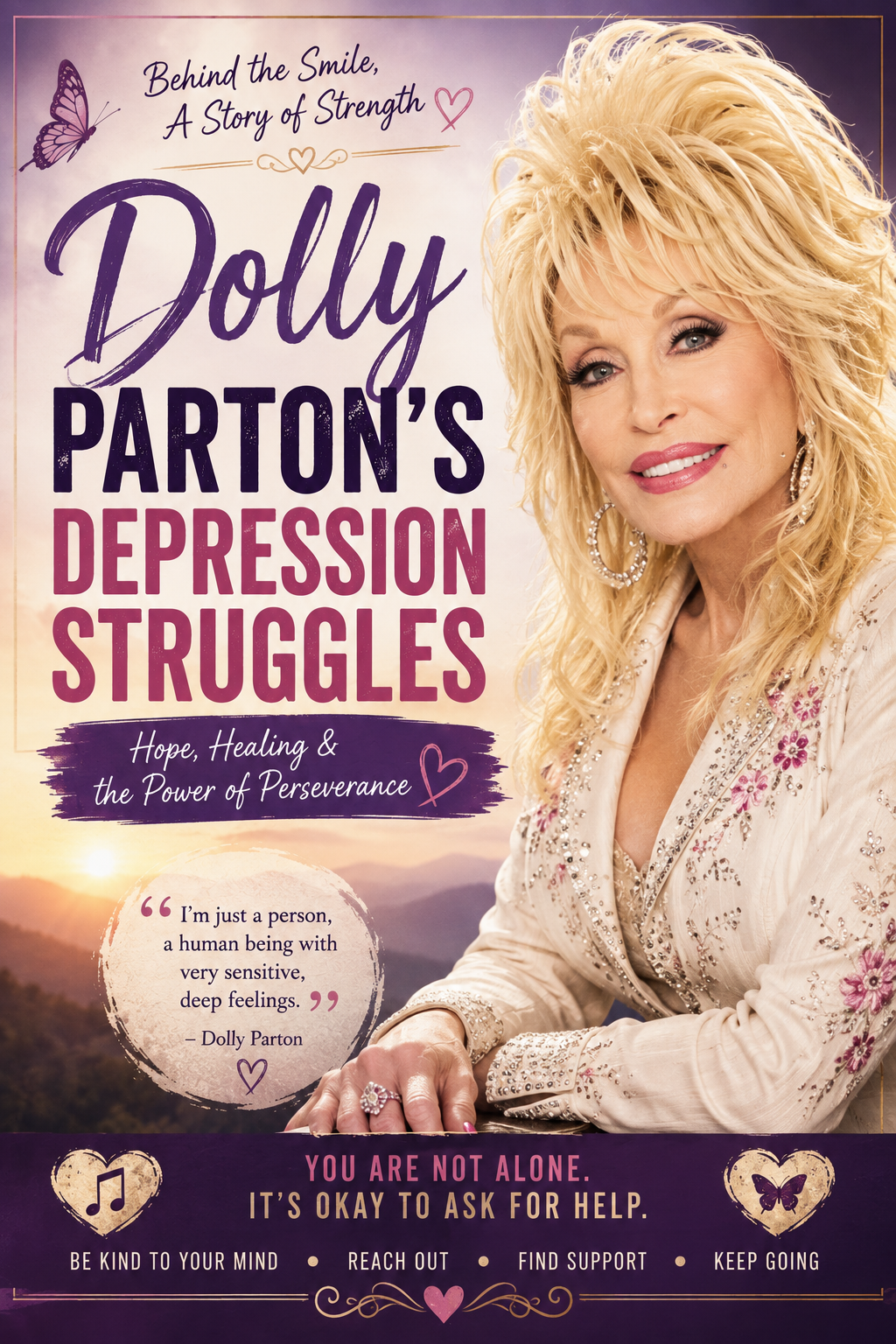
Dolly Parton is celebrated worldwide for her music, humor, positive spirit, business achievements, and larger-than-life personality. Behind her upbeat public image, however, she has spoken candidly about going through a serious period of depression during the 1980s. Her experience shows that emotional struggles are not always visible and that even people who appear happy, creative, successful, and financially secure can experience significant mental health challenges.
Dolly Parton’s Struggle With Depression
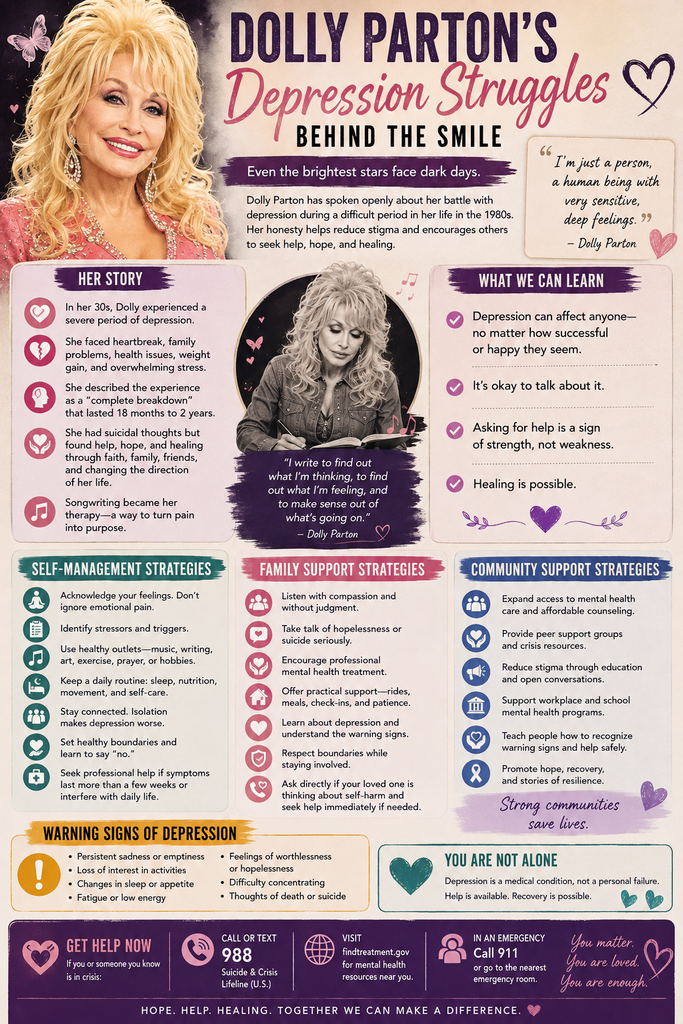
Parton has described going through a particularly difficult emotional period in her 30s. She has connected that period with several overlapping problems, including weight gain, health concerns, family issues, emotional heartbreak, stress, and pressures in her personal and professional life. She described the experience as a “complete breakdown” and has said the depressive period lasted roughly 18 months to two years.
The experience became serious enough that Parton has discussed having suicidal thoughts. In later interviews, she explained that the experience helped her understand how severe depression can lead people toward self-destructive behaviors. She has credited faith, family, friends, and eventually a change in the direction of her life with helping her through that period.
Her experience is especially meaningful because it challenges a common misconception: someone can appear happy while experiencing significant emotional pain. Parton herself has noted that people often perceive her as perpetually happy even though she considers herself deeply sensitive and emotionally affected by life experiences.
Creativity as an Emotional Outlet
Music and songwriting have long been important parts of Parton’s emotional life. She has described songwriting as being like therapy for her, allowing happy and painful emotions to become creative expression.
Creative outlets cannot replace professional treatment when depression is severe, but activities such as music, writing, art, gardening, exercise, prayer, or journaling can complement appropriate mental-health care.
Self-Management Strategies
Parton’s story can encourage people experiencing depression to recognize emotional distress instead of assuming they must continue appearing strong or cheerful.
Helpful self-management strategies may include:
- Acknowledge difficult emotions. Trying to maintain a happy appearance while ignoring emotional pain can make isolation worse.
- Identify personal stressors. Relationship problems, grief, work pressure, health concerns, loneliness, and changes in self-image may contribute to emotional distress.
- Develop healthy outlets. Writing, music, exercise, hobbies, meditation, spirituality, and time outdoors may provide constructive ways to process emotions.
- Maintain daily routines. Regular sleep, nutritious meals, physical activity, and manageable daily goals can support emotional stability.
- Stay connected. Depression often encourages withdrawal, making continued contact with trusted people especially important.
- Practice healthy boundaries. Parton has spoken about the difficulty of saying no when emotionally attached to people. Learning when to step away from harmful or overwhelming situations can protect mental health.
- Seek professional care. Persistent depression, loss of interest, hopelessness, impaired functioning, or suicidal thoughts warrant evaluation by a qualified healthcare or mental-health professional.
- Create a safety plan when necessary. Someone experiencing suicidal thoughts should not try to manage a crisis alone.
Family Support Strategies
Parton has credited family and friends as important sources of support during her difficult period. Family involvement can similarly become an important protective factor for someone experiencing depression.
Families can help by:
- Listening without immediately trying to solve every problem.
- Taking statements about hopelessness, death, or suicide seriously.
- Avoiding comments such as “You have everything—why are you depressed?”
- Encouraging professional mental-health treatment when symptoms persist.
- Helping with appointments, transportation, meals, or everyday responsibilities when depression makes normal activities difficult.
- Maintaining regular contact when a loved one begins withdrawing.
- Learning about depression and recognizing changes in sleep, appetite, energy, concentration, motivation, and behavior.
- Supporting healthy boundaries without becoming controlling.
- Asking directly about suicidal thoughts when there is concern for someone’s safety.
- Seeking emergency assistance when someone appears to be in immediate danger.
Family support should complement—not replace—professional treatment when depression becomes severe.
Community Support Strategies
Communities can make recovery easier by creating environments where people can discuss depression without shame.
Helpful community strategies include:
- Expanding access to affordable counseling and psychiatric care.
- Integrating mental-health screening into primary healthcare.
- Providing workplace mental-health and employee-assistance programs.
- Supporting community and peer-support groups.
- Increasing access to crisis-intervention services.
- Creating grief, caregiver, relationship, and family-support programs.
- Encouraging schools, workplaces, churches, and community organizations to provide mental-health education.
- Teaching people how to recognize suicide warning signs and respond appropriately.
- Challenging the misconception that depression represents weakness or failure.
- Promoting stories of recovery that encourage people to seek help rather than suffer privately.
Faith and Personal Meaning
Faith has been an important part of Parton’s life, and she has credited it as one of the resources that helped her through difficult periods.
For people who value spirituality, prayer, religious communities, meditation, or conversations with trusted spiritual leaders may provide comfort and meaning. Spiritual support can work alongside evidence-based mental-health treatment rather than serving as a substitute when clinical care is needed.
What Dolly Parton’s Journey Can Teach Us
Perhaps one of the strongest lessons from Parton’s experience is that public happiness and private suffering can exist at the same time.
A successful career does not prevent depression.
A sense of humor does not prevent depression.
Being surrounded by people does not necessarily prevent loneliness.
And experiencing depression does not mean that hope, purpose, creativity, and meaningful relationships cannot return.
Parton’s willingness to discuss a painful chapter of her life also helps reduce the stigma surrounding mental illness. Her story demonstrates the importance of recognizing distress, accepting support, finding healthy ways to process emotions, and making changes when circumstances become emotionally damaging.
Conclusion
Dolly Parton’s depression struggles reveal a more vulnerable side of a woman widely associated with optimism and resilience. During a particularly difficult period in her life, personal heartbreak, stress, health concerns, and other pressures contributed to serious emotional distress. She has spoken about reaching a point where suicidal thoughts entered her mind, while also describing the importance of faith, family, friends, creativity, and changing her circumstances in moving forward.
Her experience should not be reduced to a simple inspirational story. Severe depression can require professional treatment and can become life-threatening. The larger lesson is that people should not have to wait until they reach a crisis before receiving support. Self-awareness, compassionate families, accessible mental-health services, supportive communities, and early intervention can help people find a path forward—even when the person who is struggling appears perfectly happy from the outside.
Frequently Asked Questions
Here are some common questions:
1. Did Dolly Parton struggle with depression?
Yes. Dolly Parton publicly discussed experiencing a serious period of depression during the 1980s. She described it as an extremely difficult time involving emotional, physical, family, and professional pressures.
2. How long did Dolly Parton’s depression last?
Parton said that she went through a particularly low period for approximately 18 months to two years. Her experience is an important reminder that even people who appear energetic, successful, and optimistic can experience significant depression.
3. What contributed to Dolly Parton’s depression?
Parton has described several problems occurring around the same period, including concerns about her weight, changes in her body, family difficulties, problems involving people close to her, and business-related stress. Depression is often complex, and it may develop from a combination of biological, psychological, social, and environmental factors.
4. Did Dolly Parton ever have suicidal thoughts?
Yes. Parton has spoken publicly about becoming so depressed that she experienced suicidal thoughts. Her disclosure demonstrates why severe depression should always be taken seriously and why conversations about suicide should be met with compassion rather than judgment.
5. Did Dolly Parton attempt suicide?
Parton has discussed suicidal thoughts during her depressive period, but it is important not to add details to her story that she has not publicly shared. Her experience should be discussed accurately and respectfully rather than sensationalized.
6. What helped Dolly Parton through her depression?
Parton has credited faith, family, and friends with helping her through this difficult period. She has also described songwriting and playing guitar as therapeutic outlets that help her express and process her emotions.
7. Did songwriting help Dolly Parton cope with difficult emotions?
Yes. Parton has repeatedly described songwriting as a form of personal therapy. Writing gave her an outlet for both positive and painful emotions. Creative expression can be a valuable coping strategy, although it should not replace professional mental-health treatment when someone has severe or persistent symptoms.
8. What can we learn from Dolly Parton’s experience with depression?
One of the strongest lessons is that depression does not always have an obvious appearance. Someone may smile, work, perform, joke, care for others, and appear successful while privately experiencing significant emotional distress.
9. Can successful people become depressed?
Absolutely. Fame, financial security, professional achievement, intelligence, spirituality, and strong relationships do not make a person immune to depression. Mental health conditions can affect people from every background.
10. What are common warning signs of depression?
Possible signs include persistent sadness or emptiness, loss of interest in previously enjoyable activities, fatigue, changes in sleep or appetite, difficulty concentrating, feelings of worthlessness or hopelessness, social withdrawal, irritability, and thoughts about death or suicide.
Not everyone experiences depression in the same way, and persistent symptoms should be evaluated by a healthcare or mental-health professional.
11. What self-management strategies may help someone experiencing depression?
Helpful strategies may include maintaining regular sleep and activity routines, staying connected with supportive people, identifying major stressors, exercising when medically appropriate, eating regularly, using healthy creative outlets, practicing relaxation or mindfulness, and seeking professional help when symptoms persist.
Self-management can support recovery, but severe depression should not be managed alone.
12. How can families support someone with depression?
Families can listen without judgment, maintain regular contact, learn about depression, encourage professional treatment, assist with everyday responsibilities when needed, and take statements about hopelessness or suicide seriously.
Rather than saying, “You have so much to be happy about,” it may be more helpful to acknowledge the person’s distress and ask what kind of support they need.
13. What role can community support play?
Communities can reduce barriers to treatment by providing accessible counseling, crisis services, support groups, mental health education, workplace programs, faith-based community resources, and peer support.
Communities can also challenge the stigma that sometimes prevents people from discussing depression or asking for help.
14. Can faith help someone experiencing depression?
For people who value spirituality, faith may provide meaning, hope, connection, and emotional support. Parton has specifically credited her faith as one of the resources that helped her through her difficult period.
Faith and professional mental-health care do not have to compete with each other. Many people use spiritual support alongside counseling, medical care, and other evidence-based treatments.
15. Does depression mean someone is weak?
No. Depression is not evidence of weak character or lack of gratitude. People can be hardworking, optimistic, spiritually committed, and deeply loved while still experiencing depression.
16. What should you do if someone talks about suicide?
Take the statement seriously. Stay with the person when possible, listen without judgment, reduce access to immediate dangers when it can be done safely, and obtain professional or emergency assistance.
In the United States, call or text 988 to reach the Suicide & Crisis Lifeline. If someone is in immediate danger or experiencing a medical emergency, call 911 or go to the nearest emergency department.
17. What is the most important message from Dolly Parton’s depression journey?
Her experience reminds us not to assume that someone’s public personality reveals everything happening internally. Behind an energetic personality or successful career can be a person experiencing genuine emotional pain.
Parton’s willingness to discuss depression and suicidal thoughts helps open conversations that may encourage others to seek support earlier. Depression can be serious, but help, treatment, connection, and recovery are possible.
Video: