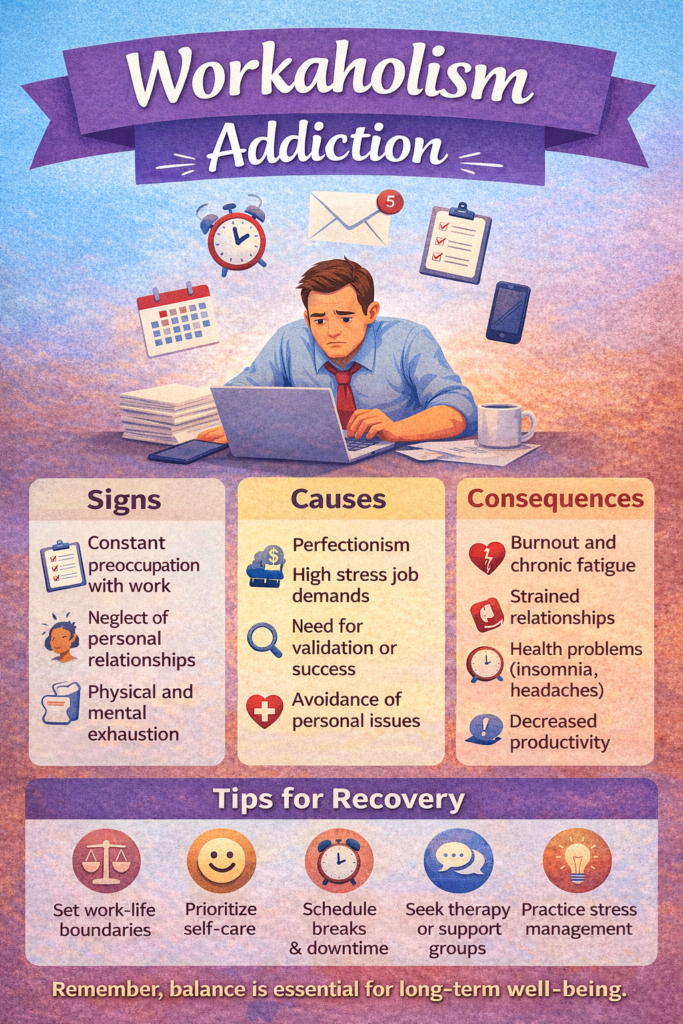
Workaholism is often mistaken for ambition, but when the drive to succeed becomes obsessive, it negatively impacts health, relationships, and well-being. It’s not just about long hours—workaholism is using work as an escape or a way to gain validation. Like other addictions, it creates a harmful cycle that’s difficult to break without support. Recognizing the signs and emotional triggers is key to finding balance and breaking free from this cycle.
Workaholism: Understanding and Overcoming the Addiction to Productivity
In a world that constantly glorifies hustle and ambition, workaholism is often seen as a sign of success and dedication. The term “workaholic” may even evoke positive qualities, such as being driven or committed. However, when work becomes all-consuming and begins to take a toll on physical health, mental well-being, and relationships, it’s important to recognize that this behavior may be more than just a personality trait—it could be an addiction.
Workaholism is defined as the compulsive need to work excessively, often at the expense of other areas of life. Just like other addictions, it is driven by an internal need for control, validation, and escape from underlying emotional issues. It is not just about working long hours—it’s about using work as a coping mechanism or avoidance strategy, making it difficult for individuals to stop even when they know it’s damaging their health or relationships.
The Psychology Behind Workaholism
At its core, workaholism is driven by emotional needs. Individuals may use work as a way to:
- Escape feelings of inadequacy, anxiety, or depression
- Seek external validation or approval
- Avoid addressing personal struggles or emotional pain
For many, the work itself becomes a temporary solution to emotional discomfort, but it’s rarely sustainable and often creates additional problems in the long run.
Signs of Workaholism
Recognizing workaholism can be difficult, especially in a culture that values productivity. However, some common signs that indicate an unhealthy relationship with work include:
- Constantly thinking about work even during personal time
- Neglecting self-care, including sleep, nutrition, and exercise
- Strained relationships with family and friends due to work commitments
- Guilt or anxiety when not working or when taking breaks
- Physical symptoms like burnout, fatigue, or chronic stress
These signs point to a deeper issue that needs attention beyond just time management or workload.
The Impact of Workaholism on Mental Health
While work can provide a sense of accomplishment, workaholism is often linked to mental health struggles. The constant pressure to perform and meet high expectations can lead to:
- Burnout: A state of emotional, physical, and mental exhaustion
- Anxiety and depression: Feelings of inadequacy, stress, and isolation
- Perfectionism: The unrelenting pursuit of flawlessness at work, which often feeds into other insecurities
These mental health challenges can worsen over time, creating a vicious cycle that’s difficult to break without intervention.
Workaholism and Relationships
Workaholism can take a significant toll on personal relationships. Loved ones may feel neglected, unimportant, or resentful due to the workaholic’s constant focus on their career. Over time, this can lead to:
- Emotional distance and communication breakdowns
- Relationship stress and even breakdowns
- Feelings of loneliness or abandonment for partners and family members
Workaholics may struggle to balance their professional and personal lives, causing friction in relationships vital to emotional support and well-being.
How to Address Workaholism
Overcoming workaholism is a complex process that requires self-awareness and a commitment to change. Some steps that can help individuals start this process include:
- Identifying the underlying causes of workaholism, such as fear, insecurity, or emotional avoidance
- Setting clear boundaries between work and personal life, and sticking to them
- Prioritizing self-care, including sleep, relaxation, and healthy hobbies
- Seeking therapy or counseling to address emotional issues driving the addiction
- Building stronger relationships by spending quality time with loved ones and being present without the distraction of work
It’s important to understand that healing from workaholism requires intentional change and a willingness to let go of equating constant productivity with self-worth.
The Role of Society in Workaholism
Workaholism is often fueled by societal pressures that value success, achievement, and long hours. The modern work culture, especially in industries that emphasize competition and productivity, can reinforce unhealthy behaviors. Challenging these societal norms and creating healthier workplace cultures that prioritize mental health and work-life balance is key to preventing workaholism.
Final Thought
Workaholism, like any addiction, is not just about excessive work—it’s about using work to mask deeper emotional needs and avoiding the discomfort of facing personal struggles. While a strong work ethic can be an asset, balance is essential. Recognizing the signs of workaholism, adopting healthier habits, and seeking professional help are important steps in reclaiming your life and well-being.
Remember, you are more than your job, and true success comes from finding harmony between professional achievement and personal fulfillment.
Managing Workaholism: Self-Strategies for Finding Balance and Well-Being
Workaholism is an addiction to productivity that can take a significant toll on both physical and mental health. While many people pride themselves on being “busy,” overworking often comes at the expense of self-care, relationships, and overall well-being. The key to breaking free from workaholism is self-management—developing strategies that create a healthier balance between work and personal life.
Understanding that workaholism is driven by emotional needs, such as the desire for control, validation, or avoidance of underlying issues, is the first step. From there, you can develop a toolkit of self-management strategies that promote boundaries, balance, and self-awareness. These strategies help mitigate the negative effects of workaholism, enabling individuals to be more productive while maintaining their health and relationships.
1. Setting Clear Boundaries Between Work and Personal Life
One of the most important steps in managing workaholism is setting clear boundaries between work and personal time. This means:
- Establishing fixed work hours: Know when you will work and when you will stop.
- Turning off work-related notifications outside of working hours.
- Designating “no-work” zones, such as your home or weekends, to prioritize relaxation and personal time.
Setting these boundaries helps create physical and psychological separation between work and personal life, reducing the risk of burnout.
2. Prioritizing Self-Care and Well-Being
Workaholics often neglect their physical and mental health in favor of their work. Self-management involves prioritizing self-care so that you can function at your best, both professionally and personally. This includes:
- Regular exercise to reduce stress and improve overall health
- Eating nutritious meals and getting enough rest
- Practicing relaxation techniques like meditation or deep breathing
- Taking breaks throughout the day to recharge
When you focus on self-care, you will be better equipped to handle work demands without sacrificing your well-being.
3. Learning to Say No
Workaholics often struggle to say no because they feel obligated to take on more work or to please others. However, learning to say no is an essential self-management strategy that helps you:
- Avoid overloading your schedule
- Maintain energy and focus for the tasks that matter most
- Set healthy limits on your workload
It’s important to recognize that your time is valuable and you are not obligated to accept every request or task that comes your way.
4. Reconnecting with Your Values
Workaholism often stems from an emotional desire for validation, success, or avoidance of personal issues. Reconnecting with your core values and priorities can help you shift your focus away from work. This means:
- Identifying what truly matters to you beyond work, such as family, hobbies, or personal growth
- Setting goals that align with your values, not just external achievements
- Reflecting on your purpose and what brings you joy outside of work
By reconnecting with your values, you can break free from the cycle of workaholism and find more fulfillment in life beyond the office.
5. Seeking Support and Accountability
Breaking free from workaholism is difficult to do alone. Seeking support from friends, family, or a therapist can help you stay accountable to your goals. This includes:
- Sharing your desire for change with loved ones who can support your efforts
- Working with a therapist to address underlying emotional issues, such as perfectionism or anxiety, that may fuel your workaholism
- Joining a support group or professional community that encourages work-life balance and self-care
Having a support system can help you stay motivated and provide encouragement when managing your workaholism.
6. Cultivating a Healthy Relationship with Work
Self-management also involves adjusting your mindset about work itself. Instead of seeing work as a measure of self-worth or success, begin to:
- Value progress over perfection
- Recognize that taking breaks can increase long-term productivity
- Accept that it’s okay to not be working constantly to be successful or valuable
By fostering a healthier relationship with work, you can reduce the compulsion to overwork and become more efficient during working hours.
7. Building Time for Hobbies and Relaxation
Workaholics often forget to make time for activities that bring them joy outside of work. Engaging in hobbies or activities that help you unwind is crucial for mental health. This includes:
- Pursuing interests that bring you joy, such as reading, cooking, or gardening
- Spending quality time with family and friends
- Taking vacations or day trips to relax and recharge
Reclaiming your time for relaxation and personal enjoyment helps you maintain a balanced life and improves your overall well-being.
Final Thought
Workaholism doesn’t just affect your job—it affects your physical health, mental clarity, and relationships. However, with the right self-management strategies, it is possible to regain balance. By setting clear boundaries, prioritizing self-care, and seeking support, you can create a healthier relationship with work that leads to long-term fulfillment and recovery. Remember, work is just one part of life, and true success comes when you balance productivity with personal well-being.
Supporting Loved Ones: Family Strategies to Understand and Address Workaholism
Workaholism is often misunderstood as simply a strong work ethic or a person’s drive for success. However, when working constantly starts affecting physical health, relationships, and mental well-being, it can become an addiction. For families, understanding workaholism and providing the right kind of support is essential to helping a loved one break free from its grip.
While individuals struggling with workaholism may not recognize the damage it’s causing, family members can play a pivotal role in offering empathy, encouragement, and healthy boundaries that foster healing and recovery. With the right strategies, families can support their loved ones in navigating their emotional struggles and finding a healthier balance between work and personal life.
1. Acknowledge the Emotional Roots of Workaholism
The first step for families in understanding workaholism is recognizing that workaholism is often driven by emotional needs—it is not merely about a desire for success. For many workaholics, working excessively can be a way to:
- Escape negative emotions like anxiety, depression, or insecurity
- Gain validation or approval from others
- Avoid facing personal issues or relationship challenges
Family members should approach workaholism with empathy, understanding that it often stems from deeper emotional struggles. Offering support starts with recognizing the emotional pain that drives this behavior rather than labeling it as mere ambition or laziness.
2. Encourage Open Communication Without Judgment
One of the most important ways families can help a workaholic is by creating a space for open, non-judgmental communication. Workaholics may feel defensive or ashamed about their behavior, making it difficult for them to talk about their struggles. Families should:
- Be patient and listen actively when their loved one expresses frustration or anxiety
- Avoid criticizing or making them feel guilty for working long hours
- Encourage them to share how they’re feeling about their work and emotional health
The goal is to create a supportive environment where the person feels safe expressing vulnerability and recognizing the emotional issues behind their work habits.
3. Set Healthy Boundaries
Supporting a workaholic doesn’t mean enabling their behavior. Families must set clear, respectful boundaries to encourage their loved ones to take breaks and adopt healthier practices. For example:
- Designating “no work” times, such as family meals or weekends, to foster connection
- Setting expectations for a balance between work and home life
- Encouraging participation in non-work activities (e.g., hobbies, relaxation) to reduce stress
Setting boundaries helps the individual realize that it’s not only acceptable but necessary to disengage from work at certain times to maintain well-being and relationships.
4. Help Reframe Their Relationship with Work
Workaholics often see work as a source of self-worth or identity, and they may fear that if they step away, they’ll lose their value. Families can help their loved one begin to reframe their relationship with work by:
- Encouraging the idea that work is just one part of life, not the defining factor of who they are
- Reminding them of their strengths and value outside of their job or career
- Celebrating achievements in personal life, such as spending time with family or taking care of their health
By helping their loved one see work from a broader perspective, families can promote a healthier balance and reduce the pressure to work incessantly.
5. Suggest Professional Help
While family support is crucial, workaholism may require professional intervention. Suggesting therapy or counseling can be an essential part of helping the individual address the emotional underpinnings of their work addiction. Therapy can:
- Help the individual explore underlying issues like anxiety, insecurity, or past trauma that contribute to workaholism
- Teach healthier coping mechanisms for managing stress without relying on excessive work
- Help rebuild relationships that may have been affected by workaholism
Approaching this suggestion with compassion and understanding is key. Family members can encourage therapy without making the loved one feel pressured or judged.
6. Support Their Progress and Celebrate Small Wins
Recovery from workaholism takes time, and progress may be slow. Families should focus on celebrating small successes and offering consistent, positive reinforcement:
- Acknowledge when the individual sets healthy boundaries (e.g., leaving work at the office or taking a day off)
- Encourage and celebrate time spent with family or engaging in hobbies
- Be patient with setbacks, recognizing that change is gradual and requires ongoing support
Celebrating progress, no matter how small, fosters motivation and reminds the person that recovery is worth the effort.
7. Take Care of Yourself
Supporting someone with workaholism can be emotionally taxing for family members. It’s essential that family members practice self-care and seek their own support, whether through therapy, support groups, or simply taking time for themselves. Healthy family dynamics are only possible when everyone is emotionally balanced and supported.
Final Thought
Workaholism is a hidden addiction that can take a toll on both the individual and their loved ones. By approaching the situation with empathy, understanding, and clear boundaries, families can support their loved ones in breaking free from the cycle of overwork and achieving a healthier, more balanced life. Recovery from workaholism is a journey, and with family support, individuals can rediscover their value beyond their job and rebuild fulfilling relationships and self-worth.
Supporting Recovery: Community Resource Strategies to Address Workaholism
In today’s fast-paced, achievement-driven society, workaholism has become an increasingly common yet often overlooked issue. While hard work and ambition are often celebrated, the addiction to productivity can lead to negative consequences, including burnout, strained relationships, and poor mental health. Addressing workaholism requires a community-based approach—one that offers support, resources, and guidance to help individuals regain balance and adopt healthier ways of engaging with work.
Communities have the power to provide not only practical tools but also emotional support that can empower individuals struggling with workaholism to break free from the cycle of overwork. Below are some community resource strategies that can be effective in addressing and managing workaholism.
1. Promoting Awareness and Education About Workaholism
Many individuals are unaware that they are dealing with workaholism. Communities can help by promoting awareness and education about workaholism and its effects on health, relationships, and overall well-being. Local workshops, seminars, or online resources can be effective tools for educating both individuals and organizations.
Key community education efforts should:
- Explain the signs and symptoms of workaholism
- Discuss the emotional and psychological toll of overworking
- Share information about the benefits of work-life balance for long-term productivity and health
By increasing awareness, communities help normalize the conversation around workaholism and reduce the stigma surrounding it.
2. Providing Access to Mental Health Support
Workaholism often has deep emotional roots, such as anxiety, perfectionism, or past trauma. Access to mental health services is critical in helping individuals address the psychological components of workaholism. Communities can provide or promote access to:
- Therapy or counseling services, either through sliding scale programs or partnerships with local clinics
- Cognitive-behavioral therapy (CBT) or other therapeutic modalities that help individuals manage perfectionist tendencies and anxiety
- Support groups for workaholism, which can provide a space for individuals to share experiences and receive guidance from peers facing similar struggles
Offering affordable mental health services allows individuals to address the emotional challenges that drive workaholism, helping them develop healthier coping mechanisms.
3. Building Peer Support Networks
Peer support is one of the most powerful resources available to individuals struggling with workaholism. When people connect with others who have faced similar struggles, they feel less isolated and more understood. Community-based peer support networks can include:
- Support groups for workaholics, where individuals can openly discuss their challenges and successes without judgment
- Mentorship programs that pair individuals with mentors who have overcome workaholism and can offer practical advice and emotional support
- Online forums or social media groups dedicated to discussing work-life balance and offering advice for setting boundaries
Peer support fosters a sense of community and provides both accountability and encouragement throughout the recovery process.
4. Encouraging Work-Life Balance Through Programs and Initiatives
Local organizations and community groups can play a pivotal role in promoting a healthier relationship with work by providing resources that encourage work-life balance. These initiatives can include:
- Workshops on stress management, time management, and relaxation techniques
- Employer-sponsored wellness programs that emphasize the importance of taking time off and setting boundaries at work
- Community events or retreats that encourage participants to disconnect from work, such as yoga sessions, meditation groups, or nature walks
By providing opportunities for individuals to engage in rejuvenating activities, communities can help reduce the reliance on work as a primary source of self-worth or fulfillment.
5. Providing Resources for Setting Healthy Boundaries
One of the most challenging aspects of workaholism is learning to set boundaries between work and personal life. Communities can offer resources that teach individuals how to set and maintain these boundaries, such as:
- Boundary-setting workshops that focus on creating clear distinctions between work time and personal time
- Time management resources that help individuals organize their schedules to leave room for relaxation, self-care, and relationships
- Guidance on saying “no” in both personal and professional contexts without guilt or fear of letting others down
By offering practical tools for setting healthy boundaries, communities can empower individuals to take control of their schedules and avoid over-committing.
6. Offering Restorative and Relaxation Activities
Many individuals struggling with workaholism have forgotten how to relax or what it feels like to unwind. Restorative activities help break the cycle of constant work and stress. Communities can offer:
- Free or low-cost fitness programs, such as yoga or tai chi, to promote relaxation and physical well-being
- Art therapy sessions, where individuals can express emotions through creativity in a non-work-related setting
- Mindfulness and meditation groups that teach individuals how to quiet their minds and focus on the present moment
These activities encourage individuals to disconnect from work and reconnect with themselves, fostering mental clarity and relaxation.
7. Promoting Workplace Support and Flexibility
Workplaces play a significant role in addressing workaholism. Communities can partner with local businesses and organizations to promote workplace wellness by:
- Encouraging businesses to implement flexible work schedules, mental health days, and other accommodations that support work-life balance
- Offering workplace training programs that teach managers and employees how to identify and address workaholism in themselves and others
- Creating employee assistance programs (EAPs) that provide confidential support for mental health and addiction-related issues
A workplace culture that encourages flexibility and understanding can significantly reduce the pressure to overwork and foster a healthier approach to productivity.
Final Thought
Workaholism is a complex issue that affects not only individuals but also their families, workplaces, and communities. However, with the right community-based resources, workaholics can find the support they need to break free from this cycle of overwork and develop a healthier, more balanced lifestyle. Through education, mental health support, peer networks, and wellness initiatives, communities can help individuals reclaim their time, relationships, and well-being. Together, we can build a culture that values balance and mental health, rather than endless productivity.
Frequently Asked Questions
Here are some common questions:
1. What is workaholism?
Workaholism is the addiction to working excessively, often to the detriment of personal health, relationships, and overall well-being. It is not just about working long hours—it’s about compulsive, uncontrollable behavior driven by an internal need for validation, achievement, or the avoidance of emotional discomfort.
2. How do I know if I’m a workaholic?
Signs of workaholism include:
- Constantly thinking about work even during personal time
- Neglecting personal relationships and self-care
- Feeling guilty or anxious when not working
- Working even when you’re physically or mentally exhausted
- Being driven by the need to achieve or gain validation through work
3. What causes workaholism?
Workaholism can stem from:
- Perfectionism: A need to always do things perfectly, leading to overwork
- Stress: High-pressure jobs and demanding work environments
- Need for validation: Seeking external approval or self-worth through achievements
- Avoidance of personal issues: Using work as a way to distract from emotional problems or relationships
4. What are the mental health consequences of workaholism?
Workaholism can lead to serious mental health issues, including:
- Burnout: Emotional and physical exhaustion from prolonged stress
- Anxiety and depression: Feelings of inadequacy or overwhelm, especially when productivity levels drop
- Isolation: Emotional distance from family, friends, and loved ones due to neglect of personal relationships
5. Can workaholism affect physical health?
Yes, workaholism can lead to:
- Chronic fatigue and exhaustion
- Insomnia and sleep disturbances
- Headaches and muscle tension
- Increased risk of cardiovascular issues due to stress
6. How does workaholism affect relationships?
Workaholism can significantly strain relationships by:
- Neglecting time spent with loved ones
- Emotional distance from family and friends
- Constantly prioritizing work over personal commitments, leading to frustration and resentment
7. What is the difference between being dedicated to work and being a workaholic?
Dedication to work involves a healthy balance: work is part of life, but it doesn’t dominate it. Workaholism, on the other hand, is an obsession that leads to neglecting other areas of life, such as health and relationships.
8. How can workaholism be treated?
Workaholism can be addressed through:
- Therapy: Cognitive-behavioral therapy (CBT) and other therapeutic approaches to understand the emotional and psychological drivers of overwork
- Support groups: Peer-led groups that provide a space to share experiences and coping strategies
- Mindfulness and relaxation techniques: Practices such as yoga and meditation to manage stress and promote mental well-being
- Setting boundaries: Learning to say “no” and create a healthy work-life balance
9. What role does setting boundaries play in overcoming workaholism?
Setting boundaries is crucial to managing workaholism. It helps individuals:
- Create time for personal life outside of work
- Reduce stress by limiting overwork
- Prioritize self-care and family relationships
Clear boundaries help prevent burnout and foster a healthier work-life balance.
10. Can workaholism be managed on your own?
While self-awareness and self-management are important, seeking professional help (through therapy or support groups) is often necessary for long-term recovery. Self-diagnosing and managing workaholism alone can lead to relapse if emotional triggers and deep-rooted issues are not addressed properly.
11. Are there any long-term effects of workaholism?
If left unaddressed, workaholism can lead to long-term consequences such as:
- Chronic mental and physical health issues
- Deteriorating relationships and social isolation
- Severe burnout that makes it difficult to return to work in a healthy way
12. How can family and friends help someone struggling with workaholism?
Family and friends can:
- Encourage open communication about work-life balance
- Set healthy boundaries around time spent together
- Support therapy or counseling
- Be patient and empathetic, as recovery from workaholism is often a slow process
13. What is the first step in overcoming workaholism?
The first step is recognizing the problem and acknowledging that workaholism is negatively affecting your health and relationships. From there, seeking professional support and implementing small, manageable changes to create a more balanced lifestyle can begin the recovery process.
14. Can workaholism be cured?
While workaholism may not have a “cure” in the traditional sense, it can be managed effectively with ongoing self-awareness, therapy, and support. Many people can break free from the cycle of overwork and lead balanced, fulfilling lives by making long-term changes in their mindset and behavior.
15. What is the most important takeaway about workaholism?
The key takeaway is that workaholism is an addiction that can deeply affect mental, physical, and emotional well-being. Recognizing the problem, setting boundaries, seeking support, and focusing on personal well-being are critical steps toward recovery. With the right resources and strategies, workaholism can be managed and a healthier work-life balance achieved.
Conclusion
Workaholism may initially appear as a path to success, but it often leads to burnout, emotional exhaustion, and a strained sense of self. Recognizing workaholism as an addiction is the first step toward recovery. With the right support, healthy coping strategies, and a shift in mindset, individuals can break free from the cycle of overwork and start building a more balanced, fulfilling life. Whether it’s through therapy, setting clear boundaries, or finding meaningful activities outside of work, overcoming workaholism requires self-awareness, commitment, and the willingness to prioritize mental health and relationships. Recovery is possible when individuals realize that success does not have to come at the cost of their well-being.
Video: Ambition vs. Addiction – Which One Are You? #workaholism #truth #mindset