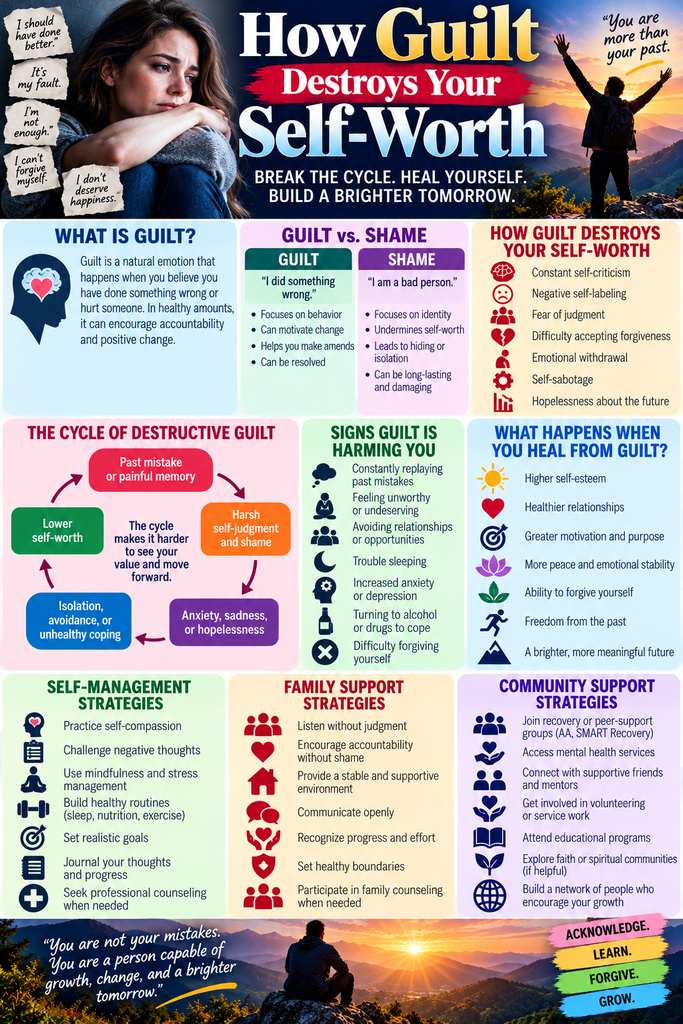
Guilt can become a heavy emotional burden, especially when past mistakes, damaged relationships, or addiction struggles lead to persistent self-blame. While healthy guilt encourages accountability and personal growth, excessive guilt and shame can undermine self-worth, increase anxiety and depression, and interfere with recovery. The greatest danger is allowing past mistakes to define your identity. Through self-management, family support, and community resources, individuals can overcome destructive guilt, rebuild confidence, practice self-compassion, and move toward emotional healing.
Understanding the Difference Between Guilt and Shame
Guilt and shame are closely related emotions, but they affect self-perception differently.
Guilt generally focuses on behavior, while shame focuses on personal identity.
For example, someone experiencing guilt may think, “I made a harmful decision.” Someone experiencing shame may think, “I am a terrible person.”
This distinction matters because guilt can motivate constructive action, while pervasive shame may encourage withdrawal, secrecy, and feelings of worthlessness.
| Guilt | Shame |
|---|---|
| Focuses on behavior | Focuses on identity |
| “I did something wrong” | “There is something wrong with me” |
| May motivate making amends | May encourage hiding or isolation |
| Can support accountability | Can undermine self-worth |
| May resolve through corrective action | Often requires deeper emotional work |
Guilt is not always harmful. It becomes problematic when it is disproportionate, based on unrealistic responsibility, or repeatedly transformed into global self-condemnation.
How Excessive Guilt Gradually Destroys Self-Worth
Self-worth refers to the belief that a person has inherent value and deserves dignity, respect, and care.
When guilt becomes chronic, individuals may begin interpreting their entire identity through past mistakes.
Instead of recognizing that they made an unhealthy choice, they may believe they are permanently damaged, undeserving of happiness, or incapable of meaningful change.
Ways excessive guilt can undermine self-worth
- Persistent self-criticism: Repeatedly replaying mistakes and judging oneself harshly.
- Negative self-labeling: Defining personal identity through past failures.
- Fear of judgment: Assuming others will reject or condemn them.
- Difficulty accepting forgiveness: Believing that positive change cannot compensate for past behavior.
- Emotional withdrawal: Avoiding relationships because of embarrassment or shame.
- Self-sabotage: Rejecting opportunities for happiness or growth because they feel undeserved.
- Hopelessness: Believing that improvement is impossible.
Over time, these patterns can reinforce depression, anxiety, and low self-esteem.
Recovery doesn’t mean denying responsibility. It is about separating accountability for behavior from the belief that a person has no value.
Why Guilt Can Be Especially Powerful During Addiction Recovery
People recovering from alcohol or drug addiction may experience guilt about events that occurred during active substance use.
These experiences can involve damaged relationships, financial hardship, neglected responsibilities, or decisions that conflicted with deeply held values.
As individuals become more emotionally aware during recovery, memories of these experiences may become more prominent.
Common sources of guilt in addiction recovery
- Breaking promises to family members.
- Concealing alcohol or drug use.
- Spending money intended for essential responsibilities.
- Missing important family events.
- Hurting loved ones through dishonesty or conflict.
- Returning to substance use after a period of abstinence.
- Feeling that years of life were lost to addiction.
Although accountability is important, excessive guilt can interfere with recovery when it leads to hopelessness or avoidance.
A person’s addiction history may explain some harmful behavior, but it does not eliminate responsibility or determine their worth as a human being.
Effective recovery involves acknowledging harm, making appropriate changes, and developing healthier ways of living.
The Psychological Cycle of Guilt and Self-Punishment
Chronic guilt can become self-reinforcing.
A person remembers a painful event, criticizes themselves, experiences emotional distress, and then withdraws from activities that might improve their well-being.
Withdrawal may increase loneliness, which can reinforce negative beliefs about oneself.
The cycle of destructive guilt
Past mistake or painful memory
Harsh self-judgment and shame
Anxiety, sadness, or hopelessness
Isolation, avoidance, or unhealthy coping
Negative beliefs become reinforced
This cycle can make individuals feel trapped in the past.
Breaking it requires recognizing unhelpful thought patterns, responding with self-compassion, and taking constructive action when appropriate.
Self-Management Strategies: Rebuilding Self-Worth After Guilt
Self-management involves developing emotional awareness, challenging distorted beliefs, and practicing behaviors that support psychological health.
For individuals recovering from addiction or other painful experiences, these skills can reduce excessive self-blame while strengthening accountability.
Practical self-management strategies
- Identify guilt triggers: Recognize memories, situations, or interactions that lead to intense self-criticism.
- Challenge negative beliefs: Replace global statements such as “I’m worthless” with accurate descriptions of specific behaviors.
- Practice self-compassion: Treat yourself with the same basic dignity you would offer someone else trying to change.
- Accept responsibility appropriately: Identify what you can repair without assuming responsibility for everything that went wrong.
- Set achievable goals: Build confidence through consistent, manageable actions.
- Use mindfulness: Notice painful emotions without automatically accepting every negative thought as fact.
- Develop healthy routines: Prioritize sleep, nutrition, exercise, and meaningful activities.
- Seek professional counseling: Work with a therapist when guilt becomes overwhelming or persistent.
Self-compassion is not the same as avoiding consequences. It lets people acknowledge mistakes without turning them into permanent judgments about who they are.
Learning to Forgive Yourself Without Excusing Harm
Self-forgiveness is often misunderstood.
Some individuals believe forgiving themselves means pretending that nothing happened or minimizing the pain they caused.
Healthy self-forgiveness involves accepting responsibility while recognizing that people can learn, change, and behave differently.
Steps toward self-forgiveness
Acknowledge what happened
Identify the behavior honestly without exaggerating or minimizing its consequences.
Recognize who was affected
Consider how your actions influenced others and what accountability may be appropriate.
Make amends when safe and appropriate
Offer sincere apologies, repair damage where possible, or demonstrate changed behavior.
Accept limits on control
Understand that others may not forgive you or restore relationships, even after genuine efforts to change.
Practice healthier behavior
Use the experience to guide future decisions rather than repeatedly punishing yourself.
Allow personal growth
Recognize that accountability and self-respect can coexist.
Self-forgiveness is often gradual, particularly when the consequences of past behavior were serious.
The Role of Cognitive Behavioral Therapy in Managing Guilt
Cognitive behavioral therapy (CBT) is an evidence-based psychological treatment that helps individuals identify and modify unhelpful thinking and behavioral patterns.
For someone experiencing chronic guilt, CBT may help distinguish realistic responsibility from distorted self-blame.
Common thinking patterns associated with destructive guilt
- All-or-nothing thinking: “Because I made one serious mistake, I am a complete failure.”
- Overgeneralization: “I ruined one relationship, so I ruin every relationship.”
- Catastrophizing: “My past means my future will always be terrible.”
- Personalization: “Everything bad that happened was my fault.”
- Emotional reasoning: “Because I feel guilty, I must be guilty.”
Therapy can help individuals examine evidence, develop balanced interpretations, and take constructive steps toward recovery.
Other approaches, including acceptance and commitment therapy and compassion-focused therapy, may also help people address persistent shame and self-criticism.
Family Support: Helping a Loved One Overcome Destructive Guilt
Families can strongly influence how individuals interpret past mistakes and understand their personal worth.
Supportive family relationships may encourage accountability while reducing unnecessary shame.
However, repeated criticism, humiliation, or reminders of past failures can reinforce negative self-beliefs.
Effective family support strategies
- Listen without judgment: Allow loved ones to express guilt and regret without immediately criticizing or dismissing their feelings.
- Separate behavior from identity: Acknowledge harmful actions without labeling the person as worthless.
- Encourage accountability: Support appropriate apologies, restitution, and meaningful behavioral change.
- Avoid repeated humiliation: Discuss past events when necessary, but don’t use them as weapons in unrelated conflicts.
- Recognize progress: Acknowledge genuine efforts to change behavior.
- Support professional treatment: Encourage counseling when guilt contributes to depression, anxiety, or substance use.
- Maintain healthy boundaries: Protect family well-being while allowing opportunities for trust to develop.
Family members should not feel pressured to forgive harmful behavior before they are ready.
Compassionate support can coexist with personal boundaries and appropriate consequences.
How Family Conflict Can Intensify Guilt
Family environments characterized by frequent criticism, unrealistic expectations, or emotional manipulation may contribute to excessive guilt.
Some individuals grow up believing they are responsible for other people’s happiness or emotional stability.
As adults, they may apologize excessively, struggle to establish boundaries, or feel guilty whenever they prioritize their own needs.
Signs of unhealthy guilt in family relationships
- Feeling responsible for everyone’s emotions.
- Apologizing when no wrongdoing occurred.
- Avoiding boundaries because of fear of rejection.
- Believing disagreement means being disrespectful.
- Feeling obligated to solve every family problem.
- Accepting blame to prevent conflict.
Learning to distinguish personal responsibility from other people’s emotions is an important step toward healthier relationships.
Family therapy or individual counseling may help individuals address these patterns.
Community Support: Rebuilding Confidence and Connection
Social isolation can intensify shame and low self-worth.
Supportive communities offer opportunities to build meaningful relationships, share experiences, and recognize that personal struggles do not diminish human dignity.
For individuals recovering from addiction, peer-support programs can offer an environment where guilt and regret are discussed without unnecessary judgment.
Community resources that support emotional recovery
Peer recovery groups
Alcoholics Anonymous, Narcotics Anonymous, SMART Recovery, and other groups may help individuals connect with people who understand addiction-related guilt.
Mental health counseling
Community mental health centers can provide therapy for depression, anxiety, trauma, and persistent self-criticism.
Recovery mentorship
Peer recovery specialists can help individuals develop coping skills and navigate treatment resources.
Volunteer opportunities
Community service may help people rebuild purpose and confidence through meaningful contributions.
Faith and spiritual communities
For individuals who value spirituality, supportive religious communities may provide belonging, forgiveness, and opportunities for reflection.
Educational programs
Workshops addressing emotional regulation, healthy relationships, and addiction stigma can help individuals develop greater self-awareness.
Community support works best when it balances compassion with accountability.
Guilt, Depression, and the Risk of Relapse
Persistent guilt can contribute to emotional distress that complicates addiction recovery.
People who believe they don’t deserve happiness may become less motivated to maintain healthy routines or seek support.
Some may turn to alcohol or drugs in an attempt to temporarily escape painful feelings.
Warning signs that guilt is affecting recovery
- Persistent feelings of worthlessness.
- Withdrawal from supportive relationships.
- Loss of interest in previously enjoyable activities.
- Increased alcohol or drug cravings.
- Repeated negative self-talk.
- Difficulty sleeping or concentrating.
- Avoiding treatment because of embarrassment.
- Thoughts of self-harm or hopelessness.
These symptoms warrant professional attention, especially when they persist or disrupt daily functioning.
If someone is experiencing thoughts of suicide or self-harm, immediate support is available through the 988 Suicide & Crisis Lifeline in the United States.
Turning Guilt Into Responsibility and Personal Growth
Guilt can become constructive when individuals use it to identify values, repair harm, and make healthier decisions.
The goal isn’t to eliminate every uncomfortable emotion, but to respond in ways that support growth.
Transforming guilt into meaningful action
| Destructive guilt | Constructive response |
|---|---|
| “I am a failure.” | “I made a mistake and can learn from it.” |
| “I don’t deserve forgiveness.” | “I can accept responsibility and work toward change.” |
| “My past ruined everything.” | “My past matters, but it does not determine every future outcome.” |
| “Everyone will always judge me.” | “Some relationships may heal, and I can build healthier connections.” |
| “I should punish myself forever.” | “I can make appropriate amends and practice better behavior.” |
Constructive guilt encourages responsibility without requiring lifelong self-condemnation.
Building a Daily Self-Worth Recovery Routine
Small, consistent habits can help individuals gradually rebuild self-respect.
Daily Self-Worth Practice
An interactive checklist for practicing healthier responses to guilt.
Today’s progress
Identify one negative thought without accepting it as fact. Write down one action that reflects my values. Practice mindful breathing for a few minutes. Reach out to someone supportive. Take one manageable step toward repair or growth. Recognize one thing I handled well today
This routine is not a replacement for therapy. It is a practical way to reinforce emotional awareness, personal responsibility, and self-compassion.
When Professional Help Is Necessary
Occasional guilt is part of ordinary emotional life. However, persistent or overwhelming guilt may indicate a need for professional support.
Consider seeking help when guilt:
- Interferes with sleep, work, or relationships.
- Causes persistent feelings of worthlessness.
- Leads to isolation or avoidance.
- Contributes to alcohol or drug cravings.
- Is associated with depression or severe anxiety.
- Involves repeated intrusive thoughts or compulsive reassurance-seeking.
- Creates thoughts of self-harm.
A qualified mental health professional can help determine whether symptoms are associated with depression, trauma, obsessive-compulsive disorder, substance use disorders, or other conditions.
Treatment should address the underlying causes rather than simply encouraging positive thinking.
Important Lessons About Guilt and Self-Worth
Understanding guilt can help individuals develop healthier relationships with themselves and others.
- Guilt is an emotion, not a permanent part of who you are.
- Making mistakes does not diminish your worth as a human.
- Accountability and self-compassion can coexist.
- Persistent shame may increase isolation and emotional distress.
- Healthy family boundaries support emotional recovery.
- Community connection can reduce stigma and loneliness.
- Professional counseling can help address destructive thinking patterns.
- Personal growth develops through consistent actions rather than endless self-punishment.
These lessons are particularly relevant for individuals rebuilding their lives after addiction, relationship difficulties, or other painful experiences.
Finding Help for Guilt, Shame, and Addiction Recovery
Individuals experiencing persistent guilt, depression, or addiction-related distress can access several resources in the United States.
- 988 Suicide & Crisis Lifeline: Call or text 988 for immediate emotional crisis support.
- FindTreatment.gov: Locate mental health and substance use treatment services.
- SAMHSA National Helpline: 1-800-662-HELP (4357), for confidential treatment referrals.
- SMART Recovery: Peer support focused on coping skills and recovery.
- Alcoholics Anonymous: Mutual support for alcohol recovery.
- National Alliance on Mental Illness: Mental health education and family support resources.
Conclusion: Your Mistakes Do Not Determine Your Worth
Guilt can be a valuable emotion when it encourages empathy, responsibility, and meaningful change. However, when guilt becomes chronic self-condemnation, it can undermine confidence, damage relationships, and interfere with emotional health.
For individuals recovering from addiction, learning to separate past behavior from personal identity is especially important.
Self-management strategies can help challenge destructive beliefs, develop healthier coping skills, and restore confidence. Family support can provide encouragement while maintaining accountability and boundaries. Community resources can reduce isolation and connect individuals with professional treatment and supportive relationships.
Healing doesn’t require forgetting the past or pretending harmful actions never happened. It means learning from those experiences without allowing them to define your entire identity.
You can acknowledge mistakes, take responsibility, make appropriate amends, and still believe that you deserve dignity, connection, and opportunities for personal growth.
Your past may be part of your story, but it does not have to become the final judgment about your worth.
Frequently Asked Questions and Answers
Understanding Guilt, Shame, and Self-Worth
1. What is guilt, and why do people experience it?
Guilt is an emotional response that occurs when someone believes they have violated personal values, made a mistake, or harmed another person.
Healthy guilt can encourage individuals to acknowledge their actions, make amends, and change their behavior. However, excessive guilt may lead to persistent self-criticism and emotional distress.
2. How does guilt destroy self-worth?
Guilt can undermine self-worth when people define themselves by their mistakes rather than recognizing their overall value.
Instead of thinking, “I made a bad decision,” someone may begin believing, “I am a bad person.”
This shift can contribute to shame, low self-esteem, emotional isolation, and hopelessness.
3. What is the difference between guilt and shame?
Guilt generally focuses on behavior, while shame focuses on personal identity.
- Guilt: “I did something wrong.”
- Shame: “There is something wrong with me.”
Guilt can motivate accountability and positive change. Persistent shame may lead to withdrawal, secrecy, and feelings of worthlessness.
4. Is guilt always harmful?
No. Guilt can be a healthy emotional signal when it helps individuals recognize harmful behavior and take responsibility.
It becomes problematic when it is disproportionate, persistent, based on unrealistic responsibility, or accompanied by severe self-condemnation.
5. What are the signs that guilt is damaging someone’s self-esteem?
Common warning signs include:
- Constantly replaying past mistakes.
- Feeling unworthy of happiness or love.
- Excessively apologizing.
- Avoiding relationships or opportunities.
- Difficulty accepting forgiveness.
- Persistent negative self-talk.
- Feeling responsible for everything that goes wrong.
- Believing personal growth is impossible.
These patterns may indicate that guilt has become emotionally harmful.
6. Can guilt cause depression or anxiety?
Persistent guilt and shame can contribute to depression and anxiety, particularly when accompanied by rumination, hopelessness, and negative self-beliefs.
However, guilt does not automatically cause a mental health disorder. Depression, anxiety, trauma, and other conditions may also produce excessive feelings of guilt.
7. Why do some people feel guilty even when they have done nothing wrong?
Excessive guilt may develop through unrealistic expectations, childhood experiences, trauma, perfectionism, or distorted beliefs about responsibility.
Some people learn to take responsibility for others’ emotions or problems.
Therapy can help distinguish actual responsibility from unnecessary self-blame.
Guilt and Addiction Recovery
8. Why is guilt common among people recovering from addiction?
Individuals recovering from substance use disorders may remember actions that harmed relationships, finances, employment, or personal responsibilities.
As they become more emotionally aware during recovery, they may experience regret about past behavior.
These feelings can motivate constructive change, but excessive guilt may interfere with recovery.
9. Can guilt increase the risk of addiction relapse?
Yes. Persistent guilt and shame may contribute to emotional distress, isolation, and hopelessness, which can increase vulnerability to substance use.
Some individuals may turn to alcohol or drugs to temporarily escape painful emotions.
Developing healthier coping strategies and seeking professional support can help reduce these risks.
10. How can someone overcome guilt about things they did while addicted?
Helpful approaches include:
- Acknowledging harmful behavior honestly.
- Taking appropriate responsibility.
- Making amends when safe and possible.
- Participating in addiction treatment.
- Practicing self-compassion.
- Developing healthier behaviors.
- Seeking counseling for persistent shame.
- Recognizing progress in recovery.
Accountability does not require lifelong self-punishment.
11. Does addiction excuse harmful behavior?
No. Addiction can affect judgment, motivation, and behavior, but it does not eliminate responsibility for harmful actions.
Recovery involves recognizing consequences, making appropriate repairs, and making healthier choices without letting past behavior define the person.
12. Can guilt prevent someone from seeking addiction treatment?
Yes. Shame and fear of judgment may discourage individuals from discussing substance use or asking for professional help.
Some people believe they do not deserve recovery or worry that treatment providers will criticize them.
Compassionate, confidential addiction services can help reduce these barriers.
13. How can someone stop feeling ashamed of their addiction history?
Reducing shame often involves understanding addiction as a treatable medical condition, recognizing personal growth, and separating past behavior from identity.
Peer support, counseling, self-compassion, and meaningful relationships may help individuals develop a healthier self-image.
Self-Management Strategies for Overcoming Guilt
14. What self-management strategies help reduce destructive guilt?
Effective strategies include:
- Identifying guilt triggers.
- Challenging negative self-talk.
- Practicing mindfulness and self-compassion.
- Setting realistic personal goals.
- Maintaining healthy sleep and exercise routines.
- Journaling about emotions and progress.
- Developing stress-management techniques.
- Seeking professional counseling when necessary.
These strategies help individuals respond constructively rather than becoming overwhelmed by self-blame.
15. How can someone stop replaying past mistakes?
Repeatedly replaying mistakes is sometimes called rumination.
Helpful techniques include recognizing repetitive thought patterns, redirecting attention to meaningful activities, and distinguishing between problems you can address and events you cannot change.
Cognitive behavioral therapy can help individuals develop more balanced thinking patterns.
16. What is self-compassion, and how does it help with guilt?
Self-compassion involves treating oneself with understanding and basic kindness during difficult experiences.
It does not mean denying responsibility or excusing harmful behavior.
Instead, it helps individuals acknowledge mistakes without concluding that they are worthless.
17. How can someone forgive themselves for past mistakes?
Self-forgiveness may involve several steps:
- Acknowledge what happened.
- Accept appropriate responsibility.
- Recognize the impact on others.
- Make amends when possible and appropriate.
- Learn from the experience.
- Practice healthier behavior.
- Allow yourself opportunities for growth.
Self-forgiveness is often gradual and does not depend entirely on receiving forgiveness from others.
18. Can mindfulness help reduce guilt?
Yes. Mindfulness can help individuals notice guilt-related thoughts and emotions without automatically accepting them as accurate judgments.
Mindful breathing, grounding exercises, and meditation may reduce rumination and emotional reactivity.
Some individuals with trauma histories may benefit from adapting mindfulness practices with professional guidance.
19. How can journaling improve self-worth?
Journaling can help individuals identify negative thinking patterns, reflect on personal values, and recognize progress.
Useful prompts include:
- What am I blaming myself for?
- What responsibility actually belongs to me?
- What have I learned?
- What action can I take today?
- How would I respond to a friend facing the same situation?
Writing can encourage emotional awareness and more balanced self-reflection.
20. How does cognitive behavioral therapy help with guilt?
Cognitive behavioral therapy (CBT) helps individuals recognize and challenge unhelpful thought patterns.
For example, CBT may help someone replace “I always ruin everything” with “I made a mistake in one situation, and I can work toward improving my behavior.”
CBT can also address avoidance, rumination, and other behaviors that reinforce guilt.
21. Can perfectionism make guilt worse?
Yes. People with perfectionistic expectations may see ordinary mistakes as proof of personal failure.
They may believe they must satisfy everyone, avoid all errors, or maintain unrealistic standards.
Learning to establish achievable expectations can reduce unnecessary guilt.
22. How can setting boundaries improve self-worth?
Healthy boundaries help individuals recognize where their responsibilities end and another person’s responsibilities begin.
Someone who feels guilty whenever they say no may benefit from practicing respectful communication and accepting that prioritizing personal needs is not inherently selfish.
Family Support and Healing From Guilt
23. How can families help someone struggling with excessive guilt?
Families can provide emotional support while encouraging accountability and healthy behavior.
Helpful approaches include:
- Listening without judgment.
- Avoiding humiliation or repeated criticism.
- Encouraging professional counseling.
- Recognizing meaningful progress.
- Supporting appropriate amends.
- Maintaining healthy boundaries.
- Offering reassurance without minimizing harmful actions.
24. Can family criticism contribute to low self-worth?
Yes. Repeated criticism, humiliation, or unrealistic expectations may contribute to negative self-beliefs.
Individuals exposed to these patterns may become highly sensitive to mistakes or believe they must constantly earn approval.
Supportive communication and appropriate boundaries can help improve emotional well-being.
25. Why do some people feel responsible for their family’s happiness?
Some individuals grow up in environments where they are expected to manage other people’s emotions or prevent conflict.
These experiences can contribute to excessive responsibility, people-pleasing, and difficulty establishing boundaries.
Counseling may help individuals develop a more realistic understanding of responsibility.
26. How can families encourage accountability without creating shame?
Families can focus on specific behaviors and their consequences rather than judging someone’s character.
For example, discussing a broken promise and identifying ways to rebuild trust is generally more constructive than labeling the person as unreliable or worthless.
27. Should families forgive someone immediately after an apology?
No. Forgiveness is a personal process and should not be forced.
People who have experienced harm may need time, boundaries, and evidence of behavioral change before considering reconciliation.
An apology does not automatically restore trust.
28. Can family counseling help reduce guilt and shame?
Yes. Family counseling can help individuals improve communication, address conflict, and understand patterns of blame or emotional withdrawal.
It may also support healthier boundaries and more constructive approaches to accountability.
Community Support and Rebuilding Self-Worth
29. Why is community support important for overcoming guilt?
Supportive communities can reduce isolation and give individuals opportunities to feel accepted, understood, and valued.
Peer relationships may help challenge the belief that personal mistakes make someone undeserving of connection.
30. What community resources help people struggling with guilt and shame?
Helpful resources include:
- Mental health counseling centers.
- Addiction recovery support groups.
- SMART Recovery.
- Alcoholics Anonymous and Narcotics Anonymous.
- Peer recovery coaching.
- Community education programs.
- Volunteer organizations.
- Supportive faith or spiritual communities.
The most appropriate resource depends on the individual’s needs and preferences.
31. How can support groups improve self-worth?
Support groups allow individuals to share experiences and hear from others who have faced similar challenges.
These connections may reduce isolation, normalize seeking help, and encourage personal growth.
32. Can volunteering help someone rebuild confidence?
Volunteering may strengthen social connection, provide meaningful responsibilities, and reinforce a sense of contribution.
However, volunteering should not become self-punishment or an attempt to earn the right to feel worthy.
33. Can spirituality help someone overcome guilt?
For individuals who value spirituality, religious practices, reflection, forgiveness, and supportive faith communities may provide comfort and meaning.
However, spiritual support should not replace appropriate mental health or addiction treatment.
People can also develop self-forgiveness and emotional healing through secular approaches.
Rebuilding Confidence and Emotional Health
34. How can someone rebuild self-worth after making serious mistakes?
Rebuilding self-worth often means accepting responsibility, developing healthier behaviors, and recognizing that your value extends beyond past actions.
Consistent positive changes, supportive relationships, and professional counseling may help individuals gradually restore confidence.
35. What is the difference between taking responsibility and punishing yourself?
Taking responsibility involves acknowledging harm and making constructive changes.
Self-punishment involves repeatedly criticizing oneself without necessarily improving the situation.
Responsibility encourages growth, while excessive self-punishment may reinforce shame and hopelessness.
36. Why do some people feel they do not deserve happiness?
People experiencing persistent shame may believe that past mistakes permanently disqualify them from happiness, love, or success.
These beliefs may be reinforced by depression, trauma, or repeated criticism.
Therapy can help individuals challenge these assumptions and develop healthier self-perceptions.
37. Can guilt lead to self-sabotaging behavior?
Yes. People who believe they don’t deserve success may avoid opportunities, withdraw from relationships, or use unhealthy coping behaviors.
These patterns can reinforce low self-esteem.
Recognizing self-sabotaging behavior and addressing underlying beliefs may support positive change.
38. How long does it take to recover from destructive guilt?
There is no universal timeline.
Recovery depends on the circumstances, severity of emotional distress, availability of support, and presence of underlying mental health conditions.
Some people improve through self-management strategies, while others benefit from longer-term therapy.
39. When should someone seek professional help for guilt?
Professional support may be appropriate when guilt:
- Interferes with sleep, work, or relationships.
- Causes persistent feelings of worthlessness.
- Contributes to depression or anxiety.
- Leads to social isolation.
- Increases alcohol or drug cravings.
- Involves intrusive thoughts or compulsive reassurance-seeking.
- Creates hopelessness or thoughts of self-harm.
A qualified mental health professional can assess underlying conditions and recommend appropriate treatment.
40. What is the most important lesson about guilt and self-worth?
The most important lesson is that making mistakes does not eliminate a person’s inherent worth.
Healthy guilt can encourage responsibility, empathy, and change. However, chronic self-condemnation can interfere with emotional well-being and personal growth.
Learning to acknowledge mistakes without defining oneself by them is an important step toward healthier self-esteem.
Helpful Resources
- 988 Suicide & Crisis Lifeline — Call or text 988 for immediate emotional crisis support in the United States.
- FindTreatment.gov — Find mental health and addiction treatment services.
- National Alliance on Mental Illness — Mental health education and family support.
- SMART Recovery — Evidence-informed addiction recovery support.
- Alcoholics Anonymous — Peer support for alcohol recovery.
- SAMHSA National Helpline: 1-800-662-HELP (4357).
Video: