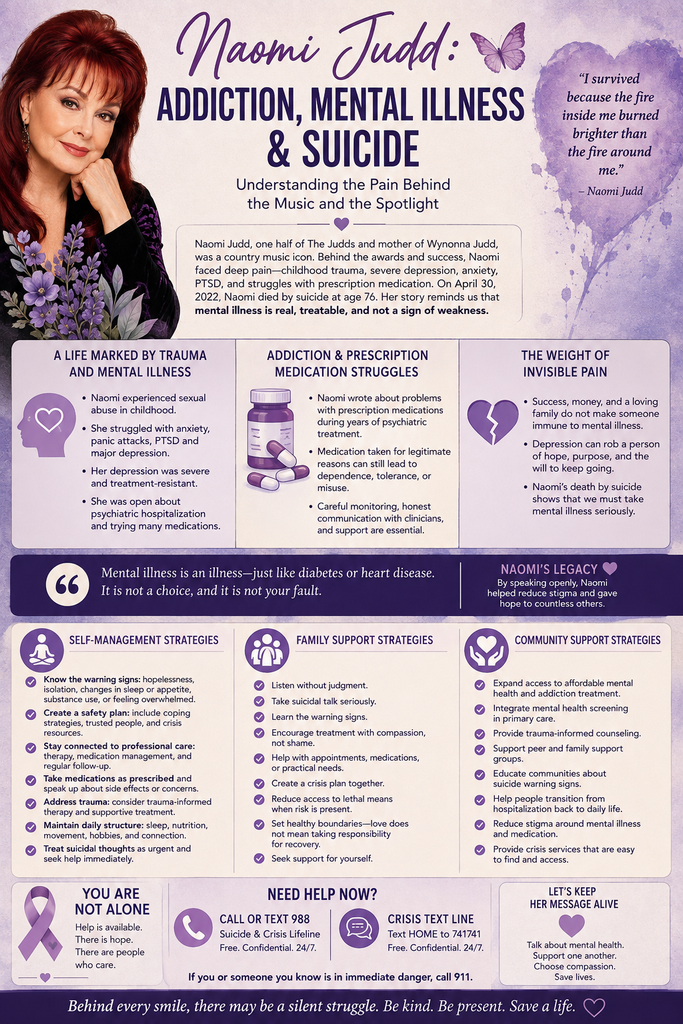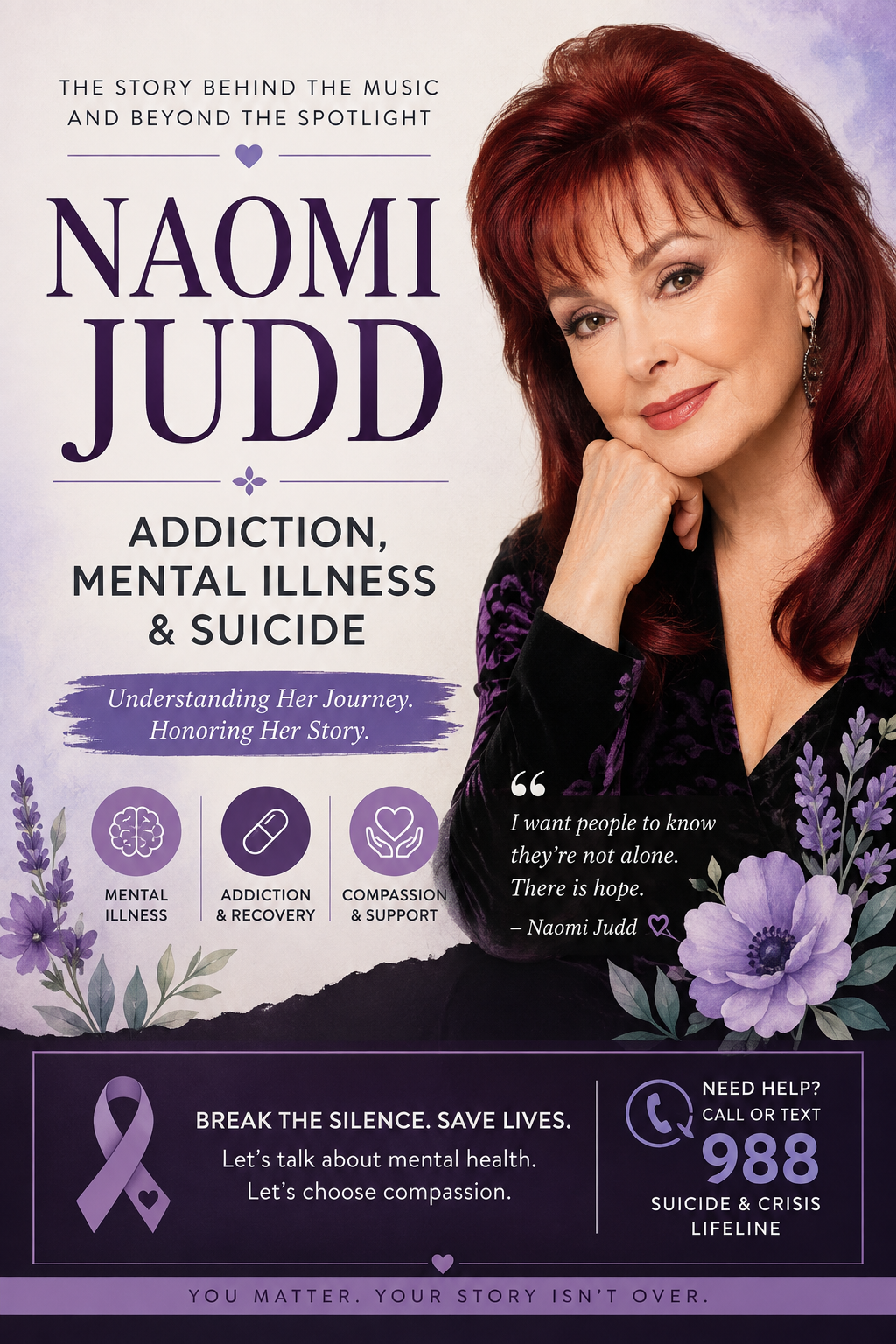
Naomi Judd was celebrated as one half of the country music duo The Judds, but behind her success was a deeply personal struggle with severe depression, anxiety, trauma, and other mental health challenges. She also wrote about difficulties involving prescription medications and addiction during periods of psychiatric treatment. Naomi spoke publicly about her mental health in hopes of reducing stigma and helping others feel less alone. Her death by suicide in 2022 highlighted the seriousness of severe mental illness and the importance of recognizing warning signs, seeking professional treatment, and providing ongoing family and community support.
Naomi Judd: Addiction, Mental Illness, and a Life Behind the Music
Naomi Judd was known to millions as the charismatic mother of country singer Wynonna Judd and one half of the Grammy-winning duo The Judds. Behind the awards, performances, and public success, however, Naomi described a much more complicated life involving childhood trauma, severe depression, anxiety, PTSD, suicidal thoughts, psychiatric treatment, and problems involving prescription medication. Her story illustrates an important reality: professional success and a loving family do not necessarily protect someone from serious mental illness.
Naomi spoke publicly about experiencing sexual trauma during childhood and other painful experiences while growing up. She later described struggling with anxiety and major depression. In 2013, she discussed experiencing major depression and previously having panic attacks, while later interviews described her depression as severe and treatment-resistant.
Her story should be discussed carefully because mental illness, substance addiction, and suicide are related but not interchangeable. Naomi’s best-documented struggle was severe mental illness. Her 2016 memoir, River of Time: My Descent Into Depression and How I Emerged with Hope, also described addiction and difficulties involving medications during an extended period of psychiatric illness and treatment.
Trauma, Depression, and Mental Illness
Naomi’s difficulties did not suddenly appear late in life. She publicly connected some of her emotional suffering to traumatic experiences dating back to childhood. She described childhood sexual abuse and later worked through her history in therapy.
Her mental health problems eventually became profoundly disabling. She described periods when she could remain home for weeks, struggle with normal hygiene, and have difficulty functioning. She underwent psychiatric hospitalization and numerous medication treatments while trying to manage severe, treatment-resistant depression.
Her experiences demonstrate several factors that can complicate mental health:
- Childhood and adult trauma can have lasting psychological effects.
- Depression can become severe even when someone’s external life appears successful.
- Anxiety and panic symptoms may occur alongside depression.
- Loss of identity or purpose can intensify emotional distress.
- Medication treatment sometimes requires considerable adjustment and monitoring.
- Mental illness may relapse even after periods of significant improvement.
Addiction and Prescription Medication
Naomi’s addiction history requires some nuance. It would be misleading simply to describe her as having a broad history of alcohol or illicit-drug addiction. Her memoir’s published description specifically discusses depression, panic attacks, PTSD, toxic drug effects, and addiction during her years of intensive psychiatric treatment.
This part of her experience highlights an important clinical issue: medications prescribed for legitimate medical or psychiatric reasons can still require careful monitoring. Certain medications can produce tolerance, physical dependence, withdrawal, or problematic patterns of use.
For anyone taking psychiatric medication, healthier management includes:
- Taking medication only as prescribed.
- Avoiding abrupt discontinuation without medical guidance.
- Telling clinicians about increasing doses, cravings, or difficulty controlling use.
- Using one coordinated treatment team whenever possible.
- Combining medication management with psychotherapy and other supports.
- Asking for help early rather than hiding medication problems because of shame.
The Importance of Identity and Purpose
Another significant theme in Naomi’s story was the relationship between identity and mental health. After extraordinary success with The Judds, major life and career transitions changed the structure and purpose that had defined much of her life.
People experiencing retirement, chronic illness, children leaving home, relationship changes, or the end of a career can sometimes experience a profound loss of identity. For someone already vulnerable to depression, these transitions may become especially difficult.
Healthy self-management can therefore involve developing meaning outside one particular role:
- Maintain hobbies and interests independent of work.
- Develop friendships outside professional relationships.
- Establish predictable daily routines.
- Set small, achievable goals during periods of depression.
- Maintain regular sleep, meals, movement, and medical care.
- Identify meaningful roles such as volunteering, mentoring, creativity, spirituality, or community involvement.
Naomi Judd’s Death by Suicide
Naomi Judd died by suicide on April 30, 2022, at age 76. Her family later reported that she had been treated for PTSD and bipolar disorder, while the medical examiner documented a significant history that included anxiety, depression, bipolar disorder, previous suicidal thinking, and recent life stressors.
Her death came just one day before Naomi and Wynonna were inducted into the Country Music Hall of Fame. The timing is a powerful reminder that external accomplishments cannot reliably tell us how much psychological pain someone is experiencing.
It is also important not to reduce suicide to one diagnosis, medication, event, or relationship. Suicide is usually complex and can involve interacting psychological, biological, social, environmental, and situational factors.
Self-Management Strategies
Naomi’s experiences can help illustrate why severe mental illness deserves the same seriousness as other potentially life-threatening illnesses. Someone experiencing worsening depression should not be expected simply to “think positively” or manage everything independently.
Helpful self-management strategies include:
- Recognize changes early. Watch for increasing hopelessness, isolation, insomnia, agitation, substance use, or inability to perform everyday activities.
- Create a written safety plan. Identify warning signs, coping strategies, supportive people, clinicians, crisis resources, and ways to make the environment safer.
- Stay connected to professional treatment. Severe or treatment-resistant depression may require psychiatric evaluation and ongoing follow-up.
- Monitor medications carefully. Discuss side effects, dependence concerns, and worsening symptoms openly with clinicians.
- Address trauma appropriately. Trauma-focused treatment may be useful when unresolved traumatic experiences contribute to current symptoms.
- Protect daily structure. Sleep, nutrition, physical activity, social interaction, and predictable routines can complement—not replace—professional treatment.
- Treat suicidal thinking as urgent. A sudden increase in suicidal thoughts or inability to remain safe requires immediate intervention.
Family Support Strategies
Naomi’s life also demonstrates how mental illness affects an entire family system. Family members may experience fear, frustration, helplessness, grief, conflict, and caregiver exhaustion while trying to support someone they love.
Families can help by:
- Listening without immediately judging or trying to “fix” the person.
- Taking statements about suicide seriously.
- Learning the warning signs of worsening depression.
- Encouraging treatment without using shame.
- Helping organize appointments or medications when welcomed.
- Discussing a crisis plan before an emergency occurs.
- Reducing access to lethal means when suicide risk is present.
- Maintaining healthy boundaries instead of assuming responsibility for another person’s recovery.
- Seeking counseling or support for themselves.
- Continuing support after hospitalization or apparent improvement.
Family support is extremely valuable, but love alone cannot always overcome a severe psychiatric disorder. Ashley Judd later emphasized the distinction between her mother and the illness from which she suffered, while also explaining that Naomi had support and resources during her struggle.
Community Support Strategies
Mental health and addiction recovery are stronger when responsibility does not fall entirely on individuals and their families. Communities can create additional layers of protection.
Useful community strategies include:
- Expanding affordable psychiatric and addiction treatment.
- Integrating mental health and substance-use screening into primary care.
- Providing trauma-informed counseling.
- Increasing access to peer-support and family-support groups.
- Educating communities about suicide warning signs.
- Supporting people transitioning from psychiatric hospitalization back into everyday life.
- Reducing stigma surrounding psychiatric medication and hospitalization.
- Providing programs for older adults experiencing isolation, retirement, grief, or loss of purpose.
- Making crisis services easy to locate and access.
What Naomi Judd’s Journey Can Teach Us
Perhaps the most important lesson from Naomi Judd’s life is that recovery and mental illness are not always linear. Someone can experience improvement, speak publicly about hope, receive treatment, love their family, achieve extraordinary success—and still experience another severe episode.
Naomi herself wanted people to understand depression as an illness rather than a personal weakness. In discussing why she shared her experiences publicly, she said she hoped others could see that survival was possible and that families could better understand the disease.
Her story therefore should not be remembered only through the circumstances of her death. It can also encourage earlier conversations about trauma, medication problems, depression, addiction, family relationships, and suicide prevention. Treatment may involve medication, psychotherapy, addiction services when appropriate, family support, crisis planning, and long-term follow-up.
Most importantly, severe depression deserves attention before a person reaches a crisis.
Frequently Asked Questions
Here are some common questions:
1. Who was Naomi Judd?
Naomi Judd was an American country music singer and one half of The Judds, the highly successful mother-daughter duo she formed with Wynonna Judd. Beyond her music career, Naomi became an outspoken advocate for greater awareness of depression, trauma, and mental health treatment.
2. What mental health conditions did Naomi Judd struggle with?
Naomi publicly discussed experiencing severe depression, anxiety, panic attacks, PTSD, and suicidal thoughts. She described periods when her depression became so severe that ordinary activities and self-care were extremely difficult.
3. Did childhood trauma affect Naomi Judd’s mental health?
Naomi spoke publicly about experiencing childhood sexual abuse and other traumatic experiences. Trauma does not inevitably cause mental illness, but childhood trauma can increase vulnerability to depression, anxiety, PTSD, substance use disorders, and other difficulties later in life.
4. Did Naomi Judd struggle with addiction?
Naomi’s story is more accurately described with nuance rather than simply labeling her as having a general drug addiction. In her memoir, River of Time, she discussed severe psychiatric illness as well as difficulties involving prescription medications and addiction during years of treatment. Her experience highlights the importance of carefully monitoring potentially dependence-forming medications.
5. Why did Naomi Judd take psychiatric medications?
Naomi received treatment for serious mental health symptoms. Psychiatric medications can be valuable and sometimes lifesaving treatments. However, finding an effective medication may take time, particularly with treatment-resistant depression, and side effects or medication-related problems require ongoing medical supervision.
6. Was Naomi Judd hospitalized for her mental health?
Yes. Naomi publicly discussed receiving intensive psychiatric treatment, including hospitalization, while experiencing severe depression. Psychiatric hospitalization can provide stabilization, assessment, medication management, and protection when symptoms become severe or safety is at risk.
7. What is treatment-resistant depression?
Treatment-resistant depression generally describes depression that has not adequately improved despite appropriate treatment attempts. It does not mean that recovery is impossible. Specialists may consider different medications, psychotherapy, medication combinations, or other evidence-based interventions.
8. How did fame affect Naomi Judd’s mental health?
It is impossible to attribute her illness to fame alone. However, Naomi discussed major changes in identity, career, relationships, health, and life circumstances. Fame and professional success also do not protect someone from psychiatric illness.
9. When did Naomi Judd die?
Naomi Judd died on April 30, 2022, at age 76. Her death was ruled a suicide. She died one day before The Judds were inducted into the Country Music Hall of Fame.
10. Why is it important not to oversimplify Naomi Judd’s suicide?
Suicide rarely has one simple explanation. Mental illness, trauma, biological vulnerability, stressful events, social circumstances, substance use, physical illness, and other factors may interact. Assigning one event or one person as the “cause” can misrepresent the complexity of suicide.
11. Can someone appear successful and still be suicidal?
Yes. Money, fame, family, professional achievements, or an outwardly positive appearance do not eliminate suicide risk. A person may experience profound psychological distress that is not apparent to others.
12. What warning signs of suicide should families recognize?
Possible warning signs include talking about wanting to die, expressing hopelessness or feeling like a burden, withdrawing from others, dramatic behavioral changes, increasing substance use, giving away important possessions, severe agitation, or researching methods of suicide. Any direct statement about suicide should be taken seriously.
13. How can someone manage severe depression?
Self-management can support professional treatment but should not replace it. Helpful strategies may include maintaining regular psychiatric care, taking medications as prescribed, participating in psychotherapy, establishing sleep and activity routines, avoiding alcohol and non-prescribed drugs, staying socially connected, recognizing personal warning signs, and creating a safety plan.
14. How can families support someone with severe mental illness?
Families can listen without judgment, learn about the person’s condition, encourage professional care, help identify warning signs, participate in safety planning when appropriate, reduce access to lethal means during periods of suicide risk, and maintain communication after hospitalization or other crises.
15. Can family support prevent every suicide?
No. Family involvement can be extremely valuable, but relatives cannot control another person’s psychiatric illness or guarantee an outcome. Severe mental illness requires professional treatment, and suicide can occur even when a person is deeply loved and supported.
16. What community resources can support people experiencing similar struggles?
Resources may include psychiatrists, therapists, primary-care clinicians, addiction-treatment programs, trauma-informed services, peer-support groups, family-support organizations, crisis centers, and community mental-health programs. Coordinating these services can be particularly important when mental illness and substance-related problems occur together.
17. What can we learn from Naomi Judd’s experience?
Her story demonstrates that mental illness can affect anyone, including people who appear successful and surrounded by love. It also emphasizes the importance of discussing trauma, depression, medication problems, addiction, and suicidal thoughts without shame and seeking help before symptoms become a crisis.
18. Where can someone get immediate help for suicidal thoughts?
In the United States, call or text 988 to reach the Suicide & Crisis Lifeline. If someone has attempted suicide, has an immediate plan and means to harm themselves, or is otherwise in immediate danger, call 911 or go to the nearest emergency department.
Video: Why we need to talk about Naomi Judd’s struggle #mentalhealth #endthestigma