Gambling addiction is one of those topics that often gets pushed aside, but it’s actually pretty important to understand, especially when you compare it with other types of addiction, like substance abuse or online gaming. Knowing how gambling addiction stacks up with things like alcohol, drugs, or even shopping binges helps you see why treatment and support need to be tailored for different people. In this article, I’m breaking down what makes gambling addiction unique, how it lines up next to other addictions, and what you should know if this hits close to home.
Understanding Gambling Addiction: What Sets It Apart?
Gambling addiction, sometimes called an impulse control disorder or gambling disorder, happens when someone can’t stop gambling even though it’s causing harm: financial, emotional, or otherwise. This isn’t just about making bad bets now and then. It’s a pattern that affects the person’s whole life. Compared to other addictions, gambling doesn’t always involve putting something external, like a drug or drink, into your body, but the feelings and behaviors can be just as powerful.
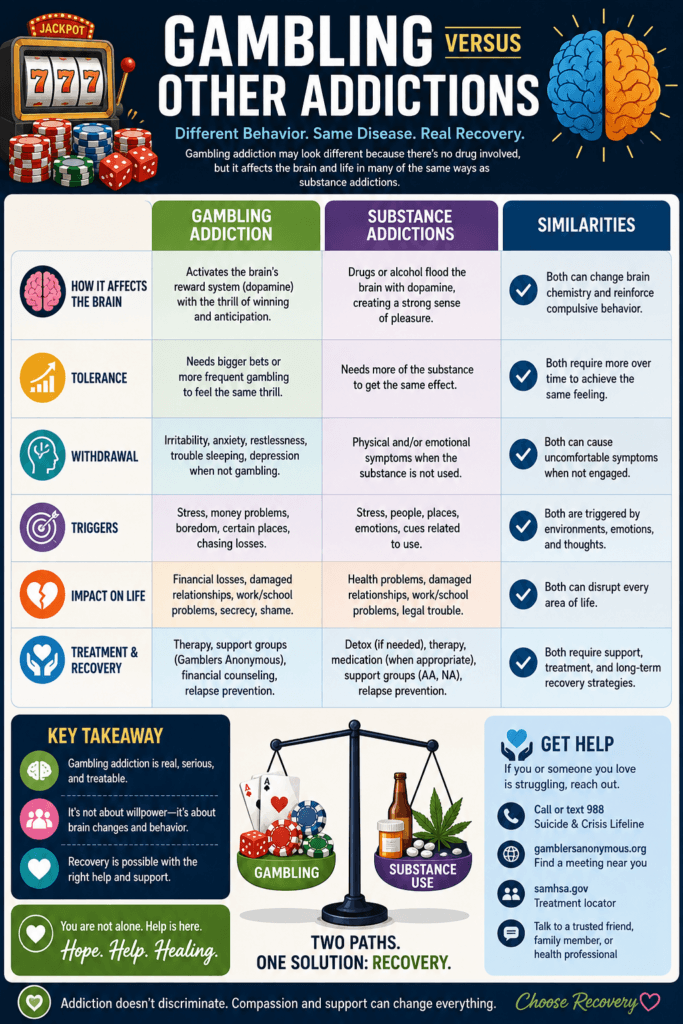
Unlike substance-based addictions, gambling addiction is known as a behavioral addiction. This means that the process—placing bets, chasing losses, or even just hanging out in a casino—triggers the brain’s reward system in a way that can become compulsive. The risks involved, anticipation, and near misses actually keep people coming back, leading to the same kind of cycles experienced with other addictions.
What Does “Addiction” Really Mean?
At its core, addiction is a condition where a person compulsively engages in a behavior or uses a substance even when they know it’s causing problems. Whether it’s alcohol, heroin, gambling, or even scrolling endlessly on social media, addiction tends to have these things in common:
- Cravings: Strong urges to use the substance or repeat the behavior.
- Loss of Control: Finding it hard to stop once you’ve started.
- Continued Use Despite Harm: Keeping at it even though it’s hurting your health, finances, or relationships.
- Withdrawal: Feeling anxious, irritable, or even physically sick if you don’t get your “fix.”
Both gambling addiction and other addictions check these boxes, which is why you’ll sometimes hear gambling disorder described as “addiction without the substance.”
How Gambling Addiction Mimics Substance Abuse
It’s wild how much gambling addiction and things like drug or alcohol addiction have in common. Brain scans show that the same dopamine pathways get fired up whether someone’s taking a drug or winning at the slots. That rush you get from a big win or a close call feels a lot like the high from substances. Over time, the brain gets so used to this that only bigger and riskier bets or bigger “hits” can get you there.
People who struggle with gambling often find that their cravings grow stronger the more they gamble, just like someone might need more of a substance to feel the same buzz. When they try to quit, withdrawal kicks in—restlessness, mood swings, even physical symptoms like headaches and insomnia. All of this adds up to a cycle that’s really tough to break. Similar patterns show up in substance dependencies, too: tolerance, escalating use, and tough withdrawal when trying to quit.
Comparing Gambling Addiction to Other Behavioral Addictions
Behavioral addictions aren’t just about gambling. Compulsive video gaming, shopping, food binges, or even social media use all fall into this category. Here’s how gambling addiction compares:
- Similar Brain Chemistry: Activities like gaming and gambling both trigger dopamine, making people want to repeat the experience.
- Loss of Time and Money: Gambling and compulsive shopping both drain bank accounts and productivity. Gaming might eat up time, but usually not cash—unless microtransactions get out of hand.
- Social Isolation: All these behaviors can lead to pulling away from friends and family.
What sets gambling apart is that the stakes can rise much faster. A single night at a casino or online betting site can wipe out savings or even rack up serious debt, while other behavioral addictions often take longer for the impacts to show up. While gaming or binge eating can cause emotional and social distress, gambling’s financial fallout tends to be immediate and sometimes devastating.
Warning Signs: Gambling Addiction vs. Other Addictions
Spotting a gambling problem isn’t always easy, but there are signs that should get your attention. Here are a few things that stand out for gambling, and how they compare with alcohol and drug addictions:
- Chasing Losses: With gambling, one of the biggest red flags is trying to win back lost money. Substance users don’t follow this pattern; their moments of crisis usually center on getting their next fix.
- Lying and Secrecy: Folks with gambling addiction often hide receipts, loans, or online betting apps. Substance users may hide bottles or paraphernalia.
- Financial Trouble: Gambling can quickly ruin credit, lead to eviction, or cause job loss. Financial problems often come later for substance users unless it drives people to spend beyond their means.
- Legal Issues: Gambling can sometimes lead to fraud or theft to cover debts, while drug addictions can lead to issues with possession charges or related crimes.
Major Differences Between Gambling and Substance Addictions
While there’s plenty of overlap, there are real differences worth knowing:
- No Physical Intake: Gambling doesn’t involve ingesting chemicals, so there’s no physical hangover in the same way you get after drugs or booze. Still, the changes in brain chemistry are just as real.
- Accessibility: With gambling, all you need is a phone or an internet connection. Substances usually require a physical purchase and sometimes more effort to obtain.
- Stigma: People sometimes see gambling addiction as “less serious” or a problem of willpower, which makes it harder for folks to reach out for help. Substance use carries its own heavy stigma, but people may notice physical signs sooner.
- Withdrawal Symptoms: Substance users may face life-threatening withdrawal symptoms. Gambling withdrawal usually brings restlessness, irritability, and depression; it is intense but not immediately dangerous.
Where Treatment Gets Tricky: Gambling vs. Other Addictions
Treating gambling addiction often looks a lot like treating other addictions: talk therapy, support groups, and maybe some medications if depression or anxiety is part of the mix. But there are things that make gambling recovery unique:
- Financial Counseling: Addressing money problems is front and center for many gambling recovery plans, which isn’t always true for other addictions.
- Relapse Triggers: Casinos, online ads, and even apps with loot boxes can trigger a relapse any time, anywhere. With substances, you can sometimes limit your exposure, but gambling temptations are everywhere these days.
- Family Involvement: Gambling addiction often affects the whole household’s finances, so including family in recovery is super important.
In fact, many support groups and counselors encourage people recovering from gambling addiction to work directly with loved ones on budgeting, rebuilding trust, and setting boundaries with money. These steps may not come into play in quite the same way for other addictions, making gambling recovery a bit more complex on the financial and social front.
Things to Watch Before Gambling Becomes a Habit
Plenty of people can gamble for fun without it spiraling out of control, but a few risk factors should be on your radar:
- Genetics: If addiction runs in your family, it’s smart to be extra cautious with gambling.
- Mental Health Conditions: People with depression, anxiety, or ADHD have higher odds of addiction—of both the substance and behavioral kind.
- Life Stress: Major losses, like a breakup, job loss, or losing a loved one, can sometimes trigger problem gambling or other addictions as a way to cope.
- Easy Access: Living near casinos, having online gambling at your fingertips, or getting ads targeted at you all raise the risk.
How to Spot the Difference: A Quick Checklist
If you’re trying to figure out what you’re dealing with, or you’re concerned about someone you care about, this basic checklist can help point you in the right direction:
- Does the person spend more time or money than they planned on the activity or substance?
- Are they hiding evidence or lying about their use?
- Is their work, school, or family life taking a hit?
- Are they trying to cut back but can’t?
- Have there been financial problems, legal trouble, or big mood swings?
If you’re seeing several of these signs pop up, it’s a good time to reach out for professional help. A doctor, counselor, or helpline can be a solid place to start. Remember: you don’t have to face this alone.
Frequently Asked Questions
Here are a few things you might be wondering, especially if you’re facing this issue yourself or want to help someone else.
Question: Can gambling addiction be as dangerous as drug or alcohol addiction?
Answer: It definitely can. The harm isn’t always to physical health, but the toll on finances, mental health, and relationships can be just as severe or even worse in some cases.
Question: Why is it so hard to quit gambling on your own?
Answer: The brain’s reward system keeps asking for that next high, making urges hard to resist. Support, therapy, or group programs give your chances a serious boost.
Question: Are there medications that help with gambling addiction?
Answer: While there isn’t a magic pill, some people benefit from medications for anxiety or depression as part of a treatment plan combined with counseling or therapy.
Question: Does quitting gambling cause physical withdrawal?
Answer: Physical symptoms are usually milder than with drugs or alcohol, but emotional withdrawal—anxiety, restlessness, and low mood—can still be tough to get through. Support can make a big difference.
It’s really important to remember that gambling addiction is real, and help is out there. Support groups, therapy, and even online resources can make a big difference. The comparison with other types of addiction helps put things in perspective and shine a light on what makes recovery a little different and what kinds of approaches tend to work best.
If you’re struggling or know someone who is, reaching out is the first step toward something better. There’s always hope and a path forward.
Video: Gambling vs. Other Addictions: It’s All Dopamine