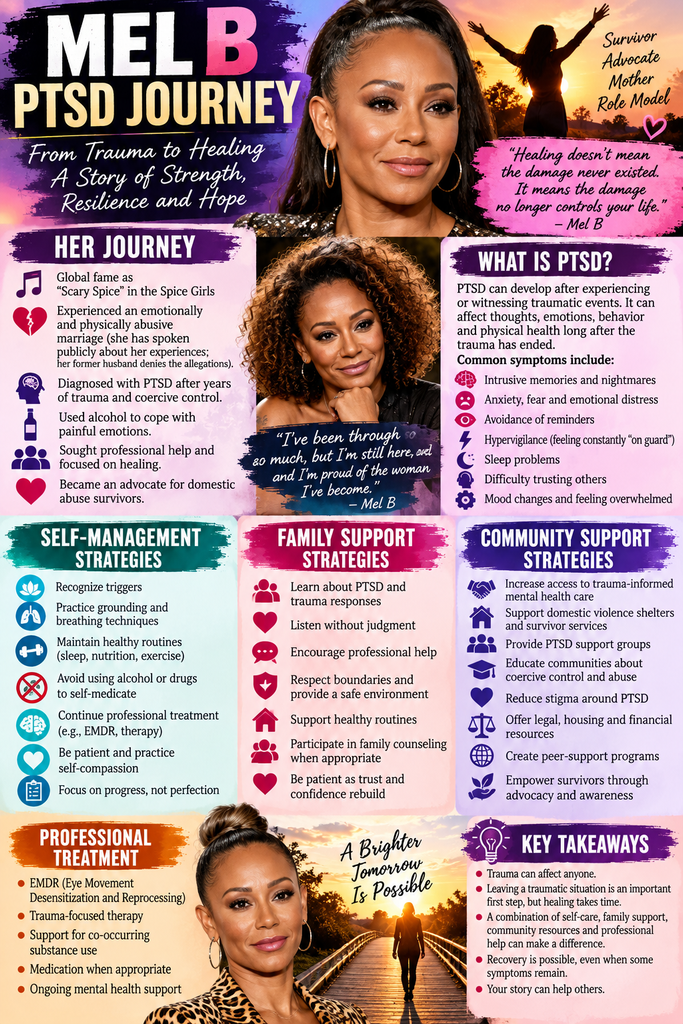
Melanie Brown, better known as Mel B or “Scary Spice” from the Spice Girls, built a public image around confidence, strength, and independence. Behind that image, however, she has spoken openly about experiencing trauma and later being diagnosed with post-traumatic stress disorder (PTSD). Her story provides an opportunity to understand how trauma can affect mental health long after a person has left a distressing situation.
In 2018, Mel B publicly said she had been diagnosed with PTSD after what she described as years of emotional and other forms of abuse during her marriage to Stephen Belafonte. Belafonte has denied allegations of abuse. Mel B has also described grief following her father’s death, prolonged legal battles, isolation, and financial difficulties as part of an extremely stressful period in her life.
Understanding Mel B’s PTSD
PTSD can develop after experiencing or witnessing traumatic events. Symptoms can include intrusive memories, nightmares, avoidance, emotional distress, hypervigilance, difficulty trusting others, sleep problems, and strong reactions to reminders of trauma.
Mel B has described trauma as something that did not simply disappear once she left her marriage. Years afterward, she continued to say that she experienced PTSD and had to learn ways of managing its effects. In a 2023 interview, she stated that she still had PTSD and described recovery from abuse as an ongoing process.
Her experience highlights an important point: being physically removed from a traumatic situation does not necessarily mean its psychological effects immediately disappear.
Trauma and Unhealthy Coping
Mel B has also discussed using alcohol as a way of trying to numb emotional pain. In 2018, while discussing her PTSD diagnosis, she said that revisiting traumatic experiences while writing her memoir Brutally Honest had been extremely difficult and that she had been drinking to cope with painful emotions. She subsequently sought further treatment.
This connection is important because people living with unresolved trauma sometimes turn to alcohol or drugs as a form of self-medication. Although substances may temporarily reduce distress, they can ultimately create additional physical, psychological, and social problems.
Trauma-informed treatment therefore looks beyond the substance or behavior and asks an important question: What pain or experience might the person be trying to cope with?
Seeking Professional Help
One significant part of Mel B’s journey has been her willingness to seek professional mental-health treatment.
She has publicly discussed receiving Eye Movement Desensitization and Reprocessing (EMDR) therapy. In 2018, she said the treatment was helping her process painful traumatic memories. Years later, she continued to describe EMDR as particularly meaningful in her healing process.
Her experience does not mean that one therapy works for everyone. PTSD treatment should be individualized and guided by qualified professionals. What her story demonstrates is the importance of continuing to search for appropriate treatment when trauma continues to interfere with everyday life.
Self-Management Strategies for PTSD
Self-management does not mean treating PTSD alone. Instead, it involves developing everyday strategies that complement professional care and help create greater emotional stability.
Helpful strategies may include:
- Recognizing triggers. Identifying situations, people, sounds, memories, or environments that increase distress can make reactions easier to understand.
- Creating periods of calm. Mel B has spoken about deliberately giving herself quiet “brain breaks” and creating comfortable environments where she can decompress.
- Practicing grounding techniques. Deep breathing, mindfulness, sensory exercises, and focusing on the present moment may help during periods of anxiety.
- Maintaining healthy routines. Regular sleep, nutritious meals, physical activity, and predictable schedules can support overall mental health.
- Avoiding self-medication. Using alcohol or drugs to suppress trauma symptoms can create additional problems.
- Continuing professional treatment. Trauma-focused psychotherapy may help people process traumatic experiences safely.
- Allowing recovery to take time. Healing does not have to follow a specific timetable.
- Practicing self-compassion. Trauma survivors may struggle with guilt or shame that can gradually be addressed through treatment and supportive relationships.
Rebuilding Trust
Another challenge Mel B has discussed is learning to trust again. She has described periods when physical closeness was difficult and said rebuilding trust after leaving the relationship took considerable time.
This demonstrates why trauma recovery involves more than reducing anxiety. A person may also need to rebuild confidence, personal boundaries, independence, relationships, and a sense of safety.
Family Support Strategies
Family relationships can become especially important during trauma recovery. Mel B has spoken about rebuilding relationships with her family and moving closer to relatives in Leeds. She has described her mother, children, and extended family as important parts of her life after leaving the relationship.
Families supporting someone with PTSD can:
- Learn about PTSD and common trauma responses.
- Listen without pressuring the person to describe traumatic experiences.
- Avoid statements such as “just forget about it” or “move on.”
- Encourage professional mental-health treatment.
- Respect personal boundaries and the individual’s need for safety.
- Watch for significant changes in mood, substance use, sleep, or behavior.
- Encourage healthy routines and positive activities.
- Participate in family counseling when appropriate.
- Recognize that family members may also need emotional support.
- Be patient as trust and confidence gradually return.
Family members should remember that support does not mean becoming someone’s therapist. Professional treatment and personal relationships serve different roles.
Community Support Strategies
Mel B eventually transformed part of her personal experience into advocacy. She became involved with Women’s Aid and has spoken publicly about domestic abuse, coercive control, trauma, and the difficulties survivors may face when trying to leave abusive relationships.
Community organizations can support people experiencing trauma by:
- Increasing access to affordable trauma-informed mental-health treatment.
- Providing domestic-violence shelters and confidential support services.
- Offering PTSD and trauma survivor support groups.
- Educating healthcare professionals about trauma-informed care.
- Teaching communities about warning signs of coercive control and abuse.
- Reducing stigma surrounding PTSD and mental-health treatment.
- Providing legal, housing, employment, and financial resources when needed.
- Creating peer-support programs where survivors can connect with people who have had similar experiences.
Community support matters because trauma can leave people feeling isolated. Connection can remind survivors that they do not have to navigate recovery alone.
Turning Personal Experience Into Advocacy
Mel B’s advocacy is another significant part of her journey. She has used interviews, her memoir, public campaigns, and her work with Women’s Aid to raise awareness about domestic abuse.
She has explained that meeting and speaking with other survivors helped her recognize patterns of coercive control that she had previously struggled to understand.
This demonstrates one potential benefit of peer support: hearing another person’s experience can sometimes help survivors better understand their own.
Advocacy can also provide meaning after trauma, although survivors should never feel obligated to publicly disclose their experiences. Healing can be completely private.
PTSD Recovery Is Not About Forgetting
One of the most important lessons from Mel B’s story is that trauma recovery does not necessarily mean erasing painful memories.
She has continued to acknowledge PTSD years after leaving the relationship while also describing progress in rebuilding her family relationships, career, confidence, and personal life.
Recovery can therefore involve learning how to live a meaningful life even when some effects of trauma remain.
Lessons From Mel B’s Journey
Mel B’s experiences highlight several broader lessons about PTSD. Someone can appear confident and successful while privately experiencing serious psychological distress. Leaving a traumatic environment can be an essential step, but emotional recovery may continue for years afterward.
Her journey also demonstrates that coping strategies matter. Alcohol and other forms of avoidance may temporarily suppress emotional pain but can introduce additional problems. Professional therapy, supportive family relationships, healthy boundaries, rest, and connection with other survivors may offer healthier paths to recovery.
Most importantly, seeking treatment should be viewed as an act of self-care rather than weakness.
Conclusion
Mel B’s PTSD journey illustrates the complicated relationship between trauma, coping, relationships, and recovery. She has publicly described experiencing lasting psychological effects from what she says was an abusive relationship, using alcohol to numb emotional pain during a difficult period, receiving a PTSD diagnosis, seeking therapy, and gradually rebuilding her life. Her former husband has denied allegations that he abused her.
Her experience also shows why PTSD recovery often benefits from several levels of support. Self-management can help individuals recognize triggers and develop healthier coping skills. Family support can restore connection and safety. Community resources can provide professional treatment, survivor services, education, and opportunities for peer support.
Healing from trauma does not necessarily mean forgetting what happened. It can mean learning to understand the effects of trauma, developing safer ways to manage difficult emotions, rebuilding trust, and gradually creating a life in which the traumatic experience no longer defines every day.
Frequently Asked Questions
Here are some common questions:
1. Who is Mel B?
Mel B, whose full name is Melanie Brown, is a singer, television personality, author, and former member of the Spice Girls. She became internationally known as “Scary Spice.” In addition to her entertainment career, she has spoken publicly about trauma, PTSD, and domestic abuse.
2. Has Mel B said she has PTSD?
Yes. Mel B publicly disclosed in 2018 that she had been diagnosed with post-traumatic stress disorder (PTSD). She has continued to discuss how trauma has affected her mental health and how recovery has been an ongoing process.
3. What caused Mel B’s PTSD?
Mel B has connected her PTSD to traumatic experiences she says occurred during her former marriage, as well as other difficult experiences in her life. She has described the relationship as abusive and controlling. Her former husband, Stephen Belafonte, has denied allegations that he abused her.
4. What is PTSD?
PTSD is a mental health condition that can develop after experiencing or witnessing traumatic events. Symptoms may include intrusive memories, nightmares, avoidance, anxiety, hypervigilance, sleep disturbances, emotional distress, and changes in mood or thinking.
5. Did Mel B use alcohol to cope with trauma?
Mel B has publicly discussed using alcohol during a particularly difficult period as a way of trying to cope with painful emotions. Her experience illustrates how some trauma survivors may turn to substances as a form of self-medication.
6. Why can alcohol or drugs make PTSD more difficult to manage?
Although substances may temporarily numb distress, they can interfere with sleep, emotional regulation, relationships, judgment, and mental health treatment. Repeated self-medication can also increase the risk of developing a substance use disorder.
7. Did Mel B receive professional treatment for PTSD?
Yes. Mel B has publicly discussed receiving mental health treatment and has specifically spoken about undergoing Eye Movement Desensitization and Reprocessing (EMDR) therapy.
8. What is EMDR therapy?
EMDR is a psychotherapy used to treat PTSD and other trauma-related symptoms. During treatment, a trained therapist helps a person process traumatic memories while using structured bilateral stimulation, such as guided eye movements. It is one of several evidence-based approaches used for PTSD.
9. Does PTSD disappear once someone leaves a traumatic situation?
Not necessarily. Leaving an unsafe environment can be extremely important, but trauma symptoms may continue afterward. Recovery may take time and require safety, professional treatment, supportive relationships, and the development of healthier coping strategies.
10. What self-management strategies can help someone living with PTSD?
Helpful approaches can include identifying triggers, practicing grounding and relaxation techniques, maintaining regular sleep and exercise routines, avoiding alcohol or drugs as coping mechanisms, continuing professional treatment, and developing a plan for managing periods of increased distress.
11. How can families support someone with PTSD?
Families can educate themselves about trauma, listen without judgment, respect boundaries, encourage professional care, provide a stable environment, and remain patient as the person rebuilds trust and confidence. Families may also benefit from counseling or support services themselves.
12. What should family members avoid doing?
Family members should avoid pressuring someone to discuss traumatic experiences, minimizing what happened, blaming the survivor, or telling the person simply to “get over it.” They should also avoid assuming they can replace professional mental health treatment.
13. Why is community support important for trauma survivors?
Community resources can provide trauma-informed mental health services, domestic violence programs, shelters, peer-support groups, legal assistance, housing resources, and education. These services can reduce isolation and help survivors rebuild independence.
14. Has Mel B become an advocate for domestic abuse survivors?
Yes. Mel B has worked with Women’s Aid and has used her public platform to discuss domestic abuse, coercive control, trauma, and survivor support.
15. Can someone with PTSD fully recover?
Many people experience substantial improvement with appropriate treatment and support. Recovery does not necessarily mean forgetting the traumatic experience. It may mean reducing symptoms, developing healthier coping skills, restoring relationships, rebuilding a sense of safety, and living a meaningful life despite what happened.
16. Can PTSD and addiction occur together?
Yes. Trauma-related disorders and substance use disorders can occur together. Some individuals use alcohol or drugs in an attempt to manage nightmares, anxiety, intrusive memories, or emotional pain. When both conditions are present, integrated treatment that addresses trauma and substance use can be especially important.
17. What can we learn from Mel B’s PTSD journey?
Her public story demonstrates that someone can appear confident and successful while experiencing significant psychological distress. It also highlights the potential value of acknowledging trauma, seeking professional treatment, developing healthier coping strategies, reconnecting with supportive people, and allowing recovery to take time.
Video: