Johnny Cash is remembered as one of the most influential figures in American country music, but behind the unmistakable voice and “Man in Black” image was a complicated struggle with substance use. His experience demonstrates how addiction can develop gradually, damage health and relationships, improve with treatment and support, and later return through relapse. Cash wrote candidly about recurring addiction to amphetamines and other drugs, making his story an important example of both the challenges and possibilities of long-term recovery.
How Johnny Cash’s Addiction Developed
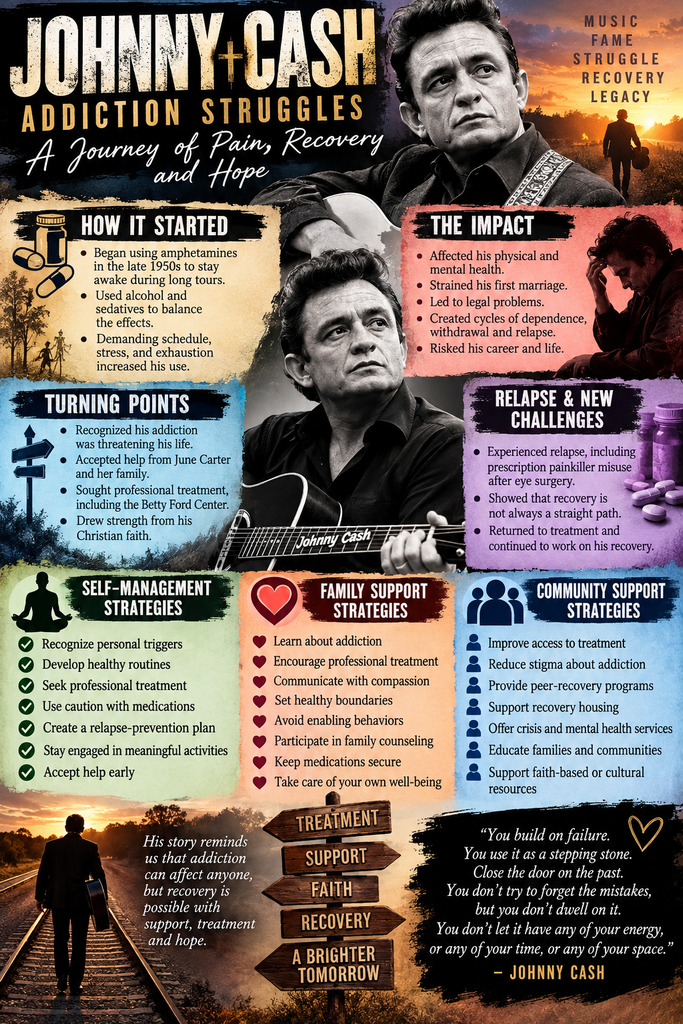
Cash’s problems with drugs emerged during the demanding years of touring and performing. According to biographical accounts, he began taking amphetamines in the late 1950s. The stimulants helped him remain awake and energetic during an exhausting touring schedule, but his use increased over time. He also used alcohol and sedating drugs to counteract the effects of stimulants.
This pattern illustrates a common feature of substance use disorders: a substance may initially appear to solve a problem—fatigue, stress, pain, anxiety, or sleeplessness—but repeated use can create additional physical and psychological problems.
Cash’s substance use eventually affected his health, behavior, career, and personal relationships. His first marriage to Vivian Liberto was strained by numerous issues, including his addiction and life on the road. His addiction also contributed to legal and personal difficulties during the 1960s.
Cash’s story should not be simplified into a dramatic tale in which one person or one moment permanently “cured” his addiction. His own autobiography acknowledged that his liberation from addiction was not permanent. He experienced later periods of problematic drug use, including prescription painkiller misuse following medical treatment.
Recovery Was a Process, Not a Single Event
During one of the darkest periods of his addiction, Cash increasingly recognized that his substance use was threatening his life. His Christian faith became an important part of how he understood recovery. He also accepted help from people around him, particularly June Carter and members of her family.
Cash later described asking June Carter and musician Marshall Grant to help him maintain regular meals and hours and provide companionship during difficult periods.
This is an important lesson from his story: recovery rarely depends on willpower alone.
Recovery may require a combination of personal commitment, family involvement, professional treatment, peer support, lifestyle changes, and—when meaningful to the individual—spiritual support.
Relapse and Prescription Painkillers
Cash’s recovery journey included relapse. After periods of improvement, he again experienced difficulties with mood-altering medications. His autobiography describes a particularly serious period involving prescription painkillers after eye surgery in the early 1980s.
He eventually received structured addiction treatment, including treatment at the Betty Ford Center. Cash later described participating in group therapy, individual counseling, and education about addiction while continuing to draw strength from his faith.
His experience illustrates another important principle of addiction treatment: relapse does not erase previous recovery. Instead, recurrence of substance use can indicate that treatment and recovery strategies need to be reassessed, strengthened, or resumed.
Self-Management Strategies
For someone struggling with addiction, self-management involves recognizing vulnerability and developing behaviors that support recovery. Cash’s life demonstrates why individuals need strategies that extend beyond simply deciding not to use drugs.
Helpful self-management approaches include:
- Recognize personal triggers. Stress, exhaustion, pain, touring, access to medications, and emotional difficulties can increase vulnerability to substance use.
- Develop healthy routines. Regular sleep, nutritious meals, physical activity, and predictable schedules can provide stability.
- Seek professional treatment. Addiction treatment may include counseling, behavioral therapies, medications when appropriate, and structured rehabilitation programs.
- Be cautious with potentially addictive medications. People with a history of substance use disorder should discuss that history with healthcare professionals when receiving treatment for pain or other conditions.
- Create a relapse-prevention plan. Identify warning signs and determine beforehand whom to contact if cravings or substance use returns.
- Maintain meaningful activities. Music, work, volunteering, hobbies, spirituality, and other purposeful activities can become important parts of recovery.
- Accept help early. Waiting until addiction reaches a crisis can make recovery more difficult.
Cash’s willingness to acknowledge that he continued to face vulnerability after periods of sobriety provides an especially useful lesson. Recovery often requires continuing attention rather than assuming the problem has disappeared permanently.
Family Support Strategies
June Carter and other family members played significant roles during Cash’s periods of recovery. Historical accounts describe June and her family helping him through withdrawal and encouraging him to obtain assistance.
However, modern families should understand that supporting someone with addiction does not mean assuming responsibility for curing that person. Withdrawal from some substances can also require medical supervision and should not automatically be attempted at home.
Families can support recovery by:
- Learning about substance use disorders as medical and behavioral health conditions.
- Encouraging professional assessment and evidence-based treatment.
- Communicating concerns calmly and specifically.
- Establishing healthy boundaries around substance use and related behaviors.
- Avoiding giving money or assistance that unintentionally supports continued substance use.
- Participating in family counseling when appropriate.
- Keeping potentially misused medications secure.
- Developing an emergency plan for overdose or other crises.
- Seeking counseling or support groups for themselves.
One of the strongest lessons from Cash’s experience is that compassionate support and accountability can coexist. Families can care deeply about someone while still establishing boundaries and encouraging treatment.
Community Support Strategies
Recovery does not occur only within an individual or family. Communities can influence whether people receive treatment or remain isolated by stigma.
Communities can help by improving access to addiction treatment, mental health services, peer-recovery programs, recovery housing, crisis services, and family education. Healthcare professionals can also help by screening for substance use disorders and discussing medication risks with patients who have histories of addiction.
Faith communities were particularly important to Cash because Christianity was central to his personal understanding of recovery. For other individuals, similar support may come from secular recovery groups, cultural organizations, peer networks, community centers, or other sources of connection. The key is to match support to the person’s beliefs and needs rather than assuming one approach works for everyone.
What Johnny Cash’s Journey Can Teach Us
Johnny Cash’s story challenges the idea that addiction happens only to people who lack talent, success, family, or determination. At the height of his fame, he could perform for thousands of people while simultaneously struggling privately with substance dependence.
His experience also demonstrates that recovery does not always follow a straight path. Cash experienced periods of sobriety, relapse, treatment, renewed recovery, and continued personal growth. He openly acknowledged these struggles rather than presenting recovery as effortless or permanent.
Conclusion
Johnny Cash’s addiction journey was filled with extraordinary professional success alongside serious personal struggles. Amphetamines and other substances became intertwined with the pressures of touring and performing, and later prescription painkillers contributed to renewed difficulties. Yet his life also demonstrates the importance of accepting help.
Personal commitment mattered, but so did family support, professional treatment, counseling, meaningful relationships, and the spiritual faith that was important to Cash himself.
Perhaps the most valuable lesson from Johnny Cash’s story is that recovery should not be measured by perfection. Substance use disorders can be chronic and recurring, and setbacks may require renewed treatment rather than shame or abandonment.
For individuals and families affected by addiction today, the goal is not simply to stop substance use. Long-term recovery involves rebuilding health, relationships, purpose, stability, and connection—one decision and one day at a time.
Frequently Asked Questions
Here are some common questions:
1. Did Johnny Cash struggle with addiction?
Yes. Johnny Cash publicly discussed significant problems with substance use, particularly amphetamines and other prescription drugs. His struggles occurred at different periods throughout his life and affected his health, relationships, and career.
2. What drugs did Johnny Cash use?
Cash became particularly associated with misuse of amphetamines and barbiturates. He also drank alcohol. Later in life, he experienced renewed problems involving prescription pain medications after receiving medical treatment.
3. Why did Johnny Cash start using amphetamines?
Cash described using stimulants during the demanding early years of his career. Amphetamines helped him stay awake and energetic through long periods of touring and performing. What may initially have seemed useful eventually developed into harmful substance use.
4. How did addiction affect Johnny Cash’s life?
His substance use contributed to physical and emotional difficulties, unpredictable behavior, damaged relationships, professional problems, and encounters with law enforcement. Addiction became intertwined with some of the most difficult periods of his life.
5. Did addiction affect Johnny Cash’s first marriage?
Substance use was among several serious problems affecting Cash’s marriage to Vivian Liberto. His extensive touring, absences, infidelity, fame, and drug use all contributed to turmoil in their relationship.
6. Did June Carter help Johnny Cash recover?
June Carter was an important source of support, as were members of her family and other people close to Cash. However, it is more accurate to view his recovery as involving Cash’s own efforts, along with family support, professional treatment, lifestyle changes, and his religious faith, rather than crediting one person with “saving” him.
7. Did Johnny Cash go to addiction treatment?
Yes. Cash received professional treatment during his life, including treatment at the Betty Ford Center in the 1980s after developing renewed problems with prescription medications.
8. Did Johnny Cash ever relapse?
Yes. His recovery was not a perfectly straight path. Cash experienced periods of improvement followed by renewed substance-related problems. His experience illustrates how substance use disorders can involve recurrence and why continuing recovery support can be important.
9. What role did faith play in Johnny Cash’s recovery?
Christianity was central to Cash’s life, and he often described his faith as a major source of meaning, strength, and direction. Spirituality became one component of his recovery alongside relationships and professional help.
10. What self-management strategies can we learn from his experience?
Cash’s story highlights the value of recognizing triggers, maintaining healthy routines, seeking treatment early, developing coping strategies, being cautious with potentially addictive medications, and asking for help when warning signs appear.
11. How can families support someone struggling with addiction?
Families can educate themselves about substance use disorders, communicate compassionately, encourage professional treatment, establish appropriate boundaries, avoid enabling harmful behaviors, participate in family counseling, and seek support for their own well-being.
12. Why is community support important in addiction recovery?
Recovery is easier when people can access treatment, mental health services, peer-support programs, recovery communities, stable housing, and supportive social relationships. Reducing stigma can also make it easier for people to seek help before their substance use reaches a crisis.
13. Does relapse mean addiction treatment has failed?
Not necessarily. A recurrence of substance use can indicate that treatment or the recovery plan needs to be resumed, modified, or intensified. It should be taken seriously, but it does not erase earlier progress.
14. What is the biggest lesson from Johnny Cash’s addiction journey?
His life demonstrates that success and talent do not protect someone from addiction. It also shows that recovery can involve setbacks and renewed efforts. Treatment, supportive relationships, personal responsibility, meaningful activities, and continued recovery support can all contribute to improvement.
15. Why is Johnny Cash’s story still relevant today?
His experience helps challenge the stereotype that addiction represents a simple lack of willpower. Substance use disorders can affect people from every background, and long-term recovery often requires a combination of individual effort, family and community support, and appropriate professional care.
Video: