Addiction is a complex medical condition that affects brain function, behavior, physical health, and emotional well-being. For individuals struggling with opioid or alcohol use disorders, overcoming addiction may involve intense cravings, withdrawal symptoms, repeated returns to substance use, and difficulties maintaining recovery.
Medication-assisted treatment (MAT), increasingly called medications for addiction treatment, combines FDA-approved medications with counseling, behavioral therapies, and supportive services when appropriate. These medications can reduce cravings, relieve withdrawal symptoms, and improve treatment outcomes.
Despite strong scientific evidence supporting its effectiveness, MAT still faces misconceptions and stigma. Some people mistakenly believe that using medication means replacing one addiction with another or that recovery only counts when someone stops taking every medication.
In reality, medication treatment is an evidence-based approach that can reduce overdose deaths, improve treatment retention, and help people regain stability in their lives.
Understanding the benefits of MAT, along with self-management, family involvement, and community support strategies, can help individuals make informed decisions about their recovery.
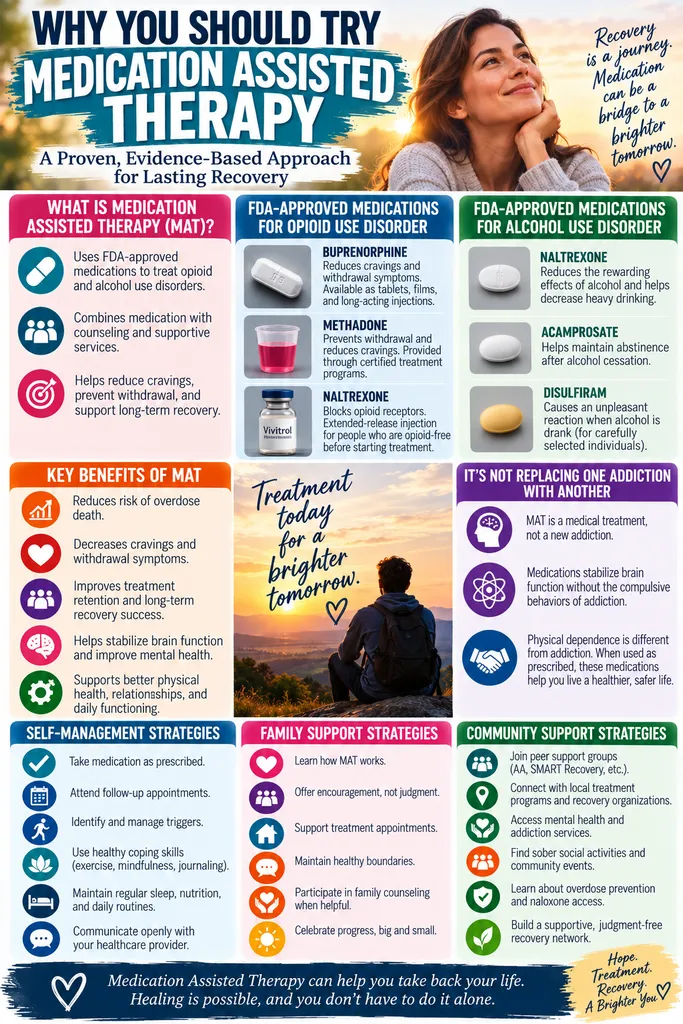
What Is Medication-Assisted Treatment?
Medication-assisted treatment uses medications to address substance use disorders, particularly opioid use disorder (OUD) and alcohol use disorder (AUD).
For opioid use disorder, medications can reduce withdrawal symptoms, cravings, and the effects of illicit opioids. For alcohol use disorder, medications may help reduce heavy drinking or support abstinence.
Although counseling and recovery support can be valuable, they should not be mandatory barriers to receiving medication for opioid use disorder.
Primary goals of medication treatment
- Reduce cravings and withdrawal symptoms.
- Decrease the risk of overdose and other substance-related harms.
- Improve participation and retention in treatment.
- Support physical and emotional stability.
- Reduce repeated cycles of withdrawal and substance use.
- Help individuals rebuild relationships, employment, and daily routines.
- Support long-term recovery according to individual goals.
Medication treatment is not a cure for addiction, but it can be a highly effective component of ongoing care.
FDA-Approved Medications for Opioid Use Disorder
Buprenorphine
Buprenorphine is a partial opioid agonist that reduces cravings and withdrawal symptoms. It is available as sublingual tablets, films, and long-acting injections.
When taken as prescribed, it can stabilize opioid dependence while reducing the risk of illicit opioid use.

Methadone
Methadone is a full opioid agonist that prevents withdrawal and reduces cravings. For OUD treatment in the United States, it is generally dispensed through certified opioid treatment programs.
Methadone can be particularly beneficial for people with high opioid tolerance or those who have not responded adequately to other treatments.

Naltrexone
Naltrexone is an opioid antagonist that blocks opioid receptors. Extended-release injectable naltrexone is an option for appropriately selected individuals who have completed opioid withdrawal.
Because patients must be opioid-free before starting it, treatment initiation can be more difficult than with buprenorphine or methadone.
Important: Buprenorphine and methadone have particularly strong evidence for reducing opioid-related mortality. Naltrexone is another effective option for selected patients, but it may not produce the same outcomes for everyone.
FDA-Approved Medications for Alcohol Use Disorder
Medication treatment is also available for individuals struggling with alcohol use disorder.
Common medications
- Naltrexone: Reduces alcohol’s rewarding effects and may decrease heavy drinking.
- Acamprosate: Helps support abstinence after alcohol cessation.
- Disulfiram: Produces an unpleasant reaction when alcohol is consumed, making it an option for carefully selected and motivated patients.
These medications work differently, and treatment selection depends on factors such as liver function, kidney function, current opioid use, treatment goals, and patient preferences.
A healthcare professional can help determine the most appropriate medication.
Why Medication Treatment Can Be Life-Saving
Opioid addiction changes brain systems involved in reward, stress, and physical dependence.
Repeated opioid exposure can produce tolerance and withdrawal symptoms, making it difficult to stop using without medical assistance.
Medication treatment helps stabilize these physiological processes.
Evidence-based benefits
- Lower overdose mortality: Methadone and buprenorphine treatment are associated with substantial reductions in opioid-related deaths.
- Reduced illicit opioid use: Effective medication treatment can decrease nonprescribed opioid consumption.
- Improved treatment retention: Patients receiving appropriate medication are often more likely to remain engaged in care.
- Reduced withdrawal symptoms: Medication can make treatment initiation and stabilization more manageable.
- Improved daily functioning: Reduced cravings and withdrawal may allow greater focus on family, work, education, and health.
- Reduced infectious disease risks: Decreased injection drug use can reduce exposure to HIV and hepatitis C.
These benefits make medication treatment an important option for people with opioid use disorder.
MAT Is Not Simply Replacing One Addiction With Another
One of the most persistent misconceptions about medication treatment is that using methadone or buprenorphine means substituting one addiction for another.
This belief confuses physical dependence with addiction.
Physical dependence occurs when the body adapts to repeated exposure to a medication. Addiction involves compulsive substance use despite harmful consequences and impaired control.
A person may develop physical dependence on prescribed medication without exhibiting addictive behaviors.
Understanding the difference
- Physical dependence: The body adapts to a substance, and withdrawal may occur if it is abruptly discontinued.
- Tolerance: The body’s response may change, requiring dose adjustments, although tolerance does not always develop uniformly.
- Addiction: A pattern of compulsive substance use involving impaired control and continued use despite significant harm.
- Therapeutic medication use: Taking medication as prescribed to treat a diagnosed condition and improve functioning.
Using medication appropriately to treat opioid use disorder is legitimate medical care.
Recovery should be measured by improved health, safety, functioning, and quality of life—not by whether someone takes an evidence-based medication.
Self-Management Strategies: Taking an Active Role in MAT Recovery
Medication treatment works best when individuals understand their treatment plans and actively participate in health decisions.
Self-management includes taking medication as prescribed, recognizing triggers, communicating with clinicians, and building healthy daily routines.
Practical self-management strategies
- Take medication as prescribed: Avoid changing doses or stopping medication without medical guidance.
- Attend follow-up appointments: Regular monitoring helps assess effectiveness, side effects, and changing treatment needs.
- Recognize triggers: Identify situations, emotions, or relationships that increase the risk of substance use.
- Develop coping skills: Use mindfulness, exercise, journaling, or counseling to manage stress.
- Maintain healthy routines: Prioritize sleep, nutrition, physical activity, and meaningful daily activities.
- Communicate openly: Report cravings, withdrawal symptoms, side effects, or continued substance use.
- Keep naloxone available: Individuals at risk of opioid overdose and their families should know how to administer it.
- Avoid dangerous medication combinations: Discuss alcohol, benzodiazepines, sedatives, and other substances with the prescribing clinician.
- Create a relapse-response plan: Identify support contacts and steps to take if substance use recurs.
- Participate in shared decision-making: Discuss treatment goals, preferences, and medication options with healthcare professionals.
Medication adherence is important, but treatment should remain flexible and responsive to individual needs.
Family Support Strategies: Helping Loved Ones Understand MAT
Family involvement can improve engagement in treatment and emotional well-being.
However, misconceptions about medication treatment may create conflict or discourage individuals from continuing effective care.
Some relatives believe recovery requires complete abstinence from all medications, including those prescribed for opioid use disorder.
Education can help families understand why medications such as buprenorphine and methadone may be necessary for long-term stability.
Ways families can support MAT recovery
- Learn how medications work: Understand the purpose, benefits, and limitations of prescribed treatments.
- Avoid stigmatizing language: Do not describe appropriate medication treatment as simply replacing one drug with another.
- Encourage treatment consistency: Support appointments and access to medication without becoming controlling.
- Recognize progress: Celebrate improved functioning, healthier relationships, and reduced substance-related harm.
- Maintain healthy boundaries: Offer support while protecting family members’ emotional and physical well-being.
- Participate in family counseling: Address communication difficulties and rebuild trust when appropriate.
- Learn overdose prevention: Keep naloxone accessible and understand emergency response procedures.
- Respect privacy: Allow individuals to make informed decisions about sharing their treatment information.
- Support long-term care: Understand that medication treatment may continue for months, years, or indefinitely.
Families should recognize that there is no universal timeline for medication discontinuation.
Community Support Strategies: Improving Access to Treatment
Medication treatment works best when people can access appropriate care without unnecessary delays or stigma.
Unfortunately, many communities still face barriers such as limited treatment availability, transportation difficulties, insurance restrictions, and shortages of qualified providers.
Community organizations, healthcare systems, and public health agencies can help reduce these barriers.
Community-based support strategies
- Expand access to medications: Improve availability of buprenorphine, methadone, and naltrexone.
- Integrate treatment into primary care: Allow patients to receive addiction care alongside other healthcare services.
- Support opioid treatment programs: Improve access to methadone and comprehensive addiction services.
- Provide peer recovery support: Connect individuals with trained peers and recovery community organizations.
- Increase naloxone availability: Promote overdose-prevention education and emergency-response training.
- Reduce treatment stigma: Educate employers, healthcare workers, and communities about evidence-based medications.
- Improve transportation and telehealth access: Reduce barriers for individuals living in underserved areas.
- Offer recovery housing: Provide safe and supportive living environments that do not discriminate against appropriate medication treatment.
- Coordinate mental health services: Address co-occurring psychiatric conditions alongside addiction treatment.
Community support can help individuals remain connected to treatment and build stable recovery environments.
How Long Should Someone Stay on Medication-Assisted Treatment?
No universal timeline exists for medication treatment. Some individuals benefit from several months of care, while others require treatment for years or indefinitely.
The appropriate duration depends on the type of substance use disorder, treatment response, overdose risk, personal preferences, and clinical circumstances.
For opioid use disorder, stopping methadone or buprenorphine can increase the risk of returning to opioid use and experiencing an overdose, particularly after tolerance decreases.
Factors that influence treatment duration
- Severity and history of substance use disorder.
- Previous overdoses or returns to substance use.
- Stability of housing, employment, and relationships.
- Co-occurring medical and mental health conditions.
- Medication effectiveness and side effects.
- Patient preferences and long-term recovery goals.
Medication discontinuation should be a shared clinical decision, not a requirement imposed by family members, employers, or recovery programs.
Common Myths About Medication-Assisted Treatment
| Myth | Medical reality |
|---|---|
| MAT replaces one addiction with another. | Appropriate medication treatment can stabilize opioid use disorder without the compulsive behaviors that characterize addiction. |
| Medication is a shortcut to recovery. | Medication is an evidence-based treatment, not a shortcut. |
| Everyone must eventually stop medication. | Long-term or indefinite treatment may be appropriate. |
| Counseling is required before medication can begin. | Counseling can help, but it should not delay medication treatment for OUD. |
| MAT is only for severe addiction. | Treatment is individualized according to diagnosis, risks, and clinical needs. |
| Relapse means medication treatment failed. | A return to substance use signals a need to reassess and potentially modify treatment. |
When Should Someone Consider Medication-Assisted Treatment?
Medication treatment should be discussed with a qualified healthcare professional when someone has opioid use disorder or alcohol use disorder, particularly when cravings, withdrawal symptoms, or repeated attempts to stop have made recovery difficult.
Signs that a medication evaluation may be beneficial
- Repeated unsuccessful attempts to stop using opioids or alcohol.
- Strong cravings that interfere with daily functioning.
- Withdrawal symptoms when substance use stops.
- Previous opioid overdose.
- Returning to substance use after detoxification.
- Continued substance use despite medical, family, or occupational consequences.
- Difficulty maintaining recovery through counseling or peer support alone.
Individuals do not need to experience a severe crisis before seeking treatment.
What to Expect When Starting MAT
The treatment process begins with a comprehensive medical assessment.
A healthcare professional reviews substance use history, medical conditions, current medications, withdrawal risk, and personal treatment goals.
Typical treatment process
- Initial assessment: Evaluate the substance use disorder and overall health.
- Medication selection: Discuss appropriate options, benefits, risks, and patient preferences.
- Treatment initiation: Begin medication using a clinically appropriate protocol.
- Monitoring: Assess cravings, withdrawal symptoms, side effects, and response.
- Supportive services: Offer counseling, peer support, and social services according to individual needs.
- Long-term follow-up: Adjust treatment and develop a continuing recovery plan.
For opioid use disorder, starting buprenorphine requires careful attention to withdrawal and recent opioid exposure to avoid precipitated withdrawal. Methadone initiation requires appropriate monitoring because of accumulation and overdose risks.
Qualified professionals should individualize treatment and provide supervision.
Why MAT Can Improve Long-Term Recovery
Medication treatment addresses biological components of addiction that motivation and willpower alone may not overcome.
When cravings and withdrawal symptoms become manageable, individuals may find it easier to focus on rebuilding their lives.
Potential long-term benefits
- Reduced opioid-related overdose risk.
- Greater treatment stability.
- Improved ability to maintain employment and education.
- More consistent participation in family responsibilities.
- Reduced involvement in dangerous substance-related activities.
- Improved opportunities to address co-occurring mental health conditions.
- Greater capacity to develop supportive relationships.
- Improved quality of life.
Medication treatment does not guarantee recovery, but it can substantially improve the likelihood of positive outcomes.
Conclusion: Medication Can Be a Powerful Tool for Recovery
Medication-assisted treatment offers an evidence-based approach for individuals living with opioid or alcohol use disorders. By reducing cravings, managing withdrawal symptoms, and supporting physiological stability, appropriate medications can help people participate more fully in recovery.
For opioid use disorder, methadone and buprenorphine are particularly important because of their demonstrated benefits in reducing overdose mortality.
Self-management encourages individuals to follow treatment plans, recognize triggers, maintain healthy routines, and communicate openly with healthcare professionals.
Family support provides encouragement, education, understanding, and emotional stability without stigmatizing prescribed medications.
Community support improves access to treatment, peer recovery services, overdose prevention, and long-term care.
Medication-assisted treatment is not the right choice for every person or every substance use disorder. However, for those who may benefit, consider it without shame or unnecessary barriers.
Recovery is not about proving that you can overcome addiction without help. It is about finding safe, effective treatment that allows you to reclaim your health, relationships, and future.
Helpful Resources
- SAMHSA — Substance Use Treatment — Information about evidence-based addiction treatment.
- National Institute on Drug Abuse — Medications for Opioid Use Disorder — Research on medication effectiveness.
- FindTreatment.gov — Locate addiction treatment services.
- SAMHSA National Helpline — 1-800-662-HELP (4357).
Frequently Asked Questions and Answers
Understanding Medication-Assisted Treatment
1. What is medication-assisted treatment (MAT)?
Medication-assisted treatment is an evidence-based medical approach that uses FDA-approved medications to treat certain substance use disorders, particularly opioid and alcohol use disorders.
Medication may be combined with counseling, behavioral therapies, and recovery support services according to individual needs.
For opioid use disorder, medication should not be delayed or withheld simply because counseling is unavailable or a patient declines it.
2. Why should someone consider medication-assisted treatment?
MAT can help reduce cravings, manage withdrawal symptoms, decrease substance use, and improve treatment engagement.
For opioid use disorder, methadone and buprenorphine are particularly important because research demonstrates substantial reductions in overdose-related mortality during treatment.
Medication can help individuals achieve greater stability while addressing other aspects of recovery.
3. What medications are used to treat opioid addiction?
Three FDA-approved medications are available for opioid use disorder:
- Buprenorphine: A partial opioid agonist that reduces cravings and withdrawal symptoms.
- Methadone: A full opioid agonist that reduces withdrawal symptoms and helps stabilize opioid dependence.
- Naltrexone: An opioid antagonist that blocks opioid receptors and prevents the effects of opioids.
These medications work differently, and treatment selection depends on medical history, opioid exposure, patient preferences, and clinical needs.
4. What medications are available for alcohol addiction?
Three commonly used FDA-approved medications for alcohol use disorder include:
- Naltrexone: Helps reduce heavy drinking and alcohol’s rewarding effects.
- Acamprosate: Supports abstinence after alcohol cessation.
- Disulfiram: Produces an unpleasant reaction when alcohol is consumed.
A healthcare professional should evaluate liver function, kidney function, current medications, and treatment goals before selecting medication.
5. Is medication-assisted treatment replacing one addiction with another?
No. Appropriate medication treatment should not be confused with addiction.
Physical dependence can occur with prescribed medications, but addiction involves compulsive substance use despite harmful consequences.
When taken as prescribed, methadone and buprenorphine can stabilize opioid use disorder, reduce illicit opioid use, and improve functioning.
6. Does medication-assisted treatment really save lives?
Yes. Research consistently shows that treatment with methadone or buprenorphine is associated with substantially lower opioid-related mortality.
These medications reduce withdrawal symptoms and cravings, making it easier for individuals to remain engaged in treatment and avoid dangerous illicit opioid exposure.
Not every medication has the same evidence for reducing mortality, so treatment decisions should be individualized.
7. Is medication-assisted treatment considered real recovery?
Absolutely. Recovery is not defined by whether someone takes prescribed medication.
Recovery involves improving health, reducing substance-related harm, strengthening relationships, and building a meaningful, stable life.
Using evidence-based medication is a legitimate form of medical treatment.
8. Is MAT only for people with severe addiction?
No. Medication treatment may be appropriate for individuals with varying levels of substance use disorder severity.
Clinical assessment considers the diagnosis, symptoms, previous treatment experiences, medical risks, and patient preferences.
Early intervention may help prevent worsening substance-related complications.
Treatment, Safety, and Effectiveness
9. How long should someone stay on medication-assisted treatment?
Treatment duration varies considerably.
Some individuals benefit from shorter treatment periods, while others require medication for years or indefinitely.
For opioid use disorder, there is no predetermined maximum duration for methadone or buprenorphine treatment.
Stopping medication should involve shared decision-making because discontinuation can increase the risk of returning to opioid use and overdose.
10. Can someone become physically dependent on MAT medications?
Yes. Physical dependence may develop with medications such as methadone and buprenorphine.
However, physical dependence is not the same as addiction.
A person taking prescribed medication may experience withdrawal if treatment stops abruptly without exhibiting compulsive drug-seeking behavior.
11. What are the possible side effects of medication-assisted treatment?
Side effects depend on the medication and may include:
- Nausea or constipation.
- Headache or dizziness.
- Sleep disturbances.
- Sweating or fatigue.
- Sedation, particularly during opioid medication initiation or with interacting substances.
- Medication-specific liver, cardiac, or other health concerns.
Patients should report concerning symptoms to their healthcare professional rather than changing doses independently.
12. Is MAT safe during pregnancy?
Methadone and buprenorphine are recommended treatments for opioid use disorder during pregnancy.
They are generally preferred over medically supervised withdrawal because withdrawal alone is associated with a high risk of returning to opioid use.
Pregnant patients should receive coordinated prenatal and addiction care. Neonatal opioid withdrawal syndrome may occur after birth, but this possibility does not outweigh the benefits of appropriate maternal treatment.
13. Can medication-assisted treatment be combined with counseling?
Yes. Counseling can help individuals address emotional triggers, trauma, relationship difficulties, and unhealthy coping behaviors.
Cognitive behavioral therapy, motivational interviewing, family counseling, and peer recovery support may complement medication treatment.
However, medication for opioid use disorder remains beneficial even when counseling is not available.
14. Can someone relapse while receiving MAT?
Yes. A return to substance use can occur during medication treatment.
This does not automatically mean the medication has failed.
Healthcare professionals may reassess dosage, adherence, ongoing cravings, co-occurring conditions, and the need for additional services.
Adjust treatment based on the individual’s clinical needs.
15. Is detoxification alone enough to treat opioid addiction?
Usually not.
Detoxification manages the acute symptoms of withdrawal but does not address the ongoing biological and behavioral components of opioid use disorder.
Individuals who complete detoxification without continuing treatment face an increased risk of returning to opioid use and overdose, particularly after tolerance decreases.
16. Can MAT medications interact with other substances?
Yes. Combining methadone or buprenorphine with alcohol, benzodiazepines, or other sedating medications can increase the risk of respiratory depression and overdose.
However, the FDA advises that buprenorphine or methadone should not automatically be withheld from individuals taking benzodiazepines. Instead, clinicians should manage the risks carefully.
Patients should disclose all medications and substances they use.
17. What happens if someone suddenly stops taking MAT medication?
Abruptly stopping methadone or buprenorphine may cause opioid withdrawal symptoms and increase the risk of returning to opioid use.
Stopping naltrexone removes opioid receptor blockade, and individuals may have reduced opioid tolerance, increasing overdose risk if opioid use resumes.
Discuss medication changes with the prescribing clinician.
Self-Management Strategies
18. What self-management strategies improve MAT treatment outcomes?
Individuals can strengthen treatment participation by:
- Taking medication as prescribed.
- Attending follow-up appointments.
- Monitoring cravings and withdrawal symptoms.
- Recognizing emotional and environmental triggers.
- Maintaining consistent sleep and nutrition.
- Practicing stress-management techniques.
- Avoiding dangerous medication combinations.
- Keeping naloxone available when opioid overdose is a concern.
- Communicating openly with healthcare professionals.
Self-management supports recovery but does not replace medical care.
19. Can exercise and healthy habits improve recovery during MAT?
Yes. Regular physical activity, adequate sleep, balanced nutrition, and stress-management practices can improve general health and emotional well-being.
These activities may support participation in treatment and reduce stress-related triggers.
However, healthy habits should complement, rather than replace, prescribed medication treatment.
20. How can someone manage cravings while receiving MAT?
Craving-management strategies include identifying triggers, practicing mindfulness, contacting supportive individuals, and participating in meaningful activities.
Persistent cravings may indicate that the medication dose, adherence, or other treatment factors need reassessment.
Patients should discuss ongoing cravings with their healthcare professional rather than attempting to manage them alone.
Family Support Strategies
21. How can families support someone receiving medication-assisted treatment?
Family members can provide encouragement, education, and practical assistance.
Helpful strategies include:
- Learning how addiction medications work.
- Respecting prescribed treatment.
- Avoiding stigmatizing language.
- Encouraging medical appointments.
- Supporting healthy routines.
- Maintaining appropriate boundaries.
- Participating in family counseling when beneficial.
- Learning overdose recognition and naloxone administration.
Family support should encourage independence and dignity.
22. What if family members believe MAT is replacing one addiction with another?
Education can help address this misconception.
Families should understand that appropriately prescribed medication treats a medical condition and can significantly reduce the risk of overdose.
Comparing addiction medication with treatments for other chronic conditions may help relatives recognize why continued medication can be medically appropriate.
23. Should families encourage someone to stop MAT after becoming stable?
Not necessarily.
Stability may indicate that medication is working effectively, not that it is no longer needed.
Families should avoid pressuring individuals to discontinue treatment. Medication duration should be determined collaboratively by the patient and healthcare professional.
24. How can families rebuild trust during medication-assisted recovery?
Rebuilding trust often requires time, consistent behavior, and open communication.
Families can establish realistic expectations, acknowledge progress, maintain healthy boundaries, and participate in counseling when appropriate.
Recovery is a process, and trust may improve gradually as relationships become more stable.
Community Support Strategies
25. What community resources support people receiving MAT?
Helpful community resources include:
- Opioid treatment programs.
- Primary care and addiction medicine clinics.
- Outpatient counseling services.
- SMART Recovery and other peer support groups.
- Recovery community organizations.
- Mental health treatment providers.
- Naloxone distribution programs.
- Recovery housing that supports prescribed medications.
- Transportation and social service assistance.
These resources can improve access to treatment and reduce isolation.
26. Can someone participate in Alcoholics Anonymous or Narcotics Anonymous while receiving MAT?
Yes. Individuals receiving medication treatment can participate in mutual-help groups.
However, attitudes toward prescribed addiction medications may vary among individual groups and members.
People should seek supportive meetings that respect medically appropriate treatment and avoid pressuring participants to discontinue prescribed medication.
27. Does health insurance cover medication-assisted treatment?
Many private insurance plans, Medicaid programs, and Medicare cover medications for substance use disorders.
Coverage varies by plan, medication, provider, and treatment setting.
Patients should verify coverage, copayments, prior authorization requirements, and available financial assistance.
28. Where can someone find medication-assisted treatment?
Individuals can begin by contacting a primary care clinician, addiction medicine specialist, opioid treatment program, or community health center.
The federal treatment locator, FindTreatment.gov, can help identify substance use treatment services.
The SAMHSA National Helpline also provides treatment information and referrals.
29. What should someone ask before starting MAT?
Important questions include:
- Which medication is most appropriate for my condition?
- What benefits and side effects should I expect?
- How will my other medications affect treatment?
- How often will I need follow-up appointments?
- What should I do if cravings continue?
- How long might medication treatment be necessary?
- What happens if I miss a dose?
- What counseling or peer support services are available?
- How will we measure treatment progress?
Shared decision-making helps ensure treatment aligns with individual needs and goals.
30. What is the most important reason to consider medication-assisted treatment?
The most important reason is that effective medication treatment can improve health, support recovery, and, in the case of methadone and buprenorphine for opioid use disorder, significantly reduce the risk of overdose death.
Recovery does not have to depend on willpower alone. Medical treatment can address the physiological components of addiction while individuals work toward improved relationships, emotional well-being, and long-term stability.
Video: This Could Be the Missing Piece in Your Recovery #addiction #recovery