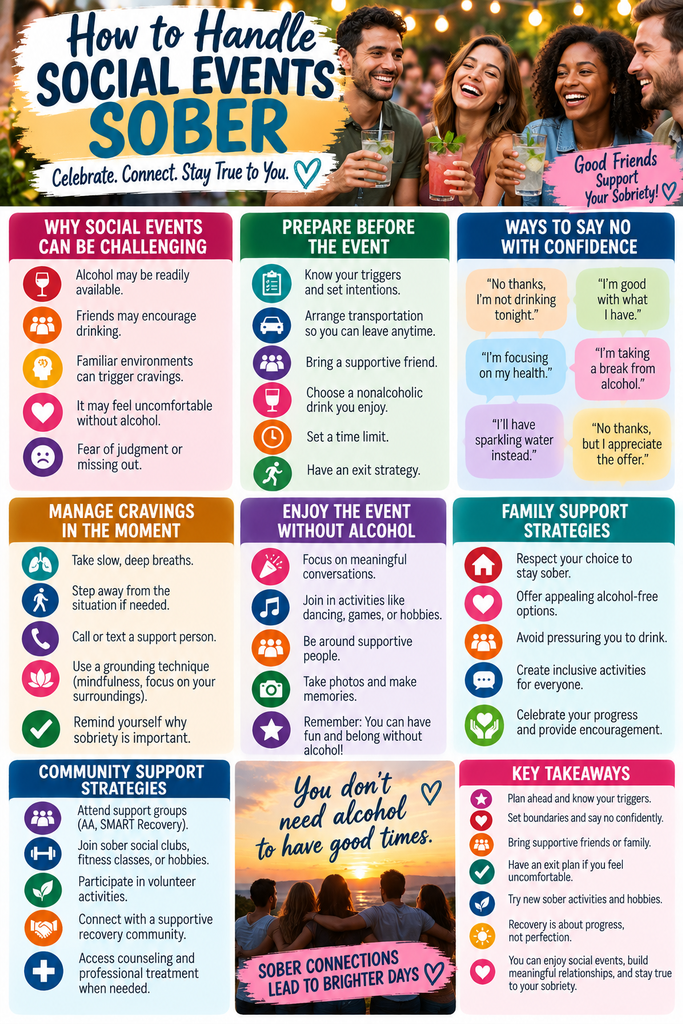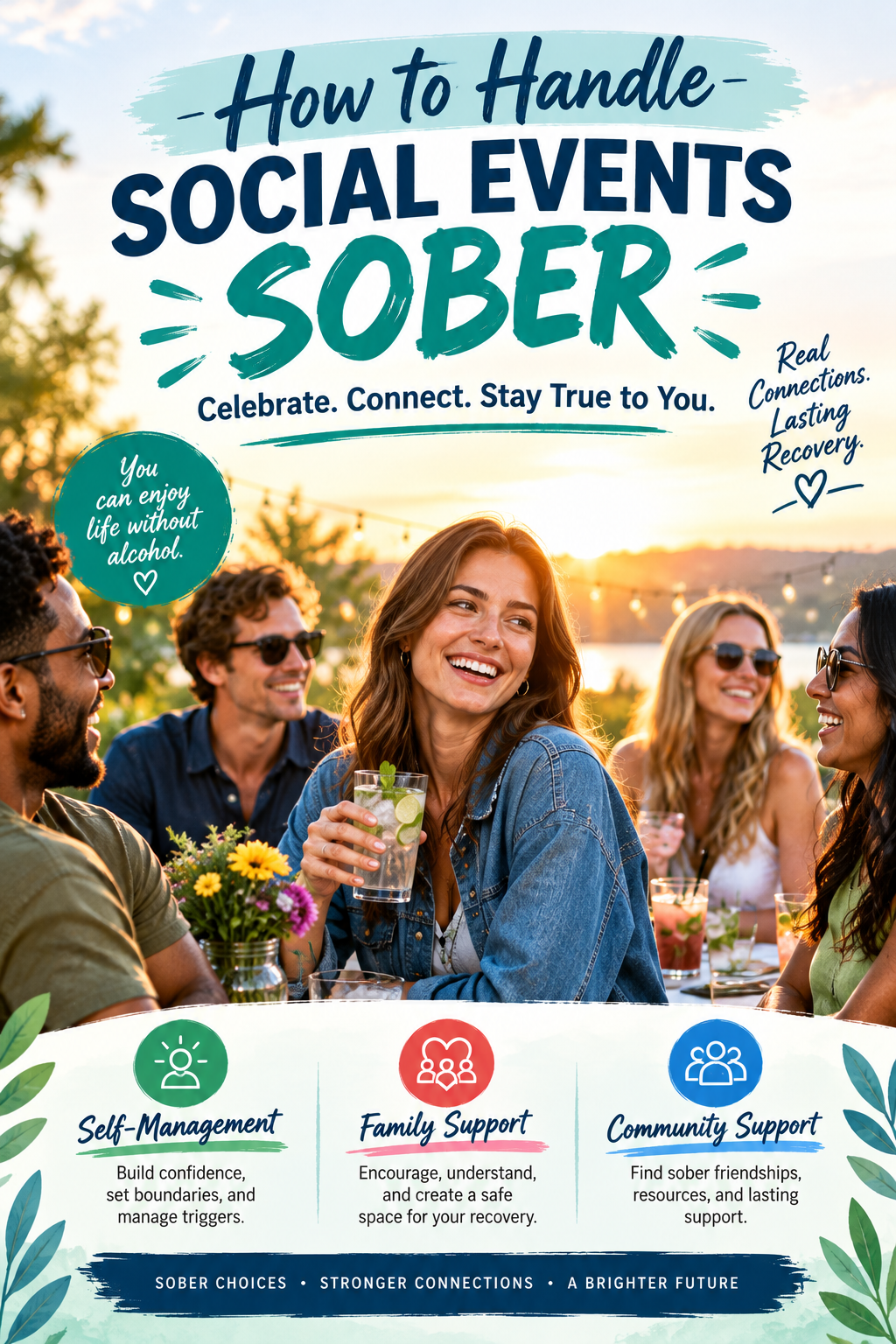
Social events often bring celebration, laughter, friendship, and connection. However, for individuals recovering from alcohol or substance use disorders, attending parties, weddings, holidays, family gatherings, or work functions can present unique challenges. Alcohol may be readily available, friends may encourage drinking, and familiar environments can trigger cravings or uncomfortable emotions.
Learning how to handle social events sober is an important part of building a sustainable recovery lifestyle. Sobriety does not mean giving up meaningful relationships or avoiding every celebration. Instead, it means building confidence, setting healthy boundaries, recognizing triggers, and creating strategies that protect recovery while still allowing people to enjoy social connections.
With effective self-management, understanding family members, and supportive community resources, people in recovery can learn to navigate social situations without compromising their progress.
Why Social Events Can Be Challenging During Recovery
For many people, drinking or substance use was previously connected to socializing, relaxation, celebrations, or managing uncomfortable feelings.
When someone stops using substances, familiar social situations may feel unfamiliar or emotionally overwhelming.
A person who once relied on alcohol to feel confident at parties may experience anxiety when attending the same events sober.
Common challenges at social gatherings
- Social pressure: Friends or acquaintances may encourage drinking.
- Environmental triggers: Seeing alcohol or returning to familiar drinking locations can increase cravings.
- Social anxiety: Individuals may feel uncomfortable interacting without substances.
- Fear of judgment: People may worry about questions concerning their sobriety.
- Emotional triggers: Stress, loneliness, embarrassment, or family conflict may increase vulnerability.
- Old habits: Familiar routines may automatically trigger thoughts about drinking.
- Fear of missing out: Individuals may believe celebrations will be less enjoyable without alcohol.
Recognizing these challenges allows people to prepare rather than react impulsively.
Understanding Social Triggers and Cravings
A trigger is a situation, emotion, person, place, or memory associated with previous substance use.
Triggers do not always lead to relapse, but they may increase cravings, especially during early recovery.
For example, attending a wedding where alcohol is served may remind someone of past celebrations involving heavy drinking.
Similarly, spending time with friends who continue to use substances may create pressure to return to familiar behaviors.
Common social triggers
- Bars, nightclubs, and alcohol-centered gatherings.
- Friends who regularly drink or use drugs.
- Celebrations associated with previous substance use.
- Family conflicts or emotionally stressful conversations.
- Feeling excluded or socially uncomfortable.
- Being offered alcohol unexpectedly.
- Staying at events longer than originally planned.
Understanding personal triggers helps individuals choose safer environments and develop practical coping strategies.
Self-Management Strategies: Preparing Before a Social Event
Preparation is one of the most effective ways to reduce anxiety and strengthen confidence before attending social gatherings.
Rather than relying entirely on willpower, individuals can create a clear plan for managing triggers, declining substances, and leaving situations that feel unsafe.
Practical self-management strategies
- Evaluate your readiness: Consider whether the event presents manageable or unnecessary risks to recovery.
- Set clear intentions: Remind yourself why sobriety matters.
- Identify potential triggers: Think about the people, locations, and situations that could increase cravings.
- Arrange transportation: Drive yourself or arrange another reliable way to get there.
- Bring a sober friend: Attend with someone who understands and respects your recovery.
- Choose a nonalcoholic beverage: Keep water, soda, or another preferred alcohol-free drink available.
- Set a time limit: Decide how long you plan to stay.
- Prepare an exit strategy: Give yourself permission to leave without guilt.
- Contact a support person: Arrange to call or text someone if cravings become difficult to manage.
A recovery plan should prioritize safety and flexibility rather than pressure to attend every event.
Learning How to Say No Without Feeling Guilty
One of the most common challenges during sober socializing is declining alcohol or other substances.
Some people may feel obligated to explain their sobriety, particularly when friends or relatives ask personal questions.
However, individuals have the right to decline alcohol without revealing their recovery history.
Simple ways to decline alcohol
- “No thanks, I’m not drinking tonight.”
- “I’m good with what I have.”
- “I’m taking a break from alcohol.”
- “I’ll have sparkling water instead.”
- “I’m focusing on my health.”
- “No thanks, but I appreciate the offer.”
These responses are respectful, confident, and do not require further explanation.
If someone repeatedly pressures you to drink, it may be necessary to establish firmer boundaries or leave the situation.
Protecting sobriety matters more than meeting another person’s expectations.
Managing Social Anxiety Without Alcohol
Some individuals previously relied on alcohol to reduce nervousness, feel more outgoing, or become comfortable in social settings.
Without alcohol, conversations and unfamiliar environments may initially feel challenging.
However, social confidence can improve through practice and healthier coping strategies.
Strategies for managing social anxiety
- Practice slow breathing before entering an event.
- Arrive with a trusted friend or family member.
- Start conversations with people you already know.
- Focus on listening rather than trying to impress others.
- Take short breaks in quiet areas when overwhelmed.
- Practice mindfulness to remain grounded in the present.
- Attend smaller gatherings before larger celebrations.
- Seek counseling when social anxiety interferes with daily life.
Cognitive behavioral therapy (CBT) can help individuals challenge unhelpful thoughts and develop healthier responses to social anxiety.
Family Support Strategies: Creating a Recovery-Friendly Environment
Family members play an important role in helping loved ones feel comfortable and included during celebrations.
A supportive family environment recognizes that sobriety may require adjustments to traditions, social activities, and expectations.
For example, a family hosting a holiday dinner can offer appealing nonalcoholic beverages and avoid pressuring guests to drink.
How families can support sober socializing
- Respect personal choices: Avoid questioning or criticizing someone for not drinking.
- Provide alcohol-free options: Offer mocktails, sparkling water, tea, and other beverages.
- Avoid unnecessary pressure: Never insist that someone drink to celebrate or participate.
- Plan substance-free activities: Include games, outdoor activities, shared meals, or creative experiences.
- Recognize potential triggers: Consider whether certain environments may be uncomfortable.
- Support healthy boundaries: Understand when a loved one needs to leave early.
- Communicate privately: Ask how you can help without drawing unwanted attention.
- Celebrate recovery progress: Recognize meaningful achievements without making sobriety the center of every gathering.
Family support should encourage independence, confidence, and emotional safety.
Community Support Strategies: Building a Sober Social Network
Recovery becomes more sustainable when individuals have access to supportive relationships and meaningful activities that do not revolve around substance use.
Community resources can help people develop new friendships, explore hobbies, and participate in social events without alcohol or drugs.
Community-based support strategies
- Alcoholics Anonymous (AA): Offers peer support and sober fellowship.
- SMART Recovery: Provides mutual support and practical coping strategies.
- Recovery community organizations: May organize sober celebrations, outings, and recreational events.
- Community recreation centers: Offer sports, fitness classes, and group activities.
- Volunteer organizations: Provide opportunities to connect with others through meaningful service.
- Faith-based groups: May offer substance-free gatherings and social support.
- Sober social clubs: Create opportunities for alcohol-free entertainment and friendship.
- Outpatient counseling programs: Help individuals develop relapse-prevention and social coping skills.
Building a supportive community reduces isolation and creates opportunities to experience enjoyment without substances.
Attending Weddings, Holidays, and Special Celebrations Sober
Weddings, holidays, birthdays, and other celebrations often involve alcohol.
For individuals in recovery, these events may require additional planning because of social expectations, emotional memories, and prolonged exposure to drinking.
Strategies for specific occasions
Weddings: Consider attending the ceremony but leaving before the reception if alcohol-centered activities create unnecessary risk. Sit with supportive guests and keep a nonalcoholic beverage available.
Holiday gatherings: Discuss alcohol-free options with the host, establish a time limit, and prepare for potentially stressful family conversations.
Birthday parties: Choose celebrations centered on meals, games, outdoor activities, or entertainment rather than drinking.
Work events: Maintain professional boundaries, decline alcohol confidently, and leave when the event becomes uncomfortable.
Family reunions: Identify trusted relatives who can support you, and avoid conversations that may cause emotional distress.
You don’t have to attend an event that threatens recovery or emotional well-being.
What to Do When Cravings Occur at a Social Event
Cravings can occur unexpectedly, even after extended periods of sobriety.
Experiencing a craving does not mean someone has failed or that relapse is inevitable.
The key is to recognize the craving and use effective coping strategies.
Immediate strategies for managing cravings
- Recognize the craving: Acknowledge the urge without judging yourself.
- Pause before acting: Take several slow breaths and let the intensity change.
- Change your environment: Move away from the bar, drinking area, or triggering conversation.
- Contact a support person: Call a sponsor, counselor, trusted friend, or family member.
- Use grounding techniques: Focus on your surroundings, breathing, or physical sensations.
- Leave if necessary: Prioritize recovery over remaining at the gathering.
Cravings often fluctuate in intensity and can become more manageable with appropriate coping skills.
Building Confidence Through Sober Social Experiences
Confidence develops gradually through repeated experiences.
The first alcohol-free wedding, holiday, or birthday celebration may feel uncomfortable. Over time, individuals may discover that they can enjoy meaningful interactions without substances.
Ways to strengthen sober confidence
- Begin with smaller, lower-risk gatherings.
- Celebrate successful experiences without alcohol.
- Reflect on strategies that worked well.
- Develop friendships with people who respect sobriety.
- Explore new hobbies and recreational interests.
- Practice assertive communication.
- Recognize that leaving an uncomfortable situation is a healthy decision.
Every successful sober experience can help reinforce confidence and strengthen recovery skills.
When Avoiding a Social Event Is the Healthiest Choice
Not every gathering suits every stage of recovery.
During early recovery, individuals may benefit from avoiding environments strongly associated with previous substance use.
Choosing not to attend an event is not necessarily a sign of weakness or social failure.
Situations when declining an invitation may be appropriate
- The gathering centers primarily on heavy drinking or drug use.
- People attending have repeatedly pressured you to use substances.
- You are experiencing strong cravings or emotional distress.
- You lack reliable transportation or an exit plan.
- The event involves unresolved conflicts or potentially unsafe relationships.
- Your treatment team recommends avoiding the environment.
Protecting recovery may mean temporarily changing social routines while you build healthier coping skills.
Developing a Personalized Sober Socializing Plan
A written plan can help individuals prepare for challenging situations and respond more effectively to unexpected triggers.
Example sober event plan
| Situation | Recovery strategy |
|---|---|
| Someone offers alcohol | Politely decline and request a nonalcoholic drink |
| Friends pressure you to drink | Repeat your boundary and change conversations |
| Cravings increase | Contact a support person and move to a safer area |
| Social anxiety develops | Practice breathing exercises or take a short break |
| The event becomes uncomfortable | Leave using prearranged transportation |
| After the gathering | Reflect on the experience and connect with supportive people |
A counselor, sponsor, or other trusted recovery professional can help you develop a personalized plan.
Recognizing Progress and Celebrating Sober Milestones
Sober socializing is a skill that develops with time, practice, and encouragement.
Attending a celebration without drinking, confidently declining alcohol, or recognizing when to leave an uncomfortable situation can represent meaningful progress.
Healthy ways to celebrate recovery achievements
- Plan an enjoyable alcohol-free outing.
- Share progress with trusted friends or family members.
- Record accomplishments in a recovery journal.
- Participate in a meaningful hobby.
- Celebrate with a favorite meal or recreational activity.
- Recognize personal growth without comparing your recovery with others.
Recovery is not measured only by the number of events attended. It also shows up in healthier decisions, improved relationships, and greater emotional confidence.
Important Lessons About Socializing Sober
Learning to participate in social events without substances can help individuals build a healthier, more fulfilling lifestyle.
The most important lessons include:
- Preparation reduces uncertainty: Planning ahead helps individuals manage predictable triggers.
- Boundaries protect recovery: No one is obligated to drink or explain their sobriety.
- Supportive relationships matter: Trusted friends and family members can provide encouragement.
- Community connection reduces isolation: Substance-free activities create opportunities for meaningful relationships.
- Cravings can be managed: Recognizing urges and using coping strategies can reduce relapse risk.
- Leaving is always an option: Personal safety and recovery come before social expectations.
- Confidence develops through practice: Positive experiences can gradually strengthen sober social skills.
Conclusion: Enjoying Life Without Compromising Sobriety
Handling social events sober is an important step toward a balanced, sustainable recovery lifestyle.
Although celebrations, family gatherings, and social activities may initially feel challenging, individuals can develop confidence through preparation, healthy boundaries, and supportive relationships.
Self-management helps individuals recognize triggers, manage cravings, and make informed decisions about attending social events.
Family support creates welcoming environments where sobriety is respected, and alcohol-free participation is encouraged.
Community support provides opportunities for sober friendships, recreational activities, and continued recovery education.
Most importantly, sobriety does not require giving up happiness, friendship, or meaningful celebrations. It means finding healthier ways to connect with others while protecting your well-being.
You do not need alcohol to belong, celebrate, or enjoy life. The strongest social connections are built on respect, authenticity, and shared experiences—not substances.
Frequently Useful Recovery Resources
- Alcoholics Anonymous (AA) — Peer support and recovery meetings.
- SMART Recovery — Evidence-informed recovery tools and support groups.
- FindTreatment.gov — Find substance use treatment services.
- SAMHSA National Helpline — 1-800-662-HELP (4357), for confidential treatment referrals.
Frequently Asked Questions and Answers
Understanding Sober Socializing
1. Why are social events challenging for people in recovery?
Social gatherings often involve alcohol, familiar drinking environments, and interactions with people who may not understand sobriety. These situations can trigger cravings, anxiety, or memories associated with previous substance use. Planning ahead helps individuals manage these challenges more effectively.
2. Can you still enjoy parties and celebrations without alcohol?
Absolutely. Enjoyment comes from meaningful conversations, laughter, music, food, dancing, and shared experiences. Many people find that sober socializing helps them stay more present, remember conversations, and build healthier relationships.
3. Should someone in early recovery avoid social events where alcohol is served?
It depends on the individual’s recovery stability, personal triggers, and support system. During early recovery, avoiding alcohol-centered gatherings may be beneficial, particularly when cravings are frequent or difficult to manage.
Discussing potentially challenging events with an addiction counselor or treatment professional can help determine whether attendance is appropriate.
4. How can someone prepare for a social event while maintaining sobriety?
Preparation can include:
- Identifying possible triggers.
- Bringing a supportive friend.
- Arranging independent transportation.
- Choosing alcohol-free beverages.
- Establishing a time limit.
- Preparing responses when offered alcohol.
- Having an exit plan if the environment becomes uncomfortable.
Planning reduces uncertainty and provides practical ways to respond to unexpected situations.
5. What should you say when someone offers you alcohol?
Simple, confident responses are usually effective:
- “No thanks, I’m not drinking tonight.”
- “I’m good with sparkling water.”
- “I’m taking a break from alcohol.”
- “I’m focusing on my health.”
- “No thanks, but I appreciate the offer.”
You do not have to disclose your recovery history or explain your decision.
6. What if friends pressure you to drink?
Politely repeat your decision and establish a clear boundary. If someone keeps pressuring you, consider changing the conversation, spending time with supportive guests, or leaving the event.
Healthy friendships respect personal choices and do not require substance use for acceptance.
7. How can you manage social anxiety without alcohol?
You can manage social anxiety with relaxation techniques, slow breathing, mindfulness, and gradual exposure to comfortable social situations.
Attending smaller gatherings, bringing a trusted friend, and practicing conversation skills may help build confidence. Cognitive behavioral therapy can also be beneficial for persistent social anxiety.
8. What should you do if you experience cravings during a party?
Recognize the craving without judging yourself. Move away from triggering situations, practice slow breathing, and contact a trusted support person.
If cravings become intense, leaving the gathering may be the safest choice.
Cravings do not automatically lead to relapse, and seeking support demonstrates effective recovery management.
Self-Management and Relapse Prevention
9. Is it okay to leave a social event early to protect sobriety?
Yes. Leaving early is a healthy boundary when an environment becomes uncomfortable or increases relapse risk.
You are not obligated to remain at an event simply to avoid disappointing others. Your health and recovery should remain priorities.
10. How can someone avoid feeling left out when everyone else is drinking?
Focus on alcohol-free activities that encourage participation, such as dancing, games, conversations, and shared meals.
Spending time with supportive friends and choosing gatherings that are not centered on drinking can also reduce feelings of exclusion.
11. Are nonalcoholic beers and mocktails safe for people in recovery?
Mocktails made entirely without alcohol can be enjoyable alternatives.
However, some nonalcoholic beers, wines, and spirits contain small amounts of alcohol. Additionally, the taste, smell, or appearance of alcoholic beverages may trigger cravings for some individuals.
Choosing clearly labeled 0.0% beverages or other alcohol-free options may be preferable, depending on personal recovery needs.
12. How can someone handle weddings sober?
Consider attending with a supportive companion, choosing a nonalcoholic beverage, and sitting away from areas where heavy drinking occurs.
You can participate in the ceremony, enjoy the meal, and leave before late-night drinking activities if necessary.
13. What are the best ways to handle holiday gatherings sober?
Holiday celebrations may involve emotional memories, family conflict, and drinking traditions.
Helpful strategies include setting time limits, preparing for difficult conversations, arranging transportation, and identifying supportive relatives.
Hosting or attending alcohol-free celebrations may also reduce unnecessary stress.
14. How can someone celebrate birthdays without alcohol?
Alcohol-free birthday celebrations can include:
- Dinner at a favorite restaurant.
- Outdoor adventures or hiking.
- Game nights or movie nights.
- Spa days or wellness activities.
- Concerts or sporting events.
- Creative workshops or hobby classes.
- Small gatherings with supportive friends.
Focus on enjoyment, connection, and meaningful experiences.
15. What is a sober exit plan?
A sober exit plan is a predetermined strategy for leaving an event if cravings, pressure, or emotional discomfort increase.
It may include having your own transportation, setting a departure time, identifying a trusted contact, and preparing a simple explanation for leaving.
An exit plan reduces the pressure to remain in a potentially triggering environment.
16. What if someone accidentally drinks alcohol at a social event?
If alcohol is consumed unintentionally, stop drinking once the mistake is recognized. Move away from the situation and contact a trusted support person if needed.
An accidental sip does not automatically mean someone has experienced a relapse. What matters is responding safely and avoiding additional consumption.
Individuals taking medications that interact with alcohol should seek medical advice when appropriate.
17. What if someone intentionally drinks after a period of sobriety?
A return to drinking should be taken seriously, but it does not erase previous recovery progress.
The person can stop further drinking, seek support, identify contributing triggers, and contact their treatment provider to reassess their recovery plan.
If there are signs of severe intoxication, overdose, or other medical emergencies, immediate medical assistance is necessary.
Family and Community Support
18. How can family members support someone attending social events sober?
Families can help by:
- Respecting the individual’s decision not to drink.
- Providing appealing alcohol-free beverages.
- Avoiding jokes or criticism about sobriety.
- Planning inclusive activities.
- Supporting early departures when necessary.
- Encouraging honest conversations.
- Recognizing recovery achievements without creating pressure.
Family support should promote independence and emotional safety.
19. Should family members remove alcohol from gatherings?
For some individuals, especially during early recovery, an alcohol-free environment can reduce cravings and provide reassurance.
Families should discuss preferences privately rather than making assumptions. The most appropriate approach depends on the person’s recovery needs and the nature of the gathering.
20. How can friends support someone who chooses sobriety?
Supportive friends respect boundaries, avoid repeatedly offering alcohol, and include sober people in social activities.
They can also suggest alcohol-free outings, provide encouragement, and offer transportation or companionship when needed.
Friendship should never depend on whether someone drinks.
21. What community resources help people build sober friendships?
Recovery-focused communities offer opportunities to develop supportive relationships through:
- Alcoholics Anonymous (AA).
- SMART Recovery.
- Recovery community centers.
- Sober recreational groups.
- Volunteer organizations.
- Fitness and wellness programs.
- Faith-based recovery groups.
- Local alcohol-free social events.
These activities can reduce isolation and help individuals establish meaningful connections.
22. How can support groups help with social anxiety and relapse prevention?
Support groups provide opportunities to discuss triggers, learn coping strategies, and receive encouragement from others with similar experiences.
Members may share practical advice about attending weddings, declining alcohol, handling family pressure, and navigating uncomfortable situations.
Peer support can complement professional treatment.
23. How can someone build confidence when socializing sober?
Confidence often develops through repeated positive experiences.
Begin with smaller gatherings, practice declining alcohol, and spend time with people who respect recovery.
Reflecting on successful experiences can help reinforce healthy behaviors and reduce anxiety about future events.
24. What are signs that a social environment may threaten sobriety?
Potential warning signs include:
- Repeated pressure to drink or use drugs.
- Strong cravings that are difficult to manage.
- Feeling emotionally overwhelmed or unsafe.
- Being surrounded by people associated with previous substance use.
- Lack of reliable transportation.
- Increasing discomfort or difficulty maintaining boundaries.
Recognizing these signs early helps people make safer decisions.
25. What is the most important lesson about handling social events sober?
The most important lesson is that sobriety and social connection can coexist.
Maintaining recovery involves recognizing personal limits, setting healthy boundaries, preparing for challenges, and surrounding yourself with supportive people.
Successful sober socializing isn’t about proving you can tolerate every environment. It is about making choices that support long-term health, confidence, and meaningful relationships.
Video: