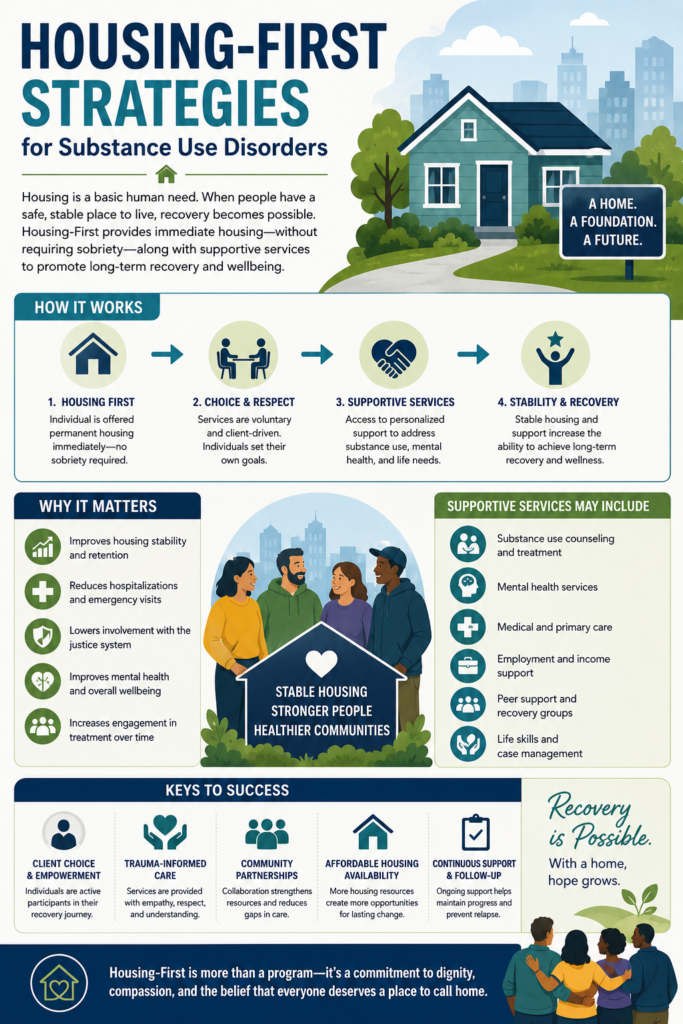
Housing-First is an evidence-based approach that has become increasingly valuable in supporting people with substance use disorders (SUDs) who are experiencing homelessness or unstable housing. Unlike traditional treatment models that often require individuals to achieve sobriety before qualifying for permanent housing, the Housing-First approach provides safe, stable housing as the first step in recovery. Once housing is secured, individuals are offered voluntary supportive services such as addiction treatment, mental health counseling, medical care, and case management. This model recognizes that people are more likely to engage in recovery when their basic needs are met. By providing a stable living environment, Housing-First programs reduce the daily stress of homelessness, improve physical and mental health, and create opportunities for individuals to focus on long-term recovery, rebuild relationships, and regain independence.
Housing-First Strategies for Substance Use Disorders
For many individuals struggling with substance use disorders (SUDs), recovery is often made more difficult by homelessness or unstable housing. Traditional treatment approaches have frequently required sobriety before a person can qualify for housing assistance. However, the Housing-First model challenges this idea by prioritizing safe, stable housing as the foundation for recovery rather than as a reward for abstinence.
Housing-First strategies recognize that recovery is difficult when people are focused on survival. Without a secure place to live, maintaining treatment appointments, finding employment, managing mental health, or avoiding relapse becomes significantly harder. By providing immediate access to housing without requiring sobriety first, Housing-First programs aim to create stability that can support long-term recovery and wellbeing.
What Is the Housing-First Approach?
The Housing-First approach is a service model that places individuals experiencing homelessness into permanent housing as quickly as possible while also offering supportive services such as:
- Substance use counseling
- Mental health treatment
- Medical care
- Employment assistance
- Peer support programs
- Case management
Unlike traditional models, Housing-First does not require individuals to complete detoxification, maintain sobriety, or participate in treatment before receiving housing. Instead, participation in supportive services is encouraged but generally voluntary.
The philosophy behind the approach is simple: housing is a basic human need, not something that must be earned. Once individuals have stable housing, they are often better able to address the underlying causes of addiction and mental health challenges.
Why Housing Stability Matters in Recovery
Substance use disorders are influenced by multiple social, psychological, and environmental factors. Housing instability can worsen many of these issues by increasing stress, trauma exposure, and social isolation.
People experiencing homelessness may face:
- Increased risk of relapse
- Limited access to healthcare
- Greater exposure to violence and trauma
- Difficulty storing medications safely
- Poor nutrition and sleep deprivation
- Reduced access to social support systems
Stable housing can reduce these barriers and provide individuals with a safer environment where recovery becomes more realistic and sustainable.
Research has shown that Housing-First programs are associated with:
- Reduced emergency room visits
- Lower hospitalization rates
- Increased housing retention
- Improved mental health outcomes
- Reduced involvement with the criminal justice system
Although sobriety may not occur immediately for every participant, long-term stability often improves the likelihood of recovery engagement over time.
Addressing Criticism of Housing-First Programs
Some critics argue that providing housing without sobriety requirements may enable continued substance use. However, supporters of the model emphasize that forcing abstinence before housing can exclude individuals who need support the most.
Housing-First programs are not designed to ignore addiction; rather, they approach addiction through a harm-reduction framework. Harm reduction focuses on minimizing the negative consequences of substance use while supporting individuals in making healthier choices over time.
This approach recognizes recovery as a gradual process rather than a single event. Individuals may experience setbacks, relapse, or periods of ambivalence, but stable housing can still provide the structure needed to continue moving toward recovery.
The Role of Integrated Support Services
Housing alone is not always enough to address substance use disorders. Effective Housing-First programs typically combine stable housing with comprehensive support services tailored to individual needs.
Integrated services may include:
- Trauma-informed therapy
- Cognitive-behavioral interventions
- Medication-assisted treatment (MAT)
- Recovery coaching
- Life skills training
- Family counseling
Programs that combine housing with strong community support often produce better long-term outcomes because they address both the addiction itself and the social conditions contributing to it.
Conclusion
Housing-First strategies represent a shift in how society approaches substance use disorders and homelessness. Rather than viewing housing as something people must earn after recovery, the model treats housing as a foundation that makes recovery possible.
While Housing-First is not a cure for addiction, it offers individuals stability, dignity, and access to supportive services that can improve recovery outcomes over time. By addressing basic human needs first, these programs help create an environment where healing and long-term recovery are more achievable.
Self-Management Strategies in Housing-First Recovery for Substance Use Disorders
Recovery from substance use disorders (SUDs) involves more than achieving sobriety. For many individuals, long-term recovery also requires stability, structure, and the ability to manage daily challenges effectively. Housing-First programs have become an important strategy in supporting people with SUDs by providing immediate access to stable housing without requiring abstinence beforehand. However, stable housing alone is not always enough to sustain recovery.
Self-management strategies play a critical role in helping individuals maintain stability, improve decision-making, and build healthier lifestyles within Housing-First environments. These strategies encourage individuals to take an active role in their recovery by developing coping skills, emotional awareness, and a sense of personal responsibility while receiving supportive services.
Understanding the Housing-First Model
The Housing-First approach prioritizes immediate access to permanent housing for individuals experiencing homelessness and substance use challenges. Unlike traditional treatment models that require sobriety before housing placement, Housing-First programs focus on reducing barriers and promoting stability first.
Once housed, individuals are connected with optional support services such as:
- Addiction counseling
- Mental health treatment
- Medical care
- Employment assistance
- Peer recovery support
- Case management
The goal is to create a safe and stable environment where individuals can begin addressing deeper emotional, behavioral, and social issues associated with addiction.
The Importance of Self-Management in Recovery
Self-management refers to a person’s ability to regulate behaviors, emotions, and daily responsibilities in ways that support long-term wellbeing. In addiction recovery, self-management strategies help individuals navigate cravings, stress, relationships, and triggers without returning to substance use.
Within Housing-First settings, self-management is especially important because residents are often transitioning from unstable or traumatic living conditions to independent housing. Learning how to maintain routines and make healthy decisions can strengthen both housing stability and recovery outcomes.
Key benefits of self-management include:
- Increased emotional regulation
- Improved coping skills
- Greater independence
- Reduced relapse risk
- Better physical and mental health
- Enhanced confidence and self-efficacy
Effective Self-Management Strategies
1. Developing Daily Routines
Consistent routines help create structure and predictability, which are important during recovery. Individuals in Housing-First programs may benefit from establishing routines related to:
- Sleep schedules
- Meal preparation
- Medication management
- Therapy appointments
- Exercise and self-care
Structured routines can reduce stress and provide a sense of control that supports recovery stability.
2. Identifying Triggers and Coping Skills
Understanding personal triggers is a major component of relapse prevention. Triggers may include stress, loneliness, trauma reminders, or exposure to substance use environments.
Self-management strategies often involve:
- Journaling emotions and behaviors
- Practicing mindfulness techniques
- Using grounding exercises during cravings
- Creating relapse prevention plans
- Learning healthy communication skills
These coping strategies allow individuals to respond to challenges in healthier ways rather than turning to substances.
3. Building Social Support Networks
Isolation can increase vulnerability to relapse. Housing-First programs often encourage residents to develop supportive relationships through:
- Peer recovery groups
- Community activities
- Supportive friendships
- Family counseling
- Mentorship programs
Positive social connections provide encouragement, accountability, and emotional support throughout recovery.
4. Goal Setting and Personal Accountability
Recovery is often more sustainable when individuals set realistic and meaningful goals. Self-management encourages residents to identify both short-term and long-term objectives, such as:
- Maintaining housing stability
- Seeking employment or education
- Improving physical health
- Rebuilding family relationships
- Achieving financial independence
Tracking progress toward these goals can strengthen motivation and confidence over time.
Challenges to Self-Management in Housing-First Programs
Although self-management strategies can be highly effective, individuals may still face barriers that complicate recovery, including:
- Co-occurring mental health disorders
- Trauma histories
- Limited social support
- Financial stress
- Ongoing substance cravings
For this reason, Housing-First programs work best when self-management strategies are combined with professional support services and trauma-informed care. Recovery is rarely a linear process, and setbacks should be viewed as opportunities for continued learning and growth rather than personal failure.
Conclusion
Housing-First strategies have transformed the way communities address homelessness and substance use disorders by recognizing that stable housing is a basic foundation for recovery. However, long-term success often depends on an individual’s ability to manage emotions, behaviors, and daily responsibilities effectively.
Self-management strategies empower individuals to take an active role in their recovery while building independence, resilience, and confidence. When combined with stable housing and supportive services, these strategies can help individuals move beyond survival and toward lasting recovery and improved quality of life.
Family Support Strategies in Housing-First Recovery for Substance Use Disorders
Substance use disorders (SUDs) affect not only individuals but also families and communities. Addiction can strain relationships, create emotional distress, and contribute to housing instability and homelessness. In response to these challenges, Housing-First programs have emerged as an effective approach that prioritizes stable housing before requiring sobriety or participation in treatment.
While safe housing provides an important foundation for recovery, family support strategies can significantly strengthen long-term recovery outcomes. Families often serve as emotional anchors, sources of encouragement, and support systems that help individuals maintain stability during the recovery process. When combined with Housing-First interventions, healthy family involvement can improve both housing retention and recovery success.
Understanding the Housing-First Approach
The Housing-First model is based on the belief that housing is a basic human need. Instead of requiring individuals to achieve sobriety before receiving assistance, Housing-First programs provide immediate access to permanent housing along with optional supportive services such as:
- Substance use counseling
- Mental health treatment
- Case management
- Employment support
- Medical care
- Peer recovery programs
This approach reduces the stress and instability associated with homelessness, creating an environment where individuals can begin addressing addiction and other personal challenges more effectively.
The Role of Family in Recovery
Families can play a powerful role in addiction recovery by offering emotional, practical, and social support. Positive family involvement may help individuals feel less isolated and more motivated to maintain progress.
Supportive families can assist with:
- Encouraging treatment participation
- Providing emotional reassurance
- Helping rebuild self-esteem
- Promoting accountability
- Assisting with childcare or transportation
- Reinforcing healthy coping behaviors
Research shows that individuals recovering from substance use disorders often experience better outcomes when they have strong and stable social support systems. Family relationships can become a protective factor against relapse and housing instability when healthy communication and boundaries are established.
Family Support Strategies in Housing-First Programs
1. Encouraging Open Communication
Addiction can damage trust and communication within families. Housing-First recovery programs may encourage family members to practice honest, respectful communication to gradually rebuild relationships.
Healthy communication strategies include:
- Active listening
- Avoiding blame or judgment
- Expressing feelings calmly
- Discussing concerns openly
- Celebrating progress and achievements
Creating a safe emotional environment allows individuals in recovery to feel supported rather than criticized.
2. Participating in Family Counseling
Family counseling can help address unresolved conflict, trauma, and unhealthy relationship patterns connected to addiction. Therapy sessions may educate families about:
- The nature of substance use disorders
- Relapse prevention strategies
- Codependency and enabling behaviors
- Healthy boundary setting
- Emotional coping skills
Family therapy can improve understanding while helping both individuals and relatives heal from the effects of addiction.
3. Supporting Stability Without Enabling
One challenge families often face is balancing support with accountability. Supportive behaviors encourage recovery, while enabling behaviors unintentionally allow substance use to continue without consequences.
Healthy support may involve:
- Encouraging treatment attendance
- Offering emotional support
- Assisting with practical needs when appropriate
- Respecting personal boundaries
Enabling behaviors may include:
- Providing money for substances
- Ignoring destructive behavior
- Taking responsibility for the individual’s actions
- Avoiding difficult conversations about addiction
Housing-First programs often educate families about this distinction to promote healthier recovery environments.
4. Promoting Social Connection and Community
Recovery can feel isolating, especially for individuals transitioning from homelessness or unstable living conditions. Families can help reduce isolation by encouraging social engagement through:
- Family gatherings
- Community activities
- Support groups
- Religious or spiritual involvement
- Recreational hobbies
Positive social interaction can strengthen emotional wellbeing and reinforce recovery goals.
Challenges Families May Experience
Supporting a loved one with a substance use disorder can be emotionally exhausting. Family members may experience:
- Anxiety and stress
- Financial strain
- Burnout or compassion fatigue
- Fear of relapse
- Difficulty rebuilding trust
Because of these challenges, families also need support and education. Many Housing-First programs encourage family members to seek counseling, peer support groups, or educational programs that help them cope effectively while maintaining their own wellbeing.
Conclusion
Housing-First strategies provide individuals with substance use disorders a stable environment where recovery becomes more achievable. However, lasting recovery often depends on more than housing alone. Family support strategies can strengthen emotional resilience, improve communication, and help individuals maintain both housing stability and sobriety.
When families are educated, involved, and supported, they can become valuable partners in the recovery process. Combined with stable housing and professional services, healthy family support creates a stronger foundation for long-term healing, independence, and improved quality of life.
Community Resource Strategies in Housing-First Recovery for Substance Use Disorders
Substance use disorders (SUDs) are complex conditions that affect individuals physically, emotionally, socially, and economically. Many people struggling with addiction also experience homelessness, unemployment, mental health challenges, and limited access to healthcare. Housing-First programs were developed to address these issues by providing stable housing before requiring sobriety or participation in treatment.
Although stable housing is a critical step toward recovery, long-term success often depends on access to strong community resources. Community resource strategies connect individuals with supportive services that improve stability, reduce relapse risk, and promote overall wellbeing. By combining housing with healthcare, employment programs, counseling, and peer support, communities can create a more comprehensive and effective recovery system.
Understanding the Housing-First Model
The Housing-First approach is based on the belief that housing is a basic human right and should not depend on sobriety or treatment completion. Individuals experiencing homelessness and substance use challenges are placed into permanent housing quickly and then offered supportive services based on their personal needs.
These services may include:
- Substance use treatment
- Mental health counseling
- Medical care
- Employment assistance
- Educational opportunities
- Peer recovery support
- Case management
The goal is to create a stable environment where individuals can focus on recovery and rebuilding their lives without the constant stress of housing insecurity.
Why Community Resources Matter in Recovery
Recovery from substance use disorders involves more than stopping substance use. Individuals often need support in multiple areas of life, including healthcare, employment, education, and social relationships. Without access to these resources, maintaining recovery can become significantly more difficult.
Community resources help individuals:
- Develop life skills
- Build social support networks
- Access healthcare and counseling
- Improve financial stability
- Reduce isolation and stigma
- Increase opportunities for long-term independence
Housing-First programs are most effective when communities work together to provide coordinated and accessible support systems.
Key Community Resource Strategies
1. Access to Healthcare and Mental Health Services
Many individuals with substance use disorders also experience co-occurring mental health conditions such as depression, anxiety, or post-traumatic stress disorder (PTSD). Community healthcare providers play an important role in helping individuals manage both physical and emotional health needs.
Effective strategies include:
- Community health clinics
- Medication-assisted treatment (MAT) programs
- Trauma-informed therapy
- Crisis intervention services
- Mobile healthcare outreach programs
Integrated healthcare services improve recovery outcomes by treating addiction and mental health concerns together rather than separately.
2. Employment and Educational Support
Stable employment and education opportunities can improve self-esteem, financial independence, and long-term recovery success. However, individuals transitioning from homelessness or addiction may face barriers such as limited work history, criminal records, or gaps in education.
Community-based programs can help through:
- Job readiness training
- Resume and interview workshops
- Vocational rehabilitation programs
- Adult education and GED classes
- College or trade school support
These opportunities allow individuals to rebuild confidence and establish greater independence.
3. Peer Support and Recovery Networks
Peer support programs connect individuals with others who have experienced similar recovery challenges. Shared experiences often reduce feelings of shame and isolation while increasing motivation and hope.
Examples of community peer support include:
- Recovery support groups
- Peer mentoring programs
- Sober living communities
- Faith-based recovery services
- Community wellness programs
Peer support encourages accountability and helps individuals build meaningful social connections that support sobriety.
4. Transportation and Accessibility Services
Accessing recovery services can be difficult without reliable transportation. Missed appointments or limited mobility may interfere with participation in treatment and recovery progress.
Communities can improve accessibility through:
- Public transportation assistance
- Free bus passes or ride services
- Mobile treatment programs
- Telehealth counseling services
Improved accessibility increases the likelihood that individuals will remain connected to essential recovery resources.
5. Community Education and Stigma Reduction
Stigma surrounding addiction and homelessness can prevent individuals from seeking help or feeling accepted within their communities. Public education campaigns can promote greater understanding of substance use disorders as health conditions rather than moral failures.
Community education strategies may include:
- Addiction awareness programs
- Recovery advocacy events
- School and workplace education
- Harm-reduction training
- Community partnerships with healthcare organizations
Reducing stigma helps create more supportive environments where individuals feel encouraged to pursue recovery.
Challenges in Community Resource Coordination
Despite the benefits of community resources, some barriers still exist, including:
- Limited funding for social services
- Shortages of affordable housing
- Inconsistent access to healthcare
- Transportation difficulties
- Gaps in mental health services
These challenges highlight the need for stronger collaboration among healthcare providers, housing agencies, nonprofits, and local governments to create more effective recovery support systems.
Conclusion
Housing-First strategies have changed the way communities approach homelessness and substance use disorders by recognizing that stable housing is essential for recovery. However, housing alone cannot fully address the many challenges associated with addiction.
Community resource strategies provide individuals with access to healthcare, education, employment support, peer connections, and other essential services that strengthen long-term recovery outcomes. When communities work together to provide coordinated and compassionate support, individuals recovering from substance use disorders have greater opportunities to achieve stability, independence, and lasting wellbeing.
Frequently Asked Questions
Here are some common questions:
1. What is the Housing-First approach?
The Housing-First approach is a strategy that provides immediate access to stable and permanent housing for individuals experiencing homelessness and substance use disorders without requiring sobriety first. Supportive services such as counseling, healthcare, and case management are offered after housing placement.
2. Why is housing important in addiction recovery?
Stable housing provides safety, structure, and reduced stress, making it easier for individuals to focus on recovery, mental health, employment, and rebuilding their lives. Recovery is often more difficult when people are struggling with homelessness or unstable living conditions.
3. Does Housing-First require people to stop using substances before getting housing?
No. Housing-First programs do not require sobriety before providing housing. The model is based on the belief that stable housing is a basic human need and can help create a stronger foundation for recovery.
4. What supportive services are included in Housing-First programs?
Supportive services may include:
- Substance use counseling
- Mental health treatment
- Medical care
- Employment assistance
- Peer recovery support
- Case management
- Life skills training
Participation in these services is often voluntary and based on individual needs.
5. How does Housing-First differ from traditional treatment models?
Traditional models often require individuals to complete treatment or maintain sobriety before receiving housing assistance. Housing-First reverses this process by providing housing first and then offering supportive services to help individuals work toward recovery goals.
6. Is the Housing-First approach effective?
Research shows that Housing-First programs can improve housing stability, reduce emergency room visits, lower hospitalization rates, and increase engagement in treatment services. Many participants also experience improvements in mental health and overall wellbeing.
7. Does Housing-First encourage substance use?
No. Housing-First programs focus on harm reduction rather than punishment or exclusion. The goal is to reduce the harmful effects of substance use while supporting individuals in making healthier choices over time. Stable housing often increases the likelihood of recovery engagement.
8. What is harm reduction?
Harm reduction is an approach that aims to minimize the negative consequences of substance use without requiring immediate abstinence. Examples include counseling, overdose prevention education, medication-assisted treatment, and safer living environments.
9. Who benefits from Housing-First programs?
Housing-First programs are especially beneficial for individuals experiencing:
- Chronic homelessness
- Substance use disorders
- Co-occurring mental health conditions
- Trauma histories
- Frequent hospitalizations or emergency service use
10. What challenges do Housing-First programs face?
Common challenges include:
- Limited affordable housing
- Funding shortages
- Community stigma toward addiction and homelessness
- Limited access to mental health and healthcare services
- Staffing shortages in social service programs
11. Can families be involved in the recovery process?
Yes. Family support can strengthen recovery outcomes by improving emotional support, communication, and accountability. Many programs encourage family counseling and education to help rebuild healthy relationships.
12. What role do communities play in Housing-First success?
Communities help support Housing-First programs through healthcare services, employment programs, peer recovery networks, affordable housing initiatives, and public education efforts that reduce stigma surrounding addiction and homelessness.
13. Is Housing-First only for people with severe addiction?
No. Housing-First programs can support individuals with varying levels of substance use and housing instability. Services are tailored to each person’s needs and recovery goals.
14. How does Housing-First improve mental health?
Stable housing can reduce stress, trauma exposure, and feelings of insecurity. This stability often helps individuals better manage anxiety, depression, and other mental health conditions while increasing access to treatment and support services.
15. What is the main goal of Housing-First strategies?
The primary goal is to provide safe, stable housing while supporting long-term recovery, improved health, and greater independence. Housing-First recognizes that stability and dignity are important foundations for healing and personal growth.
Conclusion
Housing-First strategies provide a compassionate and effective framework for supporting individuals with substance use disorders by recognizing housing as a basic human need rather than a reward for sobriety. Stable housing creates a foundation that allows individuals to address addiction, mental health concerns, and other life challenges more effectively. While recovery is often a gradual and complex process, combining housing with supportive services and community resources can improve long-term outcomes and overall wellbeing. As communities continue to address homelessness and addiction, Housing-First programs demonstrate the importance of stability, support, and dignity in promoting lasting recovery and healthier lives.
Video: Stable Housing Saves Lives #recovery #housingfirst