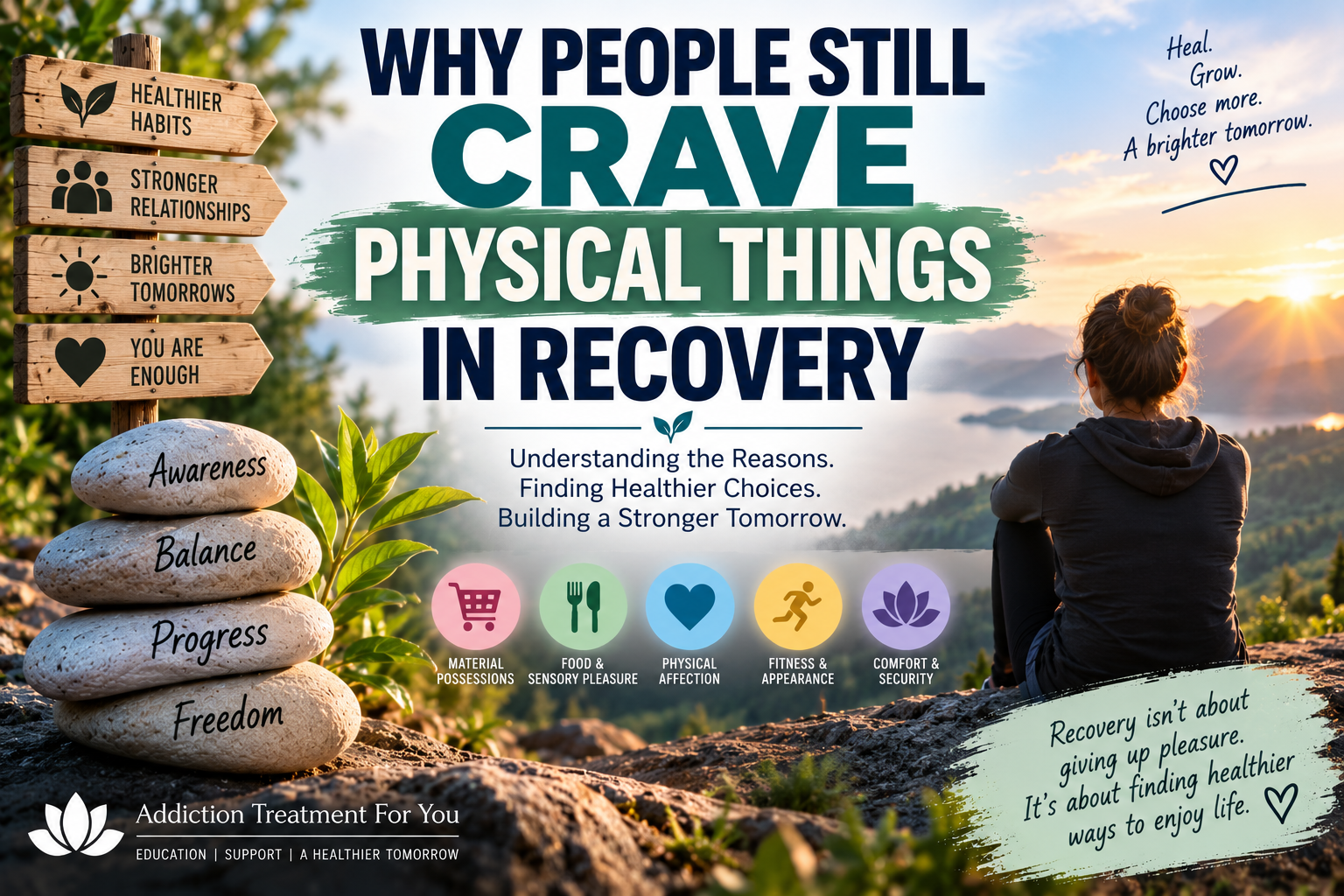
Recovery from addiction involves more than stopping alcohol or drug use. It also requires learning how to manage emotions, experience pleasure, build healthy relationships, and find satisfaction in everyday life without relying on addictive substances.
During recovery, some individuals notice an increased desire for physical possessions, food, shopping, physical affection, sexual intimacy, or other experiences that provide immediate comfort. A person who previously relied on alcohol or drugs to manage stress may begin purchasing unnecessary items, overeating, or seeking constant reassurance through physical contact.
These behaviors do not automatically indicate another addiction. Wanting comfort, pleasure, affection, and material possessions is a normal part of human experience. However, when these desires become difficult to control or begin interfering with recovery, they may deserve closer attention.
Understanding why people continue to crave physical things during recovery can help individuals distinguish healthy needs from potentially harmful coping patterns.
Through self-management, supportive family relationships, and community resources, people can develop healthier ways to experience pleasure, manage emotional distress, and build meaningful lives beyond substance use.
Recovery does not require giving up pleasure or material possessions. It involves developing a healthier relationship with the things that provide comfort, satisfaction, and enjoyment.
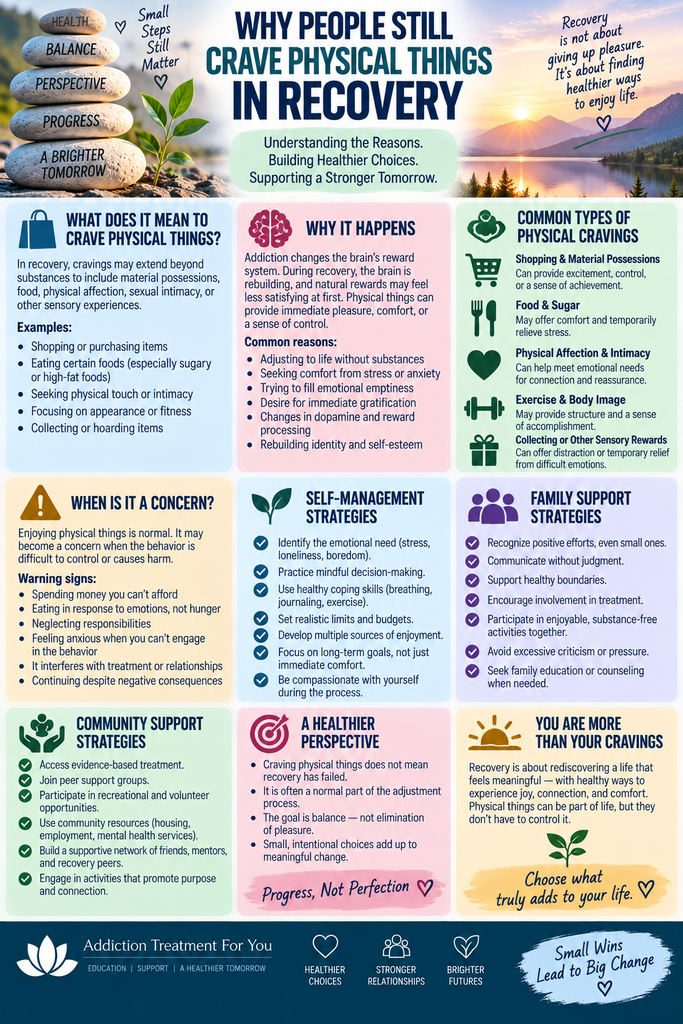
What Does Craving Physical Things Mean in Recovery?
Craving physical things means experiencing a strong desire for tangible possessions, sensory experiences, or physical comforts.
These desires may involve material objects, bodily sensations, or interpersonal experiences.
Examples include:
- Shopping for clothing, electronics, or luxury items.
- Eating highly palatable foods, particularly those high in sugar or fat.
- Seeking physical affection, such as hugging or cuddling.
- Pursuing sexual intimacy or romantic relationships.
- Spending excessive time exercising or focusing on physical appearance.
- Purchasing items to create a sense of accomplishment or personal identity.
- Seeking comfort through familiar objects, blankets, or other sensory experiences.
These activities are not inherently unhealthy.
Shopping can be enjoyable, food provides nourishment and pleasure, physical affection supports social connection, and exercise contributes to physical and emotional health.
The concern arises when a behavior becomes difficult to control, causes significant harm, or is repeatedly used to avoid emotional distress.
Healthy desires versus problematic cravings
A healthy desire generally allows an individual to make flexible choices without experiencing significant distress when the desired activity is unavailable.
A problematic craving may involve persistent urges, difficulty delaying gratification, or continuing a behavior despite harmful consequences.
For example, purchasing a new outfit to celebrate a recovery milestone may be a healthy reward.
However, repeatedly spending money needed for rent or essential expenses to temporarily relieve emotional distress may indicate a developing problem.
The key distinction is not whether someone enjoys physical things, but whether their relationship with them supports or undermines their well-being.
How Addiction Changes the Brain’s Reward System
Addiction involves changes in brain circuits associated with reward, motivation, learning, and behavioral control.
Substances such as alcohol, opioids, stimulants, and nicotine affect these systems through different biological mechanisms.
Repeated substance exposure can strengthen learned associations between substance use, environmental cues, and anticipated rewards.
During recovery, some individuals experience reduced enjoyment from ordinary activities, increased sensitivity to certain cues, or difficulty managing strong urges.
These changes may contribute to a desire for immediately rewarding experiences.
Why physical rewards may feel especially appealing
Physical rewards often provide immediate sensory feedback.
For example:
- Purchasing an item may create excitement or anticipation.
- Eating a favorite food may provide pleasure and comfort.
- Physical affection may create feelings of closeness and reassurance.
- Exercise may improve mood and provide a sense of accomplishment.
- Sexual intimacy may offer pleasure and emotional connection.
For someone who has recently stopped using substances, these experiences may feel particularly appealing when everyday activities seem less satisfying.
However, not everyone in recovery experiences increased cravings for physical rewards.
The relationship between substance use recovery and other rewarding behaviors varies according to individual biology, mental health, environmental circumstances, and personal preferences.
Does recovery create a dopamine deficiency?
It is common to hear that people in recovery seek shopping, food, or other pleasurable experiences because their brains lack dopamine.
This explanation is overly simplistic.
Dopamine contributes to motivation, learning, and reward-related behavior, but pleasure and craving involve multiple neurotransmitters and brain systems.
Recovery-related changes in reward processing differ depending on the substance involved, duration of use, and individual characteristics.
Craving physical rewards should not automatically be interpreted as evidence of a dopamine deficiency or another addiction.
The Search for Comfort After Giving Up Substances
Alcohol and drugs may become associated with temporary relief from stress, anxiety, loneliness, or emotional discomfort.
When substance use stops, individuals may need to develop new ways to manage those experiences.
Some people turn toward physical objects or sensory experiences because they provide immediate comfort.
For example, someone who previously drank alcohol after a stressful workday may begin ordering items online or eating large amounts of comfort food to create a similar sense of relief.
This pattern may represent an attempt to manage difficult emotions through external rewards.
Common emotional needs behind physical cravings
Comfort
Familiar objects, favorite foods, or physical affection may help individuals feel reassured during stressful situations.
Control
Purchasing possessions, organizing a home, or focusing on physical appearance may create a sense of predictability when other aspects of life feel uncertain.
Connection
Physical affection and intimacy may help individuals feel close to others after periods of isolation.
Achievement
Acquiring possessions or reaching physical fitness goals may provide a sense of accomplishment.
Distraction
Shopping, eating, or other activities may temporarily redirect attention away from cravings, loneliness, or painful memories.
These needs are legitimate. The goal is to identify ways of meeting them that do not create additional harm.
Can One Addiction Be Replaced by Another?
Some individuals recovering from substance use disorders develop problematic patterns involving gambling, shopping, eating, sexual behavior, or other rewarding activities.
This phenomenon is sometimes described as addiction substitution or cross-addiction.
However, the term should be used carefully.
Not every increase in shopping, eating, exercise, or sexual activity represents an addiction.
A behavioral addiction generally involves persistent difficulty controlling a behavior and continuing it despite significant negative consequences.
Gambling disorder is a formally recognized behavioral addiction. Other behaviors, such as compulsive buying, may cause substantial impairment but are not necessarily classified as independent addictive disorders in major diagnostic systems.
Warning signs that a rewarding behavior may be becoming problematic
Potential warning signs include:
- Repeatedly engaging in the behavior despite financial, physical, or relationship consequences.
- Experiencing significant difficulty controlling the behavior.
- Neglecting work, treatment, or family responsibilities.
- Using the behavior as the primary way to manage emotional distress.
- Hiding purchases, spending, or other activities from loved ones.
- Experiencing intense distress when unable to engage in the behavior.
- Continuing the behavior despite repeated attempts to reduce it.
These signs do not establish a diagnosis.
A qualified healthcare professional can help determine whether the behavior reflects a mental health condition, an unhealthy coping pattern, or another underlying concern.
Why Shopping and Material Possessions May Become More Appealing
Shopping can provide excitement, anticipation, and a temporary sense of satisfaction.
For some individuals in recovery, purchasing items may also represent a way to celebrate progress or rebuild a personal identity.
For example, someone who previously spent money on alcohol or drugs may enjoy purchasing clothing, furniture, or equipment for a new hobby.
These purchases may reflect positive changes in financial priorities.
However, shopping can become problematic when it is repeatedly used to escape emotional discomfort.
Understanding emotional spending
Emotional spending occurs when feelings, rather than practical needs or financial goals, strongly influence purchasing decisions.
A person may shop when experiencing:
- Loneliness or boredom.
- Anxiety or frustration.
- Low self-esteem.
- Relationship conflict.
- Stress related to work or finances.
- A desire for immediate gratification.
Purchasing an item may temporarily improve mood, but the relief may fade quickly.
If the person repeatedly relies on shopping to manage distress, financial problems and additional stress may develop.
Healthy alternatives to emotional spending
Helpful strategies include:
- Establishing a realistic personal budget.
- Waiting 24 hours before making nonessential purchases.
- Identifying the emotions associated with the urge to shop.
- Participating in enjoyable activities that do not require spending money.
- Discussing financial stress with a trusted person.
- Seeking professional help if spending becomes difficult to control.
The goal is not to eliminate shopping but to ensure that purchasing decisions support financial stability and personal well-being.
Why Food and Sugar Cravings May Increase During Recovery
Some individuals experience changes in appetite and food preferences after reducing or stopping substance use.
For example, people recovering from alcohol use disorder may notice increased interest in sweet foods.
Changes in eating patterns may reflect several factors, including altered routines, nutritional deficiencies, sleep disturbances, medication effects, or a renewed interest in pleasurable activities.
The specific causes vary among individuals.
When food becomes an emotional coping strategy
Food can provide comfort, pleasure, and opportunities for social connection.
However, some individuals may begin eating primarily to manage boredom, loneliness, anxiety, or emotional distress.
Potential warning signs include:
- Frequently eating in response to emotional discomfort rather than hunger.
- Feeling unable to control eating episodes.
- Experiencing significant guilt or distress after eating.
- Using food as the primary method of managing difficult emotions.
- Developing eating patterns that interfere with physical health or daily functioning.
Occasional emotional eating is common and does not necessarily indicate an eating disorder.
Persistent loss-of-control eating or significant distress warrants professional evaluation.
Supporting healthier eating habits
Helpful approaches include:
- Maintaining regular meals and snacks.
- Eating a balanced variety of foods.
- Staying adequately hydrated.
- Avoiding overly restrictive diets during early recovery.
- Identifying emotional triggers associated with eating.
- Developing alternative coping strategies for stress.
- Consulting a registered dietitian when nutritional concerns are present.
Food should not become another source of shame or rigid control during recovery.
The goal is to develop a balanced relationship with eating that supports physical health, emotional well-being, and recovery.
Why Physical Affection and Intimacy May Feel Especially Important
Recovery can involve rebuilding relationships, addressing loneliness, and developing a healthier sense of emotional connection.
Some individuals may experience an increased desire for physical affection, including hugging, cuddling, holding hands, or sexual intimacy.
These desires may reflect normal needs for closeness, reassurance, and companionship.
Physical affection can be a meaningful part of supportive relationships when it is wanted, consensual, and respectful.
When intimacy becomes a way to avoid emotional distress
Some individuals may seek repeated romantic or sexual experiences primarily to manage loneliness, insecurity, or feelings of rejection.
Potential concerns include:
- Entering relationships primarily to avoid being alone.
- Ignoring personal boundaries to maintain another person’s approval.
- Feeling unable to tolerate periods without romantic attention.
- Continuing relationships that involve coercion or emotional harm.
- Neglecting treatment or personal responsibilities to pursue intimacy.
These patterns do not automatically indicate a behavioral addiction.
They may reflect unmet emotional needs, attachment difficulties, trauma-related responses, or other psychological concerns.
Developing healthier intimacy during recovery
Helpful strategies include:
- Identifying personal emotional and relationship needs.
- Establishing clear physical and emotional boundaries.
- Practicing communication about consent and expectations.
- Maintaining friendships outside romantic relationships.
- Allowing relationships to develop at a comfortable pace.
- Seeking counseling when relationship patterns cause persistent distress.
Healthy intimacy should support mutual respect, autonomy, and emotional well-being.
Self-Management Strategies: Developing a Healthier Relationship With Physical Rewards
Self-management involves recognizing personal triggers, developing healthier coping strategies, and making decisions that support recovery goals.
For individuals experiencing strong cravings for physical possessions or sensory rewards, self-management can help distinguish genuine needs from potentially harmful patterns.
Identify the emotional need behind the craving
Before acting on an urge, consider what you are feeling emotionally.
Ask yourself:
- Am I hungry, lonely, anxious, bored, or physically tired?
- Am I seeking comfort, connection, excitement, or distraction?
- Will this activity support my recovery goals?
- Can I delay the behavior without significant distress?
- Are there other ways to meet the same emotional need?
These questions can help individuals make more intentional decisions.
Practice delaying gratification
Delaying gratification means pausing briefly between feeling an urge and acting on it.
For example, someone experiencing an urge to make an unnecessary purchase may wait 20 minutes before deciding whether to buy the item.
During that time, they might take a walk, contact a friend, or practice a relaxation exercise.
The goal isn’t to suppress every desire, but to create opportunities for thoughtful decision-making.
Develop multiple sources of pleasure
Relying exclusively on one activity for emotional comfort can create vulnerability when that activity becomes unavailable.
A balanced recovery routine may include:
- Physical activity.
- Creative hobbies.
- Social connection.
- Spending time outdoors.
- Reading or learning new skills.
- Volunteering.
- Relaxation and mindfulness.
- Meaningful work or educational activities.
Developing several sources of enjoyment can help individuals experience satisfaction without depending entirely on immediate physical rewards.
Practice self-compassion
Individuals may feel ashamed when they notice increased cravings for food, shopping, or physical affection during recovery.
However, experiencing desires does not mean that recovery has failed.
A healthier approach involves recognizing the urge, evaluating its consequences, and choosing a response consistent with personal goals.
Self-compassion can support behavior change by reducing unnecessary shame and encouraging continued engagement with recovery.
Family Support Strategies: Encouraging Balance Without Judgment
Family members may become concerned when a loved one in recovery begins shopping frequently, eating differently, or seeking increased physical affection.
However, interpreting every new behavior as another addiction can create unnecessary conflict and shame.
Families can support recovery by focusing on observable consequences rather than assuming motives.
Encourage open communication
Helpful approaches include:
- Asking how the person is feeling rather than immediately criticizing the behavior.
- Listening without judgment.
- Discussing concerns about spending or other activities respectfully.
- Recognizing positive changes in recovery.
- Encouraging professional guidance when behaviors become difficult to control.
For example, instead of saying, “You’re replacing one addiction with another,” a family member might ask whether shopping has become a way of coping with stress.
Respect personal boundaries
Family support should not involve controlling another adult’s possessions, food intake, or intimate relationships.
However, family members can establish reasonable boundaries regarding shared finances, household responsibilities, and personal safety.
Helpful strategies include:
- Developing mutually agreed-upon household budgets.
- Discussing expectations around shared expenses.
- Respecting privacy and personal autonomy.
- Avoiding shame-based comments about food or body image.
- Supporting healthy relationships without attempting to control personal decisions.
Recognize healthy forms of enjoyment
Recovery should include opportunities for pleasure, celebration, and personal growth.
Families can encourage enjoyable activities such as:
- Preparing meals together.
- Participating in outdoor recreation.
- Attending substance-free social events.
- Exploring new hobbies.
- Celebrating recovery milestones.
- Spending meaningful time together.
Supportive relationships can help individuals develop a broader range of rewarding experiences.
Community Support Strategies: Creating Opportunities for Healthy Rewards
Community environments influence access to enjoyable activities, social relationships, healthcare, and financial stability.
Individuals recovering from addiction may have limited resources or face barriers to participating in recreational activities.
Communities can support recovery by providing accessible opportunities for connection, personal development, and meaningful engagement.
Expand access to recovery-supportive activities
Community organizations can offer:
- Affordable fitness and recreation programs.
- Art, music, and creative workshops.
- Substance-free social events.
- Volunteer opportunities.
- Educational and vocational training.
- Peer recovery support groups.
- Community gardening and outdoor activities.
These programs offer enjoyment and a sense of accomplishment without relying exclusively on material purchases or substance use.
Improve access to mental health and addiction treatment
Individuals experiencing compulsive behaviors or persistent emotional distress may benefit from professional assessment.
Community healthcare organizations can support recovery by providing:
- Evidence-based addiction treatment.
- Screening for co-occurring mental health conditions.
- Counseling for problematic gambling or other compulsive behaviors.
- Financial counseling and practical assistance.
- Peer recovery services.
- Trauma-informed mental healthcare.
- Referrals to specialized treatment when needed.
Treatment should address the individual’s specific symptoms and circumstances rather than assuming that all rewarding behaviors represent addiction.
Strengthen social connection
Loneliness and social isolation can make immediate sources of comfort especially appealing.
Communities can help individuals build supportive relationships through peer groups, volunteer programs, recreational activities, and recovery-oriented social networks.
Meaningful social connection may reduce reliance on shopping, food, or other activities as the primary source of emotional comfort.
The Connection Between Childhood Trauma and Physical Cravings
Some individuals recovering from addiction also have histories of childhood abuse, neglect, or family instability.
These experiences may influence emotional regulation, self-esteem, attachment patterns, and stress responses.
For some trauma survivors, physical possessions or sensory experiences may provide a sense of comfort or predictability.
For example, a person who experienced an unpredictable childhood may find reassurance in organizing their home or surrounding themselves with familiar objects.
Another individual may seek frequent physical affection because it helps them feel connected and supported.
However, these behaviors should not automatically be interpreted as symptoms of trauma.
Trauma-informed strategies for managing physical cravings
Helpful approaches include:
- Identifying situations that produce emotional distress.
- Developing a calming physical environment.
- Practicing grounding techniques.
- Establishing healthy relationship boundaries.
- Maintaining supportive social connections.
- Seeking trauma-focused psychotherapy when appropriate.
- Developing alternative ways to experience comfort and personal control.
Trauma-informed recovery emphasizes safety, collaboration, personal choice, and respect for individual experiences.
The goal is not to eliminate the desire for comfort but to develop safe, sustainable ways to meet emotional needs.
When Physical Cravings Become a Warning Sign
Strong desires for physical possessions or sensory experiences do not necessarily indicate a problem.
However, professional evaluation may be appropriate when a behavior becomes difficult to control or causes significant harm.
Warning signs that additional support may be needed
Consider seeking professional guidance if you experience:
- Repeated financial problems caused by uncontrolled spending.
- Persistent loss of control over eating.
- Neglect of treatment, work, or family responsibilities.
- Significant distress when unable to engage in a particular activity.
- Repeatedly engaging in risky or harmful behaviors despite negative consequences.
- Using shopping, food, or sexual activity as the primary method of managing emotional distress.
- Increased cravings for alcohol or drugs associated with emotional difficulties.
- Persistent anxiety, depression, or trauma-related symptoms.
A healthcare professional can help identify underlying concerns and recommend appropriate treatment.
Depending on the situation, treatment may involve cognitive behavioral therapy, financial counseling, treatment for an eating disorder, or care for co-occurring mental health conditions.
For individuals experiencing both substance use disorders and other problematic behaviors, coordinated treatment can help address overlapping emotional and behavioral patterns.
A Seven-Day Plan for Developing Healthier Sources of Comfort
The following seven-day plan can help individuals explore their relationship with physical rewards while developing alternative coping strategies.
Adjust the activities to fit personal circumstances and treatment recommendations.
Day 1: Identify your most common cravings
Write down the physical objects or experiences you frequently desire.
Consider whether these cravings occur during particular emotional states or situations.
Day 2: Practice mindful decision-making
Before making a nonessential purchase or engaging in another rewarding activity, briefly consider your emotional needs and the potential consequences.
Day 3: Explore a new source of enjoyment
Choose an activity that provides satisfaction without requiring significant spending.
Examples include walking, reading, gardening, or participating in a creative hobby.
Day 4: Strengthen social connection
Contact a trusted friend, family member, peer recovery specialist, or support group.
Focus on meaningful interaction rather than seeking reassurance through material possessions.
Day 5: Practice a healthy coping strategy
When experiencing emotional distress, try a grounding exercise, relaxation technique, or other coping strategy recommended by your treatment provider.
Day 6: Review personal boundaries
Consider whether your spending, eating, or relationship patterns align with your recovery goals.
Identify one boundary that could improve your well-being.
Day 7: Reflect on your progress
Review what you learned about your cravings and emotional needs.
Choose one manageable strategy to continue next week.
This plan is not meant to eliminate pleasure. It helps individuals develop greater flexibility and control over how they meet their needs.
Conclusion: Recovery Is About Finding Healthier Ways to Experience Pleasure
Craving physical things during recovery is not inherently unhealthy. Material possessions, food, physical affection, and enjoyable sensory experiences are normal parts of human life.
For some individuals, these desires may become more noticeable after stopping substance use because they are adjusting to new routines, managing emotional distress, or rediscovering everyday sources of pleasure.
The concern arises when a behavior becomes difficult to control, causes significant harm, or begins replacing other important aspects of recovery.
Self-management strategies can help individuals recognize emotional triggers and develop healthier coping skills. Families can provide encouragement without judgment while maintaining appropriate boundaries. Communities can strengthen recovery by offering accessible treatment, supportive relationships, and opportunities for meaningful engagement.
The goal of recovery is not to stop wanting things. It is to develop the freedom to enjoy life’s pleasures without allowing those desires to control your decisions, relationships, or well-being.
With appropriate treatment, self-awareness, and supportive environments, individuals can develop a balanced relationship with physical rewards while continuing to build meaningful lives in recovery.
Resources for Addiction and Mental Health Support
SAMHSA National Helpline: Call 1-800-662-HELP (4357) for information about substance use and mental health treatment services.
988 Suicide & Crisis Lifeline: Call or text 988 for immediate mental health crisis support.
FindTreatment.gov: Visit the website to locate substance use and mental health treatment services in your area.
If you are experiencing persistent compulsive behaviors, significant financial problems, or difficulty managing substance-related cravings, consider discussing these concerns with a qualified healthcare professional.
Frequently Asked Questions
Here are some common questions:
1. Why do people still crave physical things during addiction recovery?
People recovering from addiction may experience increased desires for material possessions, food, physical affection, sexual intimacy, or other pleasurable experiences. These desires may reflect changes in daily routines, emotional needs, stress responses, and reward-related learning.
For some individuals, physical rewards provide temporary comfort, excitement, or a sense of control while they adjust to life without alcohol or drugs.
However, craving physical things is not automatically a sign of addiction. Enjoying food, shopping, affection, and other pleasurable experiences is a normal part of human life.
2. What are the most common physical cravings during recovery?
Physical cravings vary depending on the individual and the substance involved.
Examples include:
- Shopping for clothing, electronics, or other material possessions.
- Eating sweet foods or other highly palatable foods.
- Seeking physical affection, such as hugging or cuddling.
- Pursuing romantic relationships or sexual intimacy.
- Exercising frequently or focusing on physical appearance.
- Collecting objects that provide comfort or reassurance.
- Seeking enjoyable sensory experiences, such as massages or relaxing environments.
These activities become concerning when they are difficult to control, cause significant harm, or interfere with treatment and daily responsibilities.
3. Does craving physical things mean someone is replacing one addiction with another?
Not necessarily. An increased interest in shopping, food, exercise, or physical intimacy does not automatically indicate another addiction.
Some individuals develop problematic behavioral patterns during substance use recovery, but others are simply rediscovering activities they previously neglected.
The primary concern is whether the behavior involves persistent loss of control, significant distress, or continued participation despite harmful consequences.
A healthcare professional can help determine whether a particular behavior requires treatment.
4. How does the brain’s reward system influence physical cravings during recovery?
Addiction involves changes in brain circuits associated with reward, motivation, learning, and behavioral control.
During recovery, some individuals experience reduced enjoyment from ordinary activities or increased sensitivity to rewarding experiences.
Shopping, eating, physical affection, and other pleasurable activities may become appealing because they provide immediate satisfaction or emotional comfort.
However, these cravings cannot be explained by dopamine alone. Reward processing involves multiple neurotransmitters, psychological factors, and environmental influences.
5. Are physical cravings a normal part of early recovery?
Some individuals notice changes in their appetite, interests, spending habits, or desire for physical affection during early recovery.
These changes may reflect adjustments to new routines, emotional stress, improved physical health, or rediscovering enjoyable activities.
However, not everyone experiences increased physical cravings, and there is no universal pattern.
Persistent cravings that cause significant distress or interfere with recovery should be discussed with a healthcare professional.
Shopping, Food, and Physical Affection
6. Why do some people shop excessively after quitting alcohol or drugs?
Shopping may provide excitement, distraction, or temporary stress relief.
For some individuals, buying material possessions can also be a way to rebuild their identity or celebrate recovery achievements.
However, shopping can become problematic when someone repeatedly spends money they cannot afford, hides purchases, or relies on buying things as their primary method of managing emotional distress.
Developing a budget, identifying emotional spending triggers, and seeking financial or mental health counseling when needed can help restore balance.
7. Why do people crave sugar after quitting alcohol?
Some individuals experience increased cravings for sweet foods after reducing or stopping alcohol use.
Possible contributing factors include changes in eating patterns, appetite, sleep, nutritional status, and reward-related behavior.
Alcoholic beverages also provide calories, so changes in alcohol consumption may affect overall energy intake and food preferences.
However, sugar cravings have multiple possible causes and should not automatically be attributed to addiction-related changes in dopamine.
Regular meals, balanced nutrition, adequate hydration, and appropriate medical follow-up can help support recovery.
8. Can food become a substitute for alcohol or drugs?
Some individuals may begin using food to manage stress, loneliness, boredom, or other difficult emotions after stopping substance use.
Occasional emotional eating is common and does not necessarily indicate a problem.
However, persistent loss-of-control eating, significant distress, or eating patterns that interfere with physical health may warrant professional evaluation.
A healthcare professional can assess whether the behavior reflects an eating disorder, emotional coping difficulties, or another concern.
9. Why do people crave physical affection during recovery?
Physical affection can provide comfort, reassurance, and a sense of emotional connection.
Individuals recovering from addiction may seek increased affection as they rebuild relationships or adjust to periods of loneliness and social isolation.
Hugging, cuddling, holding hands, and other forms of consensual physical contact can be meaningful parts of supportive relationships.
However, physical affection should always involve mutual consent, respect for personal boundaries, and freedom from coercion.
10. Can seeking romantic relationships or sexual intimacy interfere with recovery?
Romantic relationships and sexual intimacy are not inherently harmful during recovery.
However, some individuals may pursue relationships primarily to manage loneliness, insecurity, or emotional distress.
Potential concerns include neglecting treatment responsibilities, ignoring personal boundaries, or remaining in relationships involving coercion or abuse.
Healthy relationships should support emotional well-being, personal autonomy, and continued recovery.
Self-Management Strategies for Physical Cravings
11. How can someone distinguish a healthy desire from a problematic craving?
A healthy desire generally allows a person to make flexible choices without significant distress or harmful consequences.
A problematic craving may involve persistent urges, difficulty controlling behavior, or continuing an activity despite negative effects.
Consider asking yourself:
- Can I delay this activity without becoming overwhelmed?
- Am I using it primarily to escape emotional distress?
- Is it interfering with my finances, health, relationships, or treatment?
- Do I feel compelled to repeat the behavior despite negative consequences?
- Can I find satisfaction through other activities?
These questions can help identify patterns that may require additional support.
12. What self-management strategies can help control excessive physical cravings?
Helpful strategies include:
- Identifying emotional and environmental triggers.
- Establishing realistic spending limits.
- Maintaining regular meals and sleep routines.
- Practicing mindfulness and grounding exercises.
- Developing enjoyable hobbies.
- Engaging in regular physical activity.
- Maintaining supportive social relationships.
- Seeking professional guidance when behaviors become difficult to control.
The goal is not to eliminate pleasure but to develop healthier ways of responding to desires.
13. Can mindfulness help manage physical cravings?
Mindfulness may help individuals recognize cravings without immediately acting on them.
For example, someone experiencing an urge to make an unnecessary purchase might pause and identify the emotions associated with that desire.
They may then decide whether the purchase aligns with their financial and recovery goals.
Mindfulness can support emotional awareness and more intentional decision-making.
However, individuals experiencing severe compulsive behaviors may require additional professional treatment.
14. How can someone manage emotional spending during recovery?
Emotional spending occurs when purchasing decisions are strongly influenced by feelings such as anxiety, boredom, loneliness, or frustration.
Helpful strategies include establishing a budget, delaying nonessential purchases, identifying emotional triggers, and developing alternative coping activities.
Removing saved payment information from shopping applications or limiting promotional notifications may also help reduce impulsive purchases.
If spending causes persistent financial problems or significant distress, financial counseling and mental health treatment may be beneficial.
15. Can exercise help reduce cravings for material possessions or other physical rewards?
Exercise may help improve mood, reduce stress, and provide a meaningful source of enjoyment during recovery.
Activities such as walking, swimming, cycling, or strength training can also provide structure and opportunities for social connection.
However, exercise does not necessarily eliminate cravings for shopping, food, or other rewarding experiences.
Excessive exercise can also become harmful when it causes injury, interferes with responsibilities, or is used compulsively.
A balanced approach should support overall physical and emotional health.
Family Support and Healthy Relationships
16. How can families support someone experiencing increased physical cravings during recovery?
Families can provide support by encouraging open communication, recognizing emotional needs, and avoiding unnecessary judgment.
Helpful approaches include:
- Asking about emotional well-being rather than criticizing behavior.
- Encouraging enjoyable substance-free activities.
- Supporting healthy spending and eating habits.
- Respecting personal boundaries.
- Recognizing positive recovery accomplishments.
- Encouraging professional treatment when behaviors become harmful.
Family support should promote personal autonomy rather than controlling another adult’s daily decisions.
17. Should family members worry if someone in recovery begins shopping more frequently?
Increased shopping does not automatically indicate a problem.
Some individuals may enjoy buying items they previously couldn’t afford or investing in new hobbies and interests.
However, repeated financial difficulties, secretive spending, or purchasing behavior that interferes with treatment may warrant concern.
Families can respectfully discuss observable consequences and set appropriate boundaries around shared finances.
18. How can families encourage healthy physical affection during recovery?
Families can support healthy physical affection by respecting personal preferences, asking permission before physical contact, and creating opportunities for meaningful connection.
Some individuals appreciate hugs or other forms of physical affection, while others prefer verbal reassurance or spending time together.
Trauma survivors may have particular sensitivities related to physical contact.
The most helpful approach is to ask what type of affection feels comfortable and respect the person’s response.
19. Can family conflict increase cravings for physical comfort?
Family conflict can increase stress and emotional distress, which may contribute to stronger urges for comforting or rewarding experiences in some individuals.
For example, someone may respond to an argument by shopping, overeating, or seeking reassurance through physical affection.
However, these responses vary and should not automatically be interpreted as symptoms of addiction.
Healthy communication, appropriate boundaries, and family counseling may help reduce unnecessary conflict.
20. How can families recognize when physical cravings are becoming harmful?
Families may notice changes such as repeated financial problems, neglect of responsibilities, persistent secrecy, or increasing distress related to a particular behavior.
Rather than labeling the behavior as another addiction, family members can discuss specific concerns and encourage professional evaluation.
Supportive communication should focus on the individual’s well-being while maintaining appropriate boundaries regarding finances, safety, and household responsibilities.
Community Support and Professional Treatment
21. How can communities help people develop healthier sources of pleasure during recovery?
Communities can provide opportunities for individuals to experience enjoyment, connection, and accomplishment without relying exclusively on material possessions or immediate rewards.
Helpful resources include:
- Peer recovery support groups.
- Affordable recreational programs.
- Community fitness and wellness activities.
- Art, music, and educational workshops.
- Volunteer opportunities.
- Employment and vocational training.
- Community mental health services.
These activities can help individuals develop meaningful routines and supportive social relationships.
22. Can peer recovery support help someone manage excessive physical cravings?
Peer recovery specialists can help individuals recognize potentially harmful behavioral patterns, establish realistic goals, and identify community resources.
They may also provide encouragement and share practical coping strategies based on their lived experience.
Peer support can complement professional treatment but should not replace medical or mental health care when compulsive behaviors cause significant impairment.
23. When should someone seek professional help for physical cravings?
Professional evaluation may be appropriate when a behavior becomes difficult to control or causes significant problems.
Warning signs include persistent financial difficulties, loss-of-control eating, neglect of treatment responsibilities, risky sexual behavior, or repeated engagement in an activity despite harmful consequences.
A healthcare professional can assess underlying mental health conditions, substance use concerns, and behavioral patterns.
Treatment may include psychotherapy, financial counseling, specialized eating disorder treatment, or integrated addiction and mental health care.
24. Can childhood trauma contribute to cravings for physical possessions or affection?
Childhood trauma may influence emotional regulation, attachment patterns, and responses to stress.
Some individuals who experienced abuse, neglect, or family instability may seek comfort through familiar objects, material possessions, food, or physical affection.
However, these behaviors are not specific indicators of childhood trauma, and not everyone with a trauma history develops them.
Trauma-informed psychotherapy can help individuals explore emotional needs and develop healthier coping strategies when these patterns cause distress.
25. What is the most important lesson about craving physical things during recovery?
Craving physical possessions, food, affection, or other pleasurable experiences does not mean that recovery has failed.
These desires may reflect normal human needs for comfort, connection, enjoyment, and personal satisfaction.
The concern arises when a behavior becomes difficult to control, causes significant harm, or interferes with recovery goals.
Recovery is not about eliminating pleasure. It is about developing healthier ways to experience comfort, connection, and satisfaction without allowing cravings to control your life.
With self-awareness, supportive relationships, appropriate treatment, and meaningful community involvement, individuals can develop a more balanced relationship with physical rewards while continuing their recovery journey.
Where Can Someone Find Help?
If you or someone you know is struggling with substance use, compulsive behaviors, or emotional distress, support is available.
SAMHSA National Helpline: Call 1-800-662-HELP (4357) for information about substance use and mental health treatment services.
988 Suicide & Crisis Lifeline: Call or text 988 for immediate mental health crisis support.
FindTreatment.gov: Visit the website to locate substance use and mental health treatment services in your area.
Remember: Recovery involves building a meaningful life with healthy pleasure, supportive relationships, and the freedom to make choices that support your well-being.
Video: Why you’re buying things you don’t need in recovery #addictionrecovery #sobriety #recovery