George Michael was one of the most celebrated musicians of his generation, captivating millions with his powerful voice, emotional songwriting, and unforgettable performances. From his early success with Wham! to his remarkable solo career, he became an international superstar. However, behind his public success, Michael experienced personal challenges involving substance use, depression, anxiety, and the pressures of fame.
His struggles with cannabis and prescription medications became public through several drug-related incidents, including a 2010 driving accident that resulted in imprisonment. Michael subsequently acknowledged his difficulties and sought professional treatment. His experiences illustrate how addiction can affect individuals regardless of their wealth, talent, or professional achievements.
Understanding George Michael’s journey offers an opportunity to explore the relationship between emotional distress and substance use, the importance of recognizing unhealthy coping mechanisms, and how self-management, family involvement, and community resources can support recovery.
George Michael’s Rise to Fame and Personal Challenges
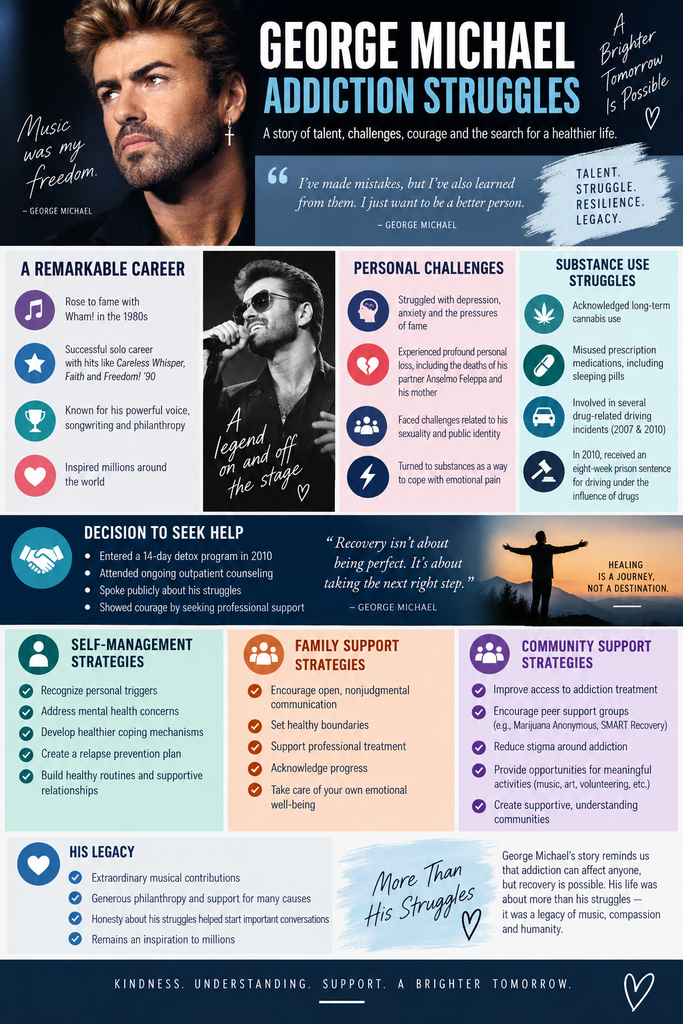
Born Georgios Kyriacos Panayiotou on June 25, 1963, George Michael rose to international fame as a member of Wham! before establishing a successful solo career.
His music, including hits such as Careless Whisper, Faith, and Freedom! ’90, resonated with audiences worldwide.
Despite his extraordinary achievements, Michael faced significant personal challenges throughout his life.
His struggles included depression, difficulties surrounding his sexuality and public identity, and the pressures of maintaining a successful entertainment career.
He also experienced profound personal losses, including the deaths of his partner Anselmo Feleppa and his mother.
Michael spoke publicly about his emotional difficulties and his use of substances. However, it is important not to assume that any single personal experience directly caused his addiction.
Substance use disorders develop through complex interactions involving biological vulnerability, psychological factors, environmental influences, and individual circumstances.
Understanding the relationship between fame and addiction
Celebrity status can create circumstances that complicate the recognition and treatment of substance use disorders.
Potential challenges include:
- Public scrutiny: Constant media attention can make individuals reluctant to discuss personal difficulties.
- Limited privacy: Seeking treatment may become more complicated when personal information attracts public interest.
- Professional pressures: Demanding schedules and performance expectations may interfere with healthy routines.
- Social isolation: Being surrounded by people does not necessarily guarantee meaningful emotional support.
- Easy access to substances: Financial resources and social environments may increase opportunities for substance use.
- Fear of judgment: Concerns about professional reputation can discourage individuals from acknowledging that they need help.
Although these circumstances may create additional challenges, addiction is not exclusive to celebrities. People from every socioeconomic background can develop substance use disorders.
George Michael’s Struggles With Cannabis and Prescription Medications
George Michael was open about his cannabis use and acknowledged that reducing his consumption was difficult.
In a 2009 interview with The Guardian, he discussed his history of cannabis use and problems involving sleeping pills.
His substance use eventually contributed to several incidents involving impaired driving.
In 2007, Michael received a driving ban after admitting to driving while unfit due to drug use.
In July 2010, he crashed his vehicle into a photography shop in London. He subsequently pleaded guilty to driving while impaired by drugs and possessing cannabis.
The court heard that he had used cannabis and a prescribed sedative before the accident.
In September 2010, Michael received an eight-week prison sentence, of which he served approximately four weeks, along with a five-year driving ban.
What his experiences teach us about substance use
George Michael’s experiences highlight several important concerns associated with problematic substance use.
Cannabis dependence
Although cannabis is sometimes perceived as harmless, frequent use can lead to cannabis use disorder.
Possible warning signs include:
- Difficulty reducing or stopping cannabis consumption.
- Spending increasing amounts of time obtaining or using cannabis.
- Continuing to use cannabis despite negative consequences.
- Experiencing cravings or withdrawal symptoms when attempting to stop.
- Neglecting responsibilities or important relationships because of substance use.
Prescription medication misuse
Prescription medications can be beneficial when used appropriately. However, certain medications, particularly sedatives and sleeping pills, may cause impairment, dependence, or dangerous interactions with other substances.
Combining cannabis with sedating medications can increase impairment and create additional safety concerns.
Individuals should discuss medication use with their healthcare providers and avoid driving when medications or other substances impair alertness or judgment.
Recognizing the need for treatment
Repeated substance-related consequences may indicate that an individual needs additional support.
Treatment should address not only substance use but also contributing medical, psychological, and social factors.
George Michael’s Decision to Seek Professional Help
Following his July 2010 driving accident, George Michael acknowledged that his personal difficulties had become increasingly challenging to manage independently.
He publicly disclosed that he had entered a 14-day detoxification program in London shortly after the incident.
He also reported receiving ongoing outpatient drug counseling several times a week.
In 2011, Michael discussed his drug-related difficulties and confirmed that he was receiving therapy.
His willingness to seek professional assistance provides an important opportunity to discuss the role of treatment in addiction recovery.
Why professional treatment matters
Addiction is a treatable health condition, but recovery often requires more than an individual’s determination to stop using substances.
Effective treatment may involve:
- A comprehensive medical and psychiatric evaluation.
- Assessment of substance use patterns and withdrawal risks.
- Cognitive behavioral therapy to identify unhealthy thoughts and behaviors.
- Motivational interviewing to strengthen readiness for change.
- Treatment of co-occurring mental health conditions.
- Development of healthy coping mechanisms.
- Relapse prevention planning.
- Continued outpatient care and recovery support.
Treatment should be individualized according to the person’s needs, preferences, substance use history, and overall health.
Recovery is not defined by a single treatment episode. It is an ongoing process that may require adjustments, additional support, and continued attention to emotional and physical well-being.
Self-Management Strategies: Taking Responsibility for Recovery
George Michael’s experiences demonstrate the importance of recognizing when substance use begins interfering with personal safety, relationships, and everyday functioning.
Self-management involves developing practical strategies that support healthier decisions and reduce the likelihood of returning to problematic substance use.
A. Recognize personal triggers
Triggers are internal or external experiences that may increase the desire to use substances.
Common triggers include emotional distress, loneliness, boredom, social pressure, and exposure to environments associated with previous substance use.
Self-management strategies:
- Keep a journal to identify situations that increase cravings.
- Recognize emotional patterns associated with substance use.
- Develop alternative responses to stress and anxiety.
- Avoid environments that encourage unhealthy substance use.
- Practice mindfulness, relaxation techniques, and deep breathing.
- Contact a trusted person when experiencing strong cravings.
Recognizing triggers allows individuals to develop healthier responses before cravings become overwhelming.
B. Address underlying mental health concerns
Depression, anxiety, insomnia, and substance use disorders can occur together.
When these conditions coexist, treating one while ignoring the others may complicate recovery.
Self-management strategies:
- Seek professional evaluation for persistent depression or anxiety.
- Attend scheduled therapy appointments.
- Follow prescribed medication instructions.
- Discuss medication side effects and possible interactions with healthcare providers.
- Maintain consistent sleep and wake times.
- Participate in enjoyable activities that support emotional well-being.
- Avoid using alcohol or other substances as a primary method of managing distress.
Individuals should not abruptly discontinue prescribed sedatives or other potentially dependence-forming medications without medical guidance.
C. Develop healthier coping mechanisms
Some individuals use substances to temporarily escape uncomfortable emotions.
Although substance use may provide short-term relief, it can create additional difficulties over time.
Developing alternative coping strategies is an important part of recovery.
Healthy alternatives include:
- Walking, swimming, or participating in other enjoyable physical activities.
- Listening to music or engaging in creative hobbies.
- Practicing meditation or guided relaxation.
- Spending time outdoors.
- Maintaining meaningful social connections.
- Participating in volunteer activities.
- Establishing a consistent daily routine.
For individuals who enjoy music, creative expression may provide a valuable outlet for processing emotions.
However, hobbies and lifestyle changes should complement professional treatment rather than replace it when treatment is needed.
D. Create a relapse prevention plan
Returning to substance use after a period of improvement does not mean that recovery is impossible.
It may indicate that additional support or changes to the treatment plan are necessary.
A relapse prevention plan should include:
- Identification of personal warning signs.
- A list of situations associated with previous substance use.
- Practical strategies for managing cravings.
- Contact information for trusted support individuals.
- Scheduled counseling or recovery support meetings.
- A plan for obtaining professional assistance if substance use resumes.
Developing a written plan can help individuals respond more effectively when unexpected challenges arise.
Family Support Strategies: Helping a Loved One Struggling With Addiction
Family members can play an important role in supporting individuals experiencing substance use disorders.
However, addiction can also create emotional stress, uncertainty, and conflict within families.
Supporting a loved one requires compassion, communication, healthy boundaries, and an understanding that family members cannot control another person’s recovery.
A. Encourage open and nonjudgmental communication
Individuals struggling with addiction may avoid discussing their substance use because they fear criticism, rejection, or disappointment.
Family members can create a more supportive environment by encouraging honest conversations.
Family support strategies:
- Listen without immediately criticizing or interrupting.
- Express concern about specific behaviors rather than attacking the person’s character.
- Ask how the individual is feeling emotionally.
- Encourage discussions about treatment options.
- Acknowledge positive changes and recovery efforts.
- Avoid using shame or humiliation as motivation.
For example, instead of accusing a loved one of making irresponsible decisions, a family member might express concern about their safety and ask how they can help them access treatment.
B. Establish healthy boundaries
Supporting someone with addiction does not mean accepting behavior that places others at risk.
Healthy boundaries help protect both the individual experiencing addiction and their family members.
Examples of healthy boundaries include:
- Refusing to provide transportation assistance that would enable impaired driving.
- Avoiding financial support that directly facilitates substance use.
- Establishing clear expectations regarding safety and respectful communication.
- Protecting children and vulnerable family members from unsafe situations.
- Encouraging accountability without threatening or humiliating the individual.
Communicate boundaries calmly and consistently.
C. Encourage professional treatment
Family members can help reduce practical barriers to obtaining treatment.
They may help locate healthcare professionals, arrange transportation, or identify appropriate recovery programs.
Helpful approaches include:
- Encouraging evaluation by an addiction medicine professional.
- Offering to accompany the individual to an appointment.
- Helping identify mental health counseling services.
- Supporting participation in outpatient or residential treatment when appropriate.
- Learning about substance use disorders through reliable educational resources.
Family members should respect the individual’s autonomy while responding appropriately to immediate safety concerns.
D. Protect family members’ emotional well-being
Living with someone experiencing addiction can create significant stress.
Family members may experience anxiety, frustration, guilt, or emotional exhaustion.
They also deserve support.
Family self-care strategies:
- Participate in family counseling.
- Join support groups for relatives of individuals with addiction.
- Maintain personal interests and social relationships.
- Seek professional assistance when experiencing persistent emotional distress.
- Recognize that they cannot independently control another person’s substance use.
Supporting recovery is a shared process, but family members should not be expected to sacrifice their own health or safety.
Community Support Strategies: Building a Strong Recovery Network
George Michael’s experiences also illustrate why access to professional treatment and ongoing support is important.
Community resources can help individuals maintain recovery by providing healthcare services, social connections, education, and practical assistance.
A. Improve access to addiction treatment
Individuals experiencing substance use disorders should have access to timely, affordable, and evidence-based care.
Community strategies include:
- Expanding outpatient addiction treatment services.
- Improving access to mental health professionals.
- Providing integrated treatment for co-occurring psychiatric conditions.
- Offering telehealth appointments when appropriate.
- Connecting individuals with affordable healthcare resources.
- Supporting continuity of care after residential treatment.
Accessible services can reduce the barriers that prevent individuals from obtaining help.
B. Encourage peer recovery support
Peer support groups provide opportunities to connect with people who have experienced similar challenges.
These groups may offer encouragement, accountability, and practical strategies for maintaining recovery.
Community resources include:
- Marijuana Anonymous.
- Narcotics Anonymous.
- SMART Recovery.
- Recovery Community Organizations.
- Peer recovery coaching programs.
Different recovery approaches work for different individuals.
Participation should reflect personal preferences, treatment needs, and comfort with the program’s philosophy.
C. Reduce stigma surrounding addiction
Public attitudes toward addiction can influence whether individuals feel comfortable seeking help.
Negative stereotypes may discourage people from discussing their substance use or accessing treatment.
Community education can help improve understanding of substance use disorders.
Stigma reduction strategies include:
- Providing accurate information about addiction and recovery.
- Using respectful, person-first language.
- Encouraging public conversations about mental health.
- Avoiding sensationalized portrayals of individuals experiencing addiction.
- Promoting recovery stories without presenting any single experience as universal.
- Supporting confidential access to treatment.
George Michael’s public struggles remind us that a person’s substance use history does not define their entire identity or diminish their personal achievements.
D. Support recovery through meaningful activities
Community participation can help individuals develop healthy routines and strengthen social connections.
Examples include:
- Community music and art programs.
- Volunteer organizations.
- Recreational sports and fitness activities.
- Educational and vocational training.
- Community wellness programs.
- Social groups that do not center on substance use.
Meaningful activities can provide structure, connection, and a sense of purpose during recovery.
Understanding George Michael’s Death: Separating Addiction From Medical Facts
George Michael died on December 25, 2016, at the age of 53.
Although his history of substance use received significant media attention during his lifetime, it is important to distinguish his documented addiction struggles from the medical findings surrounding his death.
The coroner determined that Michael died of natural causes, identifying dilated cardiomyopathy with myocarditis and fatty liver.
His death was not officially attributed to a drug overdose.
A history of addiction should never be used as the basis for assuming the cause of an individual’s death.
George Michael’s experiences can inform discussions about substance use and recovery without reducing his life or death to addiction alone.
Important Lessons From George Michael’s Addiction Struggles
George Michael’s journey offers several lessons about substance use, mental health, and the importance of seeking assistance.
1. Professional success does not prevent addiction.
Wealth, fame, talent, and career achievements do not eliminate the possibility of developing a substance use disorder.
2. Emotional health deserves attention.
Depression, anxiety, insomnia, and substance use may interact in ways that complicate treatment and recovery.
3. Substance use can create serious safety risks.
Driving while impaired by cannabis, sedatives, alcohol, or other substances can endanger both the driver and the public.
4. Seeking help demonstrates a willingness to make changes.
Recognizing problematic substance use and participating in treatment are meaningful steps toward recovery.
5. Family support and professional treatment can work together.
Compassionate relationships, appropriate boundaries, and access to healthcare can help create a supportive recovery environment.
6. Recovery requires an individualized approach.
No single treatment strategy works for everyone. Ongoing care should address each person’s medical, psychological, and social needs.
7. A person’s addiction history does not define their entire life.
George Michael’s musical achievements, charitable contributions, and cultural influence remain important parts of his legacy.
Conclusion: George Michael’s Legacy Beyond Addiction
George Michael’s life was marked by extraordinary musical achievements, personal challenges, and public struggles with substance use. His experiences with cannabis, prescription medications, and drug-related legal consequences demonstrated how problematic substance use can affect personal safety and everyday functioning, even when an individual appears successful in other areas of life.
His decision to seek professional treatment highlighted the importance of recognizing when independent efforts are no longer sufficient and additional support is necessary.
For individuals experiencing addiction, self-management strategies such as identifying triggers, addressing mental health concerns, developing healthier coping mechanisms, and maintaining a relapse prevention plan can support long-term recovery.
Family members can help by communicating compassionately, encouraging treatment, setting healthy boundaries, and protecting their own emotional well-being. Communities can strengthen recovery opportunities by expanding access to addiction services, reducing stigma, and providing meaningful social connections.
George Michael’s story also reminds us that addiction should never overshadow a person’s humanity, accomplishments, or contributions to others.
Recovery is not about achieving perfection. It is about recognizing the need for change, accessing appropriate support, and continuing to build a healthier and more meaningful life.
Frequently Asked Questions
Here are some common questions:
1. What substances did George Michael struggle with?
George Michael publicly acknowledged difficulties involving cannabis and prescription medications, including sleeping pills. His substance use contributed to several drug-related driving incidents and legal consequences. He also discussed receiving professional treatment to address his substance use.
2. Was George Michael addicted to cannabis?
George Michael acknowledged that his cannabis consumption had become problematic and that reducing his use was difficult. He discussed periods of heavy cannabis use and sought professional assistance.
Cannabis use disorder can develop when an individual experiences difficulty controlling cannabis consumption despite negative consequences affecting their health, relationships, or daily functioning.
3. Did George Michael struggle with prescription drug addiction?
George Michael publicly discussed problems involving prescription sleeping pills. His 2010 driving incident involved cannabis and a prescribed sedative.
Certain prescription medications, particularly benzodiazepines and other sedatives, can cause physical dependence, impaired judgment, and withdrawal symptoms.
However, prescription medication use or dependence does not automatically establish that an individual has a substance use disorder.
4. How did George Michael’s addiction affect his career?
George Michael’s substance-related incidents attracted significant media attention and resulted in legal consequences, including driving bans and imprisonment.
His personal difficulties also created challenges outside his professional life.
Despite these struggles, Michael continued to make music and remained an influential figure in the entertainment industry.
His experiences demonstrate that professional achievements do not necessarily protect individuals from developing substance use problems.
5. Why did George Michael struggle with substance use?
George Michael experienced several personal challenges, including depression, anxiety, grief, and the pressures associated with international fame.
He also experienced the deaths of his partner Anselmo Feleppa and his mother.
Although these experiences may help provide context for his emotional difficulties, it is not possible to establish that any single event caused his substance use problems.
Addiction generally develops through interactions among biological, psychological, social, and environmental factors.
6. Did George Michael experience depression and anxiety?
Yes. George Michael publicly discussed experiencing depression and anxiety during his lifetime.
He also experienced significant grief following the deaths of people close to him.
Mental health conditions and substance use disorders can occur together, making comprehensive assessment and integrated treatment important.
However, depression or anxiety does not automatically lead to addiction.
7. Did George Michael seek professional addiction treatment?
Yes. Following his 2010 driving accident, George Michael disclosed that he had entered a 14-day detoxification program in London.
He also reported participating in ongoing outpatient drug counseling.
His decision to seek professional assistance illustrates the importance of recognizing problematic substance use and accessing appropriate treatment.
8. Was George Michael arrested because of his substance use?
Yes. George Michael experienced several drug-related legal incidents.
In 2007, he received a driving ban after admitting to driving while unfit due to drug use.
In 2010, he crashed his vehicle into a London photography shop while impaired by drugs.
He was later sentenced to eight weeks in prison and a five-year driving ban.
These incidents highlight the serious safety and legal consequences associated with driving while impaired.
9. Did George Michael overcome his addiction?
George Michael publicly acknowledged his substance use problems and sought professional treatment.
However, his complete treatment history and long-term recovery status were not publicly documented.
Therefore, it would be inaccurate to describe his recovery as a definitive success or failure.
Recovery is an individualized process that may involve periods of improvement, setbacks, and continued treatment.
10. Did addiction cause George Michael’s death?
No. George Michael died on December 25, 2016, at the age of 53.
The coroner determined that he died of natural causes, identifying dilated cardiomyopathy with myocarditis and fatty liver.
His death was not officially attributed to a drug overdose.
Although Michael had a documented history of substance use, it is important not to assume that addiction directly caused his death.
Self-Management and Addiction Recovery
11. What are the warning signs of cannabis use disorder?
Cannabis use disorder occurs when cannabis consumption becomes difficult to control and continues despite negative consequences.
Common warning signs include:
- Repeated unsuccessful attempts to reduce or stop cannabis use.
- Strong cravings or urges to use cannabis.
- Using cannabis more frequently or in larger amounts than intended.
- Neglecting important responsibilities because of cannabis use.
- Continuing cannabis consumption despite relationship or health problems.
- Experiencing withdrawal symptoms when attempting to stop.
Individuals experiencing these symptoms should consider seeking evaluation from a qualified healthcare professional.
12. Can cannabis use worsen depression or anxiety?
Cannabis can affect mood, cognition, and emotional regulation.
Some individuals report temporary relaxation after using cannabis, while others experience increased anxiety, panic, paranoia, or other unpleasant psychological effects.
Frequent or heavy cannabis use may complicate the management of certain mental health conditions.
Individuals experiencing depression or anxiety should discuss cannabis use with their healthcare providers to determine whether it may be affecting their symptoms or treatment.
13. What are effective self-management strategies for addiction recovery?
Self-management involves developing healthier behaviors and recognizing situations that increase the risk of returning to substance use.
Helpful strategies include:
- Identifying personal triggers and warning signs.
- Establishing consistent sleep and daily routines.
- Developing healthy coping mechanisms for stress.
- Participating in counseling or other recommended treatment.
- Maintaining supportive relationships.
- Avoiding situations that encourage problematic substance use.
- Creating a written relapse prevention plan.
Self-management strategies are most effective when combined with appropriate professional treatment and ongoing support.
14. How can someone manage cravings during addiction recovery?
Cravings are common during recovery and do not necessarily indicate that a person will return to substance use.
Helpful coping strategies include deep breathing, physical activity, changing environments, and contacting a trusted support person.
Mindfulness techniques may also help individuals recognize cravings without immediately acting on them.
If cravings become persistent or difficult to manage, professional treatment can provide additional behavioral strategies and support.
15. Why is addressing mental health important during addiction treatment?
Mental health conditions and substance use disorders frequently occur together.
Some individuals use substances in an attempt to manage depression, anxiety, insomnia, or emotional distress.
However, substance use may worsen existing symptoms or interfere with treatment.
Integrated care addresses both mental health and substance use concerns through coordinated medical and psychological services.
This approach can improve overall functioning and support sustained recovery.
Family Support and Addiction Recovery
16. How can family members support someone struggling with addiction?
Family members can provide emotional encouragement while respecting the individual’s autonomy and maintaining healthy boundaries.
Helpful strategies include:
- Listening without judgment.
- Encouraging professional addiction treatment.
- Learning about substance use disorders.
- Supporting healthy routines and recovery activities.
- Recognizing positive changes.
- Avoiding shame, threats, or humiliation.
- Seeking family counseling when appropriate.
Family involvement can strengthen recovery support, but family members cannot independently control another person’s substance use.
17. What should family members avoid when helping someone with addiction?
Family members should avoid behaviors that unintentionally increase safety risks or interfere with treatment.
These may include providing money specifically for substance purchases, minimizing dangerous behavior, or repeatedly concealing serious consequences.
However, maintaining boundaries should not involve abandoning the individual or withholding essential medical assistance.
Families should focus on compassionate communication, appropriate accountability, and encouraging access to professional care.
18. How can families encourage a loved one to seek addiction treatment?
Families can start by expressing concern about specific behaviors and explaining how they affect health, safety, and relationships.
They can offer practical help by identifying treatment providers, arranging appointments, or arranging transportation.
Avoid confrontational approaches that increase shame or defensiveness.
When an individual is unwilling to seek treatment, family members can consult an addiction specialist for guidance on maintaining safety and encouraging future engagement.
Community Support and Long-Term Recovery
19. What community resources are available for people struggling with cannabis addiction?
Several community organizations provide support for individuals experiencing cannabis use disorder or other substance use problems.
These include:
- Marijuana Anonymous: A peer support program for individuals seeking freedom from cannabis use.
- SMART Recovery: A mutual support program that teaches practical strategies for managing addictive behaviors.
- Narcotics Anonymous: A peer support fellowship for individuals recovering from substance use problems.
- Outpatient addiction treatment programs: Professional services providing counseling and individualized treatment.
- Community mental health centers: Organizations offering mental health assessment, counseling, and additional recovery resources.
Individuals can choose resources that align with their treatment needs and personal preferences.
20. How can communities reduce the stigma surrounding addiction?
Communities can reduce stigma by promoting accurate information about substance use disorders and encouraging respectful discussions about recovery.
Educational programs can help people understand that addiction is a treatable health condition rather than simply a lack of willpower.
Communities can also improve access to confidential treatment, support recovery organizations, and encourage individuals to seek help without fear of humiliation or discrimination.
21. What can George Michael’s addiction struggles teach us about recovery?
George Michael’s experiences demonstrate that substance use problems can affect individuals regardless of their talent, financial resources, or professional achievements.
His public acknowledgment of his difficulties and participation in professional treatment highlight the importance of recognizing problematic substance use and seeking appropriate assistance.
His experiences also illustrate the need to address emotional well-being, personal safety, and the potential consequences of combining substances.
Most importantly, his life reminds us that an individual’s addiction history should not define their entire identity or overshadow their accomplishments.
22. Where can someone find immediate help for addiction?
In the United States, individuals seeking addiction treatment can contact SAMHSA’s National Helpline at 1-800-662-HELP (4357) for free, confidential treatment referrals and information.
Additional resources include:
- FindTreatment.gov: A directory of substance use and mental health treatment facilities.
- 988 Suicide & Crisis Lifeline: Call or text 988 for immediate support during a mental health or substance-related crisis.
- Primary care providers: Healthcare professionals who can evaluate substance use concerns and provide treatment referrals.
- Local addiction treatment centers: Facilities offering outpatient, residential, and other specialized treatment services.
If someone is unconscious, has difficulty breathing, or is experiencing another life-threatening emergency, call 911 immediately.
Final Thoughts
George Michael’s addiction struggles provide an opportunity to understand the complex relationship between substance use, emotional health, personal circumstances, and the importance of professional treatment.
His experiences remind us that addiction can affect anyone and that recovery requires more than determination alone.
With appropriate treatment, self-management strategies, compassionate family involvement, and accessible community resources, individuals experiencing addiction can work toward healthier and more fulfilling lives.
Video: Why Fame Couldn’t Save George Michael #shorts #addiction #celebrity