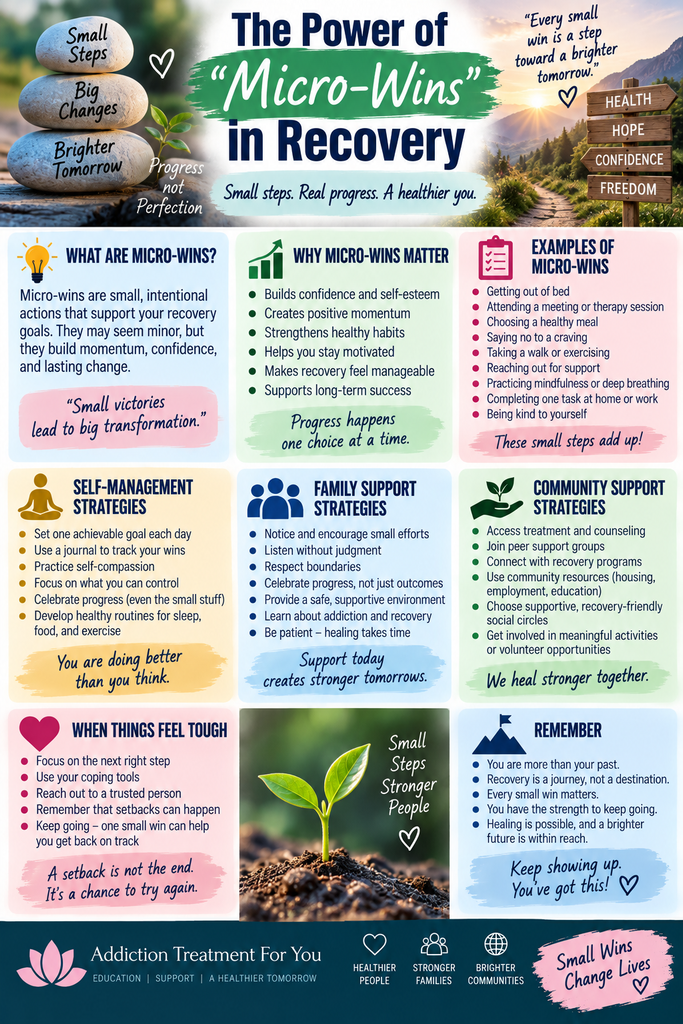
Recovery from addiction is often measured by major milestones, such as completing treatment, reaching one year of sobriety, rebuilding relationships, or returning to work. While these achievements deserve recognition, they can sometimes overshadow the smaller accomplishments that make long-term recovery possible.
For someone struggling with addiction, getting out of bed, attending a therapy session, resisting a craving, or asking for help can represent meaningful progress. These seemingly minor accomplishments are known as micro-wins—small, intentional actions that support recovery and gradually build confidence, motivation, and healthier habits.
Micro-wins help individuals recognize that recovery is not defined solely by major achievements or the absence of setbacks. Instead, it involves making repeated choices that support physical health, emotional well-being, and personal growth.
By recognizing daily progress, individuals can strengthen their sense of self-efficacy, develop healthier coping strategies, and remain engaged in treatment.
Family members and communities also play important roles by acknowledging small accomplishments, providing encouragement, and creating environments where progress is valued over perfection.
Recovery isn’t built on one extraordinary decision. It develops through many small actions repeated over time.
What Are Micro-Wins in Addiction Recovery?
Micro-wins are small, achievable accomplishments that move an individual toward a larger recovery goal.
They may involve changes in behavior, emotional regulation, physical health, relationships, or participation in treatment.
Unlike major recovery milestones, micro-wins focus on actions that can be completed within a relatively short period.
For example, someone recovering from alcohol use disorder may establish a goal of maintaining long-term sobriety. However, that goal may initially feel overwhelming.
Breaking it into smaller steps can make recovery more manageable.
Daily micro-wins might include:
- Attending a scheduled counseling appointment.
- Taking prescribed medication as directed.
- Choosing a nonalcoholic beverage during a social event.
- Contacting a supportive friend when experiencing cravings.
- Eating a nutritious meal.
- Going for a short walk instead of drinking.
- Practicing a grounding exercise during emotional distress.
- Completing one household responsibility.
- Going to bed at a consistent time.
- Asking for help before a difficult situation escalates.
Each action may seem insignificant on its own.
However, repeated actions can help establish healthier routines and support meaningful behavioral change.
Why micro-wins matter
Large recovery goals often require sustained effort over months or years.
Focusing exclusively on distant outcomes can discourage individuals when progress is slow.
Micro-wins provide opportunities to recognize improvement throughout recovery.
They can help individuals:
- Develop greater confidence in their ability to change.
- Break overwhelming goals into manageable actions.
- Strengthen healthy daily routines.
- Recognize progress beyond abstinence alone.
- Maintain motivation during challenging periods.
- Develop a more compassionate response to setbacks.
Micro-wins are not a replacement for evidence-based addiction treatment. They are practical tools that can complement treatment and support long-term recovery.
The Psychology Behind Micro-Wins: Why Small Successes Matter
Micro-wins are closely related to several established psychological concepts, including self-efficacy, behavioral activation, positive reinforcement, and habit formation.
Understanding these concepts helps explain why recognizing small accomplishments can support recovery.
Self-efficacy: Building confidence through action
Self-efficacy refers to a person’s belief in their ability to perform behaviors necessary to achieve a particular goal.
Individuals recovering from addiction may experience reduced confidence after repeated unsuccessful attempts to change their substance use.
Completing manageable tasks can provide evidence that change is possible.
For example, someone who successfully attends a recovery meeting despite feeling anxious may become more confident about attending future meetings.
Over time, repeated successes can strengthen confidence in handling increasingly difficult situations.
However, confidence alone does not eliminate cravings or prevent relapse. It works alongside treatment, social support, and other recovery resources.
Positive reinforcement: Encouraging healthy behaviors
Positive reinforcement occurs when a rewarding consequence increases the likelihood that a behavior will occur again.
In recovery, recognizing a completed goal may make an individual more willing to repeat that behavior.
For example, someone who completes a morning walk may experience a sense of accomplishment or improved mood.
Acknowledging that experience can help reinforce the decision to remain physically active.
Positive reinforcement can also involve encouragement from family members, supportive feedback from a therapist, or structured incentives within an evidence-based treatment program.
Behavioral activation: Taking action before motivation appears
Behavioral activation is a therapeutic approach that encourages individuals to engage in meaningful activities, even when motivation is low.
People experiencing depression or early addiction recovery may struggle to begin everyday tasks.
Instead of waiting until they feel motivated, they can start with a small, achievable action.
For example:
- Instead of cleaning the entire house, organize one drawer.
- Instead of exercising for an hour, take a five-minute walk.
- Instead of completing an entire journal entry, write one sentence.
- Instead of attempting to repair every relationship, send one supportive message.
Completing a small task may increase confidence and make additional activity feel more manageable.
Micro-wins help shift attention from everything left unfinished to what you can accomplish today.
How Micro-Wins Help Rebuild the Brain’s Reward System
Addiction involves changes in brain circuits associated with reward, motivation, learning, and behavioral control.
Repeated exposure to addictive substances can alter how individuals respond to substance-related cues and naturally rewarding activities.
During recovery, some individuals experience reduced enjoyment, low motivation, or difficulty finding satisfaction in everyday activities.
This experience is sometimes associated with anhedonia, a reduced ability to experience pleasure.
How small accomplishments support healthier reward experiences
Micro-wins can help individuals gradually reconnect with meaningful activities and natural sources of satisfaction.
Examples include:
- Completing a manageable task.
- Preparing a healthy meal.
- Spending time with supportive friends.
- Participating in an enjoyable hobby.
- Reaching a personal fitness goal.
- Learning a new skill.
- Helping another person.
These activities may provide opportunities for positive reinforcement and support healthier behavioral patterns.
However, it is important to distinguish between psychological motivation and neurological recovery.
Micro-wins do not directly reset dopamine levels or repair addiction-related brain changes.
Brain recovery is complex and varies by substance, duration of use, co-occurring conditions, treatment, and individual biological factors.
Micro-wins can support recovery by encouraging healthier behaviors, but they should not be presented as a substitute for medical treatment or as a guaranteed way to restore brain function.
Self-Management Strategies: Using Micro-Wins to Build Daily Recovery Habits
Self-management involves developing practical skills that support physical health, emotional regulation, treatment engagement, and long-term recovery.
Micro-wins can make self-management more manageable by transforming large goals into smaller actions.
Start with one achievable daily goal
Attempting to change every aspect of life immediately after beginning recovery can create unnecessary pressure.
Instead, choose one action that can realistically be completed today.
Examples include:
- Drinking a glass of water after waking up.
- Eating breakfast before leaving home.
- Taking prescribed medication on schedule.
- Attending one recovery meeting.
- Spending five minutes practicing mindfulness.
- Contacting a trusted support person.
- Completing one household responsibility.
Once the behavior becomes more consistent, you can introduce additional goals.
The objective is to develop sustainable routines rather than achieve perfection.
Use the SMART goal framework
SMART goals are specific, measurable, achievable, relevant, and time-bound.
Instead of setting a broad goal such as “I want to become healthier,” choose a more concrete action.
For example:
“I will take a 10-minute walk after lunch on Monday, Wednesday, and Friday.”
This goal identifies the behavior, duration, and schedule.
Other examples include:
- Attending two counseling sessions this month.
- Preparing one healthy meal each day.
- Practicing a grounding exercise for three minutes when experiencing stress.
- Contacting a recovery support person before attending a high-risk social event.
Specific goals make it easier to recognize progress and identify when additional support is needed.
Track and Celebrate Small Accomplishments
Recovery can feel discouraging when individuals focus primarily on mistakes, cravings, or unfinished goals.
Tracking micro-wins provides a practical way to recognize progress that might otherwise go unnoticed.
Keep a daily recovery journal
A recovery journal can include three simple questions:
- What small accomplishment did I achieve today?
- What challenge did I experience?
- What is one manageable action I can take tomorrow?
For example:
“Today, I attended my counseling appointment even though I felt anxious. I experienced cravings after work but contacted my support person instead of drinking. Tomorrow, I will prepare dinner before leaving for work.”
This approach encourages self-reflection without requiring lengthy journal entries.
Create a micro-win checklist
A simple daily checklist may include:
- Took prescribed medication.
- Ate regular meals.
- Practiced one coping strategy.
- Contacted a supportive person.
- Completed one meaningful activity.
- Followed my treatment plan.
Not every item needs to be completed every day.
The checklist should provide encouragement and structure, not become another source of guilt or pressure.
Celebrate progress without using substances
Acknowledging accomplishments can strengthen motivation.
Healthy rewards may include:
- Watching a favorite movie.
- Spending time outdoors.
- Enjoying a favorite meal.
- Purchasing an inexpensive item related to a hobby.
- Spending time with supportive friends.
- Taking a relaxing bath.
- Participating in a meaningful activity.
Rewards should align with recovery goals and avoid creating additional financial or behavioral problems.
Micro-Wins During Cravings and High-Risk Situations
Cravings are common during recovery from substance use disorders.
They may be triggered by stress, environmental cues, emotional distress, social situations, or exposure to substances.
A craving does not mean that treatment has failed.
Micro-wins can help individuals focus on manageable actions during difficult moments.
Break cravings into smaller decisions
Instead of focusing on never experiencing another craving, concentrate on the next helpful action.
Examples include:
- Moving away from a substance-related trigger.
- Contacting a trusted recovery support person.
- Practicing slow breathing.
- Drinking water or eating a meal if hungry.
- Engaging in a brief, absorbing activity.
- Reviewing a personalized relapse prevention plan.
- Attending a recovery meeting or contacting a treatment provider.
A micro-win may simply involve recognizing a craving and asking for help before acting on it.
Develop an emergency coping plan
Individuals can work with their treatment providers to develop a personalized plan for high-risk situations.
The plan may identify:
- Common emotional and environmental triggers.
- Early warning signs of increased relapse vulnerability.
- Coping strategies that have previously been helpful.
- Trusted people to contact.
- Treatment providers and crisis resources.
- Steps to take if substance use occurs.
For individuals with opioid use disorder, overdose prevention should also be part of recovery planning, including access to naloxone and education about its use.
A successful recovery response does not require eliminating every craving. It involves developing safer ways to respond when cravings occur.
Family Support Strategies: Recognizing Progress Without Creating Pressure
Family members often focus on major recovery outcomes, such as complete abstinence, employment, financial stability, or restored relationships.
Although these goals may be important, they can take time to achieve.
Recognizing smaller accomplishments can help families provide encouragement while maintaining realistic expectations.
Acknowledge effort and specific behaviors
Instead of offering only general praise, family members can recognize particular actions.
Examples include:
- “I appreciate that you attended your treatment appointment today.”
- “Thank you for being honest about how you are feeling.”
- “I noticed that you reached out for support when things became difficult.”
- “It means a lot that you followed through on our plans.”
Specific encouragement helps individuals recognize the behaviors that contribute to recovery.
However, praise should remain genuine and should not be used to pressure someone into meeting another person’s expectations.
Avoid comparing recovery journeys
Recovery experiences vary considerably.
One person may return to work shortly after beginning treatment, while another may need additional time to stabilize their mental health or living situation.
Comparisons can increase shame and discourage people progressing at a different pace.
Families can help by:
- Recognizing individual progress.
- Avoiding comparisons with other people in recovery.
- Respecting the person’s treatment goals.
- Encouraging realistic expectations.
- Supporting continued treatment engagement.
Evaluate recovery based on the individual’s circumstances and clinical needs.
Support healthy routines
Families can help individuals maintain manageable recovery goals by creating predictable and supportive environments.
Helpful approaches include:
- Encouraging regular meals and consistent sleep.
- Providing transportation to treatment appointments when possible.
- Participating in enjoyable substance-free activities.
- Respecting privacy and personal boundaries.
- Supporting healthy communication.
- Helping individuals identify practical solutions to everyday challenges.
Family support should promote autonomy rather than controlling every aspect of the individual’s recovery.
Respond constructively to setbacks
If substance use occurs during recovery, family members may experience disappointment, fear, or frustration.
However, shaming or threatening responses can make it more difficult for individuals to seek help.
A constructive response may involve:
- Prioritizing immediate medical safety.
- Encouraging honest communication.
- Helping the individual reconnect with treatment.
- Reviewing potential triggers and unmet support needs.
- Maintaining appropriate personal boundaries.
- Recognizing that previous accomplishments still matter.
A return to substance use may require changes to the treatment plan, but it does not erase the skills and progress developed before the event.
Community Support Strategies: Creating Environments That Recognize Small Victories
Recovery depends on more than individual motivation.
Access to healthcare, stable housing, employment, transportation, supportive relationships, and community resources can affect a person’s ability to maintain treatment and achieve recovery goals.
Communities can help by creating environments where small accomplishments are recognized, and individuals have opportunities to build on their progress.
Expand access to evidence-based addiction treatment
Community healthcare organizations can support recovery by providing:
- Affordable addiction treatment services.
- Medication treatment for opioid and alcohol use disorders.
- Mental health screening and treatment.
- Peer recovery support.
- Transportation assistance.
- Flexible appointment scheduling.
- Recovery housing and employment resources.
Reducing practical barriers can make it easier for individuals to complete manageable recovery goals.
Encourage peer recovery support
Peer recovery specialists use their lived experience of recovery to support others.
They may help individuals establish realistic goals, identify resources, and recognize personal accomplishments.
Examples of peer-supported micro-wins include:
- Attending an initial treatment appointment.
- Completing an application for housing assistance.
- Developing a daily routine.
- Reconnecting with a supportive family member.
- Participating in a community activity.
- Establishing a plan for managing cravings.
Peer support can complement professional treatment by providing encouragement and practical assistance.
Support recovery-friendly workplaces
Employment can provide structure, financial stability, social connection, and opportunities for personal growth.
However, individuals in early recovery may experience challenges related to treatment schedules, mental health symptoms, or rebuilding daily routines.
Recovery-supportive workplaces can help by:
- Providing access to employee assistance programs.
- Supporting reasonable treatment-related scheduling needs.
- Maintaining confidential procedures for seeking assistance.
- Promoting respectful communication.
- Avoiding unnecessary stigma surrounding addiction treatment.
- Recognizing consistent effort and professional development.
A recovery-friendly workplace should evaluate employees according to appropriate job-related standards while supporting access to healthcare and recovery resources.
Micro-Wins and the Connection Between Trauma and Addiction
Many individuals experiencing substance use disorders also have histories of trauma, although trauma is not present in every case.
Trauma-related symptoms may include anxiety, intrusive memories, emotional numbness, sleep disturbances, or difficulty trusting others.
For individuals managing both trauma-related symptoms and addiction, large recovery goals may feel especially overwhelming.
Micro-wins can provide manageable opportunities to practice emotional regulation and rebuild confidence.
Examples of trauma-informed micro-wins
- Recognizing an emotional trigger without blaming yourself.
- Practicing a grounding technique during distress.
- Communicating a personal boundary.
- Attending a trauma-focused therapy appointment.
- Asking for support when feeling overwhelmed.
- Creating a calming physical environment.
- Completing one enjoyable activity.
- Identifying one person who provides emotional safety.
These actions can support emotional stability while individuals participate in appropriate mental health and addiction treatment.
However, micro-wins should not be used to pressure trauma survivors to confront painful memories or participate in activities before they are ready.
Trauma-informed recovery emphasizes safety, personal choice, collaboration, and respect for individual readiness.
How Micro-Wins Can Help After a Recovery Setback
Recovery does not always follow a predictable path.
Some individuals experience periods of increased cravings, emotional distress, reduced motivation, or a return to substance use.
During these periods, focusing exclusively on previous milestones may contribute to feelings of shame or hopelessness.
Micro-wins can help individuals identify practical steps toward reengaging with recovery.
Rebuilding momentum after a setback
Helpful actions may include:
- Contacting a healthcare professional or treatment provider.
- Discussing what happened with a trusted support person.
- Returning to a regular sleep and meal schedule.
- Attending the next scheduled treatment appointment.
- Reviewing the relapse prevention plan.
- Identifying one manageable goal for the following day.
- Reassessing whether additional treatment or support is needed.
If substance use resumes after a period of abstinence, overdose risk may increase because tolerance can decrease. This is especially important for individuals with opioid use disorder.
Medical safety should take priority over goal tracking or motivational exercises.
Avoid the all-or-nothing mindset
All-or-nothing thinking occurs when individuals interpret progress as either complete success or total failure.
For example, someone may believe that missing one recovery meeting means they have failed their entire treatment plan.
A more balanced perspective recognizes that one missed appointment does not erase previous progress.
However, it may indicate a need to identify barriers and adjust the plan.
Micro-wins can help individuals recognize that recovery involves multiple behaviors and that progress can continue after difficult experiences.
A Seven-Day Micro-Win Challenge for Recovery
The following seven-day challenge provides a simple starting point for individuals who want to incorporate micro-wins into their recovery routines.
Adjust these activities to fit personal circumstances and treatment recommendations.
Day 1: Recognize one accomplishment
Write down one positive action you completed today.
It may involve attending treatment, preparing a meal, asking for help, or completing a household responsibility.
Day 2: Establish one healthy routine
Choose one manageable behavior that supports physical or emotional health.
Examples include drinking water after waking up, eating breakfast, or establishing a consistent bedtime.
Day 3: Connect with a supportive person
Contact a trusted friend, family member, peer recovery specialist, or treatment provider.
You do not need to discuss every aspect of recovery to benefit from supportive social connection.
Day 4: Practice one coping strategy
Choose a coping technique that helps manage stress or cravings.
Examples include grounding exercises, physical activity, relaxation techniques, or contacting a recovery support person.
Day 5: Complete one meaningful activity
Participate in an activity that provides enjoyment, purpose, or a sense of accomplishment.
This may involve cooking, gardening, reading, volunteering, or engaging in a hobby.
Day 6: Recognize progress in a relationship
Identify one small action that supports healthier communication.
Examples include expressing appreciation, respecting a boundary, or following through on a commitment.
Day 7: Reflect and plan
Review the accomplishments you completed during the week.
Consider which activities were helpful and which goals may need adjustment.
Choose one manageable action to continue during the following week.
The purpose of this challenge is not to complete every task perfectly. It is to develop greater awareness of the small actions that support recovery.
When Micro-Wins Are Not Enough: The Importance of Professional Treatment
Micro-wins can strengthen motivation and support healthier habits, but addiction is a complex medical condition that may require comprehensive treatment.
Some individuals experience severe cravings, withdrawal symptoms, co-occurring psychiatric conditions, or repeated episodes of substance use despite their efforts to change.
In these situations, professional treatment may be necessary.
Evidence-based addiction treatment may include:
- Medical evaluation and withdrawal management when indicated.
- Medications for opioid or alcohol use disorders.
- Cognitive behavioral therapy.
- Motivational interviewing.
- Contingency management.
- Treatment for co-occurring mental health conditions.
- Peer recovery support.
- Family education and counseling.
- Long-term recovery monitoring and follow-up.
Individuals with alcohol or benzodiazepine dependence should seek medical guidance before abruptly stopping use because withdrawal can be dangerous and, in some cases, life-threatening.
Micro-wins are most useful when they support an individualized treatment plan rather than replace appropriate medical care.
What Does Long-Term Progress Look Like?
Long-term recovery involves more than reaching a particular number of substance-free days.
Depending on the individual’s circumstances and treatment goals, meaningful progress may include improvements in physical health, emotional well-being, relationships, employment, housing stability, and quality of life.
Examples of long-term recovery achievements include:
- Maintaining engagement with treatment.
- Developing healthier responses to cravings.
- Improving sleep and physical health.
- Establishing supportive relationships.
- Rebuilding trust through consistent behavior.
- Maintaining stable housing.
- Returning to meaningful work or education.
- Managing co-occurring mental health conditions.
- Developing a stronger sense of personal purpose.
These achievements often develop gradually through repeated daily actions.
Recognizing micro-wins can help individuals appreciate the progress occurring between major milestones.
Conclusion: Small Victories Can Create Meaningful Change
The power of micro-wins in recovery lies in their ability to make change feel manageable, achievable, and personally meaningful.
Rather than focusing exclusively on distant milestones, individuals can recognize the small actions that support healthier routines, emotional regulation, treatment engagement, and stronger relationships.
Self-management strategies help individuals establish realistic goals and acknowledge daily accomplishments. Families can encourage effort without creating unnecessary pressure. Communities can strengthen recovery by improving access to treatment, peer support, stable housing, and other essential resources.
Micro-wins do not eliminate the challenges of addiction or guarantee long-term recovery. However, they can help individuals build confidence, stay motivated, and recognize that progress is possible even during difficult periods.
Recovery is not defined by one perfect day or one extraordinary achievement. It is built through meaningful actions, supportive relationships, appropriate treatment, and the willingness to keep moving forward.
Every small step deserves recognition because lasting change often begins with the decision to take the next manageable step.
Resources for Addiction Recovery
If you or someone you know is struggling with substance use or experiencing a mental health crisis, confidential assistance is available.
SAMHSA National Helpline: Call 1-800-662-HELP (4357) for information about substance use and mental health treatment services.
988 Suicide & Crisis Lifeline: Call or text 988 for immediate mental health crisis support.
FindTreatment.gov: Visit the website to locate substance use and mental health treatment services in your area.
If someone is experiencing a suspected overdose, call 911 immediately. Administer naloxone if an opioid overdose is suspected and naloxone is available.
Frequently Asked Questions
Here are some common questions:
1. What are micro-wins in addiction recovery?
Micro-wins are small, achievable accomplishments that support an individual’s recovery goals. They may include attending a therapy session, taking prescribed medication, resisting a craving, preparing a healthy meal, or reaching out to a supportive person.
These small actions help individuals recognize progress without focusing exclusively on major milestones such as completing treatment or achieving one year of sobriety.
Micro-wins demonstrate that meaningful recovery can develop through consistent, manageable actions over time.
2. Why are micro-wins important in addiction recovery?
Micro-wins can help individuals build confidence, maintain motivation, and develop healthier daily routines. Recognizing small accomplishments may also reduce feelings of discouragement when larger recovery goals seem overwhelming.
Rather than focusing only on what remains unfinished, individuals can acknowledge the positive actions they have already taken.
Micro-wins can complement evidence-based addiction treatment by encouraging continued engagement and reinforcing healthier behaviors.
3. What are examples of micro-wins during early recovery?
Examples of micro-wins include:
- Getting out of bed and following a morning routine.
- Attending a counseling appointment or recovery meeting.
- Taking prescribed medication as directed.
- Eating a nutritious meal.
- Choosing a nonalcoholic beverage.
- Practicing a coping strategy during cravings.
- Contacting a trusted friend or recovery support person.
- Completing a household responsibility.
- Establishing a consistent bedtime.
- Asking for help when experiencing emotional distress.
The significance of a micro-win depends on the individual’s circumstances and recovery goals.
4. How do micro-wins help build confidence in recovery?
Micro-wins can strengthen self-efficacy, a person’s belief in their ability to perform the behaviors necessary to achieve a goal.
For example, successfully attending a recovery meeting despite feeling anxious may increase confidence about attending future meetings.
Repeated successful experiences can help individuals recognize their ability to make healthier decisions.
However, confidence alone does not prevent relapse. It should be supported by appropriate treatment, coping strategies, and social support.
5. Can small victories really lead to long-term recovery?
Small accomplishments can support long-term recovery by helping individuals build healthier routines and stay engaged in treatment.
For example, consistently attending appointments, taking prescribed medication, practicing coping skills, and maintaining supportive relationships can contribute to meaningful progress.
However, micro-wins do not guarantee long-term recovery or replace evidence-based addiction treatment.
Recovery outcomes depend on multiple biological, psychological, social, and environmental factors.
Self-Management and Daily Recovery Habits
6. How can I start incorporating micro-wins into my recovery routine?
Begin by choosing one small, achievable action that supports your recovery goals.
For example, you might decide to take a 10-minute walk, attend a counseling appointment, or contact a supportive person.
Once the behavior becomes more consistent, you can gradually introduce additional goals.
Avoid trying to change every aspect of your life at once. Small, sustainable changes are often easier to maintain than unrealistic expectations.
7. How can I track my micro-wins during recovery?
A recovery journal, daily checklist, calendar, or smartphone application can help you monitor small accomplishments.
Consider recording three things each day:
- One positive action you completed.
- One challenge you experienced.
- One manageable goal for tomorrow.
Tracking progress can help you identify helpful routines and recognize improvements that might otherwise go unnoticed.
However, goal tracking should provide encouragement rather than become a source of guilt or pressure.
8. How do micro-wins help someone manage cravings?
Micro-wins can help individuals focus on immediate, manageable actions when experiencing cravings.
For example, a person may recognize a craving, move away from a substance-related trigger, contact a support person, or practice a coping strategy.
Each action can contribute to a safer response and reinforce healthier coping mechanisms.
Cravings are common during recovery and do not automatically indicate that treatment has failed.
Individuals experiencing frequent or severe cravings should discuss their symptoms with their treatment provider.
9. Can micro-wins help improve motivation during recovery?
Yes. Completing manageable tasks can provide a sense of accomplishment and encourage individuals to continue working toward their goals.
For someone experiencing low motivation, beginning with a small action may feel more achievable than attempting a major lifestyle change.
This approach is consistent with behavioral activation, which encourages participation in meaningful activities even when motivation is limited.
However, persistent low motivation may also be associated with depression, withdrawal, sleep disturbances, or other conditions that require professional evaluation.
10. How do micro-wins support healthier habits?
Micro-wins encourage individuals to repeat manageable behaviors that support physical and emotional well-being.
For example, consistently preparing breakfast, attending treatment appointments, or practicing relaxation techniques can gradually become part of a daily routine.
Repeating these behaviors consistently can help strengthen habits over time.
The time required to establish a habit varies depending on the behavior, individual circumstances, and environmental factors.
Family Support and Encouragement
11. How can family members recognize micro-wins during addiction recovery?
Family members can acknowledge specific positive behaviors rather than focusing exclusively on major recovery milestones.
For example, they might recognize that a loved one attended treatment, communicated honestly about cravings, or followed through on a personal commitment.
Helpful statements include:
- “I appreciate that you attended your appointment today.”
- “Thank you for reaching out when things became difficult.”
- “I noticed the effort you made to follow through on your plans.”
- “I’m glad you asked for support when you needed it.”
Encouragement should remain genuine and avoid pressuring someone to meet recovery milestones on someone else’s timeline.
12. Can celebrating small victories improve family relationships?
Recognizing positive behaviors may help create opportunities for supportive communication and strengthen relationships during recovery.
For example, acknowledging consistent effort, honesty, or improved communication can reinforce healthier interactions.
However, rebuilding trust after addiction-related difficulties often requires time, accountability, and repeated behavior changes.
Celebrating micro-wins should not require family members to ignore harmful behavior or abandon appropriate personal boundaries.
13. How can families encourage recovery without creating pressure?
Families can support recovery by recognizing effort, respecting personal boundaries, and encouraging continued engagement in treatment.
Helpful approaches include:
- Avoiding comparisons with other people in recovery.
- Recognizing progress without demanding perfection.
- Supporting healthy routines.
- Encouraging open communication.
- Offering practical assistance when appropriate.
- Respecting the individual’s treatment decisions.
Family members should also maintain their own emotional well-being and seek support when needed.
14. Should families celebrate every small recovery accomplishment?
Families can acknowledge meaningful progress without turning every daily action into a formal celebration.
Some individuals appreciate verbal encouragement, while others prefer private recognition or practical support.
The most helpful approach is to ask the person what type of encouragement feels comfortable.
Celebrations should support autonomy and avoid making the individual feel monitored, judged, or pressured.
15. How should families respond when someone experiences a recovery setback?
Families should prioritize immediate safety and encourage the individual to reconnect with appropriate treatment and support.
A constructive response may involve discussing potential triggers, identifying unmet needs, and reviewing the recovery plan with a healthcare professional.
Family members can acknowledge previous progress while recognizing that a return to substance use may require additional treatment.
Shame, threats, and humiliation can discourage individuals from seeking help.
However, families should maintain appropriate boundaries and protect their own safety.
Community Support and Professional Treatment
16. How can recovery support groups encourage micro-wins?
Recovery support groups can give individuals opportunities to share accomplishments, discuss challenges, and receive encouragement from others with similar experiences.
Participants may recognize achievements such as attending treatment, practicing coping strategies, rebuilding relationships, or completing personal goals.
Peer support can reduce isolation and provide practical encouragement.
However, support groups should complement professional treatment when medical or mental health care is needed.
17. What role do peer recovery specialists play in recognizing small victories?
Peer recovery specialists use their lived experience of recovery to provide encouragement, practical guidance, and connections to community resources.
They may help individuals establish manageable goals, recognize progress, and identify barriers to treatment.
For example, a peer specialist might help someone schedule an appointment, apply for housing assistance, or develop a daily recovery routine.
Peer support can strengthen recovery engagement but does not replace medical treatment or licensed mental health services.
18. How can communities create environments that support micro-wins?
Communities can support recovery by improving access to affordable treatment, stable housing, transportation, employment assistance, and peer support services.
Recovery-friendly workplaces, community organizations, and healthcare facilities can also provide environments where individuals feel respected and supported.
Reducing practical barriers makes it easier for individuals to complete manageable recovery goals and stay engaged in treatment.
19. Can micro-wins replace professional addiction treatment?
No. Micro-wins are motivational and behavioral strategies that can complement evidence-based addiction treatment.
Substance use disorders may require medical evaluation, medications, psychotherapy, withdrawal management, and ongoing recovery support.
For example, medications such as buprenorphine and methadone are evidence-based treatments for opioid use disorder.
Individuals with alcohol or benzodiazepine dependence should seek medical guidance before abruptly stopping use because withdrawal can be dangerous and potentially life-threatening.
20. How can healthcare professionals incorporate micro-wins into addiction treatment?
Healthcare professionals can help patients set realistic, measurable goals aligned with their individual treatment plans.
Examples include:
- Attending scheduled appointments.
- Taking prescribed medication consistently.
- Practicing a coping strategy during cravings.
- Improving sleep or nutrition.
- Contacting a support person during high-risk situations.
- Completing a manageable daily responsibility.
Clinicians can review these accomplishments during follow-up visits and adjust treatment goals according to the patient’s progress and needs.
Micro-wins can also be incorporated into structured behavioral interventions, including contingency management, when clinically appropriate.
Trauma, Setbacks, and Long-Term Recovery
21. Can micro-wins help individuals recovering from both trauma and addiction?
Yes. Individuals experiencing trauma-related symptoms and substance use disorders may benefit from breaking larger recovery goals into smaller, manageable actions.
Examples include practicing a grounding technique, attending therapy, establishing a personal boundary, or contacting a trusted support person.
These actions can help individuals develop emotional regulation skills and recognize progress.
However, trauma-informed recovery should prioritize safety, personal choice, and appropriate professional treatment.
22. What happens if I cannot complete my daily micro-win goals?
Missing a daily goal does not mean that recovery has failed.
Consider whether the goal was realistic, whether unexpected circumstances interfered, or whether you need additional support.
You may benefit from adjusting the goal into a smaller action or choosing a different activity.
For example, if a 30-minute walk feels overwhelming, a five-minute walk may be more manageable.
Micro-wins support progress, not another standard of perfection.
23. Do micro-wins still matter after a relapse?
Yes. Previous accomplishments and learned coping skills do not disappear after a return to substance use.
However, immediate safety and appropriate medical care should take priority.
A person may begin rebuilding recovery momentum by contacting their treatment provider, discussing what happened, reviewing their relapse prevention plan, and identifying manageable next steps.
A return to substance use may indicate that treatment or support needs should be reassessed.
For individuals with opioid use disorder, overdose risk may increase after a period of abstinence because tolerance can decrease.
24. How can I recognize micro-wins when recovery feels overwhelming?
When recovery feels overwhelming, focus on one manageable action rather than trying to solve every problem at once.
For example, you might contact a trusted person, attend a treatment appointment, eat a meal, or practice a brief grounding exercise.
Recognizing these actions can help you acknowledge progress during difficult periods.
If emotional distress becomes persistent or interferes with daily functioning, consider seeking additional support from a healthcare professional.
25. What is the most important lesson about micro-wins in recovery?
The power of micro-wins lies in recognizing that meaningful progress can develop through small, repeated actions.
Recovery does not depend on achieving every goal immediately or completing each day perfectly.
By setting manageable goals, practicing healthier coping strategies, staying engaged in treatment, and seeking appropriate support, individuals can gradually strengthen their recovery.
Small victories may not transform a person’s life overnight, but they can help build the confidence, routines, and support needed for meaningful long-term change.
Where Can Someone Find Help for Addiction Recovery?
Individuals struggling with substance use or experiencing a mental health crisis can access confidential assistance through the following resources.
SAMHSA National Helpline: Call 1-800-662-HELP (4357) for information about substance use and mental health treatment services.
988 Suicide & Crisis Lifeline: Call or text 988 for immediate mental health crisis support.
FindTreatment.gov: Visit the website to locate substance use and mental health treatment services in your area.
If someone is experiencing a suspected overdose, call 911 immediately. Administer naloxone if an opioid overdose is suspected and naloxone is available.
Remember: Recovery is a journey built through meaningful actions, supportive relationships, and appropriate treatment. Every small step toward better health and well-being deserves recognition.
Video: Why your small wins matter more than you know #soberlife #progress