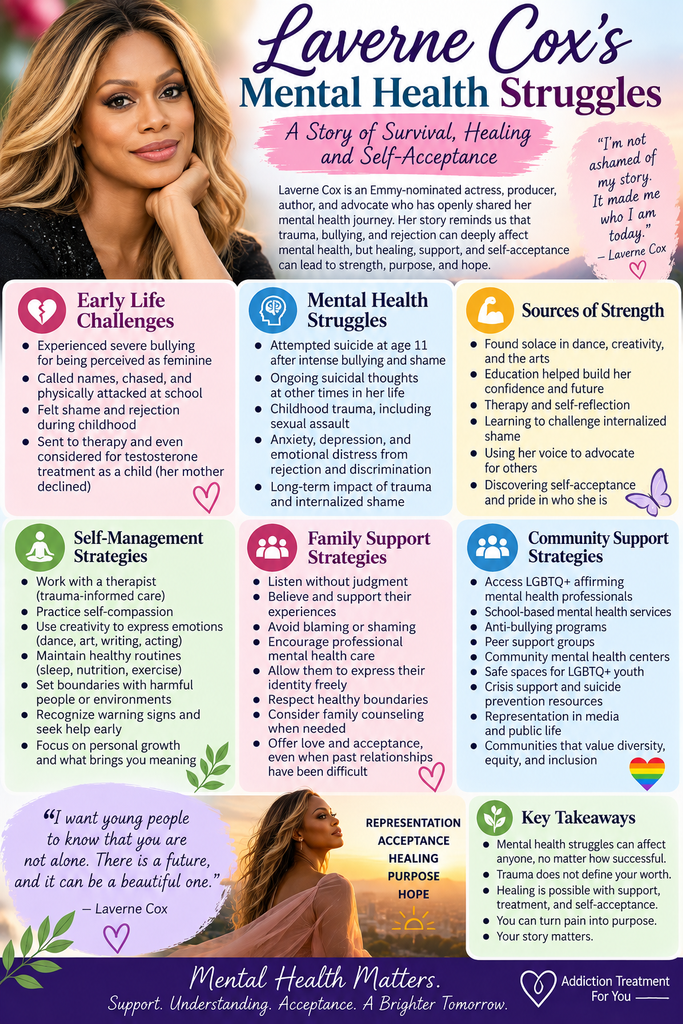
Laverne Cox is an Emmy-nominated actress, producer, author, and advocate best known for her groundbreaking role as Sophia Burset on Orange Is the New Black. Behind her professional achievements is a deeply personal mental-health journey involving childhood bullying, shame, trauma, suicidal thoughts, and the difficult process of learning self-acceptance. Cox has spoken publicly about these experiences for years and discussed them in greater depth in her 2026 memoir, Transcendent.
Her experiences provide an important opportunity to discuss how trauma, rejection, discrimination, and isolation can affect mental health—and how therapy, creativity, supportive relationships, community connection, and self-acceptance can contribute to healing.
Childhood Bullying and Shame
Growing up in Mobile, Alabama, Cox experienced severe bullying because other children perceived her as feminine. She has described being called derogatory names, chased home from school, and physically attacked. Cox has explained that she eventually internalized some of those messages and began policing her own behavior and gender expression.
As a child, she was also sent to therapy after a teacher expressed concern about her femininity. Cox has described those early therapeutic experiences as profoundly shaming rather than affirming. In more recent interviews, she has said that testosterone treatment was proposed when she was about eight or nine, but her mother declined it.
Repeated bullying and rejection can have serious psychological consequences. When children repeatedly hear that something is wrong with who they are, those external messages can gradually become internal ones.
Suicide Attempt and Emotional Distress
One of the most painful parts of Cox’s story occurred when she was 11. She has publicly described attempting suicide by taking pills after experiencing intense shame, bullying, religious conflict, and distress surrounding her identity.
Cox has also said that although this was her only suicide attempt, suicidal thoughts continued at other points in her life. She has described later periods of self-destructive behavior and the exhaustion of experiencing harassment in public spaces.
Her experience demonstrates why childhood bullying should never be dismissed as simply a normal part of growing up. Persistent humiliation, violence, rejection, and isolation can create profound emotional distress.
Trauma, Abuse, and Healing
In 2026, Cox disclosed additional experiences from her childhood, including sexual assault as a young teenager and other forms of abuse and neglect. She described carrying shame and feelings of being unwanted or unworthy of love for years.
Importantly, Cox does not present healing as something she has completely finished. While discussing her memoir, she acknowledged that some early experiences remain emotionally difficult despite the extensive work she has done on herself.
This is an important lesson about trauma recovery. Healing does not necessarily mean forgetting what happened. It can involve understanding the experience, developing healthier responses to painful memories, rebuilding self-worth, and recognizing that trauma does not determine a person’s value or future.
Self-Management Strategies
Cox has spoken about therapy, creativity, dance, education, self-reflection, and learning to challenge internalized shame. She has described dance and education as particularly important sources of strength during her youth.
For someone experiencing trauma-related emotional difficulties, healthy self-management strategies may include:
- Recognizing internalized negative messages. Ask whether harsh thoughts about yourself reflect reality or messages learned through bullying, rejection, or discrimination.
- Working with a qualified therapist. Trauma-informed therapy can help people process painful experiences and develop healthier coping strategies.
- Finding healthy forms of expression. Dance, music, acting, writing, art, and other creative activities can provide meaningful ways to express emotions.
- Developing self-compassion. Replace constant self-criticism with more realistic, compassionate self-talk.
- Establishing boundaries. Sometimes, distance from harmful relationships or environments may be necessary for emotional well-being.
- Maintaining supportive relationships. Connection with people who provide respect and acceptance can counteract isolation.
- Recognizing warning signs. Increasing hopelessness, withdrawal, self-harm, or suicidal thoughts should prompt immediate professional support.
- Finding purpose. Education, creativity, advocacy, work, spirituality, or service to others can help create meaning beyond painful experiences.
Self-management should complement—not replace—professional mental-health treatment when symptoms are severe or persistent.
Family Support Strategies
Cox has described a complicated relationship with her mother. In recent interviews, she has discussed both painful childhood experiences and her decision as an adult to maintain a relationship with her mother while developing boundaries and acknowledging her mother’s limitations.
Families supporting someone experiencing emotional distress can:
- Listen without judgment or ridicule.
- Believe someone when they describe bullying, abuse, harassment, or discrimination.
- Avoid blaming children for being bullied.
- Encourage professional mental-health care when needed.
- Allow family members to express themselves without humiliation.
- Learn about trauma and its potential long-term effects.
- Respect healthy boundaries.
- Participate in family counseling when appropriate.
- Recognize and address harmful patterns that may pass between generations.
- Offer acceptance while allowing the individual to determine their own identity and life direction.
Family relationships do not have to be perfect to improve. Sometimes progress involves honest conversations, forgiveness when appropriate, stronger boundaries, or accepting that certain relationships may need distance.
Community Support Strategies
Cox has repeatedly emphasized the importance of people seeing themselves represented and realizing they are not alone. When discussing transgender representation, she has described how seeing one’s experiences reflected can provide validation and hope.
Communities can support people experiencing mental-health difficulties through:
- Trauma-informed therapists and counselors.
- School-based mental-health services.
- Anti-bullying programs.
- Peer-support groups.
- LGBTQ+ affirming mental-health resources.
- Community mental-health centers.
- Suicide-prevention programs.
- Safe spaces for young people experiencing rejection or harassment.
- Education for parents, teachers, and healthcare professionals.
- Crisis-intervention services.
Schools have an especially important responsibility. Children experiencing bullying need adults who intervene rather than blaming them or expecting them to handle violence alone.
Turning Shame Into Self-Acceptance
A recurring theme in Cox’s recent reflections is freedom from shame. While writing Transcendent, she revisited experiences that had remained extremely painful. She has described eventually reaching a place where she genuinely recognizes herself as worthy of love.
That transformation is particularly meaningful because trauma frequently changes how people see themselves. Someone who has repeatedly experienced rejection may begin believing that rejection reflects something fundamentally wrong with them.
Recovery can involve challenging that belief.
Instead of asking, “What is wrong with me?” a healthier question may become, “What happened to me, how did it affect me, and what do I need now to heal?”
Lessons From Laverne Cox’s Journey
Cox’s experiences demonstrate that mental-health struggles do not occur in isolation. Bullying, trauma, family relationships, discrimination, social rejection, and community attitudes can all influence emotional well-being.
Her story also demonstrates the importance of protective factors. Creativity, education, meaningful work, therapy, supportive relationships, community connection, self-expression, and finding purpose can provide important sources of resilience.
Healing does not require pretending that painful experiences never happened. It can mean refusing to allow those experiences to determine one’s worth.
Conclusion
Laverne Cox’s mental-health journey includes severe childhood bullying, trauma, shame, a suicide attempt, later suicidal thoughts, and years of working toward greater self-understanding and acceptance. Her experiences also include creativity, education, therapy, advocacy, meaningful relationships, and gradually reclaiming the parts of herself she once felt pressured to suppress.
Self-management can help someone recognize harmful internal messages and develop healthier coping strategies. Families can provide acceptance, protection, appropriate boundaries, and encouragement. Communities can reduce isolation by providing safe environments, professional mental-health services, representation, and meaningful social connection.
Perhaps one of the strongest lessons from Cox’s journey is that shame grows when people believe they must hide who they are or what happened to them. Healing can begin when secrecy is replaced with safety, compassionate support, professional care, and the understanding that a person’s painful experiences do not determine their worth.
Safety note: Anyone experiencing suicidal thoughts or an immediate mental-health crisis in the United States can call or text 988 to reach the Suicide & Crisis Lifeline.
Frequently Asked Questions
Here are some common questions:
1. Has Laverne Cox publicly discussed mental health struggles?
Yes. Laverne Cox has spoken publicly about childhood bullying, shame, trauma, suicidal thoughts, and the emotional effects of rejection and discrimination. She has also discussed healing, therapy, self-acceptance, and learning to challenge negative beliefs about herself.
2. Did Laverne Cox experience bullying as a child?
Yes. Cox has described being severely bullied while growing up in Mobile, Alabama, because other children perceived her as feminine. She has said she was called derogatory names, chased, and physically attacked. Persistent bullying can contribute to anxiety, depression, isolation, low self-esteem, and suicidal thoughts.
3. Did Laverne Cox attempt suicide?
Cox has publicly stated that she attempted suicide at age 11 by taking pills. She has connected this period with intense bullying, shame, and conflict surrounding how she perceived herself and how others treated her.
4. Has Laverne Cox experienced suicidal thoughts as an adult?
Cox has discussed experiencing suicidal thoughts at other periods of her life. Her openness highlights why suicidal thinking should always be taken seriously, even when someone appears successful or confident publicly.
5. How did childhood rejection affect Laverne Cox?
Cox has described internalizing negative messages about herself after years of bullying and rejection. When children repeatedly hear that something about them is unacceptable, they may begin to believe those messages. This can contribute to shame and difficulties with self-worth.
6. Has Laverne Cox discussed childhood trauma?
Yes. Cox has publicly discussed painful childhood experiences, including bullying and abuse. Trauma can affect emotional regulation, relationships, self-esteem, feelings of safety, and responses to stress. However, experiencing trauma does not determine someone’s future.
7. What helped Laverne Cox cope with difficult experiences?
Cox has spoken about creativity, dance, acting, education, therapy, self-reflection, supportive relationships, and eventually developing greater self-acceptance. Meaningful activities can provide healthy outlets for emotions while helping people develop identity and purpose.
8. How can therapy help someone who has experienced trauma or bullying?
Trauma-informed therapy can help individuals understand how past experiences influence current emotions and behaviors. Treatment may also help people challenge negative beliefs, develop coping skills, establish boundaries, process traumatic memories, and rebuild self-esteem.
9. What self-management strategies can help someone experiencing similar struggles?
Helpful approaches can include:
- Maintaining regular sleep, nutrition, and physical activity.
- Identifying emotional triggers.
- Practicing self-compassion rather than constant self-criticism.
- Using art, music, dance, writing, or other creative outlets.
- Establishing boundaries with harmful people or environments.
- Staying connected with supportive individuals.
- Working with a qualified mental-health professional.
- Seeking immediate help when suicidal or self-harming thoughts occur.
10. Why is self-acceptance important for mental health?
Constantly believing that something is fundamentally wrong with you can contribute to shame, anxiety, depression, and isolation. Developing self-acceptance does not mean ignoring areas for personal growth. It means recognizing your basic worth while working toward healthier thoughts, relationships, and behaviors.
11. How can families support someone struggling with identity, bullying, or trauma?
Families can listen without judgment, take reports of bullying seriously, avoid ridicule or shaming, encourage professional help, provide emotional safety, and respect healthy boundaries. Family counseling may also help when relationships have become strained.
12. Why is family acceptance important?
Feeling accepted by important people can provide emotional security, particularly during childhood and adolescence. Families don’t have to understand every aspect of someone’s experience immediately to communicate love, safety, respect, and a willingness to learn.
13. What role can schools play in preventing mental-health problems related to bullying?
Schools can establish effective anti-bullying policies, intervene when harassment occurs, provide access to counselors, educate students about respectful behavior, and create safe ways for students to report bullying. Adults should avoid dismissing repeated harassment as simply part of growing up.
14. How can communities support people experiencing similar difficulties?
Community resources can include therapists, primary-care clinicians, community mental-health centers, peer-support groups, school counselors, crisis programs, and organizations providing supportive services to people experiencing discrimination or social isolation.
15. Why does representation matter for mental health?
Seeing people with similar experiences living meaningful and successful lives can reduce feelings of isolation. Representation can communicate a powerful message to someone who feels different or rejected: You are not the only one.
16. Can discrimination affect mental health?
Yes. Repeated discrimination, harassment, violence, rejection, and social exclusion can create chronic stress and contribute to psychological distress. Addressing mental health therefore involves not only helping individuals cope but also creating safer and more supportive environments.
17. Can someone heal from childhood trauma?
Many people experience substantial improvement with appropriate support. Healing may involve therapy, healthy relationships, self-compassion, boundaries, meaningful activities, and learning to separate one’s identity from the harmful messages received during traumatic experiences.
18. What is an important lesson from Laverne Cox’s journey?
Her publicly described experiences demonstrate that painful experiences do not have to determine a person’s entire future. Someone who once experienced severe bullying, shame, and suicidal thoughts can develop greater self-understanding, purpose, meaningful relationships, and self-acceptance.
19. Why is it important to talk openly about suicide and mental health?
Responsible conversations can reduce stigma and make it easier for people to ask for help. Talking about suicidal thoughts should be done compassionately and without sensationalizing them, while emphasizing that treatment and crisis support are available.
20. What should someone do if they are experiencing suicidal thoughts?
Suicidal thoughts require immediate attention, particularly when someone has a plan, intent, or access to a means of harming themselves. Stay with the person when possible, involve trusted support, and seek professional or emergency assistance.
Safety note: In the United States, anyone experiencing suicidal thoughts or a mental-health crisis can call or text 988 to reach the Suicide & Crisis Lifeline. If there is immediate danger, call 911 or go to the nearest emergency department.
Video: