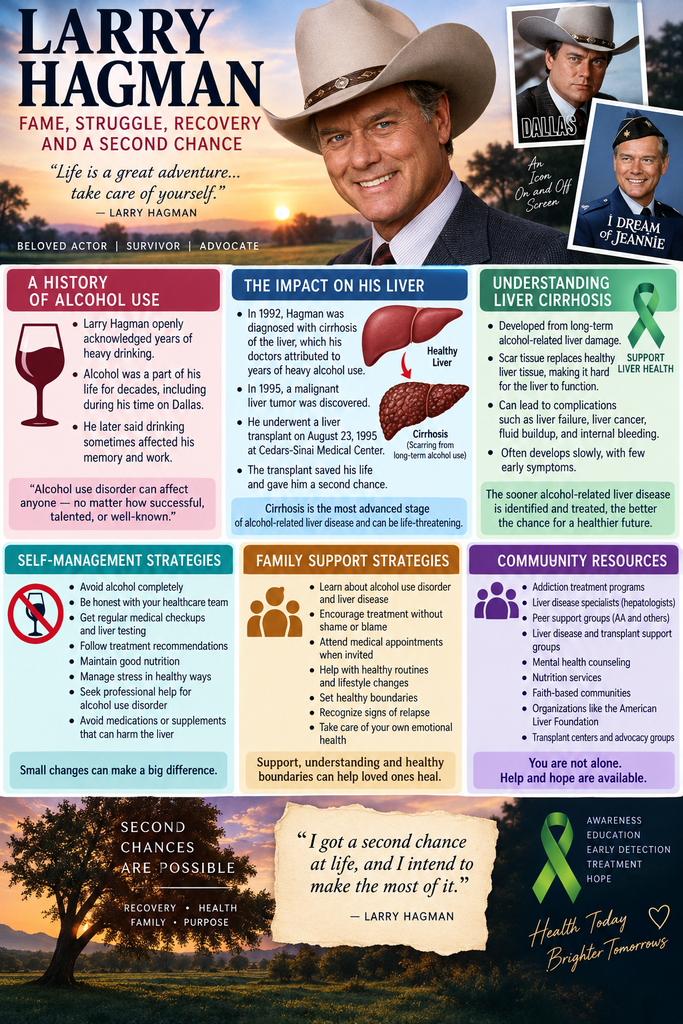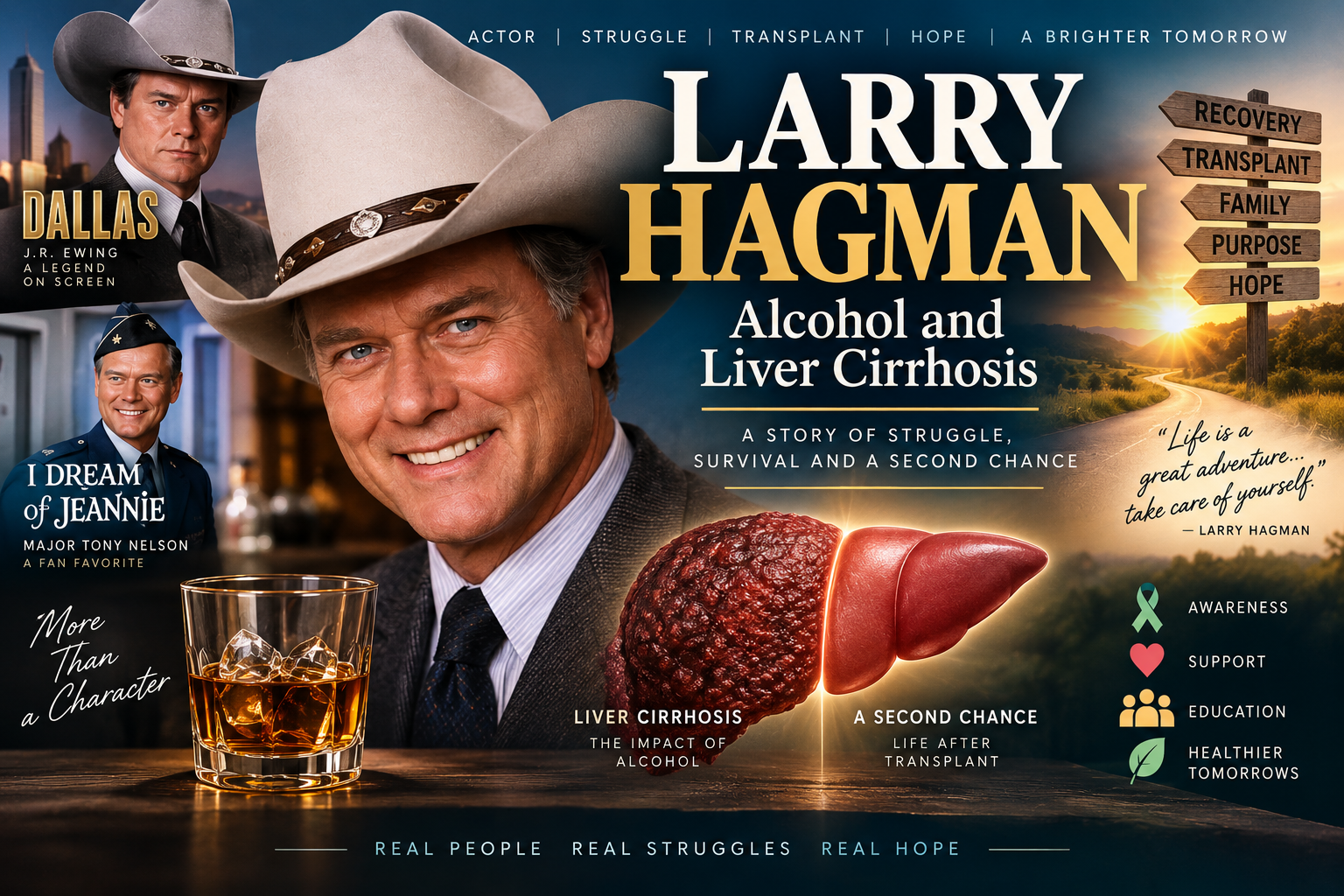
Larry Hagman became a television icon as J.R. Ewing on Dallas and Major Tony Nelson on I Dream of Jeannie. Behind his successful career, however, Hagman experienced years of heavy alcohol use that eventually contributed to serious liver disease. He was diagnosed with cirrhosis in 1992 and later developed a malignant liver tumor. In August 1995, he underwent a liver transplant that saved his life.
Hagman’s experience provides an important opportunity to understand how long-term heavy alcohol consumption can damage the liver, why cirrhosis may remain unnoticed until significant damage has occurred, and how recovery can involve medical treatment, lifestyle changes, family involvement, and community support.
Larry Hagman’s Struggle With Alcohol
Hagman was candid about his history of heavy drinking. Accounts of his life describe alcohol consumption extending over decades, including during the years he starred on Dallas. He later acknowledged that drinking sometimes interfered with his ability to remember his lines.
In 1992, a medical examination revealed cirrhosis of the liver. Hagman said that after receiving the diagnosis, he stopped drinking. Three years later, after a malignant tumor was discovered in his liver, his advanced liver disease ultimately required transplantation.
His experience demonstrates an important characteristic of alcohol-related liver disease: serious liver damage can develop gradually. A person may not recognize how advanced the disease has become until symptoms appear or testing identifies significant damage.
Understanding Alcohol-Associated Cirrhosis
The liver performs hundreds of essential functions, including processing nutrients, removing toxins, producing proteins involved in blood clotting, and metabolizing alcohol.
Repeated exposure to large amounts of alcohol can cause inflammation and injury to liver cells. Over time, healthy liver tissue can be replaced by scar tissue, a process known as fibrosis. When scarring becomes extensive and permanently disrupts the liver’s structure, the condition is called cirrhosis.
The American Liver Foundation describes alcohol-associated cirrhosis as the most advanced form of alcohol-related liver disease. Unlike early fatty liver changes, established cirrhosis generally cannot be reversed, although stopping alcohol can help prevent additional injury and reduce complications.
Possible complications of advanced cirrhosis include fluid accumulation in the abdomen, internal bleeding, confusion from hepatic encephalopathy, liver failure, and liver cancer.
Alcohol Was a Major Part of Hagman’s Liver Disease
In Hagman’s case, the connection between prolonged alcohol use and cirrhosis was not simply speculation. Contemporary reports stated that his physicians attributed his severe cirrhosis to years of heavy drinking. His surgeon reportedly found the cirrhosis even more advanced than expected when the transplant was performed.
This does not mean everyone who drinks alcohol will develop cirrhosis. Individual susceptibility varies according to the amount and duration of alcohol exposure as well as genetics, metabolic health, nutrition, other liver diseases, medications, and additional health factors.
The lesson is therefore about risk rather than blame. Alcohol use disorder is a treatable health condition, while alcohol-associated liver disease is a medical consequence requiring appropriate evaluation and treatment.
A Liver Transplant Gave Hagman Another Chance
By 1995, Hagman’s liver disease had become extremely serious. He also had a malignant liver tumor. On August 23, 1995, he underwent a lengthy liver transplant operation at Cedars-Sinai Medical Center. Contemporary reporting indicated that without transplantation, his advanced cirrhosis placed him at risk of becoming critically ill within months.
Hagman recovered and returned to acting. He also became an advocate for organ donation and served as a national spokesperson for the U.S. Transplant Games.
His story demonstrates how transplantation can provide a second chance for selected patients with end-stage liver disease, but transplantation is a major treatment rather than a cure-all. Recipients require lifelong medical monitoring and medications to reduce the risk of organ rejection.
Self-Management Strategies
Someone experiencing problematic alcohol use or alcohol-related liver disease should work with healthcare professionals rather than trying to manage advanced disease alone.
Helpful strategies include:
- Be completely honest with healthcare professionals about alcohol consumption.
- Obtain appropriate testing and follow-up for suspected liver disease.
- Seek evidence-based treatment for alcohol use disorder.
- Take prescribed medications exactly as directed.
- Attend hepatology, addiction-treatment, and primary-care appointments.
- Avoid alcohol when diagnosed with alcohol-related liver disease.
- Maintain appropriate nutrition under professional guidance.
- Identify emotional, social, and environmental triggers for drinking.
- Develop alternative coping strategies for stress, grief, anxiety, loneliness, or boredom.
- Avoid supplements or medications that could harm the liver unless cleared by a healthcare professional.
- Seek counseling or peer support when additional help is needed to maintain recovery.
For people who are physically dependent on alcohol, abruptly stopping can cause potentially dangerous withdrawal. Medical evaluation is important because some individuals require supervised withdrawal management.
Family Support Strategies
Alcohol-related liver disease affects more than the person who drinks. Partners, children, relatives, and caregivers may experience fear, anger, frustration, financial stress, and uncertainty.
Families can provide meaningful support while maintaining appropriate boundaries.
Helpful approaches include:
- Learn about alcohol use disorder and liver disease.
- Encourage treatment without shaming or humiliating the individual.
- Avoid purchasing or supplying alcohol.
- Attend medical appointments when invited.
- Help the person follow treatment recommendations without becoming controlling.
- Recognize warning signs of relapse.
- Establish clear boundaries around alcohol-related behavior.
- Encourage healthy routines and alcohol-free activities.
- Seek counseling or support groups for family members.
- Remember that family members cannot control another person’s recovery.
Support is most effective when compassion and accountability go hand in hand.
Community Support Strategies
Recovery often becomes more sustainable when people have support beyond their immediate family.
Community resources may include:
- Addiction medicine professionals and treatment programs.
- Primary-care providers and hepatologists.
- Individual and family counseling.
- Peer-recovery organizations.
- Alcohol recovery support groups.
- Liver disease support groups.
- Transplant centers and transplant support programs.
- Nutrition professionals experienced with liver disease.
- Mental health services.
- Faith-based recovery communities when meaningful to the individual.
- Programs supporting caregivers and family members.
The American Liver Foundation provides education, patient programs, liver-disease information, and support resources for patients, caregivers, families, and healthcare professionals.
Why Stopping Alcohol Matters
Stopping alcohol can make an important difference at multiple stages of alcohol-related liver disease. Earlier forms of alcohol-related liver injury may improve substantially with abstinence. Once cirrhosis is established, the scarring generally cannot be reversed, but abstinence can reduce further liver injury and improve outcomes.
Current medical guidance reports that continued drinking among people with alcohol-related liver disease is associated with greater risks of liver failure and death, while abstinence is associated with fewer liver-related complications and improved survival.
Recovery therefore remains worthwhile even after liver damage has occurred.
What Larry Hagman’s Journey Can Teach Us
Hagman’s experience shows how years of heavy drinking can eventually have profound physical consequences. At the same time, his story should not be reduced to the idea that someone simply made “bad choices.”
Alcohol use disorder involves biological, psychological, social, and behavioral factors. Effective treatment addresses those factors while helping people develop healthier ways to manage stress and maintain recovery.
His experience also demonstrates the importance of routine healthcare. Cirrhosis can progress quietly, and significant liver damage may already exist before obvious symptoms develop.
Conclusion
Larry Hagman’s journey from decades of heavy alcohol use to cirrhosis, liver cancer, transplantation, and renewed advocacy illustrates both the serious consequences of alcohol-related liver disease and the possibility of meaningful change.
After receiving his cirrhosis diagnosis, Hagman reported stopping alcohol, and after his transplant, he returned to acting and promoted organ-donation awareness. His experience reminds us that confronting addiction or serious illness does not have to be the end of someone’s story.
For people struggling with alcohol, seeking help before irreversible liver damage develops can be lifesaving. For those who already have liver disease, abstinence, medical treatment, family involvement, and community support can still make an important difference.
The central message is simple: take alcohol-related liver disease seriously, seek treatment early, support recovery without shame, and remember that asking for help can be the beginning of change.
Frequently Asked Questions
Here are some common questions:
1. Did Larry Hagman struggle with alcohol?
Yes. Hagman spoke publicly about decades of heavy drinking, including during his years starring as J.R. Ewing on Dallas. He later acknowledged that drinking sometimes made it harder to remember his lines.
2. When was Larry Hagman diagnosed with cirrhosis?
Hagman was diagnosed with cirrhosis of the liver in 1992. His official biography and contemporary reporting describe years of heavy alcohol consumption as contributing to his liver disease.
3. Did alcohol cause Larry Hagman’s cirrhosis?
His physicians attributed his severe cirrhosis to prolonged heavy alcohol consumption. Alcohol-associated liver disease can progress from fatty liver and inflammation to fibrosis and eventually cirrhosis.
4. What exactly is liver cirrhosis?
Cirrhosis is advanced scarring of the liver. Healthy tissue is progressively replaced by scar tissue, interfering with the liver’s ability to perform essential functions. Cirrhosis can eventually cause liver failure and other serious complications.
5. Did Larry Hagman stop drinking after his diagnosis?
According to Hagman’s account, he stopped drinking after learning that he had cirrhosis in 1992.
6. Did Larry Hagman also develop liver cancer?
Yes. In 1995, doctors discovered a malignant tumor in his liver. His already severe cirrhosis complicated his condition and contributed to the need for transplantation.
7. Did Larry Hagman receive a liver transplant?
Yes. Hagman underwent a liver transplant at Cedars-Sinai Medical Center in August 1995. Contemporary reports described his cirrhosis as extremely advanced, and his surgeon said the transplant came just in time.
8. Can the liver recover after someone stops drinking?
It depends on the stage of liver disease. Earlier alcohol-associated liver injury can improve substantially with abstinence. Established cirrhosis is much harder, and often impossible, to reverse, but stopping alcohol can prevent additional damage and significantly improve survival.
9. Does everyone who drinks heavily develop cirrhosis?
No. Not everyone who drinks heavily develops cirrhosis. The risk varies according to factors such as the amount and duration of alcohol exposure, genetics, nutrition, metabolic health, and other liver conditions. However, prolonged heavy alcohol consumption substantially increases the risk of serious alcohol-associated liver disease.
10. What are warning signs of advanced liver disease?
Symptoms can include jaundice, abdominal swelling, swelling of the legs, fatigue, weakness, easy bruising or bleeding, confusion, and loss of appetite. Unfortunately, significant liver damage can sometimes develop before obvious symptoms appear.
11. Why is abstinence so important after alcohol-related liver disease develops?
Continuing to drink can accelerate liver injury. NIAAA reports that abstinence is important at every stage of alcohol-associated liver disease; among people with cirrhosis, abstinence helps prevent further liver damage and is associated with significantly better survival.
12. Is it safe for someone who drinks heavily to suddenly stop alcohol?
Not always. A person who has developed physical alcohol dependence can experience potentially dangerous withdrawal, including seizures and delirium tremens. Medical evaluation is advisable when significant dependence is suspected rather than attempting abrupt withdrawal without professional guidance.
13. How can families help someone with alcohol-related cirrhosis?
Families can encourage addiction and medical treatment without shame, avoid supplying alcohol, attend appointments when invited, help with healthy routines, and learn the warning signs of worsening liver disease. Healthy boundaries are also important because they allow relatives to support recovery without assuming responsibility for another person’s choices.
14. What community resources can help?
Useful resources include addiction medicine specialists, hepatologists, mental health professionals, peer-recovery groups, liver-disease support programs, and transplant centers. The American Liver Foundation provides liver-disease education and support resources, while NIAAA provides evidence-based information about alcohol use disorder and alcohol-related health effects.
15. What can we learn from Larry Hagman’s experience?
His story illustrates how long-term heavy alcohol consumption can eventually produce severe physical consequences, even when someone remains professionally successful. It also demonstrates that seeking treatment and stopping alcohol use remain meaningful after liver disease has developed. Hagman’s 1995 transplant saved his life, and he subsequently returned to acting.
The larger message is awareness rather than blame. Alcohol use disorder is treatable, alcohol-associated liver disease is a medical condition, and earlier intervention can help prevent progression to irreversible liver damage.
Video: What Larry Hagman’s Health Struggle Teaches Us About Liver Care #livertransplant #recovery