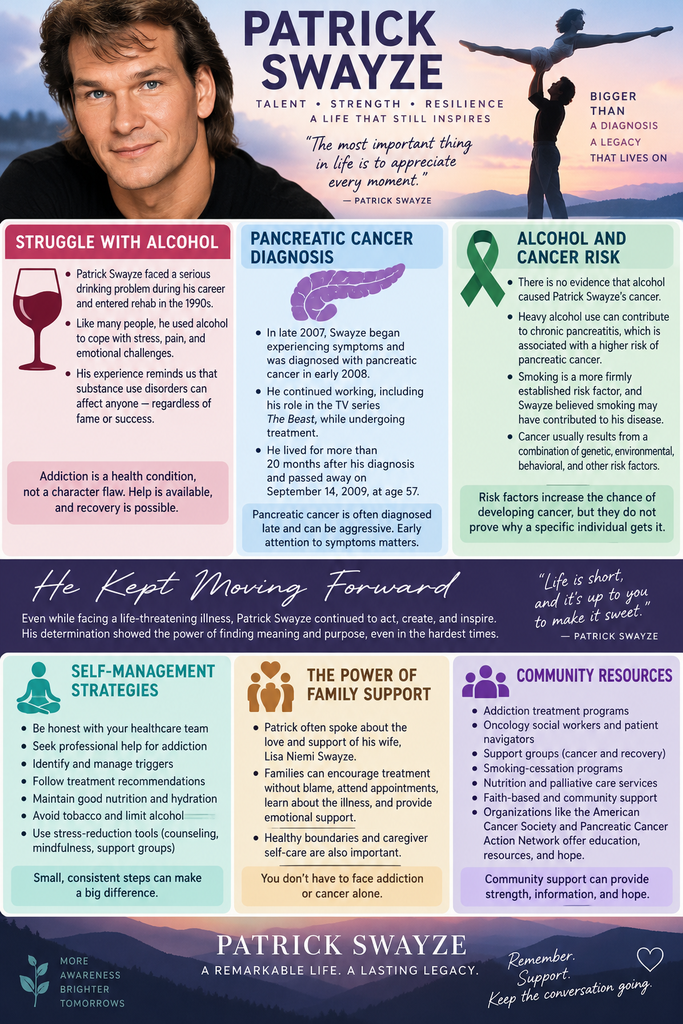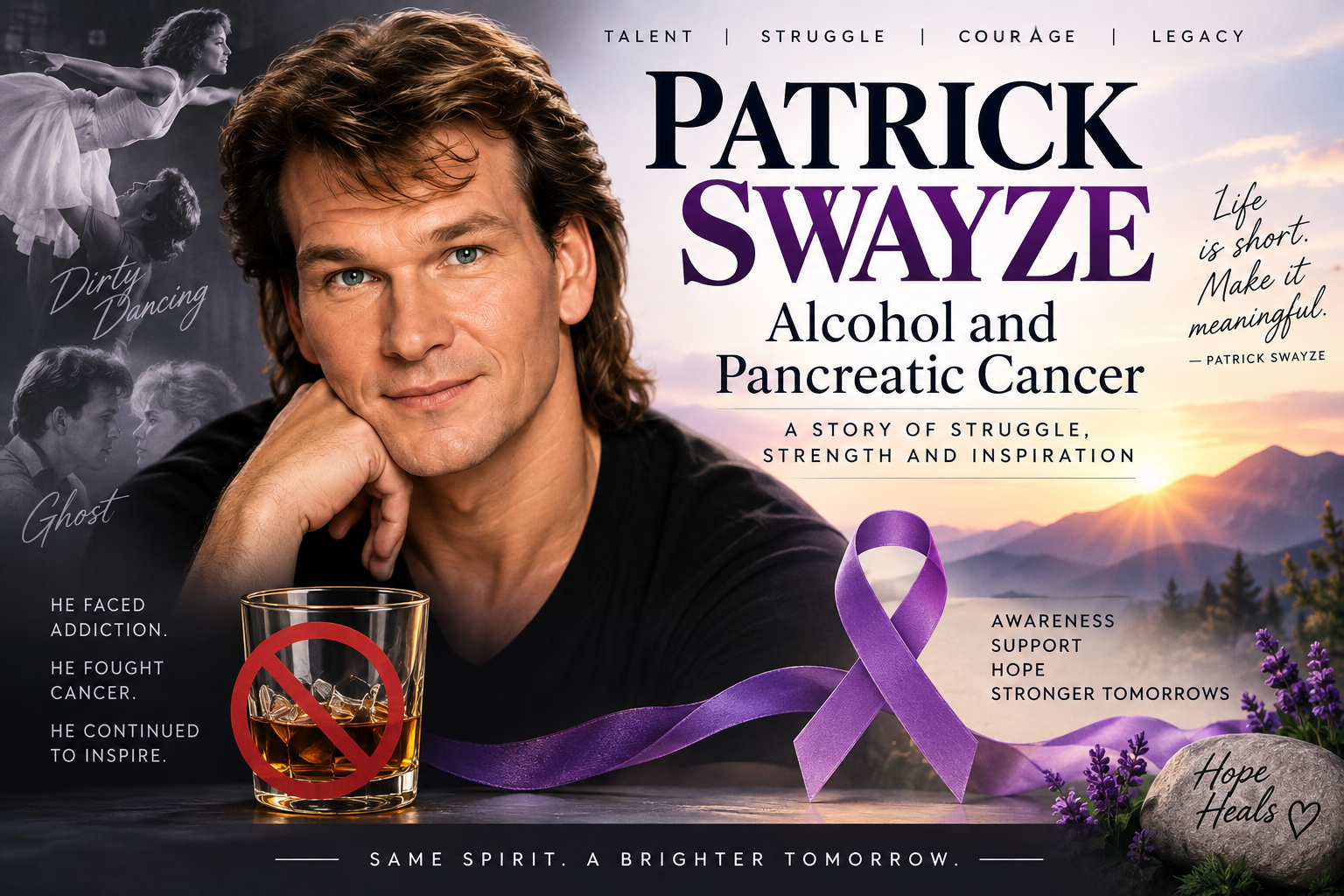
Patrick Swayze was known around the world for movies such as Dirty Dancing and Ghost, but behind his successful career were personal struggles that included problematic alcohol use and, later, a devastating diagnosis of pancreatic cancer. His experience provides an opportunity to discuss addiction, cancer risk, coping with serious illness, and the importance of family and community support.
Patrick Swayze’s Struggle With Alcohol
Swayze reportedly experienced a serious drinking problem during his career and entered rehabilitation in the 1990s. His difficulties remind us that substance use disorders can affect people regardless of talent, wealth, fame, or professional success.
Alcohol can become a way of coping with grief, stress, physical pain, relationship problems, or emotional distress. Over time, however, relying on alcohol for relief can create additional physical and psychological problems.
Swayze’s history should also be discussed carefully. Having an alcohol problem does not mean that alcohol caused his pancreatic cancer. Cancer usually develops through a complicated interaction of biological, environmental, behavioral, and sometimes genetic factors.
Patrick Swayze’s Pancreatic Cancer Diagnosis
Swayze began experiencing significant symptoms in late 2007, including persistent indigestion, rapid weight loss, and eventually jaundice. He sought medical attention and was diagnosed with pancreatic cancer in early 2008.
Despite his illness and treatment, he continued acting and completed work on the television series The Beast. He lived for more than 20 months after his diagnosis and died on September 14, 2009, at age 57.
His determination to continue working illustrates something important about serious illness: quality of life can mean different things to different people. For Swayze, remaining active and continuing his creative work appeared to be meaningful parts of coping with his disease.
Did Alcohol Cause Patrick Swayze’s Pancreatic Cancer?
There is no evidence that allows us to say alcohol caused Patrick Swayze’s cancer.
Heavy alcohol consumption has been associated with pancreatic cancer in some studies. One possible pathway is chronic pancreatitis, or long-term inflammation of the pancreas. Heavy alcohol use can contribute to chronic pancreatitis, and chronic pancreatitis itself is associated with an increased risk of pancreatic cancer.
Smoking is a more firmly established pancreatic cancer risk factor. Swayze continued smoking after his diagnosis and publicly acknowledged that he believed smoking might have contributed to his disease.
According to the American Cancer Society, cigarette smoking is one of the most important modifiable risk factors for pancreatic cancer. Other recognized or suspected factors include obesity, diabetes, chronic pancreatitis, age, family history, certain inherited genetic conditions, and possibly heavy alcohol consumption.
The key distinction is risk versus cause. A risk factor increases the probability of developing a disease; it does not prove why a particular individual developed it.
Self-Management Strategies
People recovering from problematic alcohol use while also coping with a serious medical condition may benefit from addressing both conditions rather than treating them as unrelated problems.
Helpful self-management strategies can include:
- Being honest with medical professionals about alcohol, tobacco, medications, and other substance use.
- Following oncology and primary-care treatment recommendations.
- Seeking professional addiction treatment rather than relying only on willpower.
- Identifying emotional situations that trigger urges to drink.
- Developing alternative coping strategies for anxiety, grief, anger, loneliness, and pain.
- Maintaining nutrition and hydration according to the medical team’s recommendations.
- Using appropriate physical activity when medically safe.
- Avoiding smoking and obtaining smoking-cessation assistance when needed.
- Using counseling, mindfulness, relaxation techniques, journaling, or peer support to manage stress.
- Asking for help when cravings, depression, anxiety, or physical symptoms become difficult to manage.
When someone is physically dependent on alcohol, suddenly stopping can cause dangerous withdrawal. Medical evaluation may be necessary before attempting to quit.
Family Support Strategies
Patrick Swayze frequently spoke about the importance of his wife, Lisa Niemi, during his cancer journey. They had been married for more than three decades when he became ill, and Swayze described her support as an important part of getting through his cancer experience.
Families supporting someone facing addiction and cancer can help without assuming responsibility for everything the person does.
Family members can:
- Encourage treatment without shaming or blaming.
- Listen when the person wants to discuss fear, anger, grief, or uncertainty.
- Attend important medical appointments when invited.
- Learn about both substance use disorders and the person’s cancer diagnosis.
- Avoid providing alcohol or enabling harmful substance use.
- Establish healthy boundaries around unacceptable behavior.
- Help organize medications, transportation, meals, and appointments when appropriate.
- Recognize caregiver stress and seek their own emotional support.
- Respect the patient’s preferences and independence whenever medically possible.
Family members cannot force recovery, but they can help create an environment that supports treatment and healthier choices.
Community Support Strategies
Serious illness combined with addiction can become extremely isolating. Community resources can provide support beyond what one family can reasonably provide.
Useful resources may include:
- Addiction medicine specialists and treatment programs.
- Oncology social workers and patient navigators.
- Individual and family counseling.
- Alcohol recovery and peer-support groups.
- Cancer support groups.
- Smoking-cessation programs.
- Nutrition services specializing in cancer care.
- Palliative-care teams for symptom management and quality of life.
- Faith-based or spiritual communities when meaningful to the individual.
- Caregiver support programs.
- Pancreatic cancer organizations that provide education and patient resources.
Organizations such as the American Cancer Society and Pancreatic Cancer Action Network also provide educational and support resources for patients and families. Swayze’s wife, Lisa Niemi Swayze, later became involved in pancreatic cancer advocacy and awareness efforts.
What Patrick Swayze’s Journey Can Teach Us
Swayze’s experience demonstrates why discussions about addiction and cancer should avoid blame. Someone who develops cancer after smoking or struggling with alcohol did not simply “cause” their disease. Risk factors are only part of a much more complicated medical picture.
His story also shows that recovery and serious illness do not require someone to become a perfect patient. People may continue struggling with addictive behaviors even after receiving a life-threatening diagnosis. Addiction involves powerful biological, psychological, and behavioral processes that do not automatically disappear because the consequences become severe.
At the same time, reducing modifiable risks remains worthwhile. The American Cancer Society recommends avoiding tobacco and notes that limiting or avoiding alcohol may help reduce pancreatic cancer risk, particularly because heavy drinking can contribute to chronic pancreatitis.
Conclusion
Patrick Swayze’s life was much larger than either his alcohol struggles or his cancer diagnosis. He was an actor, dancer, husband, and artist who continued pursuing meaningful work while confronting an aggressive disease.
His journey offers an important lesson for addiction and cancer education: risk factors should encourage prevention and treatment, not judgment. Alcohol misuse deserves evidence-based treatment, tobacco cessation can reduce health risks, and symptoms such as unexplained weight loss or jaundice deserve prompt medical evaluation.
For people facing addiction, cancer, or both, recovery and coping are rarely accomplished alone. Medical treatment, personal coping skills, supportive families, and strong community resources can work together to help people protect their health, maintain dignity, and preserve quality of life through extraordinarily difficult circumstances.
Frequently Asked Questions
Here are some common questions:
1. Did Patrick Swayze struggle with alcohol?
Yes. Patrick Swayze publicly discussed periods of heavy drinking and sought treatment for alcohol-related problems. His experience illustrates that substance use problems can affect people regardless of professional success or fame.
2. When was Patrick Swayze diagnosed with pancreatic cancer?
Swayze was diagnosed with pancreatic cancer in January 2008 after developing symptoms that included digestive problems and significant weight loss. He continued acting while receiving treatment.
3. Did alcohol cause Patrick Swayze’s pancreatic cancer?
There is no evidence establishing that alcohol caused Swayze’s cancer. Heavy alcohol consumption may indirectly increase pancreatic cancer risk in some people because it can contribute to chronic pancreatitis, which is a recognized risk factor. Cancer generally develops through multiple interacting factors.
4. Was Patrick Swayze a smoker?
Yes. Swayze had a long history of cigarette smoking and continued smoking after his cancer diagnosis. Cigarette smoking is an established modifiable risk factor for pancreatic cancer.
5. What are the major risk factors for pancreatic cancer?
Risk factors include cigarette smoking, increasing age, obesity, diabetes, chronic pancreatitis, certain inherited genetic conditions, and family history. Heavy alcohol consumption may also contribute indirectly, particularly when it causes chronic pancreatitis.
6. Does everyone who drinks heavily develop pancreatic cancer?
No. Most people who consume alcohol will not develop pancreatic cancer. A risk factor increases the likelihood of disease but does not mean the disease will definitely occur.
7. Can heavy drinking damage the pancreas?
Yes. Long-term heavy alcohol consumption can contribute to acute or chronic pancreatitis, which involves inflammation and damage to the pancreas. Chronic pancreatitis is associated with an increased risk of pancreatic cancer.
8. What symptoms did Patrick Swayze experience?
Reports about Swayze’s illness described symptoms including digestive discomfort, unexplained weight loss, and jaundice. Pancreatic cancer can initially cause few noticeable symptoms, which contributes to difficulties detecting it early.
9. Did Patrick Swayze continue working after his cancer diagnosis?
Yes. Despite undergoing cancer treatment, Swayze continued working and starred in the television series The Beast. His decision to continue acting reflected his desire to maintain meaningful activities during his illness.
10. When did Patrick Swayze die?
Patrick Swayze died on September 14, 2009, at age 57, approximately 20 months after his pancreatic cancer diagnosis.
11. How can someone with alcohol problems manage their health after a cancer diagnosis?
Treatment should involve both conditions. Helpful strategies can include discussing alcohol use honestly with healthcare professionals, obtaining evidence-based addiction treatment, identifying triggers, following cancer treatment recommendations, maintaining appropriate nutrition, and obtaining mental health support. Someone who is physically dependent on alcohol should seek medical guidance before abruptly stopping because severe alcohol withdrawal can be dangerous.
12. How can families support someone dealing with addiction and cancer?
Families can encourage professional treatment, provide transportation or assistance with appointments, listen without judgment, learn about addiction and cancer, establish healthy boundaries, and obtain caregiver support for themselves. Family members can provide support without taking responsibility for another person’s recovery.
13. What community resources can help?
Resources can include addiction-treatment programs, oncology social workers, cancer support groups, peer-recovery programs, smoking-cessation services, counseling, palliative-care services, nutrition specialists, and caregiver-support programs.
14. What is the most important lesson from Patrick Swayze’s experience?
His experience highlights the importance of separating risk from blame. Smoking, heavy alcohol use, and other behaviors can influence health risks, but they do not establish why a particular person developed cancer. Prevention, early medical evaluation, addiction treatment, and compassionate support are more constructive than assigning blame.
15. Can reducing alcohol and tobacco use still help after years of use?
Yes. Reducing harmful alcohol consumption and stopping tobacco use can provide health benefits even after years of exposure. People who need help quitting can work with healthcare professionals to develop an individualized and medically appropriate plan.
Video: Why Patrick Swayze’s battle with cancer was so misunderstood #shorts #cancer