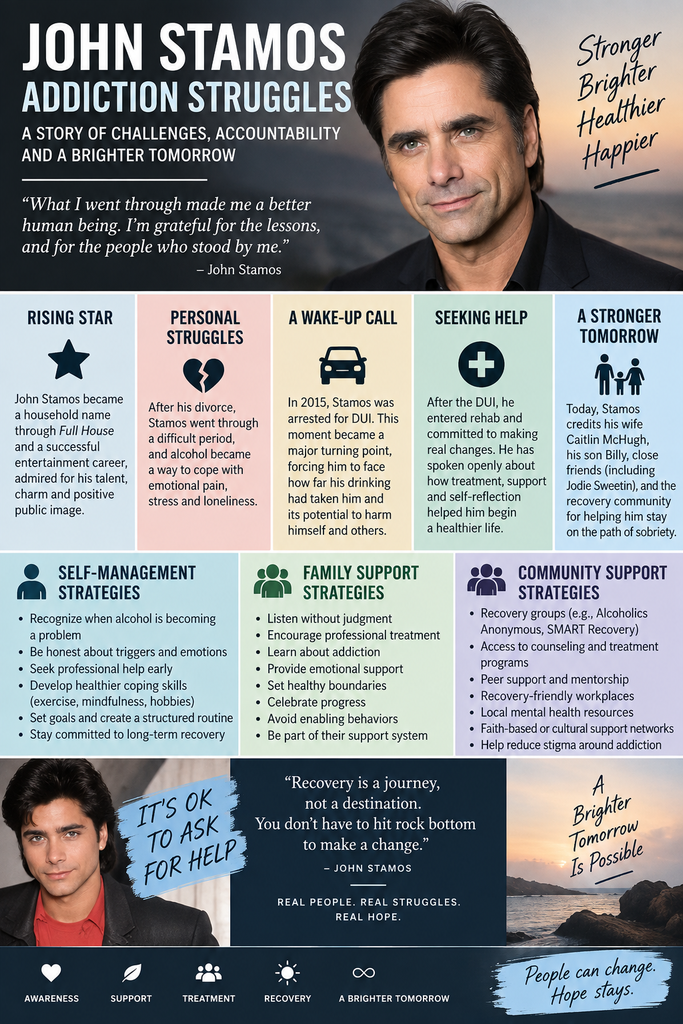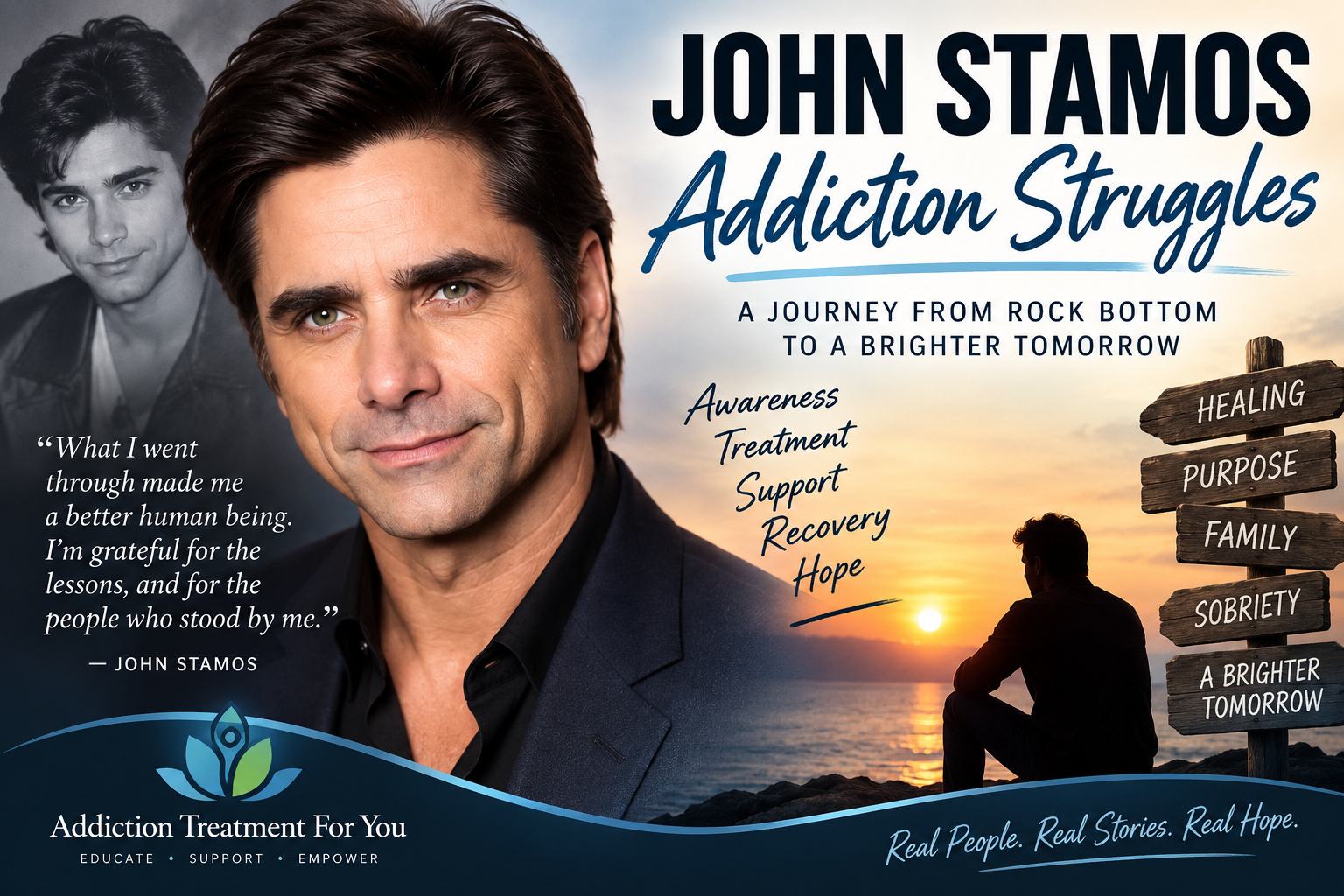
John Stamos is widely recognized for his television career, especially his role as Uncle Jesse on Full House. Behind his successful public image, however, Stamos has spoken openly about a period when alcohol became increasingly harmful in his life. His experience demonstrates an important reality about substance use disorders: professional success, popularity, and financial stability do not protect someone from developing an unhealthy relationship with alcohol.
Stamos has described his 2015 DUI as a major turning point. He later acknowledged that his drinking had contributed to behaviors that did not reflect the person he wanted to be. After the arrest, he entered treatment and began working toward sobriety. He has described the period as difficult but ultimately transformative.
When Alcohol Becomes a Coping Mechanism
Problematic alcohol use does not always begin dramatically. For some people, drinking gradually becomes a way of coping with loneliness, grief, stress, relationship difficulties, or uncomfortable emotions.
Stamos has connected increased drinking with difficult periods in his personal life, including the emotional aftermath of his divorce from Rebecca Romijn. Looking back, he has acknowledged that his way of coping during that period was unhealthy.
His experience illustrates why it can be important to ask not only how much someone drinks but also why they drink.
Warning signs that alcohol may be becoming problematic can include:
- Drinking to escape sadness, anxiety, loneliness, or stress
- Regularly drinking more than originally intended
- Making risky decisions while intoxicated
- Experiencing blackouts or memory problems
- Continuing to drink despite relationship or work consequences
- Feeling unable to relax or socialize without alcohol
- Hiding or minimizing alcohol consumption
- Trying unsuccessfully to reduce drinking
- Continuing to drink after recognizing that it is causing harm
The DUI That Became a Turning Point
Stamos has publicly described his DUI as his “rock bottom.” He acknowledged that driving while impaired could have resulted in someone being seriously injured or killed. The experience forced him to confront where his drinking was taking him.
He entered rehabilitation after the arrest. Treatment did not instantly erase every difficulty, but it provided an opportunity to interrupt his drinking and begin building a different life.
Recovery does not require waiting for a catastrophic event. Someone experiencing escalating alcohol use can seek professional help before losing a relationship, job, health, freedom, or life.
Self-Management Strategies for Recovery
Stamos’s experience can be used to illustrate several broader self-management principles commonly important in addiction recovery. These strategies are not claims about everything Stamos personally did; rather, they are practical lessons applicable to recovery.
1. Recognize the Problem
Change often begins when someone becomes willing to acknowledge that substance use is causing harm.
Helpful strategies include:
- Honestly evaluating the consequences of drinking or drug use
- Identifying situations that trigger cravings
- Keeping track of substance use patterns
- Recognizing rationalizations such as “I can control it this time”
- Discussing concerns honestly with a healthcare professional
2. Accept Professional Treatment
Stamos entered rehabilitation following his DUI. Professional addiction treatment can provide medical, psychological, and behavioral support while helping someone develop strategies for maintaining recovery.
Depending on individual needs, treatment may include:
- Medical assessment
- Medically supervised withdrawal when necessary
- Individual counseling
- Group therapy
- Cognitive behavioral therapy
- Treatment for co-occurring mental health conditions
- Medications for alcohol use disorder when clinically appropriate
- Relapse-prevention planning
- Continuing outpatient care
3. Develop Healthier Coping Skills
Removing alcohol does not automatically remove the emotions or circumstances that contributed to drinking.
Recovery may require learning healthier ways to respond to:
- Stress
- Rejection
- Grief
- Loneliness
- Relationship problems
- Anger
- Anxiety
- Career pressure
Exercise, therapy, meditation, hobbies, adequate sleep, meaningful relationships, structured routines, and peer support can become alternatives to using substances to manage uncomfortable emotions.
4. Build a Life Worth Protecting
Long-term recovery involves more than avoiding alcohol. Developing a sense of purpose, meaningful relationships, a sense of responsibility, and personal goals can strengthen motivation to maintain sobriety.
Stamos has credited his wife, Caitlin McHugh, and their son, Billy, with helping him remain committed to the path he established in sobriety.
Family and Friend Support Strategies
Recovery may begin with an individual decision, but supportive relationships can make it easier to maintain that decision.
One particularly meaningful relationship in Stamos’s recovery story is with his Full House costar, Jodie Sweetin, who has publicly discussed her own recovery. Stamos has credited Sweetin with supporting him during difficult periods and helping arrange 12-step meetings for him on the Fuller House set.
Families and friends can support someone in recovery by:
- Listening without immediately criticizing or lecturing
- Encouraging professional treatment
- Learning about substance use disorders
- Avoiding alcohol or drugs around someone in early recovery when appropriate
- Supporting attendance at counseling or recovery meetings
- Recognizing progress without expecting perfection
- Establishing clear and healthy boundaries
- Avoiding behaviors that enable continued substance use
- Developing an emergency plan for relapse or overdose risk
- Seeking counseling or support groups for themselves
Support does not mean protecting someone from every consequence of substance use. Healthy support combines compassion with accountability.
Community Support Strategies
Stamos’s experience with peer and 12-step support also highlights the value of recovery communities. Addiction can become isolating, while recovery often requires rebuilding connection.
Community resources may include:
- Alcoholics Anonymous and other mutual-help groups
- SMART Recovery
- Recovery community organizations
- Peer recovery specialists
- Outpatient addiction programs
- Behavioral health clinics
- Faith-based recovery programs
- Individual and family counseling
- Recovery-friendly workplaces
- Community education and stigma-reduction programs
Different approaches work for different people. Community systems are strongest when individuals have multiple pathways to recovery, rather than being expected to succeed through a single method.
Why Family Support Matters—but Cannot Replace Treatment
Loved ones can encourage recovery, but they cannot maintain another person’s sobriety for them.
Families may unintentionally become exhausted by constantly monitoring, rescuing, arguing with, or protecting someone who is struggling with addiction. Family members need their own boundaries and support.
A healthier approach is to communicate:
“I care about you and will support your recovery, but I cannot participate in behaviors that allow the addiction to continue.”
This balance allows compassion without enabling.
Recovery Is an Ongoing Process
One important lesson from Stamos’s story is that stopping alcohol use is only part of recovery. Maintaining recovery requires continued attention to behaviors, relationships, emotional health, and the circumstances that once made alcohol appealing.
Stamos has spoken about the temptation people in recovery may experience to believe that, after enough time has passed, they can safely return to drinking. He has credited his family with helping him remain committed to sobriety.
That illustrates an important recovery principle: feeling better does not necessarily mean the underlying vulnerability to addiction has disappeared.
What Families Can Learn From John Stamos’ Journey
His experience offers several useful lessons:
- Addiction can affect people who appear highly successful.
- Alcohol can gradually become a way of coping with emotional pain.
- Serious consequences may reveal a problem that has existed for years.
- Treatment can create an opportunity for major life changes.
- Asking for help is a strength rather than a failure.
- Peer recovery support can be powerful.
- Families can provide motivation while maintaining boundaries.
- Recovery requires continued effort after formal treatment ends.
- A person does not need to reach “rock bottom” before seeking help.
Final Thoughts
John Stamos’s publicly shared experience shows the contrast that can exist between someone’s outward success and private struggle. His 2015 DUI became a major wake-up call, followed by rehabilitation and a commitment to sobriety. He has subsequently credited treatment, recovery support, Jodie Sweetin, and the family he later built with helping him remain on a healthier path.
For families affected by addiction, perhaps the most useful lesson is that recovery rarely depends on one person or one intervention. Self-management provides daily responsibility, family support provides connection, and community resources provide treatment and ongoing recovery networks.
Most importantly, people do not have to wait for an arrest, an accident, a hospitalization, or another devastating consequence before asking for help. Recognizing the warning signs early and connecting with appropriate treatment can prevent a difficult situation from becoming a tragedy.
Frequently Asked Questions
Here are some common questions:
1. Did John Stamos struggle with alcohol addiction?
John Stamos has publicly discussed problematic alcohol use and his decision to become sober. He has described a period when drinking negatively affected his judgment, behavior, and well-being. It is best to describe his experience using his own public disclosures rather than assigning a diagnosis he has not personally confirmed.
2. What was the turning point in John Stamos’ struggle with alcohol?
A major turning point occurred in June 2015, when Stamos was arrested for driving under the influence in Beverly Hills. He has subsequently described the incident as a wake-up call that forced him to confront his behavior.
3. Did John Stamos go to rehab?
Yes. Following his DUI arrest, Stamos entered a residential treatment program in July 2015. He later spoke publicly about treatment and his decision to pursue sobriety.
4. What substances has John Stamos discussed?
Stamos has spoken most prominently about his problems with alcohol. In discussing the period surrounding his DUI, he has also publicly acknowledged using substances other than alcohol. When discussing his story, it is important not to speculate beyond what he has personally disclosed.
5. Did emotional difficulties contribute to his drinking?
Stamos has discussed difficult periods in his personal life, including loneliness and emotional struggles following his divorce. His experience illustrates how some people may turn to alcohol as an unhealthy coping mechanism for emotional distress.
6. How did John Stamos begin his recovery?
His recovery included acknowledging that his behavior had become dangerous, entering treatment, becoming sober, and accepting support from people around him. Recovery is highly individual, so his experience should not be considered a treatment plan for everyone.
7. Did Jodie Sweetin help John Stamos during recovery?
Yes. Stamos has publicly credited his Full House and Fuller House costar Jodie Sweetin, who has spoken about her own recovery, with providing meaningful support. He has said she helped arrange 12-step meetings for him during production.
8. How can self-management support addiction recovery?
Self-management involves taking responsibility for everyday behaviors that protect recovery. Helpful strategies can include:
- Identifying personal triggers and high-risk situations
- Developing healthier ways to cope with stress
- Following an individualized treatment plan
- Creating consistent sleep, exercise, and daily routines
- Staying connected with supportive people
- Attending counseling or recovery meetings when helpful
- Developing a relapse-prevention plan
- Seeking help early when cravings or warning signs return
9. How can families support someone struggling with alcohol?
Family members can encourage treatment, listen without humiliation or judgment, learn about substance use disorders, establish healthy boundaries, and recognize positive changes. Supporting recovery does not require protecting someone from the consequences of continued substance use.
10. Why are boundaries important for families?
Boundaries help families distinguish support from enabling. A family member might offer transportation to treatment, for example, while refusing to provide money that could be used to purchase alcohol. Boundaries can protect both the individual and the family.
11. What community resources can support alcohol recovery?
Depending on individual needs, resources can include addiction treatment programs, behavioral health professionals, primary-care providers, peer recovery specialists, Alcoholics Anonymous, SMART Recovery, recovery community organizations, and family-support programs such as Al-Anon.
12. Does someone have to “hit rock bottom” before getting help?
No. Although Stamos has described his DUI as a major wake-up call, people do not need to experience a catastrophic consequence before seeking treatment. Earlier intervention may prevent accidents, health complications, relationship problems, employment difficulties, and other serious consequences.
13. Can successful people develop alcohol problems?
Absolutely. Fame, money, education, professional accomplishments, and supportive relationships do not make someone immune to substance-related problems. Stamos’ experience helps challenge the stereotype that addiction affects only certain kinds of people.
14. Is relapse inevitable in addiction recovery?
No. Relapse can occur, but it is not inevitable. When it does happen, it should signal a need to reassess triggers, treatment, coping strategies, and support, rather than be automatically interpreted as a personal failure.
15. What can people learn from John Stamos’ experience?
One of the strongest lessons is that acknowledging a problem can become the beginning of meaningful change. His public story emphasizes accountability, professional treatment, supportive relationships, and continued commitment to sobriety.
16. What should someone do if they are worried about their drinking?
A healthcare or addiction professional can evaluate drinking patterns and recommend appropriate treatment. People who drink heavily or regularly should obtain medical advice before suddenly stopping because alcohol withdrawal can sometimes be dangerous or life-threatening.
17. What is the overall message of John Stamos’ recovery story?
His experience demonstrates that a serious mistake does not have to define the rest of someone’s life. Recognizing harmful behavior, accepting responsibility, seeking appropriate help, and developing a strong support system can create an opportunity for lasting change.
Video: John Stamos’ Hardest Battle Wasn’t On Camera #johnstamos #mentalhealth