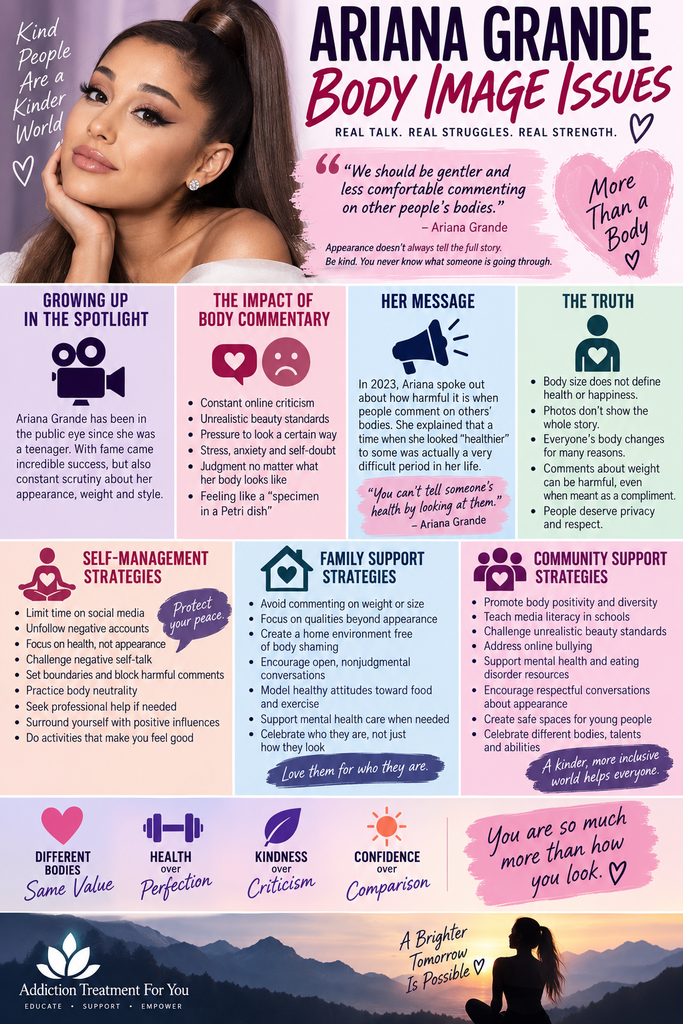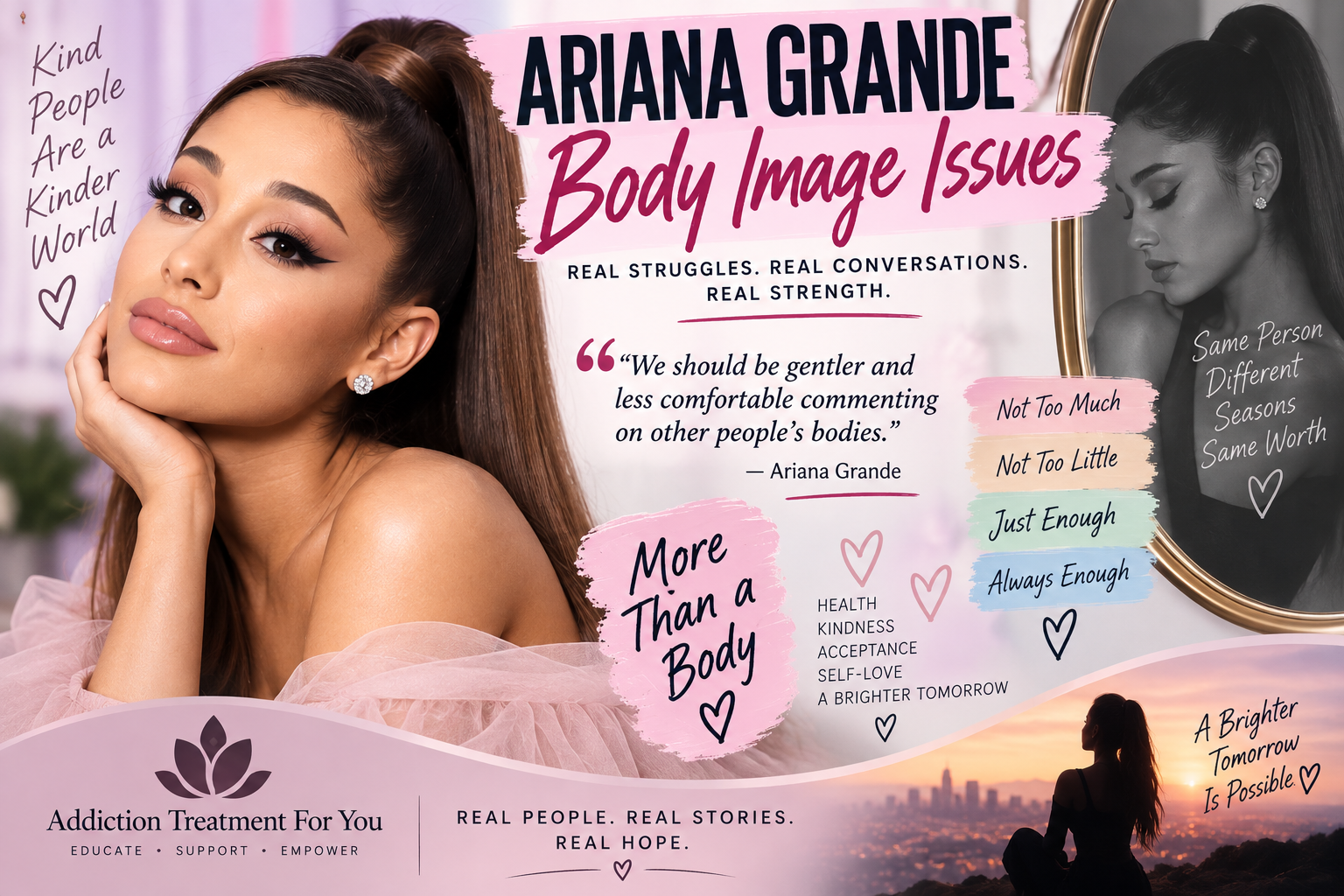
Ariana Grande has spent much of her life in the public eye, first as a teenage actress and later as an internationally recognized singer and performer. Along with fame has come intense scrutiny of her appearance. Grande has repeatedly spoken about how uncomfortable and potentially harmful it can be when strangers analyze someone’s weight, face, clothing, or perceived health.
Her experience offers an important lesson about body image: you cannot reliably determine someone’s physical or mental health simply by looking at their body.
In 2023, Grande addressed widespread comments about her appearance and urged people to be less comfortable commenting on other people’s bodies. She explained that a previous version of her body that some people were describing as looking “healthier” actually corresponded with a very difficult period in her life.
Growing Up Under a Microscope
Grande entered the entertainment industry when she was young. As her fame increased, so did public discussion of her appearance.
During a 2024 interview promoting Wicked, Grande became emotional while discussing years of criticism. She said she had felt as though she had been examined like a “specimen in a Petri dish” since she was around 16 or 17. She described hearing countless opinions about what supposedly needed to change about her appearance—only to face different criticism when something did change.
Although celebrities experience scrutiny on an enormous scale, the underlying problem is familiar to many people.
Body comments can occur anywhere:
- At school
- At work
- During family gatherings
- In romantic relationships
- At the gym
- On social media
- Among friends
- In healthcare environments
Even a comment intended as a compliment—such as telling someone they look thinner—can have an unintended emotional effect.
“Healthy” Doesn’t Have One Appearance
One of the strongest messages from Grande’s 2023 statement was that appearance does not tell the complete story of someone’s health.
Grande explained that during an earlier period when people thought she looked particularly “healthy,” she was taking antidepressants, drinking while taking them, eating poorly, and experiencing a very low point emotionally.
Her disclosure demonstrates why assumptions based solely on photographs can be misleading.
A person’s weight can change for countless reasons, and body size alone cannot establish whether someone has an eating disorder, substance use disorder, depression, or another medical condition.
Grande has not publicly established an eating-disorder diagnosis merely because internet users have speculated about her appearance. Responsible conversations about body image should avoid diagnosing celebrities—or anyone else—from photographs.
The Psychological Impact of Constant Body Commentary
Repeated criticism of appearance can influence how people see themselves.
For some individuals, excessive appearance-focused attention may contribute to:
- Body dissatisfaction
- Social comparison
- Anxiety
- Shame
- Low self-esteem
- Excessive checking of appearance
- Avoidance of photographs or social situations
- Preoccupation with weight or shape
- Unhealthy dieting or exercise behaviors
Social media can intensify these pressures because people may encounter thousands of opinions, edited photographs, filters, beauty trends, and unrealistic comparisons.
Grande’s response challenges the assumption that commenting on someone’s body is acceptable simply because they are famous.
Self-Management Strategies
Grande has spoken about learning to protect herself from outside criticism. In 2024, she explained that she no longer wanted to give unnecessary commentary about her appearance in her life. She also suggested practical actions such as blocking people or deleting apps when necessary.
For anyone experiencing body-image pressure, useful self-management strategies can include:
- Limit appearance-based comparisons. Constantly comparing your body with celebrities, influencers, friends, or your younger self can distort expectations.
- Curate social media. Unfollow or mute accounts that consistently make you feel inadequate.
- Set digital boundaries. Blocking abusive accounts, limiting comments, or taking breaks from social media can protect emotional well-being.
- Challenge negative self-talk. Replace statements such as “My body isn’t good enough” with thoughts focused on health, function, abilities, and personal values.
- Practice body neutrality. You do not have to love every aspect of your appearance every day. Learning to respect your body without constantly evaluating how it looks can be a realistic goal.
- Focus on health rather than appearance. Sleep, nutrition, movement, stress management, and healthcare matter more than achieving a particular body shape.
- Seek professional support when needed. Persistent body dissatisfaction, restrictive eating, bingeing, purging, compulsive exercise, or intense fear surrounding weight deserves professional attention.
Family Support Strategies
Families can significantly influence how children, teenagers, and adults think about their bodies. Even seemingly harmless comments about weight can reinforce the idea that appearance determines personal worth.
Families can create healthier environments by:
- Avoiding comments about someone’s weight gain or loss
- Complimenting qualities unrelated to appearance
- Avoiding labeling foods as morally “good” or “bad”
- Modeling balanced attitudes toward eating and exercise
- Discouraging teasing about body size
- Listening when someone discusses body-image concerns
- Avoiding comparisons between siblings or relatives
- Encouraging professional support when concerning behaviors develop
- Creating boundaries around appearance-focused conversations
Instead of saying, “You’ve lost weight—you look amazing,” consider recognizing something unrelated to size, such as: “You seem really happy,” “It’s great seeing you,” or “I’m proud of what you’ve accomplished.”
Community Support Strategies
Body-image problems are not created solely within individuals. Cultural expectations, advertising, entertainment, social media, bullying, and discrimination can all contribute to pressure around appearance.
Communities can help by:
- Providing body-image education in schools
- Teaching young people media literacy
- Expanding access to mental healthcare
- Supporting eating-disorder prevention and treatment
- Addressing appearance-based bullying
- Encouraging responsible social-media practices
- Promoting diverse representations of bodies
- Training coaches and educators to recognize concerning behaviors
- Creating supportive peer groups
- Challenging stigma surrounding mental health treatment
Healthcare professionals also have an important role. Discussions about weight should be clinically relevant, respectful, individualized, and focused on health rather than shame.
Friends Can Become a Protective Factor
Grande has emphasized the importance of having supportive people around her. During her 2024 discussion of body criticism, she said she felt fortunate to have people she trusted who helped reinforce her sense of worth.
Friends can help someone struggling with body image by listening rather than immediately trying to “fix” the problem.
A supportive friend might say:
“I’m here if you want to talk. You don’t have to change your appearance to deserve respect.”
Support should focus on the person’s emotional experience rather than debating whether they actually look “too thin,” “too heavy,” or attractive enough.
The Danger of Diagnosing Someone From a Photograph
Grande’s experience offers an especially important lesson for the social media era.
Photographs cannot reveal someone’s:
- Laboratory results
- Nutritional status
- Mental health diagnosis
- Medication history
- Eating behaviors
- Substance use
- Medical conditions
- Emotional well-being
Concern for another person’s health can be compassionate. Public speculation and diagnosis are different.
If someone personally known to you shows concerning changes alongside symptoms such as fainting, severe food restriction, purging, compulsive exercise, rapid unexplained weight changes, or significant emotional distress, encouraging professional evaluation is more helpful than criticizing their appearance.
Redefining Beauty and Health
Grande’s public response encourages a broader definition of health and beauty.
A healthy relationship with your body does not necessarily mean waking up every morning feeling completely confident about your appearance. It can mean learning that your value extends beyond your weight, clothing size, facial features, or other people’s approval.
Healthy self-image can involve:
- Respecting your body’s needs
- Separating self-worth from appearance
- Accepting normal physical changes
- Developing meaningful relationships
- Pursuing interests unrelated to appearance
- Recognizing unrealistic beauty standards
- Asking for help when body concerns interfere with everyday life
What Parents Can Teach Children
Children absorb messages about bodies surprisingly early. Parents and caregivers therefore have an opportunity to build healthier attitudes before social pressures become overwhelming.
Rather than repeatedly discussing dieting, weight, or dissatisfaction with their own bodies, adults can emphasize what bodies do.
Bodies allow people to learn, hug loved ones, dance, work, create, laugh, travel, play, and experience life.
Teaching children that bodies naturally come in different shapes and sizes can provide a protective foundation against later pressures around appearance.
What We Can Learn From Ariana Grande
Grande’s experience offers several broader lessons:
- We cannot determine someone’s health from appearance alone.
- Comments about weight are not automatically compliments.
- Celebrities deserve personal boundaries too.
- Social media can magnify body scrutiny.
- Setting boundaries with negative commentary can protect emotional health.
- Friends and family can reinforce self-worth beyond appearance.
- Seeking mental health support should be normalized.
- Body changes should not automatically become public discussions.
- Concern should be expressed with compassion rather than speculation.
- Health and beauty can look different from person to person.
Final Thoughts
Ariana Grande’s experience with years of public scrutiny demonstrates how easily concern about someone’s appearance can become invasive commentary. In both 2023 and 2024, she encouraged people to reconsider the assumption that another person’s body is an appropriate subject for public judgment.
Her message extends far beyond celebrity culture.
Self-management means learning to protect your emotional space. Family support means creating relationships where worth is not determined by appearance. Community support means challenging the culture that teaches people their bodies are always available for public evaluation.
Perhaps the most important lesson is also the simplest: we rarely know what another person is experiencing based on how they look. Choosing kindness, respecting boundaries, and avoiding assumptions can help create a healthier environment for everyone.
Frequently Asked Questions
Here are some common questions:
1. Has Ariana Grande publicly discussed body image?
Yes. Ariana Grande has spoken publicly about the emotional impact of having her appearance and body repeatedly analyzed. In 2023, she specifically asked people to become “gentler” and less comfortable commenting on other people’s bodies.
2. Why did Ariana Grande speak out about comments concerning her weight?
Grande responded after widespread online discussion about changes in her appearance. She explained that people were comparing her current body with an earlier version of herself without knowing what she had been experiencing privately. Her central message was that appearance alone cannot tell us whether someone is healthy.
3. Did Ariana Grande say that her previous appearance represented a healthier period?
No. In fact, she explained that the body people were comparing her current appearance with represented an unhealthy and emotionally difficult period for her. This illustrates why judging someone’s health from photographs can be misleading.
4. Does Ariana Grande have an eating disorder?
Ariana Grande should not be diagnosed with an eating disorder based on photographs, weight changes, or social-media speculation. Unless a person publicly confirms a diagnosis, it is inappropriate to present online assumptions as medical facts.
5. How has being famous affected Ariana Grande’s body image experience?
Grande has been in the entertainment industry since she was a teenager. She has described years of public criticism of her appearance and discussed how difficult it can be to hear strangers continually evaluate her looks.
6. Why can comments about someone’s weight be harmful?
Comments such as “You’ve lost so much weight” or “You looked healthier before” may seem harmless, but we rarely know why someone’s body has changed. Weight changes can be associated with stress, medication, illness, lifestyle changes, mental health, or many other factors.
7. Can compliments about weight loss also cause problems?
Yes. Praising weight loss can unintentionally reinforce the belief that being thinner makes someone more attractive, successful, or valuable. It may also be distressing if the weight loss resulted from illness, grief, depression, disordered eating, or another difficult experience.
8. What does Ariana Grande’s experience teach us about social media?
Social media can expose people to unrealistic beauty standards, edited photographs, filters, comparisons, and constant feedback. Grande’s experience demonstrates how thousands of individual comments can collectively create enormous pressure.
Self-Management and Body Image
9. What self-management strategies can help with negative body image?
Helpful approaches can include:
- Limiting comparison with celebrities and influencers
- Unfollowing accounts that trigger negative self-talk
- Taking breaks from appearance-focused social media
- Practicing body neutrality
- Focusing on what the body can do rather than only how it looks
- Challenging unrealistic beauty standards
- Maintaining balanced nutrition, sleep, movement, and stress management
- Seeking professional support when body concerns interfere with everyday life
10. What is body neutrality?
Body neutrality shifts attention away from needing to love your appearance all the time. Instead, it encourages respect for your body and appreciation for what it allows you to experience and accomplish.
11. Is it okay to block people who repeatedly criticize your appearance?
Setting digital boundaries can be a healthy form of self-management. Grande has discussed how to protect herself from harmful commentary. Muting, unfollowing, blocking, limiting comments, or temporarily leaving a platform may help protect emotional well-being.
Family Support
12. How can families support someone struggling with body image?
Families can create an environment where appearance is not treated as the primary measure of someone’s worth. They can:
- Avoid criticizing weight or body shape
- Stop comparing family members’ bodies
- Compliment character, effort, creativity, and accomplishments
- Model balanced attitudes toward food and exercise
- Listen without judgment
- Discourage appearance-based teasing
- Encourage professional support when necessary
13. What should parents avoid saying about weight?
Parents should be cautious about routinely praising weight loss, criticizing weight gain, discussing restrictive diets, or making negative comments about their own bodies. Children can absorb these messages and begin associating thinness with worth or acceptance.
14. How should someone respond when a loved one says, “I hate my body”?
Avoid immediately arguing about whether the person looks attractive. Instead, listen and explore what they are experiencing. Statements such as “I’m sorry you’re feeling this way. Do you want to tell me what’s been making you feel uncomfortable about your body?” can encourage a deeper conversation.
Community Support
15. How can communities promote healthier body image?
Schools, workplaces, healthcare organizations, media companies, and community groups can help by promoting diverse body representation, addressing appearance-based bullying, teaching media literacy, improving access to mental healthcare, and challenging unrealistic beauty standards.
16. What role can schools play?
Schools can teach students how advertising, filters, editing, algorithms, and influencer culture affect perceptions of beauty. Anti-bullying policies should also address teasing related to weight, body shape, skin, disabilities, and other physical characteristics.
17. When should someone seek professional help for body-image concerns?
Professional evaluation is particularly important when body concerns lead to severe food restriction, binge eating, purging, compulsive exercise, intense fear of gaining weight, persistent depression or anxiety, social withdrawal, significant physical symptoms, or major interference with everyday life.
18. Can you determine someone’s health by looking at them?
No. A photograph cannot reveal someone’s nutritional status, laboratory results, mental health, medications, eating behaviors, medical history, or overall well-being. This is one of the most important messages in Grande’s public comments on body scrutiny.
19. What can we learn from Ariana Grande’s experience?
Her experience encourages people to reconsider how casually society discusses other people’s bodies. Concern and curiosity do not automatically give us permission to analyze someone’s appearance publicly.
20. What is the main message of Ariana Grande’s body-image story?
The central lesson is simple: people are more than their bodies. Self-management can help individuals protect themselves from harmful comparisons, families can reinforce worth beyond appearance, and communities can challenge the cultural standards that encourage constant body judgment.
Video: Why You Can’t Judge Ariana Grande’s Health by Her Looks 😤 #arianagrande #selfacceptance