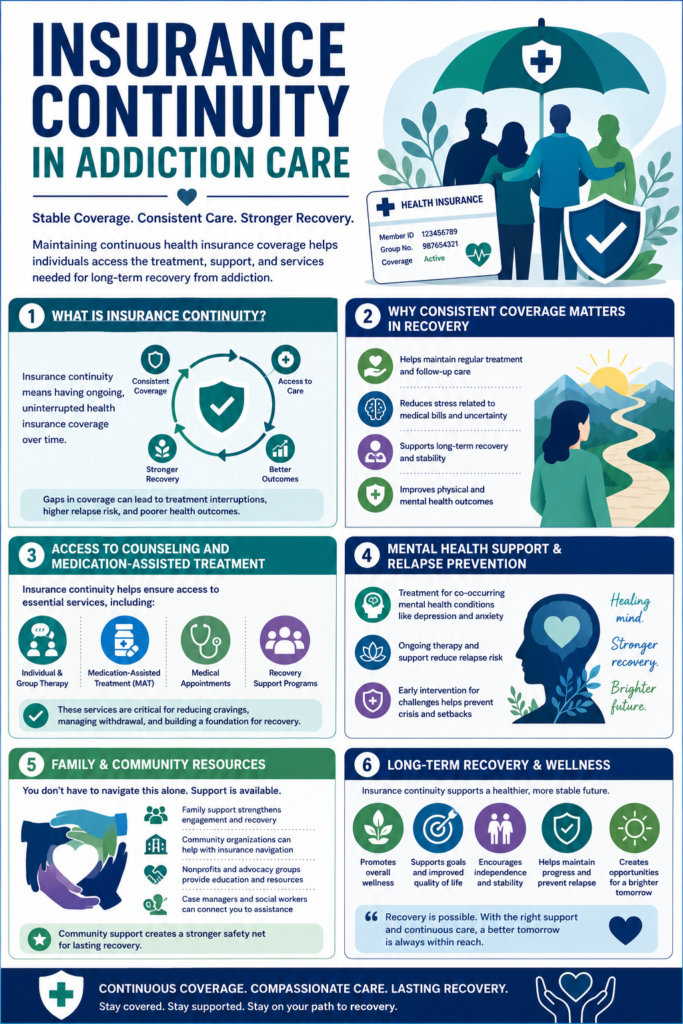
Insurance continuity is an essential component of effective addiction care because recovery from substance use disorders often requires long-term access to healthcare services, counseling, medication-assisted treatment, mental health support, and recovery programs. Many individuals recovering from addiction face challenges such as financial hardship, unemployment, housing instability, and co-occurring mental health conditions, all of which can increase the risk of interruptions in healthcare coverage. Gaps in insurance coverage may disrupt treatment, limit access to medications and therapy, and increase the risk of relapse or worsening health outcomes. Understanding the importance of insurance continuity in addiction care can help individuals, families, healthcare providers, and communities support stable access to treatment and improve long-term recovery outcomes.
Insurance Continuity in Addiction Care: Supporting Long-Term Recovery and Treatment Stability
Addiction recovery is often a long-term process that requires consistent medical care, counseling, behavioral therapy, medication management, and social support. However, many individuals recovering from substance use disorders face interruptions in healthcare coverage that can disrupt treatment and increase the risk of relapse. Insurance continuity—the ability to maintain stable and uninterrupted health insurance coverage—plays a critical role in ensuring access to addiction treatment services and long-term recovery support. Understanding the importance of insurance continuity in addiction care can help individuals, families, healthcare providers, and policymakers improve access to treatment, recovery stability, and overall health outcomes.
Understanding Addiction Care
Substance use disorders affect physical health, emotional well-being, relationships, employment, and quality of life. Effective addiction treatment often includes:
- Detoxification services
- Counseling and psychotherapy
- Medication-assisted treatment (MAT)
- Mental health care
- Peer support programs
- Relapse prevention planning
- Long-term recovery support
Because addiction is often a chronic and relapsing condition, ongoing treatment and follow-up care are frequently necessary.
What Is Insurance Continuity?
Insurance continuity refers to maintaining consistent health insurance coverage without interruptions or gaps. Stable insurance coverage allows individuals to continue accessing:
- Medical appointments
- Prescription medications
- Behavioral health services
- Inpatient or outpatient treatment
- Recovery support programs
Insurance disruptions may occur due to:
- Job loss
- Financial hardship
- Changes in eligibility
- Administrative barriers
- Policy changes
- Transitions between healthcare programs
Even short gaps in coverage may interfere with addiction recovery progress.
Why Insurance Continuity Matters in Addiction Recovery
1. Ensures Access to Treatment
Consistent insurance coverage helps individuals maintain access to essential addiction treatment services. Without insurance, many individuals may struggle to afford:
- Therapy sessions
- Recovery medications
- Psychiatric care
- Residential treatment programs
Interrupted care may increase relapse risk and worsen physical or mental health conditions.
2. Supports Medication-Assisted Treatment (MAT)
Many individuals recovering from opioid or alcohol use disorders rely on medication-assisted treatment using medications such as:
- Buprenorphine
- Methadone
- Naltrexone
Insurance continuity helps individuals maintain consistent access to these medications and follow-up care.
3. Improves Mental Health Support
Many people with substance use disorders also experience co-occurring mental health conditions, such as:
- Depression
- Anxiety
- PTSD
- Bipolar disorder
Stable insurance coverage supports ongoing psychiatric care, counseling, and medication management that may improve emotional stability and recovery outcomes.
4. Reduces Relapse Risk
Treatment interruptions caused by insurance loss may lead to:
- Missed therapy appointments
- Medication discontinuation
- Increased stress
- Loss of support systems
These disruptions may increase vulnerability to relapse and overdose risk.
5. Promotes Long-Term Recovery Stability
Addiction recovery often requires long-term monitoring and support. Insurance continuity enables individuals to maintain access to preventive healthcare and recovery services over time, improving overall wellness and quality of life.
Barriers to Insurance Continuity in Addiction Care
Several challenges may interfere with stable insurance coverage:
- Employment Instability
- Substance use disorders may affect employment, leading to loss of employer-sponsored insurance.
- Financial Challenges
- High treatment costs and financial hardship may make it difficult to maintain insurance premiums.
- Administrative Complexity
- Complicated enrollment processes, renewal requirements, and eligibility changes may create coverage interruptions.
- Limited Behavioral Health Coverage
- Some insurance plans may limit coverage for addiction treatment or mental health services.
- Stigma and Discrimination
- Fear of stigma may discourage some individuals from seeking treatment or using available insurance benefits.
Strategies to Improve Insurance Continuity
1. Expanding Access to Public Insurance Programs
Programs such as Medicaid may help individuals maintain access to healthcare during financial hardship or unemployment.
2. Strengthening Mental Health Parity Laws
Mental health parity laws aim to ensure that behavioral health services receive coverage comparable to physical healthcare services.
Improved enforcement may increase access to addiction treatment and psychiatric care.
3. Improving Care Coordination
Healthcare providers, case managers, and social workers can help individuals:
- Navigate insurance systems
- Maintain eligibility
- Access financial assistance
- Coordinate treatment services
Care coordination reduces the risk of treatment interruptions.
4. Supporting Telehealth and Community Programs
Telehealth services and community recovery programs may increase access to treatment for individuals facing transportation, financial, or geographic barriers.
5. Providing Patient Education
Individuals benefit from understanding:
- Insurance benefits
- Coverage renewal requirements
- Available assistance programs
- Treatment rights and protections
Education empowers individuals to make informed healthcare decisions.
The Role of Families and Communities
Families and community organizations can support insurance continuity by:
- Helping individuals understand healthcare systems
- Encouraging treatment participation
- Assisting with paperwork or appointments
- Connecting individuals to local resources
Supportive environments may reduce stress and improve long-term recovery engagement.
Benefits of Insurance Continuity in Addiction Care
Stable insurance coverage may:
- Improve treatment retention
- Increase access to medications and therapy
- Reduce relapse and overdose risk
- Improve mental and physical health outcomes
- Strengthen long-term recovery success
- Reduce healthcare disparities
Consistent care often leads to better recovery stability and improved quality of life.
Limitations and Considerations
Although insurance continuity improves treatment access, challenges may still remain, including:
- Provider shortages
- High out-of-pocket costs
- Limited specialized addiction services
- Social and economic barriers
Comprehensive addiction care requires both accessible insurance coverage and high-quality treatment systems.
Conclusion
Insurance continuity plays a critical role in addiction care by supporting consistent access to medical treatment, mental health services, medication-assisted treatment, and long-term recovery support. Interruptions in healthcare coverage can disrupt treatment progress, increase stress, and raise the risk of relapse or overdose. By improving healthcare access, strengthening behavioral health coverage, expanding public insurance programs, and supporting patient education, healthcare systems and communities can help individuals maintain recovery and improve overall well-being.
Addiction recovery is a long-term journey that requires stability, support, and ongoing care. Ensuring consistent insurance coverage can help individuals remain connected to life-saving treatment services and build healthier, more sustainable paths toward recovery and wellness.
Self-Management Strategies to Understand Insurance Continuity in Addiction Care
Addiction recovery is often a long-term process that requires ongoing access to healthcare services, counseling, medication management, mental health support, and recovery programs. For many individuals, maintaining consistent health insurance coverage is essential for continuing treatment and avoiding interruptions in care. However, changes in employment, financial difficulties, eligibility requirements, or administrative barriers can sometimes cause gaps in insurance coverage that may interfere with recovery progress. Self-management strategies can help individuals better understand insurance continuity, maintain access to treatment services, and strengthen long-term recovery outcomes in addiction care.
Understanding Insurance Continuity in Addiction Care
Insurance continuity refers to maintaining stable and uninterrupted health insurance coverage over time. Consistent insurance coverage allows individuals recovering from substance use disorders to continue accessing:
- Counseling and therapy
- Medication-assisted treatment (MAT)
- Mental health services
- Medical appointments
- Recovery support programs
- Prescription medications
Because addiction is often a chronic condition requiring long-term treatment, interruptions in healthcare coverage may increase emotional stress, treatment instability, and relapse risk.
Why Self-Management Matters in Recovery
Self-management involves actively participating in one’s own healthcare and recovery process. In addiction treatment, self-management strategies help individuals:
- Stay engaged in care
- Understand healthcare benefits
- Monitor recovery progress
- Reduce treatment disruptions
- Strengthen coping skills
- Improve long-term wellness
Developing healthcare navigation skills may help individuals feel more confident and prepared to manage treatment needs and insurance responsibilities.
Self-Management Strategies for Understanding Insurance Continuity
1. Learn About Insurance Benefits and Coverage
Understanding insurance plans can help individuals access needed services more effectively. Important areas to understand include:
- Behavioral health coverage
- Mental health benefits
- Prescription coverage
- Deductibles and copayments
- Provider networks
- Coverage renewal requirements
Learning these details may reduce confusion and prevent unexpected treatment interruptions.
2. Keep Important Insurance Documents Organized
Maintaining organized healthcare records can improve communication and reduce administrative stress. Helpful documents may include:
- Insurance cards
- Policy information
- Medical bills
- Prescription records
- Appointment summaries
- Contact information for providers
Keeping records accessible may make it easier to resolve coverage issues quickly.
3. Monitor Insurance Renewal Dates
Many insurance plans require periodic renewal or eligibility verification. Missing deadlines may result in coverage gaps.
Self-management strategies may include:
- Setting calendar reminders
- Tracking renewal dates
- Responding quickly to insurance notices
- Updating personal information when needed
Early preparation may reduce the risk of losing healthcare coverage.
4. Understand Medication Coverage
Many individuals in addiction recovery rely on medications such as:
- Buprenorphine
- Methadone
- Naltrexone
Understanding prescription coverage and pharmacy requirements can help individuals maintain consistent access to medications and avoid treatment interruptions.
5. Build Communication Skills with Healthcare Providers
Open communication with healthcare providers, case managers, and insurance representatives is important for managing recovery care. Individuals should feel comfortable asking questions about:
- Treatment costs
- Insurance approvals
- Medication coverage
- Referrals and authorizations
- Financial assistance programs
Effective communication may improve healthcare coordination and reduce confusion.
6. Develop Financial Planning Strategies
Healthcare costs can create stress during recovery. Budgeting and financial planning may help individuals prepare for:
- Copayments
- Transportation costs
- Medication expenses
- Emergency healthcare needs
Financial stability may reduce stress and improve treatment consistency.
7. Use Community and Social Support Resources
Community organizations and recovery programs may help individuals:
- Navigate insurance systems
- Access financial assistance
- Apply for public insurance programs
- Connect with social services
Seeking help when needed is an important part of self-management and recovery.
8. Stay Engaged in Ongoing Treatment
Consistent participation in treatment supports long-term recovery stability. Self-management includes:
- Attending appointments regularly
- Following treatment plans
- Taking medications as prescribed
- Participating in therapy and support groups
Staying connected with healthcare providers may also improve continuity of care if insurance coverage changes.
9. Prepare for Insurance Changes or Emergencies
Unexpected life events such as job loss or financial hardship may affect insurance coverage. Planning ahead may reduce stress during transitions.
Helpful strategies include:
- Learning about alternative insurance options
- Exploring public assistance programs
- Identifying community health resources
- Maintaining updated provider contact information
Preparedness may reduce treatment disruptions during difficult periods.
10. Practice Stress Management and Emotional Coping Skills
Insurance and financial concerns may increase anxiety and emotional distress during recovery. Healthy coping strategies may include:
- Mindfulness and meditation
- Physical exercise
- Journaling
- Counseling
- Peer support groups
- Relaxation techniques
Managing stress may improve emotional resilience and reduce the risk of relapse.
Benefits of Self-Management in Insurance Continuity
Strong self-management skills may help individuals:
- Maintain healthcare coverage
- Improve treatment adherence
- Reduce stress and confusion
- Strengthen recovery stability
- Improve communication with providers
- Increase confidence and independence
Active participation in healthcare decisions may improve long-term recovery outcomes.
Limitations and Considerations
Although self-management strategies are helpful, systemic barriers may still affect insurance continuity, including:
- Limited healthcare access
- Complex insurance systems
- Financial hardship
- Provider shortages
- Administrative delays
Individuals may benefit from additional support from case managers, social workers, and recovery programs.
Conclusion
Insurance continuity is an important part of addiction care because stable healthcare coverage supports ongoing access to counseling, medication-assisted treatment, mental health services, and long-term recovery support. Self-management strategies such as understanding insurance benefits, organizing healthcare information, planning for coverage changes, maintaining treatment participation, and building communication skills can help individuals navigate healthcare systems more effectively and reduce treatment disruptions.
Recovery from addiction is a long-term journey that requires stability, support, and access to care. Through informed self-management and active participation in healthcare decisions, individuals may strengthen recovery outcomes, improve emotional well-being, and build healthier, more sustainable paths toward long-term wellness and recovery success.
Family Support Strategies to Understand Insurance Continuity in Addiction Care
Addiction recovery often requires long-term treatment, emotional support, mental health care, medication management, and ongoing recovery services. Maintaining stable health insurance coverage is an important part of ensuring that individuals can continue receiving the care they need throughout the recovery process. However, many individuals recovering from substance use disorders experience interruptions in insurance coverage due to financial hardship, employment changes, administrative challenges, or a lack of understanding about healthcare systems. Family support strategies can play a valuable role in helping individuals understand insurance continuity, maintain access to treatment services, and strengthen long-term recovery outcomes.
Understanding Insurance Continuity in Addiction Care
Insurance continuity refers to maintaining consistent and uninterrupted health insurance coverage over time. Stable insurance coverage allows individuals recovering from addiction to continue accessing:
- Counseling and therapy
- Medication-assisted treatment (MAT)
- Mental health services
- Medical appointments
- Prescription medications
- Recovery support programs
Because addiction is often a chronic condition that requires ongoing care, interruptions in treatment caused by insurance loss may increase stress, relapse risk, and emotional instability.
Why Family Support Matters in Recovery
Family support can significantly influence recovery success. Supportive families may help individuals:
- Stay engaged in treatment
- Reduce feelings of isolation
- Improve emotional stability
- Manage stress more effectively
- Navigate healthcare systems
Families who understand insurance processes and addiction treatment needs can help reduce barriers to care and strengthen recovery stability.
Family Support Strategies for Understanding Insurance Continuity
1. Learn About Addiction Treatment and Insurance Coverage Together
Families benefit from understanding:
- Substance use disorders
- Mental health treatment
- Insurance terminology
- Behavioral health coverage
- Medication-assisted treatment services
Learning together may improve communication and reduce confusion about treatment options and healthcare access.
2. Help Organize Important Healthcare Documents
Managing insurance paperwork can feel overwhelming during recovery. Family members can help organize:
- Insurance cards
- Policy information
- Medical bills
- Prescription records
- Appointment schedules
- Contact information for providers
Organized records may help prevent missed deadlines or coverage problems.
3. Support Insurance Renewal and Eligibility Processes
Many insurance programs require:
- Periodic renewals
- Verification documents
- Income updates
- Eligibility reviews
Families can help individuals track deadlines, complete paperwork, and respond to insurance notices promptly to reduce the risk of coverage interruptions.
4. Encourage Consistent Treatment Participation
Insurance continuity is most beneficial when individuals remain engaged in treatment. Families can encourage:
- Regular therapy attendance
- Medication adherence
- Follow-up appointments
- Participation in support groups
- Mental health counseling
Consistent treatment participation may strengthen long-term recovery outcomes.
5. Understand Medication Coverage and Recovery Needs
Many individuals in addiction recovery rely on medications such as:
- Buprenorphine
- Methadone
- Naltrexone
Families can help individuals understand prescription coverage, pharmacy requirements, and refill schedules to reduce the risk of medication interruptions.
6. Encourage Open Communication About Financial Stress
Healthcare costs and insurance concerns may create anxiety during recovery. Family members can support individuals by:
- Discussing financial concerns calmly
- Avoiding shame or criticism
- Helping explore assistance programs
- Encouraging problem-solving conversations
Supportive communication may reduce emotional stress and improve recovery engagement.
7. Help Identify Community Resources
Families can assist individuals in connecting with:
- Case managers
- Social workers
- Community health centers
- Recovery organizations
- Financial assistance programs
Community resources may help individuals maintain access to healthcare during periods of financial or insurance instability.
8. Promote Healthy Daily Routines
Stable routines may improve both emotional wellness and treatment adherence. Families can encourage:
- Regular sleep schedules
- Healthy meals
- Stress management
- Physical activity
- Structured daily activities
Healthy routines may strengthen emotional regulation and stability in recovery.
9. Prepare for Insurance Changes or Emergencies
Unexpected events such as job loss or financial hardship may affect insurance coverage. Families can help individuals:
- Explore backup insurance options
- Understand public assistance programs
- Identify affordable treatment resources
- Plan for temporary coverage gaps
Preparation may reduce panic and treatment disruption during difficult transitions.
10. Encourage Emotional Support and Stress Management
Insurance and financial concerns may increase emotional distress and relapse risk. Families can help by encouraging:
- Counseling participation
- Peer support groups
- Mindfulness and relaxation techniques
- Positive coping strategies
Emotional support helps individuals feel less alone while navigating recovery challenges.
Benefits of Family Support in Insurance Continuity
Strong family support may help individuals:
- Maintain treatment access
- Improve healthcare navigation
- Reduce stress and confusion
- Strengthen recovery stability
- Improve medication adherence
- Increase confidence and motivation
Supportive family involvement often improves long-term recovery outcomes and overall well-being.
Limitations and Considerations
Although family support is valuable, systemic barriers may still affect insurance continuity, including:
- Complex insurance systems
- Limited behavioral health coverage
- Financial hardship
- Provider shortages
- Administrative delays
Families may benefit from guidance provided by healthcare professionals, social workers, or case managers.
Conclusion
Insurance continuity is an important part of addiction care because consistent healthcare coverage supports ongoing access to counseling, medication-assisted treatment, mental health services, and long-term recovery support. Family support strategies such as education, organization, emotional encouragement, treatment participation, and healthcare navigation assistance can help individuals maintain access to care and reduce treatment disruptions.
Recovery from addiction is a long-term journey that often requires stability, compassion, and ongoing support. Through informed family involvement and supportive communication, individuals may feel more empowered to manage healthcare challenges, maintain progress in recovery, and work toward lasting wellness and long-term success.
Community Resource Strategies to Understand Insurance Continuity in Addiction Care
Addiction recovery is often a long-term process that requires consistent access to healthcare services, counseling, medication-assisted treatment, mental health support, and recovery programs. For many individuals recovering from substance use disorders, maintaining stable health insurance coverage is essential for continuing treatment and preventing interruptions in care. However, insurance gaps caused by financial hardship, unemployment, administrative barriers, or limited healthcare access can interfere with recovery progress and increase the risk of relapse. Community resource strategies can help individuals and families better understand insurance continuity, navigate healthcare systems, and maintain access to addiction treatment services and long-term recovery support.
Understanding Insurance Continuity in Addiction Care
Insurance continuity refers to maintaining uninterrupted healthcare coverage over time. Stable insurance coverage allows individuals recovering from addiction to continue receiving:
- Counseling and therapy
- Medication-assisted treatment (MAT)
- Mental health services
- Medical appointments
- Prescription medications
- Recovery support programs
Because addiction is often a chronic condition requiring ongoing care, disruptions in insurance coverage may create treatment instability and emotional stress.
The Importance of Community Resources in Recovery
Community resources play an important role in supporting individuals during addiction recovery. Strong community support systems may help:
- Improve access to healthcare
- Reduce social isolation
- Increase treatment participation
- Strengthen emotional well-being
- Support long-term recovery stability
Communities that provide education, financial support, healthcare guidance, and recovery services may reduce barriers to treatment and improve overall health outcomes.
Community Resource Strategies for Understanding Insurance Continuity
1. Community Education Programs
Educational programs offered through:
- Community health centers
- Public health agencies
- Recovery organizations
- Schools and colleges
- Mental health advocacy groups
can help individuals understand:
- Health insurance systems
- Behavioral health coverage
- Addiction treatment benefits
- Prescription coverage
- Insurance renewal processes
Education may reduce confusion and empower individuals to make informed healthcare decisions.
2. Access to Case Management and Social Work Services
Case managers and social workers can help individuals:
- Navigate insurance applications
- Maintain eligibility
- Understand healthcare benefits
- Access financial assistance programs
- Coordinate addiction treatment services
Professional guidance may reduce treatment interruptions and administrative stress.
3. Support for Public Insurance Programs
Community organizations can assist individuals with enrollment in programs such as:
- Medicaid
- State-funded behavioral health programs
- Community healthcare assistance services
Public insurance programs may provide access to essential treatment during periods of financial hardship or unemployment.
4. Community Recovery and Peer Support Programs
Peer recovery groups and community support organizations help individuals:
- Stay engaged in recovery
- Learn coping strategies
- Reduce isolation
- Share healthcare navigation experiences
- Build supportive relationships
Peer support may improve emotional resilience and encourage treatment participation.
5. Healthcare Navigation Assistance
Navigating healthcare systems can feel overwhelming during addiction recovery. Community healthcare navigators may help individuals:
- Understand insurance paperwork
- Locate covered providers
- Resolve billing issues
- Access referrals and authorizations
- Maintain treatment continuity
Navigation assistance may improve healthcare access and reduce confusion.
6. Telehealth and Community Clinic Services
Telehealth programs and community clinics can improve access to addiction care for individuals facing:
- Transportation barriers
- Financial hardship
- Geographic isolation
- Limited provider availability
Accessible healthcare options may help individuals remain connected to treatment during insurance or financial challenges.
7. Medication Access and Prescription Assistance Programs
Many individuals recovering from addiction rely on medications such as:
- Buprenorphine
- Methadone
- Naltrexone
Community prescription assistance programs may help individuals maintain access to medication when insurance coverage changes.
8. Employment and Financial Support Services
Employment instability may contribute to insurance loss and treatment disruption. Community programs that provide:
- Job training
- Employment counseling
- Financial assistance
- Housing support
- Transportation services
may reduce stress and improve long-term recovery stability.
9. Public Awareness and Anti-Stigma Campaigns
Stigma surrounding addiction and mental health may discourage individuals from seeking treatment or using insurance benefits. Community awareness campaigns can:
- Promote understanding of addiction as a health condition
- Encourage treatment participation
- Reduce discrimination
- Improve knowledge about recovery resources
Reducing stigma may increase willingness to seek healthcare and support services.
10. Family and Community Collaboration
Strong collaboration between families, healthcare providers, and community organizations may improve:
- Treatment coordination
- Emotional support
- Recovery planning
- Insurance continuity
- Access to long-term services
Supportive recovery environments help individuals feel connected and encouraged throughout treatment.
Benefits of Community-Based Support for Insurance Continuity
Community resource strategies may help individuals:
- Maintain healthcare coverage
- Improve treatment adherence
- Reduce stress and confusion
- Access medications and counseling
- Strengthen long-term recovery stability
- Improve overall wellness and quality of life
Strong communities can create safer and more supportive recovery environments.
Limitations and Considerations
Although community resources can improve healthcare access, some barriers may still remain, including:
- Provider shortages
- Complex insurance systems
- Financial hardship
- Limited behavioral health services
- Transportation challenges
Ongoing policy improvements and healthcare system support are often necessary to expand access to addiction care.
Conclusion
Insurance continuity is a critical component of addiction care because uninterrupted healthcare coverage supports consistent access to counseling, medication-assisted treatment, mental health services, and recovery support programs. Community resource strategies such as healthcare education, case management, public insurance assistance, peer support programs, telehealth services, and financial assistance initiatives can help individuals better understand healthcare systems and maintain access to treatment.
Recovery from addiction is a long-term process that requires stability, support, and ongoing care. By developing informed and supportive communities, individuals may feel more empowered to navigate healthcare challenges, remain engaged in treatment, and build healthier, more sustainable paths toward long-term recovery and wellness.
Frequently Asked Questions
Here are some common questions:
1. What is insurance continuity in addiction care?
Insurance continuity refers to maintaining consistent and uninterrupted health insurance coverage so individuals can continue receiving addiction treatment and recovery services without gaps in care.
2. Why is insurance continuity important during addiction recovery?
Addiction recovery often requires long-term medical care, counseling, mental health treatment, and medication support. Continuous insurance coverage helps individuals stay connected to these essential services.
3. What types of addiction treatment services are usually covered by insurance?
Coverage may include:
- Counseling and therapy
- Detoxification services
- Inpatient and outpatient treatment
- Medication-assisted treatment (MAT)
- Mental health services
- Recovery support programs
Coverage varies depending on the insurance plan.
4. What is medication-assisted treatment (MAT)?
Medication-assisted treatment combines behavioral therapy with medications to support recovery from substance use disorders.
Common medications include:
- Buprenorphine
- Methadone
- Naltrexone
5. How can insurance interruptions affect recovery?
Gaps in insurance coverage may lead to:
- Missed therapy appointments
- Medication interruptions
- Increased emotional stress
- Loss of healthcare providers
- Higher relapse risk
Consistent access to treatment is important for long-term recovery stability.
6. What causes gaps in insurance coverage?
Common causes may include:
- Job loss
- Financial hardship
- Missed renewal deadlines
- Changes in eligibility
- Administrative problems
- Changes in healthcare plans
7. Can mental health treatment be covered by insurance?
Yes. Many insurance plans cover mental health services, such as:
- Counseling
- Psychiatric care
- Therapy
- Medication management
Behavioral health coverage may vary depending on the insurance provider and plan.
8. What are behavioral health benefits?
Behavioral health benefits are insurance services related to mental health and substance use disorder treatment.
These benefits may include therapy, psychiatric care, and addiction treatment programs.
9. How can individuals maintain insurance continuity during recovery?
Helpful strategies include:
- Tracking renewal dates
- Keeping insurance documents organized
- Understanding plan benefits
- Communicating with providers
- Seeking assistance from case managers or social workers
10. What role do families play in insurance continuity?
Families can support recovery by:
- Helping organize paperwork
- Encouraging treatment participation
- Assisting with insurance renewals
- Providing emotional support
- Helping individuals navigate healthcare systems
11. Can public insurance programs support addiction treatment?
Yes. Programs such as Medicaid may provide addiction treatment, counseling, and mental health services for eligible individuals.
12. What happens if someone loses insurance coverage during treatment?
Individuals may experience treatment interruptions or difficulty accessing medications and therapy. However, community health centers, public programs, and financial assistance resources may help maintain care temporarily.
13. Are telehealth addiction services covered by insurance?
Many insurance plans now cover telehealth services, including:
- Virtual counseling
- Psychiatric appointments
- Recovery support services
Coverage policies may vary by provider and state.
14. What are common barriers to insurance continuity?
Barriers may include:
- Financial instability
- Complex insurance systems
- Lack of transportation
- Limited provider availability
- Difficulty understanding insurance policies
15. How can community resources help?
Community organizations may assist with:
- Insurance enrollment
- Financial assistance
- Case management
- Recovery support groups
- Healthcare navigation services
Community support may reduce stress and improve access to treatment.
16. Why is healthcare navigation important in recovery?
Healthcare systems can be complicated. Navigating insurance plans, referrals, authorizations, and billing issues may be challenging during recovery.
Support from healthcare navigators or case managers can improve access to treatment.
17. Can stable insurance coverage reduce relapse risk?
Consistent insurance coverage may reduce relapse risk by helping individuals maintain:
- Counseling participation
- Medication access
- Mental health treatment
- Long-term recovery support
Stable access to treatment often improves recovery outcomes.
18. What should individuals do if they cannot afford treatment costs?
Individuals may explore:
- Public insurance programs
- Sliding-scale clinics
- Nonprofit treatment programs
- Community health centers
- Prescription assistance programs
Healthcare providers and social workers may help identify resources.
19. How does insurance continuity improve long-term wellness?
Stable healthcare coverage supports:
- Preventive care
- Emotional stability
- Medication adherence
- Physical health management
- Ongoing recovery support
Long-term care may improve overall quality of life and the stability of recovery.
20. What is the overall goal of insurance continuity in addiction care?
The goal is to ensure that individuals recovering from addiction can maintain consistent access to healthcare, mental health treatment, medications, and recovery services that support long-term healing, stability, and wellness.
Conclusion
Insurance continuity plays a critical role in supporting successful addiction recovery by ensuring ongoing access to medical care, mental health services, medication-assisted treatment, and recovery support programs. Consistent healthcare coverage may reduce treatment disruptions, improve emotional and physical well-being, strengthen treatment engagement, and lower the risk of relapse. Although barriers such as financial instability, administrative challenges, and limited access to healthcare may still affect recovery, supportive healthcare systems, community resources, and patient education can help individuals maintain continuity of care. Recovery from addiction is a long-term journey that requires stability, support, and consistent treatment access. By promoting insurance continuity and reducing barriers to healthcare, individuals may experience greater opportunities for healing, recovery, stability, and improved quality of life.
Video: Don’t Let This Happen to Your Recovery #AddictionTreatment #HealthInsurance #RecoveryJourney