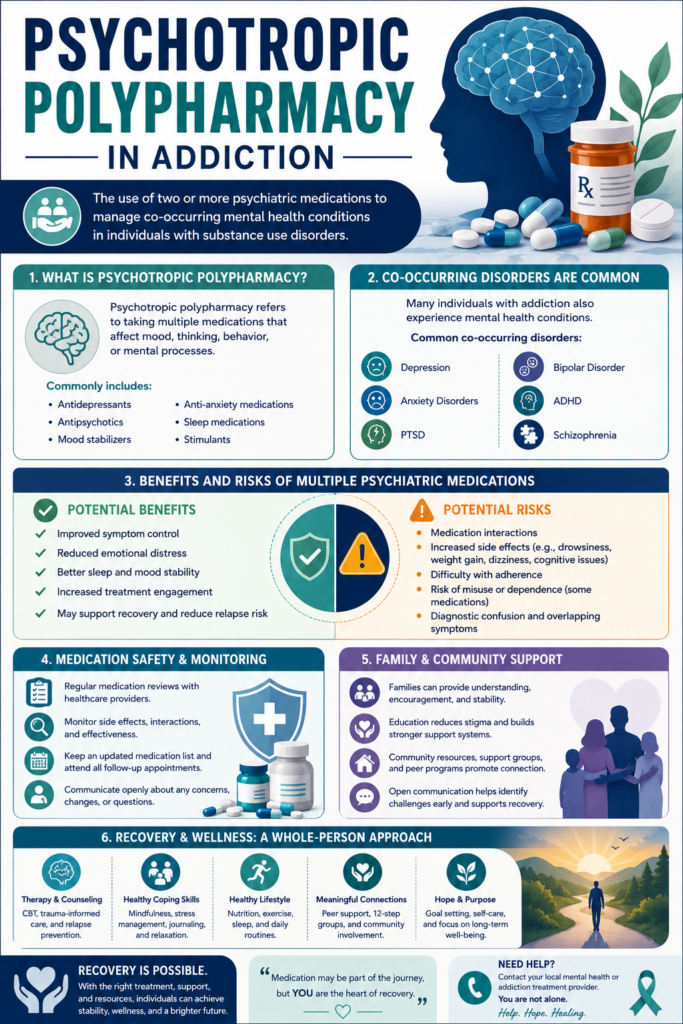
Psychotropic polypharmacy—the use of two or more psychiatric medications at the same time—is becoming more common in addiction treatment because many individuals with substance use disorders also have co-occurring mental health conditions. Disorders such as depression, anxiety, bipolar disorder, Post-traumatic stress disorder (PTSD), and Schizophrenia often require ongoing psychiatric care and, in some cases, a combination of medications. Although these medications can help stabilize mood, reduce psychiatric symptoms, and support recovery, using multiple medications may also increase the risk of side effects, drug interactions, and challenges with medication adherence. Understanding psychotropic polypharmacy helps individuals, families, and healthcare providers make informed decisions about treatment while promoting safe, personalized, and comprehensive care for both mental health and addiction recovery.
Psychotropic Polypharmacy in Addiction: Balancing Mental Health Treatment and Recovery
Psychotropic medications are commonly used to treat mental health conditions such as depression, anxiety, bipolar disorder, schizophrenia, and trauma-related disorders. In addiction treatment settings, many individuals experience co-occurring psychiatric conditions that require careful medical management. As a result, some patients may receive multiple psychotropic medications at the same time, a practice known as psychotropic polypharmacy. While combining medications may sometimes improve symptom control and quality of life, psychotropic polypharmacy in addiction treatment can also create challenges related to medication interactions, side effects, treatment adherence, and relapse risk. Understanding the benefits and concerns associated with psychotropic polypharmacy is important for promoting safe, effective, and individualized addiction recovery care.
Understanding Psychotropic Polypharmacy
Psychotropic polypharmacy refers to the use of two or more psychiatric medications simultaneously. These medications may include:
- Antidepressants
- Antipsychotics
- Mood stabilizers
- Anti-anxiety medications
- Sleep medications
- Stimulants
Polypharmacy may occur when individuals have multiple mental health diagnoses or when symptoms do not respond adequately to a single medication.
The Connection Between Addiction and Mental Health
Many individuals with substance use disorders also experience co-occurring mental health conditions, sometimes referred to as dual diagnosis or co-occurring disorders. Common conditions may include:
- Depression
- Anxiety disorders
- Post-traumatic stress disorder (PTSD)
- Bipolar disorder
- Attention-deficit/hyperactivity disorder (ADHD)
- Schizophrenia
Mental health symptoms may increase vulnerability to substance use, while addiction itself can worsen psychiatric symptoms. Treating both conditions simultaneously is often necessary for successful recovery.
Why Psychotropic Polypharmacy Occurs in Addiction Treatment
Psychotropic polypharmacy may be used in addiction treatment for several reasons:
1. Managing Multiple Mental Health Conditions
Individuals with more than one psychiatric diagnosis may require different medications to address separate symptoms or disorders.
For example:
- One medication may treat depression
- Another may stabilize mood
- Another may improve sleep or anxiety
2. Treating Severe or Resistant Symptoms
Some individuals do not respond adequately to a single medication. In these situations, healthcare providers may combine medications to improve symptom management.
3. Supporting Withdrawal and Recovery Symptoms
Certain medications may be prescribed temporarily during addiction recovery to manage:
- Anxiety
- Insomnia
- Agitation
- Mood instability
- Cravings
These medications may help stabilize during the early recovery stages.
Potential Benefits of Psychotropic Polypharmacy
When carefully managed, psychotropic polypharmacy may provide benefits such as:
- Improved symptom control
- Reduced emotional distress
- Better sleep and mood regulation
- Increased treatment participation
- Improved quality of life
For some individuals, medication combinations may support emotional stability and reduce relapse risk.
Risks and Concerns of Psychotropic Polypharmacy
Although medication combinations may help some patients, polypharmacy also carries important risks.
1. Medication Interactions
Combining multiple psychotropic medications increases the possibility of harmful drug interactions that may affect physical or mental health.
2. Increased Side Effects
Common side effects may include:
- Sedation or fatigue
- Weight gain
- Cognitive impairment
- Dizziness
- Emotional blunting
- Sleep disturbances
The risk of side effects may increase as the number of medications rises.
3. Difficulty with Medication Adherence
Complex medication regimens may make it harder for individuals to consistently follow treatment plans, especially during addiction recovery.
Missed doses or medication confusion may reduce treatment effectiveness.
4. Risk of Misuse or Dependence
Some psychiatric medications, particularly certain anti-anxiety or sleep medications, may carry risks of misuse, dependence, or interaction with substances.
Careful monitoring is important in addiction treatment settings.
5. Diagnostic Challenges
Substance use, withdrawal symptoms, medication side effects, and psychiatric symptoms can sometimes overlap, making accurate diagnosis and treatment planning more difficult.
The Importance of Individualized Treatment
Effective addiction treatment requires individualized care based on:
- Mental health history
- Substance use patterns
- Physical health
- Medication response
- Recovery goals
Healthcare providers must carefully evaluate the risks and benefits of each medication combination and regularly monitor treatment outcomes.
Strategies for Safe Medication Management
Several strategies may improve safety and effectiveness in psychotropic polypharmacy:
Regular Medication Reviews
Healthcare providers should routinely evaluate medications to determine:
- Whether each medication is necessary
- Possible interactions
- Opportunities to simplify treatment
Monitoring Side Effects
Ongoing assessment of physical and emotional symptoms helps identify medication-related problems early.
Integrated Mental Health and Addiction Care
Collaboration between psychiatrists, addiction specialists, therapists, and primary care providers may improve coordination and treatment quality.
Patient Education
Individuals should understand:
- Why medications are prescribed
- How to take them safely
- Potential side effects
- Risks of combining medications with substances
Education supports informed participation in recovery.
Behavioral and Non-Medication Therapies
Medication alone is rarely enough to support addiction recovery. Comprehensive treatment often includes:
- Cognitive behavioral therapy (CBT)
- Trauma-informed therapy
- Peer support groups
- Stress management
- Lifestyle and wellness interventions
Behavioral therapies may reduce reliance on medications and strengthen long-term coping skills.
The Role of Recovery Support Systems
Families, peer groups, and community support services can help individuals:
- Maintain treatment adherence
- Monitor emotional changes
- Encourage healthy routines
- Reduce relapse risk
Supportive environments contribute to better long-term outcomes.
Limitations and Considerations
Psychotropic polypharmacy is not always inappropriate, but it requires careful oversight and ongoing evaluation. Some individuals may benefit from multiple medications, while others may experience unnecessary risks or overmedication.
Treatment plans should remain flexible and be regularly reassessed to ensure medications continue to support recovery goals.
Conclusion
Psychotropic polypharmacy in addiction treatment reflects the complex relationship between mental health disorders and substance use disorders. While combining psychiatric medications may improve symptom management and emotional stability for some individuals, it also introduces risks related to side effects, medication interactions, and treatment complexity. Safe and effective care requires individualized treatment planning, careful medical supervision, ongoing monitoring, and integration of behavioral therapies and recovery support systems.
Recovery from addiction involves more than symptom control—it requires emotional healing, healthy coping skills, and long-term support. By balancing medication management with comprehensive recovery care, healthcare providers and individuals can work together toward improved mental health, stability, and lasting recovery outcomes.
Self-Management Strategies in Understanding Psychotropic Polypharmacy in Addiction
Addiction recovery can be especially complex for individuals living with co-occurring mental health conditions such as depression, anxiety, bipolar disorder, trauma-related disorders, or schizophrenia. Many individuals in recovery are prescribed multiple psychiatric medications to manage emotional and psychological symptoms, a practice known as psychotropic polypharmacy. While psychotropic medications may improve mental health stability and support recovery, taking several medications at the same time can also create challenges related to side effects, medication interactions, treatment adherence, and emotional well-being. Self-management strategies can help individuals better understand psychotropic polypharmacy, participate actively in treatment decisions, and improve long-term recovery outcomes.
Understanding Psychotropic Polypharmacy
Psychotropic polypharmacy refers to the use of two or more psychiatric medications simultaneously. These medications may include:
- Antidepressants
- Antipsychotics
- Mood stabilizers
- Anti-anxiety medications
- Sleep medications
- Stimulants
In addiction treatment settings, polypharmacy often occurs because many individuals experience both substance use disorders and co-occurring mental health conditions.
The Importance of Self-Management in Recovery
Self-management involves actively participating in one’s own healthcare and recovery process. In addiction and mental health treatment, self-management helps individuals:
- Monitor symptoms and medication effects
- Improve treatment adherence
- Recognize relapse warning signs
- Strengthen coping skills
- Build healthy daily routines
Understanding medications and treatment plans may help individuals feel more confident, informed, and engaged in recovery.
Self-Management Strategies for Understanding Psychotropic Polypharmacy
1. Learn About Prescribed Medications
Individuals should understand:
- Why each medication is prescribed
- How medications work
- Possible side effects
- Medication interactions
- Safe usage instructions
Keeping a medication list may improve organization and communication with healthcare providers.
Education promotes informed decision-making and medication safety.
2. Monitor Physical and Emotional Symptoms
Tracking symptoms can help individuals recognize how medications affect mood, energy, sleep, and overall well-being.
Helpful strategies may include:
- Keeping a mood journal
- Recording side effects
- Tracking sleep patterns
- Monitoring anxiety or cravings
Symptom monitoring helps individuals identify concerns early and discuss them with healthcare providers.
3. Practice Medication Adherence
Taking medications consistently and as prescribed is important for treatment effectiveness. Self-management strategies for adherence may include:
- Using medication organizers
- Setting phone reminders
- Following daily routines
- Attending regular appointments
Consistent medication use may improve emotional stability and reduce relapse risk.
4. Recognize Side Effects and Warning Signs
Psychotropic polypharmacy may increase the risk of:
- Sedation or fatigue
- Dizziness
- Weight changes
- Emotional blunting
- Difficulty concentrating
- Sleep disturbances
Individuals should seek medical guidance if side effects become severe or interfere with daily functioning.
5. Avoid Substance Use and Unsafe Medication Mixing
Combining psychotropic medications with alcohol or illicit substances may increase the risk of:
- Dangerous drug interactions
- Overdose
- Emotional instability
- Relapse
Self-management includes understanding medication safety and avoiding behaviors that may interfere with treatment.
6. Develop Healthy Coping Skills
Medication alone is often not enough to support long-term addiction recovery. Healthy coping strategies may include:
- Exercise and physical activity
- Mindfulness and meditation
- Journaling
- Creative activities
- Peer support groups
- Stress-management techniques
Healthy coping skills may reduce emotional distress and improve resilience.
7. Build Communication Skills with Healthcare Providers
Open communication with healthcare professionals is important when managing multiple medications. Individuals should feel comfortable discussing:
- Side effects
- Emotional changes
- Concerns about medications
- Questions about treatment plans
Collaborative communication supports safer and more individualized care.
8. Participate in Behavioral Therapy
Behavioral therapies such as:
- Cognitive behavioral therapy (CBT)
- Trauma-informed therapy
- Relapse prevention counseling
- Group therapy
may help individuals strengthen coping skills and reduce reliance on medications alone.
Self-management includes applying therapeutic skills in daily life.
9. Establish Structured Daily Routines
Recovery often improves when individuals maintain healthy routines involving:
- Regular sleep schedules
- Balanced nutrition
- Physical activity
- Stress reduction
- Social support
Structure and stability may improve emotional regulation and treatment adherence.
10. Set Long-Term Recovery Goals
Recovery is a gradual process that benefits from realistic goal setting. Goals may include:
- Maintaining sobriety
- Improving mental health
- Returning to work or school
- Strengthening relationships
- Improving physical wellness
Tracking progress can improve motivation and self-confidence.
Benefits of Self-Management in Psychotropic Polypharmacy
Strong self-management skills may help individuals:
- Better understand treatment plans
- Reduce medication-related risks
- Improve emotional awareness
- Strengthen relapse prevention
- Increase treatment participation
- Build long-term recovery stability
Active participation in healthcare often improves treatment outcomes and quality of life.
Limitations and Considerations
Psychotropic polypharmacy can be helpful for some individuals but may not be appropriate for everyone. Medication needs may change over time depending on:
- Recovery progress
- Mental health symptoms
- Side effects
- Physical health conditions
Individuals should never stop or change medications without medical supervision.
Conclusion
Psychotropic polypharmacy in addiction treatment reflects the complex relationship between substance use disorders and mental health conditions. While multiple psychiatric medications may help improve emotional stability and symptom management, safe and effective treatment requires ongoing monitoring, communication, and active participation in recovery.
Self-management strategies such as medication education, symptom tracking, healthy coping skills, structured routines, and participation in behavioral therapy can help individuals better understand their treatment and strengthen long-term recovery outcomes. Through informed self-care and supportive treatment, individuals may build greater resilience, emotional balance, and confidence as they work toward lasting wellness and recovery.
Family Support Strategies in Understanding Psychotropic Polypharmacy in Addiction
Addiction recovery can become more complicated when individuals also experience mental health conditions such as depression, anxiety, bipolar disorder, trauma-related disorders, or schizophrenia. Many people in addiction treatment are prescribed multiple psychiatric medications to manage emotional and psychological symptoms, a practice known as psychotropic polypharmacy. While psychotropic medications may improve mental health stability and support recovery, the use of several medications at once can also create challenges related to side effects, medication interactions, emotional functioning, and treatment adherence. Family support strategies can help individuals better understand psychotropic polypharmacy, strengthen recovery efforts, and promote safer, more supportive treatment environments.
Understanding Psychotropic Polypharmacy
Psychotropic polypharmacy refers to the use of two or more psychiatric medications simultaneously. These medications may include:
- Antidepressants
- Antipsychotics
- Mood stabilizers
- Anti-anxiety medications
- Sleep medications
- Stimulants
In addiction treatment settings, polypharmacy is often used when individuals have co-occurring mental health disorders that require complex treatment approaches.
The Connection Between Addiction and Mental Health
Many individuals with substance use disorders experience mental health challenges that may affect recovery. Common co-occurring conditions include:
- Depression
- Anxiety disorders
- Post-traumatic stress disorder (PTSD)
- Bipolar disorder
- Attention-deficit/hyperactivity disorder (ADHD)
- Schizophrenia
Treating both addiction and mental health symptoms often requires comprehensive care involving medication, counseling, and behavioral support.
Why Family Support Matters in Recovery
Family relationships strongly influence addiction recovery outcomes. Supportive family environments may help individuals:
- Feel emotionally understood
- Stay engaged in treatment
- Reduce stress and isolation
- Improve treatment adherence
- Strengthen motivation for recovery
In contrast, conflict, criticism, or misunderstanding may increase emotional distress and relapse risk. Families who understand psychotropic medications and addiction recovery may better support long-term healing.
Family Support Strategies for Understanding Psychotropic Polypharmacy
1. Learn About Mental Health and Addiction Together
Families benefit from understanding that addiction and mental illness are complex medical and psychological conditions rather than personal failures. Learning about:
- Substance use disorders
- Mental health conditions
- Psychiatric medications
- Recovery processes
can improve empathy and reduce stigma.
Education also helps families understand why multiple medications may sometimes be necessary.
2. Understand the Purpose of Each Medication
Families should understand:
- Why medications are prescribed
- What symptoms do they treat
- Possible side effects
- The importance of medication adherence
Understanding treatment goals may reduce confusion and unrealistic expectations during recovery.
3. Encourage Open and Respectful Communication
Supportive communication is essential in recovery. Family members can help by:
- Listening without judgment
- Avoiding criticism or blame
- Encouraging honest conversations
- Respecting emotional experiences
Positive communication may improve emotional safety and reduce stress within the home.
4. Help Monitor Side Effects and Emotional Changes
Psychotropic polypharmacy may increase the risk of side effects such as:
- Fatigue
- Drowsiness
- Weight changes
- Mood instability
- Difficulty concentrating
- Sleep disturbances
Family members may notice emotional or behavioral changes that the individuals themselves do not recognize. Encouraging communication with healthcare providers about concerns may improve treatment safety.
5. Support Medication Adherence
Consistent medication use is important for emotional stability and treatment effectiveness. Families can help by:
- Encouraging healthy routines
- Supporting appointment attendance
- Helping organize medication schedules when appropriate
- Reducing environmental stress
Support should remain respectful and avoid becoming controlling or intrusive.
6. Encourage Participation in Therapy and Recovery Programs
Medication alone is often not enough to support long-term addiction recovery. Families can encourage participation in:
- Cognitive behavioral therapy (CBT)
- Trauma-informed counseling
- Peer support groups
- Family therapy
- Relapse prevention programs
Behavioral therapies help individuals develop healthier coping skills and emotional resilience.
7. Recognize Stress and Relapse Triggers
Stress is a major relapse risk factor. Families can help identify and reduce triggers such as:
- Conflict or emotional tension
- Substance-using environments
- Social isolation
- Sleep disruption
- Financial stress
Creating calmer and more supportive environments may improve emotional stability and recovery outcomes.
8. Promote Healthy Lifestyle Habits
Families can encourage wellness by supporting:
- Regular sleep schedules
- Balanced nutrition
- Physical activity
- Stress-management techniques
- Healthy social activities
Healthy routines may improve both mental health and addiction recovery.
9. Avoid Stigma and Medication Shame
Some individuals feel embarrassed or discouraged about taking multiple psychiatric medications. Families should avoid:
- Criticizing medication use
- Labeling individuals as “overmedicated”
- Comparing treatment experiences to others
Supportive attitudes may improve treatment engagement and emotional confidence.
10. Participate in Family Education or Counseling
Family therapy and educational programs may help improve:
- Communication skills
- Conflict resolution
- Understanding of addiction and mental illness
- Emotional support strategies
Professional guidance may strengthen family relationships and recovery support systems.
Benefits of Family Support in Psychotropic Polypharmacy
Strong family support may help individuals:
- Improve treatment adherence
- Reduce stress and relapse risk
- Strengthen emotional stability
- Feel less isolated
- Increase motivation for recovery
- Build healthier coping skills
Supportive families often contribute to more positive long-term recovery outcomes.
Limitations and Considerations
Psychotropic polypharmacy may be appropriate for some individuals but not for others. Medication needs can change over time depending on:
- Mental health symptoms
- Recovery progress
- Side effects
- Physical health conditions
Families should encourage regular medical evaluation and avoid pressuring individuals to stop or change medications without professional guidance.
Conclusion
Psychotropic polypharmacy in addiction treatment reflects the complex relationship between mental health disorders and substance use disorders. While multiple psychiatric medications may help stabilize emotional and psychological symptoms, recovery also requires behavioral support, healthy coping skills, and strong social connections.
Family support strategies such as education, respectful communication, medication understanding, stress reduction, and encouragement of therapy participation can strengthen treatment engagement and improve long-term recovery outcomes. Through compassionate involvement and informed support, families can help individuals feel more empowered, emotionally supported, and better equipped to build lasting recovery and mental wellness.
Community Resource Strategies in Understanding Psychotropic Polypharmacy in Addiction
Addiction recovery is often complicated by the presence of co-occurring mental health conditions such as depression, anxiety, bipolar disorder, trauma-related disorders, and schizophrenia. To manage these conditions, many individuals are prescribed multiple psychiatric medications simultaneously, a practice known as psychotropic polypharmacy. While psychotropic medications may improve emotional stability and support recovery, taking several medications at once can also create challenges involving side effects, medication interactions, treatment adherence, and overall quality of life. Community resource strategies can help individuals, families, and healthcare providers better understand psychotropic polypharmacy, improve access to supportive services, and strengthen long-term addiction recovery outcomes.
Understanding Psychotropic Polypharmacy
Psychotropic polypharmacy refers to the use of two or more psychiatric medications at the same time. These medications may include:
- Antidepressants
- Antipsychotics
- Mood stabilizers
- Anti-anxiety medications
- Sleep medications
- Stimulants
In addiction treatment settings, polypharmacy often occurs because individuals may have multiple mental health diagnoses that require ongoing symptom management.
The Relationship Between Addiction and Mental Health
Substance use disorders frequently occur alongside psychiatric conditions. Many individuals use substances to cope with emotional distress, trauma, or untreated mental illness. Common co-occurring conditions include:
- Depression
- Anxiety disorders
- Post-traumatic stress disorder (PTSD)
- Bipolar disorder
- Attention-deficit/hyperactivity disorder (ADHD)
- Schizophrenia
Integrated treatment approaches are often necessary to address both addiction and mental health symptoms effectively.
The Importance of Community Resources in Recovery
Recovery is often more successful when individuals have access to strong community support systems. Community resources can help:
- Improve access to treatment
- Reduce social isolation
- Promote medication education
- Strengthen coping skills
- Encourage long-term recovery engagement
Communities that provide supportive healthcare and recovery services may improve understanding of psychotropic medications and reduce stigma surrounding addiction and mental illness.
Community Resource Strategies for Understanding Psychotropic Polypharmacy
1. Community Education Programs
Educational programs offered through:
- Community health centers
- Public health agencies
- Recovery organizations
- Schools and colleges
- Mental health advocacy groups
can help individuals and families better understand:
- Psychiatric medications
- Addiction recovery
- Medication safety
- Side effects and interactions
- Mental health treatment options
Education reduces misinformation and encourages informed participation in care.
2. Integrated Mental Health and Addiction Services
Integrated treatment programs combine addiction care and psychiatric treatment within the same system. These programs may provide:
- Medication management
- Counseling services
- Behavioral therapy
- Psychiatric evaluation
- Relapse prevention planning
Coordinated care may reduce confusion and improve treatment consistency for individuals managing multiple medications.
3. Access to Medication Management Services
Community healthcare providers and pharmacies can support safe psychotropic medication use by offering:
- Medication reviews
- Side-effect monitoring
- Drug interaction screening
- Patient education
- Follow-up appointments
Regular medication evaluation helps ensure that treatment remains safe and effective.
4. Peer Support and Recovery Groups
Peer support programs allow individuals to connect with others who understand the challenges of addiction and mental health recovery. Support groups may help individuals:
- Share experiences
- Learn coping strategies
- Reduce feelings of isolation
- Improve motivation
- Discuss medication concerns safely
Recovery communities often provide emotional encouragement and accountability.
5. Family Education and Support Programs
Families may struggle to understand psychotropic medications and addiction treatment. Community family support programs can improve:
- Communication skills
- Mental health education
- Understanding of medication use
- Stress management
- Emotional support strategies
Educated families may provide stronger recovery support environments.
6. Wellness and Lifestyle Programs
Community wellness initiatives may complement psychotropic treatment and addiction recovery by encouraging:
- Physical activity
- Nutrition education
- Stress reduction
- Mindfulness practices
- Creative therapies
- Healthy social engagement
Healthy lifestyle habits may improve emotional stability and reduce the risk of relapse.
7. Housing and Social Support Services
Stable living conditions are important for individuals managing addiction recovery and mental health treatment. Community organizations may assist with:
- Transitional housing
- Employment programs
- Transportation assistance
- Case management
- Financial support resources
Reducing environmental stress may improve medication adherence and emotional well-being.
8. Public Awareness Campaigns
Public education campaigns can help communities better understand:
- Addiction as a health condition
- Mental illness and recovery
- Medication-assisted treatment
- Risks and benefits of psychotropic medications
Reducing stigma may encourage more individuals to seek treatment without fear of judgment.
9. Telehealth and Online Recovery Resources
Digital healthcare resources can improve access to treatment and education, especially in underserved communities. Helpful online services may include:
- Virtual therapy
- Medication management appointments
- Recovery education websites
- Online support groups
- Mental health apps
Technology can help individuals stay connected to recovery support systems.
Benefits of Community-Based Support
Strong community support systems may help individuals:
- Improve treatment adherence
- Better understand medications
- Strengthen emotional stability
- Reduce relapse risk
- Build social connection
- Increase long-term recovery success
Supportive communities promote healthier environments for both addiction recovery and mental wellness.
Limitations and Considerations
Although psychotropic polypharmacy may benefit some individuals, medication treatment should be carefully monitored to reduce risks such as:
- Medication interactions
- Excessive sedation
- Emotional blunting
- Difficulty adhering to treatment
Community education should encourage balanced, individualized, and evidence-informed approaches to medication management.
Conclusion
Psychotropic polypharmacy in addiction treatment reflects the complex relationship between substance use disorders and mental health conditions. While multiple psychiatric medications may help improve emotional stability and symptom management, recovery also depends on supportive environments, behavioral therapies, education, and social connection.
Community resource strategies such as integrated healthcare services, medication education, peer support programs, wellness initiatives, family education, and public awareness campaigns can strengthen understanding of psychotropic polypharmacy and improve long-term recovery outcomes. By building informed and compassionate communities, individuals recovering from addiction and mental illness may feel more supported, empowered, and capable of achieving lasting wellness and recovery stability.
Frequently Asked Questions
Here are some common questions:
1. What is psychotropic polypharmacy?
Psychotropic polypharmacy refers to the use of two or more psychiatric medications at the same time to treat mental health symptoms or co-occurring conditions.
2. Why is psychotropic polypharmacy common in addiction treatment?
Many individuals with substance use disorders also experience mental health conditions such as depression, anxiety, bipolar disorder, or PTSD. Multiple medications may be prescribed to manage different symptoms simultaneously.
3. What types of medications are involved in psychotropic polypharmacy?
Common psychotropic medications may include:
- Antidepressants
- Antipsychotics
- Mood stabilizers
- Anti-anxiety medications
- Sleep medications
- Stimulants
4. What are co-occurring disorders?
Co-occurring disorders, also called dual diagnosis, occur when an individual experiences both a substance use disorder and one or more mental health conditions at the same time.
5. Why do individuals with addiction often need mental health treatment?
Mental health conditions and addiction frequently influence each other. Emotional distress, trauma, anxiety, or depression may contribute to substance use, while substance use can worsen psychiatric symptoms.
6. Can psychotropic medications support addiction recovery?
Yes. Psychiatric medications may help stabilize mood, reduce anxiety, improve sleep, and manage mental health symptoms that could interfere with recovery.
7. What are the potential benefits of psychotropic polypharmacy?
Potential benefits may include:
- Better symptom control
- Improved emotional stability
- Reduced anxiety or depression
- Better sleep
- Increased treatment participation
- Lower relapse risk
8. What are the risks of psychotropic polypharmacy?
Possible risks include:
- Medication interactions
- Increased side effects
- Fatigue or sedation
- Weight gain
- Difficulty concentrating
- Medication confusion
- Reduced treatment adherence
9. Can taking multiple psychiatric medications be dangerous?
Multiple medications may increase the risk of complications if not carefully monitored. Regular medical supervision is important to ensure medication safety and effectiveness.
10. What side effects are common with psychotropic medications?
Side effects vary depending on the medications used, but may include:
- Drowsiness
- Dizziness
- Dry mouth
- Emotional blunting
- Appetite or weight changes
- Sleep disturbances
11. Why is medication monitoring important?
Monitoring helps healthcare providers:
- Detect side effects early
- Identify medication interactions
- Adjust doses safely
- Evaluate treatment effectiveness
Regular follow-up appointments are important for safe care.
12. Can psychotropic medications interact with alcohol or drugs?
Yes. Combining psychiatric medications with alcohol or illicit substances may increase the risk of overdose, sedation, emotional instability, and dangerous drug interactions.
13. Is psychotropic polypharmacy always necessary?
Not always. Some individuals benefit from multiple medications, while others may do well with fewer medications. Treatment plans should be individualized and regularly reviewed.
14. What role do behavioral therapies play in recovery?
Behavioral therapies such as:
- Cognitive behavioral therapy (CBT)
- Trauma-informed therapy
- Group counseling
- Relapse prevention programs
help individuals build coping skills and support long-term recovery alongside medication treatment.
15. How can individuals manage multiple medications safely?
Helpful self-management strategies include:
- Keeping an updated medication list
- Using pill organizers
- Setting medication reminders
- Attending follow-up appointments
- Monitoring side effects and mood changes
16. What role does family support play?
Families can support recovery by:
- Learning about medications and mental health
- Encouraging treatment participation
- Promoting healthy routines
- Reducing stress and conflict
- Supporting communication with healthcare providers
17. Can psychotropic polypharmacy increase relapse risk?
In some cases, side effects, emotional instability, or medication misuse may increase relapse risk. However, well-managed psychiatric treatment may also reduce relapse by improving emotional stability.
18. Why is integrated treatment important?
Integrated treatment combines addiction care and mental health services to address both conditions. Coordinated care often improves treatment outcomes and the stability of recovery.
19. Can medications be reduced over time?
Some individuals may eventually reduce or simplify medications under medical supervision, depending on recovery progress and symptom stability. Medications should never be stopped suddenly without professional guidance.
20. What is the overall goal of psychotropic polypharmacy in addiction treatment?
The goal is to improve mental health stability, reduce emotional distress, support addiction recovery, and help individuals function more effectively in daily life while maintaining safety and quality of care.
Conclusion
Psychotropic polypharmacy in addiction treatment reflects the complex relationship between mental illness and substance use disorders. Although multiple psychiatric medications may help manage severe or co-occurring mental health symptoms, treatment must be carefully monitored to reduce risks such as medication interactions, excessive side effects, and difficulties with adherence. Successful recovery often requires more than medication alone and should include behavioral therapies, emotional support, healthy coping strategies, and ongoing medical evaluation. Through individualized treatment planning, patient education, and supportive recovery systems, healthcare providers and individuals can work together to improve emotional stability, strengthen long-term recovery outcomes, and promote overall mental wellness and quality of life.
Video: How Multiple Medications Help Beat Addiction #AddictionRecovery #IntegratedCare #RecoveryJourney