The ongoing opioid crisis has driven researchers to explore innovative ways to prevent fentanyl-related overdoses and improve outcomes for individuals living with opioid use disorder. One promising area of research is the development of an experimental fentanyl vaccine. Unlike traditional vaccines that protect against infectious diseases, a fentanyl vaccine is designed to stimulate the immune system to produce antibodies that bind to fentanyl in the bloodstream, reducing the amount of the drug that reaches the brain. Early laboratory and animal studies have shown encouraging results, and human clinical research is underway to evaluate safety and effectiveness. Although these vaccines are not yet approved for routine clinical use, they represent a potentially valuable addition to existing evidence-based treatments. Understanding how experimental fentanyl vaccines work, their potential benefits, current limitations, and their role within comprehensive addiction treatment can help individuals, families, and healthcare professionals make informed decisions as this promising field of research continues to evolve.
Experimental Fentanyl Vaccine
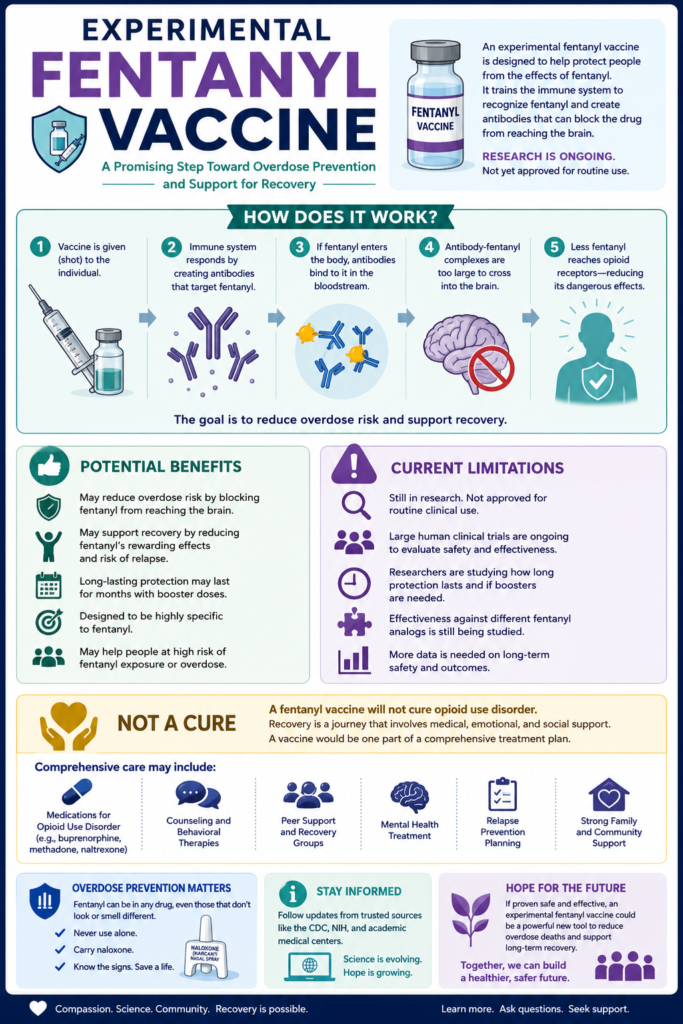
An experimental fentanyl vaccine is a promising area of addiction and overdose prevention research designed to help protect people from the effects of illicit fentanyl. Unlike traditional vaccines that prevent infectious diseases, this vaccine trains the immune system to recognize fentanyl molecules as foreign substances. The goal is to produce antibodies that bind to fentanyl in the bloodstream before it reaches the brain, reducing or blocking its dangerous effects.
How Does It Work?
Fentanyl is a very small molecule that normally goes unnoticed by the immune system. Researchers attach a fentanyl-like molecule (called a hapten) to a larger carrier protein along with an immune-stimulating adjuvant. After vaccination, the immune system produces antibodies specifically targeted against fentanyl.
If a vaccinated person is later exposed to fentanyl:
- Antibodies attach to fentanyl molecules in the bloodstream.
- The antibody-fentanyl complexes become too large to easily cross the blood-brain barrier.
- Less fentanyl reaches opioid receptors in the brain.
- This may reduce euphoria, respiratory depression, and overdose risk.
Potential Benefits
May Reduce Overdose Risk
Because less fentanyl reaches the brain, vaccinated individuals may experience less respiratory depression, the primary cause of fatal opioid overdoses.
Supports Recovery
The vaccine may help people recovering from opioid use disorder by decreasing fentanyl’s rewarding effects, making relapse less reinforcing.
Long-Lasting Protection
Rather than taking medication daily, protection may last for several months after a complete vaccine series, with periodic booster doses.
Highly Specific
Researchers are designing vaccines that target fentanyl while allowing medically necessary opioids, when appropriate, to remain effective if carefully managed.
May Help First Responders and High-Risk Groups
In the future, individuals at particularly high risk of accidental fentanyl exposure or repeated overdose may benefit from vaccination if clinical trials demonstrate safety and effectiveness.
Current Limitations
Although results from animal studies have been encouraging, no fentanyl vaccine has yet received regulatory approval for routine clinical use. Researchers continue to study:
- Long-term safety
- Duration of immunity
- Optimal dosing schedules
- Effectiveness in humans
- Whether boosters are required
- Protection against fentanyl analogs
Large human clinical trials are necessary before widespread use can be considered.
Important Considerations
A fentanyl vaccine would not cure opioid use disorder. Addiction is a chronic medical condition involving changes in brain circuitry, behavior, mental health, and social factors. Even if a vaccine reduces fentanyl’s effects, comprehensive treatment remains essential.
Treatment may still include:
- Medications for opioid use disorder, such as Buprenorphine, Methadone, or Naltrexone
- Individual and group counseling
- Behavioral therapies
- Peer recovery support
- Mental health treatment
- Relapse prevention planning
Could Someone Override the Vaccine?
One concern researchers are studying is whether someone could attempt to overcome the vaccine by taking larger amounts of fentanyl. This could increase the risk of poisoning from other substances commonly mixed with illicit drugs or from overwhelming the vaccine’s protective effect. For this reason, experts emphasize that a vaccine should be viewed as one component of a comprehensive treatment plan rather than a standalone solution.
Future Directions
Scientists are investigating vaccines that:
- Protect against multiple fentanyl analogs.
- Produce stronger, longer-lasting antibody responses.
- Work alongside existing medications for opioid use disorder.
- Reduce overdose deaths without interfering with emergency treatments such as Naloxone.
If future human studies confirm that these vaccines are safe and effective, they could become an additional tool to reduce overdose deaths and support long-term recovery, particularly when combined with evidence-based addiction treatment, counseling, and ongoing recovery support.
Self-Management Strategies to Understand an Experimental Fentanyl Vaccine
Understanding an experimental fentanyl vaccine can help individuals make informed decisions about addiction treatment and overdose prevention. While these vaccines are still being studied and not yet approved for routine clinical use, learning about their purpose and limitations can help set realistic expectations and encourage evidence-based care.
1. Learn How the Vaccine Works
Take time to understand that an experimental fentanyl vaccine does not prevent opioid use disorder or eliminate cravings. Instead, it is designed to stimulate the immune system to produce antibodies that bind to fentanyl in the bloodstream, reducing the amount that reaches the brain. Understanding this distinction helps avoid misconceptions about what the vaccine can and cannot do.
2. Stay Informed Through Reliable Sources
Follow updates from reputable organizations such as the National Institutes of Health (NIH), the Centers for Disease Control and Prevention (CDC), and peer-reviewed medical journals. As research evolves, staying informed ensures you receive accurate information rather than relying on rumors or social media misinformation.
3. Maintain Realistic Expectations
Recognize that an experimental vaccine is not a cure for opioid addiction. Recovery involves addressing physical dependence, emotional health, behavioral patterns, and social support. A vaccine, if approved in the future, would likely serve as one component of a comprehensive treatment plan.
4. Continue Evidence-Based Treatment
If you are receiving treatment for opioid use disorder, continue taking prescribed medications, attending counseling sessions, and participating in recovery programs. Do not stop treatment because of news about experimental therapies unless directed by your healthcare provider.
5. Develop an Overdose Prevention Plan
Even if future vaccines become available, overdose prevention remains essential. Carry Naloxone if appropriate, avoid using opioids alone, understand the risks of fentanyl contamination in illicit drugs, and educate trusted family members about recognizing and responding to an overdose.
6. Ask Questions During Medical Appointments
Prepare questions for your healthcare provider, such as:
- Is this vaccine available outside research studies?
- What do current clinical trials show?
- Who may benefit if it becomes approved?
- What are the known risks and limitations?
- How would it fit into my treatment plan?
Open communication helps you make informed healthcare decisions.
7. Understand the Importance of Clinical Trials
Experimental vaccines must undergo carefully designed clinical trials to evaluate safety, effectiveness, dosing schedules, and long-term outcomes. Recognizing this process helps build confidence in the need for thorough testing before new treatments become widely available.
8. Focus on Whole-Person Recovery
Support your recovery by maintaining healthy daily habits, including regular exercise, nutritious meals, adequate sleep, stress management, and meaningful social connections. These lifestyle practices improve overall well-being and complement medical treatment.
9. Build Critical Thinking Skills
Be cautious of sensational headlines claiming a vaccine is a “miracle cure.” Compare information from multiple credible sources and discuss new developments with healthcare professionals before changing your treatment plan.
10. Stay Engaged in Recovery
Continue participating in counseling, peer support groups, recovery meetings, or other evidence-based programs. Even if a fentanyl vaccine becomes available in the future, long-term recovery will still depend on healthy coping skills, ongoing support, relapse prevention planning, and addressing underlying mental health or medical conditions.
Conclusion
An experimental fentanyl vaccine represents an exciting area of scientific research that may one day help reduce the risk of fentanyl overdose and support recovery. However, it remains under investigation and should not be viewed as a replacement for comprehensive addiction treatment. By staying informed, asking questions, following evidence-based care, and maintaining healthy recovery habits, individuals can make informed decisions while continuing to build a strong foundation for lasting recovery.
Family Support Strategies to Understand an Experimental Fentanyl Vaccine
Families play an important role in helping a loved one understand new developments in addiction treatment, including experimental fentanyl vaccines. While these vaccines are still being researched and are not yet approved for routine clinical use, family members can provide encouragement, accurate information, and emotional support without creating unrealistic expectations. Learning together helps families make informed decisions and strengthens recovery efforts.
1. Learn About the Science Together
Take time to read information from trusted medical organizations and discuss how an experimental fentanyl vaccine works. Understanding that the vaccine is designed to help block fentanyl from reaching the brain—not to cure addiction—can help everyone develop realistic expectations.
2. Encourage Open and Honest Conversations
Create a safe environment where your loved one feels comfortable discussing concerns, questions, and hopes about new treatments. Listen without judgment and avoid criticism, allowing conversations to focus on understanding rather than persuasion.
3. Avoid Viewing the Vaccine as a “Quick Fix”
Help family members recognize that opioid use disorder is a chronic medical condition requiring comprehensive treatment. Even if a fentanyl vaccine becomes available, counseling, recovery support, medication when appropriate, and healthy lifestyle changes will remain important parts of recovery.
4. Support Evidence-Based Treatment
Encourage your loved one to continue working with healthcare professionals and to follow established treatment plans, which may include medications such as Buprenorphine, Methadone, or Naltrexone when appropriate. Experimental therapies should complement—not replace—proven treatments.
5. Stay Informed About Research Progress
Clinical trials continue to evaluate the safety and effectiveness of fentanyl vaccines. Families can follow updates from reputable medical organizations instead of relying on social media posts or sensational headlines that may exaggerate research findings.
6. Help Develop an Overdose Prevention Plan
Even with promising future therapies, overdose prevention remains essential. Encourage your loved one to have access to Naloxone when appropriate, understand overdose warning signs, avoid using illicit substances alone, and seek emergency medical care immediately if an overdose is suspected.
7. Encourage Questions During Healthcare Visits
Offer to attend medical appointments if your loved one is comfortable with your presence. Help prepare questions about clinical trials, eligibility, potential benefits, risks, and how future vaccines might fit into an individualized treatment plan.
8. Promote Healthy Recovery Habits
Support daily routines that strengthen recovery, including healthy meals, regular physical activity, quality sleep, stress management, participation in counseling, and involvement in recovery support groups. These healthy habits improve overall well-being regardless of future medical advances.
9. Be Patient Throughout Recovery
Recovery is rarely a straight path. Celebrate progress, encourage resilience after setbacks, and remind your loved one that lasting recovery is built through consistent treatment, healthy choices, and ongoing support—not a single medical intervention.
10. Care for Your Own Well-Being
Supporting someone with opioid use disorder can be emotionally challenging. Family members should also prioritize their own mental and physical health by seeking counseling, joining family support groups, practicing self-care, and connecting with others who understand the recovery journey.
Conclusion
An experimental fentanyl vaccine represents an exciting area of research that may one day become another tool for reducing overdose risk and supporting recovery. Families can make a meaningful difference by learning about the science, encouraging evidence-based treatment, maintaining realistic expectations, and offering compassionate support. By working together with healthcare professionals, families help create an environment where recovery can grow through knowledge, hope, and ongoing encouragement.
Community Resource Strategies to Understand an Experimental Fentanyl Vaccine
Community resources play a vital role in educating the public about emerging treatments for opioid use disorder, including experimental fentanyl vaccines. Although these vaccines are still under investigation and not approved for routine clinical use, community organizations can help individuals and families understand the science, distinguish facts from misinformation, and access evidence-based care. A well-informed community is better equipped to support recovery and reduce overdose deaths.
1. Attend Community Education Programs
Many hospitals, public health departments, universities, and recovery organizations offer educational presentations on opioid addiction, overdose prevention, and new research. Participating in these events can help individuals learn how experimental fentanyl vaccines work, their potential benefits, and their current limitations.
2. Utilize Public Health Resources
Local and state health departments often provide educational materials about fentanyl, overdose prevention, harm reduction, and addiction treatment. These resources explain current evidence while emphasizing that experimental vaccines remain under clinical investigation.
3. Connect with Addiction Treatment Programs
Substance use treatment centers can help explain how future vaccines might fit into a comprehensive treatment plan. Healthcare professionals can discuss ongoing research while reinforcing the importance of counseling, behavioral therapies, and medications for opioid use disorder.
4. Participate in Recovery Support Organizations
Peer recovery groups and community recovery organizations provide opportunities to discuss new medical advances while sharing real-world recovery experiences. These groups can help individuals understand that recovery involves much more than a single treatment approach.
5. Learn About Clinical Trial Opportunities
Academic medical centers and research institutions may conduct clinical trials evaluating experimental fentanyl vaccines. Community members interested in participating in research should discuss eligibility, potential risks, and possible benefits with qualified healthcare professionals before enrolling.
6. Take Advantage of Harm Reduction Programs
Community harm reduction organizations provide education about fentanyl contamination, overdose prevention, safer use practices, and distribution of Naloxone. These services remain essential regardless of future vaccine availability.
7. Access Reliable Educational Resources
Seek information from respected organizations, including government health agencies, academic medical centers, and professional medical societies. Reliable resources help community members distinguish evidence-based findings from misleading claims circulating on social media.
8. Encourage Community Conversations
Faith communities, schools, employers, libraries, and civic organizations can host educational forums about addiction science and emerging treatments. Open discussions reduce stigma and encourage individuals to seek treatment without fear of judgment.
9. Support Comprehensive Recovery Services
Communities can advocate for continued investment in medication-assisted treatment, mental health services, housing assistance, employment programs, transportation, and peer recovery support. These services address many of the factors that contribute to long-term recovery beyond any single medical intervention.
10. Promote Ongoing Prevention Efforts
Even if an experimental fentanyl vaccine eventually becomes available, prevention remains a community responsibility. Public awareness campaigns, youth education, early intervention, safe prescribing practices, and widespread overdose education continue to be essential strategies for reducing opioid-related harm.
Conclusion
Experimental fentanyl vaccines represent an exciting area of scientific research with the potential to become another tool for preventing fentanyl-related overdoses. However, they are not a substitute for comprehensive addiction treatment or community-based prevention efforts. By using trusted educational resources, supporting evidence-based treatment programs, participating in community education, and promoting harm reduction initiatives, communities can help individuals make informed decisions while strengthening the overall response to the opioid crisis.
Frequently Asked Questions
Here are some common questions:
1. What is an experimental fentanyl vaccine?
An experimental fentanyl vaccine is a research-based treatment designed to train the immune system to produce antibodies that recognize and bind to fentanyl. These antibodies may help prevent fentanyl from reaching the brain, potentially reducing its effects and lowering overdose risk.
2. Is a fentanyl vaccine currently available to the public?
No. Fentanyl vaccines are still being studied in clinical research and have not been approved for routine public use. Researchers continue to evaluate their safety and effectiveness in human trials.
3. How does the vaccine work?
The vaccine stimulates the body’s immune system to create antibodies against fentanyl. If fentanyl enters the bloodstream, these antibodies bind to it, making it more difficult for the drug to cross the blood-brain barrier and activate opioid receptors.
4. Can a fentanyl vaccine prevent addiction?
No. A fentanyl vaccine is not designed to prevent addiction. It may reduce fentanyl’s effects, but opioid use disorder is a complex medical condition that involves biological, psychological, and social factors requiring comprehensive treatment.
5. Can the vaccine prevent overdose?
Researchers hope the vaccine may reduce the risk of fentanyl overdose by limiting the amount of fentanyl that reaches the brain. However, more research is needed to determine how effective it may be in preventing overdoses in humans.
6. Is the vaccine a cure for opioid use disorder?
No. Even if proven effective, a fentanyl vaccine would be one tool among many used to treat opioid use disorder. Recovery often includes counseling, behavioral therapies, medications, and social support.
7. Would people still need addiction treatment if vaccinated?
Yes. Vaccination would not replace evidence-based treatments such as counseling or medications like Buprenorphine, Methadone, or Naltrexone.
8. How long might protection last?
Researchers are still studying how long immunity may last. Future vaccines may require booster doses to maintain adequate antibody levels.
9. Would the vaccine work against all opioids?
Most experimental vaccines are designed to target fentanyl specifically. Their effectiveness against fentanyl analogs and other opioids is still being investigated.
10. Could someone override the vaccine by taking more fentanyl?
This is an important concern being studied. Attempting to overcome the vaccine by taking larger amounts of fentanyl could be extremely dangerous and may increase the risk of overdose or exposure to other harmful substances.
11. Would emergency overdose treatment still work?
Researchers are designing fentanyl vaccines to work alongside overdose-reversal medications such as Naloxone. Current evidence suggests that naloxone would likely remain an important emergency treatment.
12. Are there side effects?
Because fentanyl vaccines are still experimental, researchers are continuing to study potential side effects. As with many vaccines, possible reactions include soreness at the injection site, fatigue, headache, or immune-related responses.
13. Who might benefit from a fentanyl vaccine in the future?
If approved, individuals at high risk for fentanyl exposure, recurrent overdose, or relapse may potentially benefit. Eligibility and recommendations would depend on future clinical trial findings and regulatory approval.
14. Can family members receive the vaccine to protect themselves from accidental exposure?
Current research is focused on preventing the effects of fentanyl after it enters the body. The vaccine is not intended to replace safe handling practices or occupational safety measures.
15. Why is research on fentanyl vaccines important?
Fentanyl is involved in a significant number of overdose deaths. Researchers hope that vaccines may provide an additional layer of protection alongside prevention, treatment, harm reduction, and recovery support efforts.
16. Can someone participate in a fentanyl vaccine clinical trial?
Possibly. Participation depends on the specific study’s eligibility requirements. Interested individuals should consult healthcare professionals or research institutions conducting approved clinical trials.
17. Will a fentanyl vaccine eliminate cravings?
The vaccine is not designed to directly treat cravings. Cravings often involve multiple brain pathways and psychological factors that typically require comprehensive addiction treatment.
18. What is the biggest limitation of current fentanyl vaccine research?
The biggest limitation is that researchers still need more human clinical trial data to determine long-term safety, effectiveness, duration of protection, and real-world impact on overdose prevention.
19. Why isn’t the vaccine available yet?
New medical treatments must undergo rigorous testing to ensure they are safe and effective. Researchers must complete multiple phases of clinical trials and obtain regulatory approval before widespread use.
20. What should people do while waiting for new treatments?
Individuals affected by opioid use disorder should seek evidence-based care, carry naloxone when appropriate, engage in recovery support services, follow medical advice, and utilize available treatment resources. Current proven treatments remain the best tools for reducing overdose risk and supporting long-term recovery.
Conclusion
Experimental fentanyl vaccines represent an exciting scientific advancement that may one day help reduce fentanyl-related overdoses and support recovery from opioid use disorder. While early research offers hope, these vaccines remain under investigation and should not be viewed as a cure for addiction or a replacement for established treatments. Long-term recovery continues to depend on comprehensive care that includes evidence-based medications, behavioral therapies, mental health services, overdose prevention strategies, and strong family and community support. As research progresses through clinical trials, healthcare professionals and the public should remain informed through reliable scientific sources and maintain realistic expectations about the vaccine’s capabilities. If proven safe and effective, an experimental fentanyl vaccine could become another valuable tool in addressing the opioid crisis, complementing—not replacing—the comprehensive medical and psychosocial approaches that form the foundation of successful recovery.
Video: The New Defense Against Fentanyl Overdoses #OpioidCrisis