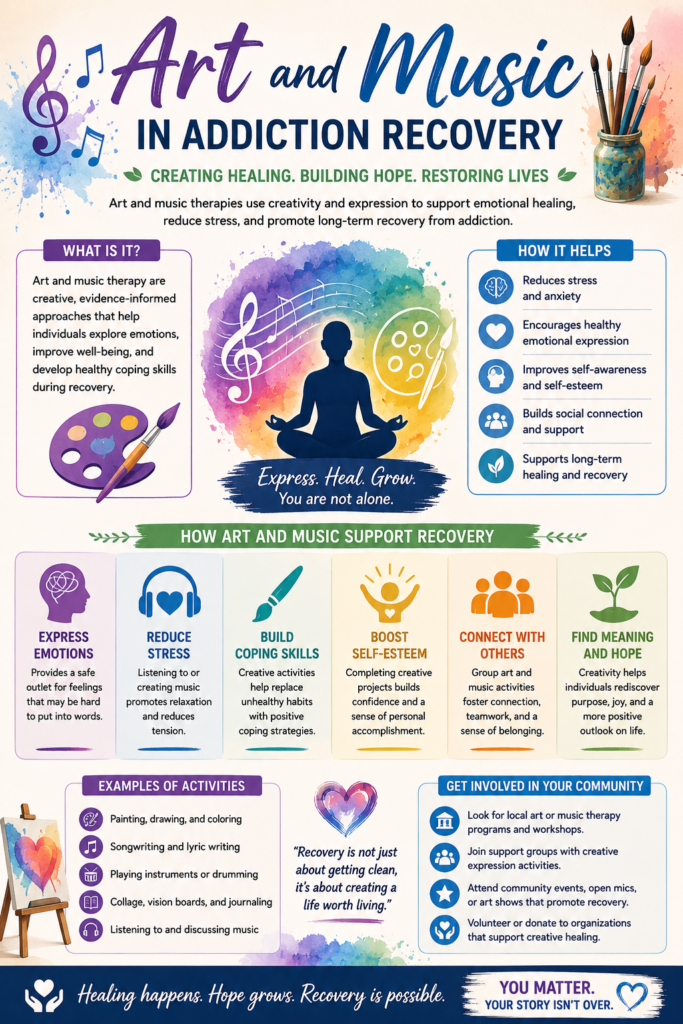
Addiction recovery involves more than overcoming physical dependence on substances—it also requires emotional healing, personal growth, and the development of healthier coping skills. Many individuals struggling with substance use disorders experience anxiety, depression, trauma, stress, and difficulty expressing emotions. As a result, creative therapies such as art and music therapy have become increasingly recognized as valuable components of addiction treatment and recovery programs. Art and music therapies provide individuals with opportunities to express emotions, reduce stress, improve self-awareness, and rebuild confidence through creative and meaningful experiences. By encouraging healthy self-expression and emotional connection, these therapies can support long-term healing and enhance overall well-being during recovery.
Art and Music in Addiction Recovery: Healing Through Creative Expression
Addiction recovery is a complex process that involves healing not only the body, but also the mind and emotions. Many individuals recovering from substance use disorders struggle with stress, trauma, anxiety, depression, and difficulties expressing emotions. While traditional treatments such as counseling, medication-assisted treatment, and support groups remain important components of recovery, creative therapies such as art and music therapy are increasingly recognized as valuable tools for emotional healing and personal growth. Art and music therapies provide individuals with healthy ways to express feelings, reduce stress, and reconnect with themselves during the recovery journey.
Understanding Addiction Recovery
Substance use disorders affect multiple areas of life, including physical health, emotional well-being, relationships, and social functioning. Recovery often involves:
- Managing cravings and triggers
- Developing healthier coping skills
- Processing emotional pain
- Rebuilding self-esteem
- Restoring social connections
Because addiction frequently involves emotional suppression or avoidance, therapies that encourage self-expression can play an important role in long-term healing.
What Is Art Therapy?
Art therapy is a therapeutic approach that uses creative activities such as drawing, painting, sculpting, collage-making, and other visual arts to support emotional expression and psychological healing. Individuals do not need artistic talent or experience to benefit from art therapy.
In addiction recovery, art therapy may help individuals:
- Express difficult emotions
- Process trauma and stress
- Improve self-awareness
- Build confidence
- Reduce anxiety and depression
Creating art can provide a nonverbal outlet for emotions that may be difficult to communicate through traditional talk therapy.
What Is Music Therapy?
Music therapy involves the use of music-based activities to improve emotional, cognitive, and social well-being. Certified music therapists may use:
- Listening to music
- Songwriting
- Singing
- Playing instruments
- Guided imagery with music
- Group music activities
Music therapy can help individuals in recovery manage emotions, reduce stress, and strengthen motivation for positive change.
How Art and Music Support Addiction Recovery
1. Encouraging Emotional Expression
Many individuals with addiction histories struggle to openly express emotions such as sadness, anger, guilt, or fear. Creative therapies allow individuals to safely explore and communicate these feelings.
Art and music create opportunities for emotional release without judgment or pressure.
2. Reducing Stress and Anxiety
Stress is a major relapse trigger in addiction recovery. Engaging in creative activities may promote relaxation and reduce emotional tension.
Listening to calming music or participating in creative expression can activate relaxation responses in the body and mind.
3. Improving Self-Esteem and Confidence
Addiction often damages self-worth and personal identity. Completing creative projects may help individuals experience a sense of accomplishment, confidence, and personal growth.
Creative success can reinforce a positive self-image and motivation for recovery.
4. Supporting Trauma Recovery
Trauma is common among individuals with substance use disorders. Art and music therapies may help individuals process traumatic experiences in a safe and supportive environment.
Creative therapies can sometimes make it easier to explore painful memories that are difficult to discuss verbally.
5. Strengthening Social Connection
Group art and music activities encourage communication, teamwork, and social interaction. These experiences may reduce feelings of isolation and help individuals build supportive relationships during recovery.
Healthy social connections are an important protective factor against relapse.
6. Promoting Mindfulness and Relaxation
Creative activities often encourage individuals to focus on the present moment. This mindfulness-based experience may reduce cravings and improve emotional regulation.
Art and music can become healthy coping strategies that replace substance use behaviors.
Examples of Art and Music Activities in Recovery
Common activities may include:
- Painting emotions or recovery goals
- Journaling with art
- Writing recovery-themed songs
- Drumming circles
- Guided music meditation
- Creating vision boards
- Collaborative group art projects
These activities encourage reflection, creativity, and emotional healing.
Benefits of Creative Therapies in Recovery
Potential benefits include:
- Reduced stress and anxiety
- Improved emotional awareness
- Healthier coping skills
- Increased motivation for recovery
- Better communication skills
- Enhanced self-esteem
- Stronger social support
Creative therapies may also make treatment more engaging and enjoyable for some individuals.
Limitations and Considerations
Although art and music therapies can be highly beneficial, they are usually most effective when combined with comprehensive addiction treatment. Creative therapies should not replace medical care, counseling, or evidence-based interventions when needed.
Effectiveness may vary depending on:
- Individual participation
- Therapist training
- Treatment setting
- Emotional readiness
Certified professionals should guide therapeutic interventions to ensure safe and supportive care.
Conclusion
Art and music therapies offer meaningful opportunities for healing during addiction recovery by encouraging emotional expression, reducing stress, improving self-esteem, and strengthening social connections. Through creative expression, individuals may discover healthier ways to cope with difficult emotions and rebuild a sense of identity beyond addiction.
Recovery is not only about stopping substance use—it is also about learning new ways to heal, communicate, and connect with life. By integrating art and music into recovery programs, individuals may experience greater emotional growth, resilience, and hope for long-term wellness.
Self-Management Strategies to Understand Using Art and Music in Addiction Recovery
Addiction recovery is a lifelong process that often involves rebuilding emotional health, developing healthier coping skills, and learning new ways to manage stress and daily challenges. While traditional therapies such as counseling and support groups remain important, creative approaches like art and music therapy are increasingly used to support emotional healing and recovery. These therapies encourage self-expression, relaxation, and personal growth, helping individuals process emotions in healthy and meaningful ways. Self-management strategies can further strengthen the benefits of art and music in addiction recovery by helping individuals actively participate in their own healing process and maintain long-term wellness.
Understanding Art and Music in Addiction Recovery
Addiction affects emotional, psychological, and social functioning. Many individuals use substances to cope with stress, trauma, anxiety, loneliness, or depression. Recovery often requires finding healthier ways to manage these emotions and rebuild self-identity.
Art and music therapies provide opportunities for:
- Emotional expression
- Stress reduction
- Self-reflection
- Improved communication
- Relaxation and mindfulness
Creative activities may help individuals explore emotions that are difficult to express verbally while also promoting a sense of accomplishment and hope.
The Importance of Self-Management in Recovery
Self-management refers to the ability to monitor behaviors, regulate emotions, and make healthy decisions that support recovery goals. In addiction treatment, self-management helps individuals:
- Identify triggers
- Reduce relapse risk
- Strengthen coping skills
- Build emotional awareness
- Maintain healthy routines
Combining self-management strategies with creative therapies allows individuals to actively engage in their recovery process and apply therapeutic benefits to daily life.
Self-Management Strategies for Using Art and Music in Recovery
1. Identify Emotional Triggers Through Creative Expression
Art and music can help individuals recognize emotions connected to substance use. Keeping a creative journal with drawings, poems, or music reflections may help identify:
- Stress triggers
- Negative thought patterns
- Emotional cravings
- Situations linked to relapse risk
Understanding emotional patterns improves self-awareness and recovery planning.
2. Use Music for Stress Management
Stress is one of the most common relapse triggers. Individuals can create personalized playlists that promote:
- Relaxation
- Motivation
- Positive emotions
- Mindfulness
Calming music may help reduce anxiety, while uplifting music can improve mood and energy during difficult moments.
3. Practice Mindfulness Through Art
Mindfulness involves focusing attention on the present moment without judgment. Creative activities such as painting, coloring, sketching, or sculpting encourage concentration and relaxation.
Mindful art practices may:
- Reduce racing thoughts
- Improve emotional regulation
- Increase calmness
- Distract from cravings
Regular creative practice can become a healthy coping strategy during recovery.
4. Set Recovery Goals Through Creative Projects
Art and music can help individuals visualize personal growth and recovery goals. Examples include:
- Creating vision boards
- Writing recovery-themed songs or poetry
- Designing artwork that represents healing
- Using music to reflect personal progress
Creative goal-setting encourages motivation and reinforces positive identity changes.
5. Replace Harmful Habits with Healthy Creative Routines
Recovery often requires replacing substance-related behaviors with healthier activities. Scheduling regular creative time can help reduce boredom and improve emotional balance.
Healthy routines may include:
- Playing an instrument
- Listening to guided relaxation music
- Painting or drawing
- Attending community art classes
- Participating in recovery music groups
Consistent routines support structure and stability during recovery.
6. Strengthen Emotional Communication
Many individuals in recovery struggle to express emotions openly. Art and music provide nonverbal ways to communicate difficult feelings.
Self-management strategies may include:
- Reflecting on emotional themes in artwork
- Writing songs or lyrics about recovery experiences
- Discussing creative projects in therapy or support groups
Improved emotional communication may reduce isolation and strengthen relationships.
7. Build Social Support Through Creative Activities
Social connection is an important protective factor in addiction recovery. Group creative activities encourage teamwork, trust, and shared healing experiences.
Helpful activities may include:
- Group drumming sessions
- Collaborative art projects
- Recovery choirs
- Music or art workshops
Positive social experiences help individuals feel supported and understood.
Benefits of Combining Self-Management with Creative Therapies
Using self-management strategies alongside art and music therapies may:
- Improve emotional awareness
- Reduce stress and cravings
- Strengthen coping skills
- Increase confidence and motivation
- Promote mindfulness and relaxation
- Encourage healthier daily routines
These approaches support long-term recovery by helping individuals actively participate in their healing journey.
Limitations and Considerations
Although art and music therapies can provide important emotional benefits, they are most effective when combined with comprehensive addiction treatment. Creative therapies should complement, not replace:
- Counseling
- Medical treatment
- Support groups
- Behavioral therapies
Individual experiences may vary depending on personal interests, emotional readiness, and treatment support.
Conclusion
Art and music therapies provide powerful opportunities for emotional healing, self-expression, and personal growth during addiction recovery. When combined with self-management strategies such as mindfulness, stress reduction, goal setting, and healthy routine development, creative therapies may strengthen long-term recovery outcomes and improve overall well-being.
Recovery is not only about avoiding substances—it is also about rebuilding identity, learning healthier coping skills, and discovering meaningful ways to connect with emotions and life experiences. Through creativity and active self-management, individuals may develop resilience, confidence, and hope as they move toward lasting recovery and wellness.
Family Support Strategies to Understand Using Art and Music in Addiction Recovery
Addiction recovery is a challenging and deeply personal journey that often requires emotional healing, behavioral change, and strong social support. While counseling, medical care, and recovery programs remain essential components of treatment, creative therapies such as art and music therapy are increasingly recognized as valuable tools in the healing process. These therapies encourage emotional expression, stress reduction, and self-discovery, helping individuals develop healthier coping strategies during recovery. Family support can further strengthen the benefits of art and music therapies by creating a positive environment that encourages communication, understanding, and long-term healing.
Understanding Art and Music in Addiction Recovery
Substance use disorders affect not only physical health but also emotional and social well-being. Many individuals struggling with addiction experience:
- Anxiety and depression
- Emotional suppression
- Trauma-related stress
- Relationship difficulties
- Low self-esteem
Art and music therapies offer nonverbal, creative ways to process these experiences. Through activities such as painting, drawing, songwriting, drumming, or listening to music, individuals may express emotions that are difficult to communicate through words alone.
Creative therapies may help:
- Reduce stress and cravings
- Improve emotional awareness
- Increase confidence
- Encourage mindfulness
- Promote healthy self-expression
Why Family Support Matters in Recovery
Family involvement is often an important factor in successful addiction recovery. Supportive families can help individuals feel:
- Encouraged
- Understood
- Motivated
- Emotionally safe
In contrast, conflict, criticism, or misunderstanding may increase stress and relapse risk. Families who understand the purpose and benefits of creative therapies may better support recovery efforts and strengthen emotional healing.
Family Support Strategies for Understanding Art and Music in Recovery
1. Learn About Creative Therapies Together
Families can begin by learning how art and music therapies support emotional healing and recovery. Understanding that creative therapies are evidence-informed treatment tools—not simply hobbies—can improve support and reduce skepticism.
Families may learn through:
- Educational workshops
- Counseling sessions
- Recovery programs
- Books and online resources
- Community mental health organizations
Shared understanding promotes empathy and cooperation during recovery.
2. Encourage Emotional Expression Without Judgment
Many individuals in recovery struggle to discuss painful emotions openly. Art and music offer safer and less threatening ways to express feelings, such as:
- Anger
- Fear
- Sadness
- Shame
- Hope
Family members can support emotional expression by:
- Listening without criticism
- Respecting creative work
- Avoiding negative comments
- Encouraging honest communication
A supportive environment may help individuals feel more comfortable sharing their experiences.
3. Participate in Creative Activities Together
Families can strengthen relationships and reduce stress by participating in healthy creative activities together. Shared experiences may improve emotional connection and communication.
Examples include:
- Painting or drawing together
- Attending music events
- Listening to calming music
- Creating family vision boards
- Participating in drumming or art workshops
Positive family activities help replace unhealthy behaviors with supportive routines.
4. Support Stress Management Through Music and Art
Stress is a common trigger for relapse in addiction recovery. Families can encourage relaxation and emotional balance by incorporating creative activities into daily life.
Helpful strategies may include:
- Playing calming music at home
- Encouraging mindfulness art exercises
- Supporting creative hobbies
- Using music for emotional relaxation
A calm and supportive environment may improve emotional regulation and stability in recovery.
5. Respect Individual Creativity and Identity
Recovery often involves rebuilding personal identity and self-esteem. Creative therapies allow individuals to explore who they are beyond addiction.
Family members should avoid:
- Criticizing artistic abilities
- Comparing creative work
- Pressuring individuals to share more than they are comfortable sharing
Respecting personal creativity encourages confidence and emotional growth.
6. Reinforce Positive Progress
Positive reinforcement can strengthen motivation and emotional resilience during recovery. Families can encourage recovery efforts by:
- Recognizing accomplishments
- Celebrating milestones
- Encouraging healthy routines
- Acknowledging emotional growth
Supportive feedback may improve self-confidence and commitment to long-term recovery.
7. Encourage Professional Support When Needed
Although family support is valuable, professional guidance is often necessary in addiction recovery. Families can help individuals access:
- Certified art therapists
- Music therapists
- Counselors
- Support groups
- Mental health services
Professional support ensures that creative therapies are used safely and effectively within a comprehensive recovery plan.
Benefits of Family Support in Creative Recovery Approaches
Combining family support with art and music therapies may:
- Improve emotional communication
- Strengthen relationships
- Reduce stress and isolation
- Increase treatment engagement
- Promote healthier coping skills
- Support long-term recovery success
Supportive family systems help individuals feel connected and valued during difficult periods of change.
Limitations and Considerations
Creative therapies are not a replacement for medical or psychological treatment when needed. Recovery often requires multiple forms of support, including:
- Behavioral counseling
- Medical care
- Peer support
- Lifestyle changes
Families should also recognize that recovery is a gradual process and setbacks may occur. Patience, consistency, and compassion are essential.
Conclusion
Art and music therapies provide meaningful opportunities for emotional healing, self-expression, and personal growth during addiction recovery. Family support strategies such as education, positive communication, shared creative activities, stress reduction, and encouragement can strengthen the effectiveness of these therapies and improve recovery outcomes.
Recovery is not only about stopping substance use—it is also about rebuilding emotional health, relationships, and personal identity. Through supportive family involvement and creative healing approaches, individuals may develop greater resilience, healthier coping skills, and renewed hope for long-term wellness and recovery.
Community Resource Strategies to Understand Using Art and Music in Addiction Recovery
Addiction recovery is a complex process that involves healing emotional, psychological, social, and physical challenges caused by substance use disorders. While counseling, medication-assisted treatment, and support groups remain important forms of care, creative therapies such as art and music therapy are increasingly recognized as valuable tools in the recovery process. These therapies encourage emotional expression, stress management, self-awareness, and personal growth. Community resources can further strengthen the effectiveness of art and music therapies by providing education, social support, accessible treatment opportunities, and safe environments that promote long-term recovery and wellness.
Understanding Art and Music in Addiction Recovery
Substance use disorders often affect emotional health, relationships, and coping abilities. Many individuals struggling with addiction experience:
- Anxiety and depression
- Trauma-related stress
- Emotional isolation
- Difficulty expressing feelings
- Low self-esteem
Art and music therapies provide healthy and creative outlets for emotional healing. Through activities such as painting, drawing, songwriting, drumming, singing, or listening to music, individuals may process emotions and reduce stress in nonverbal and supportive ways.
Creative therapies may help individuals:
- Develop healthier coping skills
- Improve emotional awareness
- Reduce stress and cravings
- Strengthen confidence and motivation
- Build social connection
The Importance of Community Resources in Recovery
Recovery is often more successful when individuals have access to supportive community environments. Community resources help reduce isolation and improve access to treatment, education, and emotional support.
Strong community involvement can:
- Increase treatment accessibility
- Promote healthy coping strategies
- Reduce stigma surrounding addiction
- Encourage long-term recovery participation
- Build social support networks
Communities that understand the value of creative therapies can help individuals engage more fully in recovery.
Community Resource Strategies for Understanding Art and Music in Recovery
1. Community Education Programs
Educational programs can help individuals and families understand how art and music therapies support addiction recovery. Workshops and seminars offered by:
- Community centers
- Healthcare organizations
- Schools
- Recovery programs
- Public health agencies
may explain the emotional and psychological benefits of creative therapies.
Education reduces misconceptions and encourages acceptance of alternative and complementary recovery approaches.
2. Access to Art and Music Therapy Programs
Communities can improve recovery outcomes by increasing access to certified art and music therapists. Local treatment centers and wellness organizations may offer:
- Individual therapy sessions
- Group art therapy
- Music therapy workshops
- Community wellness events
Affordable and accessible services allow more individuals to participate in creative recovery programs.
3. Support Groups with Creative Activities
Recovery support groups that include creative expression can provide emotional healing and social connection. Examples may include:
- Recovery drumming circles
- Community art workshops
- Creative writing groups
- Open-mic recovery events
- Music-based peer support programs
These activities encourage communication, reduce isolation, and strengthen recovery-focused relationships.
4. Youth and School-Based Programs
Schools and youth organizations play an important role in addiction prevention and emotional development. Community youth programs may use art and music activities to:
- Teach emotional coping skills
- Reduce stress and anxiety
- Encourage positive self-expression
- Build resilience against substance use
Creative prevention programs can help young people develop healthier coping mechanisms before addiction develops.
5. Mental Health and Wellness Services
Many individuals with substance use disorders also experience mental health challenges. Community mental health services can integrate creative therapies into broader treatment programs that include:
- Counseling
- Trauma-informed care
- Stress management
- Mindfulness training
- Group therapy
Combining art and music therapies with professional mental health support may strengthen emotional healing and recovery outcomes.
6. Public Events and Awareness Campaigns
Community awareness campaigns can reduce stigma and promote understanding of addiction recovery. Events such as:
- Recovery art exhibitions
- Community concerts
- Wellness fairs
- Mental health awareness programs
can highlight the role of creativity in healing and encourage community involvement in recovery support.
These events may also provide individuals in recovery with opportunities to share their experiences and build confidence.
7. Online and Digital Community Resources
Digital platforms can expand access to creative recovery resources for individuals who may not have local services. Helpful online resources may include:
- Virtual art therapy sessions
- Recovery music playlists
- Online support communities
- Educational videos
- Creative wellness apps
Online access allows individuals to continue practicing healthy coping skills outside traditional treatment settings.
Benefits of Community-Based Creative Recovery Support
Community resources that support art and music therapies may:
- Improve emotional well-being
- Strengthen social support
- Encourage healthy self-expression
- Reduce relapse risk
- Increase treatment engagement
- Promote resilience and hope
Communities that prioritize recovery support help individuals feel connected, valued, and empowered.
Limitations and Considerations
Although art and music therapies can provide important emotional and psychological benefits, they are most effective when used alongside comprehensive addiction treatment. Recovery often requires:
- Medical care
- Counseling
- Behavioral therapies
- Peer support
- Lifestyle changes
Access to qualified therapists and supportive environments is important to ensure safe and effective care.
Conclusion
Art and music therapies provide meaningful opportunities for emotional healing, stress reduction, and personal growth during addiction recovery. Community resource strategies such as education programs, support groups, youth initiatives, mental health services, and public awareness campaigns can strengthen understanding of and access to these creative approaches.
Recovery is not only about overcoming substance use—it is also about rebuilding emotional wellness, social connection, and personal identity. By developing supportive communities that foster creativity and healing, individuals in recovery may gain greater confidence, healthier coping skills, and renewed hope for long-term wellness and success in recovery.
Frequently Asked Questions
Here are some common questions:
1. What are art and music therapies in addiction recovery?
Art and music therapies are creative therapeutic approaches that use artistic expression and music-based activities to support emotional healing, stress reduction, and personal growth during addiction recovery.
2. How do art and music help people recovering from addiction?
Creative therapies help individuals express emotions, manage stress, improve self-awareness, and develop healthier coping skills. They also provide positive outlets that can replace harmful substance-related behaviors.
3. Do individuals need artistic or musical talent to participate?
No. Art and music therapies focus on self-expression and healing, not talent or performance ability. Anyone can participate regardless of experience or skill level.
4. What types of activities are included in art therapy?
Art therapy activities may include:
- Painting
- Drawing
- Coloring
- Sculpting
- Collage-making
- Journaling with art
- Creating vision boards
These activities help individuals explore thoughts and emotions in creative ways.
5. What types of activities are used in music therapy?
Music therapy may involve:
- Listening to music
- Songwriting
- Singing
- Playing instruments
- Drumming circles
- Guided relaxation with music
- Group music activities
These activities support emotional regulation and stress management.
6. How do creative therapies reduce stress?
Art and music can activate relaxation responses in the brain and body. Creative activities may lower anxiety, improve mood, and provide healthy distractions from cravings or emotional distress.
7. Can art and music therapies help with trauma?
Yes. Many individuals in addiction recovery have experienced trauma. Creative therapies provide safe, nonverbal ways to process difficult emotions and memories that may be hard to discuss directly.
8. Are art and music therapies evidence-based?
Research suggests that creative therapies can improve emotional well-being, reduce stress, strengthen coping skills, and increase treatment engagement when combined with comprehensive addiction treatment.
9. Can these therapies prevent relapse?
Art and music therapies may help reduce relapse risk by:
- Improving emotional awareness
- Teaching healthier coping skills
- Reducing stress and anxiety
- Increasing social connection
- Promoting mindfulness and self-reflection
However, they are usually most effective as part of a broader recovery plan.
10. Are art and music therapies used in treatment centers?
Yes. Many addiction treatment programs, rehabilitation centers, hospitals, and community wellness programs include creative therapies as part of holistic recovery services.
11. How does music affect emotional healing?
Music can influence mood, relaxation, memory, and emotional processing. Listening to calming or meaningful music may help individuals feel comforted, motivated, and emotionally connected during recovery.
12. Why is emotional expression important in recovery?
Many individuals use substances to avoid painful emotions. Learning healthy ways to express emotions can improve emotional regulation and reduce reliance on substances as coping mechanisms.
13. Can group creative activities improve social support?
Yes. Group art and music activities encourage communication, teamwork, trust, and shared experiences. These social connections can reduce isolation and strengthen recovery support systems.
14. Are art and music therapies suitable for adolescents?
Yes. Creative therapies are often effective for adolescents because they provide engaging and age-appropriate ways to explore emotions, stress, and identity development.
15. Can families participate in creative recovery activities?
Families may participate in shared art or music activities to improve communication, strengthen relationships, and create supportive recovery environments.
16. What are the mental health benefits of creative therapies?
Potential mental health benefits include:
- Reduced anxiety
- Improved mood
- Increased self-esteem
- Better emotional awareness
- Greater mindfulness
- Reduced feelings of isolation
17. Can creative therapies replace counseling or medical treatment?
No. Art and music therapies are usually considered complementary treatments. They work best alongside counseling, medical care, behavioral therapies, and support groups.
18. How can someone begin using art or music in recovery?
Individuals can start by:
- Listening to calming music
- Drawing or painting emotions
- Writing songs or poetry
- Joining community art or music groups
- Attending therapy programs that offer creative activities
Even simple creative practices may support emotional healing.
19. What role do communities play in creative recovery support?
Communities can support recovery by offering:
- Art and music workshops
- Support groups
- Wellness programs
- Public awareness events
- Access to certified therapists
Community involvement helps reduce stigma and encourages social connection.
20. What is the overall goal of art and music in addiction recovery?
The goal is to help individuals heal emotionally, develop healthier coping skills, strengthen self-awareness, rebuild confidence, and support long-term recovery through creativity and positive self-expression.
Conclusion
Art and music therapies offer powerful and supportive approaches to addiction recovery by helping individuals explore emotions, manage stress, strengthen self-esteem, and develop healthier coping strategies. Through creative expression, individuals may find new ways to process difficult experiences, reconnect with themselves, and build positive relationships with others. Although creative therapies are most effective when combined with comprehensive addiction treatment and support systems, they can play an important role in promoting emotional healing and long-term recovery. Recovery is not only about ending substance use—it is also about rebuilding identity, restoring hope, and creating a healthier and more meaningful life. By integrating art and music into recovery programs, individuals may gain greater resilience, emotional balance, and confidence as they move toward lasting wellness.
Video: I Didn’t Know Creative Expression Could Heal Like This #ArtTherapy #RecoverySupport