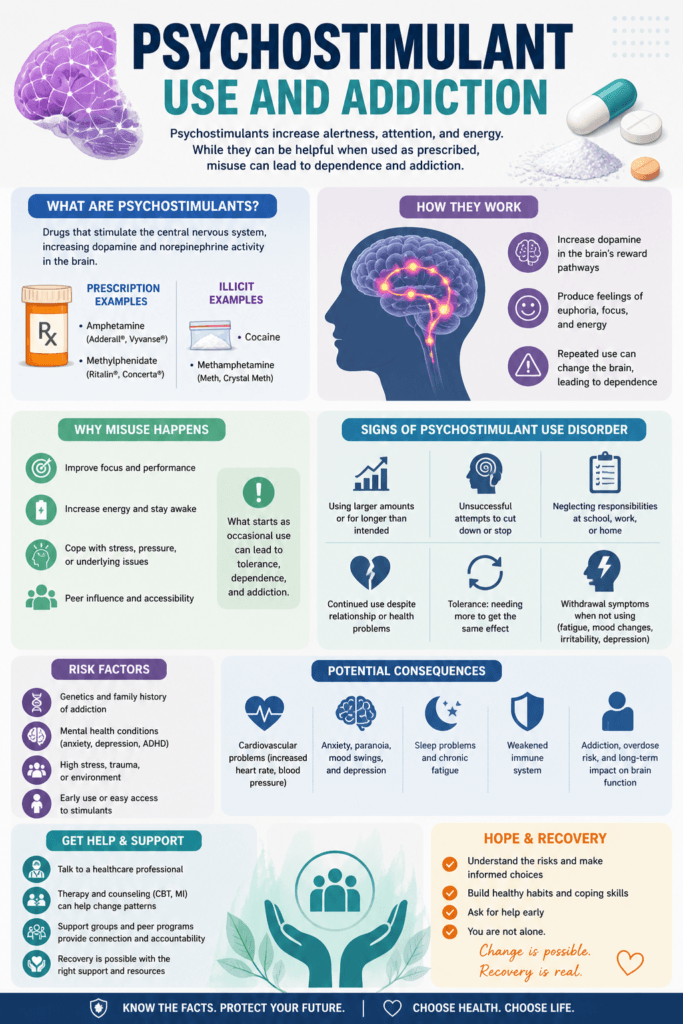
Psychostimulant use represents a complex issue that intersects both clinical medicine and public health. These substances include prescription stimulants commonly used to treat conditions such as attention-deficit/hyperactivity disorder (ADHD), as well as illicit drugs like cocaine and methamphetamine. By increasing alertness, concentration, and energy, psychostimulants can provide important therapeutic benefits when used appropriately under medical supervision. However, misuse, nonmedical use, or prolonged exposure can alter brain circuits involved in reward, motivation, and self-control, increasing the risk of dependence and addiction. Understanding psychostimulant use and addiction requires more than knowledge of how these drugs affect the brain. It also involves recognizing the psychological, social, genetic, and environmental influences that shape patterns of substance use and contribute to an individual’s vulnerability to developing a substance use disorder.
From Focus to Dependence: Understanding Psychostimulant Use and Addiction
Psychostimulants—such as prescription medications for ADHD and illicit substances like cocaine or methamphetamine—are widely used for their ability to increase alertness, energy, and concentration. In clinical settings, these drugs can be highly effective when used as prescribed. However, their impact on the brain’s reward system also gives them a significant potential for misuse and addiction, especially when taken in higher doses or without medical supervision.
At a neurobiological level, psychostimulants primarily act on dopamine pathways in the brain. Dopamine is a neurotransmitter associated with reward, motivation, and reinforcement learning. When psychostimulants rapidly elevate dopamine levels, they can create a sense of euphoria and heightened performance. Over time, repeated exposure can alter brain chemistry, making it harder for individuals to experience pleasure without the substance and increasing the likelihood of dependence.
Why Psychostimulants Can Become Addictive
Several factors contribute to the addictive potential of psychostimulants:
- Rapid Dopamine Release: Intense increases in dopamine reinforce repeated use
- Short-Term Benefits: Improved focus, energy, and mood can encourage continued use
- Tolerance Development: Over time, higher doses are needed to achieve the same effects
- Withdrawal Symptoms: Fatigue, depression, and irritability can drive continued use
- Accessibility: Prescription stimulants may be misused due to perceived safety
Risk Factors for Misuse
Not everyone who uses psychostimulants develops an addiction. Risk is influenced by a combination of biological, psychological, and social factors:
- Genetic vulnerability to addiction
- Co-occurring mental health conditions (e.g., anxiety, ADHD, depression)
- High-stress environments or academic/work pressure
- Early exposure to substance use
- Social norms that normalize misuse (e.g., “study drugs”)
Signs of Psychostimulant Use Disorder
Recognizing problematic use early can make a significant difference:
- Using larger amounts or for longer than intended
- Inability to cut down despite attempts
- Neglecting responsibilities at school, work, or home
- Continued use despite negative consequences
- Strong cravings or compulsive use patterns
Behavioral and Clinical Interventions
Treatment for psychostimulant addiction often focuses on behavioral approaches, sometimes combined with medical support:
- Cognitive Behavioral Therapy (CBT): Helps individuals identify and change harmful thought patterns
- Contingency Management: Uses positive reinforcement to encourage abstinence
- Motivational Interviewing: Strengthens personal motivation for change
- Peer Support Programs: Provide accountability and shared recovery experiences
- Structured Treatment Programs: Outpatient or inpatient care depending on severity
Moving Toward Prevention and Recovery
Addressing psychostimulant addiction requires both individual and systemic approaches. Education about the risks of misuse—especially among students and professionals—is critical. Healthcare providers also play a key role in monitoring prescriptions and identifying early warning signs.
Recovery is possible, but it often involves rebuilding routines, developing healthier coping strategies, and addressing underlying mental health concerns. Understanding how and why psychostimulants affect the brain is an important step in reducing stigma and promoting effective, evidence-based care.
Taking Control: Self-Management Strategies for Understanding Psychostimulant Use and Addiction
Psychostimulants—whether prescribed (like ADHD medications) or used non-medically—can affect focus, energy, and mood in powerful ways. While they may offer short-term benefits, repeated or unregulated use can shift patterns of thinking and behavior toward dependence. Self-management strategies are not a replacement for professional treatment, but they play a critical role in helping individuals recognize patterns, reduce harm, and support long-term recovery.
Understanding your own relationship with psychostimulants starts with awareness. Many people don’t immediately recognize when use is becoming problematic because the early effects—productivity, alertness, or mood elevation—can feel beneficial. Over time, however, reliance may grow, and the substance can begin to shape daily functioning. Self-management helps bring these patterns into focus and creates space for intentional change.
Building Awareness of Use Patterns
Recognizing how, when, and why psychostimulants are used is a foundational step:
- Track frequency, dosage, and context of use (e.g., studying, work stress)
- Identify emotional or situational triggers (fatigue, pressure, anxiety)
- Notice patterns of escalation or increasing reliance
- Reflect on how use affects sleep, mood, and productivity over time
Understanding Triggers and Motivations
Psychostimulant use is often tied to deeper needs or pressures:
- Desire for improved performance or concentration
- Coping with academic, work, or social demands
- Managing underlying mental health symptoms
- Seeking temporary relief from fatigue or low mood
Recognizing these drivers helps shift the focus from the substance itself to the unmet needs behind it.
Developing Healthier Alternatives
Replacing substance use with sustainable strategies is key to long-term change:
- Establish structured routines for sleep, meals, and work
- Use time-management techniques (e.g., task batching, scheduled breaks)
- Practice stress-reduction methods like mindfulness or deep breathing
- Incorporate physical activity to naturally boost energy and mood
- Break large tasks into manageable steps to reduce overwhelm
Strengthening Self-Regulation Skills
Improving control over impulses and decision-making can reduce misuse:
- Set clear personal limits or boundaries around use
- Delay urges (“wait 10–15 minutes” before acting on cravings)
- Use self-talk to challenge justifications for misuse
- Reward progress toward healthier habits
Monitoring Warning Signs
Ongoing self-checks can help catch problems early:
- Increasing tolerance or needing higher doses
- Difficulty functioning without the substance
- Neglecting responsibilities or relationships
- Experiencing withdrawal symptoms (fatigue, irritability, low mood)
Seeking Support When Needed
Self-management is most effective when combined with external support:
- Talk with a healthcare provider about safe use or concerns
- Engage in therapy (e.g., cognitive behavioral approaches)
- Connect with peer support groups or recovery communities
- Involve trusted friends or family for accountability
Moving Toward Sustainable Change
Self-management is about building insight and gradually reshaping habits—not achieving instant perfection. Change often happens in stages, with setbacks as part of the process. By increasing awareness, addressing underlying needs, and developing healthier coping strategies, individuals can regain control over psychostimulant use and reduce the risk of addiction.
Stronger Together: Family Support Strategies for Understanding Psychostimulant Use and Addiction
Psychostimulant use—whether involving prescription medications or illicit substances—can affect not only the individual but also the entire family system. Families often find themselves trying to make sense of changes in behavior, mood, and functioning without fully understanding what’s driving them. Building awareness of how psychostimulants influence the brain and behavior is a critical first step, but equally important is learning how to respond in ways that support recovery rather than unintentionally reinforce harmful patterns.
Addiction is not simply a matter of willpower; it involves changes in brain systems related to reward, motivation, and self-control. This means that family responses grounded in blame or punishment are often ineffective and can increase shame or secrecy. Instead, supportive, informed, and consistent approaches can help create an environment where recovery is more likely.
Building Understanding as a Family
Education helps families respond with clarity rather than confusion:
- Learn how psychostimulants affect mood, energy, and decision-making
- Understand the difference between prescribed use, misuse, and addiction
- Recognize that dependence can develop gradually, even with initially controlled use
- Stay informed about common signs of psychostimulant use disorder
Improving Communication
Open, nonjudgmental communication reduces defensiveness and builds trust:
- Use calm, respectful language when discussing concerns
- Focus on specific behaviors rather than personal criticism
- Practice active listening without interrupting or assuming
- Express concern using “I” statements (e.g., “I’m worried about your health”)
Setting Healthy Boundaries
Support does not mean removing all consequences. Boundaries protect both the individual and the family:
- Clearly define what behaviors are acceptable and unacceptable
- Avoid enabling (e.g., providing money that may support substance use)
- Be consistent with expectations and follow-through
- Balance compassion with accountability
Encouraging Treatment and Support
Families can play a key role in connecting individuals to help:
- Encourage professional evaluation and evidence-based treatment
- Support participation in therapy or counseling
- Help identify local or online recovery resources
- Offer to attend family therapy sessions when appropriate
Supporting Recovery at Home
A stable, structured environment can reinforce positive change:
- Promote regular routines (sleep, meals, daily responsibilities)
- Encourage healthy coping strategies (exercise, hobbies, stress management)
- Celebrate progress, even small steps forward
- Reduce exposure to high-risk situations or triggers when possible
Caring for the Family System
Supporting someone with substance use challenges can be emotionally taxing:
- Seek support through family groups or counseling
- Acknowledge and manage feelings of frustration, fear, or guilt
- Avoid taking responsibility for the individual’s choices
- Maintain personal well-being and boundaries
Moving Forward as a Unit
Recovery is often a long-term process that involves both individual and relational change. Families who focus on understanding, consistent support, and healthy boundaries are better positioned to navigate the challenges of psychostimulant use and addiction. While families cannot control another person’s behavior, they can influence the environment in ways that make recovery more achievable.
Building Recovery Networks: Community Resource Strategies for Understanding Psychostimulant Use and Addiction
Psychostimulant use and addiction are not just individual challenges—they are deeply influenced by social, economic, and environmental factors. Communities play a crucial role in shaping both risk and recovery by providing access to education, healthcare, and supportive services. When individuals and families understand how to navigate community resources, they are better equipped to prevent misuse, reduce harm, and sustain long-term recovery.
Psychostimulants, including prescription stimulants and illicit substances, can alter brain systems related to reward and motivation. While treatment often begins at the individual level, recovery is strengthened when supported by a network of accessible, community-based services. These resources help bridge gaps in care, reduce stigma, and provide practical tools for managing addiction.
Expanding Awareness Through Community Education
Education initiatives help individuals recognize risks and make informed decisions:
- Public health campaigns on the risks of psychostimulant misuse
- School- and workplace-based prevention programs
- Community workshops on addiction science and mental health
- Training on recognizing early warning signs of substance misuse
Improving Access to Treatment Services
Accessible care is a cornerstone of effective addiction response:
- Outpatient and inpatient treatment programs
- Behavioral therapies such as cognitive behavioral therapy (CBT)
- Screening and referral services in community clinics
- Integrated care addressing both mental health and substance use
Utilizing Harm Reduction Strategies
Communities can reduce the negative consequences of substance use even when abstinence is not immediate:
- Distribution of overdose-reversal medications (e.g., Naloxone kits)
- Safe-use education to lower risk of complications
- Needle exchange or syringe service programs (where available)
- Outreach services connecting individuals to care and support
Strengthening Peer and Social Support Networks
Connection and shared experience are powerful components of recovery:
- Peer support groups and recovery communities
- Community-based recovery centers
- Mentorship programs pairing individuals with those in sustained recovery
- Faith-based or culturally specific support networks
Addressing Social Determinants of Health
Long-term recovery is influenced by stability and opportunity:
- Access to stable housing and transitional living programs
- Employment assistance and job training services
- Educational support and skill-building programs
- Transportation services to attend treatment and appointments
Reducing Stigma and Promoting Inclusion
Community attitudes can either support or hinder recovery:
- Anti-stigma campaigns that frame addiction as a health condition
- Language that avoids labeling or shaming individuals
- Inclusive policies that encourage people to seek help without fear
- Community dialogue that fosters empathy and understanding
Moving Toward a Community-Based Recovery Model
Effective responses to psychostimulant use and addiction require coordination across healthcare providers, public health systems, schools, and local organizations. When communities invest in education, accessible treatment, and supportive infrastructure, they create environments where recovery is not only possible but sustainable.
Frequently Asked Questions
Here are some common questions:
1. What are psychostimulants?
Psychostimulants are substances that increase activity in the central nervous system. They enhance alertness, attention, energy, and sometimes mood. Examples include prescription medications for ADHD (like amphetamines and methylphenidate) and illicit drugs such as cocaine and methamphetamine.
2. Are psychostimulants always dangerous?
No. When used as prescribed under medical supervision, psychostimulants can be safe and effective—especially for conditions like ADHD. Risks increase when they are misused, taken in higher doses, or used without a prescription.
3. How do psychostimulants affect the brain?
They increase levels of neurotransmitters like dopamine and norepinephrine. This can improve focus and energy but also activates the brain’s reward system, which can reinforce repeated use and potentially lead to addiction.
4. What is psychostimulant use disorder?
It is a medical condition where a person has difficulty controlling their use of stimulants despite negative consequences. It may involve cravings, tolerance, withdrawal symptoms, and interference with daily life.
5. What are common signs of addiction?
- Using more than intended
- Difficulty stopping or cutting down
- Strong cravings
- Neglecting responsibilities
- Continuing use despite harm
- Experiencing withdrawal (fatigue, depression, irritability)
6. Why do people misuse psychostimulants?
Common reasons include:
- Improving focus or academic/work performance
- Staying awake or increasing energy
- Coping with stress or mental health issues
- Peer pressure or social influence
7. Can prescription stimulants lead to addiction?
Yes, especially if they are misused (e.g., taking higher doses, using without a prescription, or altering how they are taken). Even though they are medically approved, they still carry a risk for dependence.
8. What are the long-term effects of misuse?
- Anxiety, depression, or paranoia
- Sleep disturbances
- Cardiovascular issues (e.g., increased heart rate, blood pressure)
- Cognitive and memory problems
- Increased risk of overdose
9. Is withdrawal from psychostimulants dangerous?
Withdrawal is usually not life-threatening but can be very uncomfortable. Symptoms may include fatigue, depression, irritability, and difficulty concentrating, which can increase relapse risk.
10. How is psychostimulant addiction treated?
Treatment often includes:
- Behavioral therapies (e.g., cognitive behavioral therapy)
- Contingency management (reward-based systems)
- Support groups or peer programs
- Addressing co-occurring mental health conditions
11. Can someone recover from psychostimulant addiction?
Yes. Recovery is possible with the right combination of treatment, support, and lifestyle changes. Many people achieve long-term recovery and improved quality of life.
12. How can family or friends help?
- Offer nonjudgmental support
- Encourage professional help
- Set healthy boundaries
- Educate themselves about addiction
- Support recovery efforts consistently
13. When should someone seek help?
Help should be sought if psychostimulant use is causing problems in health, relationships, school/work, or if the person feels unable to stop on their own.
Conclusion
Psychostimulant use and addiction represent a multifaceted challenge that extends beyond individual behavior to encompass broader biological and social dynamics. Although these substances can serve legitimate therapeutic purposes, their potential for misuse underscores the importance of careful monitoring, education, and early intervention. Effective responses must integrate evidence-based treatment approaches, including behavioral therapies and supportive services, while also addressing underlying risk factors such as mental health conditions and environmental stressors. By fostering greater awareness and reducing stigma, individuals, families, and communities can work together to support prevention, promote recovery, and improve long-term outcomes for those affected by psychostimulant use and addiction.
Video: The dark side of ADHD meds you need to know #Shorts #AddictionAwareness