Nicotine pouches have become a popular smoke-free alternative to traditional tobacco products, but their growing popularity has also attracted scammers looking to take advantage of consumers. Fake online stores, counterfeit products, deceptive subscription offers, and misleading health claims can expose buyers to financial loss, identity theft, and potentially unsafe products. Understanding how these scams work is essential for making informed purchasing decisions and protecting your health. By learning to recognize warning signs, verify retailers, and rely on trusted sources of information, consumers can reduce their risk while making safer choices about nicotine products.
The Truth About Nicotine Pouch Scams
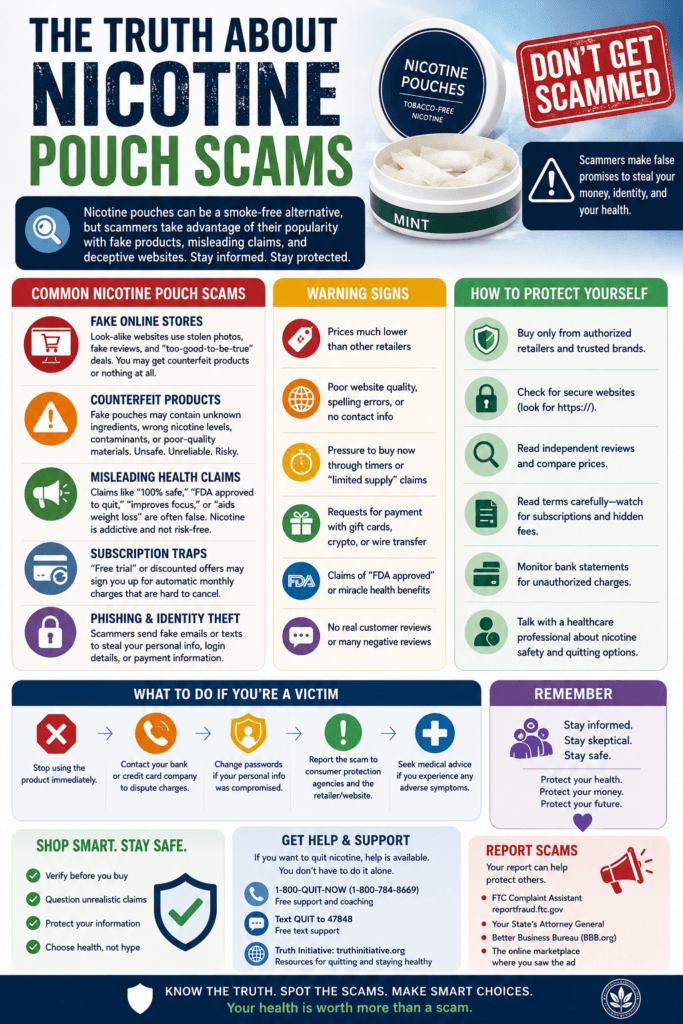
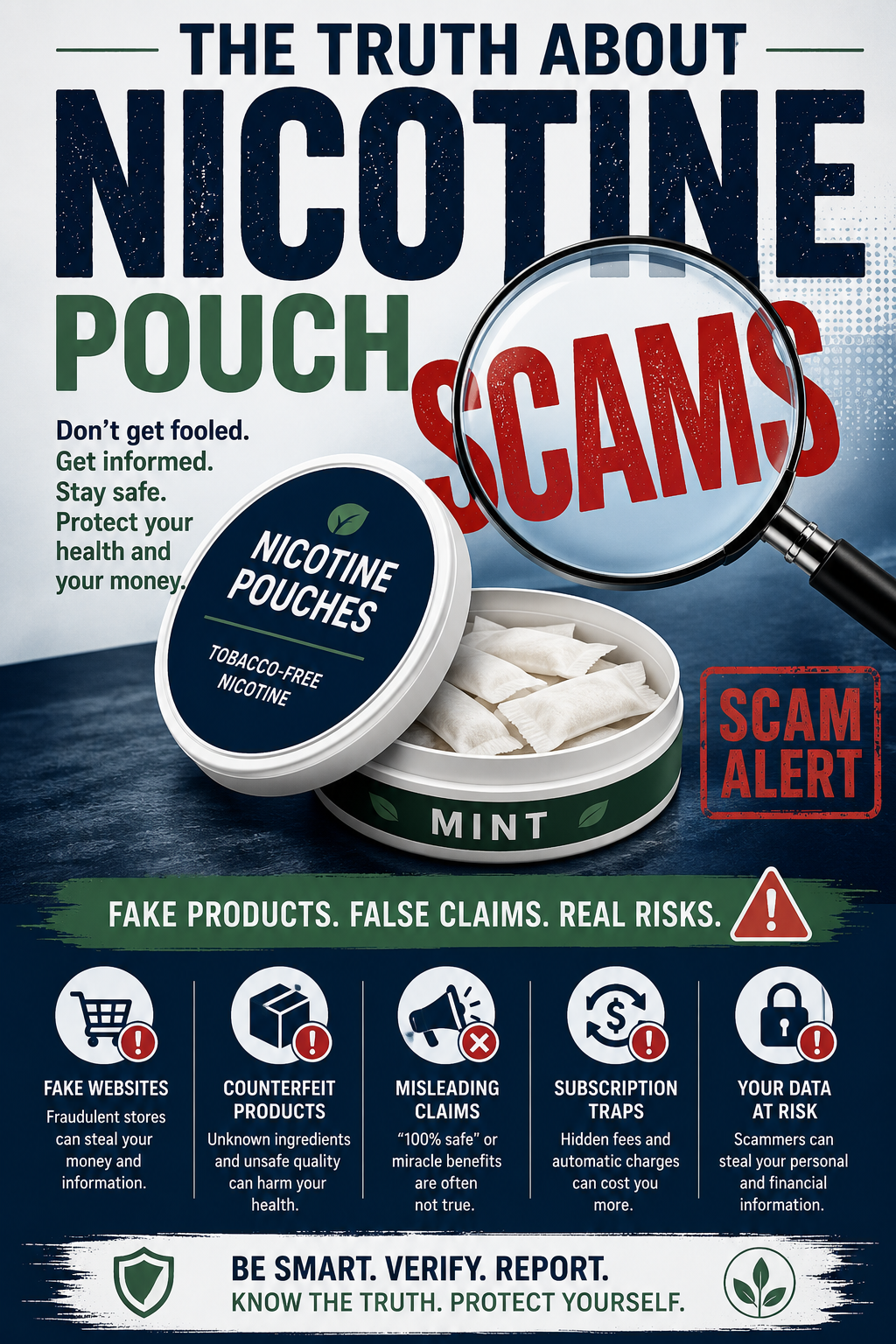
Nicotine pouches have become increasingly popular as smoke-free nicotine products, making them an attractive target for scammers. Fraudulent websites, counterfeit products, misleading advertisements, and deceptive subscription offers can put consumers at risk of losing money, exposing personal information, or using products that may not meet quality or safety standards. Understanding how these scams work can help you make informed purchasing decisions and protect both your health and your finances.
Many scams begin with fake online stores that imitate legitimate retailers. These websites often use professional-looking designs, stolen product photos, fake customer reviews, and countdown timers to create a false sense of urgency. Consumers may receive counterfeit products, completely different items, or nothing at all after making a purchase. Some fraudulent websites disappear shortly after collecting payments, making refunds nearly impossible.
Counterfeit nicotine pouches may contain inaccurate nicotine concentrations, unknown ingredients, contaminants, or poor-quality materials. Because these products are not manufactured under the same quality controls as legitimate brands, they may increase the risk of unexpected side effects or inconsistent nicotine delivery. Using only products from authorized retailers helps reduce these risks.
Scammers also rely on misleading health claims to attract buyers. Some advertisements falsely suggest that nicotine pouches are completely safe, improve mental performance, eliminate anxiety, promote weight loss, or are approved treatments for quitting tobacco. While nicotine pouches eliminate exposure to tobacco smoke, nicotine itself remains an addictive substance and is not without health risks. Consumers should be cautious of advertisements that promise unrealistic benefits without credible scientific evidence.
Another common tactic is the subscription trap. Customers may believe they are purchasing a one-time promotional offer or free trial, only to discover recurring monthly charges on their credit card. Hidden terms and conditions can make these subscriptions difficult to cancel, emphasizing the importance of reading purchase agreements carefully before completing an order.
Phishing scams have also become more common. Criminals may send fake emails, text messages, or social media advertisements claiming there is a problem with an order or offering exclusive discounts. These messages often direct consumers to fraudulent websites designed to steal usernames, passwords, credit card numbers, or other sensitive personal information.
Warning Signs of a Nicotine Pouch Scam
- Prices that are dramatically lower than those of other retailers.
- Websites with poor grammar, spelling mistakes, or blurry product images.
- No physical address, customer service phone number, or return policy.
- Pressure to purchase immediately through countdown timers or “limited supply” claims.
- Requests for payment through gift cards, cryptocurrency, or wire transfers.
- Claims that nicotine pouches are completely harmless or provide miracle health benefits.
- Numerous negative customer reviews or no independent reviews at all.
How to Protect Yourself
- Purchase nicotine pouches only from authorized retailers or reputable stores.
- Verify that the website uses secure payment encryption (https://).
- Compare prices across multiple trusted retailers before buying.
- Read customer reviews from independent sources.
- Carefully review subscription terms before entering payment information.
- Monitor bank and credit card statements for unauthorized charges.
- Avoid clicking links in unsolicited emails or text messages.
- Keep receipts and order confirmations for future reference.
What to Do If You Become a Victim
- Stop using any product you suspect may be counterfeit.
- Contact your bank or credit card company immediately to dispute fraudulent charges.
- Change passwords if personal account information may have been compromised.
- Report suspicious websites to the online marketplace, payment processor, or your state’s consumer protection office.
- Seek medical advice if you experience unexpected symptoms after using a questionable nicotine product.
Key Takeaway
Nicotine pouch scams often rely on attractive prices, false advertising, counterfeit products, and deceptive online sales tactics. Becoming an informed consumer, verifying retailers, reading purchase terms carefully, and recognizing common warning signs can significantly reduce your risk. Whether you currently use nicotine pouches or are considering quitting nicotine altogether, making informed decisions and relying on trusted sources is the best way to protect your health, personal information, and financial security.
Self-Management Strategies to Understand The Truth About Nicotine Pouch Scams
Protecting yourself from nicotine pouch scams starts with becoming an informed and cautious consumer. Scammers often rely on impulsive buying, misleading advertisements, and unrealistic claims to attract customers. By slowing down, researching products, and verifying information before making a purchase, you can reduce your risk of financial loss and exposure to counterfeit or potentially unsafe products.
If you use nicotine pouches or are considering them as an alternative to smoking or vaping, focus on evidence-based information rather than social media promotions or influencer recommendations. Remember that nicotine remains an addictive substance, and no nicotine product is completely risk-free. Learning to recognize deceptive marketing can help you make healthier, more informed decisions while protecting your personal information and finances.
Research Before You Buy
Take the time to research the retailer and the product before making a purchase.
- Buy only from authorized retailers or reputable online stores.
- Compare prices across several trusted websites.
- Read independent customer reviews rather than relying only on testimonials posted on the seller’s website.
- Look for secure websites that begin with “https://” before entering payment information.
- Verify that the company provides a physical address, customer service contact, and a clear return policy.
Recognize Common Scam Tactics
Understanding how scammers operate makes it easier to avoid becoming a victim.
- Be cautious of prices that seem much lower than competitors’.
- Avoid websites that pressure you with countdown timers or “limited supply” offers.
- Watch for exaggerated health claims, such as “100% safe,” “miracle product,” or “FDA approved to quit smoking,” when unsupported by evidence.
- Be skeptical of fake celebrity endorsements or influencer promotions that lack transparency.
- Never trust unsolicited emails or text messages offering exclusive nicotine pouch deals.
Protect Your Personal Information
Online safety is just as important as product safety.
- Use strong, unique passwords for shopping accounts.
- Enable two-factor authentication whenever possible.
- Avoid saving payment information on unfamiliar websites.
- Monitor your credit card and bank statements regularly.
- Never provide personal or financial information through suspicious emails, text messages, or social media messages.
Read the Fine Print
Many scams involve hidden subscription services or recurring charges.
- Review the terms and conditions before completing a purchase.
- Look for automatic renewal or monthly subscription agreements.
- Understand the cancellation and refund policies.
- Save your order confirmation and receipts for future reference.
Inspect Products Carefully
Counterfeit nicotine pouches may have noticeable differences from legitimate products.
- Examine packaging for spelling errors or poor print quality.
- Check that safety seals are intact.
- Verify expiration dates and lot numbers.
- Do not use products that appear damaged, tampered with, or significantly different from previous purchases.
Focus on Long-Term Health
If your goal is to reduce or quit nicotine use, rely on proven resources rather than marketing claims.
- Discuss nicotine cessation options with your healthcare provider.
- Use evidence-based treatments if you are ready to quit nicotine.
- Learn healthy coping strategies for cravings, including exercise, mindfulness, and stress management.
- Continue educating yourself through trusted public health organizations and reputable medical sources.
Know What to Do If You Suspect a Scam
Acting quickly can reduce financial losses and help protect others.
- Stop using products you believe may be counterfeit.
- Contact your bank or credit card company to dispute fraudulent charges.
- Report suspicious sellers to the online marketplace or appropriate consumer protection agencies.
- Change passwords if your personal information may have been compromised.
- Seek medical attention if you experience unexpected symptoms after using a questionable nicotine product.
Developing these self-management habits helps you become a more informed consumer while protecting your health, finances, and personal information. Staying cautious, verifying information, and relying on trusted healthcare guidance can greatly reduce your risk of becoming a victim of nicotine pouch scams while supporting healthier decision-making about nicotine use.
Family Support Strategies to Understand The Truth About Nicotine Pouch Scams
Families can play an important role in protecting one another from nicotine pouch scams by encouraging open communication, critical thinking, and informed decision-making. Many scams target individuals through social media advertisements, fake online stores, and misleading health claims. By working together to verify information and discuss potential risks, families can reduce the likelihood of financial loss and exposure to counterfeit or unsafe products.
Supportive family involvement is especially important for teenagers and young adults, who may be more likely to encounter nicotine pouch marketing through influencers or social media platforms. Parents and caregivers can help loved ones recognize deceptive advertising while promoting healthy conversations about nicotine addiction, peer pressure, and safer alternatives for quitting tobacco. The goal is not to criticize or shame someone for using nicotine but to provide accurate information and encourage responsible choices.
Encourage Open Communication
Create a safe environment where family members feel comfortable discussing nicotine products and online purchases.
- Talk openly about nicotine use without judgment.
- Encourage questions about advertisements and online promotions.
- Listen to concerns before offering advice.
- Discuss the risks of counterfeit nicotine products and online scams.
- Promote honesty if someone has already fallen victim to a scam.
Teach How to Recognize Scams
Help family members develop skills to identify fraudulent sellers and misleading marketing.
- Explain that extremely low prices are often warning signs.
- Review websites together before making purchases.
- Teach family members to recognize fake reviews and unrealistic health claims.
- Discuss how scammers use urgency, limited-time offers, and emotional appeals.
- Encourage verifying product information through trusted healthcare organizations.
Promote Safe Online Shopping
Families can help protect each other from identity theft and financial fraud.
- Purchase nicotine products only from reputable retailers or authorized sellers.
- Verify that websites use secure payment methods.
- Avoid clicking links from unsolicited emails, text messages, or social media advertisements.
- Encourage the use of strong passwords and two-factor authentication.
- Review bank or credit card statements regularly for suspicious charges.
Support Healthy Nicotine Decisions
If a loved one is using nicotine products, offer support rather than criticism.
- Encourage conversations with a healthcare provider about nicotine dependence.
- Learn about evidence-based smoking and nicotine cessation options together.
- Celebrate progress toward reducing or quitting nicotine use.
- Offer emotional support during cravings or withdrawal.
- Avoid enabling nicotine use while remaining compassionate and understanding.
Protect Children and Teenagers
Young people are frequently exposed to nicotine marketing through social media.
- Discuss how influencers and advertisements may promote misleading information.
- Explain the addictive nature of nicotine.
- Teach children never to purchase nicotine products without adult guidance.
- Encourage critical thinking about online health claims.
- Monitor younger adolescents’ online activity when appropriate, while respecting their privacy.
Respond Calmly if a Scam Occurs
If a family member becomes the victim of a nicotine pouch scam, focus on solving the problem together.
- Avoid blame or criticism.
- Help report fraudulent charges to the bank or credit card company.
- Assist in reporting counterfeit products or suspicious websites.
- Encourage changing passwords if personal information may have been compromised.
- Seek medical advice if counterfeit products were used and concerning symptoms develop.
Build a Family Culture of Informed Decision-Making
Strong family relationships can reduce the impact of scams and support healthier choices.
- Share reliable health information from trusted organizations.
- Encourage thoughtful purchasing decisions instead of impulse buying.
- Discuss current scam trends and online safety regularly.
- Model responsible online shopping habits.
- Reinforce that asking for help is a sign of good judgment, not weakness.
Families who communicate openly, verify information together, and support one another without judgment are better equipped to recognize nicotine pouch scams and make informed decisions. By combining education, digital safety, and compassionate support, families can protect their loved ones from financial fraud while encouraging healthier choices about nicotine use and overall well-being.
Community Resource Strategies to Understand The Truth About Nicotine Pouch Scams
Communities play a vital role in helping individuals recognize nicotine pouch scams and make informed decisions about nicotine products. Healthcare organizations, public health agencies, schools, community centers, and consumer protection groups provide valuable education on identifying counterfeit products, avoiding fraudulent online sellers, and understanding the health risks associated with nicotine. Accessing trusted community resources can reduce the likelihood of financial fraud while promoting safer nicotine use and tobacco cessation.
Community education also helps combat misinformation spread through social media, online advertisements, and influencer marketing. Many organizations provide evidence-based information that explains the difference between legitimate nicotine products and deceptive marketing claims. By encouraging individuals to use reliable sources rather than internet rumors or promotional content, communities can improve public awareness and consumer safety.
Utilize Healthcare Professionals
Healthcare providers are trusted sources of information about nicotine products and cessation options.
- Speak with your primary care provider about nicotine use and available treatment options.
- Consult pharmacists with questions about nicotine replacement therapies.
- Ask healthcare professionals about the safety and risks of nicotine pouches.
- Seek guidance before using products advertised with unrealistic health claims.
- Report unusual reactions to nicotine products to your healthcare provider.
Access Public Health Resources
Government and nonprofit organizations provide evidence-based education.
- Visit state and local health department websites for tobacco education.
- Review educational materials from national public health agencies.
- Learn about nicotine addiction through reputable medical organizations.
- Use community tobacco prevention programs for updated information.
- Attend public health workshops focused on nicotine and tobacco products.
Learn Through Community Education Programs
Many local organizations offer educational opportunities for consumers.
- Attend seminars on nicotine addiction and tobacco prevention.
- Participate in community health fairs.
- Join smoking and nicotine cessation classes.
- Take advantage of free educational materials offered by hospitals and community centers.
- Encourage schools to provide youth education about nicotine products and online scams.
Report Fraud and Counterfeit Products
Reporting scams helps protect the entire community.
- Report suspicious websites to consumer protection agencies.
- Notify online marketplaces about counterfeit sellers.
- Contact your bank or credit card company if fraudulent charges occur.
- Inform local law enforcement if identity theft or financial fraud is suspected.
- Report adverse health events related to questionable nicotine products through appropriate healthcare channels.
Support Tobacco and Nicotine Cessation Programs
Community resources can help individuals reduce or quit nicotine use safely.
- Enroll in local smoking cessation programs.
- Use telephone quitlines for free counseling and support.
- Participate in behavioral counseling programs.
- Explore support groups for nicotine dependence.
- Ask healthcare providers about evidence-based medications that may help with nicotine cessation.
Promote Digital and Consumer Safety
Community organizations can help improve online safety awareness.
- Attend digital literacy classes that teach safe online shopping practices.
- Learn how to recognize phishing emails and fraudulent websites.
- Share scam alerts through neighborhood groups and community organizations.
- Teach older adults and vulnerable populations about the risks of online purchasing.
- Encourage families to discuss internet safety and consumer protection.
Build Community Awareness
Communities become safer when information is shared openly and responsibly.
- Encourage schools, workplaces, and faith-based organizations to provide educational resources.
- Share accurate information through local newsletters and community events.
- Support public awareness campaigns about counterfeit nicotine products.
- Promote fact-checking before purchasing nicotine products online.
- Encourage community members to rely on trusted health information rather than social media rumors.
Strong community partnerships help individuals recognize nicotine pouch scams, avoid counterfeit products, and make informed health decisions. By using healthcare professionals, public health agencies, consumer protection organizations, and tobacco cessation resources, individuals can protect themselves from fraud while supporting healthier choices. Educated communities are better equipped to reduce misinformation, improve consumer safety, and promote overall public health.
Frequently Asked Questions
Here are some common questions:
1. What is a nicotine pouch scam?
A nicotine pouch scam involves deceptive practices such as fake online stores, counterfeit products, false advertising, subscription traps, or phishing attempts designed to steal money, personal information, or both.
2. How can I tell if a nicotine pouch website is legitimate?
Look for secure website encryption (https://), clear contact information, a physical business address, transparent return policies, and independent customer reviews. Avoid websites with unusually low prices or poor grammar.
3. Are counterfeit nicotine pouches dangerous?
Yes. Counterfeit products may contain inaccurate nicotine levels, unknown ingredients, contaminants, or poor-quality materials that could increase health risks.
4. Why are nicotine pouches targeted by scammers?
Their increasing popularity and online availability make them attractive targets. Scammers know consumers are often looking for discounted prices and may purchase from unfamiliar websites.
5. What are some common warning signs of a scam?
Warning signs include:
- Prices that are much lower than those of competitors
- Limited-time offers create urgency
- No customer service contact information
- Fake or copied customer reviews
- Requests for payment through gift cards, cryptocurrency, or wire transfers
- Unrealistic health claims
6. Can nicotine pouches help people quit smoking?
Some adults use nicotine pouches instead of cigarettes, but they are not approved by the U.S. Food and Drug Administration (FDA) as smoking cessation medications. If you want to quit nicotine, talk with a healthcare provider about evidence-based treatments.
7. Are nicotine pouches completely safe?
No. Although nicotine pouches eliminate exposure to tobacco smoke, they still contain nicotine, which is addictive and may have health effects. They should not be considered risk-free.
8. What is a subscription trap?
A subscription trap occurs when a customer unknowingly agrees to recurring monthly shipments or automatic billing after accepting a free trial or promotional offer.
9. How can I avoid becoming a victim of a nicotine pouch scam?
You can reduce your risk by:
- Purchasing only from reputable retailers
- Comparing prices before buying
- Reading customer reviews from trusted sources
- Reviewing subscription terms carefully
- Avoiding unrealistic health claims
- Using secure payment methods
10. What should I do if I think I purchased counterfeit nicotine pouches?
Stop using the product immediately. Contact the retailer, notify your credit card company if necessary, and seek medical attention if you experience unusual symptoms.
11. Can scammers steal my personal information?
Yes. Some fake websites and phishing emails are designed to collect credit card numbers, passwords, addresses, and other personal information for identity theft or financial fraud.
12. Are social media advertisements always trustworthy?
No. Some advertisements and influencer promotions may contain misleading or inaccurate information. Always verify claims through trusted healthcare organizations and reputable retailers before making a purchase.
13. Should teenagers use nicotine pouches?
No. Nicotine can interfere with brain development in adolescents and is highly addictive. Nicotine products should be kept away from children and teenagers unless specifically prescribed or recommended by a qualified healthcare professional for an appropriate medical reason.
14. Where can I report a nicotine pouch scam?
You can report suspected scams to:
- The online marketplace where the purchase occurred
- Your bank or credit card company
- Your state’s consumer protection office or attorney general
- The Federal Trade Commission (FTC) if fraud is involved
15. What is the best way to protect myself?
The best protection is staying informed. Buy only from trusted retailers, verify website security, avoid deals that seem too good to be true, question exaggerated marketing claims, and consult healthcare professionals for accurate information about nicotine products and quitting options.
Conclusion
Awareness is the strongest defense against nicotine pouch scams. Taking time to research products, purchasing only from reputable retailers, and questioning unrealistic marketing claims can help protect both your health and your finances. If you suspect a scam or receive a counterfeit product, report it promptly and seek assistance from your financial institution and healthcare provider when appropriate. Staying informed, practicing safe online shopping habits, and relying on evidence-based health information empower consumers to make confident decisions while reducing the risks associated with fraudulent nicotine products.
Video: Fake Nicotine Pouch Sites Using This Trick #scamalert #shopping