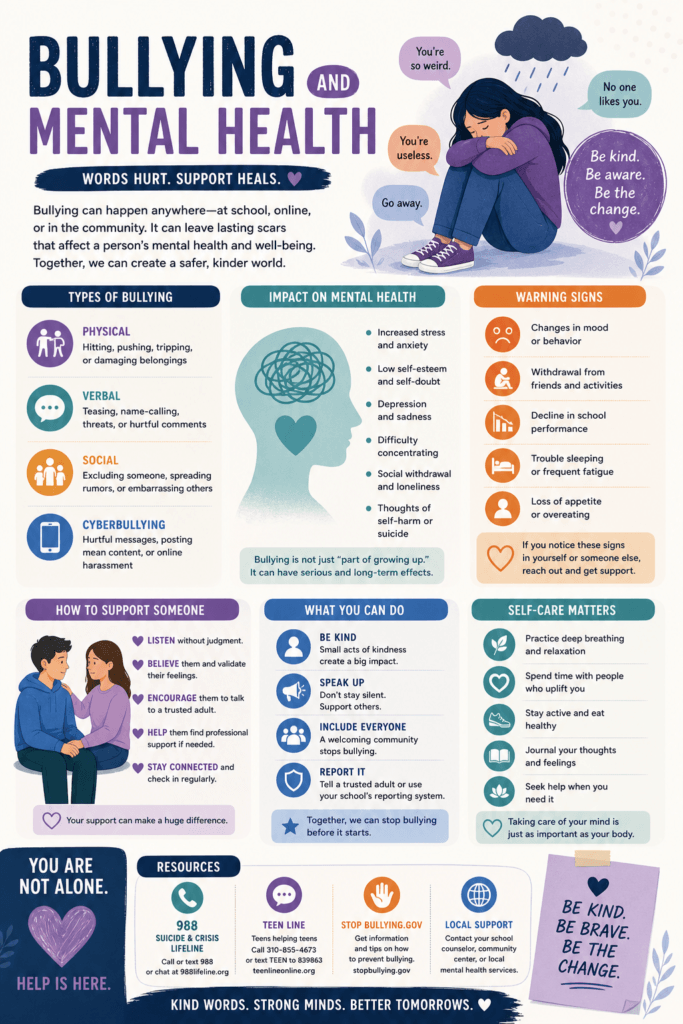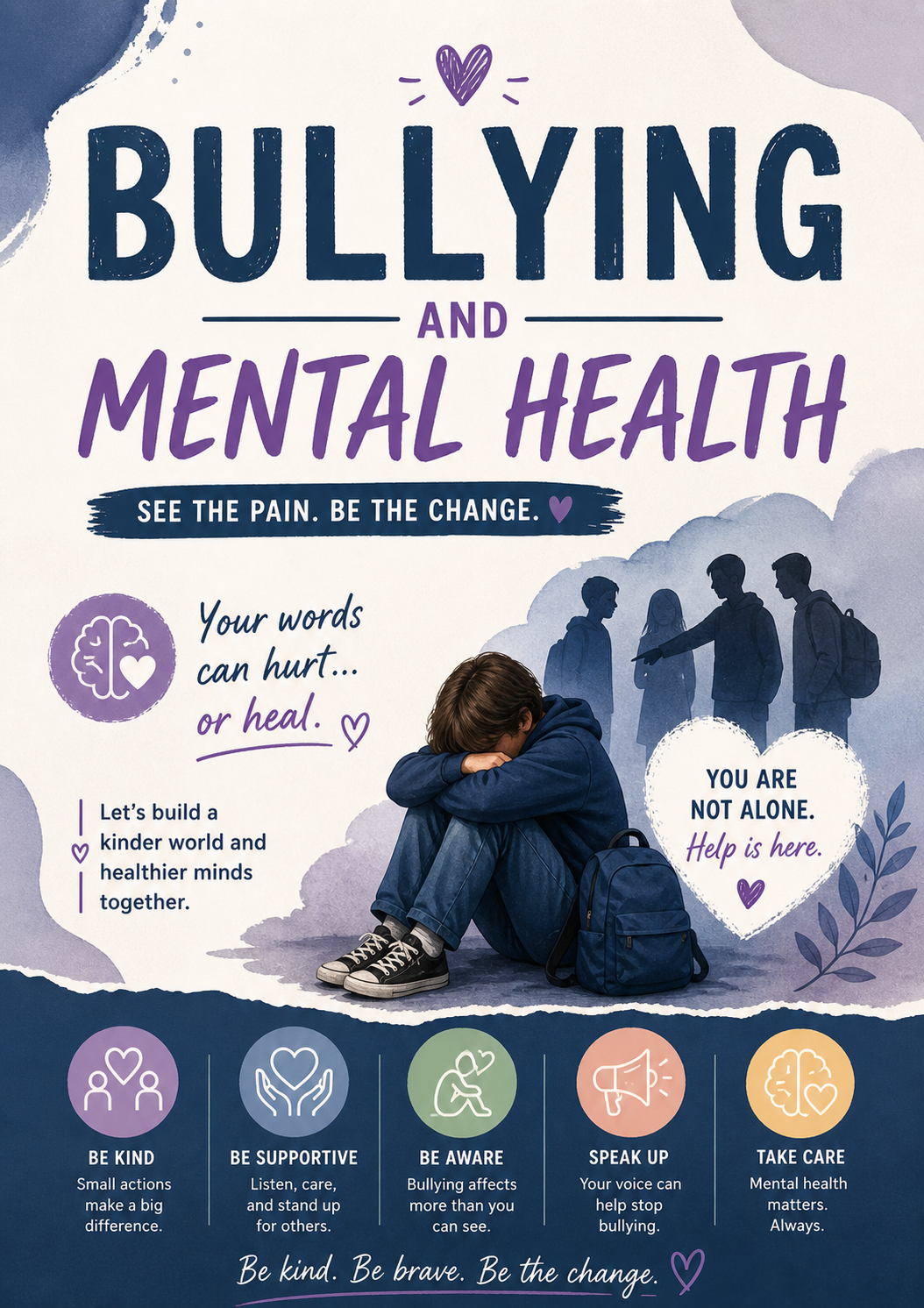
Bullying is a widespread social issue that extends far beyond temporary conflict, significantly impacting an individual’s mental health and overall well-being. It can take many forms, including physical aggression, verbal harassment, social exclusion, and cyberbullying, and often occurs in environments such as schools, workplaces, and online platforms. Repeated exposure to bullying can lead to emotional distress, affecting how individuals perceive themselves and interact with others. Over time, these experiences can contribute to the development of mental health challenges such as anxiety, depression, and low self-esteem. Understanding the connection between bullying and mental health is essential for recognizing its seriousness and promoting effective prevention and intervention strategies.
Silent Scars: Understanding the Link Between Bullying and Mental Health
Bullying is more than a social issue—it is a serious public health concern with lasting psychological consequences. Whether it occurs in schools, workplaces, or online spaces, bullying can take many forms, including physical aggression, verbal harassment, social exclusion, and cyberbullying. While some may dismiss bullying as a normal part of growing up, research consistently shows that it can have profound and long-term effects on mental health.
The impact of bullying extends beyond the immediate moment of harm. Repeated exposure to intimidation or humiliation can alter how individuals see themselves and the world around them. Victims of bullying often experience increased stress, fear, and emotional distress, which can interfere with daily functioning and overall well-being. Understanding this connection is essential for prevention, early intervention, and support.
How Bullying Affects Mental Health
Bullying can influence mental health in several significant ways:
- Increased Anxiety: Constant fear of being targeted can lead to chronic worry and hypervigilance
- Depression: Feelings of sadness, hopelessness, and low self-worth are common
- Low Self-Esteem: Victims may internalize negative messages and develop poor self-image
- Social Withdrawal: Avoidance of social situations due to fear or embarrassment
- Academic or Work Decline: Difficulty concentrating and decreased performance
Common Emotional and Behavioral Signs
Recognizing warning signs can help identify individuals who may be struggling:
- Sudden changes in mood or behavior
- Loss of interest in activities once enjoyed
- Increased irritability or emotional outbursts
- Trouble sleeping or frequent fatigue
- Avoidance of school, work, or social settings
Long-Term Consequences
If left unaddressed, bullying can lead to more serious outcomes:
- Development of anxiety disorders or depression
- Increased risk of substance use as a coping mechanism
- Difficulty forming healthy relationships
- Ongoing issues with self-confidence and trust
- Higher risk of self-harm or suicidal thoughts
Protective Factors and Support Strategies
Support systems play a critical role in reducing harm:
- Open Communication: Encourage individuals to share their experiences without fear of judgment
- Trusted Adults or Mentors: Teachers, parents, or counselors can provide guidance and intervention
- Peer Support: Positive friendships can buffer against the effects of bullying
- School or Workplace Policies: Clear anti-bullying policies and reporting systems
- Mental Health Services: Counseling or therapy to address emotional impact
Prevention and Awareness
Creating safer environments requires collective effort:
- Educating communities about the impact of bullying
- Promoting empathy, respect, and inclusion
- Encouraging bystander intervention
- Addressing cyberbullying through digital responsibility
- Supporting programs that build social and emotional skills
Moving Toward Healing and Change
Bullying and mental health are deeply interconnected, but the effects are not irreversible. With early recognition, supportive relationships, and access to resources, individuals can recover and rebuild confidence. Addressing bullying is not just about stopping harmful behavior—it’s about fostering environments where people feel safe, valued, and empowered to thrive.
Taking Back Control: Self-Management Strategies for Coping with Bullying and Protecting Mental Health
Bullying can have a powerful impact on mental health, affecting how individuals think, feel, and respond to everyday situations. While external support from family, schools, or workplaces is essential, self-management strategies can empower individuals to better understand their experiences and regain a sense of control. These strategies focus on building awareness, strengthening emotional resilience, and developing healthy ways to cope with stress and negative experiences.
Self-management does not mean handling everything alone—it means actively participating in your own well-being. By recognizing patterns, managing emotional responses, and developing supportive habits, individuals can reduce the psychological impact of bullying and protect their mental health over time.
Building Self-Awareness
Understanding your thoughts and feelings is the first step toward managing them:
- Identify how bullying situations make you feel (e.g., anxious, sad, angry)
- Notice patterns in when and where bullying occurs
- Recognize negative self-talk or beliefs that may develop
- Reflect on how experiences affect your mood and behavior
Managing Emotional Responses
Learning to regulate emotions can reduce the intensity of distress:
- Practice deep breathing or grounding techniques during stressful moments
- Use journaling to process emotions and release tension
- Challenge negative thoughts with more balanced, realistic perspectives
- Allow yourself to feel emotions without judgment
Strengthening Self-Esteem
Bullying often targets self-worth, so rebuilding confidence is key:
- Focus on personal strengths and achievements
- Engage in activities that bring a sense of accomplishment
- Set small, realistic goals and celebrate progress
- Surround yourself with supportive and positive influences
Developing Healthy Coping Strategies
Replacing harmful coping mechanisms with healthy ones supports resilience:
- Stay physically active to reduce stress and improve mood
- Maintain consistent sleep and nutrition routines
- Use creative outlets (art, music, writing) to express emotions
- Practice mindfulness or relaxation exercises
Setting Personal Boundaries
Protecting yourself includes knowing your limits:
- Decide what behavior you will and will not tolerate
- Practice assertive communication when safe to do so
- Limit exposure to environments or people that trigger distress
- Use digital boundaries (blocking, reporting) in cases of cyberbullying
Seeking Support When Needed
Self-management works best alongside support systems:
- Talk to a trusted adult, friend, or mentor
- Reach out to school counselors or mental health professionals
- Join peer support groups where experiences can be shared
- Report bullying through appropriate channels when necessary
Monitoring Mental Health
Regular check-ins help prevent long-term impact:
- Notice changes in mood, sleep, or energy levels
- Be aware of signs of anxiety, depression, or withdrawal
- Take breaks when feeling overwhelmed
- Seek professional help if symptoms persist or worsen
Moving Toward Empowerment
Bullying can deeply affect mental health, but individuals are not powerless. Through self-management strategies, it is possible to build resilience, regain confidence, and reduce the emotional impact of negative experiences. Combining personal coping skills with external support creates a stronger foundation for healing, growth, and long-term well-being.
Stronger Together: Family Support Strategies for Addressing Bullying and Protecting Mental Health
Bullying can deeply affect an individual’s emotional well-being, often leading to anxiety, depression, and a decline in self-confidence. While schools and communities play important roles in prevention, family support is one of the most powerful protective factors. A supportive family environment can help individuals feel safe, understood, and empowered to cope with the challenges of bullying. Families who are informed and proactive can significantly reduce the long-term mental health impact.
Understanding the connection between bullying and mental health allows families to respond with empathy rather than frustration. Instead of dismissing experiences or encouraging individuals to “ignore it,” effective family support focuses on validation, communication, and action. When families work together, they can create a strong foundation for resilience and recovery.
Creating Open Communication
A safe space for conversation is essential:
- Encourage honest discussions about daily experiences
- Listen without interrupting or minimizing feelings
- Use supportive language and avoid blame
- Ask open-ended questions to better understand what’s happening
Recognizing Warning Signs
Early detection can prevent worsening mental health challenges:
- Sudden changes in mood or behavior
- Withdrawal from family, friends, or activities
- Declining performance in school or work
- Changes in sleep, appetite, or energy levels
Providing Emotional Support
Validation helps individuals feel less alone:
- Acknowledge their feelings and experiences as real and important
- Reassure them that bullying is not their fault
- Offer consistent encouragement and reassurance
- Spend quality time together to strengthen connection
Taking Action Against Bullying
Families can play an active role in addressing the situation:
- Report bullying to school or workplace authorities when appropriate
- Document incidents to track patterns
- Advocate for policies and interventions that ensure safety
- Teach problem-solving and assertiveness skills
Promoting Healthy Coping Strategies
Helping individuals manage stress improves resilience:
- Encourage physical activity and regular routines
- Support hobbies and interests that build confidence
- Practice relaxation techniques like deep breathing or mindfulness
- Limit exposure to negative online environments
Seeking Professional Support
Sometimes additional help is needed:
- Consult school counselors or mental health professionals
- Consider therapy to address anxiety, depression, or trauma
- Join family or support groups for shared experiences
- Explore community resources for bullying prevention
Supporting Family Well-Being
Families also need to care for themselves:
- Acknowledge your own emotions (worry, frustration, helplessness)
- Avoid self-blame or guilt
- Seek guidance or counseling if needed
- Maintain healthy boundaries and self-care routines
Moving Toward Healing
Bullying can leave lasting emotional effects, but strong family support can make a meaningful difference. By fostering open communication, taking action, and promoting healthy coping, families help individuals rebuild confidence and emotional strength. Addressing bullying is not just about stopping harmful behavior—it’s about creating a safe, supportive environment where individuals can heal, grow, and thrive.
Stronger Communities, Healthier Minds: Resource Strategies for Addressing Bullying and Mental Health
Bullying is not just an individual or family issue—it is a community-wide concern that affects schools, workplaces, and social environments. Its impact on mental health can be long-lasting, contributing to anxiety, depression, and social withdrawal. Communities play a critical role in prevention, early intervention, and recovery by providing resources, education, and supportive environments. When communities actively address bullying, they help create safer spaces where individuals can thrive emotionally and socially.
Community resource strategies focus on connecting individuals to support systems while also promoting awareness and accountability. By combining education, accessible services, and inclusive policies, communities can reduce the harmful effects of bullying and strengthen overall mental well-being.
Promoting Education and Awareness
Knowledge empowers communities to prevent and respond effectively:
- Public awareness campaigns about the impact of bullying on mental health
- School and workplace training programs on recognizing and addressing bullying
- Workshops on empathy, respect, and conflict resolution
- Educational materials for parents, teachers, and community members
Providing Access to Mental Health Services
Timely support can reduce long-term consequences:
- Counseling services in schools, community centers, and clinics
- Access to psychologists, social workers, or therapists
- Crisis hotlines and online mental health resources
- Early screening programs for anxiety, depression, and stress
Strengthening Reporting and Intervention Systems
Safe reporting encourages individuals to seek help:
- Anonymous reporting tools in schools and workplaces
- Clear policies and procedures for addressing bullying incidents
- Trained staff to respond quickly and effectively
- Follow-up systems to ensure ongoing support
Building Supportive Peer Networks
Connection helps reduce isolation and emotional harm:
- Peer support groups for individuals experiencing bullying
- Mentorship programs pairing youth with positive role models
- Community clubs and activities that foster inclusion
- Safe spaces where individuals feel accepted and heard
Addressing Cyberbullying
Digital environments require targeted strategies:
- Education on responsible social media use
- Tools for blocking, reporting, and managing online harassment
- Parental and community guidance on digital safety
- Collaboration with schools and platforms to monitor harmful behavior
Encouraging Inclusive and Safe Environments
Community culture plays a key role in prevention:
- Anti-bullying policies that promote zero tolerance for harassment
- Programs that celebrate diversity and inclusion
- Community events that foster belonging and connection
- Encouraging bystander intervention and advocacy
Collaborating Across Community Systems
A coordinated approach strengthens outcomes:
- Partnerships between schools, healthcare providers, and local organizations
- Law enforcement involvement when necessary for safety
- Community leaders advocating for mental health resources
- Shared data and strategies to improve prevention efforts
Moving Toward a Safer Community
Addressing bullying and its impact on mental health requires a collective effort. Communities that invest in education, accessible resources, and supportive networks create environments where individuals feel safe and valued. By working together, communities can reduce the harm caused by bullying and promote resilience, well-being, and long-term mental health for all members.
Frequently Asked Questions
Here are some common questions:
1. What is bullying?
Bullying is repeated aggressive behavior intended to harm, intimidate, or control another person. It can be physical, verbal, social (exclusion or rumors), or online (cyberbullying).
2. How does bullying affect mental health?
Bullying can lead to anxiety, depression, low self-esteem, stress, and emotional distress. Over time, it may impact how a person thinks, feels, and interacts with others.
3. Can bullying cause long-term psychological effects?
Yes. If not addressed, bullying can contribute to long-term issues such as chronic anxiety, depression, difficulty trusting others, and ongoing low self-confidence.
4. What are common signs someone is being bullied?
- Sudden changes in mood or behavior
- Avoiding school, work, or social situations
- Trouble sleeping or frequent fatigue
- Loss of interest in activities
- Increased anxiety, sadness, or irritability
5. What is cyberbullying, and how is it different?
Cyberbullying occurs through digital platforms like social media, texting, or gaming. It can happen anytime, spread quickly, and be harder to escape, which can intensify its mental health impact.
6. Why do people bully others?
People may bully due to:
- Desire for control or power
- Peer pressure or social influence
- Personal insecurities
- Learned behavior from their environment
7. Can bullying affect academic or work performance?
Yes. Stress, fear, and emotional distress can make it difficult to concentrate, leading to declining performance and disengagement.
8. How can someone cope with bullying?
- Talk to a trusted adult, friend, or counselor
- Practice stress-management techniques (deep breathing, journaling)
- Build supportive friendships
- Avoid isolation and seek help when needed
9. When should someone seek professional help?
If bullying leads to persistent anxiety, depression, withdrawal, or thoughts of self-harm, it’s important to seek help from a mental health professional immediately.
10. How can parents or families help?
- Listen without judgment
- Take concerns seriously
- Communicate with schools or workplaces
- Encourage professional support if needed
11. What should bystanders do if they witness bullying?
- Speak up if it is safe to do so
- Support the person being bullied
- Report the behavior to a trusted authority
- Avoid encouraging or ignoring the situation
12. Can someone recover from the effects of bullying?
Yes. With the right support, coping strategies, and time, individuals can heal, rebuild confidence, and improve their mental health.
13. How can communities prevent bullying?
- Promote awareness and education
- Enforce anti-bullying policies
- Encourage kindness and inclusion
- Provide access to mental health resources
Conclusion
The relationship between bullying and mental health highlights the need for increased awareness, early intervention, and strong support systems. While the effects of bullying can be deeply harmful, they are not irreversible when individuals receive appropriate support from families, schools, and communities. Addressing bullying requires a collective effort to create safe, inclusive environments and to promote empathy, respect, and accountability. By prioritizing mental health and taking proactive steps to prevent and respond to bullying, society can help individuals heal, build resilience, and achieve long-term emotional well-being.
Video: This Is What Happens When Bullying Never Stops #depression #mentalhealth