The “California sober” lifestyle represents a modern shift in how sobriety and recovery are defined. Rather than adhering to complete abstinence from all substances, this approach emphasizes selective use—typically avoiding high-risk drugs like alcohol or opioids while allowing limited use of substances such as cannabis. Rooted in harm reduction principles, California sober challenges traditional recovery models by prioritizing reduced risk and improved quality of life over strict abstinence. As this approach gains visibility, it has sparked both interest and debate among healthcare professionals, individuals in recovery, and the broader public. Understanding this lifestyle requires examining its motivations, potential benefits, and the risks associated with maintaining controlled substance use.
Redefining Recovery: Understanding the “California Sober” Lifestyle
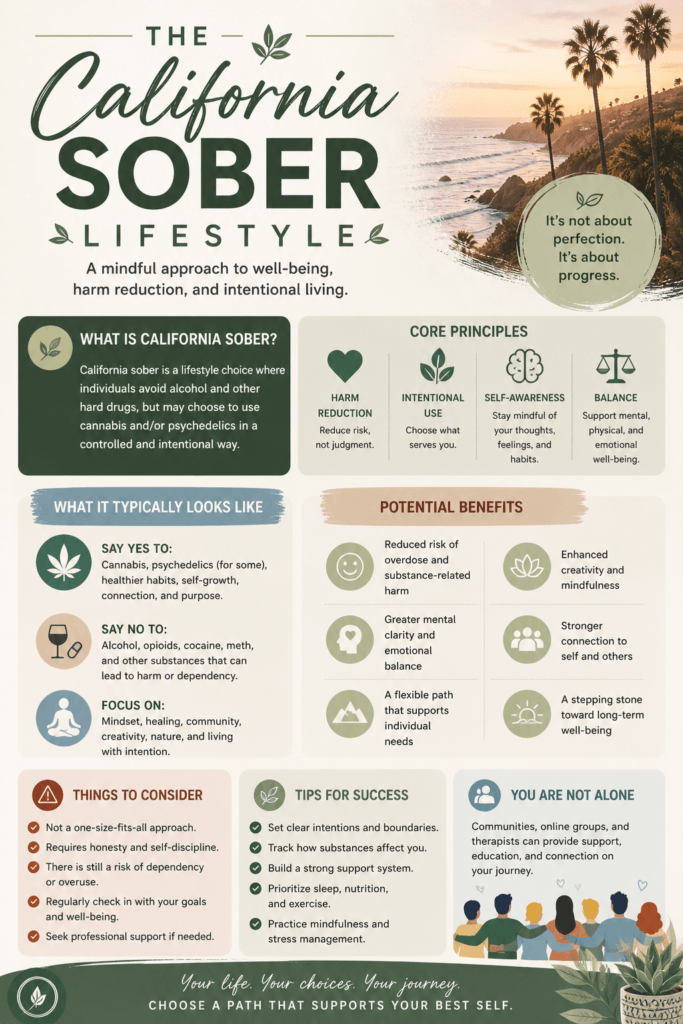
The “California sober” lifestyle is a modern and somewhat controversial approach to recovery that challenges traditional definitions of sobriety. Instead of complete abstinence from all substances, individuals who identify as California sober typically avoid high-risk drugs like opioids, cocaine, or alcohol, while continuing to use substances such as cannabis or psychedelics in a controlled or intentional way. For some, this approach feels more realistic and sustainable; for others, it raises concerns about relapse and continued dependency.
At its core, California sober reflects a broader shift toward harm reduction—a public health strategy focused on minimizing the negative consequences of substance use rather than insisting on total abstinence. While this model may work for certain individuals, especially those seeking gradual change, it is not universally effective and may not be appropriate for people with severe substance use disorders.
What Does “California Sober” Typically Mean?
Although definitions vary, the lifestyle often includes:
- Abstaining from alcohol and “hard” drugs
- Continuing or allowing limited use of cannabis
- Sometimes including psychedelics in controlled or therapeutic contexts
- Emphasizing intention, moderation, and self-awareness
Why Do People Choose This Approach?
Individuals may adopt a California sober lifestyle for different reasons:
- Desire for a more flexible or realistic recovery path
- Belief that certain substances (like cannabis) are less harmful
- Difficulty maintaining complete abstinence
- Interest in harm reduction strategies
- Cultural or social influences that normalize selective use
Potential Benefits
For some individuals, this approach may offer:
- Reduced use of higher-risk substances
- Lower likelihood of overdose compared to polysubstance use
- Increased sense of autonomy and control
- A stepping stone toward fuller recovery
- Decreased stigma associated with strict sobriety models
Potential Risks and Concerns
It’s important to consider the limitations and risks:
- Continued activation of addictive behaviors or reward pathways
- Risk of substituting one substance for another
- Blurred boundaries that may lead to relapse
- Not suitable for individuals with severe addiction histories
- Limited long-term research on effectiveness
Who Might This Approach Work For?
California sober may be more appropriate for:
- Individuals with mild to moderate substance use patterns
- Those motivated to reduce harm rather than fully abstain
- People with strong self-monitoring and support systems
- Individuals working with healthcare professionals to guide use
Strategies for Staying Intentional
For those exploring this lifestyle, self-awareness and structure are key:
- Set clear limits on what substances are allowed and in what amounts
- Regularly evaluate how use affects mental and physical health
- Avoid using substances as the primary coping mechanism
- Maintain routines that support overall well-being (sleep, nutrition, activity)
- Stay connected to support systems (therapy, peer groups, trusted individuals)
A Balanced Perspective
The California sober lifestyle highlights an ongoing evolution in how society understands addiction and recovery. While traditional abstinence-based models remain the gold standard for many, alternative approaches like harm reduction offer additional pathways that may resonate with different individuals.
Ultimately, recovery is not one-size-fits-all. What matters most is whether a chosen approach leads to improved health, stability, and quality of life. Thoughtful decision-making, ongoing self-reflection, and access to support are essential—regardless of the path someone takes.
Intentional Living: Self-Management Strategies for Navigating the California Sober Lifestyle
The “California sober” lifestyle reflects a shift away from traditional all-or-nothing approaches to recovery, focusing instead on selective substance use and harm reduction. While this approach may offer flexibility, it also requires a high level of self-awareness and personal responsibility. Without clear structure, boundaries can easily blur, increasing the risk of returning to problematic patterns. Self-management strategies are essential for individuals choosing this path, helping them stay intentional, evaluate their behaviors, and maintain control over their choices.
Understanding your relationship with substances is central to making the California sober lifestyle sustainable. This approach is not simply about avoiding certain drugs while using others—it’s about actively monitoring how those choices impact your mental health, behavior, and overall quality of life. Effective self-management encourages reflection, discipline, and ongoing adjustment.
Building Self-Awareness
Recognizing patterns and motivations is the foundation of this lifestyle:
- Track when, why, and how often substances are used
- Identify emotional triggers (stress, boredom, social pressure)
- Reflect on whether use is intentional or habitual
- Assess how substance use affects mood, productivity, and relationships
Setting Clear Personal Boundaries
Structure is critical in preventing misuse:
- Define which substances are acceptable and which are not
- Establish limits on frequency and quantity
- Avoid “exceptions” that can gradually expand boundaries
- Revisit and adjust rules as needed based on outcomes
Developing Healthy Coping Strategies
Substances should not become the primary way of managing life challenges:
- Practice stress management techniques (mindfulness, breathing exercises)
- Engage in regular physical activity
- Build routines that support sleep and nutrition
- Use hobbies or creative outlets to manage emotions
Monitoring for Warning Signs
Ongoing self-checks help prevent escalation:
- Increasing reliance on allowed substances
- Using to cope rather than for intentional purposes
- Difficulty sticking to self-imposed limits
- Noticing negative impacts on mental or physical health
Strengthening Accountability
External and internal accountability improve consistency:
- Share goals with a trusted friend, partner, or mentor
- Consider therapy or counseling for guidance
- Use journaling or apps to track progress
- Celebrate small wins and adjust after setbacks
Maintaining Balance and Perspective
The goal is improved well-being, not just reduced substance use:
- Regularly evaluate if this lifestyle supports long-term health
- Stay open to changing approaches if needed
- Avoid comparing your recovery journey to others
- Focus on overall life satisfaction, not just substance rules
Moving Forward with Intention
The California sober lifestyle can be a meaningful approach for some individuals, but it requires discipline, honesty, and continuous reflection. Self-management is what transforms this model from a vague idea into a structured and sustainable way of living. By setting boundaries, staying aware of patterns, and prioritizing health, individuals can reduce risk while working toward greater stability and well-being.
Supporting with Balance: Family Strategies for Understanding the California Sober Lifestyle
The “California sober” lifestyle—where individuals avoid certain high-risk substances while continuing limited use of others, such as cannabis—can be confusing for families trying to support a loved one. Unlike traditional abstinence-based recovery, this approach requires nuanced understanding, open communication, and careful boundary-setting. Families may struggle to determine what is helpful versus enabling, especially when the definition of “sobriety” differs from what they expect.
For families, the goal is not to control a loved one’s choices but to create an environment that promotes safety, accountability, and well-being. Understanding the principles behind harm reduction and selective sobriety can help reduce conflict and support more productive conversations. At the same time, families should remain attentive to risks and ensure that support does not unintentionally reinforce harmful behaviors.
Educating the Family on the Approach
Clarity reduces confusion and miscommunication:
- Learn what “California sober” means and how it differs from full abstinence
- Understand the concept of harm reduction and its goals
- Recognize that effectiveness varies depending on the individual
- Stay informed about potential risks, including substitution and relapse
Encouraging Open and Respectful Communication
Healthy dialogue builds trust and reduces defensiveness:
- Ask questions to understand your loved one’s perspective
- Avoid judgmental or dismissive language
- Express concerns using calm, supportive “I” statements
- Listen actively without interrupting or assuming intent
Setting Healthy Boundaries
Support should be balanced with clear limits:
- Define what behaviors are acceptable within the household
- Avoid enabling (e.g., providing money or covering up consequences)
- Be consistent with expectations and follow-through
- Communicate boundaries clearly and respectfully
Promoting Accountability and Self-Awareness
Families can help reinforce responsibility without controlling behavior:
- Encourage regular self-reflection about substance use
- Support goal-setting related to health and well-being
- Suggest tracking habits or discussing progress openly
- Reinforce honesty rather than perfection
Watching for Warning Signs
Even with selective use, risks can increase over time:
- Expanding beyond originally agreed-upon substances
- Increased frequency or reliance on “allowed” substances
- Negative changes in mood, behavior, or responsibilities
- Defensiveness or secrecy around substance use
Encouraging Professional and Peer Support
External support strengthens long-term outcomes:
- Recommend therapy or counseling for guidance
- Suggest family therapy to improve communication
- Encourage involvement in peer support groups
- Stay open to adjusting the approach if concerns grow
Caring for Family Well-Being
Supporting someone else should not come at the cost of your own health:
- Seek support from counseling or family support groups
- Acknowledge feelings of uncertainty, frustration, or concern
- Maintain personal boundaries and self-care routines
- Avoid taking responsibility for another person’s choices
Moving Forward as a Support System
The California sober lifestyle requires ongoing evaluation, honesty, and flexibility—for both the individual and their family. While this approach may work for some, it is not without risks. Families who focus on education, communication, and balanced support are better equipped to navigate this path. By fostering accountability and maintaining healthy boundaries, families can play a meaningful role in promoting stability and long-term well-being.
Community Matters: Resource Strategies for Understanding the California Sober Lifestyle
The “California sober” lifestyle represents a shift toward harm reduction, where individuals intentionally avoid certain high-risk substances while allowing limited use of others, such as cannabis. As this approach becomes more visible, communities play an important role in shaping how it is understood, supported, and evaluated. Community resources can provide education, structure, and accountability—helping individuals make informed decisions while reducing potential risks associated with selective substance use.
Understanding this lifestyle requires more than individual reflection; it benefits from access to reliable information, supportive networks, and health services. Community-based strategies help bridge the gap between personal choices and public health by offering tools that promote awareness, safety, and long-term well-being.
Expanding Community Education and Awareness
Access to accurate information helps individuals and families make informed choices:
- Public health campaigns explaining harm reduction and selective sobriety
- Workshops or seminars on substance use, mental health, and recovery models
- School and workplace education addressing evolving definitions of sobriety
- Community forums that encourage open, stigma-free discussions
Providing Access to Support Services
Even non-abstinence approaches benefit from structured support:
- Counseling and therapy services for substance use and mental health
- Outpatient programs that incorporate harm reduction principles
- Screening and referral services through community clinics
- Online platforms offering education and recovery tools
Strengthening Peer and Social Support Networks
Connection and shared experience enhance accountability:
- Peer-led support groups open to diverse recovery approaches
- Community recovery centers offering safe, inclusive spaces
- Mentorship programs connecting individuals with experienced peers
- Social groups that promote substance-free or low-risk activities
Promoting Harm Reduction Resources
Communities can reduce risks while supporting informed choices:
- Education on safer substance use practices
- Access to health screenings and wellness services
- Distribution of educational materials about substance interactions and risks
- Outreach programs that meet individuals where they are
Addressing Social and Environmental Factors
Recovery and stability are influenced by broader life conditions:
- Access to stable housing and supportive living environments
- Employment assistance and vocational training programs
- Transportation services for healthcare and support meetings
- Educational opportunities that build long-term resilience
Reducing Stigma and Encouraging Inclusion
Community attitudes significantly impact help-seeking behavior:
- Campaigns that frame substance use as a health issue, not a moral failure
- Inclusive language that respects different recovery paths
- Safe spaces for open dialogue without judgment
- Policies that support rather than punish individuals seeking help
Encouraging Ongoing Evaluation and Flexibility
Because the California sober model is not one-size-fits-all, communities should promote adaptability:
- Encourage regular self-assessment and goal setting
- Provide resources for transitioning to different recovery approaches if needed
- Support collaboration between healthcare providers, educators, and community leaders
- Emphasize that success is measured by improved health and functioning
Moving Toward a Supportive Community Framework
The California sober lifestyle highlights the need for diverse, flexible support systems within communities. By offering education, accessible services, and inclusive environments, communities can help individuals navigate this approach with greater awareness and safety. Ultimately, the goal is not to endorse one path over another, but to ensure that all individuals have the resources and support needed to make informed, healthy decisions.
Frequently Asked Questions
Here are some common questions:
1. What does “California sober” mean?
The California sober lifestyle typically refers to avoiding certain substances—like alcohol or “hard” drugs—while continuing limited or intentional use of others, most commonly cannabis. It’s a form of selective sobriety rooted in harm reduction.
2. Is California sober the same as being sober?
Not in the traditional sense. Traditional sobriety usually means complete abstinence from all substances. California sober redefines sobriety by allowing certain substances while avoiding others.
3. Why do people choose this lifestyle?
People may choose California sober because:
- They find full abstinence difficult to maintain
- They believe some substances are less harmful than others
- They want a more flexible or realistic approach to recovery
- They are focusing on reducing harm rather than eliminating all use
4. Is California sober considered recovery?
It depends on perspective. Some view it as a valid harm reduction strategy, while others—especially in abstinence-based programs—may not consider it full recovery. Effectiveness varies by individual.
5. What substances are usually allowed?
Most commonly:
- Cannabis
- Sometimes psychedelics (in controlled or therapeutic settings)
Typically avoided:
- Alcohol
- Opioids
- Cocaine, methamphetamine, and other high-risk drugs
6. What are the potential benefits?
- Reduced use of more dangerous substances
- Lower risk of overdose compared to polysubstance use
- Greater sense of autonomy and flexibility
- May serve as a step toward full abstinence for some
7. What are the risks?
- Risk of substituting one substance for another
- Blurred boundaries leading to relapse
- Continued activation of addictive behaviors
- Not effective for everyone, especially those with severe addiction
8. Who might this approach work best for?
- Individuals with mild to moderate substance use patterns
- People committed to self-monitoring and setting boundaries
- Those with strong support systems
- Individuals working with healthcare professionals
9. How can someone stay in control while being California sober?
- Set clear rules about what is and isn’t allowed
- Limit frequency and amount of use
- Regularly evaluate how use affects mental health and functioning
- Avoid using substances as the main coping strategy
10. Can California sober lead to relapse?
Yes, it can. Because some substance use continues, it may trigger cravings or lead back to previously avoided substances. Ongoing self-awareness and monitoring are essential.
11. Should someone consult a professional before trying this?
Yes. A healthcare provider or therapist can help assess whether this approach is appropriate based on individual history and risk factors.
12. How can family and friends respond to this lifestyle?
- Stay informed about what California sober means
- Communicate openly and without judgment
- Set healthy boundaries
- Encourage professional support if concerns arise
13. Is there research supporting this approach?
Research on California sober specifically is still limited. However, harm reduction strategies more broadly have shown benefits in reducing negative outcomes associated with substance use.
Conclusion
The California sober lifestyle highlights the evolving nature of recovery and the growing acceptance of individualized approaches to substance use. While it may offer flexibility and a sense of autonomy for some individuals, it also requires a high level of self-awareness, discipline, and ongoing evaluation to prevent relapse or substitution. This model is not universally effective and may not be appropriate for everyone, particularly those with severe substance use disorders. Ultimately, the success of any recovery approach depends on whether it supports long-term health, stability, and well-being. By fostering informed decision-making and maintaining access to supportive resources, individuals can better navigate the complexities of recovery in ways that align with their personal needs and goals.
Video: What Happens When You Go California Sober #health #trending