Hunter Biden’s experience with addiction is a highly public example of how substance use disorder can affect a person regardless of wealth, education, family background, or social status. In his 2021 memoir Beautiful Things, Biden described years of problematic alcohol and drug use, repeated treatment attempts, relapse, grief, and efforts toward sobriety. His account also illustrates an important reality of addiction: recovery often involves more than simply deciding to stop using substances. It may require personal change, persistent family involvement, professional treatment, and a supportive recovery community.
Addiction, Loss, and Grief
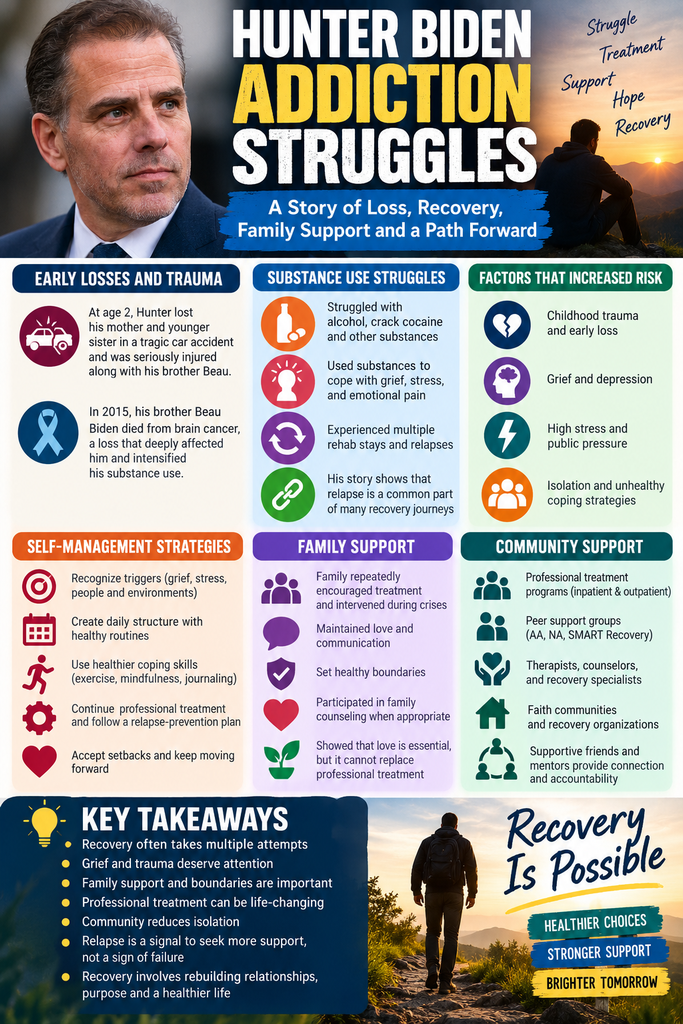
Hunter Biden has connected parts of his addiction journey with significant losses throughout his life. When he was two years old, a car accident killed his mother and younger sister and seriously injured him and his brother Beau. Decades later, Beau Biden died from brain cancer in 2015 at age 46. Hunter has described his substance use becoming particularly destructive during the period surrounding and following his brother’s death.
Grief does not automatically cause addiction, and trauma does not mean that someone will develop a substance use disorder. However, overwhelming grief, stress, depression, isolation, and unresolved emotional pain can become important factors in a person’s substance use.
Hunter Biden has publicly described periods of severe crack cocaine and alcohol use, as well as multiple attempts at rehabilitation followed by relapse. His experience demonstrates why relapse should be understood as a signal that treatment and recovery strategies may need to be strengthened or changed—not simply as evidence that a person lacks willpower.
Self-Management Strategies for Addiction Recovery
Personal responsibility is an important part of recovery, but self-management does not mean recovering alone. It means developing skills and routines that help a person recognize risks and make healthier decisions.
Helpful self-management strategies can include:
- Recognizing triggers: Grief, loneliness, stress, conflict, certain people, and environments associated with previous substance use can increase cravings.
- Developing a relapse-prevention plan: Identifying warning signs and deciding in advance whom to contact or where to go when cravings intensify can reduce impulsive decisions.
- Creating daily structure: Regular sleep, meals, exercise, appointments, work, hobbies, and recovery activities can replace some of the instability associated with active addiction.
- Learning healthier coping strategies: Counseling, mindfulness, journaling, exercise, spiritual practices, creative activities, and peer support can provide alternatives to using substances to escape emotional distress.
- Continuing treatment: Recovery may involve addiction counseling, behavioral therapies, medications when clinically appropriate, residential or outpatient treatment, and continuing care.
- Accepting setbacks without abandoning recovery: A relapse can be dangerous, but it does not erase previous progress. Returning to professional treatment quickly can be critical.
Hunter Biden’s account is particularly useful for understanding that repeated treatment attempts can occur before a person achieves greater stability. His memoir recounts numerous episodes of treatment, relapse, and renewed efforts to become sober.
The Role of Family Support
One of the strongest themes in Hunter Biden’s story is family involvement. His family repeatedly attempted to intervene when his substance use became dangerous. Accounts from his memoir describe relatives confronting him and encouraging him to return to treatment.
Families supporting someone with addiction can:
- Encourage professional treatment without shaming the person.
- Learn about substance use disorders and relapse.
- Establish healthy boundaries rather than continually rescuing someone from the consequences of substance use.
- Avoid providing money or resources that could unintentionally support continued drug or alcohol use.
- Participate in family counseling when appropriate.
- Maintain communication while protecting their own emotional and physical well-being.
- Recognize that relatives cannot control another person’s recovery.
Love can be enormously important, but love alone cannot treat addiction. Hunter Biden’s experiences demonstrate this difficult distinction. His family could encourage treatment, maintain contact, and intervene during crises, but ultimately recovery required his participation as well. In public comments, he described frequent communication with his father as an enduring part of their relationship.
Community Support and Long-Term Recovery
Community support can give people something addiction frequently takes away: connection.
Recovery communities may include treatment professionals, peer recovery specialists, mutual-help groups, sober friends, faith communities, recovery organizations, supportive workplaces, and other people who understand substance use disorders.
Community-based recovery support can help by reducing isolation, providing accountability, connecting people with treatment and housing resources, and giving individuals opportunities to build relationships that are not centered around substance use.
Programs such as Alcoholics Anonymous, SMART Recovery, Narcotics Anonymous, outpatient treatment programs, recovery community organizations, and peer-support services may be helpful depending on an individual’s needs and preferences. No single recovery approach works for everyone.
Understanding Relapse Without Removing Accountability
Hunter Biden’s story also highlights an important balance in discussing addiction: compassion and accountability can exist together.
Recognizing addiction as a health condition does not require ignoring harmful behavior or its consequences. People in recovery may still need to repair relationships, accept responsibility for decisions, rebuild trust, and develop healthier behaviors.
At the same time, humiliation and stigma rarely provide an effective foundation for sustained recovery. Treatment is more productive when individuals can acknowledge the seriousness of their behavior while believing that change remains possible.
What Families Can Learn From Hunter Biden’s Journey
Perhaps the most important lesson from Hunter Biden’s addiction struggles is that recovery rarely follows a perfectly straight path. His memoir describes severe substance use, repeated rehabilitation attempts, relapse, family interventions, and eventually a period of sobriety.
For individuals and families experiencing addiction, several lessons stand out:
- Recovery may require multiple attempts.
- Grief and trauma deserve attention alongside substance use.
- Family members can provide support without assuming responsibility for another person’s recovery.
- Professional treatment and continuing care can be essential.
- Healthy routines and coping skills help support long-term change.
- Social connection can reduce the isolation that often accompanies addiction.
- Relapse should prompt renewed intervention rather than hopelessness.
- Recovery involves rebuilding relationships, responsibility, purpose, and everyday life—not merely stopping substance use.
Moving Forward
Hunter Biden’s story is ultimately useful not because his experience represents everyone with addiction—it does not—but because it demonstrates how complicated addiction and recovery can become. Severe substance use can coexist with family love, professional success, grief, repeated treatment, relapse, and a desire to change.
Effective recovery usually develops through several layers of support. Self-management helps individuals recognize triggers and practice healthier coping strategies. Family support can provide connection, boundaries, and encouragement toward treatment. Community and professional support can provide treatment, accountability, peer connection, and the resources needed for long-term stability.
Addiction can dramatically alter a person’s life, but a history of relapse does not mean recovery is impossible. Hunter Biden’s public account shows that recovery may involve repeated efforts—and that continuing to seek help can itself be an important part of the journey.
Frequently Asked Questions and Answers
1. What addiction has Hunter Biden publicly discussed?
Hunter Biden has publicly described struggles with alcohol and drug addiction, including severe crack cocaine use. He discussed these experiences extensively in his memoir Beautiful Things and in media interviews.
2. When did Hunter Biden’s substance use problems begin?
Biden has described drinking alcohol when he was young and experiencing substance-related problems at different points in adulthood. His addiction became particularly severe during periods of intense stress, grief, and instability.
3. Did grief play a role in Hunter Biden’s addiction struggles?
Hunter Biden has connected his substance use with grief and emotional pain, particularly following the 2015 death of his brother, Beau Biden, from brain cancer. However, addiction is complex, and grief should be considered one possible contributing factor rather than a single cause.
4. Did childhood trauma affect Hunter Biden?
When Hunter Biden was two years old, a car accident killed his mother and younger sister and seriously injured Hunter and his brother Beau. Hunter has discussed this early loss as part of his life story. Trauma can increase vulnerability to later mental health and substance-use problems, although people respond to trauma differently.
5. Did Hunter Biden go to rehabilitation?
Yes. Hunter Biden has publicly described multiple attempts at rehabilitation and treatment. His experiences show that some people need several treatment episodes to achieve sustained recovery.
6. Did Hunter Biden experience relapse?
Yes. He has openly described periods of sobriety followed by relapse. Relapse can occur during recovery from substance use disorders and can indicate that treatment, coping strategies, or recovery supports need to be strengthened.
7. How did Hunter Biden’s family try to help him?
Hunter Biden has described family members encouraging him to enter treatment, intervening during serious periods of substance use, maintaining communication, and continuing to support his efforts toward recovery. Family support can be valuable, although relatives cannot recover on another person’s behalf.
8. What self-management strategies can help someone dealing with addiction?
Helpful strategies can include identifying triggers, developing a relapse-prevention plan, maintaining healthy sleep and daily routines, exercising, managing stress, avoiding high-risk environments, attending treatment appointments, and contacting supportive people when cravings become difficult.
9. Why are healthy family boundaries important?
Supporting someone does not mean protecting them from every consequence of substance use. Families can express love while setting boundaries around money, housing, communication, substance use in the home, and other behaviors. Family counseling can also help relatives determine appropriate boundaries.
10. How can community support help with addiction recovery?
Treatment programs, therapists, peer recovery specialists, mutual-help groups, recovery organizations, supportive friends, and faith communities can reduce isolation and provide accountability. Groups such as Alcoholics Anonymous, Narcotics Anonymous, and SMART Recovery are examples of community-based resources, although no single approach works for everyone.
11. Does relapse mean addiction treatment has failed?
Not necessarily. Substance use disorders can involve periods of recurrence. A relapse should be taken seriously because returning to substance use can be dangerous, but it can also signal a need to reassess treatment and increase support.
12. What can families learn from Hunter Biden’s experience?
One major lesson is that addiction can affect families across social and economic backgrounds. Persistent support, appropriate boundaries, professional treatment, and attention to grief or trauma may all have roles in recovery.
13. Can someone recover after years of severe addiction?
Yes. People can recover even after prolonged or repeated episodes of substance use. Recovery may involve treatment, medication when appropriate, behavioral therapy, peer support, healthier relationships, and significant lifestyle changes.
14. What is the biggest takeaway from Hunter Biden’s addiction journey?
His publicly described experiences illustrate that addiction and recovery can be complicated and nonlinear. Recovery is not simply about stopping substance use—it can also involve learning healthier coping skills, addressing emotional difficulties, rebuilding relationships, accepting accountability, and creating a more stable life.
15. Where can someone seek help for substance use problems?
In the United States, people can contact the SAMHSA National Helpline at 1-800-662-HELP (4357) for confidential treatment information and referrals. A physician or licensed addiction professional can also help determine the appropriate level of treatment.
Video: