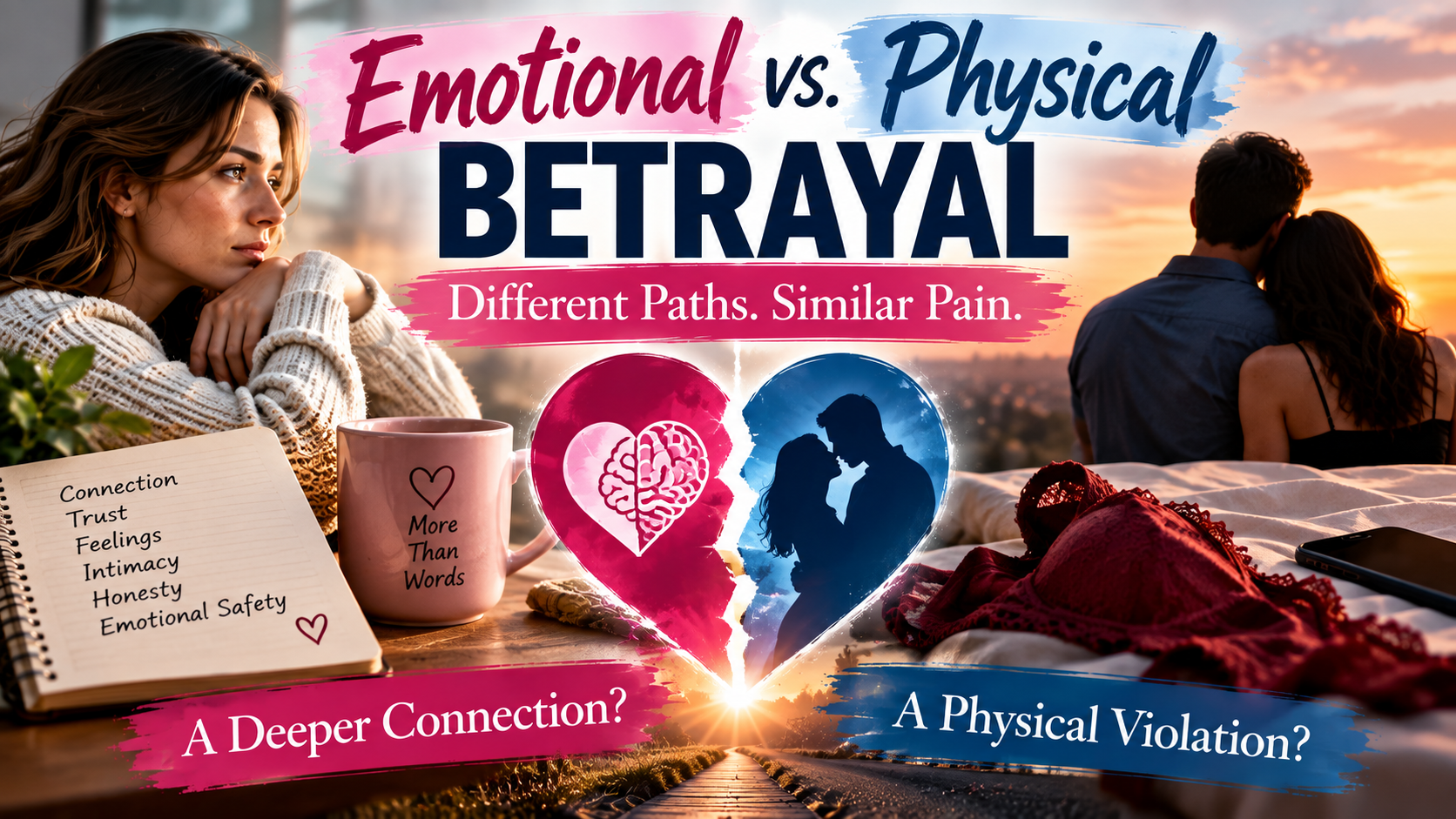
Infidelity can create one of the most painful disruptions in an intimate relationship. For some people, discovering that a partner had sexual contact with someone else is devastating. For others, learning that their partner developed a secret emotional connection—sharing affection, personal thoughts, hopes, or vulnerabilities—can feel even more threatening.
So, which hurts more: emotional or physical infidelity? There is no universal answer. Research suggests reactions vary by person, relationship, circumstances, expectations, and the meaning attached to the betrayal. Both emotional and sexual infidelity can significantly damage trust and psychological well-being.
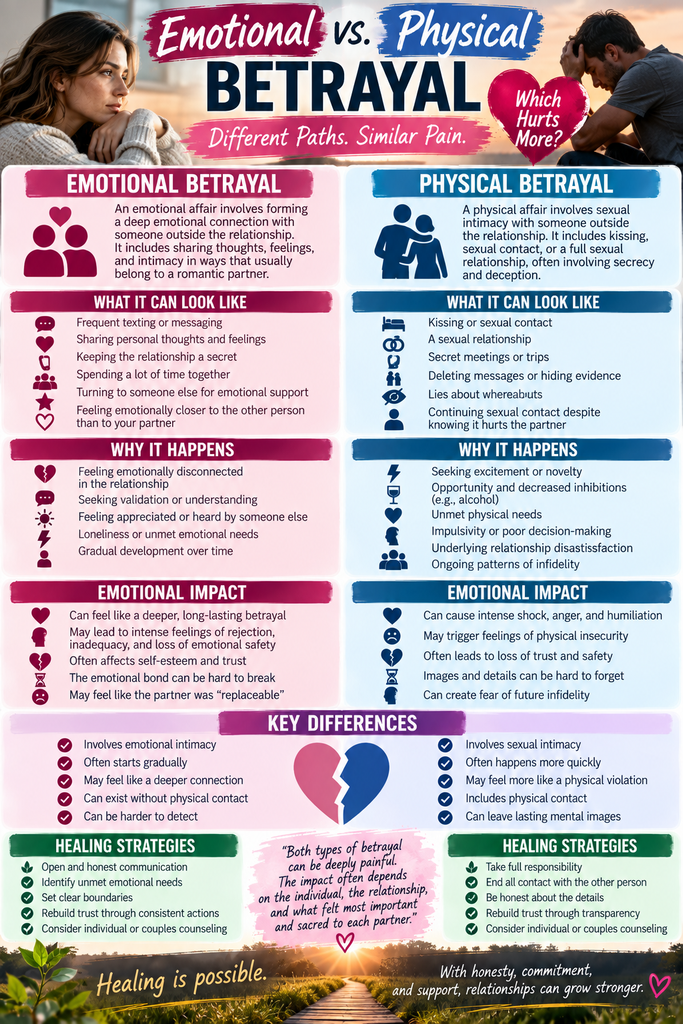
What Is Emotional Infidelity?
Emotional infidelity generally involves developing an intimate emotional connection outside a committed relationship that violates the couple’s understood boundaries. Sexual contact does not have to occur for a partner to experience the relationship as a betrayal.
Common characteristics may include:
- Hiding messages, calls, meetings, or the closeness of a friendship.
- Sharing intimate thoughts with another person instead of a partner.
- Becoming emotionally dependent on someone outside the relationship.
- Frequently thinking about or seeking attention from that person.
- Comparing a partner unfavorably with the other person.
- Becoming defensive when questioned about the relationship.
- Deleting conversations or minimizing how emotionally close the relationship has become.
Technology can make these boundaries particularly complicated because intimate relationships may develop through texting, social media, messaging platforms, or other online interactions. Marriage and family therapy literature recognizes emotional and technology-mediated relationships as important forms of relationship betrayal.
What Is Physical Infidelity?
Physical or sexual infidelity involves sexual behavior with someone outside a committed relationship when that behavior violates the couple’s agreed-upon boundaries.
For a betrayed partner, the pain may involve much more than the sexual act itself. They may experience intrusive thoughts about what happened, question whether other encounters occurred, worry about sexually transmitted infections, compare themselves with the other person, or wonder whether their relationship was ever what they believed it to be.
Physical betrayal can therefore affect emotional security, sexual intimacy, self-esteem, and trust simultaneously.
Why Emotional Infidelity Can Hurt So Deeply
Someone discovering an emotional affair may think, “You gave someone else the part of you that I thought belonged to our relationship.”
Emotional intimacy is often a foundation of long-term relationships. When intimate conversations, affection, emotional dependence, or private experiences are secretly transferred to another person, the betrayed partner may feel emotionally replaced.
The secrecy can be especially damaging. Finding months of messages or discovering repeated dishonesty may cause the person to question not only the affair but also their perception of the relationship.
Why Physical Infidelity Can Be Equally Devastating
Sexual exclusivity carries tremendous meaning in many relationships. Discovering that a partner crossed an agreed sexual boundary can trigger anger, rejection, jealousy, grief, humiliation, anxiety, and loss of emotional safety.
Research comparing hypothetical sexual and emotional infidelity has found differences in people’s reactions, but the findings do not support declaring one type universally more painful for everyone. Individual characteristics and the relationship itself influence the response.
Sometimes the Deception Hurts Most
The most damaging element may not fit neatly into the category of “emotional” or “physical.”
It may be the lying.
A partner may discover secret accounts, deleted messages, fabricated explanations, hidden meetings, financial spending, or repeated denials. The betrayed person may begin questioning memories they once trusted.
Was that business trip really business?
Were those late nights actually innocent?
How long was I being deceived?
What else don’t I know?
This loss of certainty can contribute to significant emotional distress. Research literature has described infidelity as a potential attachment injury, with some betrayed partners experiencing substantial anxiety, depression, intrusive thoughts, and trauma-like symptoms.
Self-Management Strategies After Infidelity
The immediate aftermath of discovering infidelity is usually not the best time to make every major decision about the future. Emotional reactions can be intense, and stabilization may need to come first.
Helpful self-management strategies include:
- Allow yourself to experience your emotions. You may feel anger, sadness, confusion, grief, fear, and even conflicting emotions.
- Avoid blaming yourself for another person’s decision. Relationship problems can involve both partners, but responsibility for crossing agreed boundaries belongs to the person who made that choice.
- Maintain basic routines. Sleep, nutrition, physical activity, and everyday responsibilities can become difficult during intense emotional distress.
- Limit compulsive investigation. Repeatedly checking phones or social media may sometimes intensify distress rather than provide lasting reassurance.
- Write down important questions. Organizing thoughts can make later conversations more productive.
- Establish boundaries. Decide what contact and communication you can tolerate while processing what happened.
- Avoid using alcohol or drugs to numb the pain. Temporary emotional relief can create additional problems.
- Seek professional support when needed. Individual counseling can help process betrayal even if the relationship ultimately ends.
Family Support Strategies
Family members and close friends often become an important support system after infidelity. However, support should not become pressure.
Helpful approaches include:
- Listen without immediately telling the person whether to stay or leave.
- Avoid statements such as “Just forgive them” or “You need to divorce immediately.”
- Provide practical assistance if the person is having difficulty functioning.
- Respect privacy rather than spreading details throughout the family.
- Encourage counseling when distress becomes overwhelming.
- Avoid turning children into messengers or asking them to choose sides.
- Support the person’s right to make their own relationship decisions.
The betrayed partner may need emotional support without having someone else determine the future of the relationship.
Community and Professional Support
Some couples choose separation after infidelity. Others decide to explore reconciliation. Neither outcome happens simply because someone says, “I’m sorry.”
Professional resources can include:
- Individual psychotherapy.
- Licensed marriage and family therapists.
- Couples counseling.
- Emotionally Focused Couple Therapy.
- Evidence-based approaches focused on rebuilding trust after affairs.
- Support groups for relationship betrayal or divorce.
- Faith-based counseling when consistent with the individual’s beliefs.
- Domestic violence resources if betrayal occurs alongside intimidation, threats, coercion, stalking, or abuse.
Professional therapy can provide structure for difficult conversations. The American Psychological Association describes several therapeutic approaches to infidelity recovery, including models focused on accountability, understanding relationship dynamics, rebuilding trust, and deciding what the future relationship should look like.
Can Trust Be Rebuilt?
Sometimes.
Research on couples who remained together following infidelity has identified frequent, meaningful communication and efforts to rebuild safety and trust as important parts of recovery. Experiences differ considerably between couples, however, and reconciliation is not guaranteed.
The Gottman approach describes affair recovery through three broad processes: Atone, Attune, and Attach. This framework emphasizes accountability for the betrayal, understanding the relationship and each partner’s needs, and gradually rebuilding emotional connection.
Rebuilding trust usually requires more than promises. It may involve honesty, accountability, consistent behavior, appropriate transparency, empathy for the injured partner, clear boundaries, and considerable time.
Forgiveness also should not be confused with forgetting. A person can heal without pretending the betrayal never happened, and deciding whether to reconcile is separate from emotional recovery.
Emotional vs. Physical Infidelity: Which Hurts More?
The answer depends on what the betrayal means to the person experiencing it.
One individual may find sexual contact impossible to move beyond. Another may be more devastated that their partner fell in love with someone else. For someone else, discovering months or years of deception may overshadow whether the affair was primarily emotional or sexual.
And many affairs contain both emotional and physical betrayal, making the distinction less meaningful.
Instead of asking only, “Which type of cheating is worse?” a more useful question may be:
“What was broken in this relationship, what would be required to restore emotional safety, and do both people genuinely want to do that work?”
Conclusion
Emotional and physical infidelity can both cause profound relationship distress. There is no universal rule declaring that one must hurt more than the other. The severity of the injury depends on the couple’s boundaries, the extent of secrecy, emotional involvement, sexual behavior, duration of the affair, repeated deception, and what the betrayal means to each partner.
Recovery begins with emotional stabilization and honest recognition of what occurred. Self-management can help the injured person regain stability. Family members can provide compassionate support without dictating decisions. Therapists and community resources can help individuals and couples process the betrayal, establish boundaries, and determine what comes next.
Some relationships survive infidelity and are rebuilt. Others end. In either situation, healing is possible. The goal is not simply to erase what happened—it is to restore emotional safety, self-respect, healthy boundaries, and the ability to trust one’s own judgment again.
Frequently Asked Questions
Here are some common questions:
1. What is emotional betrayal?
Emotional betrayal occurs when someone develops a secret or inappropriate emotional connection outside their committed relationship that violates the couple’s agreed boundaries. It may involve sharing intimate feelings, seeking emotional comfort from another person, hiding conversations, or becoming emotionally attached while withdrawing from a partner.
2. What is physical betrayal?
Physical betrayal involves sexual or intimate physical behavior with someone outside the relationship when that behavior violates established relationship boundaries. What counts as physical infidelity can vary between couples, which is why discussing expectations is important.
3. Which hurts more: emotional or physical betrayal?
There is no universal answer. Some people find sexual infidelity more painful, while others are more devastated by discovering that their partner developed a deep emotional attachment to someone else. The impact depends on the person, the relationship, the circumstances, and what the betrayal means.
4. Why can emotional betrayal hurt so deeply?
Emotional intimacy often represents closeness, trust, and exclusivity. Discovering that a partner shared private thoughts, affection, dreams, or emotional vulnerability with someone else can create feelings of rejection and emotional replacement.
5. Can emotional betrayal happen without physical contact?
Yes. An emotional affair can occur entirely through conversations, texting, social media, phone calls, or online communication. Physical contact is not required for secrecy and emotional intimacy to violate relationship boundaries.
6. Is texting another person considered cheating?
Not automatically. The context matters. Ordinary friendships and conversations are not inherently inappropriate. Warning signs may include hiding messages, deleting conversations, flirting, secretly discussing intimate relationship problems, or developing a connection that someone deliberately conceals from their partner.
7. Why does physical betrayal cause so much emotional pain?
Physical infidelity can trigger feelings of rejection, anger, humiliation, insecurity, jealousy, and loss of trust. Some people also experience intrusive thoughts about what happened or compare themselves with the other person.
8. Can both emotional and physical betrayal happen together?
Yes. An affair may begin as an emotional connection and later become physical, or physical contact may eventually develop into emotional attachment. When both occur, the betrayed partner may experience multiple layers of loss and deception.
9. Is secrecy a warning sign of betrayal?
It can be. Privacy and secrecy are not necessarily the same thing. Healthy relationships allow reasonable privacy. However, deliberately hiding conversations, meetings, accounts, spending, or the nature of another relationship because a partner would object may indicate that an important boundary has been crossed.
10. Can betrayal cause trauma-like symptoms?
Some people experience significant psychological distress after discovering infidelity, including intrusive thoughts, sleep disturbances, anxiety, difficulty concentrating, hypervigilance, emotional numbness, or repeatedly reviewing what happened. Persistent or severe symptoms may benefit from professional mental-health support.
11. Why does the lying sometimes hurt more than the affair?
Repeated deception can make someone question their understanding of the relationship. They may begin wondering which conversations, trips, explanations, or memories were genuine. The resulting loss of emotional safety can sometimes become as painful as—or more painful than—the sexual or emotional behavior itself.
12. Does infidelity mean the relationship was already unhealthy?
Not necessarily. Relationship problems can increase vulnerability to affairs in some situations, but infidelity can also occur in relationships that appeared relatively stable. Problems within a relationship should be addressed, but they do not automatically justify violating agreed boundaries.
13. Is the betrayed partner responsible for the affair?
Relationship difficulties can involve both partners, but responsibility for choosing to violate relationship boundaries belongs to the person who made that decision. Understanding relationship problems is different from assigning responsibility for infidelity.
14. Can a relationship survive betrayal?
Yes, some relationships recover after infidelity, while others end. Recovery usually requires more than an apology. Accountability, honesty, empathy, consistent behavior, appropriate transparency, boundaries, communication, and sometimes professional counseling may be necessary.
15. How can someone manage their emotions after discovering betrayal?
Helpful self-management strategies include:
- Allow yourself time to process anger, sadness, grief, and confusion.
- Avoid making every major decision during the initial emotional shock.
- Maintain sleep, nutrition, exercise, and basic routines.
- Talk with trusted people who will listen without trying to control your decisions.
- Establish temporary boundaries if conversations become overwhelming.
- Avoid using alcohol or drugs to numb emotional pain.
- Consider individual counseling for persistent distress.
16. Should you immediately ask for every detail about an affair?
Not necessarily. Some information may be necessary to make informed decisions and rebuild trust, but graphic or unnecessary details can sometimes intensify intrusive thoughts. A couples therapist experienced in infidelity recovery can help determine what information is useful.
17. How can family members support someone experiencing betrayal?
Family members can listen without judgment, respect confidentiality, provide practical assistance, and avoid pressuring the person to forgive, reconcile, separate, or divorce immediately. The individual experiencing the betrayal needs space to make their own decisions.
18. Should children be told about infidelity?
Children generally should not be placed in the middle of adult relationship conflicts or asked to choose sides. What they are told should depend on their age, developmental level, and how family circumstances are changing. Parents can explain necessary changes without providing inappropriate adult details.
19. Can couples counseling help after infidelity?
It can. Couples counseling may help partners understand what happened, establish boundaries, improve communication, address relationship problems, and determine whether reconciliation is realistic. Individual therapy may also be valuable for either partner.
20. Does forgiveness mean staying together?
No. Forgiveness and reconciliation are separate decisions. Someone may eventually release anger while deciding that returning to the relationship is not healthy for them.
21. How can trust be rebuilt after betrayal?
Trust generally returns through repeated trustworthy behavior rather than promises alone. Helpful steps include ending the outside relationship, communicating honestly, accepting responsibility, respecting agreed boundaries, answering reasonable questions, demonstrating consistency, and allowing time to heal.
22. How long does it take to recover from infidelity?
There is no standard timeline. Recovery depends on factors such as the duration and nature of the betrayal, extent of deception, previous relationship difficulties, willingness to accept responsibility, individual coping styles, and whether both partners want reconciliation.
23. When should someone consider ending the relationship?
That decision is personal. However, repeated infidelity, continued deception, refusal to end an affair, manipulation, coercive control, threats, or abuse are serious concerns. Safety should take priority whenever abuse is present.
24. Can someone heal even if the relationship ends?
Yes. Healing does not depend on reconciliation. Individual therapy, supportive relationships, healthy routines, boundaries, and rebuilding self-confidence can help someone recover whether the couple remains together or separates.
25. What is the most important lesson about emotional vs. physical betrayal?
Instead of trying to determine which form of infidelity is universally “worse,” it may be more helpful to examine what boundary was violated, how trust was damaged, what the betrayal meant to each partner, and what would be required to restore emotional safety.
Both emotional and physical betrayal can cause significant pain. Healing is possible, but it usually requires time, support, honest communication, healthy boundaries, and—when reconciliation is attempted—meaningful accountability from the person who broke the trust.
Video: When trust is broken: Emotional vs. Physical 💔 #relationships #trust #sad