Setting boundaries with a loved one who is struggling with addiction can be one of the most difficult—and most important—steps you take. Healthy boundaries are not about punishment, control, or withdrawing love. Instead, they protect your emotional, physical, and financial well-being while encouraging your loved one to take responsibility for their choices. Clear, compassionate boundaries can reduce enabling behaviors, improve communication, and create healthier relationships for everyone involved. This guide explores practical strategies for setting and maintaining boundaries with confidence, what reactions you may encounter, and how to stay consistent without being overwhelmed by guilt or self-doubt. Remember, taking care of yourself is not selfish—it is an essential part of supporting both your own well-being and your loved one’s recovery journey.
Why Boundaries are Really Important When Dealing with Addiction
If you’re close to someone who’s dealing with an addiction, boundaries can feel a bit confusing at first. Sometimes it might seem like setting limits is harsh or unloving, but in reality, clear boundaries give both you and your loved one the structure everyone needs. I’ve seen how people start to feel more uplifted and less stressed when they give themselves permission to say “no” and to protect their own needs.
Boundaries keep you from enabling harmful behaviors, and they create space for the person with an addiction to take responsibility for their own recovery. These limits are not about putting up walls; they’re about building healthy, respectful relationships, especially when things are tough. You allow yourself to step up for your own wellbeing while still caring about the other person.
What Healthy Boundaries with Addicts Look Like
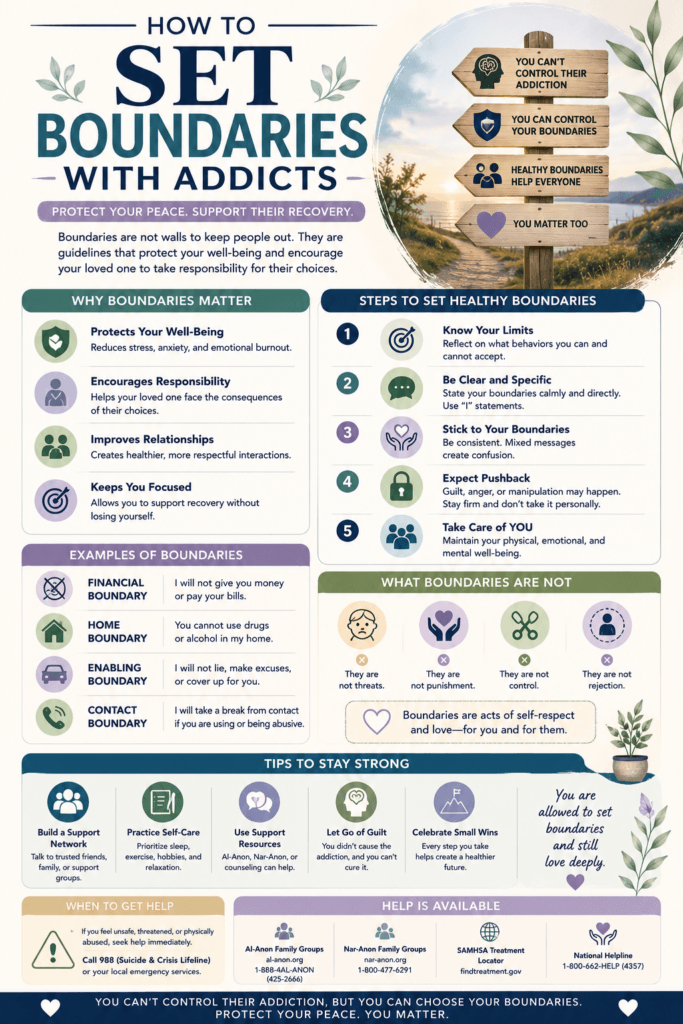
Healthy boundaries are not about controlling someone else, but about clarifying what you will and won’t allow in your own life. Here’s what that might look like in real situations:
- No to financial support for unhealthy behavior: You might decide not to give money that could be used for substances, but you could offer help in other ways, like giving a ride to work or rehab appointments.
- Refusing to cover up consequences: You’re not responsible for making excuses for missed work, unpaid bills, or other fallout.
- Setting physical or emotional limits: You can ask for distance if their behavior gets out of hand or makes you feel unsafe. This might mean stepping out for a walk or even asking them to leave your home if they won’t respect your space.
- Maintaining your own routines: Keeping up with your hobbies, work, and self-care, even when you have a crisis, helps keep your life balanced.
It’s also important to remember that boundaries should change as your needs and circumstances do. Adjust them to fit your life, not just the other person’s situation.
Steps to Start Setting Boundaries With Addicts
The hardest part of setting boundaries is often just getting started. Here’s a practical guide that’s worked for me and others:
- Figure out what matters to you: Think about what you need for your own emotional and physical health. If you don’t want to argue late at night or lend money, those can be your boundaries.
- Communicate clearly and calmly: Use “I” statements. For example, you might say, “I can’t lend you money, but I can help you track down a meeting to go to.”
- Anticipate pushback: Some people get upset or try to test your limits, especially at the start. Remind yourself, this isn’t about punishing them; it’s about looking after yourself.
- Stick with your decision: Consistency is really important. People with addiction sometimes push boundaries, but repeating your limits will eventually set the tone.
- Don’t expect instant change: Boundaries take time to work, and things might get a bit rocky at first. It’s totally normal for there to be ups and downs as everyone gets used to the new rules.
Jot down your boundaries somewhere visible, like on your phone or a sticky note, so you stay clear about your own needs. It’s easy to lose track in a heated moment, but a reminder keeps you on point.
Common Challenges and How to Deal With Them
Anyone who’s spent time with someone struggling with addiction knows that boundary-setting isn’t a one-and-done deal. Here are some bumps you might hit and ways to handle them:
- Feeling guilty: It’s normal to feel bad at first. Remember, boundaries help both of you grow. Give yourself compassion and maybe talk to a friend or therapist about it until you feel more at ease.
- Manipulation or anger: Addicts sometimes try to guilt-trip or argue when you say “no.” Keeping calm and repeating your boundary without getting into a big debate is really helpful.
- Worrying about their safety: If you’re worried about their safety, it’s okay to reach out for outside support, such as counselors, interventionists, or hotlines. Your wellbeing matters too.
- Concern over losing the relationship: Setting boundaries might feel scary because you worry they’ll shut you out. Remember, healthy relationships require respect for your limits. If you don’t stand up for what you need, resentment can grow quickly.
Rely on outside support or support groups if these challenges start to feel overwhelming. Sometimes talking with others who have lived through similar situations makes a huge difference.
When Boundaries Are Ignored
If someone you care about keeps crossing your boundaries, you have every right to follow through on your stated limits. That could mean asking for space, limiting communication, or even calling for professional help if things get dangerous. Your safety and emotional health always come first. It might take more than one try before things shift, and it’s okay to reset your boundaries as needed.
Different Types of Boundaries To Consider
Boundaries come in all shapes and sizes. Here are a few you might find helpful when someone you know is dealing with addiction:
- Physical boundaries: Limits on physical space or interactions, like making a rule against substance use in your home.
- Emotional boundaries: Not letting their anger or distress throw you off, and declining to get involved in arguments or drama.
- Time boundaries: Protecting your own schedule by saying “no” to late-night calls or requests unless it’s a real emergency.
- Financial boundaries: Keeping your bank account separate, not cosigning loans, and not paying their bills.
- Social boundaries: Limiting involvement in their drama or refraining from activities where substance use is likely.
- Communication boundaries: Setting rules around how and when you want to talk, especially when conversations start to get heated or negative. This can be as simple as saying, “If I feel upset, I’ll step away, and we’ll finish this when things cool down.”
Mixing and matching these boundaries will help you cover a wide range of situations. Make sure you check in with yourself to see what works best for you as time goes on.
How Boundaries Help Both You and the Person With Addiction
Even though it might feel tough at first, boundaries are actually pretty helpful for everyone involved. For you, it means less stress, more time for self-care, and less anger or resentment. For your loved one, it removes the safety net that sometimes lets their addiction continue. It might encourage them to face the real-life impact of their choices, which is sometimes needed for change to get started.
Many addiction counselors, including those at SAMHSA, recommend strong boundaries as a core part of supporting loved ones, while still encouraging their adventure toward recovery. Healthy limits also help you rebuild trust and focus on healing both yourself and your relationship. Over time, these shifts can improve everyone’s wellbeing.
Extra Tips for Holding Boundaries
- Lean on support: I’ve found groups like Al-Anon or therapy to be really helpful when you need backup or want to swap ideas with people who get it.
- Focus on your own health: Exercise, hobbies, and friends—these are super important, so you’re not always caught up in someone else’s crisis. Practice self-care wherever you can, like taking walks, journaling, or spending time outdoors.
- Remember self-respect: Saying “no” actually shows respect for yourself and for your relationship with your loved one.
- Be patient: Old patterns are hard to break, and everyone messes up now and then, including you. If you bend your boundary once, it’s not the end of the world. Get back on track next time. Real growth comes over time with practice and gentle reminders to yourself.
- Communicate boundaries in writing: If things get tense easily, writing down your boundaries in a letter or note can help you stay clear and calm and give the other person a chance to digest them without an argument in the heat of the moment.
Frequently Asked Questions About Boundaries With Addicts
People have a lot of questions about boundaries, so here are some that come up often:
Question: What’s a good way to start setting boundaries if I’ve never done it before?
Answer: Start small. Pick one or two boundaries that feel most urgent. Communicate them clearly, and stick to them as much as you can. The more you practice, the easier it gets. It’s okay to learn and grow along the way.
Question: What if the person gets really angry or cuts me off?
Answer: That’s tough, but sometimes people react badly when you change the rules. Their feelings aren’t your fault. Over time, relationships can get better if you stay clear and compassionate. If there’s a break in the relationship, focus on your own healing and keep your door open if things ever get healthier down the road.
Question: Should I seek professional help?
Answer: If situations get unsafe or you’re struggling, it’s always okay to reach out to a therapist, counselor, support group, or even local authorities if you need to protect yourself.
Question: Can my boundaries make things worse?
Answer: You might worry about upsetting your loved one, but firm, kind boundaries are unlikely to actually cause harm. They may get angry, but in the long run, boundaries provide structure and care for everyone involved. If you keep feeling anxious, talk your feelings over with a support group or counselor who understands addiction.
Final Thoughts
Setting boundaries with someone battling addiction isn’t about turning your back; it’s about protecting your sanity and keeping your relationship as healthy as possible. Boundaries let you care in a way that doesn’t harm you or unknowingly support the addiction. Give yourself credit for sticking up for what you need, and remember it’s okay to get help along the way. By staying patient, flexible, and kind with yourself, you make space for lasting change and healthier connections, no matter what challenges you face.
Video: When Saying No Saves Their Life #Boundaries #Recovery