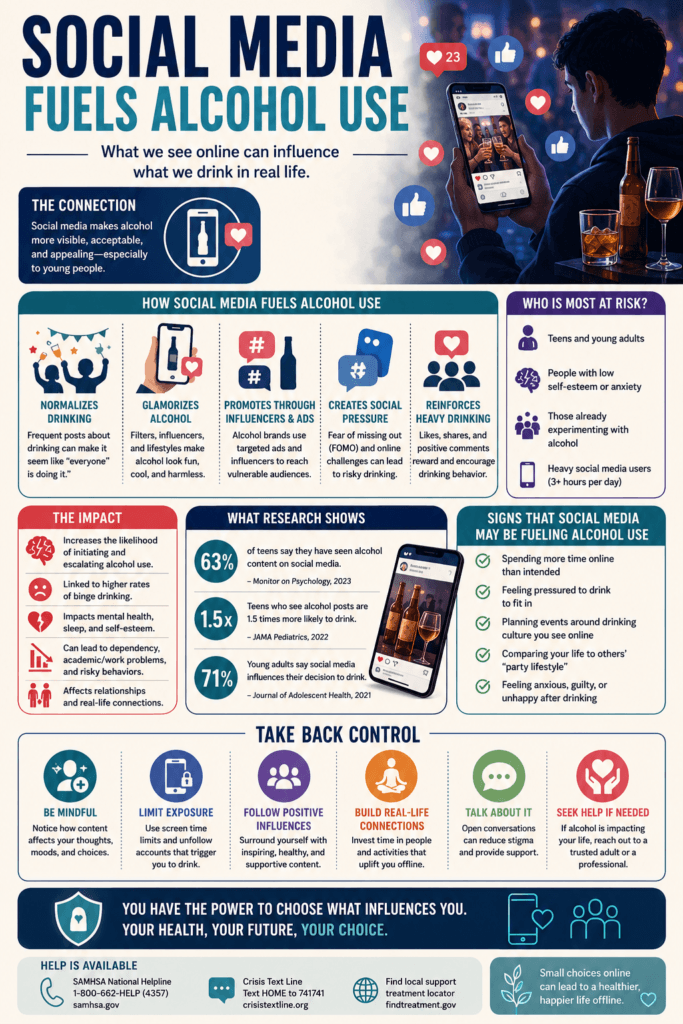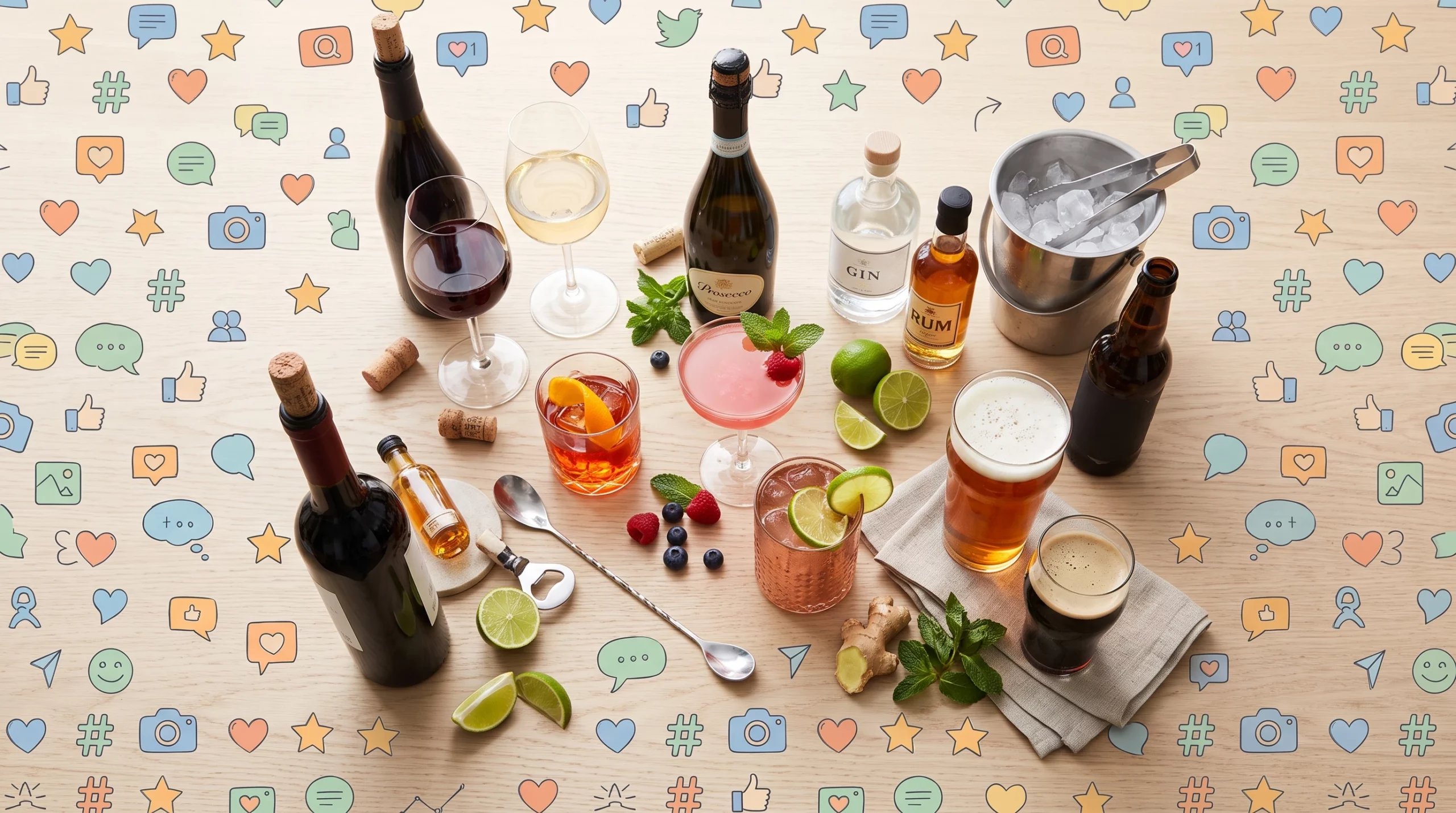
Social media has changed a lot about how people interact, especially when it comes to the way we think about alcohol. From sponsored posts to personal stories that make drinking look exciting or glamorous, social media can influence a lot of drinking choices. If you’re curious about how all this works, this guide covers how social media fuels alcohol abuse and why it’s worth being aware of these influences.
The Role of Social Media in Shaping Alcohol Culture
Social media has a pretty big say in what people see as normal or cool, and drinking is front and center in plenty of posts, ads, and stories. Big brands, influencers, and even friends add to the idea that drinking is a fun, everyday thing. Studies show that regularly seeing content featuring alcohol can nudge people toward drinking more themselves.
Alcohol marketing is nothing new, but social media lets it reach people in a way that feels personal and constant. Videos, memes, and photos of parties, cocktails, or relaxing with a drink can make alcohol seem like it’s always part of fun or social moments. Even hashtags like #FridayVibes or #WineOClock turn drinking into a trending experience.
Compared to old-school ads on TV or billboards, social media feels much more direct. If someone you follow shares a drink recipe or a night out, it can seem way more relatable than an ad on the side of a bus. This frequent exposure slowly shifts what feels normal, especially for young people navigating what’s “in.”
This eye-catching content doesn’t just show up—it’s carefully crafted to make drinking look more appealing and part of a desirable lifestyle. Users scrolling through their feeds see not just one-off promotions, but a steady drumbeat of images, stories, and memes that normalize and sometimes glamorize alcohol. This regular dose of content can slowly add to the idea that drinking is just another part of life, especially when it comes from people you trust or admire online.
How Alcohol Makes Its Way into Your Feed
Alcohol content shows up in a bunch of different ways on social media. Here are some of the main ones:
- Influencer Posts: Popular users often share sponsored posts or personal stories involving alcohol, sometimes without marking them as ads.
- Brand Ads: Alcohol brands use targeted ads, trendy visuals, and interactive giveaways that feel fun.
- User-generated content: Every day, people post pictures of drinks, parties, or celebrations (think boomerangs of shots or photos of wine nights).
- Memes & Challenges: Viral jokes and challenges encourage drinking or make light of heavy drinking sessions.
- Livestreams: Drinking “games” or parties streamed live blur the lines between offline partying and the digital world.
The mix of these factors creates a steady stream of alcohol-related content, making drinking look pretty routine and sometimes even encouraged by the wider community. It’s this constant, diverse flow—ranging from brand campaigns to friends’ selfies—that keeps drinking top of mind for users.
Why Social Media Content Can Be So Persuasive
A lot of social media’s power comes from its emotional pull and real-time conversations. Here are some reasons alcohol content can be so convincing:
- Relatability: When you see friends, people you admire, or influencers enjoying a drink, it feels familiar and less like marketing.
- FOMO (Fear of Missing Out): Posts from parties or fun social settings can trigger a fear of being left out, which can nudge some people to drink to fit in.
- Reward Loops: Likes and comments on alcohol-related posts reinforce the idea that drinking gets attention and approval.
- Constant Exposure: Because content is always updating, it’s easy for drinking to seem like an ongoing theme in day-to-day life.
Studies have found that regularly seeing drinking online, especially from friends, can make people more likely to drink, and sometimes to binge drink. Social media can also make drinking seem like a solution for stress, boredom, or social anxiety. The effect can be subtle yet strong, especially with daily exposure.
Peer influence is also heightened online. Seeing someone in your circle share a “Drink of the Day” photo or post about wild nights out makes it harder to remember that these moments are only snapshots, not the full picture. This climate can easily make social media users underestimate the risks or consequences associated with regular drinking.
Spotting Common Pitfalls and Risks
Seeing drinking as “no big deal” on social media can cause a few problems:
- Normalizing Binge Drinking: Heavy drinking can start to look normal, especially when party photos or wild nights get the most likes.
- Peer Pressure: The idea that “everyone is doing it” can add pressure, especially for teenagers or young adults.
- Misinformation: Myths about hangover cures, “healthy” cocktails, or what’s considered safe drinking spread quickly and can lead to risky decisions.
- Reduced Awareness of Consequences: Social media rarely shows the negative sides of drinking, like regret, health consequences, or addiction.
It’s easy to forget social media is only a highlight reel, and all the filters and edits can hide the real consequences of heavy drinking. This can make it seem like the only outcomes of drinking are fun or relaxing, masking the real risks tied to alcohol abuse.
The problem can be even more serious for those who are already struggling with moderation; seeing alcohol and party culture everywhere can create a feeling of isolation or make someone second-guess their own decisions to cut back. That steady stream of positive, shiny moments doesn’t show the full story.
Understanding How Alcohol Brands Target Users Online
Alcohol companies invest heavily in social media for a reason. Smart use of hashtags, microinfluencers, and targeted ads enables them to reach people with personalized content. Many brands use seasonal campaigns, limited edition drinks, or “party packs” to get people excited online. The lines between organic posts and ads are often blurred, so it’s not always clear when you’re seeing pure marketing.
- Targeted Ads: Algorithms serve ads based on what you like, watch, and interact with, so alcohol content can end up in your feed if you click or engage with it just a few times.
- Sponsorships: Influencers might share next-level cool drink recipes or party tips that are actually paid promotions.
- Brand Challenges: Alcohol brands launch shareable challenges (such as creative cocktail contest videos), prompting followers to help spread the word.
These tactics work together to keep alcohol on your mind, and the transparency about what’s an ad and what’s just “fun” content isn’t always there. Social media algorithms can deliver a never-ending loop of these marketing efforts, brewing familiarity and interest without you even noticing.
What You Can Do to Stay Aware
Social media isn’t going away, and seeing alcohol-related content now and then isn’t a problem for everyone. Still, being aware of how this content works can help you keep your choices in check.
- Mute or Unfollow: If certain pages or people constantly share content that makes you feel pressured to drink, there’s nothing wrong with taking a break or unfollowing them.
- Limit Engagement: Liking or sharing alcohol content means you’ll get served more similar posts; cutting back helps limit how much you see.
- Talk About It: Open up chats with friends or family about how drinking looks online versus in real life to help put things in perspective.
- Seek Credible Info: Follow or bookmark groups that focus on wellness or fact-based content around healthy habits.
- Privacy Settings: Review ad preferences and manage targeted ads on your favorite platforms to change what shows up in your feed.
If you find social media making it hard to control drinking, talking to a doctor or counselor, or reaching out to a support group is a smart step. Even just learning more about how these platforms work can help you make choices that feel right for you. Staying sharp and making conscious choices is key when scrolling. Remember, social media is only part of the bigger picture of your life.
Challenges Facing Young Audiences
Teenagers and younger adults are especially at risk when it comes to alcohol promotion on social media. This group tends to spend more time online and is more influenced by images, trends, and influencers’ popularity. With algorithms sometimes amplifying content even when a user tries to avoid it, it’s easy to feel surrounded by messages that connect fun or popularity with drinking.
- Hidden Marketing: Ads and posts aren’t always labeled, making it harder to distinguish genuine recommendations from marketing.
- Social Proof: When peers share posts of drinking, it ramps up the idea that heavy drinking or experimentation is common or safe.
- Accessibility: Content and ads may not always be filtered by age, so underage users see drinking as socially acceptable or even encouraged.
Parents and caregivers talking openly about the realities of alcohol can make a difference, as can encouraging media literacy. Helping young people spot the not-so-obvious marketing tactics at play goes a long way. Schools and community programs can also provide workshops or resources to make this learning easier and more relatable.
FAQ: Social Media and Alcohol Abuse
Question: How can I tell if a post is sponsored by an alcohol brand?
Answer: Look for tags like #ad or #sponsored, but keep in mind that not all posts are clearly marked. If a post heavily features a brand or specific product, there’s a good chance it’s linked to a business partnership.
Question: Does everyone who sees drinking online develop a problem?
Answer: No, but frequent exposure can increase the chances of seeing alcohol as a daily habit, which adds risk for people who are vulnerable or already struggling with moderation.
Question: What should I do if social media is making it harder for me to avoid drinking?
Answer: Try to limit alcohol-related accounts, talk to people you trust, and consider reaching out to a professional if it starts affecting your wellbeing.
Key Takeaways: Navigating Social Media and Alcohol Content
The way social media shows alcohol can influence what people think is normal or even expected. With constant exposure, easy access to ads, and clever marketing, it’s easy to pick up on habits before even realizing it. Being more conscious of these influences helps put you back in charge, so you can scroll, swipe, and like on your own terms. Keep questioning what you see and remember that managing your feed can make a big difference to your health and happiness.
Video: How Instagram Normalizes Heavy Drinking #SocialMediaEffect #Relatable