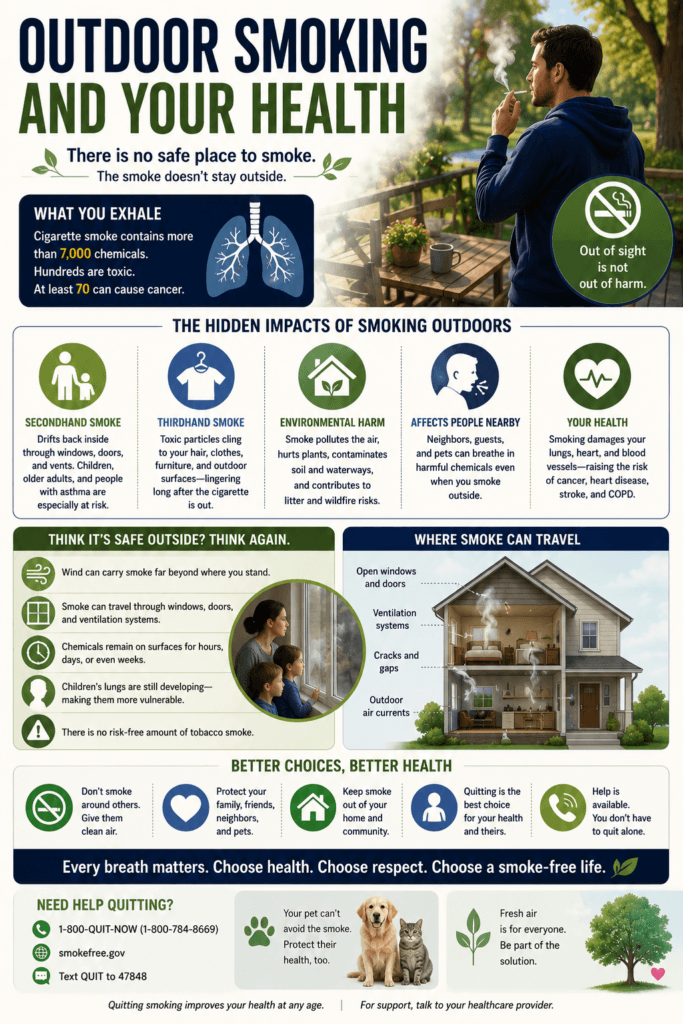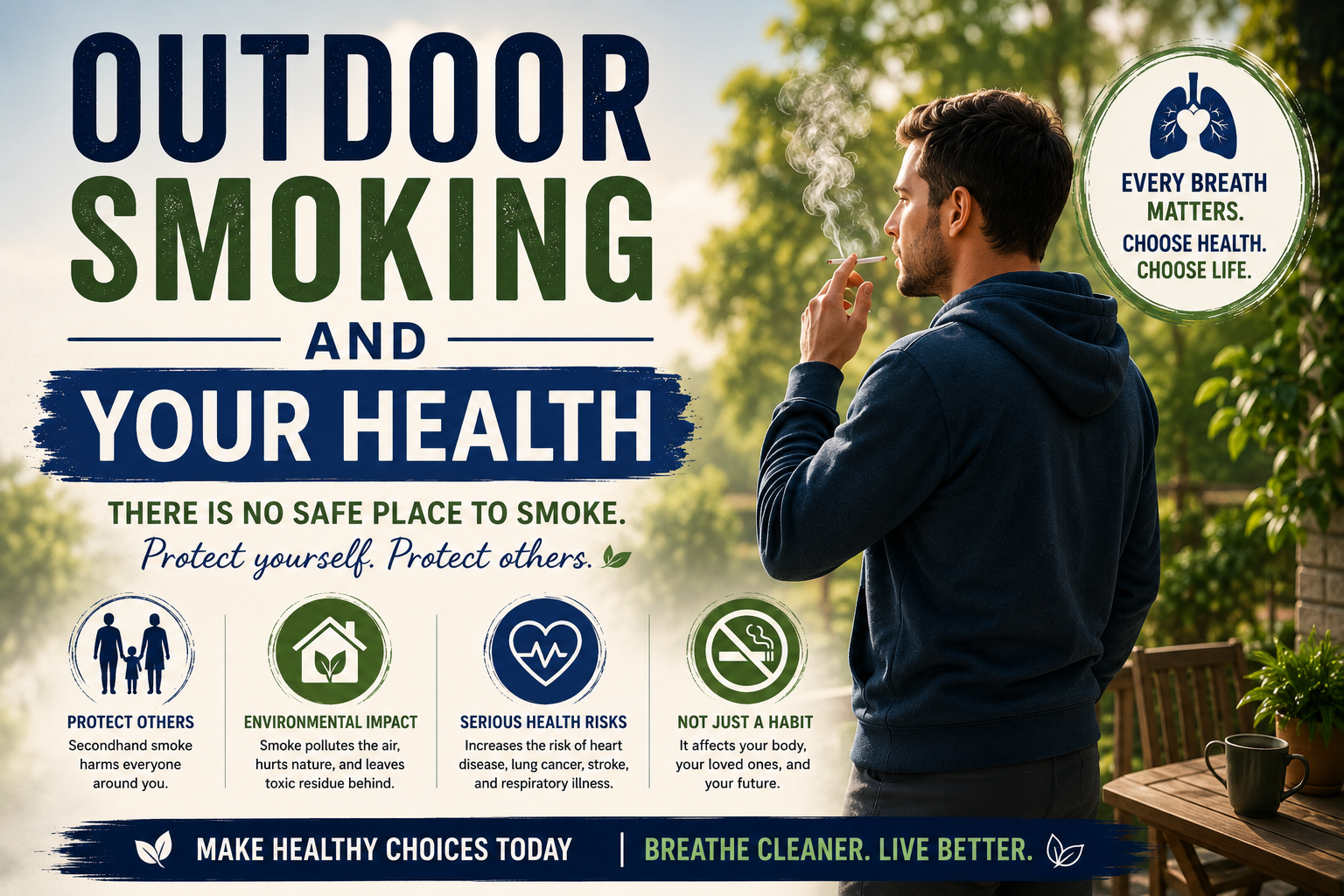
Many people believe that smoking outdoors eliminates most of the risks associated with tobacco smoke. While outdoor settings generally reduce the concentration of secondhand smoke compared with enclosed spaces, research shows that people nearby can still be exposed to harmful chemicals, especially in crowded areas or when they are close to someone who is smoking. In addition, tobacco smoke leaves behind toxic residue, known as thirdhand smoke, on clothing, skin, and other surfaces, while cigarette litter contributes to environmental pollution. Understanding the health and environmental effects of outdoor smoking can help individuals make informed decisions that protect both themselves and those around them.
The Basics of Smoking Outdoors
Smoking outside is pretty common, especially in places where indoor smoking isn’t allowed. Parks, patios, building entrances, and sidewalks are usual spots. Even though open air moves smoke around fast, it doesn’t make all the effects disappear. Knowing how outdoor smoke spreads and who it impacts, especially in shared spaces, makes a difference for everyone involved.
The idea behind outdoor smoking rules began to emerge alongside laws banning indoor smoking. Cities and countries began establishing designated smoking areas to keep indoor air cleaner and protect non-smokers. This seemed like a win for everyone. Now, outdoor smoking zones keep popping up near offices, universities, and public spots, but they come with their own set of challenges and side effects.
How Outdoor Cigarette Smoke Really Behaves
When someone smokes outside, the smoke plume doesn’t just vanish into thin air. The chemistry of outdoor air helps break up smoke faster than it does indoors, but outdoor smoke hangs around longer than most people think. Wind can carry particles across yards, apartment balconies, or crowded sidewalks, sometimes far enough to bother folks who aren’t even nearby.
Secondhand smoke contains thousands of chemicals, including fine particles that can linger for quite a while before settling. These particles disperse more in the open, but sensitive groups like kids, the elderly, or people with asthma can still pick them up even from a distance. So, outdoor smoke can linger, especially during calm weather or near walls that block airflow. Even larger outdoor gatherings, such as festivals or crowded patios, can make these effects more noticeable. Fresh air might seem to push the smoke away, but that just shifts it into other spaces where others might breathe it in. If the air is still, smoke lingers in clusters, and anyone walking through can inhale those particles without realizing it.
- Wind Direction: Smoke travels wherever the wind blows, sometimes pooling in corners, under overhangs, or hanging around patios.
- Obstacles: Fences, trees, umbrellas, and walls can keep smoke from moving on, trapping it at face level longer than expected.
- Humidity and Temperature: On cool, still mornings or muggy days, smoke tends to linger, leaving outdoor areas smoky for longer.
A good example is apartment balconies—people often step outside thinking the smoke will disappear, but if the breeze carries it upward, it can enter neighboring apartments through open windows or get trapped by walls.
Things Worth Knowing Before Smoking Outdoors
Lighting up outside might feel polite or considerate, but there are things you might not have thought about that come with each puff. Here are a few points to keep in mind:
- Litter: Cigarette butts are the world’s most common form of litter. Tossing them on the ground, even “just once”, can add up fast, clogging drains or polluting parks and waterways.
- Odor: Smoke clings to clothes and lingers in the air, sometimes seeping through open windows or doors and bothering neighbors or passersby.
- Health Concerns: Even brief outdoor exposure to secondhand smoke can irritate eyes, worsen allergies, or trigger asthma in sensitive individuals.
- Local Rules: Some spaces, such as public parks, campuses, or apartment buildings, have anti-smoking policies that include outdoor areas. Fines are not uncommon for breaking these rules.
The Environmental Impact
Outdoor smoking leaves a mark on the environment. Most cigarette filters are made of plastic fibers that don’t break down easily. Tossed cigarette butts end up washing into rivers and oceans, where they release harmful chemicals and put wildlife at risk. On top of that, the chemicals in tobacco smoke settle into the soil and build up over time. Even if the smoke itself isn’t visible for long, its chemical traces stick around much longer.
Fire Risk
Dry conditions, summer heat, and careless disposal make outdoor smoking a big fire hazard, especially near grassy fields or wooded parks. Many wildfires are sparked by discarded cigarette butts, leading to massive property and environmental damage.
Health Effects for Smokers and Non-Smokers
Taking a smoke outside can limit direct exposure to others, but it doesn’t eliminate the risk completely. Here’s what happens to both smokers and people nearby:
- For the Smoker: The risks are the same outdoors; cancer, respiratory illness, heart disease, and more. For some, smoking outside might help avoid smoking indoors, which reduces the “thirdhand smoke” residue left on surfaces.
- For Those Nearby: In open air, the dose of secondhand smoke is usually lower than indoors, but it still has an impact, especially for those who are close by or standing downwind.
- For Children and Pets: Playgrounds and patios where smoke lingers can put kids and pets at risk. Pets can suffer from breathing in smoke, too, and might even eat cigarette butts if left on the ground.
It’s also worth mentioning that outdoor gatherings involving children, like birthday parties or playdates in parks, can expose kids to smoke in ways that aren’t always obvious. Small children playing close to the ground are especially at risk from both leftover smoke particles and discarded butts.
Thirdhand Smoke Concerns
Residue from outdoor smoking, called thirdhand smoke, can cling to benches, tables, umbrellas, and even playground equipment. Over time, these sticky chemicals build up, turn into dust, and can be picked up by shoes, clothes, and skin. Many people aren’t aware that even after the visible smoke is gone, these pollutants persist, affecting anyone who comes into contact with contaminated surfaces.
Steps for Reducing the Effects of Outdoor Smoking
I’ve seen people take a few simple steps that make a difference in reducing the impacts of outdoor smoking. These can help everyone breathe a little easier:
- Choose Open Spaces: Smoke away from doorways, windows, vents, or high-traffic areas. Picking a spot with good airflow reduces how much smoke lingers.
- Use Portable Ashtrays: Carry a pocket ashtray or use dedicated bins to keep butts off the ground. Some reusable containers are small enough to fit in your pocket or bag.
- Check Local Policies: Know the smoking rules for public parks or apartment complexes before lighting up. Rules can change, so checking in with posted signs helps prevent surprises.
- Keep Away from Groups: Avoid smoking near kids, pets, or crowds; step further away when possible. If you see a group coming, move to give them space.
- Dispose of Butts Properly: Make sure cigarette butts are fully out and in a secure container. Never flick them into bushes or soil, as even a small ember can cause a fire.
Practical Tips for Responsible Outdoor Smoking
Managing the impact of smoking outside comes down to awareness and some smart habits. Here’s how I handle it when I can’t avoid smoking in a public spot:
- Stand Upwind: Keep the smoke blowing away from people as much as possible. If the wind shifts, try to move or pause smoking until it clears.
- Time Your Smoke: Choose less-crowded times to reduce others’ exposure. Early mornings or late evenings might mean fewer people around.
- Stow Your Litter: Keep a reusable ash container handy for ash and butts. Empty it regularly in a proper bin.
- Double-Check Fire Danger: Check for bans or warnings during dry weather; sometimes it’s just better not to risk it.
Building thoughtful habits over time not only protects others but also makes public spaces nicer for everyone. Responsible outdoor smoking relies on a community mindset—looking out for others, handling trash, and staying aware of your surroundings.
Outdoor Smoking and Community Spaces
Shared spaces like parks, beaches, and cafes are where outdoor smoking rules are most often tested. I’ve noticed that clear signs, handy disposal bins, and a bit of mutual respect help a lot. If you’re in charge of a community area, providing well-marked smoking and nonsmoking zones keeps things calmer. For apartment buildings, open communication between residents about preferred smoking times and spots can ease tension before it turns into bigger conflicts.
- Smoking Zones: Placing them far from entrances and play areas helps keep smoke out of busy spots. Signs should be visible, and smoking areas should be easy to find so nobody is left guessing.
- Community Guidelines: Posting reminders about littering and safe disposal goes a long way in keeping shared spots clean. It’s surprising how many more people obey the rules when simple instructions and bins are nearby.
It can be useful for communities to occasionally hand out portable ashtrays or host clean-up days to make a dent in lingering litter. Even small efforts in public education about environmental harm can change habits for the better over time.
Frequently Asked Questions
Here are answers to a few questions I often come across about outdoor smoking:
Question: Does smoking outdoors eliminate secondhand smoke risks?
Answer: Outdoor air does dilute smoke, but wind can blow particles into nearby areas. While the risks are lower than indoors, they’re not gone entirely, especially for people standing close by.
Question: Can cigarette butts really harm the environment?
Answer: Yes. Butts are made mostly of plastic and contain trapped toxins. They end up in soil and waterways, harming animals and polluting parks and beaches.
Question: Are there places where outdoor smoking is banned?
Answer: Many cities have banned smoking in outdoor public spaces like parks, beaches, and stadiums. Fines can apply even in outdoor areas, so it’s worth double-checking the rules before lighting up.
Question: Why does smoke sometimes seem to stick around longer outside?
Answer: When the air is still or humid, smoke particles linger close to the ground. Physical obstacles like walls or hedges trap smoke near people, even outdoors.
Key Takeaways for Smokers and Non-Smokers
Smoking outdoors differs from smoking indoors, but it doesn’t eliminate all the effects. From the drift of secondhand smoke to the impact of cigarette litter, there are direct and indirect ways outdoor smoking touches everyone. Making informed, considerate choices, whether you’re lighting up or just sharing a space, helps keep things safer and friendlier for all. Responsible smoking is possible, but it comes down to staying aware and looking out for your community.
Video: Outdoor Smoking Won’t Save You #toxins #shorts