Glucagon-like peptide-1 (GLP-1) receptor agonists have transformed the treatment of type 2 diabetes and obesity by improving blood sugar control, promoting weight loss, and reducing the risk of certain cardiovascular complications. More recently, researchers have discovered that these medications may also influence the brain’s reward and motivation pathways, leading to growing interest in their potential role in treating substance use disorders. Early laboratory studies, observational research, and emerging clinical trials suggest that GLP-1 medications may reduce cravings, decrease the rewarding effects of addictive substances, and lower the risk of relapse for conditions involving alcohol, nicotine, opioids, stimulants, and other substances. Although these findings are promising, GLP-1 medications are not currently approved specifically for the treatment of substance use disorders, and additional clinical research is needed to determine their safety, effectiveness, and long-term role in addiction care. Understanding this emerging area of research helps patients, families, and healthcare professionals appreciate both the potential benefits and the current limitations of these medications.
How GLP-1 Medications May Lower the Risk of Multiple Substance Use Disorders
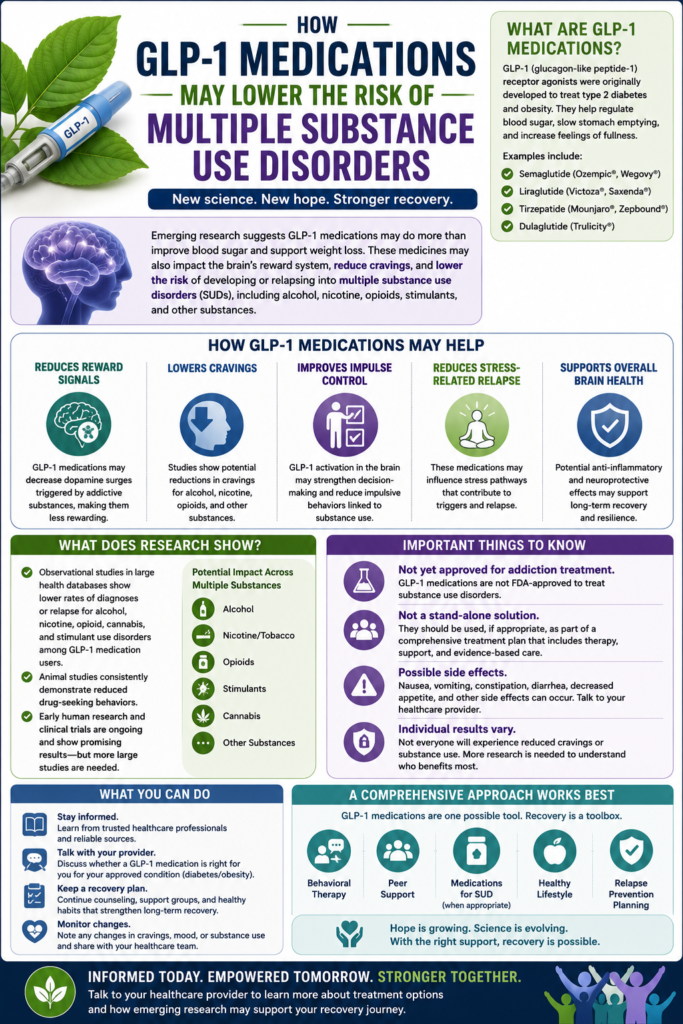
Originally developed to treat type 2 diabetes and obesity, GLP-1 (glucagon-like peptide-1) receptor agonists have recently attracted attention for another potential benefit: reducing the risk of multiple substance use disorders. Medications such as Semaglutide, Liraglutide, Tirzepatide, and Dulaglutide are best known for improving blood sugar control and promoting weight loss, but growing research suggests they may also influence the brain’s reward system, potentially reducing cravings and compulsive behaviors associated with addiction.
What Are GLP-1 Medications?
GLP-1 is a naturally occurring hormone released by the intestines after eating. It helps regulate blood sugar by stimulating insulin release, slowing stomach emptying, and increasing feelings of fullness. GLP-1 receptors are also found in several brain regions involved in reward, motivation, impulse control, and decision-making. This has led researchers to investigate whether GLP-1 medications could affect behaviors beyond eating.
How Might GLP-1 Medications Reduce Substance Use?
Researchers believe GLP-1 receptor agonists may influence several brain pathways involved in addiction:
Reduced Dopamine Reward
Many addictive substances—including alcohol, nicotine, opioids, cocaine, and methamphetamine—cause large increases in dopamine within the brain’s reward system. Laboratory studies suggest GLP-1 medications may reduce these excessive dopamine responses, making substances less rewarding and potentially decreasing the desire to continue using them.
Improved Impulse Control
GLP-1 receptors are present in brain regions involved in executive functioning and self-control. Some studies suggest these medications may improve decision-making and reduce impulsive behaviors that contribute to addiction.
Decreased Cravings
Early clinical observations and patient reports have described reductions in cravings not only for food but also for alcohol, nicotine, and other substances. Researchers are actively studying whether these effects can be confirmed in larger clinical trials.
Reduced Stress-Related Relapse
Stress is a major trigger for relapse. Animal studies suggest GLP-1 medications may influence stress pathways that contribute to drug seeking, although more human research is needed.
What Does Current Research Show?
Several observational studies have reported associations between GLP-1 medication use and lower rates of diagnoses or relapse involving alcohol, tobacco, cannabis, opioids, and stimulant use disorders. Animal studies have consistently demonstrated reduced drug-seeking behaviors after GLP-1 receptor activation. However, these findings do not prove that GLP-1 medications directly prevent or treat addiction.
Large randomized clinical trials are still needed to determine:
- Which substances respond best
- Which patients benefit most
- Appropriate dosing for addiction treatment
- Long-term safety and effectiveness
- Whether benefits persist after stopping medication
Could GLP-1 Medications Become Addiction Treatments?
Possibly, but not yet. At present, GLP-1 medications are not approved specifically to treat substance use disorders. Researchers are investigating whether they could become an additional treatment option when combined with counseling, behavioral therapies, and established medications for addiction.
Important Limitations
Although the research is promising, several limitations remain:
- Most evidence comes from observational studies or animal research.
- Clinical trials specifically focused on addiction are still ongoing.
- Not everyone taking a GLP-1 medication reports reduced cravings.
- These medications have potential side effects, including nausea, vomiting, diarrhea, constipation, and, rarely, more serious complications.
- They should only be used under the supervision of a qualified healthcare professional.
A Comprehensive Approach to Recovery
Even if future research confirms that GLP-1 medications help reduce substance use, they are unlikely to replace comprehensive addiction treatment. Successful recovery typically combines:
- Behavioral therapy
- Individual and group counseling
- Peer recovery support
- Treatment of mental health conditions
- Relapse prevention planning
- Social and family support
- When appropriate, medications specifically approved for substance use disorders
Looking Ahead
The discovery that GLP-1 medications may influence the brain’s reward system has opened an exciting new area of addiction research. If future clinical trials confirm early findings, these medications could become valuable tools for reducing cravings, lowering relapse risk, and supporting long-term recovery across multiple substance use disorders. Until then, they should be viewed as promising investigational therapies rather than established treatments for addiction.
Self-Management Strategies for Understanding How GLP-1 Medications May Lower the Risk of Multiple Substance Use Disorders
Understanding how GLP-1 medications may influence substance use disorders can help individuals make informed decisions about their health and recovery. Although research suggests these medications may reduce cravings and affect the brain’s reward system, they are not currently approved specifically to treat substance use disorders. The following self-management strategies can help individuals stay informed while maintaining a comprehensive approach to recovery.
1. Learn How GLP-1 Medications Work
Educate yourself about how GLP-1 receptor agonists work in the body. These medications were developed to treat type 2 diabetes and obesity by regulating blood sugar levels, slowing gastric emptying, and increasing feelings of fullness. Researchers are also studying how they may influence brain pathways involved in reward, cravings, and impulse control.
2. Maintain Realistic Expectations
Understand that GLP-1 medications are not a cure for addiction. While early studies suggest they may help reduce cravings or lower the risk of relapse for some individuals, more clinical research is needed before they can be considered standard treatment for substance use disorders.
3. Continue Your Current Treatment Plan
If you are in recovery, continue following your healthcare provider’s recommendations. Counseling, behavioral therapies, peer support, and medications specifically approved for substance use disorders remain the foundation of effective treatment. Do not stop or change prescribed treatments without consulting your provider.
4. Monitor Changes in Cravings
If you are prescribed a GLP-1 medication for diabetes or weight management, keep a journal of any changes you notice in cravings, mood, eating behaviors, or substance use. Sharing these observations with your healthcare provider may help guide future treatment decisions.
5. Focus on Healthy Lifestyle Habits
Support your recovery by maintaining regular physical activity, eating a balanced diet, getting adequate sleep, staying hydrated, and practicing stress-management techniques such as mindfulness, meditation, or deep breathing. These habits complement medical treatment and improve overall well-being.
6. Recognize and Manage Triggers
Identify situations, emotions, or environments that increase your risk of substance use. Develop healthy coping strategies such as calling a trusted friend, attending a recovery meeting, exercising, journaling, or engaging in hobbies that promote relaxation and resilience.
7. Stay Informed Through Reliable Sources
Because research on GLP-1 medications and addiction is rapidly evolving, rely on trusted healthcare professionals, peer-reviewed studies, and reputable medical organizations for accurate information rather than social media or anecdotal reports.
8. Report Side Effects Promptly
If you are taking a GLP-1 medication, monitor for side effects such as nausea, vomiting, diarrhea, constipation, abdominal pain, or dehydration. Contact your healthcare provider if side effects are severe, persistent, or interfere with your daily activities.
9. Maintain Regular Healthcare Follow-Up
Attend scheduled appointments with your healthcare team to discuss your progress, medication effectiveness, and any concerns about cravings or recovery. Regular monitoring helps ensure your treatment plan remains safe and appropriate for your needs.
10. Build a Strong Recovery Network
Recovery is strengthened by support from family, friends, counselors, peer recovery groups, and healthcare professionals. Continue participating in recovery activities and remember that medications—whether for diabetes, weight management, or potentially addiction in the future—are most effective when combined with healthy coping skills and supportive relationships.
Conclusion
Research suggests that GLP-1 medications may one day become an important addition to the treatment of multiple substance use disorders by influencing the brain’s reward system and reducing cravings. However, these medications are still being studied for this purpose and should not replace evidence-based addiction treatment. By staying informed, following your treatment plan, maintaining healthy lifestyle habits, monitoring your progress, and working closely with your healthcare team, you can build a strong foundation for lasting recovery while benefiting from future advances in addiction medicine.
Family Support Strategies for Understanding How GLP-1 Medications May Lower the Risk of Multiple Substance Use Disorders
Families play an important role in supporting loved ones who are living with or recovering from substance use disorders. As research continues to explore how GLP-1 medications may reduce cravings and lower the risk of relapse, families can help by learning the science, encouraging evidence-based treatment, and maintaining realistic expectations. Although these medications show promise, they are not currently approved specifically to treat substance use disorders, and they should be viewed as a potential complement—not a replacement—to comprehensive addiction care.
1. Learn About GLP-1 Medications Together
Take time to understand what GLP-1 medications are, how they were originally developed to treat type 2 diabetes and obesity, and why researchers are studying their effects on the brain’s reward system. Accurate knowledge helps reduce misconceptions and supports informed family discussions.
2. Maintain Realistic Expectations
Recognize that GLP-1 medications are not a cure for addiction. While early research suggests they may help reduce cravings or lower the risk of substance use for some individuals, recovery still requires counseling, healthy lifestyle changes, ongoing support, and, when appropriate, medications specifically approved for substance use disorders.
3. Encourage Open Communication
Create a supportive environment where your loved one feels comfortable discussing treatment goals, medication experiences, cravings, and recovery challenges. Listen without judgment and encourage honest conversations about both successes and setbacks.
4. Support Evidence-Based Treatment
Encourage your loved one to continue following their individualized treatment plan. If they are taking a GLP-1 medication for diabetes or weight management, remind them to continue counseling, behavioral therapy, recovery meetings, and any prescribed addiction medications unless their healthcare provider recommends changes.
5. Attend Medical Appointments When Appropriate
If your loved one is comfortable with your involvement, accompany them to healthcare appointments. This allows family members to better understand the medication, ask questions, learn about potential side effects, and understand how the medication fits into the overall treatment plan.
6. Promote Healthy Lifestyle Habits
Support healthy daily routines by preparing nutritious meals, encouraging regular physical activity, promoting good sleep habits, and participating in stress-reducing activities together. These lifestyle habits strengthen both physical health and recovery.
7. Monitor for Positive Changes and Side Effects
Observe whether your loved one experiences changes in cravings, eating habits, mood, or substance use while taking a GLP-1 medication. Also, be aware of possible side effects such as nausea, vomiting, constipation, diarrhea, or decreased appetite, and encourage them to discuss concerns with their healthcare provider.
8. Avoid Stigma and Blame
Remember that substance use disorder is a chronic medical condition rather than a lack of willpower. Avoid blaming your loved one if recovery is challenging, and recognize that medications are one part of a broader treatment approach designed to improve long-term outcomes.
9. Encourage Continued Recovery Participation
Support ongoing involvement in counseling, peer recovery groups, educational programs, and relapse prevention planning. Even if future research confirms the benefits of GLP-1 medications, strong recovery habits will remain essential for lasting success.
10. Take Care of Yourself
Supporting someone with a substance use disorder can be emotionally demanding. Prioritize your own well-being by seeking counseling if needed, joining family support groups, maintaining healthy routines, and connecting with trusted friends or relatives. Caring for yourself allows you to provide more effective long-term support.
Conclusion
Research into GLP-1 medications has opened an exciting new area of addiction science, with early studies suggesting these medications may help reduce cravings and lower the risk of multiple substance use disorders. However, they remain investigational for this purpose and should be used only under medical supervision for their approved indications unless future approvals expand their use. Families can contribute to successful recovery by staying informed, encouraging evidence-based treatment, maintaining open communication, supporting healthy lifestyle habits, and offering compassionate encouragement. Together with healthcare professionals, families help create a supportive environment that promotes hope, resilience, and lasting recovery.
Community Resource Strategies for Understanding How GLP-1 Medications May Lower the Risk of Multiple Substance Use Disorders
Community resources play an essential role in helping individuals and families understand emerging developments in addiction treatment, including research on GLP-1 medications. Although these medications are currently approved to treat type 2 diabetes and obesity—not substance use disorders—early studies suggest they may reduce cravings and influence the brain’s reward system. Communities can promote informed decision-making by providing accurate education, expanding access to evidence-based care, and supporting ongoing research.
1. Attend Community Health Education Programs
Hospitals, universities, public health departments, and community health centers often host educational seminars on addiction, obesity, diabetes, and new medical treatments. These programs can help explain how GLP-1 medications work, what current research shows, and why more clinical trials are needed before these medications become standard addiction treatments.
2. Utilize Public Health Resources
State and local health departments provide educational materials about substance use disorders, overdose prevention, and emerging treatment options. These resources help individuals distinguish between established medical evidence and preliminary research findings.
3. Connect with Addiction Treatment Programs
Community addiction treatment centers can explain how GLP-1 medications may eventually fit into comprehensive treatment while emphasizing that counseling, behavioral therapies, and approved medications remain the current standard of care for substance use disorders.
4. Access Community Mental Health Services
Many people living with substance use disorders also experience anxiety, depression, trauma, or other mental health conditions. Community mental health centers provide counseling, psychiatric care, and integrated treatment that address both mental health and addiction.
5. Participate in Peer Recovery Support Groups
Recovery organizations offer opportunities to learn from others who are managing substance use disorders. These groups provide encouragement, accountability, and education while reinforcing that long-term recovery involves healthy coping skills and ongoing support, regardless of medication use.
6. Learn Through Healthcare Professionals
Primary care providers, addiction medicine specialists, pharmacists, diabetes educators, and behavioral health clinicians can provide accurate information about GLP-1 medications, their approved uses, potential side effects, and the current evidence regarding addiction research.
7. Promote Evidence-Based Health Literacy
Community organizations, schools, libraries, and employers can offer educational programs that teach people how to evaluate medical information critically. Encouraging individuals to rely on peer-reviewed research and trusted healthcare sources helps reduce misinformation about emerging therapies.
8. Support Clinical Research Participation
Academic medical centers and research institutions may conduct clinical trials evaluating GLP-1 medications for substance use disorders. Eligible individuals who are interested in participating should discuss the potential benefits and risks with qualified healthcare professionals before enrolling.
9. Encourage Collaboration Among Community Partners
Partnerships between healthcare systems, public health agencies, schools, recovery organizations, faith-based groups, employers, and community leaders can strengthen public education, improve access to treatment, and increase awareness of new research developments.
10. Continue Supporting Comprehensive Recovery Services
Even if GLP-1 medications eventually become an approved treatment for substance use disorders, communities should continue investing in prevention programs, behavioral health services, medication-assisted treatment, housing assistance, employment support, transportation services, and peer recovery programs. These resources address the many factors that contribute to successful long-term recovery.
Conclusion
Research on GLP-1 medications has created new opportunities for understanding how the brain’s reward system may be influenced to reduce cravings and support recovery from multiple substance use disorders. While these findings are promising, more clinical trials are needed before these medications can be recommended as standard addiction treatment. Communities can help by promoting accurate education, supporting evidence-based care, encouraging participation in responsible research, and expanding access to comprehensive recovery services. Through collaboration and informed public outreach, community resources can empower individuals and families while helping advance the future of addiction treatment.
Frequently Asked Questions
Here are some common questions:
1. What are GLP-1 medications?
GLP-1 (glucagon-like peptide-1) receptor agonists are medications primarily used to treat type 2 diabetes and obesity. They help regulate blood sugar, slow stomach emptying, reduce appetite, and promote weight loss.
2. Why are researchers studying GLP-1 medications for addiction?
Researchers have discovered that GLP-1 receptors are found in brain regions involved in reward, motivation, and impulse control. This has led to studies examining whether these medications may reduce cravings and lower the risk of substance use disorders.
3. Which GLP-1 medications are being studied?
Research includes medications such as Semaglutide, Liraglutide, Dulaglutide, and Tirzepatide, which also act on a second hormone receptor (GIP).
4. Are GLP-1 medications approved to treat substance use disorders?
No. At this time, GLP-1 medications are approved for certain cases of type 2 diabetes, obesity, and related conditions—not for treating substance use disorders. Research is ongoing to determine whether they may have a future role in addiction treatment.
5. How might GLP-1 medications reduce cravings?
Scientists believe these medications may reduce dopamine activity associated with addictive substances, making alcohol, nicotine, opioids, and other drugs less rewarding. They may also influence brain circuits involved in impulse control and decision-making.
6. Which substance use disorders might be affected?
Early research suggests GLP-1 medications may influence cravings or substance use involving:
- Alcohol
- Nicotine and tobacco
- Opioids
- Stimulants such as cocaine and methamphetamine
- Cannabis
More clinical research is needed to determine which conditions respond best.
7. Does current research prove these medications prevent addiction?
No. Current evidence is promising but not conclusive. Most findings come from observational studies, animal research, and early clinical trials. Larger randomized clinical trials are needed to determine cause and effect.
8. Can GLP-1 medications replace addiction treatment?
No. Even if future research confirms benefits, GLP-1 medications would likely complement—not replace—behavioral therapy, counseling, peer support, and approved medications for substance use disorders.
9. If I already take a GLP-1 medication, will my cravings automatically disappear?
Not necessarily. Some individuals report reduced cravings, while others notice little or no change. Responses vary based on individual biology, medical conditions, and the substance involved.
10. Can these medications help prevent relapse?
Early research suggests GLP-1 medications may reduce cravings and improve impulse control, which could potentially lower relapse risk. However, relapse prevention still depends on comprehensive treatment and ongoing recovery support.
11. Are GLP-1 medications safe?
For approved uses, GLP-1 medications have been studied extensively and are generally safe when prescribed appropriately. Like all medications, they have potential risks and side effects that should be discussed with a healthcare provider.
12. What are the most common side effects?
Common side effects include nausea, vomiting, diarrhea, constipation, abdominal discomfort, decreased appetite, and, in some cases, dehydration. Many side effects improve as the body adjusts to the medication.
13. Who should not take GLP-1 medications?
These medications are not appropriate for everyone. Certain individuals, such as those with specific medical conditions or contraindications, may not be good candidates. A healthcare provider can determine whether a GLP-1 medication is appropriate based on an individual’s medical history.
14. Should someone start a GLP-1 medication to treat addiction?
Not solely for that purpose at this time. Because these medications are not currently approved to treat substance use disorders, individuals should not start them for addiction treatment unless recommended within an appropriate clinical context by a qualified healthcare provider.
15. Can GLP-1 medications help people without diabetes?
Yes. Some GLP-1 medications are approved for chronic weight management in certain individuals with obesity or overweight who meet specific medical criteria. Their possible role in addiction treatment is still under investigation.
16. What other treatments remain important for recovery?
Recovery should continue to include counseling, behavioral therapies, peer recovery support, healthy lifestyle changes, treatment for mental health conditions, and approved medications for substance use disorders when appropriate.
17. What makes this research so exciting?
GLP-1 medications target brain pathways involved in reward and motivation rather than focusing only on the addictive substance itself. This raises the possibility that one medication could potentially help address cravings across multiple substance use disorders.
18. What are the biggest limitations of current research?
Researchers still need more information about long-term effectiveness, optimal dosing, which patients benefit most, potential risks, and whether the benefits continue after the medication is stopped.
19. What should patients do if they are interested in GLP-1 medications?
Talk with a healthcare provider about whether a GLP-1 medication is appropriate for your approved medical condition. If you have a substance use disorder, continue evidence-based addiction treatment and discuss any questions about emerging therapies with your treatment team.
20. What is the key takeaway?
GLP-1 medications represent a promising area of addiction research because they may reduce cravings and influence the brain’s reward system. However, they are not yet established treatments for substance use disorders. Continued research will determine whether these medications can safely become part of comprehensive addiction care in the future.
Conclusion
Research on GLP-1 medications has opened an exciting new frontier in addiction medicine by suggesting these drugs may influence the brain’s reward system and help reduce cravings across multiple substance use disorders. While early findings offer hope, more large-scale randomized clinical trials are needed before these medications can become part of standard addiction treatment. Until then, GLP-1 medications should be viewed as promising investigational therapies for substance use disorders rather than established treatments. Individuals living with addiction should continue to receive comprehensive, evidence-based care that includes behavioral therapy, counseling, recovery support services, and medications that are currently approved for substance use disorders when appropriate. As scientific knowledge continues to grow, GLP-1 medications may eventually become another valuable tool within a comprehensive, patient-centered approach to recovery, helping improve outcomes while complementing—not replacing—existing treatments.
Video: How GLP-1 Receptor Agonists May Help Prevent Substance Abuse #GLP1 #SubstanceUseDisorder