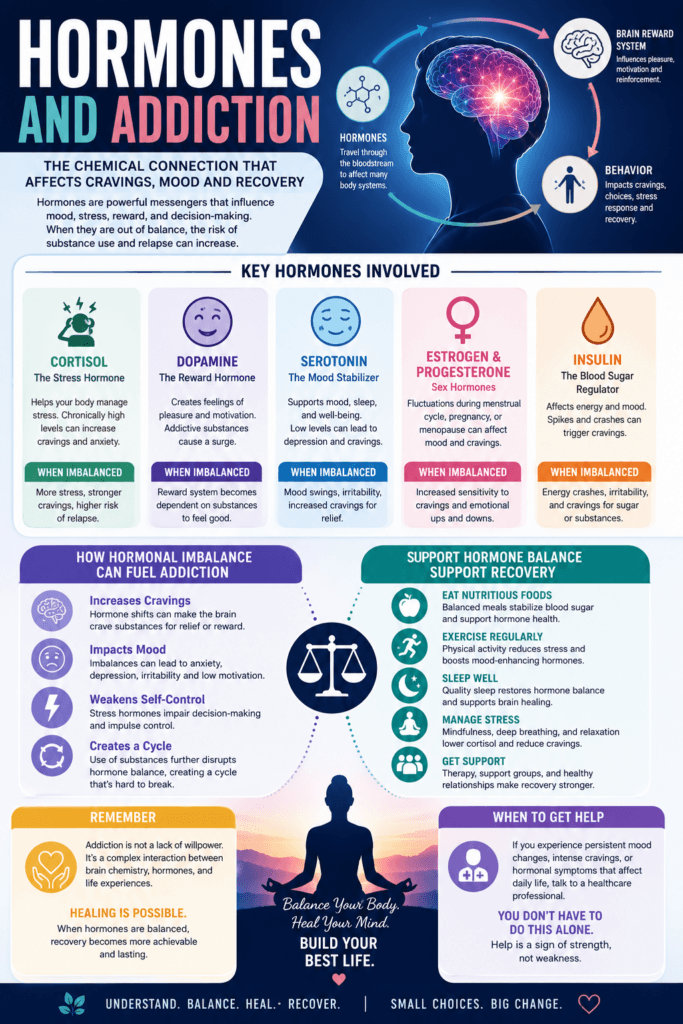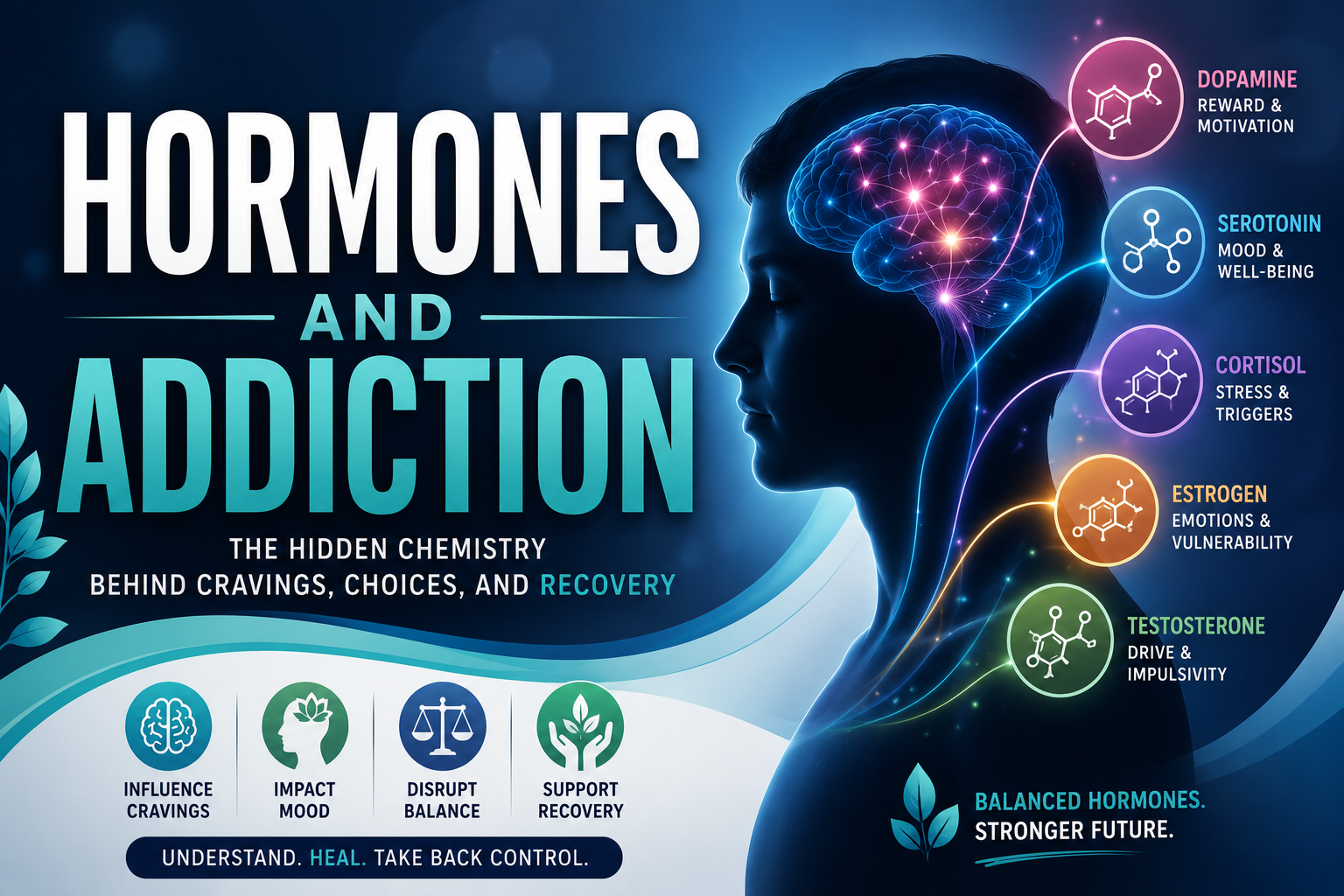
Hormones play a significant role in regulating brain function, behavior, and the body’s reward system. In the context of addiction, these chemical messengers influence stress responses, motivation, mood, and cravings, affecting both the development of substance use disorders and the recovery process. Research shows that hormones such as dopamine, cortisol, insulin, sex hormones, and oxytocin interact with brain circuits involved in reward, learning, and decision-making. Changes in hormone levels can alter vulnerability to substance use, influence withdrawal symptoms, and contribute to relapse risk. Understanding the relationship between hormones and addiction provides valuable insight into why addiction is a complex medical condition and highlights the importance of comprehensive, individualized treatment approaches.
How Hormones Influence Addictive Behaviors
The brain uses chemical messengers called neurotransmitters and hormones to communicate and guide how we think, feel, and act. Dopamine gets a lot of attention because it’s tied to the reward pathway in our brains. It makes us feel great when we eat something delicious, celebrate a win, or even scroll endlessly through social media. Drugs, alcohol, and certain behaviors like gambling hijack this system, paving the way for classic addictive patterns to form. Hormones also play a role in this control center. They don’t just ramp up pleasure; they also steer motivation, stress responses, and the never-ending drive for good feelings.
Dopamine may be the headline-grabber, but it’s not the only player. Cortisol—often called the “stress hormone,” oxytocin (which promotes bonding), endorphins (our body’s natural painbusters), and hormones like testosterone and estrogen also play important roles. For instance, a stressful period means more cortisol in the system, which can nudge someone toward substances or behaviors for relief. Conversely, hormones tied to relaxation or connection might take the edge off heavy cravings.
Key Hormones and Their Roles in Addiction
Knowing which hormones are active helps explain the addiction cycle better. Here are some major hormone contributors:
- Dopamine: This well-known hormone is central to the brain’s reward system. It tells your brain to chase and repeat whatever sparked an awesome feeling. That’s why breaking habits is more than just saying “no”—your brain is wired to want that reward again.
- Cortisol: Stress rolls in, and cortisol rises. Meant to help in emergencies, it can, when persistent, make cravings feel much heavier. Those stuck in chronic stress find they’re more pulled toward addictive stuff for a quick escape.
- Endorphins: The body’s own pain relievers. Intense exercise, laughter, and, yes, substances will flood your system with endorphins. Chasing that soothing feeling is a big piece of the addiction puzzle.
- Oxytocin: Often called the “love hormone,” oxytocin builds trust and social bonds. Lower oxytocin levels can leave someone feeling less connected, making them more likely to try to fill that gap with addictive behaviors.
- Testosterone & Estrogen: These hormones, known for their roles in intimacy, also influence mood, choices, and risk-taking; all key ingredients in many addictive patterns.
How Hormones Make Recovery Trickier
The first stages of quitting or dialing back an addiction are like a wild hormonal ride. The brain’s reward system, trained to expect highs, gets abruptly cut off. Dopamine plummets, resulting in low spirits and lack of drive. If stress adds up, cortisol rises and can lead to anxiety, insomnia, or both. The brain’s chemistry has grown to rely on shortcuts to good feelings, and now it’s forced to relearn healthier pathways.
This is why relapse sometimes happens despite strong determination. The brain needs time to catch up, but old hormonal habits can reactivate cravings when certain triggers appear. Supportive social connections and the formation of new routines help, as these actions release hormones—such as oxytocin and endorphins—that make things feel less overwhelming.
Real-Life Scenarios: Hormones and Different Types of Addiction
Addiction covers a wide range of substances and behaviors, each with its own hormonal “twist” on the story:
- Substance Addiction: Alcohol, opioids, and stimulants all tamper with dopamine in their own way. Opioids, for instance, set off large endorphin releases, resulting in a rush followed by major lows during withdrawal.
- Behavioral Addiction: Gambling, gaming, and social media all create dopamine storms, much like drugs. Removing these sources can spark withdrawal-like restlessness and irritability while your brain recalibrates.
- Caffeine and Sugar: Even these milder substances can create hormonal cycles. Sugar causes brief dopamine highs and subsequent crashes. Some folks get hooked on this cycle, too, in a way not unlike harder substances.
Practical Steps for Supporting Hormonal Balance in Recovery
There’s no single answer for addiction, but supporting hormonal balance definitely helps. Here are down-to-earth strategies that have worked for me and many others:
- Regular Routine: Maintaining consistent sleep and eating schedules supports stable cortisol and other hormone levels. During early recovery or detox, this predictability makes a real difference.
- Physical Activity: Even a short daily walk can stimulate endorphin production and help burn off excess stress hormones. Trying out yoga, swimming, hiking, or any aerobic exercise is worth a shot.
- Social Connection: Spending genuine time with friends or joining a support group helps release oxytocin, allowing new, healthier habits to take root.
- Mindfulness and Relaxation: Meditation, deep breathing, and calming music can lower cortisol and make emotional swings easier to handle.
- Nutritional Support: Eating balanced meals at regular intervals keeps your body’s hormone factory running more smoothly. I find that mindful, healthy eating makes tough periods a bit easier to handle.
An extra tip: journaling about your daily moods and urges can help you spot patterns related to food, sleep, stress, and hormones. Over time, this self-check can clue you in to what works or which triggers set you back, letting you make smarter adjustments.
Common Obstacles: Why Hormonal Triggers Lead to Relapse
Every person in recovery hits stumbling blocks. Hormonal triggers can suddenly show up—meeting an old friend, missing a loved one, dealing with a stressful work project, or even just walking by a familiar spot associated with past use. These moments often cause a surge of stress (cortisol) or lure the brain with memories of dopamine-driven rewards. That makes it tough not to slip into old routines.
Spotting these triggers in advance and having a backup plan (like texting a friend, choosing a different route, or using a brief breathing exercise) can help you push past hormone-driven urges. The longer you keep practicing these healthy patterns, the easier it becomes for your brain to dial down the cravings when triggers pop up.
Advanced Insights: Hormones, Genetics, and the Individual Experience
There’s more to addiction than just current habits—your genetics and biology play a part too. Some people naturally respond more strongly to dopamine or cortisol, which can make forming or breaking habits harder. Others have hormone imbalances linked to medical issues like thyroid problems, potentially complicating recovery even further. That’s why some recoveries are faster or seem easier than others.
If recovery feels extra tough or you find yourself getting stuck, touching base with a doctor about your hormone health might be the missing puzzle piece. Addressing any hidden hormone issues can mean smoother progress and better odds for lasting recovery.
Quick Reference: Understanding Hormonal Addiction Terms
- Reward Pathway: The brain circuit activated by enjoyable activities. During addiction, it gets overloaded with dopamine.
- Craving: An intense desire for a substance or behavior, sparked by a jump in dopamine or stress hormones.
- Withdrawal: Emotional or physical discomfort that follows when breaking away from addictive behaviors—usually linked to sharp shifts in hormone levels.
- Triggers: People, places, or feelings that ramp up cravings and spark hormone-fueled urges.
Frequently Asked Questions
Plenty of people have questions about hormones and addiction. Here are a few that come up most often:
Question: Can hormonal changes cause addiction?
Answer: Hormonal changes by themselves won’t create addiction, but they do raise the odds, especially during times of stress or big transitions.
Question: Does quitting cold turkey fix the brain’s hormones right away?
Answer: It doesn’t happen overnight. The brain’s reward system can take weeks or months to reset, so patience is key.
Question: Are men and women affected differently by hormones and addiction?
Answer: Yes. Testosterone and estrogen differences do shape cravings, risk levels, and how fast someone starts or breaks from addiction.
Question: Is it possible to use medication to manage hormones in addiction recovery?
Answer: Sometimes, doctors will prescribe medication as part of managing hormone levels and symptoms, but it should always happen under medical supervision.
Key Takeaways for Navigating Hormones and Addiction
Understanding the link between hormones and addiction can help lift the weight off the “just say no” advice. It’s not simply a willpower issue—often it’s your body’s chemistry at the wheel. Whether it’s you or someone you care about, supporting better hormonal balance, building social connections, and understanding triggers are powerful ways to make the ride smoother. If you want to dig into this further, check in with a medical provider or addiction expert about hormone health.
Getting curious about your own body and mind can lead you to new strategies and a little more self-compassion throughout the recovery journey. That’s worth checking out, no judgment needed.
Video: This is why hormonal imbalance feeds addiction #dopamine #cortisol #recovery