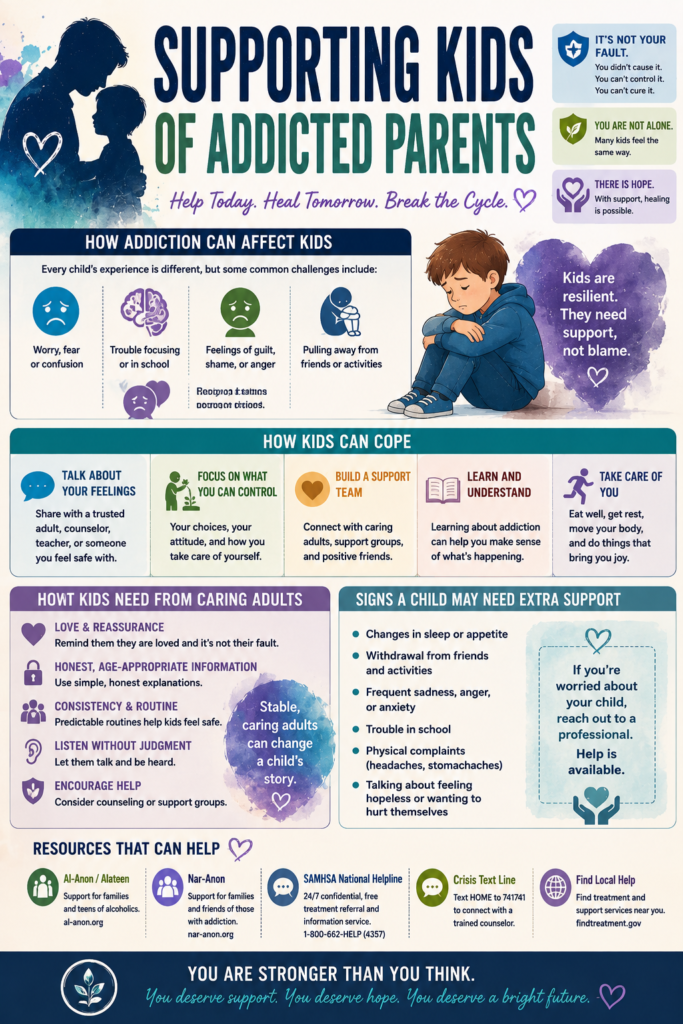
When a parent struggles with addiction, the effects ripple through the entire family, but it’s especially tough on kids. Children may feel confused, alone, or overwhelmed by emotions that they can’t always explain. I’ve known families going through this, and supporting kids through these challenges is really important. Finding ways to help kids cope can ease stress and help them build resilience for the long run.
Understanding the Impact of Parental Addiction on Kids
Living with a parent who has an addiction brings a unique set of challenges for children and teens. Their world can feel unpredictable, and kids may not know who to turn to or trust. Behavioral changes, anxiety, or feelings of shame are pretty common. Some kids end up taking on too much responsibility at home, looking after siblings or trying extra hard to keep peace in the house.
Research shows that children with a parent dealing with substance use are at greater risk for emotional issues and may face an increased chance of developing their own struggles later on. The sense of isolation can be strong, and the stigma tied to addiction makes speaking up even harder. Kids growing up in such environments may try to hide their family’s reality out of embarrassment or fear of being judged. This secrecy can make it tough to ask for help, even when they need it most. Additionally, the household atmosphere can change quickly, leaving children constantly on edge and unsure what to expect next. The unpredictable nature of addiction often leads to trust issues or a constant feeling of walking on eggshells, making developing healthy relationships outside the family more difficult.
Signs a Child May Be Struggling
Recognizing the signs that a child is having trouble coping is the first step to offering support. Here are some things you might notice:
- Withdrawal: Pulling away from friends or family, or losing interest in school and hobbies.
- Acting Out: Angry outbursts, defiance, or breaking rules, often as a reaction to uncertainty at home.
- Anxiety or Sadness: Frequent worry, trouble sleeping, or unexplained tears can be signs of distress.
- Physical Complaints: Headaches and stomachaches without a medical cause sometimes show up when kids are stressed.
- Trying to “Parent” Siblings or the Addicted Adult: Taking on adult responsibilities before they’re ready.
If you notice these changes, stepping in with a bit of extra understanding can make a real difference. Early intervention, even if it’s just a friendly conversation or offering a safe space, can help prevent bigger problems down the road.
Ways to Support Kids Coping with Parental Addiction
While there’s no perfect formula, a few consistent approaches can help kids build resilience and feel less alone. Giving kids tools and opportunities to express themselves can work wonders for their confidence and well-being.
- Encourage Openness: Let kids know it’s okay to talk about their feelings. Sometimes, they just need a safe space and a patient listener—no need for big solutions right away.
- Keep Routines Consistent: Regular meal times, bedtimes, or after-school activities help give life some predictability. This kind of structure feels really comforting, especially when other things at home aren’t so stable.
- Offer Age-Appropriate Information: Kids don’t need every detail, but simple explanations can help reduce confusion. For example, “Your parent is sick and needs help” is more helpful than pretending nothing is wrong.
- Encourage Connections: Getting kids involved in sports, clubs, or faith groups can surround them with caring adults and supportive peers. These communities often offer stability and a sense of belonging when kids need it most.
- Seek Out Professional Support: Sometimes, talking to a counselor or therapist is really useful, either individually or as a family. Therapists can give kids new coping skills and help them process big emotions in a healthy way.
In some cases, extended family members or family friends may step in to fill gaps in care. Grandparents, aunts, and uncles can be crucial supports. It’s important to recognize that asking for help isn’t a weakness—it’s a sign of care and strength, and it can give kids hope even in rough times.
Quick Guide for Caregivers and Supportive Adults
It’s easy to feel unsure about where to start, but anyone who cares about a child can help by keeping a few ideas in mind:
- Be Reliable: Be someone the child can count on. Even small, consistent gestures—a ride to practice, a regular check-in—add up.
- Reassure and Double-Check: Remind kids that the addiction is not their fault. They need to hear it’s okay to care about the parent, but also care for themselves.
- Encourage Healthy Expression: Drawing, journaling, or playing music helps kids work through feelings they can’t always talk about.
- Watch for Safety: If you suspect a child’s physical or emotional safety is at risk, don’t hesitate to reach out for help. That’s more important than anything else.
- Share Resources: Materials and hotlines like Alateen or NACoA (National Association for Children of Addiction) are made for young people in these situations and offer support, stories, and advice.
Being present, calm, and steady gives kids a solid base when they need it most. Reassuring children that things can get better and encouraging small steps go a long way. It’s not always about having the right answers; it’s more about showing up and being a safe, trusting adult.
Things to Consider When Talking with Kids
Conversations about addiction don’t come naturally to most people. Here are some ideas that help make the discussion easier and more supportive:
- Focus on Feelings Over Facts: Kids might want simple, honest answers but mostly need reassurance that their feelings are valid and safe to share.
- Respect Privacy: Not every child wants to talk right away. Gentle check-ins and letting them know you’re available if they want to talk are usually enough.
- Avoid Blame: Addiction is a medical issue, and avoiding harsh words or blame helps keep the focus on healing.
- Don’t Make Promises You Can’t Keep: Kids are quick to pick up on empty promises. Be realistic with what you can do, while being supportive.
It’s all about showing that their experiences matter and that help is available, even when things feel overwhelming. Even after a tough talk, checking in later or following up with a comforting gesture can build trust and comfort.
Why Structure and Predictability Help
Having reliable routines, like breakfast together or reading before bed, gives a sense of normalcy. I’ve seen even small rituals make a big impact for children in unpredictable homes. They come to rely on these pockets of normal life and feel more confident as they navigate tough days. Structure acts as an anchor, helping kids steady themselves when the rest of life feels uneasy.
The Role of Schools, Teachers, and Coaches
Kids may trust adults at school before they open up to family or therapists. Teachers, school counselors, and coaches are well positioned to spot changes and offer support or referrals. If you’re an educator, that extra bit of patience and availability goes a long way. School staff can also help by coordinating with social workers or school psychologists to ensure kids aren’t navigating tough times alone. Even a teacher’s understanding when homework is late can go further than you might think.
Frequently Asked Questions
These are common questions I’ve heard from friends, teachers, and families dealing with addiction at home:
Question: How can I tell if a child is being directly affected by a parent’s addiction?
Answer: Most kids won’t come out and say it, but you might notice shifts in mood, grades dropping, or them taking on adult-like roles. Gentle questions and an open-door attitude help them feel comfortable coming to you.
Question: What if the parent doesn’t want help? Does supporting the child still matter?
Answer: Supporting the child always matters. Kids can still build coping tools even if the parent isn’t ready for treatment. Connecting them to resources can make a real difference in their self-esteem and outlook. Sometimes the most life-changing support comes from outside the immediate family.
Question: Where can kids or families go for more help?
Answer: Groups like Alateen (al-anon.org), NACoA (nacoa.org), and local community centers often offer resources, meetings, and counseling for families affected by addiction. There are also online forums and support groups where children and teens can share their stories and connect with others facing similar struggles.
Extra Tools and Tips to Help Kids Cope
Beyond talking and listening, kids sometimes benefit from specific strategies to ground themselves and feel better in tough moments:
- Mindfulness Exercises: Simple breathing exercises or guided meditations can help with stress and anxiety. Even a few minutes a day can make a noticeable difference.
- Positive Outlets: Sports, painting, dancing, or even a daily walk can shift focus and boost mood.
- Journaling: Giving a child a journal (or even a private sketchbook) offers a place to let out thoughts and emotions they’ve bottled up.
- Reading Books for Children on Addiction: Picture books and stories written for kids in families struggling with addiction can help normalize their feelings and let them know they’re not alone. Many libraries have selections specifically for kids going through these experiences.
Trying different tools helps kids figure out what works for them. Mixing a few of these into the daily routine brings more balance and relief from stress. Encouraging creativity, physical activity, and quiet reflection provides different paths for children to find comfort.
Looking Ahead: Growing Beyond the Challenge
Dealing with a parent’s addiction is a heavy load for any child, but with steady support and encouragement, kids can come out more resilient and hopeful. I’ve seen young people thrive once they find the right adults to trust and build new circles of support. Over time, these experiences can help strengthen empathy and coping skills for life. The lessons learned in hard times can build deep compassion and resilience—not just for themselves but for others they meet later on.
Every caring adult, whether it’s a relative, teacher, coach, or neighbor, can play a role by showing up, listening, and being consistent. Every bit of support helps lighten the load and gives a child a better shot at healing and happiness. By being steady and present, you create hope through your actions. Even if you can’t fix everything, your reliable presence truly matters.
Real help starts with awareness, flexibility, and kindness. If you’re helping a child in this situation, know that your presence really matters, sometimes more than you realize.
Video: The Road to Recovery: How Children of Addicted Parents Can Heal and Thrive