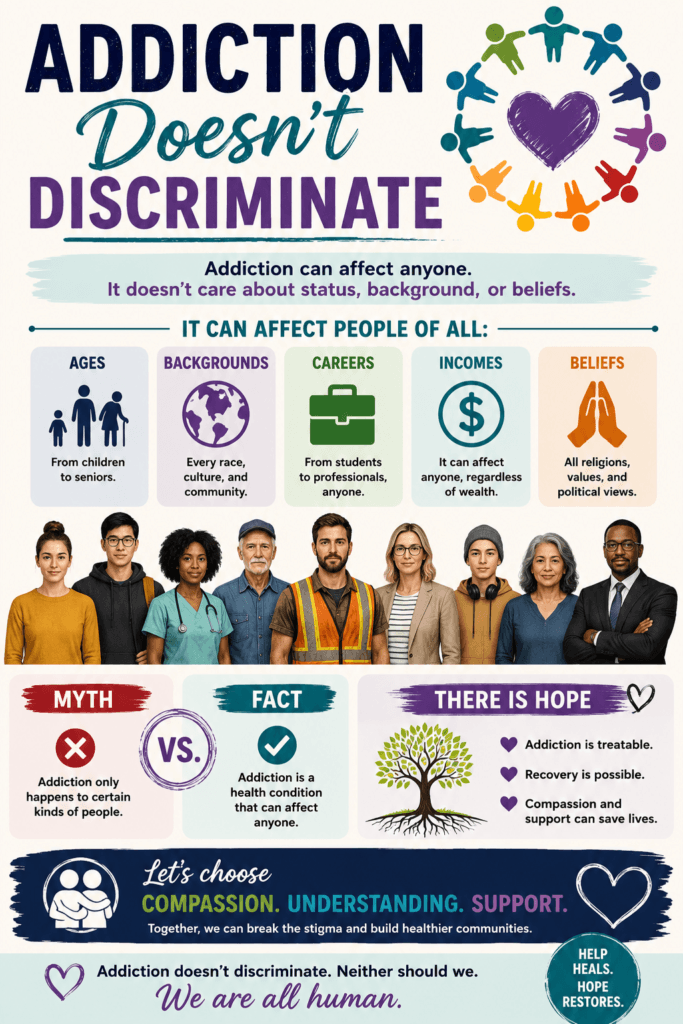
Addiction does not discriminate based on who you are, where you come from, or what you believe. It can affect people regardless of their career, income, age, social status, background, or political views. When addiction becomes surrounded by political debate or harmful stereotypes, we can lose sight of the reality that substance use disorders touch individuals, families, and communities from every walk of life. Understanding addiction requires looking beyond labels and divisions and recognizing it as a complex health and social issue. Addiction is not political—it is a human struggle that can affect anyone.
Why Addiction Doesn’t Play Favorites
It’s tempting to think of addiction as something that happens “over there,” to certain groups or in specific neighborhoods. The reality is, addiction doesn’t work like that at all. Addiction affects CEOs, construction workers, parents, teachers, artists, and students. If you’ve ever attended a support group meeting, you’ll realize just how varied the crowd truly is. Nobody is automatically protected by wealth, status, or education.
Stories abound from people who assumed addiction would never be an issue in their family, only to realize how common it really is. According to the Substance Abuse and Mental Health Services Administration, more than 46 million Americans aged twelve or older had a substance use disorder in 2021. Odds are, if you look around your workplace or school, someone you know may be struggling, even if it’s not obvious.
The Many Faces of Addiction
Addiction looks different for everyone. It might be alcoholism for one person or an opioid disorder for another. There are behavioral addictions too—like gambling, gaming, shopping, and even work itself. Some people become addicted after just one exposure, while for others, it creeps up slowly over years.
One thread connects all these experiences: addiction can happen to anyone. People in early recovery often never thought this would be part of their story. Some were lifelong high achievers; others struggled in school. There’s a real mix of backgrounds and personalities. When you look at the bigger picture, you start to realize addiction just doesn’t care who you are. It isn’t trying to fit a single narrative.
Common Myths and Stereotypes About Addiction
Despite hearing a lot about addiction in the news and on social media, myths still stick around. These misunderstandings make it harder to see addiction for what it really is. Here are a few to check out:
- Myth: Only certain types of people become addicted.
Reality: Addiction touches all kinds of people, regardless of income, upbringing, or political views. - Myth: People with strong willpower don’t get addicted.
Reality: Addiction isn’t about willpower. Genetics, mental health, social factors, and even accidents can all play a role. - Myth: Addiction is obvious and easy to spot.
Reality: Addiction is often hidden. People struggling may appear to have it all together on the outside. - Myth: It’s always about drugs or alcohol.
Reality: Many addictions fly under the radar, from shopping and food to social media and gambling.
Pushing past these myths makes the conversation much more honest and more helpful for people who need support.
How Social and Cultural Factors Interact With Addiction
Even though addiction doesn’t pick sides, it can show up in different ways depending on where and how people live. Some areas are hit hard by opioid addiction, while others see issues with alcohol, meth, or gambling. Genetics can stack the deck against some families; others may face more triggers in their daily lives or communities.
Economic hardship, trauma, and lack of support do increase risk, but many people with solid social connections and financial stability still find themselves struggling with addiction. I’ve known folks who had happy, sheltered upbringings, as well as people who dealt with ongoing challenges. Addiction doesn’t care about these lines.
Culture also affects how addiction is talked about. In certain communities, admitting to a struggle carries stigma; in others, the topic is discussed more openly. But wherever you go, the truth stays the same: anyone can face addiction, no matter their circle.
Getting Support: It’s Not About Politics or Backgrounds
Support networks are vital in recovery. You’ll find clinics, peer groups, and treatment centers in every state, filled with a variety of people who may not interact otherwise but find common ground in these spaces.
Real empathy and honest listening—not judgments about someone’s background—make support most effective. Nobody is helped by shame or finger-pointing. Access to services, encouragement from friends and family, and a sense of belonging make a world of difference for anyone in recovery, no matter their story.
Barriers to Recovery (and How to Get Past Them)
Although addiction doesn’t favor anyone, not everyone gets the same shot at recovery resources. Insurance, where you live, and stigma all play a part in the process. Some turn to private rehab, while others rely on community clinics or mutual aid groups. There’s no single solution, and no “right” kind of person who deserves help more than another.
One crucial point: asking for help is tough but brave—it’s not reserved for any one group. Everyone deserves a chance to get well, whether it’s in a therapist’s office, a church basement, or a trusted friend’s home.
Societal Stigma and the Fear of Reaching Out
Stereotypes and blame have kept many people struggling in silence for years. The fear of losing a job, damaging relationships, or facing harsh judgment often keeps people from speaking up or seeking support. More open conversations about addiction—without connecting it to politics or labels—can tear down those barriers.
Tips for Supporting Others (or Yourself) Through Addiction
If you know someone struggling with addiction, or if you’re in the midst of it, here are a few things that make a difference:
- Lead with empathy. Everyone’s experience is unique. Being open-minded makes it easier to offer meaningful support.
- Avoid blame. Addiction isn’t a moral shortcoming. Negative language only adds to what’s already difficult.
- Focus on people, not the problem. Keep in mind the human behind the struggle.
- Encourage connection. Peer groups, counseling, or just reaching out to friends and family can really boost recovery.
- Educate yourself. Understanding how addiction works and knowing where to find help only strengthens everyone involved.
Frequently Asked Questions
Here are some questions that pop up time and again when talking honestly about addiction’s reach:
Question: Are certain people more likely to experience addiction?
Answer: While genetics and environment affect risk, nobody is truly immune. Addiction happens in all kinds of families, communities, and cultures.
Question: Can you spot addiction just by looking at or talking to someone?
Answer: Not always. Plenty of people working through addiction maintain jobs, social lives, and families. Some are open about it; others keep it private.
Question: Isn’t addiction mostly about drugs and alcohol?
Answer: That’s a common assumption, but it doesn’t tell the whole story. Addiction takes the shape of behaviors, such as gambling, shopping, or even social media use, that can take over a life the same way substances can.
Question: Does addiction only impact those with mental health challenges?
Answer: Those with mental health struggles are at higher risk, but anyone can fall into addiction, regardless of their mental health history.
Addiction and Everyday Life: Real-World Impact
I’ve met countless people who never dreamed addiction would touch them. Sometimes stress, chronic pain, or even curiosity can be the trigger. You’ll find addiction everywhere—in bustling cities, quiet towns, workplaces, college campuses, and small family gatherings. All types of families feel the ripple effects.
The more we treat addiction as a human issue and not a political debate, the closer we get to building communities that welcome healing, no matter where you’re from or what path you walked. If more people realized how widespread addiction really is, maybe reaching out for support would seem a whole lot less daunting.
Video: Why Anyone Can Become Addicted: The Surprising Truth