Naltrexone is prescribed for treating opioid use disorder and alcohol dependence, often leading people to wonder about possible side effects before starting a new medication. I see many folks curious about how it might make them feel and what they should watch for. Knowing what to expect helps you make better choices with your healthcare team and feel more at ease if any side effects show up.
What Is Naltrexone and Why Is It Prescribed?
Naltrexone is a medication commonly prescribed for people seeking help in their recovery from opioid or alcohol addiction. It works by blocking certain opioid receptors in the brain, reducing cravings and stopping the high that people get from opioids or alcohol. Unlike some other medications, naltrexone is not an opioid, and it doesn’t cause dependence or produce a high. You’ll usually find it as a tablet (taken daily) or an injection (given monthly by a healthcare provider).
Before starting naltrexone, it’s vital to know that it doesn’t work exactly the same for everyone. Some people are more sensitive to its side effects than others. Getting a sense of these potential side effects early on can help you feel more comfortable if your doctor thinks naltrexone would be a good addition to your treatment plan.
The Most Common Side Effects of Naltrexone
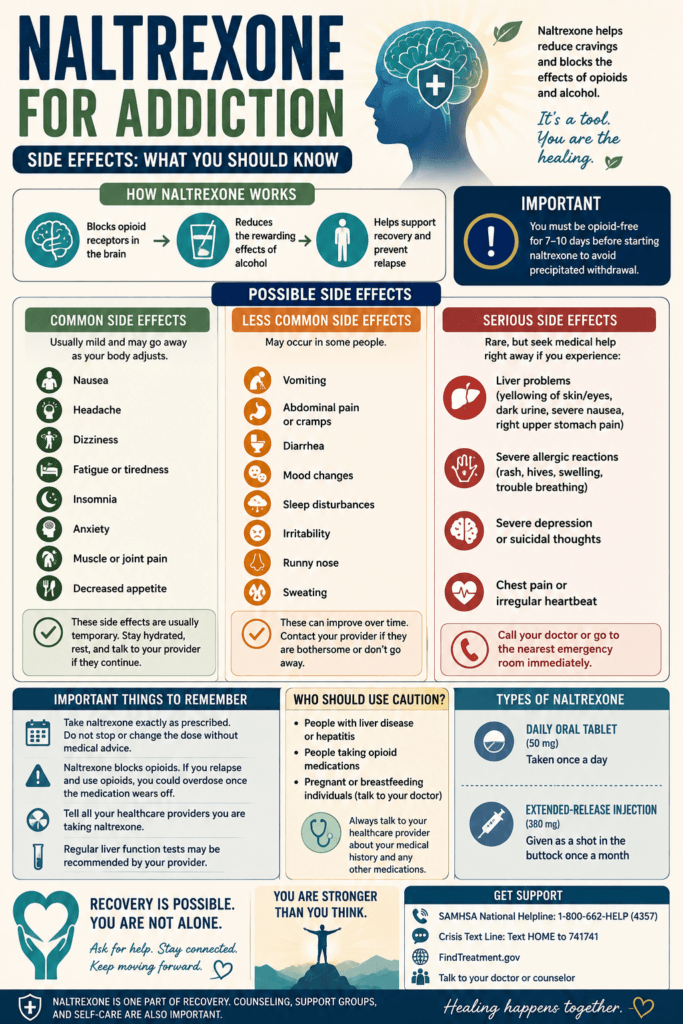
Many people who try naltrexone notice some side effects at first. Most of the time, these get better after a short while, but knowing what might happen helps you prepare.
- Nausea: This is probably the most common side effect. Some people feel a bit queasy, especially during the first one or two weeks. Taking naltrexone with food can sometimes ease stomach discomfort.
- Headache: Mild to moderate headaches may occur. Staying hydrated and perhaps using pain relief (as recommended by your doctor) can help.
- Dizziness: A feeling of lightheadedness or dizziness, especially right after your dose, is sometimes reported. Getting up slowly from sitting or lying down often makes a difference.
- Tiredness or fatigue: Some people notice extra tiredness. This usually fades as your body gets used to the medication.
- Difficulty sleeping (insomnia): Occasionally, there are reports of trouble sleeping. Practicing healthy bedtime habits or talking to your healthcare provider for tips can help if insomnia continues.
- Muscle or joint aches: Stiffness or mild aches, especially in the first few days of treatment, may be noticed by some folks.
These side effects are usually manageable, but letting your doctor know about them is a smart move, especially if they linger or become more bothersome than expected.
Less Common but Notable Naltrexone Side Effects
All medications have the potential to cause less common reactions. With naltrexone, it’s good to be aware of certain symptoms even if most people never experience them.
- Liver concerns: At high doses, naltrexone can affect your liver. Signs of liver problems include dark urine, yellowing of the skin or eyes, or unexplained pain in the upper right part of your belly. Your doctor will usually monitor your liver by checking blood tests before and during treatment. If you notice these signs, call your healthcare provider promptly.
- Allergic reactions: While rare, some people may develop a rash, itching, swelling, or trouble breathing. If anything like this happens, seek help right away.
- Depression or mood changes: A few people find their mood drops, or they feel more anxious after starting naltrexone. Let your doctor know about any unusual mood changes, especially if you have a history of mental health concerns.
- Loss of appetite or weight loss: Noticing less hunger from time to time is normal, but if weight loss continues, let your healthcare provider know.
Jotting down these symptoms and sharing them with your doctor helps spot any problems early, leading to a smoother, safer experience.
Rare Side Effects and Risks to Watch For
Rare side effects usually affect fewer people, but they’re important because they can be more serious. Here are several possibilities that might come up, even though most people don’t run into them.
- Liver damage, especially with pre-existing liver problems: While this is uncommon at normal doses, folks with hepatitis, cirrhosis, or ongoing heavy alcohol use might face a higher risk. Regular liver checks before and during treatment bring extra reassurance if you’re in this group.
- Severe allergic reactions (anaphylaxis): Difficulty breathing, severe rash, or facial and throat swelling call for emergency help. Such reactions are rare, but it is wise to know the warning signs.
- Injection site reactions (for the injectable form): Most are mild, such as swelling or redness at the injection site, but sometimes pain or skin changes persist. If you get ongoing pain, skin color changes, or a lump that doesn’t go away, mention it to your provider.
Most people will never face these problems, but understanding what’s possible—however rare—allows you to catch trouble early and get support if needed.
Tips for Managing Naltrexone Side Effects
Teaming up with your healthcare provider and tuning into your body are solid ways to manage side effects. Several tips can make adjusting to naltrexone easier:
- Start low and go slow: Doctors may recommend starting with a lower dose and gradually increasing it. This helps your body adjust and can reduce side effects.
- Take with food: Taking naltrexone alongside a meal often calms the stomach and keeps nausea in check.
- Hydrate and rest: Drinking enough water helps deal with headaches and dizziness, and sticking to a good sleep routine gives your body time to recover.
- Keep a symptom diary: Writing down when you have side effects makes it easier for you and your doctor to adjust your plan if needed.
Most people find that these simple steps help during the typical adjustment phase. Regular check-ins with your provider make sure you’re on the right track and give you space to ask questions as they come up.
Who Should Be Extra Careful with Naltrexone?
Naltrexone isn’t a perfect fit for everyone. Some groups should be more careful or work especially closely with their medical team. Here’s who might need an extra pause before starting:
- People with liver disease: Naltrexone can influence liver function, so those with existing liver problems should be monitored closely. Sometimes a different treatment may be a better fit.
- People currently using opioids: Taking naltrexone when opioids are still in your system can lead to sudden withdrawal. Doctors usually wait until your system is clear (seven to ten days after your last opioid) before starting.
- Pregnant or breastfeeding people: Because research is limited, discussing risks and benefits with your doctor is very important.
Being honest with your healthcare provider about your medical history, current medications, and lifestyle helps them ensure naltrexone is safe for you. Each person’s situation is unique, so these precautions help build the safest possible approach.
Frequently Asked Questions about Naltrexone Side Effects
Many people have lingering questions about how naltrexone may affect them. Here are answers to the most common ones:
Question: How long do naltrexone side effects last?
Answer: Most people find that common side effects like nausea or headache fade within the first one to two weeks as their body gets used to the medication. If they last longer or get in the way, check in with your doctor.
Question: Can I drink alcohol or use pain pills while on naltrexone?
Answer: Naltrexone lessens the high from alcohol and blocks opioids, but risky behaviors or physical harm are still possible. Using opioids or alcohol alongside it can also increase side effects or trigger withdrawal, so always talk openly with your healthcare team before making changes.
Question: Should I worry about liver problems with naltrexone?
Answer: The risk is low at normal doses, but your doctor will usually check your liver before you start and sometimes during treatment, especially if you have liver issues. Pay attention to dark urine or yellowing of the skin, and let your doctor know right away if these occur.
Question: What if I have an allergic reaction or trouble breathing?
Answer: Stop taking the medication and get emergency care immediately. Even though allergic reactions are rare, symptoms such as trouble breathing, swelling, or intense itching require prompt attention.
What Else to Consider Before Starting Naltrexone
Choosing to start a new medication like naltrexone comes with a few things to keep in mind:
- Share your full medical history and all medications or supplements with your healthcare team.
- Don’t miss follow-up appointments or recommended bloodwork.
- Talk about any new mood changes, weird symptoms, or any questions.
- Remember that support from your care provider, family, and friends can make a huge difference as you adjust to medication.
Naltrexone can play a big role in recovery adventures, but just like with any medication, it’s good to start with open eyes and solid information. Keeping regular contact with your healthcare provider helps you get the most out of treatment and troubleshoot any side effects along the way.
Video: Naltrexone Side Effects: What to Watch Out For