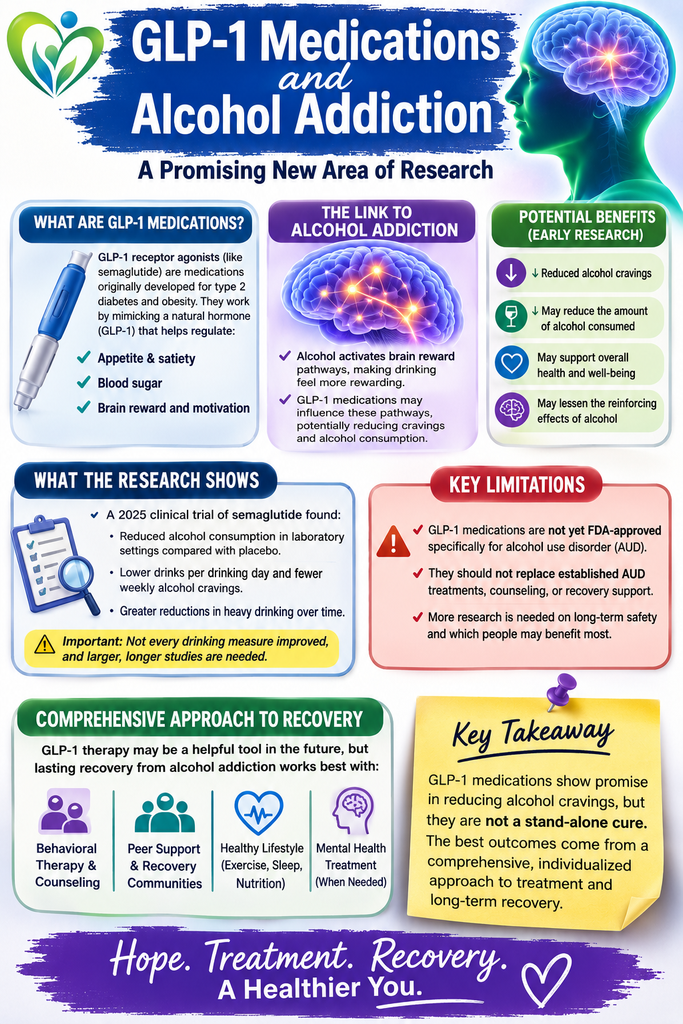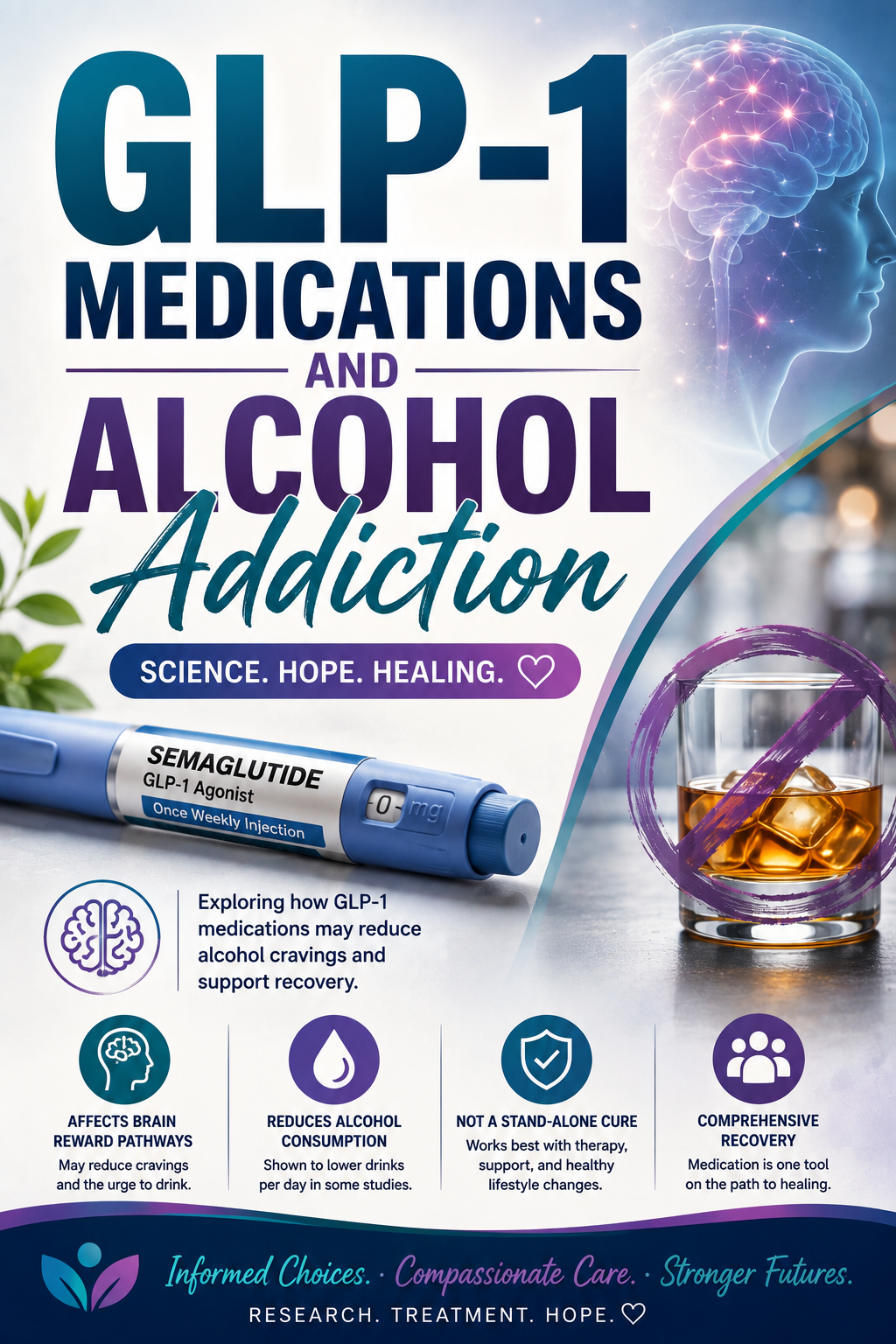
GLP-1 receptor agonists, including medications such as semaglutide, have gained attention not only for treating type 2 diabetes and obesity but also for their potential role in alcohol use disorder (AUD). Researchers are investigating whether these medications may influence brain pathways involved in reward, motivation, and craving, potentially reducing the desire for alcohol or the amount consumed. Early human studies have produced promising findings, but the evidence remains preliminary, and GLP-1 medications are not currently established or FDA-approved specifically as treatments for AUD. Understanding this emerging research is important because it could eventually expand medication options for alcohol addiction while reinforcing the need for comprehensive treatment that addresses the biological, psychological, behavioral, and social components of recovery.
GLP-1 Medications and Alcohol Addiction: A Promising New Area of Research
GLP-1 receptor agonists—medications such as semaglutide, liraglutide, and exenatide—are best known for treating type 2 diabetes and obesity. More recently, researchers have become interested in whether these medications could also help people with alcohol use disorder (AUD) by influencing brain reward pathways, cravings, and alcohol consumption.
Why Would a Diabetes or Weight-Loss Drug Affect Alcohol Use?
GLP-1 is a hormone involved in appetite, blood glucose regulation, satiety, and communication between the gastrointestinal system and brain. GLP-1 receptors are also present in brain regions involved in reward, motivation, and reinforcement.
This is important because alcohol activates reward pathways that contribute to repeated drinking. Researchers hypothesize that GLP-1 receptor agonists may decrease some of alcohol’s reinforcing effects, potentially making drinking less rewarding and reducing cravings.
The concept is somewhat similar to what many patients taking GLP-1 medications describe with food: the powerful drive or preoccupation surrounding a rewarding substance may become less prominent. However, this proposed effect on alcohol requires substantially more clinical research.
What Does the Human Research Show?
One of the most important studies so far was a 2025 randomized, double-blind clinical trial of semaglutide involving 48 adults with AUD. Participants received low-dose semaglutide or placebo for nine weeks.
Compared with placebo, semaglutide reduced alcohol consumption during a laboratory alcohol self-administration experiment. It also significantly reduced drinks per drinking day and weekly alcohol cravings and was associated with greater reductions in heavy drinking over time. However, it did not significantly reduce every drinking outcome, including the average number of drinks per calendar day or the overall number of drinking days.
That distinction is important: the study provides an encouraging signal of effectiveness, not definitive evidence that semaglutide treats AUD.
Earlier GLP-1 Research Has Been Mixed
Semaglutide is not the first GLP-1 medication studied for alcohol dependence. A randomized trial investigated weekly exenatide for 26 weeks in treatment-seeking patients with AUD who also received cognitive behavioral therapy. The overall trial did not establish a clear benefit of exenatide across the entire study population, illustrating why findings for one GLP-1 medication should not automatically be generalized to the entire class.
Large observational studies have nevertheless added to the interest. For example, a Swedish registry study of people with AUD found associations between periods of semaglutide or liraglutide use and lower risks of certain alcohol-related outcomes. Observational research cannot, however, prove that the medication itself caused those improvements.
Potential Benefits for AUD
If larger clinical trials confirm the early findings, GLP-1 medications could potentially help reduce alcohol craving, the amount consumed during drinking episodes, heavy drinking, and alcohol’s reinforcing effects.
They might eventually be especially interesting for people who have AUD alongside obesity or type 2 diabetes, since a GLP-1 medication could potentially address metabolic disease while also influencing alcohol-related behavior. But that possibility still needs to be studied directly before it becomes routine clinical practice.
GLP-1s Are Not Yet Established AUD Medications
This is the most important limitation. GLP-1 receptor agonists should currently be considered investigational for treating AUD, rather than replacements for established alcohol-use-disorder treatment.
The 2025 semaglutide trial itself concluded that its findings justify larger clinical trials. It involved only 48 participants, lasted nine weeks, and included adults with AUD who were not seeking treatment to reduce their drinking.
Therefore, prescribing semaglutide specifically for AUD would currently represent an off-label approach rather than an established standard treatment.
Established AUD Treatment Still Matters
People with AUD should continue to receive evidence-based treatment appropriate to their individual circumstances. Treatment can include behavioral therapies, recovery support, treatment of co-occurring psychiatric conditions, and established medications for AUD such as naltrexone, acamprosate, and disulfiram when clinically appropriate.
GLP-1 therapy should not be viewed as a medication that eliminates the psychological, behavioral, environmental, and social components of addiction.
Safety Also Matters
GLP-1 medications can cause adverse effects, particularly gastrointestinal symptoms such as nausea, vomiting, diarrhea, constipation, and abdominal discomfort. Individual medications also have specific contraindications, precautions, and potential complications.
This becomes especially important in people with heavy alcohol consumption because they may already have gastrointestinal, nutritional, hepatic, pancreatic, or metabolic problems. Treatment therefore requires appropriate medical evaluation and monitoring.
The Bigger Addiction-Medicine Question
Perhaps the most exciting implication extends beyond alcohol. Addiction involves altered reward, motivation, craving, and reinforcement, and GLP-1 signaling appears capable of influencing some of these systems.
Researchers are consequently investigating whether incretin-based medications could eventually have broader applications across addictive behaviors. The semaglutide trial even found a greater reduction in cigarettes smoked among the small subgroup of participants who smoked, although that exploratory finding is far from sufficient to establish a treatment for nicotine dependence.
Key Takeaway
GLP-1 medications represent a promising but still experimental approach to alcohol addiction. Early human evidence—particularly the 2025 randomized semaglutide trial—suggests that semaglutide may decrease alcohol craving and some measures of alcohol consumption. But the evidence is not yet strong enough to make GLP-1 medications standard treatment for AUD.
The emerging concept is nevertheless fascinating: medications originally developed around metabolism and appetite may also influence the brain’s reward system and addictive behavior. If larger trials confirm meaningful reductions in heavy drinking and demonstrate long-term safety and effectiveness, GLP-1 receptor agonists could eventually become another pharmacological tool in addiction medicine.
Self-Management Strategies to Understand GLP-1 Medications and Alcohol Addiction
GLP-1 receptor agonists such as semaglutide are being investigated for their potential effects on alcohol cravings, reward, and drinking behavior. Early research is promising, but GLP-1 medications are not currently established or FDA-approved treatments specifically for alcohol use disorder (AUD). Self-management should therefore focus on understanding personal drinking patterns, following prescribed treatment, and combining medication with comprehensive addiction care rather than relying on a GLP-1 medication alone.
1. Understand what GLP-1 medications may—and may not—do. Early studies suggest GLP-1 medications may influence brain reward pathways and reduce alcohol cravings or some measures of alcohol consumption. They should not be viewed as a proven cure for AUD or a replacement for behavioral and psychosocial treatment.
2. Track alcohol cravings. Keep a simple record of when cravings occur, their intensity, what triggered them, and whether drinking followed. If someone already takes a GLP-1 medication for an approved indication, tracking may help them discuss any perceived changes in cravings with their healthcare professional rather than assuming the medication caused them.
3. Monitor drinking patterns. Record drinking days, approximate number of drinks, heavy-drinking episodes, and alcohol-free days. Objective tracking can reveal changes that may otherwise be difficult to recognize.
4. Identify emotional and environmental triggers. GLP-1 therapy does not eliminate stress, trauma, loneliness, relationship problems, social pressure, or habitual drinking cues. Identify the situations that typically precede alcohol use and develop a specific alternative response for each.
5. Don’t increase or change GLP-1 medication independently. A perceived reduction in alcohol cravings is not a reason to increase a GLP-1 dose. These medications have specific dosing schedules and adverse-effect considerations. Dose changes should be made by the prescribing healthcare professional.
6. Pay attention to side effects. GLP-1 medications commonly cause gastrointestinal symptoms such as nausea, vomiting, diarrhea, constipation, and abdominal discomfort. Significant or persistent symptoms should be reported to the prescribing clinician, particularly when alcohol use could contribute to dehydration, nutritional problems, or other medical complications.
7. Don’t use GLP-1 therapy as a reason to continue risky drinking. Reduced cravings do not mean alcohol has become harmless. Alcohol can still cause intoxication, injuries, impaired judgment, liver disease, medication interactions, and other complications.
8. Continue evidence-based AUD treatment. Behavioral therapy, motivational interventions, peer recovery support, and established AUD medications may remain appropriate. Medications with established roles in AUD treatment include naltrexone, acamprosate, and disulfiram for appropriately selected patients.
9. Build alcohol-free coping strategies. Exercise, mindfulness, hobbies, social support, counseling, relaxation techniques, and structured routines can help replace alcohol’s role in managing emotions. Medication may influence cravings, but recovery also requires learning what to do when stress and triggers occur.
10. Monitor mental health. Depression, anxiety, trauma, insomnia, and other psychiatric conditions can influence alcohol use. Changes in drinking should not distract from treating these conditions when they are present.
11. Set measurable recovery goals. Depending on the individualized treatment plan, goals might include abstinence, reducing heavy-drinking episodes, attending treatment consistently, managing triggers, improving sleep, or strengthening relationships. Discuss appropriate goals with the treatment team.
12. Review progress with a healthcare professional. Bring information about cravings, alcohol consumption, medication adherence, side effects, mood, and functioning to follow-up appointments. This helps determine whether the overall treatment plan is working rather than judging success from cravings alone.
13. Never abruptly stop heavy alcohol use without considering withdrawal risk. GLP-1 medications do not treat potentially dangerous alcohol withdrawal. A person who drinks heavily or has a history of significant withdrawal should seek medical guidance before suddenly stopping alcohol. Withdrawal management is a separate clinical issue from craving reduction.
Key Takeaway
The most useful way to think about GLP-1 medications and alcohol addiction is “potential tool, not complete treatment.” Early research suggests that GLP-1 signaling may influence alcohol reward and craving, but larger and longer clinical trials are needed.
For someone already receiving a GLP-1 medication for an appropriate medical indication, self-management can include tracking cravings, drinking behavior, triggers, mood, side effects, and overall functioning and sharing those observations with the treatment team. Long-term recovery still depends on addressing the biological, psychological, behavioral, and social components of alcohol addiction together.
Family Support Strategies to Understand GLP-1 Medications and Alcohol Addiction
Families can play an important role when a loved one with alcohol use disorder (AUD) is taking or considering a GLP-1 receptor agonist such as semaglutide. Early research suggests that GLP-1 medications may influence alcohol craving and reward, but they are not currently FDA-approved specifically for AUD treatment. Family support should therefore focus on education, realistic expectations, treatment participation, and the broader recovery process rather than viewing GLP-1 therapy as a cure for alcohol addiction.
1. Learn what GLP-1 medications are. Family members should understand that GLP-1 receptor agonists were developed primarily for conditions such as type 2 diabetes and obesity. Researchers are now studying whether their effects on appetite and brain reward systems might also influence alcohol consumption and cravings.
2. Keep expectations realistic. A family may become hopeful when a loved one reports less interest in alcohol after beginning a GLP-1 medication. This can be encouraging, but reduced cravings do not necessarily mean AUD has resolved. Recovery may still require behavioral treatment, social support, and management of co-occurring conditions.
3. Understand that the evidence is still developing. A small randomized clinical trial published in 2025 found that low-dose semaglutide reduced some measures of alcohol consumption and alcohol craving, but not every drinking outcome. Larger and longer studies are needed before researchers can determine its role in routine AUD treatment.
4. Encourage medical supervision. Families should encourage the person to discuss alcohol use openly with the clinician prescribing the GLP-1 medication. Healthcare professionals need accurate information about drinking patterns, other medications, medical conditions, and adverse effects to make appropriate treatment decisions.
5. Never encourage medication changes independently. Family members should not recommend increasing, decreasing, sharing, or stopping a GLP-1 medication based on changes in alcohol cravings. Medication decisions belong with the prescribing clinician.
6. Support alcohol-craving and drinking tracking. Families can encourage—but not police—the individual to monitor cravings, drinking days, heavy-drinking episodes, triggers, mood, and alcohol-free days. This information can help the patient and healthcare team evaluate changes over time.
7. Recognize that medication does not remove triggers. Even if cravings decrease, relationship conflict, trauma, stress, loneliness, social environments, and learned drinking habits may remain. Families can help identify these triggers and encourage healthier responses.
8. Create a recovery-supportive home. When appropriate and agreed upon, reducing alcohol availability in the home can make recovery easier. Family activities can also become less centered around drinking and more focused on alcohol-free social connection.
9. Encourage comprehensive AUD treatment. GLP-1 therapy should not replace established addiction treatment. Families can support counseling, behavioral therapies, recovery groups, and appropriate AUD medications. Established medication options include naltrexone, acamprosate, and disulfiram for appropriately selected patients.
10. Monitor side effects without becoming the clinician. GLP-1 medications commonly cause gastrointestinal symptoms such as nausea, vomiting, diarrhea, constipation, and abdominal discomfort. Families can encourage the person to report persistent or concerning symptoms to their healthcare professional rather than trying to manage significant medication problems independently.
11. Understand alcohol-withdrawal risk. This is particularly important if a GLP-1 medication dramatically reduces someone’s desire to drink. A person who has been drinking heavily may be at risk for withdrawal if alcohol consumption suddenly stops. GLP-1 medications do not prevent or treat dangerous alcohol withdrawal. People with heavy or prolonged alcohol use should discuss safe withdrawal management with a healthcare professional.
12. Support rather than control recovery. Family members can provide transportation, encouragement, companionship, and emotional support, but they cannot force another person to recover. Excessive monitoring can create conflict and secrecy. Healthy support combines compassion with appropriate boundaries.
13. Avoid treating reduced appetite for alcohol as a cure. Addiction involves more than craving. Habit, reward learning, emotional coping, relationships, environment, and mental health can all influence alcohol use. These areas may still require attention even when the desire to drink decreases.
14. Recognize progress beyond abstinence. Improvements may include fewer heavy-drinking episodes, increased treatment participation, improved relationships, better coping strategies, greater honesty, improved health behaviors, and willingness to seek help. These changes can represent meaningful progress in recovery.
Key Takeaway
Families should think of GLP-1 medications as a promising area of addiction research rather than a proven stand-alone treatment for alcohol addiction. Early findings suggest that medications such as semaglutide may reduce alcohol cravings and some drinking behaviors, but research remains limited.
The family’s most valuable role is to provide informed support without becoming the prescriber or treatment monitor. Encouraging professional care, maintaining realistic expectations, creating a recovery-supportive environment, recognizing withdrawal risks, and addressing the psychological and social dimensions of addiction can help ensure that medication—whether established AUD therapy or an emerging approach—is part of a comprehensive recovery plan.
Community Resource Strategies to Understand GLP-1 Medications and Alcohol Addiction
As research explores whether GLP-1 receptor agonists such as semaglutide may reduce alcohol cravings and some drinking behaviors, community resources can help people distinguish promising research from established treatment. GLP-1 medications are not currently FDA-approved specifically for alcohol use disorder (AUD), so community strategies should emphasize evidence-based AUD care, medical supervision, education, and coordinated support.
1. Connect with addiction medicine professionals. Community addiction specialists, behavioral-health clinics, and primary-care providers can explain the difference between established AUD treatments and emerging GLP-1 research. They can also evaluate drinking severity, withdrawal risk, medical conditions, and appropriate treatment options.
2. Coordinate addiction and metabolic healthcare. Some people with AUD may already receive a GLP-1 medication for diabetes or obesity. Primary-care clinicians, endocrinology professionals, obesity-medicine specialists, and addiction clinicians should communicate when possible so alcohol use, medication effects, nutrition, metabolic health, and recovery goals are considered together.
3. Use community behavioral-health programs. Counseling centers and behavioral-health organizations can address the psychological and behavioral components of alcohol addiction that medication alone cannot resolve. Treatment may include motivational interventions, cognitive behavioral strategies, relapse-prevention skills, family therapy, and treatment of co-occurring mental health conditions.
4. Educate communities about emerging evidence. Hospitals, clinics, universities, pharmacies, and community organizations can provide educational programs explaining what researchers currently know—and do not know—about GLP-1 medications and addiction. Education should avoid presenting preliminary research as proof that GLP-1 therapy cures AUD.
5. Continue promoting established AUD treatments. Community programs should ensure that excitement surrounding GLP-1 medications does not overshadow established treatment. Depending on individual circumstances, treatment may include behavioral therapies and medications such as naltrexone, acamprosate, or disulfiram, along with recovery support.
6. Provide peer recovery resources. Peer recovery specialists and mutual-support communities can help individuals manage triggers, strengthen motivation, develop alcohol-free relationships, and maintain recovery. Even if medication reduces cravings, social and behavioral support can remain important.
7. Include pharmacists in community education. Pharmacists can reinforce medication safety, appropriate administration, potential adverse effects, and the importance of communicating alcohol use and other medications to healthcare professionals. They can also help counter misinformation about using GLP-1 medications specifically for addiction.
8. Establish safe alcohol-withdrawal referral pathways. Communities should ensure that people who drink heavily can access appropriate withdrawal assessment and management. GLP-1 medications do not prevent dangerous alcohol withdrawal. Emergency departments, withdrawal management programs, addiction clinics, and hospitals should be integrated into referral networks.
9. Address barriers to treatment. Cost, insurance coverage, transportation, stigma, childcare, limited behavioral-health services, and medication availability can interfere with recovery. Social workers and community case managers can help connect individuals with appropriate services rather than allowing access to a particular medication to determine whether someone receives treatment.
10. Encourage participation in legitimate clinical research. People interested in GLP-1 medications specifically for AUD can discuss clinical trials with their healthcare professionals. ClinicalTrials.gov provides information about registered studies and can help people identify legitimate research rather than relying on unverified online claims.
11. Use trusted national treatment resources. Community organizations can direct individuals and families to FindTreatment.gov to locate mental health and substance-use treatment services. These resources can help connect people with appropriate care regardless of whether GLP-1 treatment is relevant to their medical situation.
12. Combat misinformation and stigma. Social media may portray GLP-1 medications as a simple solution for many addictive behaviors. Community education should explain that AUD is a complex condition involving biological, psychological, behavioral, environmental, and social factors. At the same time, addiction should be approached as a treatable health condition rather than a moral failure.
13. Build coordinated continuing-care networks. Recovery may involve primary care, addiction medicine, behavioral-health treatment, pharmacy services, peer recovery, family support, and community programs. Creating communication and referral pathways among these resources can provide more comprehensive care than any single intervention.
Key Takeaway
Community resources should approach GLP-1 medications and alcohol addiction with both optimism and caution. Early research suggests that GLP-1 receptor agonists may influence alcohol craving and reward, but these medications remain an emerging area of AUD research rather than established stand-alone treatment.
The strongest community strategy is therefore to connect people with qualified healthcare professionals, evidence-based AUD treatment, behavioral-health services, withdrawal management when necessary, peer recovery support, reliable education, and legitimate clinical research. If GLP-1 medications eventually become part of routine addiction medicine, these existing community supports will still be essential because reducing cravings is only one component of long-term recovery.
Frequently Asked Questions
Here are some common questions:
1. What are GLP-1 medications?
GLP-1 receptor agonists are medications that mimic the action of the hormone glucagon-like peptide-1. Drugs such as semaglutide, liraglutide, and exenatide have established uses in diabetes and/or chronic weight management, depending on the specific medication and formulation. Researchers are now investigating whether GLP-1 signaling may also influence addictive behaviors.
2. Why are GLP-1 medications being studied for alcohol addiction?
GLP-1 receptors are present in brain regions involved in reward, motivation, appetite, and reinforcement. Researchers hypothesize that activating these receptors may reduce some of alcohol’s rewarding effects, potentially decreasing cravings or alcohol consumption.
3. Can semaglutide reduce alcohol cravings?
Early evidence suggests it might. A small 2025 randomized clinical trial involving 48 adults with alcohol use disorder (AUD) found that low-dose semaglutide reduced weekly alcohol cravings and some measures of alcohol consumption compared with placebo. However, not every drinking outcome improved, and larger trials are needed.
4. Are GLP-1 medications FDA-approved for alcohol use disorder?
No. GLP-1 receptor agonists are not currently FDA-approved specifically for treating AUD. Their use specifically as an AUD treatment remains investigational.
5. Does that mean semaglutide cannot be prescribed to someone who has AUD?
A person with AUD might independently have an approved indication for a GLP-1 medication, such as diabetes or obesity. Whether a GLP-1 medication is appropriate requires an individualized medical assessment. Prescribing one specifically to treat AUD would currently represent an off-label approach.
6. Are GLP-1 medications a cure for alcohol addiction?
No. Even if future studies establish benefits, AUD involves biological, psychological, behavioral, environmental, and social factors. Reducing cravings would address only part of the disorder.
7. How might GLP-1 medications affect alcohol reward?
The proposed mechanism involves GLP-1 signaling within brain reward pathways. If alcohol becomes less reinforcing or rewarding, a person might experience less motivation to continue drinking. This mechanism is still being investigated in humans.
8. Do all GLP-1 medications have the same effect on alcohol use?
We don’t know. Results should not automatically be generalized across the entire drug class. For example, an earlier randomized trial of exenatide did not demonstrate a significant overall reduction in heavy drinking days compared with placebo, although exploratory subgroup findings generated additional research questions.
9. What are the potential benefits being investigated?
Researchers are examining whether GLP-1 medications could decrease alcohol cravings, drinks consumed during drinking episodes, heavy drinking, and alcohol-related reward. Long-term effects on abstinence, relapse, functioning, and health outcomes require further investigation.
10. What are common side effects of GLP-1 medications?
Gastrointestinal effects are common and can include nausea, vomiting, diarrhea, constipation, and abdominal discomfort. Individual GLP-1 medications also have specific warnings, contraindications, and precautions that clinicians must consider.
11. Can someone drink alcohol while taking a GLP-1 medication?
This depends on the person’s medical condition, medication, drinking pattern, and other risk factors. People taking these medications should discuss alcohol consumption honestly with their prescribing healthcare professional rather than assuming drinking is automatically safe.
12. Can GLP-1 medications replace naltrexone or acamprosate?
Not based on current evidence. Established AUD medications should not automatically be replaced by an experimental approach. Treatment options should be selected according to the person’s medical history, recovery goals, contraindications, and clinical needs.
13. Could someone take a GLP-1 medication and an established AUD medication together?
Potentially, but this is an individualized medical decision. A clinician must consider the specific medications, health conditions, side effects, alcohol consumption, and available evidence before recommending combinations.
14. Can GLP-1 medications prevent alcohol withdrawal?
No. This distinction is extremely important. GLP-1 medications are not treatments for alcohol withdrawal. A person who is physiologically dependent on alcohol may develop serious withdrawal after abruptly reducing or stopping drinking and should receive appropriate medical assessment.
15. Who might eventually benefit most from GLP-1 treatment for AUD?
Researchers do not yet know. One important research question is whether certain groups—potentially including people with particular metabolic characteristics—respond differently. Identifying who benefits and who does not will require larger clinical trials.
16. Why are researchers so interested in GLP-1 medications for addiction medicine?
They offer a potentially different biological treatment target. Instead of acting exclusively through traditional AUD medication pathways, GLP-1 therapies may influence the interaction between metabolism, appetite, reward, motivation, and addictive behavior.
17. Should someone ask their healthcare provider about GLP-1 medications for alcohol addiction?
Yes, discussing emerging research with a clinician is reasonable, particularly if the person already has an approved medical indication for GLP-1 therapy. The conversation should include the limitations of current evidence and established AUD treatment alternatives.
18. What should patients avoid doing?
People should not obtain GLP-1 medications from questionable sources, share another person’s prescription, change their dose to suppress alcohol cravings, or discontinue established AUD treatment without discussing it with their healthcare professional.
19. What research is still needed?
Researchers need larger and longer randomized trials to determine effectiveness, optimal dosing, long-term safety, durability of reduced drinking, relapse outcomes, appropriate patient selection, and how GLP-1 therapy compares with or complements established AUD treatments.
20. What is the most important takeaway?
GLP-1 medications represent a promising but experimental direction in alcohol addiction treatment. Early semaglutide research suggests potential reductions in cravings and certain drinking behaviors, but current evidence is not sufficient to consider GLP-1 therapy a standard treatment for AUD.
Conclusion
GLP-1 medications represent an intriguing and rapidly developing area of addiction research, with early evidence suggesting that they may reduce alcohol cravings and certain drinking behaviors in some individuals. However, larger and longer clinical trials are necessary to determine their effectiveness, appropriate dosing, long-term safety, and which patients are most likely to benefit. Until stronger evidence and specific regulatory approval are available, GLP-1 medications should not replace established AUD treatments, behavioral therapies, recovery support, or medically supervised withdrawal management when needed. The future of GLP-1 therapy in addiction medicine may be promising, but successful alcohol recovery will likely continue to require an individualized, comprehensive approach that combines appropriate medication with behavioral healthcare, family support, community resources, and long-term recovery strategies.
Video: Can GLP-1 Drugs Cure Alcohol Addiction? #AlcoholAddiction #AUD