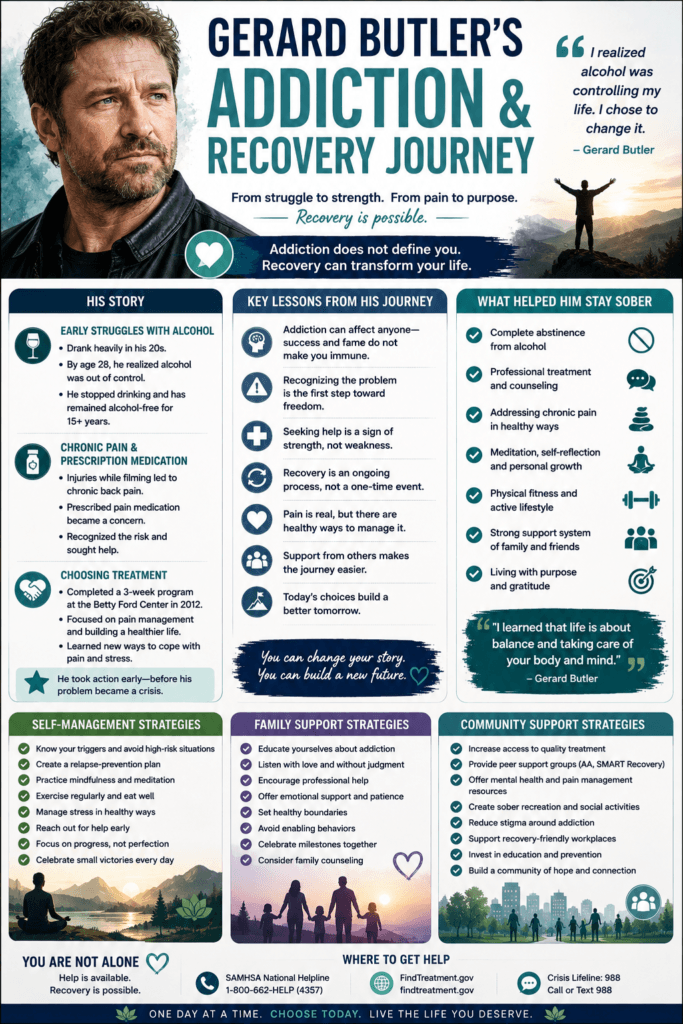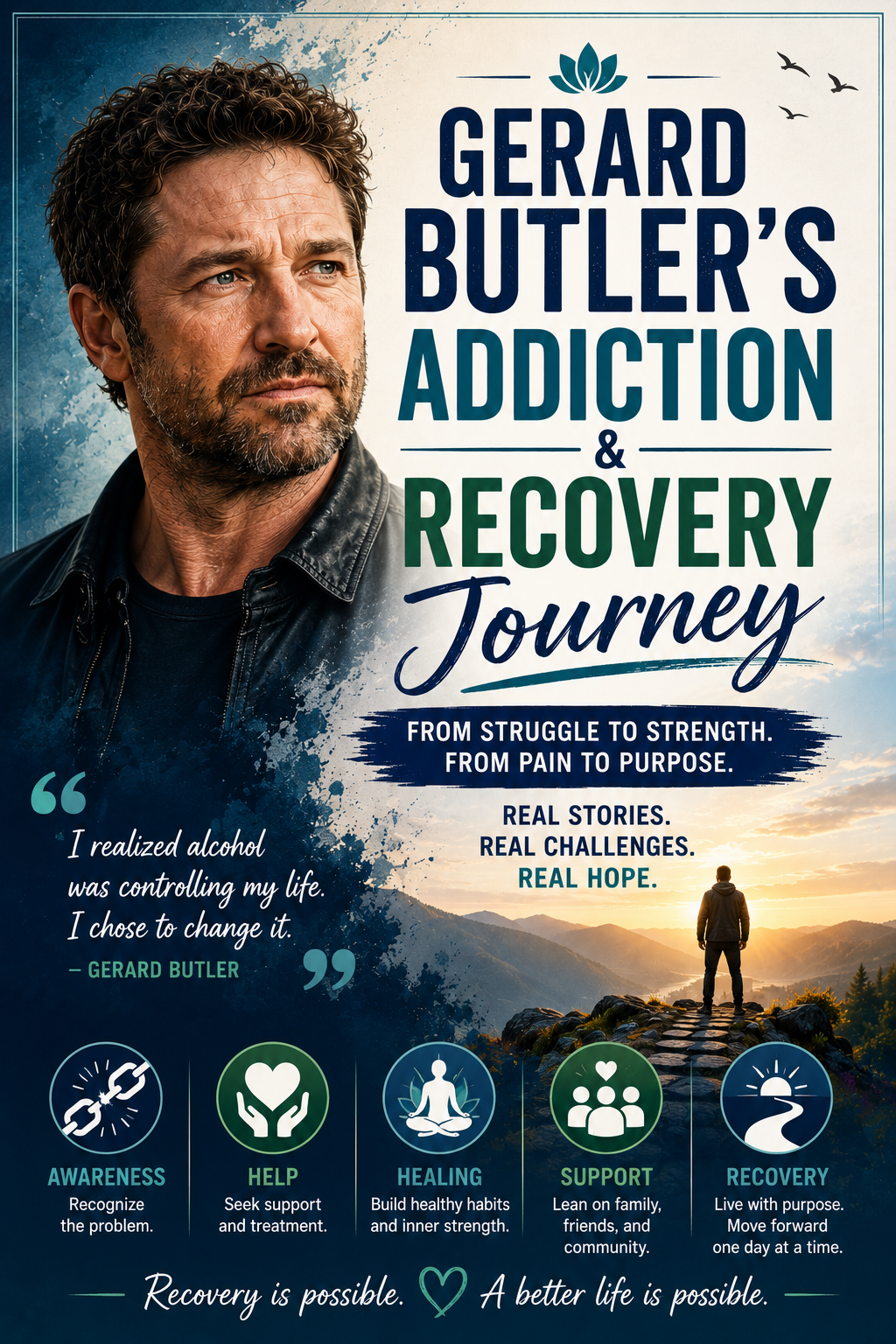
Gerard Butler’s journey with alcohol, prescription pain medication, and recovery demonstrates how substance-related problems can develop at different stages of a person’s life. Long before he became internationally known for films such as 300, Butler said his drinking became excessive in his twenties. In a 2002 interview, he described realizing at age 28 that his drinking was getting out of control and deciding to stop. Years later, physical injuries and chronic pain created a different challenge involving prescription pain medication.
Butler’s story is especially useful for understanding that recovery is not simply a matter of willpower. His experience involved recognizing unhealthy behavior, changing his relationship with alcohol, managing physical pain, seeking professional treatment when he became concerned about prescription medication, and developing healthier approaches to stress and discomfort.
Butler’s Early Struggles With Alcohol
Before his acting career became established, Butler described a period of heavy drinking during his twenties. He later recalled that some of the periods when he appeared happiest to others were actually among the most difficult of his life. By 28, he recognized that alcohol was becoming a serious problem and stopped drinking.
His experience illustrates several potential warning signs:
- Drinking heavily or frequently.
- Experiencing blackouts or memory loss.
- Using alcohol to escape uncomfortable emotions.
- Continuing to drink despite problems in work or relationships.
- Spending increasing amounts of time in drinking environments.
- Feeling emotionally unhappy despite appearing successful.
- Recognizing that alcohol is beginning to control important areas of life.
- Continuing a behavior even when its consequences are becoming increasingly serious.
Butler later said in a 2012 interview that he had not consumed alcohol for approximately 15 years, directly disputing reports that his rehabilitation that year was for alcohol.
When Chronic Pain Created Another Risk
Years after stopping alcohol, Butler experienced significant physical injuries while working on physically demanding movies. He said he began taking prescription pain medication following an injury while making Shattered in 2007. His back problems later intensified during Coriolanus, and another serious surfing accident while filming Chasing Mavericks created additional pain.
This part of his story demonstrates an important issue in addiction prevention: a medication can begin as legitimate medical treatment but still require careful monitoring.
Warning signs associated with prescription pain medication can include:
- Needing medication more frequently.
- Taking medication differently from the prescribed instructions.
- Becoming increasingly focused on the next dose.
- Using medication for emotional relief rather than its prescribed purpose.
- Continuing medication after its benefits become unclear.
- Feeling uncomfortable about how much medication is being used.
- Attempting unsuccessfully to reduce use.
- Combining medications or substances in unsafe ways.
These warning signs do not automatically mean someone has an addiction, but they should prompt discussion with a healthcare professional.
Choosing Treatment Before the Problem Became Worse
In February 2012, Butler completed approximately three weeks of treatment at the Betty Ford Center. Later that year, he explained that his primary concern involved pain management and his increasing use of prescription pain medication rather than a return to alcohol.
Butler said that he was taking a relatively small amount of medication when he entered treatment but recognized the potential danger. His treatment also focused on learning different ways of responding to physical pain.
His decision provides several important lessons:
- Treatment does not have to wait until someone’s life has completely fallen apart.
- Recognizing increasing reliance on medication can justify early intervention.
- Chronic pain and addiction risk sometimes need to be addressed together.
- Rehabilitation can involve psychological and behavioral treatment as well as stopping substance use.
- Asking for professional assistance can be a preventive decision rather than evidence of failure.
Chronic Pain and Addiction Recovery
Butler’s experience also highlights the complicated relationship between chronic pain and substance use. People experiencing persistent pain may need medications, physical rehabilitation, behavioral interventions, and other therapies. When someone has a history of substance-related problems, pain management may require additional monitoring and individualized treatment.
A comprehensive approach can include:
- Nonopioid medications when clinically appropriate.
- Physical therapy.
- Therapeutic exercise.
- Behavioral pain-management techniques.
- Mindfulness or meditation.
- Appropriate interventional treatments.
- Regular reassessment of medications.
- Addiction treatment when substance use becomes problematic.
- Coordination between pain-management and addiction professionals.
The goal should not be to deny appropriate pain treatment. Instead, clinicians and patients can work together to manage pain while minimizing unnecessary substance-related risks.
Self-Management Strategies
Butler described his rehabilitation experience as helping him examine his behavior, clear away problems, and develop a plan. He also discussed meditation and learning to respond differently to physical pain.
People in recovery can use similar general self-management principles:
- Identify personal alcohol or drug triggers.
- Recognize situations associated with previous substance use.
- Develop a written relapse-prevention plan.
- Seek professional treatment before problems become severe.
- Take prescription medications exactly as directed.
- Discuss concerns about pain medication openly with healthcare professionals.
- Avoid using someone else’s medication.
- Develop non-drug methods of managing stress.
- Use physical therapy and exercise when medically appropriate.
- Practice mindfulness, meditation, or relaxation techniques.
- Establish consistent sleep and daily routines.
- Maintain relationships with supportive people.
- Develop meaningful substance-free activities.
- Recognize cravings or increasing medication use as signals to seek assistance.
- Continue recovery practices even when life is going well.
Learning to Live Without Alcohol
One of the strongest themes in Butler’s earlier comments about drinking was discovering that he could become more comfortable with himself without alcohol. In 2002, he described being happier after stopping drinking, despite previously appearing happy to others during periods when he was drinking heavily.
Recovery can similarly involve learning to:
- Socialize without alcohol.
- Manage uncomfortable emotions without substances.
- Develop confidence without intoxication.
- Build relationships around shared interests rather than drinking.
- Recognize emotional triggers.
- Find meaningful activities and goals.
- Accept that discomfort is sometimes part of life.
- Seek support rather than trying to escape difficult emotions.
Family Support Strategies
The private details of Butler’s family involvement in his recovery should not be assumed. However, his experience provides an opportunity to discuss how families generally can support someone recovering from alcohol or prescription medication problems.
Families can help by:
- Learning about substance use disorders.
- Understanding the relationship between chronic pain and substance use.
- Encouraging professional treatment.
- Listening without immediately criticizing or shaming.
- Encouraging appropriate medical management of pain.
- Supporting substance-free activities.
- Avoiding offering medications that were not prescribed to the person.
- Keeping medications securely stored when appropriate.
- Recognizing early warning signs of recurrence.
- Encouraging continued counseling or recovery support.
- Maintaining clear and healthy boundaries.
- Avoiding enabling harmful behavior.
- Participating in family counseling when appropriate.
- Seeking emotional support for themselves.
Families should support recovery without assuming responsibility for controlling another person’s behavior.
Community Support Strategies
Butler’s decision to enter professional treatment illustrates why communities need accessible addiction and pain-management resources. Someone concerned about increasing reliance on a medication should not have to wait until the situation becomes a crisis before receiving help.
Communities can strengthen recovery by:
- Expanding access to evidence-based addiction treatment.
- Providing appropriate pain-management services.
- Improving access to physical therapy.
- Integrating addiction medicine with primary care.
- Providing behavioral health counseling.
- Supporting peer and mutual-support programs.
- Offering outpatient and intensive outpatient treatment.
- Providing residential treatment when clinically appropriate.
- Expanding mental health services.
- Developing recovery-friendly workplaces.
- Increasing access to nonopioid pain-management options.
- Educating patients about prescription medication safety.
- Providing safe medication-disposal programs.
- Reducing stigma surrounding rehabilitation and addiction treatment.
- Supporting long-term recovery rather than focusing only on crisis intervention.
The Importance of Early Intervention
Perhaps one of the most valuable lessons from Butler’s experience is the importance of responding to warning signs early. He sought professional help when he became concerned about his relationship with prescription pain medication rather than waiting for the situation to become even more severe.
Early intervention may involve:
- Talking honestly with a healthcare professional.
- Reviewing all prescription medications.
- Screening for substance use disorder.
- Evaluating chronic pain.
- Developing alternative pain-management strategies.
- Beginning counseling.
- Strengthening social support.
- Developing a relapse-prevention plan.
- Increasing monitoring when clinically appropriate.
Lessons From Gerard Butler’s Journey
Butler’s publicly documented experience provides several broader lessons about addiction and recovery:
- Substance-related problems can affect successful people.
- Alcohol and prescription medications can create different challenges at different times.
- Chronic pain can increase vulnerability to problematic medication use.
- Legitimately prescribed medication still requires careful monitoring.
- People do not need to reach their lowest point before seeking treatment.
- Professional treatment can help people develop new coping strategies.
- Recovery involves addressing behaviors, emotions, triggers, and lifestyle—not simply removing a substance.
- Long-term recovery can require continued self-awareness.
- Seeking treatment early may prevent a developing problem from becoming more severe.
Conclusion
Gerard Butler’s addiction and recovery journey demonstrates how recovery can evolve throughout a person’s life. He has spoken about recognizing that his drinking had become unhealthy in his twenties, stopping alcohol, and years later seeking professional treatment when physical injuries and prescription pain medication created a different concern.
His experience reinforces the importance of recognizing warning signs before a crisis develops. Self-management strategies can help people identify triggers, manage pain safely, and develop healthier coping mechanisms. Family support can provide encouragement while maintaining appropriate boundaries. Community resources can make addiction treatment, mental healthcare, and comprehensive pain management accessible when they are needed.
Recovery does not require waiting until everything has been lost. Sometimes one of the most important recovery decisions is recognizing that a pattern is becoming dangerous and asking for help before it goes any further.
Frequently Asked Questions
Here are some common questions:
1. Did Gerard Butler struggle with alcohol?
Yes. Butler has publicly discussed drinking heavily during his twenties. In a 2002 interview, he said he eventually recognized that his drinking had become out of control and decided to stop.
2. How old was Gerard Butler when he stopped drinking?
Accounts vary slightly on his exact age. Butler said in a 2002 interview that he was 28 when he realized his drinking was out of control, while a later interview described him as giving up alcohol at 27. The important point is that he stopped in his late twenties.
3. What made Butler realize alcohol was becoming a problem?
He described years of heavy drinking and eventually recognizing that the situations surrounding his alcohol use no longer reflected the person he wanted to be. He also recalled that some periods when others thought he seemed happy were actually among his unhappiest.
4. Did Gerard Butler go to rehabilitation for alcohol addiction?
Not for the 2012 treatment episode. Butler specifically said he had already been alcohol-free for about 15 years when he entered the Betty Ford Center. His 2012 treatment focused primarily on pain management and concerns about prescription pain medication.
5. Why did he begin taking prescription pain medication?
Butler said he began using prescription painkillers after an injury while filming Shattered in 2007. His back problems later became worse during physically demanding movie work, and a serious surfing accident while filming Chasing Mavericks added another pain-related challenge.
6. Was Gerard Butler addicted to prescription painkillers?
Butler’s own description is more nuanced. He said his medication use had not reached what he considered full-blown addiction, but he became concerned about where it could lead and sought treatment. That distinction is important when discussing his story accurately.
7. Where did Gerard Butler receive treatment?
In February 2012, Butler entered the Betty Ford Center and participated in a treatment program for approximately three weeks.
8. What did he learn during treatment?
Butler described treatment as a process of examining his behavior, recognizing problems, and developing a plan. He also discussed meditation and learning different ways of responding to physical pain rather than depending primarily on medication.
9. What self-management strategies can people learn from his journey?
- Recognize problematic substance use early.
- Identify personal triggers.
- Seek professional help before a crisis develops.
- Take prescription pain medications exactly as directed.
- Discuss increasing medication use with a healthcare professional.
- Develop a relapse-prevention plan.
- Practice healthy approaches to stress management.
- Consider mindfulness or meditation.
- Use physical rehabilitation when medically appropriate.
- Maintain supportive, substance-free relationships.
- Continue monitoring recovery even when life is going well.
10. What does Butler’s experience teach us about chronic pain and addiction?
His experience demonstrates that legitimate pain treatment and addiction prevention can overlap. Prescription medications can be medically appropriate, but increasing reliance deserves attention. Pain management may involve medication alongside physical therapy, exercise, behavioral strategies, and other individualized treatments.
11. How can families support someone experiencing similar problems?
- Learn about addiction and prescription medication risks.
- Encourage professional treatment.
- Listen without shaming the person.
- Support appropriate pain management.
- Encourage healthy coping strategies.
- Maintain appropriate boundaries.
- Avoid enabling harmful substance use.
- Learn possible warning signs of recurrence.
- Participate in family counseling when appropriate.
- Seek support for their own well-being.
12. What community resources can support recovery?
- Addiction treatment programs.
- Primary care and addiction medicine.
- Chronic pain specialists.
- Physical and occupational therapy.
- Behavioral health counseling.
- Peer and mutual-support programs.
- Outpatient and residential treatment when appropriate.
- Nonopioid pain-management services.
- Recovery-friendly social activities.
- Continuing recovery and relapse-prevention programs.
13. What makes Butler’s story different from some celebrity addiction stories?
One significant feature is early intervention. According to Butler, he sought treatment while his prescription medication use was still relatively limited because he was concerned about where it might lead. His experience shows that people do not have to wait until addiction becomes catastrophic before asking for help.
14. Did recovery improve Butler’s life?
When discussing his earlier alcohol use, Butler said he became happier and more comfortable with himself after stopping drinking. His comments illustrate how recovery can involve emotional and lifestyle changes beyond simply eliminating a substance.
15. What is the main lesson from Gerard Butler’s addiction and recovery journey?
His story highlights the importance of self-awareness, early intervention, and willingness to seek help. Heavy alcohol use earlier in his life and later concerns about prescription pain medication presented different challenges, but both illustrate why recognizing unhealthy patterns matters.
Video: Gerard Butler’s Hidden Struggle You Never Knew #AddictionRecovery #Sobriety