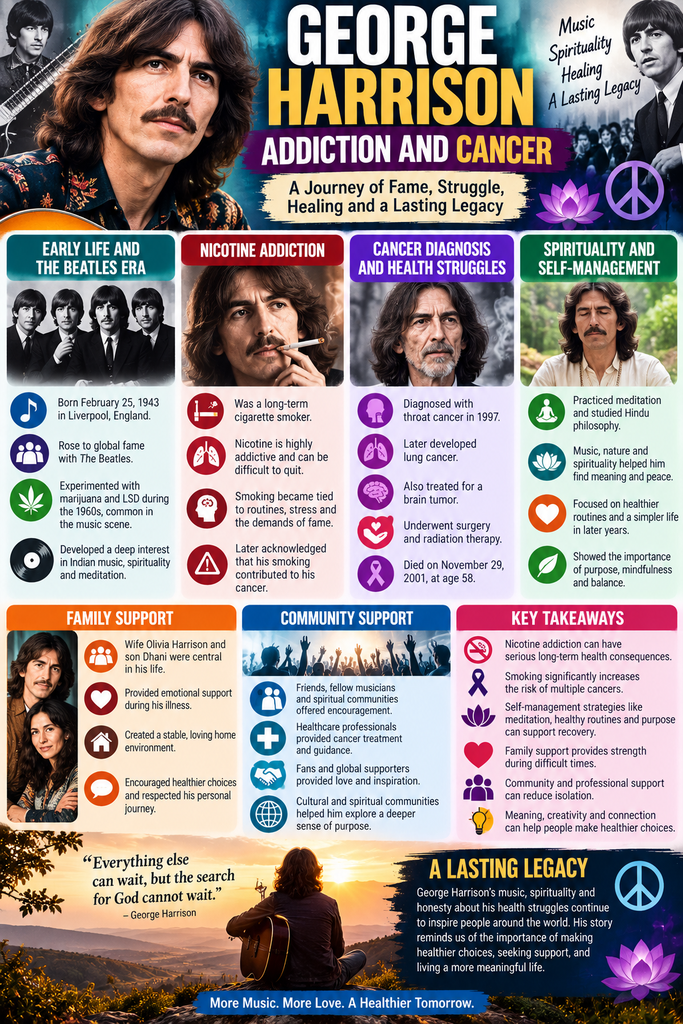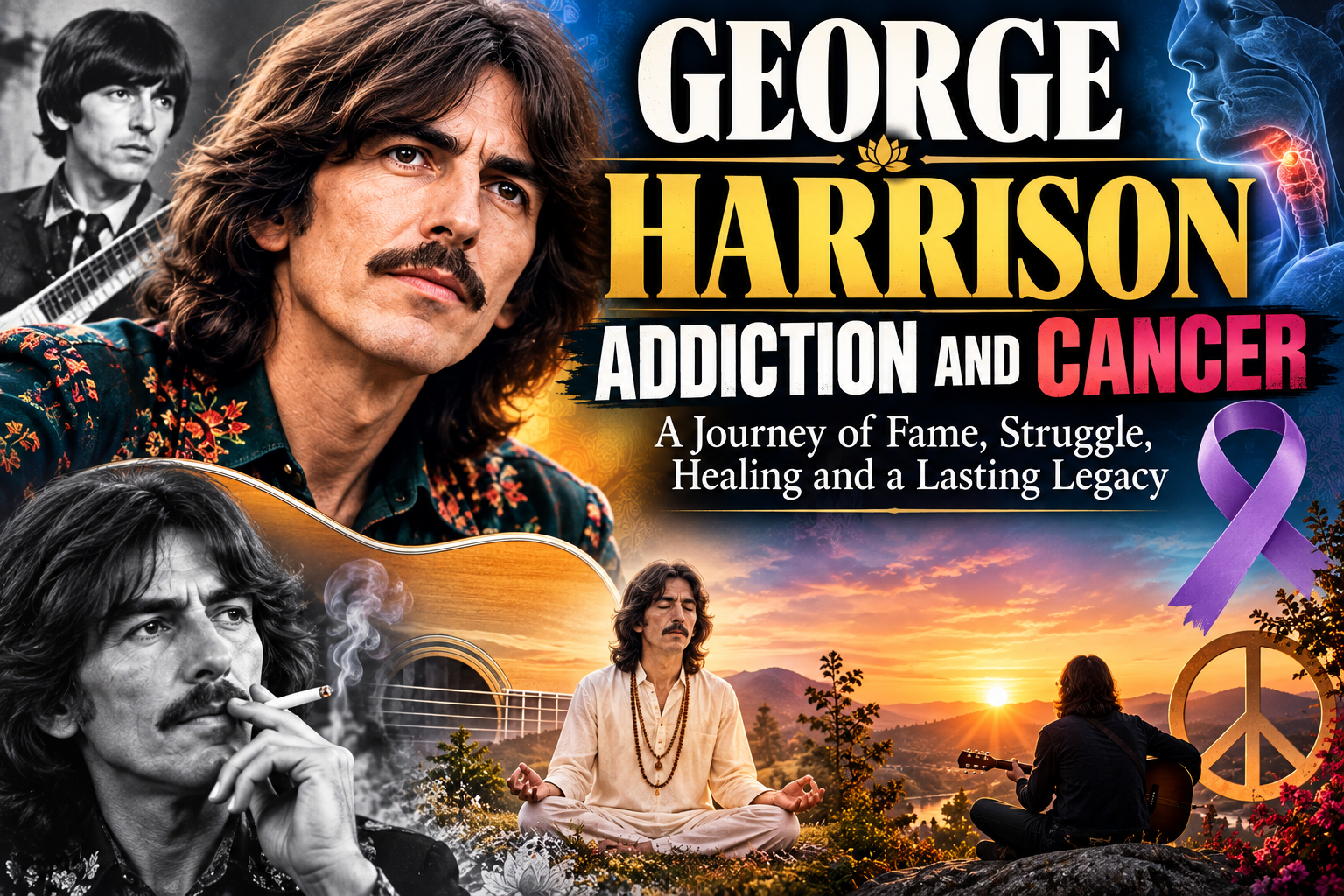
George Harrison, the legendary guitarist for the Beatles, lived a life filled with extraordinary musical achievement, spiritual exploration, and significant health challenges. Harrison was a longtime cigarette smoker and later spoke candidly about the connection between smoking and his cancer. He also experienced the pressures and substance-heavy culture surrounding the Beatles era. His journey provides an opportunity to examine nicotine dependence, substance use, cancer, spirituality, family relationships, and the importance of supportive communities.
It is important not to oversimplify Harrison’s medical history by labeling every period of drug experimentation as an addiction. His clearest documented long-term substance problem was cigarette smoking. Viewing his experience through that distinction makes his story a useful lesson in dependence, behavior change, cancer prevention, and recovery support.
George Harrison’s Experiences With Drugs and Smoking
During the 1960s, Harrison and the other Beatles encountered several psychoactive substances, including marijuana and LSD. Harrison later became increasingly interested in Indian spirituality and meditation, influences that changed how he thought about drugs, material success, and personal fulfillment.
Cigarettes were a more persistent issue. Harrison smoked heavily for many years. Nicotine dependence can be particularly difficult to overcome because cigarettes combine a powerful addictive drug with routines that may become embedded in everyday life.
Smoking can become associated with:
- Stress and anxiety.
- Socializing with other smokers.
- Drinking alcohol or coffee.
- Taking breaks from work.
- Coping with uncomfortable emotions.
- Habitual routines developed over many years.
- Environments where smoking is normalized.
These associations can remain powerful even when someone understands the health risks.
George Harrison’s Cancer Diagnosis
In 1997, Harrison was diagnosed with throat cancer. He underwent treatment, including surgery and radiation therapy.
Harrison publicly acknowledged his history of smoking when discussing the illness and described his cancer in connection with years of cigarette use.
His health problems did not end there. Cancer later affected his lung, and he subsequently received treatment for a brain tumor. Harrison died on November 29, 2001, at age 58.
His experience demonstrates why tobacco-related health risks can remain significant after decades of smoking. Tobacco smoke exposes tissues throughout the respiratory system to carcinogenic substances, increasing the risk of several cancers as well as cardiovascular and respiratory diseases.
Nicotine Addiction Is More Than a Habit
Someone may understand that cigarettes are dangerous and still find quitting extremely difficult. That apparent contradiction makes more sense when nicotine dependence is understood as an addiction rather than simply a bad habit.
Nicotine activates the brain’s reward pathways. Repeated exposure can lead to physical dependence, while smoking routines create powerful psychological and environmental associations.
When someone stops using nicotine, withdrawal may involve irritability, cravings, restlessness, difficulty concentrating, sleep disturbances, anxiety, or changes in appetite.
Successful cessation therefore often requires addressing both the physical dependence and the behavioral routines surrounding cigarettes.
Self-Management Strategies
Harrison’s later life was strongly influenced by spirituality, meditation, gardening, music, and a desire for greater peace away from celebrity culture. While these should not be presented as substitutes for medical addiction treatment, they illustrate how meaningful activities and personal values can become part of a healthier lifestyle.
For someone struggling with nicotine or another substance, useful self-management strategies can include:
- Identify triggers. Recognize the emotions, environments, routines, and relationships that increase cravings.
- Develop alternative coping skills. Exercise, meditation, music, hobbies, breathing exercises, or journaling can help you respond to stress in healthier ways.
- Create a structured quit plan. Choose a quit date and determine how cigarettes or other nicotine products will be removed from daily routines.
- Avoid high-risk situations. Early in cessation, reducing exposure to people or environments strongly associated with smoking can help.
- Seek evidence-based treatment. Counseling and FDA-approved smoking-cessation medications can significantly improve the likelihood of quitting successfully.
- Monitor physical health. Long-term smokers should discuss appropriate preventive care and concerning symptoms with healthcare professionals.
- Reconnect with personal values. Family, spirituality, creativity, health, or other meaningful priorities can strengthen motivation.
- Respond constructively to setbacks. Returning to nicotine does not require abandoning the entire effort. The experience can help identify weaknesses in the quit plan.
Spirituality and Meaning in Harrison’s Life
Spirituality became an especially important part of Harrison’s identity. His interest in Hindu philosophy, meditation, and Indian music extended far beyond a temporary fascination.
For Harrison, spirituality offered a perspective on fame, possessions, suffering, and mortality that differed considerably from the celebrity culture surrounding him.
In recovery, spirituality can provide meaning and connection for some people. Others may find those same benefits through therapy, family, art, nature, volunteering, exercise, or secular recovery communities.
Recovery does not have to be religious or spiritual. The broader lesson is that developing meaning and purpose beyond substance use can strengthen long-term behavioral change.
The Importance of Family Support
George Harrison’s family life became increasingly important during his later years. His wife, Olivia Harrison, and their son, Dhani, were central figures in his personal life as he faced serious illness.
Families dealing with addiction or tobacco dependence can provide meaningful support without attempting to control another person’s behavior.
Helpful family strategies include:
- Encouraging treatment without shame or humiliation.
- Maintaining a smoke-free home and vehicle.
- Removing environmental triggers when possible.
- Listening when the person discusses cravings or fears.
- Supporting healthy activities and routines.
- Accompanying a loved one to medical appointments when appropriate.
- Respecting the person’s autonomy while maintaining healthy boundaries.
- Celebrating progress rather than demanding perfection.
When cancer is also present, family support may expand to transportation, medical appointments, medication management, emotional companionship, household responsibilities, and communication with healthcare providers.
Community Support
Addiction recovery and serious illness can both become isolating. Community support connects individuals and families with people who understand their challenges and can provide practical assistance.
Community resources may include:
- Physicians and oncology teams.
- Tobacco-cessation specialists.
- Mental health counselors.
- Addiction professionals.
- Cancer support organizations.
- Smoking-cessation programs and quitlines.
- Peer-support and recovery groups.
- Spiritual or faith communities when desired.
- Friends, neighbors, and extended family.
- Creative, recreational, or volunteer communities.
Professional medical care is especially important when addiction and cancer intersect. Emotional support is valuable, but it cannot replace evidence-based cancer treatment or appropriate addiction care.
Cancer, Addiction, and Accountability
Harrison’s experience illustrates an important principle: recognizing addiction as a health condition does not mean pretending that individual choices have no consequences.
People can take responsibility for changing harmful behaviors without being defined or shamed by those behaviors.
This balance is particularly important with smoking. Someone may regret decades of tobacco use after receiving a cancer diagnosis. Blame cannot reverse the disease. Compassionate medical treatment, cessation support, emotional care, and realistic conversations about health are far more constructive.
What Families Can Learn From George Harrison’s Journey
Several lessons emerge when Harrison’s experience is viewed through the combined lenses of substance use, tobacco dependence, cancer, and personal growth:
- Nicotine dependence can persist for many years.
- Drug experimentation and addiction are not automatically the same thing.
- Cigarette smoking significantly increases the risk of multiple cancers.
- Understanding health risks does not necessarily make quitting easy.
- Professional cessation treatment can strengthen a person’s chances of success.
- Meaningful activities can help replace substance-centered routines.
- Family members can encourage without trying to control recovery.
- Community support can reduce isolation during addiction treatment and cancer care.
- Serious illness may change how people think about relationships, priorities, spirituality, and mortality.
- Prevention and early cessation are preferable to waiting until health consequences appear.
A Legacy Beyond Addiction and Cancer
George Harrison’s life should not be reduced to smoking or cancer. He was a musician, songwriter, producer, philanthropist, husband, father, gardener, and spiritual seeker whose influence continued long after the Beatles separated.
At the same time, his health history provides a meaningful public-health lesson. Long-term cigarette smoking can create dependence and contribute to devastating medical consequences. Recognizing that connection is not about judging Harrison—it is about learning from his experience.
Self-management can help people recognize triggers, build healthier routines, and seek treatment. Family support can provide encouragement, stability, and companionship without shame. Community and professional support can provide cessation treatment, counseling, medical care, peer connection, and cancer resources.
Harrison spent much of his later life searching for peace beyond fame and material success. His journey reminds us that recovery and health are not simply about eliminating a harmful substance. They can also involve finding healthier ways to manage stress, strengthening relationships, reconnecting with meaningful activities, accepting professional help, and building a life that gives you reasons to protect your health.
Frequently Asked Questions and Answers
1. Did George Harrison struggle with addiction?
George Harrison experimented with substances including marijuana and LSD during the Beatles era, but it is important not to automatically describe all of this experimentation as addiction. His clearest long-term substance-related problem was heavy cigarette smoking and nicotine dependence.
2. Was George Harrison a heavy smoker?
Yes. Harrison smoked cigarettes for many years. He later publicly acknowledged smoking when discussing his cancer and expressed regret about the habit.
3. Why is nicotine considered addictive?
Nicotine affects the brain’s reward pathways and reinforces repeated tobacco use. Regular smokers can develop physical dependence and may experience cravings, irritability, anxiety, restlessness, sleep problems, and difficulty concentrating when they try to quit.
4. What type of cancer did George Harrison have?
Harrison was diagnosed with throat cancer in 1997. He underwent treatment and later experienced additional cancer involving his lung and brain. He died on November 29, 2001, at age 58.
5. Did George Harrison believe smoking contributed to his cancer?
Yes. When discussing his throat cancer, Harrison publicly acknowledged his history of smoking and connected the disease with his cigarette use. Cigarette smoking is an established risk factor for cancers of the lung, throat, mouth, and other parts of the body.
6. Did George Harrison receive treatment for his cancer?
Yes. Harrison received several forms of medical treatment during his cancer journey, including surgery and radiation therapy. He later sought additional treatment as the disease progressed.
7. Did George Harrison quit smoking?
Harrison reportedly stopped smoking after years of tobacco use. Quitting remains beneficial even after someone has smoked for many years, although it cannot guarantee that tobacco-related health problems will not occur later.
8. What role did spirituality play in George Harrison’s life?
Spirituality became a major part of Harrison’s identity. His study of Hindu philosophy, meditation, and Indian spirituality influenced his music and his approach to life, suffering, and mortality. Spiritual practices can provide meaning and emotional support for some people, but they should complement, not replace, medical treatment.
9. What self-management strategies can help with nicotine addiction?
Helpful approaches include identifying triggers, establishing a quit date, removing cigarettes and smoking supplies, changing routines associated with smoking, exercising, practicing stress-management techniques, and seeking evidence-based cessation treatment. Developing meaningful activities can also help replace routines previously centered on smoking.
10. How can family members support someone trying to quit smoking?
Families can create smoke-free homes and vehicles, encourage treatment, avoid criticizing setbacks, participate in healthy activities together, and recognize progress. Support is generally more productive when it combines encouragement with healthy boundaries.
11. How did George Harrison’s family support him during his illness?
His wife, Olivia Harrison, and son, Dhani Harrison, were important figures in his later life. Family companionship and practical support can become particularly valuable when someone is coping with a serious illness such as cancer.
12. What community resources can help someone with nicotine dependence?
Healthcare professionals, tobacco-cessation counselors, quitlines, support groups, behavioral counseling, and community cessation programs can help. Evidence-based medications may also be appropriate and can be discussed with a healthcare professional.
13. What can people learn from George Harrison’s cancer experience?
One important lesson is that the health effects of long-term smoking can emerge after many years. His experience reinforces the value of preventing tobacco use, quitting as early as possible, obtaining appropriate medical care, and paying attention to persistent or unusual symptoms.
14. Can meditation or spirituality cure addiction or cancer?
No. Meditation and spiritual practices may help some people manage stress, find meaning, and cope emotionally, but they are not substitutes for evidence-based addiction treatment or cancer care. They are best viewed as complementary forms of support.
15. Does a relapse to smoking mean someone cannot quit?
No. Many people require several quit attempts. A setback can help identify triggers and reveal where additional behavioral, medical, family, or community support may be needed.
16. What is the biggest lesson from George Harrison’s journey?
Harrison’s life demonstrates how health, behavior, relationships, creativity, and personal meaning can intersect. His experience emphasizes that self-management can strengthen healthier habits, family support can provide stability during difficult periods, and professional and community support can reduce isolation and provide effective treatment.
George Harrison’s legacy is much larger than his experiences with smoking and cancer. His music, spirituality, creativity, and search for meaning continue to be remembered. At the same time, his health journey provides a powerful reminder that addressing nicotine dependence early can protect health and that people struggling to quit deserve treatment and support rather than judgment.
Video: