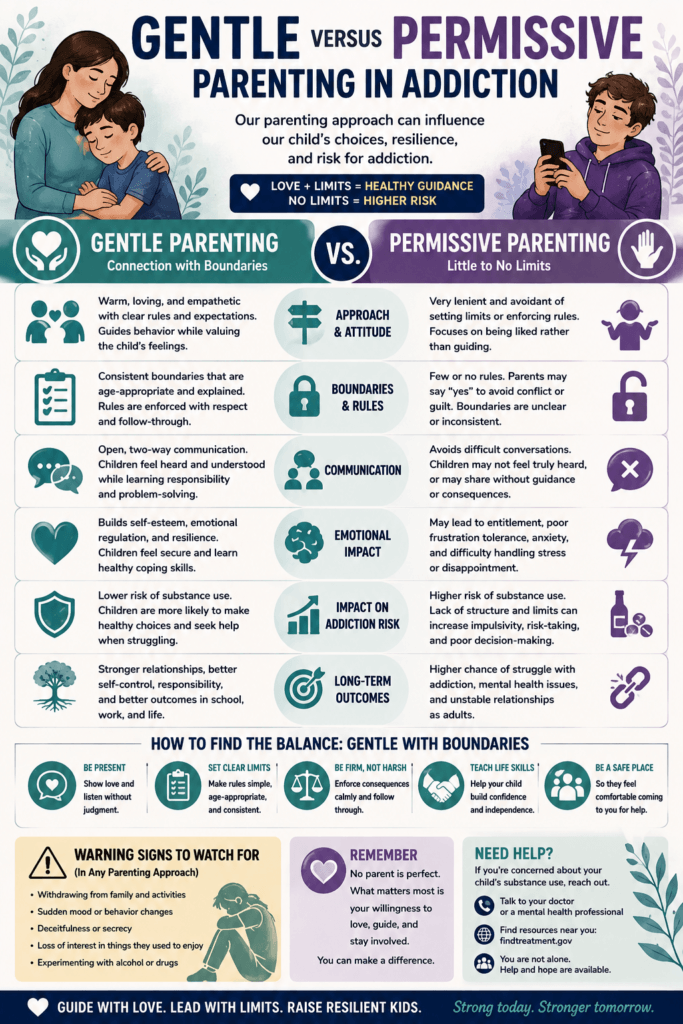
Parenting approaches can have a big impact when you’re supporting a child or teen through recovery, whether it’s from trauma, addiction, anxiety, or other tough patches. The two styles that get talked about a lot are gentle parenting and permissive parenting. The tricky part is, these two sound pretty similar on the surface but work in surprisingly different ways, especially when it comes to helping someone truly heal and grow. Here’s a look at how these approaches actually play out, plus what I’ve learned about which one tends to give recovery a boost best.
Understanding Gentle Parenting and Permissive Parenting
Gentle parenting is often confused with permissive parenting because both focus on warmth, kindness, and emotional support. But there are key differences in how they handle boundaries, discipline, and long-term growth.
Gentle parenting is all about respect; respect for your child, their emotions, and their needs, as well as for the family as a whole. It balances empathy with clear boundaries, helping kids know where the lines are without feeling shamed. This approach takes the whole person into account. I’ve noticed that gentle parenting really encourages kids to feel heard and safe, which is deeply helpful during recovery.
Permissive parenting, on the other hand, places a strong emphasis on keeping things peaceful, sometimes at the expense of structure or consistency. It’s high on love and low on rules. Parents coming from this style usually avoid saying “no” or enforcing consequences, hoping this will keep the relationship positive. The snag comes when kids don’t get enough guidance or structure to feel secure, especially when they’re recovering from something tough.
Why Parenting Style Makes a Real Difference in Recovery
When someone’s working through recovery, whether it’s from substance use, self-harm, or just high anxiety, environment matters. Recovery thrives where there’s safety, predictability, and emotional support. Structure is equally important, as it gives kids or teens anchors when everything else feels shaky.
Gentle parenting can offer real stability in these situations by mixing warmth with dependable routines and fair boundaries. It keeps the lines of communication open while gently steering kids back on track if they tip over a boundary. That combination builds trust and helps kids develop their own coping skills, something invaluable for lifelong resilience.
Permissive parenting, even though it comes from a place of love, doesn’t provide the same anchors. Without enough boundaries or clear expectations, kids might end up feeling unsure about what’s really safe or allowed. That unpredictability can pump up anxiety and make setbacks more likely during recovery.
Main Features of Gentle Parenting
Gentle parenting is designed to meet a kid’s emotional and developmental needs in a flexible but steady way. Some traits you’ll notice include:
- Empathy First: Kids are encouraged to talk about feelings, not hide them. Parents stay calm and curious, even during conflict.
- Clear Boundaries: Rules are clearly explained, and they make sense. If a limit is set, parents stick to it, but they’re not harsh about it.
- Natural Consequences: Instead of punishments, gentle parents rely on the natural outcomes of actions as learning opportunities. For example, if homework isn’t done, the child might receive a low grade but won’t be yelled at or shamed.
- Collaborative Problem Solving: When issues pop up, parents and kids look for solutions together rather than just telling kids what to do.
This kind of approach is handy because it models the same self-regulation and self-care that’s essential in recovery. Being able to talk things through honestly can help children connect with their feelings and make sense of their own behavior. In the long run, gentle parenting often helps children transfer these lessons into positive habits outside the home too.
Common Traits of Permissive Parenting
Permissive parenting comes from a place of kindness, but it can slip into overaccommodation. Here’s what makes permissive parenting recognizable:
- Few or No Rules: Kids have a lot of freedom, and rules (if there are any) aren’t often enforced.
- Rare Consequences: Parents step in to smooth things over if kids make mistakes, but consequences are inconsistent or missing.
- High Responsiveness, Low Demands: Parents are always emotionally available but ask little from their kids in terms of behavior or chores.
- Desire to Avoid Conflict: To keep things easy, parents may give in rather than hold the line, especially if kids get upset.
In recovery, permissive parenting can accidentally reinforce unhealthy patterns, because it removes limits that are actually comforting and needed by someone who is struggling. Also, kids might start to lose trust in boundaries altogether, leading them to seek structure elsewhere—or act out to “test” where the boundaries actually are.
How Gentle Parenting Supports Recovery
Gentle parenting creates a safe space for healing. Kids feel accepted and understood, but they also know what’s expected of them. Over time, I’ve noticed this helps kids build self-discipline and develop coping skills they can use for life. For example, if a teen is recovering from substance use, gentle parenting means listening without judgment when they talk about their struggles while still holding lines around risky behavior, like not keeping certain items in the house or having check-ins about friends and plans.
This approach also teaches emotional regulation, because kids watch parents stay calm and collected, even during difficult moments. That can be really helpful for kids who are relearning self-control or working on trust after trauma. Children start to realize that setbacks or mistakes are not a cause for shame but instead opportunities for understanding and growth. Self-worth gets a serious boost when a child knows their parent is steady and dependable, regardless of challenges.
Why Permissive Parenting Can Undermine Recovery
Recovery involves facing challenges and sometimes stepping outside your comfort zone. Permissive parenting’s lack of structure can make it harder for kids to grow in these areas. I’ve seen teens with permissive parents struggle to keep routines, skip therapy, or avoid tough conversations that are actually really important to healing.
Without boundaries, recovery sometimes gets replaced by avoidance-based coping, which can stall real progress. Kids might not learn healthy limits or get enough practice facing natural ups and downs with support, since there’s nothing reliable to lean on. This can keep children feeling “stuck” in their recovery, as they might not build the resilience needed to bounce back from small setbacks.
Practical Ways Parents Can Use Gentle Parenting in Recovery
- Create Predictable Routines: Even small routines, like regular mealtimes or bedtime rituals, give kids comfort during recovery. Predictability often acts as a “safety net.”
- Model Open Communication: Regularly ask questions like, “How are you feeling today?” or “What was the hardest part of your day?” and be open to whatever answer your child gives, even if it’s tough to hear.
- Stay Consistent with Boundaries: If you set a family rule, such as no screens after a certain hour, explain why clearly and follow through every time to build consistency.
- Practice Nonviolent Discipline: Use calm conversations or natural consequences instead of punishments. For instance, if a child skips a therapy appointment, talk through what led to that decision and discuss how to fix it instead of scolding.
- Support Healthy Coping Skills: Encourage journaling, relaxation techniques, or creative hobbies as alternatives when stress flares. Help your child track which strategies work and which they enjoy.
Common Challenges and How to Handle Them
- Emotional Overwhelm: Sometimes the urge to “fix” your child’s emotions can take over. Instead, try naming the feeling and just being present. Validating your child’s experience is often more powerful than rescuing them from discomfort.
- Persistent Pushback: Kids recovering from trauma or addiction might resist routines. Keep boundaries steady, and offer choices within limits to give them some control over their day. This approach helps reestablish a sense of agency without sacrificing the stability they need.
- Mixed Family Styles: If not everyone in the family is on board with gentle parenting, try focusing on clear communication and explaining the reasons behind your methods. Open discussions can create common ground over time, even if some relatives stick to different approaches.
Putting It Into Practice: Real-World Example
A friend of mine used gentle parenting while her child worked through anxiety and school refusal. She maintained boundaries around attendance and bedtime but offered plenty of empathy when her child expressed fear. They started a shared journal to check in about feelings daily, and over a few months, her child began to trust that home and recovery were safe places to land. Over time, not only did school attendance improve, but her child felt comfortable sharing more about school challenges and working together on problem-solving.
What Does Research Say?
Studies from organizations such as the American Psychological Association note that firm-but-warm parenting is linked to better emotional recovery, stronger self-worth, and fewer setbacks than permissive or harsh parenting. Kids consistently say they want boundaries as much as support, even if they push back at first. Research shows that children need structure just as much as encouragement; it builds a strong emotional foundation and gives them the tools to bounce back during tough times.
Frequently Asked Questions
What’s the main difference between gentle and permissive parenting?
Gentle parenting involves warm support, consistent boundaries, and problem-solving. Permissive parenting is warm, but lacks rules and follow-through, which can make things feel unpredictable for kids.
Which style is better for my child in recovery?
The evidence and real-life experience both point to gentle parenting. It creates a safe, supportive framework that helps kids build the skills and confidence they need to heal and thrive. Gentle parenting is especially helpful when your child or teen faces challenging feelings or setbacks that come with recovery.
How can I switch from permissive to gentle parenting?
Start by setting one or two clear family rules, explain them calmly, and stick with them. Keep communication open and focus on connection; kids may test the limits at first, but they’ll start feeling more grounded and secure when they know what to expect each day.
Final Thoughts
Choosing a parenting approach is a big decision, but it doesn’t have to feel overwhelming. Gentle parenting gives kids and teens steady support while also guiding them with healthy boundaries, which really helps during tough recovery adventures. It’s not about being perfect, but about showing up, listening with respect, and staying steady through the ups and downs. The bottom line is: balance warmth with structure, and you’ll be helping your child build confidence and resilience for life.
Video: Gentle Parenting vs Permissive: Which One Are You? #parentingstyles #shorts