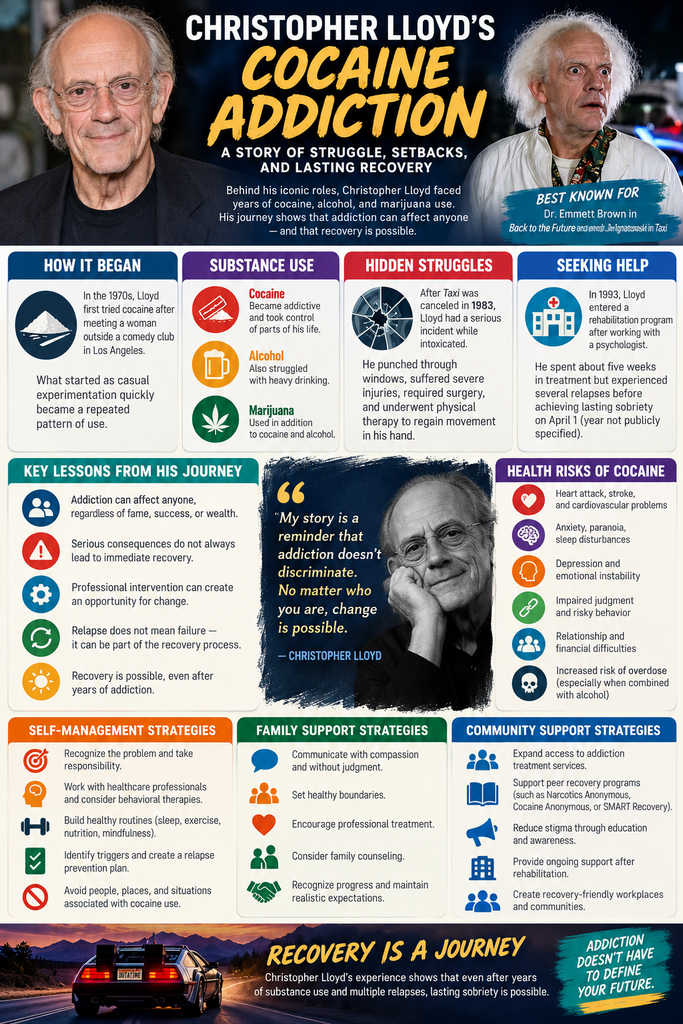
Christopher Lloyd, the legendary actor best known for portraying Dr. Emmett Brown in Back to the Future and Reverend Jim Ignatowski in Taxi, has entertained audiences for decades. Behind his extraordinary Hollywood career, however, Lloyd experienced a prolonged struggle with cocaine, alcohol, and marijuana use that remained largely hidden from the public.
In his memoir, In My Own Time, released October 27, 2026, Lloyd, now 88, revealed how his cocaine use began in the 1970s, gradually became entrenched in his life, and eventually led him to seek professional treatment. His recovery included rehabilitation, several relapses, and ultimately lasting sobriety.
His experience illustrates an important reality: Addiction can affect anyone, regardless of fame, professional accomplishments, financial security, or social status. His journey also demonstrates why recognizing substance use problems, obtaining appropriate treatment, and developing long-term recovery support are essential.
Christopher Lloyd: From Cocaine to Recovery
1. Christopher Lloyd’s Early Experiences With Cocaine
Lloyd revealed that he first experimented with cocaine in the 1970s after meeting a woman outside a comedy club in Los Angeles. What began as a seemingly casual experience developed into repeated use.
In his memoir, Lloyd acknowledged that cocaine quickly became appealing and eventually gained control over aspects of his life.
Over time, his substance use expanded to include alcohol and marijuana. Despite these struggles, he maintained his acting career and reported that he never performed onstage or in front of cameras while intoxicated.
This distinction matters because professional success does not necessarily mean someone is free from addiction.
Why cocaine can become addictive
Cocaine is a powerful central nervous system stimulant that increases dopamine signaling in the brain’s reward pathways. Its reinforcing effects can encourage repeated use, while long-term exposure may change motivation, impulse control, and stress responses.
Common risk factors for cocaine use disorder include:
- Intense reward and reinforcement: Cocaine can produce brief feelings of euphoria, energy, and confidence.
- Psychological cravings: Repeated exposure may create strong urges to use the substance.
- Stress and emotional difficulties: Some individuals use stimulants to cope with distress or uncomfortable emotions.
- Environmental influences: Social situations where cocaine is available may encourage experimentation and continued use.
- Tolerance and compulsive behavior: Individuals may escalate their use or struggle to stop despite negative consequences.
- Co-occurring substance use: Combining cocaine with alcohol or other drugs increases health risks and can complicate recovery.
Although Lloyd described becoming hooked very quickly, not everyone who experiments with cocaine develops an addiction. The progression depends on multiple biological, psychological, and environmental factors.
2. The Hidden Consequences of His Addiction
One of the most disturbing incidents Lloyd described occurred after Taxi was canceled in 1983.
During a period of alcohol and drug use, he argued with his then-girlfriend. After spending the night at his nephew’s home, Lloyd returned to find the door locked.
While intoxicated, he punched through windows, suffering serious injuries and substantial blood loss. He subsequently required emergency medical treatment, surgery, and physical therapy to restore movement in his hand.
The incident illustrates how substance use can impair judgment, increase impulsivity, and contribute to dangerous situations.
Health and behavioral consequences of cocaine addiction
Long-term cocaine use may contribute to:
- Cardiovascular complications, including heart attack, arrhythmias, and stroke.
- Anxiety, irritability, paranoia, and sleep disturbances.
- Depression and emotional instability, particularly during withdrawal.
- Relationship conflicts and impaired decision-making.
- Financial difficulties and reduced quality of life.
- Increased risk of overdose, including from cocaine contaminated with fentanyl.
- Serious complications when cocaine and alcohol are combined, partly because the body can form cocaethylene, a substance associated with additional cardiovascular toxicity.
These are recognized risks of cocaine use and should not be interpreted as conditions Lloyd personally experienced unless documented.
3. Christopher Lloyd’s Decision to Seek Treatment
In 1993, Lloyd entered a rehabilitation program after working with a psychologist who helped him recognize the negative effects of substance use.
He spent approximately five weeks receiving treatment.
However, rehabilitation did not immediately resolve his addiction. Lloyd acknowledged experiencing several relapses before eventually achieving lasting sobriety on April 1, several years later. The report does not specify the year of that final sobriety date.
His experience highlights a critical lesson: Recovery is often a continuing process rather than a single event.
A return to substance use does not erase earlier progress, but it signals the need to reassess treatment, identify contributing factors, and strengthen recovery strategies.
Self-Management Strategies for Cocaine Addiction Recovery
Although Lloyd has publicly discussed rehabilitation and sobriety, the specific daily recovery techniques he personally used have not been fully documented. The following evidence-informed strategies can help others facing similar challenges.
Recognizing addiction and taking responsibility
Acknowledging that substance use has become harmful is an important step toward recovery.
Individuals can begin by:
- Evaluating how cocaine affects their physical health, emotional well-being, and relationships.
- Identifying situations that increase cravings.
- Recognizing unsuccessful attempts to reduce or stop use.
- Discussing substance use honestly with a qualified healthcare professional.
- Establishing achievable recovery goals.
Self-awareness helps individuals recognize the difference between occasional experimentation and a developing substance use disorder.
Participating in evidence-based treatment
Effective treatment for cocaine use disorder typically involves behavioral interventions.
Approaches include:
- Cognitive behavioral therapy (CBT): Helps individuals recognize unhealthy thought patterns, manage triggers, and develop coping skills.
- Contingency management: Uses structured, positive incentives to reinforce abstinence and participation in treatment.
- Motivational interviewing: Helps individuals explore ambivalence and strengthen their motivation for change.
- Relapse prevention counseling: Helps patients recognize high-risk situations and develop practical responses.
- Treatment for co-occurring disorders: Addresses depression, anxiety, alcohol use disorder, or other conditions when present.
Currently, there is no FDA-approved medication specifically for cocaine use disorder. However, medications may be appropriate for co-occurring psychiatric conditions or other substance use disorders.
Developing healthy daily routines
Consistent daily habits can support emotional stability and reduce exposure to triggers.
Helpful strategies include:
- Establishing regular sleep and wake times.
- Engaging in physical activity appropriate to one’s health.
- Maintaining balanced nutrition and hydration.
- Practicing mindfulness, breathing exercises, or meditation.
- Avoiding people, places, and situations associated with cocaine use.
- Participating in meaningful hobbies, education, employment, or volunteer activities.
- Scheduling regular follow-up appointments with addiction treatment professionals.
These approaches complement professional treatment rather than replace it.
Creating a relapse prevention plan
Relapse prevention involves identifying warning signs before substance use resumes.
A practical plan should include:
- Personal triggers and high-risk environments.
- Early warning signs such as cravings, isolation, or changes in mood.
- Coping strategies for managing urges.
- Trusted individuals who can provide immediate support.
- Contact information for treatment providers.
- Steps to quickly return to care after a lapse.
For individuals who also drink heavily, medical assessment is important before stopping alcohol because withdrawal can cause seizures and other life-threatening complications.
Family Support Strategies: Helping a Loved One Recover
Addiction affects more than the individual using substances. Family members may experience fear, uncertainty, frustration, and emotional exhaustion.
Lloyd’s public account does not establish precisely how his family participated in his treatment. Nevertheless, family involvement can support recovery when relationships are safe and supportive.
Providing compassionate communication
Families can encourage treatment without judgment or confrontation.
Helpful approaches include:
- Listening carefully when a loved one discusses substance use.
- Avoiding labels that reinforce shame.
- Expressing concern about specific behaviors rather than attacking someone’s character.
- Encouraging professional assessment and treatment.
- Recognizing positive behavioral changes.
- Maintaining realistic expectations about recovery.
For example, a family member might say:
“I’m concerned about how cocaine is affecting your health and relationships. I care about you, and I want to help you find treatment and support.”
Compassionate communication can encourage openness without minimizing the seriousness of addiction.
Establishing healthy boundaries
Supporting someone with addiction does not mean accepting unsafe or harmful behavior.
Families should consider:
- Refusing to provide money that may support substance use.
- Avoiding covering up serious consequences of addiction.
- Establishing clear expectations about substance use in the home.
- Protecting children and vulnerable family members from unsafe situations.
- Seeking professional help when conflict, threats, or violence occur.
Healthy boundaries protect family well-being while allowing individuals to take responsibility for their recovery.
Participating in family counseling
Family therapy can improve communication, address unresolved conflict, and strengthen relationships.
Potential benefits include:
- Understanding substance use disorders as treatable health conditions.
- Recognizing patterns of conflict and unhealthy coping.
- Developing constructive problem-solving skills.
- Learning how to respond to relapse.
- Reducing blame and stigma.
- Supporting long-term recovery without neglecting personal well-being.
Family members may also benefit from their own counseling or peer support, regardless of whether their loved one is ready for treatment.
Community Support Strategies for Long-Term Sobriety
Community resources provide opportunities for connection, accountability, education, and continuing care.
Christopher Lloyd’s recovery story shows that entering rehabilitation can be an important first step, but ongoing support may also be necessary.
Expanding access to addiction treatment
Communities can improve recovery outcomes by:
- Increasing access to affordable outpatient and residential treatment.
- Offering evidence-based behavioral therapies, particularly contingency management.
- Providing integrated treatment for mental health and substance use disorders.
- Expanding telehealth and transportation services.
- Supporting continuing care after rehabilitation.
- Reducing barriers related to insurance, cost, and stigma.
Encouraging peer recovery programs
Peer support organizations can help individuals connect with others who understand the challenges of addiction.
Examples include:
- Narcotics Anonymous (NA), which offers peer-led recovery meetings.
- Cocaine Anonymous (CA), which focuses on recovery from cocaine and other substance use.
- SMART Recovery, which uses evidence-informed self-management and mutual support principles.
- Community recovery centers that provide education, peer mentoring, and referrals.
Peer support can complement clinical treatment, although not everyone needs to participate in a recovery program.
Reducing addiction-related stigma
Communities should recognize that substance use disorders are medical conditions influenced by complex biological, psychological, and social factors.
Public education can help by:
- Replacing judgmental language with respectful terminology.
- Sharing recovery experiences with appropriate consent.
- Encouraging early treatment rather than waiting for a crisis.
- Educating employers about recovery-friendly workplace practices.
- Supporting policies that improve access to evidence-based treatment.
- Recognizing that addiction can affect individuals from every socioeconomic background.
Lloyd’s willingness to discuss his experiences may help challenge the misconception that successful individuals are immune to addiction.
Important Lessons From Christopher Lloyd’s Recovery Journey
Several lessons emerge from Lloyd’s public account.
First, addiction can remain hidden behind professional achievement. Lloyd continued building a successful acting career while experiencing significant substance use problems.
Second, serious consequences do not always lead to immediate recovery. His account of the 1980s injury and subsequent treatment illustrates how substance use problems can continue despite significant harm.
Third, professional intervention can create an opportunity for change. Lloyd identified psychological treatment and rehabilitation as important steps toward recovery.
Fourth, relapse does not necessarily prevent long-term sobriety. His experience included multiple setbacks before he established lasting abstinence.
Finally, recovery is possible even after years of addiction. His willingness to discuss the past demonstrates that substance use problems do not have to define an individual’s entire life.
Resources for Individuals and Families
Individuals experiencing cocaine addiction can obtain confidential guidance and treatment referrals through established organizations.
- SAMHSA National Helpline: 1-800-662-HELP (4357), offering treatment referral information.
- FindTreatment.gov: Find substance use treatment providers.
- 988 Suicide & Crisis Lifeline: Call or text 988 for immediate emotional or mental health crisis support.
- SMART Recovery: Explore recovery meetings and resources.
- Narcotics Anonymous: Find peer recovery support.
Anyone experiencing chest pain, seizures, severe agitation, difficulty breathing, or loss of consciousness following cocaine use should receive emergency medical evaluation. Call 911 in the United States.
Conclusion: Christopher Lloyd’s Journey Shows That Recovery Is Possible
Christopher Lloyd’s journey from cocaine and alcohol addiction to lasting sobriety offers an important perspective on the challenges of substance use disorders. Despite achieving extraordinary success in Hollywood, he experienced years of problematic substance use, serious personal consequences, and repeated setbacks before finding sustained recovery.
His story emphasizes that addiction does not discriminate based on age, fame, wealth, or professional accomplishments. It also demonstrates that recovery may require professional treatment, personal commitment, behavioral changes, and continuing support.
For individuals struggling with cocaine addiction, self-management strategies can strengthen motivation, improve coping skills, and reduce relapse risks. Families can provide compassionate encouragement while maintaining healthy boundaries. Communities can contribute by expanding treatment services, promoting peer recovery programs, and challenging the stigma surrounding addiction.
The most important lesson from Christopher Lloyd’s experience is that addiction does not have to determine a person’s future. Even after years of substance use and multiple relapses, meaningful change and lasting recovery remain possible.
Frequently Asked Questions and Answers
Understanding Christopher Lloyd’s Addiction Journey
1. Who is Christopher Lloyd, and why is his cocaine addiction story important?
Christopher Lloyd is an American actor best known for portraying Dr. Emmett Brown in Back to the Future and Reverend Jim Ignatowski in Taxi. His reported experiences with cocaine and other substances offer an opportunity to discuss how addiction can affect successful individuals, often without obvious signs to the public. His story also highlights the importance of treatment, relapse prevention, and long-term recovery.
2. When did Christopher Lloyd begin using cocaine?
According to accounts attributed to Lloyd, he first experimented with cocaine during the 1970s. What began as experimentation reportedly developed into repeated substance use. His experience illustrates how cocaine’s powerful reinforcing effects can contribute to addiction.
3. What substances did Christopher Lloyd reportedly struggle with?
Lloyd has been reported to have discussed cocaine, alcohol, and marijuana use. Using multiple substances can increase health risks and complicate treatment, especially when stimulants such as cocaine are combined with alcohol.
4. How did cocaine addiction affect Christopher Lloyd’s personal life?
Reports about Lloyd’s substance use describe periods of impaired judgment and interpersonal difficulties. One account involves a serious hand injury after he reportedly punched through windows while intoxicated. Such incidents illustrate how substance use can contribute to impulsive behavior and physical harm.
5. Did Christopher Lloyd’s addiction affect his acting career?
Lloyd maintained a successful acting career while reportedly struggling with substance use. He has been described as separating his substance use from his professional performances. However, maintaining employment or achieving professional success does not rule out a substance use disorder.
6. When did Christopher Lloyd seek treatment for addiction?
Published accounts describe Lloyd entering a rehabilitation program in 1993 after working with a psychologist. He reportedly participated in approximately five weeks of treatment. This demonstrates the potential importance of professional assessment and structured rehabilitation.
7. Did Christopher Lloyd experience relapses after rehabilitation?
Yes, according to accounts of his recovery, Lloyd experienced several relapses after his initial treatment. Relapse can occur during recovery from substance use disorders, but it is not inevitable. When it happens, treatment plans should be reassessed and strengthened.
8. Is Christopher Lloyd sober today?
Lloyd has been described as achieving lasting sobriety after experiencing setbacks. His current recovery status should be based on his most recent verified statements, not assumptions.
9. What motivated Christopher Lloyd to stop using cocaine?
Reports suggest that professional psychological support helped Lloyd recognize the harmful effects of his substance use. However, his complete personal motivations and private treatment decisions are not publicly established. In general, recognizing health consequences, relationship difficulties, and loss of control can motivate individuals to seek help.
10. What is the most important lesson from Christopher Lloyd’s addiction journey?
The central lesson is that addiction can affect anyone, regardless of wealth, fame, or professional accomplishments. Effective treatment and sustained recovery are possible, even after years of substance use or repeated setbacks.
Cocaine Addiction and Its Health Effects
11. Why is cocaine so addictive?
Cocaine increases dopamine signaling in the brain’s reward system, producing intense but relatively short-lived feelings of pleasure, energy, and confidence. Repeated use can alter reward processing, increase cravings, and make it difficult to control substance use despite harmful consequences.
12. What are the warning signs of cocaine addiction?
Common warning signs include:
- Strong cravings and unsuccessful attempts to stop.
- Increasing time spent obtaining or using cocaine.
- Irritability, anxiety, or sleep disturbances.
- Neglecting responsibilities or relationships.
- Continuing use despite physical or psychological harm.
- Using cocaine to cope with stress or emotional difficulties.
A professional assessment is necessary to determine whether someone meets the diagnostic criteria for cocaine use disorder.
13. What are the long-term health risks of cocaine use?
Long-term cocaine use can increase the risk of heart attack, stroke, cardiac arrhythmias, seizures, anxiety, depression, and cognitive difficulties. Snorting cocaine may also damage nasal tissues. Cocaine contaminated with fentanyl creates additional overdose risks.
14. Why is combining cocaine with alcohol particularly dangerous?
When cocaine and alcohol are used together, the liver can produce cocaethylene, a metabolite associated with increased cardiovascular toxicity. This combination may raise the risk of dangerous heart rhythms, cardiac injury, and sudden death.
15. Can someone recover from cocaine addiction after many years?
Yes. Recovery is possible even after prolonged substance use. Evidence-based behavioral treatments, ongoing care, supportive relationships, and relapse-prevention planning can help individuals achieve and maintain recovery.
Self-Management and Recovery Strategies
16. What self-management strategies can help someone recovering from cocaine addiction?
Effective strategies include identifying triggers, avoiding high-risk environments, maintaining consistent sleep and exercise routines, managing stress, and engaging in professional treatment. A written relapse prevention plan can help individuals respond to cravings before substance use resumes.
17. What treatments are most effective for cocaine use disorder?
Contingency management has particularly strong evidence for stimulant use disorders. Cognitive behavioral therapy, community reinforcement approaches, and motivational interventions can also help. There is currently no FDA-approved medication specifically for cocaine use disorder.
18. How can someone manage cocaine cravings without relapsing?
Cravings can be managed by leaving triggering environments, contacting a trusted support person, practicing mindfulness, using coping skills learned in therapy, and engaging in alternative activities. Cravings often fluctuate in intensity and can pass without substance use.
19. Does relapse mean addiction treatment has failed?
No. Relapse indicates that recovery strategies may need adjustment, not that long-term recovery is impossible. Individuals should promptly reconnect with their treatment team, identify contributing factors, and revise their care plan.
20. How important is mental health treatment during cocaine addiction recovery?
Mental health treatment is essential when conditions such as depression, anxiety, PTSD, or bipolar disorder coexist with substance use. Integrated treatment can address both conditions and reduce barriers to sustained recovery.
Family Support Strategies
21. How can families help someone struggling with cocaine addiction?
Families can communicate compassionately, encourage professional treatment, help identify recovery resources, and recognize positive changes. Support should avoid blame while maintaining appropriate expectations and boundaries.
22. What should families avoid doing when supporting someone with addiction?
Families should avoid shaming, threatening, enabling harmful behaviors, or attempting to control every aspect of recovery. They should also avoid providing money that may support substance use or concealing dangerous situations.
23. Can family counseling improve addiction recovery?
Yes. Family counseling can improve communication, reduce conflict, establish healthy boundaries, and help relatives understand substance use disorders. It can also provide emotional support for family members affected by addiction.
24. How should families respond when a loved one relapses?
Families should respond calmly, assess immediate safety, encourage prompt professional reassessment, and reinforce healthy boundaries. If an overdose or medical emergency is suspected, emergency services should be contacted immediately.
Community Support and Addiction Awareness
25. What community resources can support cocaine addiction recovery?
Community resources include Narcotics Anonymous, Cocaine Anonymous, SMART Recovery, licensed addiction treatment centers, mental health clinics, and peer recovery programs. These services can provide social connection, practical guidance, and continuing support.
26. How can communities reduce the stigma surrounding cocaine addiction?
Communities can promote evidence-based education, use respectful language, support recovery-friendly workplaces, and encourage treatment rather than judgment. Public discussions of recovery can help challenge misconceptions about addiction.
27. What role do healthcare professionals play in cocaine addiction treatment?
Healthcare professionals can screen for substance use disorders, assess cardiovascular and psychiatric complications, provide behavioral treatment referrals, coordinate care for co-occurring conditions, and monitor recovery progress.
28. What can society learn from Christopher Lloyd’s decision to share his addiction history?
Lloyd’s disclosure illustrates that addiction can remain hidden behind professional success. In his memoir, In My Own Time, published October 27, 2026, he describes years of substance use, rehabilitation in 1993, and several relapses before achieving lasting sobriety.
His experience encourages a more compassionate understanding of substance use disorders and emphasizes the importance of treatment access.
29. Where can someone seek help for cocaine addiction?
In the United States, individuals and families can contact the SAMHSA National Helpline at 1-800-662-HELP (4357) or visit FindTreatment.gov to locate treatment providers. For an immediate mental health crisis, call or text 988. For a suspected overdose or medical emergency, call 911.
30. What is the final message of Christopher Lloyd’s recovery journey?
Christopher Lloyd’s story demonstrates that addiction can affect people from all backgrounds, including individuals with successful careers and public recognition. His reported experience with treatment, relapse, and eventual sobriety reinforces an important message: Recovery is possible, and setbacks do not have to define a person’s future.