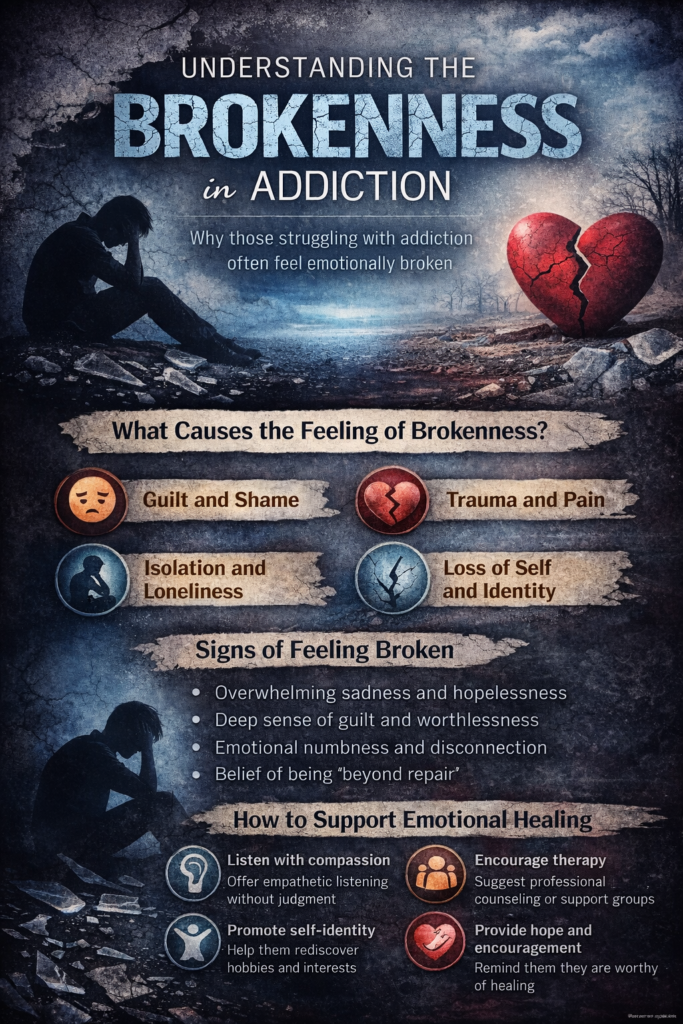
Addiction is frequently linked with deep emotional distress, often leaving individuals with a strong sense of brokenness. This feeling can show up as guilt, shame, isolation, and a diminished sense of identity. By its nature, addiction creates disconnection—from oneself and from others—making it easy to believe that the damage is permanent. However, this sense of being “broken” is not fixed; it develops from the cycle of substance use and the emotional struggles that come with it. Recognizing this emotional impact is a vital step toward recovery. With self-awareness, support, and compassion, what feels like brokenness can become a starting point for growth, healing, and rebuilding a sense of self.
Feeling Broken in Addiction: Understanding the Emotional Struggles
Addiction often brings with it a profound sense of emotional brokenness. For many, substance use begins as a way to manage overwhelming feelings—sadness, shame, fear, or anxiety. But over time, it leads to a deep sense of being fractured, disconnected from oneself and others. This feeling of brokenness is not just a byproduct of addiction, but often a core experience that makes recovery seem daunting and nearly impossible.
The good news? It is possible to heal from that feeling of brokenness. Understanding why we feel broken and acknowledging those emotions is the first step in the healing process.
Why Addiction Leads to Feelings of Brokenness
Addiction is often driven by a need to escape emotional pain. When someone turns to substances, it’s frequently because they feel overwhelmed by difficult emotions or life circumstances. Over time, this reliance on substances to cope can lead to:
- Emotional numbness: Addiction can numb feelings, making it harder to connect with emotions or people, leading to a sense of isolation.
- Guilt and shame: As addiction progresses, many individuals feel they are failing themselves or their loved ones, which deepens the sense of brokenness.
- Loss of self: Addiction distorts one’s identity. Individuals may feel disconnected from who they once were or who they could be, which can contribute to a sense of irreparability.
- Physical and mental damage: Prolonged substance use can affect cognitive function, mental health, and physical well-being, reinforcing feelings of brokenness and hopelessness.
Emotional Pain and the Illusion of Brokenness
The feeling of being “broken” is often a reflection of the intense emotional pain and internal conflict that addiction creates. In the depths of addiction, it can seem as though there is no way out—no way to feel whole again.
But this feeling of brokenness is not a permanent condition. It is an emotional reaction to the destructive cycle of substance use and the overwhelming difficulties that accompany addiction. In recovery, the goal is not to erase this feeling of brokenness but to understand and heal the underlying pain.
The Healing Process: From Broken to Rebuilt
The road to recovery is not about “fixing” oneself, because, in truth, there is nothing inherently broken within a person that cannot be healed. Rather, recovery is about rebuilding what was lost—reconnecting with emotions, rediscovering identity, and finding peace amidst the pain.
Steps toward healing from the feeling of brokenness:
- Acknowledge the pain: The first step is to recognize and accept the feelings of brokenness without judgment. This allows individuals to address the emotional wounds at the heart of addiction.
- Self-compassion: Often, the feeling of brokenness is exacerbated by shame or self-criticism. Practicing self-compassion can ease this pain, reminding individuals that healing takes time and that no one is beyond repair.
- Support systems: Connection with others—whether through family, friends, or support groups—is crucial in the healing process. Support helps individuals feel less alone and validates the emotional struggles they face.
- Therapy and counseling: Professional therapy can help individuals uncover and process underlying traumas or emotional issues that contributed to the feeling of being broken. Healing often involves deep emotional work and learning healthier ways to cope with difficult emotions.
- Mindfulness and self-reflection: Mindfulness practices help individuals stay present and accept their feelings without being overwhelmed. Journaling, meditation, or breathing exercises can help restore emotional balance.
The Role of Sobriety in Healing
Sobriety is a critical part of recovery, not just because it ends the cycle of addiction, but because it allows the emotional and physical healing process to begin. Substance use often clouds the emotional landscape, making it difficult to connect with feelings in a healthy way.
As sobriety takes hold:
- Clarity begins to return: Without substances clouding judgment, individuals can see the roots of their brokenness and begin to work through them.
- Emotions are restored: Sobriety opens the door to feeling emotions again, which, although sometimes painful, are necessary for healing.
- Strength and resilience are built as individuals move through the challenges of recovery, gaining confidence and resilience that reinforce their sense of self-worth and prove they are not truly “broken.”
Rebuilding Self-Worth in Recovery
The sense of brokenness often stems from a loss of self-worth. Recovery is an opportunity to rebuild that self-worth, step by step. This can involve:
- Reaffirming personal values: Rediscover what matters most to you, and start living in alignment with those values.
- Setting goals and achieving them: Small, achievable goals in recovery help build confidence and restore a sense of accomplishment.
- Forgiving yourself: Let go of guilt and regret, and replace them with self-compassion and understanding.
Healing is not linear, and the feeling of brokenness may resurface at times. But through recovery, individuals can learn to integrate their experiences, accept their flaws, and emerge stronger and more resilient.
Closing Thought
The feeling of being broken in addiction is not a permanent state, but a product of emotional distress, self-doubt, and coping mechanisms gone astray. Addiction may cause individuals to feel like they have lost themselves, but recovery offers the opportunity to rebuild from the inside out. With time, support, and self-compassion, the feeling of brokenness can transform into a story of resilience, growth, and healing. Through sobriety, sleep, serenity, and emotional healing, individuals can rediscover their strength and emerge from the darkness into a more whole and healthy life.
Managing the Feeling of Brokenness in Addiction: Self-Strategies for Healing and Recovery
Addiction often comes hand-in-hand with a deep sense of emotional brokenness. This feeling can manifest as isolation, shame, guilt, or a sense of being irreparably damaged. It’s a feeling many in recovery struggle with—the belief that they are too far gone to heal, that their past mistakes and addictions define who they are.
But this sense of brokenness is not the end of the story. In fact, it’s often the beginning of the recovery process. Understanding the feeling of brokenness and learning how to manage it through self-compassion and actionable strategies is key to reclaiming one’s life and moving forward in recovery.
Why Does Addiction Cause the Feeling of Brokenness?
Addiction creates an emotional void that many try to fill with substances. The use of alcohol, drugs, or other behaviors may begin as an attempt to numb pain or escape difficult emotions. Over time, however, addiction leads to further emotional and physical damage, contributing to a deep sense of brokenness.
Here’s why addiction often leads to feelings of brokenness:
- Emotional suppression: Addiction numbs emotions, preventing individuals from addressing or processing feelings of sadness, fear, anger, or shame.
- Loss of self-identity: Addiction can strip away a person’s sense of self-worth, leading to feelings of disconnection from who they once were or who they could be.
- Guilt and shame: Addiction often involves destructive behavior that hurts relationships, finances, and personal well-being. These consequences fuel feelings of regret and hopelessness.
- Isolation: Addiction can lead individuals to withdraw from loved ones, reinforcing a sense of loneliness and disconnection from others.
The result is often a belief that they are “broken” beyond repair. However, addiction is a pattern, not an identity, and this feeling of brokenness can be addressed through self-awareness, self-compassion, and healthy coping strategies.
Self-Management Strategies for Managing Brokenness in Addiction Recovery
Healing from the feeling of brokenness in addiction is a gradual process. It involves confronting painful emotions, rebuilding self-worth, and learning healthier ways to cope with difficult feelings. Here are some self-management strategies that can help individuals navigate this journey:
1. Practice Self-Compassion and Acceptance
The feeling of brokenness often stems from harsh self-criticism. Addiction is a challenging battle, and recovery is not about perfection—it’s about progress. Practicing self-compassion is essential to healing.
Self-compassion tips:
- Acknowledge your suffering: Instead of avoiding or suppressing your pain, recognize it and be gentle with yourself.
- Avoid self-criticism: Replace negative self-talk with affirmations of self-worth. Recognize that you are not defined by your addiction or past mistakes.
- Treat yourself as you would a friend: If a friend were struggling, you would offer them kindness and understanding. Offer yourself the same compassion.
2. Build Emotional Awareness and Expression
One of the reasons addiction leads to feelings of brokenness is emotional numbness or suppression. Learning to identify and express your emotions in a healthy way is key to understanding and managing your feelings.
Emotional awareness tips:
- Journaling: Write down your thoughts and feelings. This can help you process emotions you may have avoided or didn’t know how to express.
- Talk to someone you trust: share your feelings with a friend, a family member, or a therapist. Sometimes simply voicing your emotions helps to relieve the burden of emotional isolation.
- Mindfulness: Practice being present in the moment without judgment. Mindfulness helps you observe your thoughts and feelings from a place of acceptance, rather than criticism.
3. Set Small, Achievable Goals
Recovery can feel overwhelming, especially when the feeling of brokenness is front and center. Focusing on small, manageable goals can help build confidence and a sense of accomplishment.
Goal-setting tips:
- Start with simple, daily tasks: whether it’s making your bed, attending a support group, or drinking enough water, small actions build momentum.
- Celebrate your progress: Recognize every step forward, no matter how small. Celebrate achievements to reinforce your belief in your ability to heal and grow.
- Focus on the process: Recovery is not about perfection; it’s about progress. Allow yourself to make mistakes and learn from them, rather than expecting immediate success.
4. Build Healthy Routines and Structure
When addiction is active, routines can be chaotic, making individuals feel even more disconnected from themselves. In recovery, creating a structured daily routine brings a sense of purpose and stability.
Routine-building tips:
- Create a morning routine: Start your day with something grounding—such as meditation, stretching, or a healthy breakfast. A consistent start to your day sets a positive tone.
- Plan activities: Whether it’s exercise, social time, or creative hobbies, fill your day with positive activities that reinforce your commitment to recovery and growth.
- Prioritize self-care: Dedicate time to self-care practices like getting enough sleep, eating well, and engaging in activities that nourish your mind and body.
5. Seek Support and Build Connections
The feeling of brokenness often grows from emotional isolation. Reaching out to others in recovery or to professionals for support can help you feel understood and less alone.
Support-seeking tips:
- Join a support group: Recovery meetings such as those based on the 12-step model, SMART Recovery, or therapy groups offer a space to connect with others who understand your struggles.
- Therapy and counseling: Working with a therapist can help you address deeper emotional wounds, such as trauma, guilt, or shame, that contribute to feelings of brokenness.
- Stay connected: Reconnect with family or friends who support your recovery. Positive relationships provide comfort and reassurance.
6. Focus on Rebuilding Your Identity
Recovery is a process of rediscovering who you are and what truly matters to you. The feeling of brokenness is often tied to a loss of self. Rebuilding your identity involves reconnecting with your core values and purpose.
Rebuilding identity tips:
- Identify your core values: What truly matters to you? Use these values to guide your actions and decisions in recovery.
- Set long-term goals: Think about where you want to be in the future and break that vision down into actionable steps.
- Explore new interests: Recovery offers a chance to rediscover passions and explore new interests. This helps you reconnect with who you are outside of addiction.
Closing Thought
The feeling of brokenness in addiction is not permanent—it’s a natural response to the trauma, isolation, and emotional pain that addiction brings. Through self-compassion, emotional awareness, and practical recovery strategies, individuals can rebuild their lives, reframe their sense of self, and move toward healing. Recovery is not about fixing what’s broken—it’s about rebuilding, rediscovering strength, and learning to live with greater peace and purpose. You are not defined by your past; you are capable of healing, growing, and thriving.
Supporting the Feeling of Brokenness in Addiction: Family Strategies for Understanding and Healing
Addiction doesn’t just affect the body; it deeply impacts the mind and spirit. For many individuals in recovery, the feeling of brokenness is one of the most challenging emotional hurdles to overcome. This feeling often arises from the emotional pain, guilt, shame, and disconnection that come with addiction. It can feel like a fracture in one’s identity, making recovery not just a physical journey but an emotional and spiritual one as well.
As a family member, understanding this feeling of brokenness—and how it manifests in your loved one’s recovery—is crucial. With the right support strategies, you can help them heal, reconnect, and rebuild their sense of self-worth. This process begins with empathy, patience, and an open heart. Here’s how families can offer the support needed for healing and recovery.
Why Does Addiction Lead to a Feeling of Brokenness?
The sense of brokenness in addiction comes from the combination of emotional neglect, self-doubt, and the destructive cycle that addiction creates. Individuals struggling with addiction may feel:
- Isolated: Addiction often leads people to push away loved ones or withdraw from relationships, creating feelings of loneliness and emotional detachment.
- Guilt and Shame: Addiction brings about behaviors that may hurt others, and the individual may carry a heavy burden of guilt, believing they have failed themselves or their loved ones.
- Loss of Identity: Addiction can distort one’s sense of self, leaving individuals disconnected from who they used to be or who they could be. They may feel they are “broken beyond repair.”
- Emotional Numbness: In an attempt to cope, many use substances to numb overwhelming emotions, which leads to an inability to fully engage with their feelings.
These feelings of brokenness often leave the individual believing they are unworthy of love, care, or healing. Family members may feel helpless, but your understanding and support can make a significant difference in the healing process.
1. Acknowledge the Brokenness Without Judgment
The first step to supporting a loved one’s recovery from the feeling of brokenness is to acknowledge their pain without judgment. Addiction recovery can bring up complex emotions, and understanding that feeling broken is part of the healing process can help you empathize more effectively.
How to support:
- Listen without offering solutions: Sometimes, just being there to listen without rushing to fix the problem is incredibly powerful.
- Validate their emotions: Let your loved one know that their feelings of brokenness are real and understandable, without minimizing or dismissing them.
- Be patient: Healing takes time, and emotional recovery often takes longer than physical recovery. Offering a steady presence is often more helpful than offering immediate solutions.
2. Show Compassion and Avoid Blame
Guilt and shame are common in addiction, and they often lead to a sense of brokenness. Your loved one may blame themselves for the pain they’ve caused, or you may feel resentment or frustration because of their behavior during active addiction.
How to support:
- Express love and understanding: Focus on showing unconditional love. You might say things like, “I know this has been hard on you. I’m here for you.”
- Avoid guilt-tripping: Avoid statements that could deepen guilt, such as “You’ve really hurt the family” or “You’ve let everyone down.” Instead, focus on how they are working toward recovery.
- Encourage self-compassion: Help them practice kindness toward themselves, reminding them that recovery is a journey and that everyone makes mistakes.
3. Encourage Healthy Communication
Addiction often leads to emotional suppression, where feelings are buried instead of processed. This can make it difficult for your loved one to express their pain and frustration, leading to deeper feelings of isolation and brokenness.
How to support:
- Create a safe space for communication: Let your loved one know that it’s okay to talk about their feelings without judgment. Let them express their fears, regrets, and hopes without interruption.
- Use “I” statements: When discussing difficult topics, use “I” statements to express your feelings without blaming. For example, “I feel sad when I see you struggling” instead of “You make me feel sad.”
- Encourage therapy: Suggest individual therapy or couples/family therapy to work through communication barriers and begin addressing underlying emotional issues.
4. Help Rebuild Their Sense of Identity
Feeling broken often stems from a loss of self-worth and identity. When addiction takes hold, a person’s values, interests, and connections can be overshadowed by substance use. Helping your loved one rediscover who they are outside of their addiction is a key part of healing.
How to support:
- Encourage them to explore hobbies and interests: suggest activities they used to enjoy or invite them to try new ones. This helps them reconnect with their true self.
- Celebrate small victories: Acknowledge and celebrate progress in their recovery, no matter how small. Every step forward reinforces their worth and helps rebuild their self-esteem.
- Promote positive self-reflection: Help your loved one reflect on their strengths and achievements, focusing on their growth rather than their past mistakes.
5. Build a Supportive, Non-Judgmental Environment
The environment plays a huge role in recovery. If your home or interactions are filled with tension, criticism, or conflict, it can reinforce feelings of brokenness and make recovery harder.
How to support:
- Promote a calm, supportive home: Encourage an environment of peace, where your loved one feels safe and supported.
- Create a non-judgmental space: Practice compassion and empathy in your daily interactions. This reduces feelings of shame and helps your loved one feel safe opening up.
- Encourage social support: Help them connect with recovery communities where they can find understanding and shared experiences. Peer support is an invaluable part of healing from brokenness.
Closing Thought
The feeling of brokenness in addiction is deeply painful but not permanent. With love, understanding, and patience, families can help their loved ones rebuild a sense of wholeness and self-worth. Recovery is a long process, but with the right support, individuals can heal, reconnect with themselves, and create a fulfilling life beyond addiction. By supporting emotional healing, family members provide the foundation for their loved ones to not only recover but also thrive.
Community Support for Healing Brokenness in Addiction: Resources for Emotional Recovery
Addiction is not only a physical battle but an emotional one, often leading individuals to feel broken, disconnected, and lost. The feeling of emotional brokenness in addiction is shaped by feelings of guilt, shame, isolation, and a loss of self-identity. Recovery, therefore, requires not just sobriety, but emotional healing as well. While individuals in recovery must work on rebuilding their sense of self-worth, they don’t have to do it alone. Community resources can play a powerful role in understanding and addressing the deep emotional wounds that contribute to the feeling of brokenness.
Community support offers more than just a safety net—it provides structured guidance, emotional validation, and the opportunity to rebuild a sense of self and purpose. Here’s how community resources can aid in understanding and healing the emotional brokenness caused by addiction.
Why Brokenness Occurs in Addiction
The feeling of brokenness in addiction often stems from emotional pain that has been suppressed or ignored. Many people turn to substances as a means of escaping overwhelming emotions like anxiety, depression, or past trauma. Over time, this reliance on substances to numb feelings leads to more serious emotional damage. As addiction progresses, feelings of shame, guilt, and disconnection from self and others can create a profound sense of brokenness.
Rebuilding from this emotional brokenness takes time and support. Community resources help individuals understand their emotional struggles, reconnect with their values, and provide the tools necessary for emotional healing.
1. Emotional and Mental Health Support Services
Community-based mental health services are essential in providing therapeutic support to individuals facing the emotional challenges of addiction recovery. Therapy helps address the root causes of brokenness, such as trauma, shame, and unresolved emotional pain.
Community strategies for emotional support:
- Individual Therapy: Many community centers offer counseling services to help individuals work through trauma, guilt, or deep emotional struggles caused by addiction.
- Group Therapy: Group therapy provides a safe space for people in recovery to share their feelings with others who have experienced similar struggles. This fosters a sense of belonging and mutual understanding.
- Trauma-Informed Care: Specialized programs focusing on trauma-informed care help individuals process past traumas that may have contributed to feelings of brokenness and addiction.
By addressing the emotional causes of brokenness, these services help individuals heal from within, restoring their mental and emotional health.
2. Peer Support and 12-Step Programs
Peer support is a cornerstone of addiction recovery. Recovery programs like Alcoholics Anonymous (AA), Narcotics Anonymous (NA), and SMART Recovery provide a supportive community where individuals can share their experiences, struggles, and victories. These programs offer more than just sobriety—they help people understand that they are not alone in their feelings of brokenness.
Community strategies for peer support:
- Support Groups: Regular meetings provide a structured space for people to connect, share experiences, and offer advice. These meetings can reduce feelings of isolation, as individuals learn from others who have been through similar challenges.
- Mentorship: Many community programs offer mentorship opportunities where individuals in recovery are paired with someone who has been through the same journey. Mentors provide guidance, empathy, and emotional support, helping people feel less “broken” and more connected to the recovery community.
- Building Emotional Resilience: Peer support groups help people develop resilience in the face of emotional difficulties, teaching strategies to cope with triggers, cravings, and feelings of self-doubt.
By fostering a sense of community and shared experience, these programs help individuals heal the emotional wounds caused by addiction.
3. Community-Based Wellness Programs
In addition to emotional and mental health services, many communities offer wellness programs that focus on physical and emotional health. These programs help individuals in recovery restore their sense of self by integrating healthy habits and self-care practices into their daily lives.
Community strategies for wellness:
- Mindfulness and Yoga Classes: Community centers often offer mindfulness, meditation, and yoga programs that help individuals reduce stress, increase emotional regulation, and promote inner peace. These practices are particularly helpful for cultivating serenity, which in turn helps alleviate feelings of brokenness.
- Physical Exercise Programs: Exercise is an excellent tool for boosting mood, reducing anxiety, and rebuilding physical health. Many community organizations offer group fitness classes, walking groups, or recreational sports leagues that provide both physical and emotional benefits.
- Nutrition and Healthy Eating: Community programs focused on nutrition educate individuals about the importance of healthy eating in supporting emotional well-being. Proper nutrition helps restore physical health, contributing to a healthier mindset.
Incorporating wellness practices into daily life helps individuals rebuild their physical and emotional strength, creating a healthier foundation for sobriety.
4. Family and Relationship Support
Addiction doesn’t just affect the individual—it impacts families and relationships as well. Community resources that include family therapy, education, and support can help mend the rifts caused by addiction and emotional pain. These resources provide tools for healthy communication, boundary-setting, and healing strained relationships.
Community strategies for family support:
- Family Therapy Programs: Many addiction treatment centers and community organizations offer family therapy, which helps families understand the emotional pain of addiction, repair damaged relationships, and learn healthier ways to support one another.
- Education for Loved Ones: Support programs for family members teach them about addiction, recovery, and how to support their loved ones without enabling unhealthy behaviors. This education is key to reducing codependency and fostering healthier family dynamics.
- Parenting Support: For individuals who are parents, community programs that focus on parenting during recovery help restore a sense of responsibility and connection with children, healing emotional scars caused by addiction.
By healing family relationships and creating a supportive environment, individuals in recovery can overcome the feeling of brokenness and rebuild trust, love, and connection.
5. Building Connections Through Social Activities
Lastly, social activities in recovery are essential for building a sense of connection and belonging. Addiction can leave individuals feeling isolated, but participating in sober activities with others in recovery can help restore social connections and reduce feelings of loneliness and brokenness.
Community strategies for social engagement:
- Sober Social Events: Many communities host sober social events such as movie nights, bowling, hiking trips, or picnics. These events provide opportunities to bond with others while enjoying fun, healthy activities.
- Volunteer Opportunities: Volunteering gives individuals a sense of purpose, connection, and self-worth. Many recovery programs encourage giving back to the community as part of the healing process.
- Recreational Groups: Joining a group such as a book club, art class, or sports team helps individuals build friendships and engage in activities that foster a sense of accomplishment and social integration.
Through these social activities, individuals in recovery can experience the joy of connecting with others, moving beyond the isolation that addiction often brings.
Closing Thought
The feeling of brokenness is a powerful and painful emotion in addiction recovery, but it is not a permanent state. Through community support, individuals can heal emotionally, rebuild their lives, and restore a sense of self-worth. Whether through mental health services, peer support, wellness programs, or family healing, community resources provide the tools necessary to overcome feelings of brokenness. Recovery is not just about getting sober—it’s about reconnecting, rebuilding, and rediscovering who you are. With the right support, the journey from brokenness to wholeness is not only possible but transformative.
Frequently Asked Questions
Here are some common questions:
1. What does “brokenness” mean in the context of addiction?
Brokenness in addiction refers to the deep emotional pain, guilt, shame, and disconnection that individuals often feel as a result of their addiction. It can manifest as a loss of self-worth, a sense of isolation, and the belief that one is irreparably damaged or beyond healing. This feeling is often rooted in unresolved trauma, emotional suppression, and the destructive behaviors associated with addiction.
2. Why do people feel “broken” during addiction recovery?
People in addiction recovery often feel broken because they are confronting the emotional and physical toll of their substance use. Addiction causes individuals to disconnect from their true selves, suppress their emotions, and harm relationships, leading to feelings of guilt, shame, and isolation. Recovery requires emotional healing, which can feel overwhelming and like starting over from a place of deep emotional distress.
3. How does addiction contribute to the feeling of brokenness?
Addiction fosters emotional brokenness through:
- Guilt and shame from behaviors that hurt oneself and others
- Trauma and pain from past experiences that haven’t been addressed
- Isolation from distancing oneself from loved ones and society
- Loss of self-identity, as addiction becomes the central part of life, causing a disconnection from who they used to be or who they could be
These factors combine to create a pervasive sense of being “broken” or unworthy.
4. Can someone heal from the feeling of brokenness in addiction?
Yes, the feeling of brokenness is not permanent. Healing begins with recognizing and acknowledging these emotions. Through therapy, self-compassion, and support systems like family and community, individuals in recovery can gradually rebuild their sense of self-worth, reestablish connections with others, and find emotional balance. Healing is a process, and while it takes time, it is entirely possible.
5. What are the common signs of feeling “broken” during addiction?
Some common signs include:
- Overwhelming sadness or hopelessness
- Intense guilt and shame about past actions or harm caused
- Emotional numbness or difficulty connecting with others
- A sense of disconnection from one’s true self
- Belief that one is “beyond repair” or that recovery is impossible
Recognizing these signs is the first step toward healing.
6. How can families support someone who feels broken in addiction recovery?
Families can offer crucial support by:
- Listening with compassion, offering empathy without judgment
- Encouraging therapy to help address underlying trauma and emotional pain
- Promoting self-identity by helping their loved one rediscover hobbies and passions
- Providing hope and encouragement, reminding them that they are worthy of healing and growth
The key is to offer patience, understanding, and unconditional support throughout the healing process.
7. How can individuals in recovery begin to manage feelings of brokenness?
To manage feelings of brokenness, individuals can:
- Practice self-compassion, being kind to themselves as they work through their recovery
- Seek professional help, such as therapy or counseling, to address the underlying trauma or emotional struggles
- Engage in mindfulness practices like meditation or journaling to process emotions
- Surround themselves with a support system that understands and encourages their journey
Self-care, emotional expression, and seeking help are essential steps in rebuilding a sense of wholeness.
8. Is feeling broken a common experience in addiction recovery?
Yes, feeling broken is a common experience in addiction recovery. Many individuals face overwhelming emotions when they begin to confront the damage caused by their addiction. However, understanding that these feelings are part of the healing process can provide hope. The feeling of brokenness does not define a person; it’s a phase in their emotional recovery, and with support, it can be healed.
9. How can someone reconnect with their sense of self after addiction?
Reconnecting with oneself after addiction involves rediscovering personal values, interests, and passions. Individuals can:
- Engage in activities that make them feel fulfilled or that they enjoyed before addiction
- Reflect on personal values and set goals that align with them
- Reconnect with loved ones and build healthy, supportive relationships
- Participate in therapy to work on self-identity and emotional healing
This process helps individuals rebuild their sense of self-worth and confidence.
10. How long does it take to heal from the feeling of brokenness in addiction recovery?
Healing from the feeling of brokenness varies for each person. Some may begin to feel better in a few months, while others may take longer to work through their emotional struggles. The healing process is ongoing, with setbacks and breakthroughs. Patience, self-compassion, and a commitment to therapy and self-care can help individuals gradually heal over time.
11. Can brokenness be an opportunity for growth in recovery?
Yes, brokenness can be an opportunity for deep emotional growth. Recovery often involves learning from past struggles, understanding the root causes of addiction, and rediscovering personal strengths. Many individuals find that facing their brokenness allows them to emerge stronger, more resilient, and more connected to themselves and others.
Conclusion
The feeling of brokenness in addiction is a powerful, but not permanent, experience. It is an emotional response to the deep pain and disconnection caused by substance use, but it does not define an individual’s worth or future. Recovery is not about erasing this feeling, but about understanding and healing it. Through therapy, self-compassion, and the support of loved ones and community, individuals can rebuild their self-worth, reconnect with their true identity, and create a healthier, more fulfilling life. Brokenness is not the end of the story—it is the beginning of the journey toward healing, wholeness, and lasting recovery.
Video: That ‘Broken’ Feeling? It’s Actually Unprocessed Pain #MentalHealth #Healing #Recovery