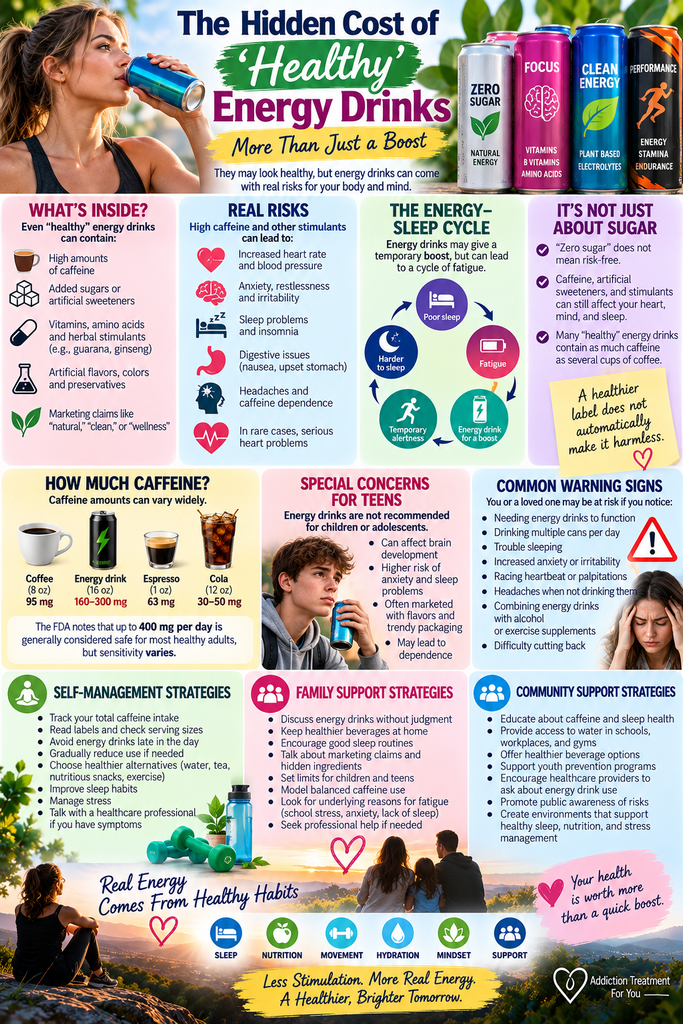
Someone may experience unpleasant symptoms at much lower amounts because of body size, medications, medical conditions, pregnancy, genetics, sleep deprivation, or individual caffeine sensitivity.
Caffeine also comes from more than energy drinks. Daily intake can quietly accumulate through:
- Coffee
- Tea
- Soda
- Energy drinks
- Pre-workout supplements
- Chocolate
- Caffeine tablets
- Certain medications
Someone who drinks coffee in the morning, uses a pre-workout supplement before exercising, and reaches for an energy drink during the afternoon may consume much more caffeine than they realize.
The Energy–Sleep Cycle
One of the most overlooked problems with frequent energy-drink use is its relationship with sleep.
Imagine someone who sleeps poorly and wakes exhausted. They drink caffeine to function. Because caffeine remains active in the body for hours, afternoon or evening consumption makes it harder to fall asleep or achieve restorative sleep.
The next morning, they are tired again.
So they consume more caffeine.
A cycle develops:
Poor sleep → fatigue → caffeine → temporary alertness → disrupted sleep → more fatigue → more caffeine.
Eventually, the person may believe they cannot function without an energy drink, even though some of their exhaustion may stem from chronic sleep disruption.
Caffeine Dependence Is Real
Caffeine is a psychoactive stimulant, and regular use can produce physical dependence.
Someone who suddenly reduces or stops caffeine may experience:
- Headaches
- Fatigue
- Irritability
- Difficulty concentrating
- Low mood
- Sleepiness
- Reduced motivation
These symptoms can encourage someone to consume caffeine again simply to feel normal.
This does not mean everyone who drinks an energy drink has an addiction. Occasional use and problematic dependence are different. The concern increases when someone repeatedly needs larger amounts, cannot comfortably reduce consumption, experiences withdrawal, or continues using large quantities despite negative consequences.
Energy Drinks and Anxiety
Caffeine stimulates the central nervous system. For some people, especially those who are sensitive to stimulants or already experience anxiety, high caffeine intake can intensify physical sensations that resemble anxiety.
These may include:
- Racing heartbeat
- Shaking
- Sweating
- Restlessness
- Rapid breathing
- Difficulty relaxing
- Feelings of panic
Someone may interpret these physical sensations as worsening anxiety without recognizing that caffeine is contributing.
Reducing caffeine intake may therefore be worth discussing with a healthcare professional when anxiety, panic, insomnia, or persistent restlessness is present.
Energy Drinks and the Heart
Caffeine can temporarily increase heart rate and blood pressure. High doses or rapid consumption may produce palpitations in susceptible individuals.
Risk can become more concerning when energy drinks are combined with other stimulants, intense exercise, dehydration, certain medications, or underlying cardiovascular conditions.
Chest pain, fainting, severe palpitations, or significant shortness of breath should not simply be blamed on an energy drink. These symptoms deserve prompt medical evaluation.
Energy Drinks and Exercise
Fitness marketing has made energy drinks and pre-workout products increasingly common around gyms.
Caffeine can improve alertness and certain aspects of exercise performance, but more caffeine doesn’t automatically mean better performance.
Excessive stimulant use before exercise can increase jitteriness, gastrointestinal discomfort, anxiety, and cardiovascular strain. It can also make someone mistake stimulation for genuine recovery.
Your body still needs:
- Sleep
- Adequate nutrition
- Hydration
- Recovery time
- Rest days
No energy drink can replace these fundamentals.
Energy Drinks and Alcohol
Combining energy drinks with alcohol presents another concern.
Caffeine can make someone feel more awake without reversing alcohol-related impairment. As a result, a person may underestimate how intoxicated they are.
Feeling alert is not the same as being sober.
Caffeine does not restore judgment, coordination, or reaction time impaired by alcohol.
Adolescents Need Special Protection
Energy drinks are particularly concerning for children and adolescents. The American Academy of Pediatrics has advised that energy drinks are not appropriate for children and adolescents.
Young people may be attracted to colorful packaging, influencer marketing, gaming culture, sports sponsorships, and promises of improved concentration or performance.
Parents should pay attention to how much caffeine teenagers consume and why.
A teenager repeatedly relying on energy drinks may be trying to compensate for inadequate sleep, academic pressure, demanding sports schedules, anxiety, or excessive nighttime technology use.
The beverage may be only part of the problem.
Self-Management Strategies
Reducing excessive energy-drink consumption does not necessarily require eliminating every source of caffeine overnight.
Helpful strategies include:
- Track total caffeine intake. Include coffee, tea, soda, supplements, and medications.
- Read serving sizes carefully. One container may contain more caffeine than expected.
- Identify your reason for using energy drinks. Are you tired, stressed, studying, exercising, driving, or simply following a habit?
- Avoid caffeine late in the day. Protecting sleep may gradually reduce the perceived need for stimulants.
- Reduce gradually when necessary. Slowly decreasing caffeine may lessen withdrawal headaches and fatigue.
- Replace the routine. Try water, sparkling water, decaffeinated beverages, stretching, walking, or a nutritious snack.
- Prioritize sleep. Persistent fatigue deserves attention, not endless stimulation.
- Avoid mixing energy drinks with alcohol.
- Be cautious about combining multiple stimulant products.
- Talk with a healthcare professional if you experience significant palpitations, anxiety, insomnia, or difficulty reducing caffeine.
Family Support Strategies
Family members can help without turning energy-drink use into an argument.
Families can:
- Discuss caffeine honestly rather than labeling every energy drink as dangerous.
- Learn how much caffeine different products contain.
- Keep water and healthier beverage options easily available.
- Encourage consistent sleep schedules.
- Avoid routinely purchasing high-caffeine drinks for children and adolescents.
- Discuss advertising claims such as “natural energy” or “clean energy.”
- Model reasonable caffeine consumption.
- Ask why someone feels they need energy drinks every day.
- Encourage medical evaluation when fatigue is persistent or unexplained.
Parents should particularly focus on the underlying reason a teenager is exhausted rather than simply confiscating the beverage.
Community Support Strategies
Schools, workplaces, healthcare systems, gyms, and community organizations can help people make informed decisions about caffeine.
Helpful strategies include:
- Educating students about caffeine and sleep.
- Teaching people how to interpret beverage labels.
- Providing access to water in schools and workplaces.
- Offering healthier beverage choices.
- Educating athletes about stimulant-containing supplements.
- Encouraging healthcare professionals to ask about caffeine use when evaluating insomnia, anxiety, palpitations, or chronic fatigue.
- Promoting sleep education for teenagers and adults.
- Supporting public-health education about mixing caffeine with alcohol.
Communities should focus on education, not shame. Energy drinks are legal products, and many adults consume them without developing serious problems. The goal is informed use and early recognition of harmful patterns.
What Does “Healthy Energy” Really Mean?
Real energy is not simply stimulation.
The body creates and maintains energy through adequate sleep, nutrition, hydration, physical activity, stress management, and recovery. Caffeine can temporarily increase alertness, but it cannot repay sleep debt or replace adequate nutrition.
That distinction is easy to forget when marketing promises focus, performance, metabolism, productivity, or “clean energy.”
Instead of asking:
“Which energy drink is healthiest?”
Consider asking:
“Why am I so tired that I need this every day?”
That question may reveal something far more important.
The Bottom Line
Not every energy drink is equally concerning, and occasional consumption by a healthy adult differs from drinking several high-caffeine products every day.
But “zero sugar,” “natural,” “vitamin enhanced,” or “fitness focused” should not automatically be interpreted as healthy.
The hidden cost of excessive energy-drink use can include disrupted sleep, anxiety, cardiovascular symptoms, caffeine dependence, withdrawal, and a cycle in which caffeine temporarily hides the fatigue it may also be helping perpetuate.
Self-management begins with understanding your total caffeine intake and recognizing why you reach for these drinks. Families can encourage healthier routines without judgment. Communities can improve education about caffeine, sleep, and stimulant use.
Sometimes the healthiest source of energy does not come in a can.
It comes from sleep, hydration, nutrition, movement, recovery, and giving your body what it actually needs.
Frequently Asked Questions
Here are some common questions:
1. Are “healthy” energy drinks actually healthy?
Not necessarily. Terms such as “natural,” “clean energy,” “zero sugar,” “plant-based,” and “vitamin enhanced” can make an energy drink appear healthier, but the product may still contain substantial amounts of caffeine or other stimulant ingredients. A healthier-looking label does not automatically mean a risk-free beverage.
2. What is the main concern with energy drinks?
One of the biggest concerns is their caffeine content. High caffeine intake can contribute to jitteriness, anxiety, insomnia, headaches, digestive problems, increased heart rate, temporary increases in blood pressure, and caffeine dependence.
3. Does “zero sugar” mean an energy drink is healthy?
No. A zero-sugar drink may reduce added-sugar intake, but it can still contain significant caffeine and other ingredients. Evaluate sugar content and stimulant content separately.
4. How much caffeine is considered safe for adults?
For most healthy adults, the FDA has cited 400 milligrams of caffeine per day as an amount not generally associated with negative effects. However, sensitivity varies considerably, and some people experience side effects at much lower amounts.
5. Why should I check caffeine from sources other than energy drinks?
Your total daily intake matters. Caffeine can come from coffee, tea, soda, chocolate, pre-workout supplements, medications, energy shots, and energy drinks. Combining several sources can push intake much higher than expected.
6. Can energy drinks interfere with sleep?
Yes. Caffeine can remain active in the body for hours. Consuming them later in the day may make it harder to fall asleep or reduce sleep quality, leaving someone tired the following day.
7. What is the energy-sleep cycle?
A person sleeps poorly, feels tired, and uses an energy drink to stay alert. The caffeine then contributes to another night of poor sleep. The person wakes tired again and consumes more caffeine. Over time, this can create a repeating poor sleep → caffeine → temporary energy → disrupted sleep → fatigue → more caffeine cycle.
8. Can someone become dependent on energy drinks?
A person can become physically dependent on caffeine. Regular users may experience headaches, fatigue, irritability, difficulty concentrating, sleepiness, or low mood when caffeine intake suddenly decreases.
9. Is caffeine addiction the same as substance addiction?
Caffeine can produce dependence and withdrawal, but patterns and consequences vary widely. Occasional energy-drink consumption is different from feeling unable to function without caffeine or continuing heavy use despite significant health or sleep problems.
10. Can energy drinks make anxiety worse?
Yes, particularly in people who are sensitive to caffeine. High caffeine intake can cause a racing heartbeat, shaking, restlessness, sweating, nervousness, and difficulty relaxing. These sensations can resemble or intensify anxiety and panic symptoms.
11. Can energy drinks affect the heart?
Caffeine and other stimulants can temporarily increase heart rate and blood pressure. People with certain cardiovascular conditions or stimulant sensitivities should discuss caffeine consumption with their healthcare professional.
12. When should symptoms after an energy drink receive medical attention?
Severe or persistent chest pain, fainting, significant shortness of breath, confusion, seizures, or severe or persistent heart palpitations require prompt medical evaluation rather than simply assuming caffeine will wear off.
13. Are energy drinks good before exercising?
Caffeine can improve alertness and some aspects of athletic performance, but more is not necessarily better. Excessive stimulant intake can cause jitteriness, gastrointestinal discomfort, anxiety, and cardiovascular symptoms. Energy drinks also cannot replace adequate sleep, hydration, nutrition, and recovery.
14. Is it safe to mix energy drinks with alcohol?
This combination presents additional concerns. Caffeine can make someone feel more awake without reversing alcohol-related impairment. A person may feel alert while judgment, coordination, and reaction time remain impaired.
15. Are energy drinks appropriate for children and teenagers?
Major pediatric organizations advise against energy-drink consumption by children and adolescents. Young people may be particularly vulnerable to sleep disruption, excessive caffeine intake, and dependence.
16. Why might a teenager rely heavily on energy drinks?
Frequent use may reflect underlying issues such as inadequate sleep, late-night gaming or social media, school pressure, sports schedules, poor nutrition, stress, or an established caffeine habit. Families should explore why the teenager needs constant stimulation rather than focusing only on the beverage.
17. Are “natural” caffeine sources safer?
Natural origin does not eliminate caffeine’s stimulant effects. Caffeine from coffee beans, tea, guarana, or other plant sources can still affect sleep, heart rate, blood pressure, and anxiety.
18. What are signs that energy-drink consumption may be becoming problematic?
Warning signs can include needing energy drinks every day to function, consuming several per day, increasing intake over time, experiencing headaches without caffeine, drinking them despite insomnia or anxiety, and repeatedly trying unsuccessfully to cut back.
19. How can someone reduce energy-drink consumption?
Start by tracking total caffeine intake and identifying when and why you use energy drinks. Gradually reducing caffeine may minimize withdrawal symptoms. Water, nutritious food, exercise, improved sleep, and lower-caffeine or caffeine-free beverages can help replace the routine.
20. How can families support someone trying to reduce energy drinks?
Families can avoid criticism, provide healthier beverage choices, encourage adequate sleep, discuss marketing claims, model reasonable caffeine consumption, and encourage professional evaluation when persistent fatigue, anxiety, or sleep problems are present.
21. How can communities help?
Schools, workplaces, gyms, healthcare systems, and community organizations can provide caffeine education, access to water, healthier beverage options, sleep education, and information about stimulant-containing supplements.
22. Why doesn’t an energy drink actually fix fatigue?
Caffeine temporarily increases alertness, but it does not replace sleep or correct the underlying cause of exhaustion. Persistent fatigue may result from inadequate sleep, stress, poor nutrition, medication effects, medical conditions, or other factors that deserve attention.
23. What provides healthier, more sustainable energy?
The fundamentals remain surprisingly powerful: adequate sleep, hydration, nutritious meals, regular physical activity, stress management, appropriate recovery, and treatment of medical conditions contributing to fatigue.
24. What is the biggest takeaway about “healthy” energy drinks?
Do not judge an energy drink solely by words such as natural, clean, zero sugar, fitness, vitamins, or plant-based. Read the caffeine amount, serving size, and ingredient list—and consider your total caffeine intake from all sources.
A quick boost may temporarily make you feel more energetic, but lasting energy depends on giving your body what it actually needs: sleep, nutrition, hydration, movement, recovery, and balance.
Video: The hidden cost of your daily energy drink #health #caffeine #shorts