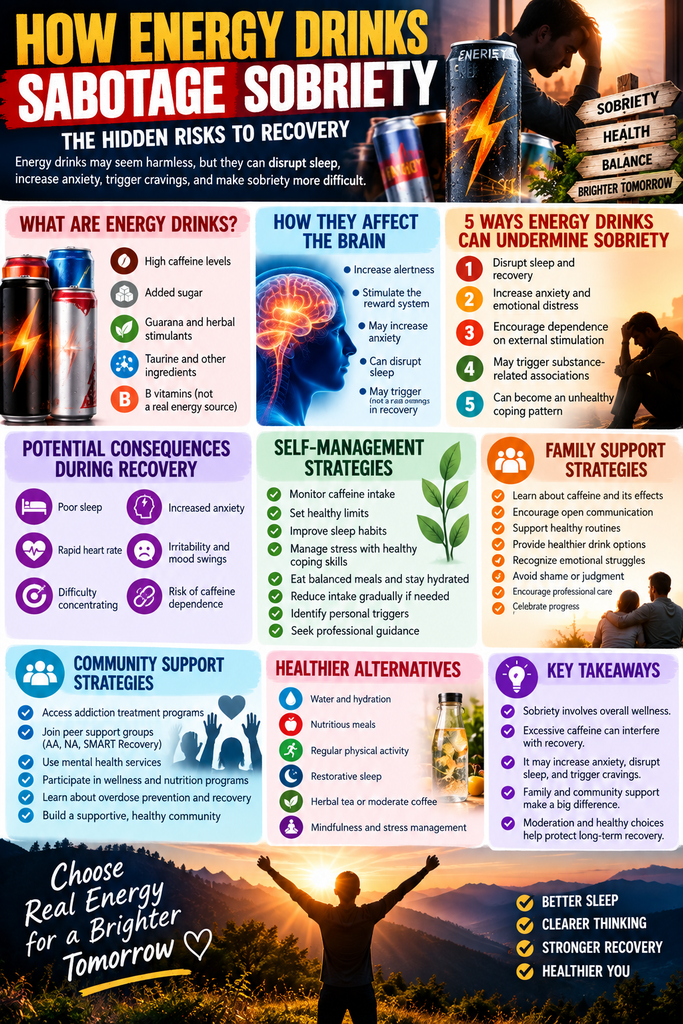
Energy drinks have become increasingly popular among people seeking a quick boost in energy, concentration, and productivity. For individuals recovering from alcohol or drug addiction, these beverages may seem like a harmless alternative to substances they previously used. However, excessive consumption of energy drinks can create unexpected challenges during addiction recovery.
Many energy drinks contain high levels of caffeine, added sugar, and other stimulatory ingredients that can influence sleep, anxiety, heart rate, and emotional regulation. Although energy drinks do not automatically cause relapse, excessive caffeine consumption may interfere with healthy recovery routines and intensify symptoms that make sobriety more difficult to maintain.
For individuals recovering from stimulant addiction, alcohol use disorder, or other substance use disorders, understanding the effects of energy drinks is especially important. Their stimulating effects may sometimes resemble sensations associated with previous substance use, potentially creating discomfort or cravings in susceptible individuals.
Maintaining sobriety involves more than avoiding alcohol and illicit drugs. It also requires developing healthy coping mechanisms, managing stress, protecting sleep, and establishing supportive relationships.
Understanding how energy drinks affect the brain and body can help individuals make informed decisions that protect their recovery and overall well-being.
What Are Energy Drinks, and Why Can They Be Problematic During Recovery?
Energy drinks are beverages marketed to improve alertness, concentration, physical performance, and energy levels. They typically contain caffeine and may include guarana, taurine, B vitamins, and added sugars.
Some products contain substantially more caffeine than a standard cup of coffee, particularly when sold in large containers or concentrated formulations.
Common ingredients include:
- Caffeine: Stimulates the central nervous system, temporarily increasing alertness while potentially contributing to anxiety, insomnia, and rapid heart rate.
- Guarana: A plant-derived ingredient that contains caffeine and can increase total stimulant exposure.
- Added sugar: Provides calories and may contribute to energy-level fluctuations, particularly when consumed in large amounts.
- Taurine: An amino sulfonic acid included in many energy drinks; its specific contribution to energy drink effects remains uncertain.
- B vitamins: Support normal metabolic processes but do not provide additional energy when nutritional needs are already met.
- Other herbal ingredients: May have incompletely studied effects or interactions, depending on the formulation.
Energy drinks are not inherently addictive in the same way as alcohol, cocaine, or opioids. However, caffeine can produce physical dependence, withdrawal symptoms, and problematic patterns of use.
For individuals in recovery, the concern is not simply whether a beverage contains caffeine. It is whether consumption interferes with sleep, emotional stability, physical health, or established recovery strategies.
How Energy Drinks Affect the Brain During Addiction Recovery
Addiction involves changes in brain systems responsible for reward, motivation, learning, stress responses, and behavioral control.
During recovery, individuals may experience fatigue, difficulty concentrating, sleep disturbances, irritability, or emotional fluctuations. These symptoms can vary depending on the substance previously used, duration of use, co-occurring conditions, and stage of recovery.
Energy drinks may temporarily reduce tiredness, but they don’t address the underlying causes of fatigue.
Caffeine primarily works by blocking adenosine receptors in the brain, reducing the sensation of sleepiness. It can also influence other neurotransmitter systems involved in alertness and motivation.
Potential concerns during recovery include:
- Increased anxiety or nervousness.
- Difficulty falling or staying asleep.
- Irritability and restlessness.
- Palpitations or elevated blood pressure.
- Reliance on caffeine to manage fatigue.
- Headaches and tiredness when caffeine intake decreases.
- Difficulty distinguishing caffeine-related symptoms from recovery-related distress.
These effects do not occur in everyone. Individual sensitivity, dose, timing, and overall health matter.
Five Ways Energy Drinks May Undermine Sobriety
1. Energy Drinks Can Disrupt Sleep and Recovery
Sleep supports emotional regulation, memory, decision-making, and physical restoration.
Many individuals recovering from substance use disorders already experience disrupted sleep patterns. Excessive caffeine can worsen these difficulties.
Poor sleep may increase stress, reduce frustration tolerance, and make it more difficult to use healthy coping strategies.
Potential consequences include:
- Difficulty falling asleep.
- Frequent nighttime awakenings.
- Reduced sleep quality.
- Increased daytime fatigue.
- Greater emotional irritability.
- Reduced concentration and motivation.
Sleep disruption is associated with poorer recovery outcomes in some substance use disorders. However, this does not mean that drinking an energy drink directly causes relapse.
2. Energy Drinks May Increase Anxiety and Emotional Distress
High caffeine intake can produce symptoms resembling anxiety, including restlessness, trembling, rapid heartbeat, and feelings of nervousness.
For individuals who already experience anxiety during recovery, these physical sensations may become especially uncomfortable.
Some people may misinterpret stimulant-related symptoms as signs of emotional instability or withdrawal.
This can create a difficult pattern in which caffeine is used to combat fatigue but contributes to anxiety and disrupted sleep.
3. Energy Drinks Can Encourage Dependence on External Stimulation
During recovery, individuals often work toward developing sustainable ways to manage energy, mood, and stress.
Regularly relying on energy drinks to function may interfere with recognizing underlying problems such as insufficient sleep, poor nutrition, depression, or medication-related fatigue.
Caffeine dependence is not equivalent to a severe substance use disorder, but withdrawal symptoms can include:
- Headaches.
- Fatigue.
- Irritability.
- Difficulty concentrating.
- Low mood.
- Reduced alertness.
These symptoms may be particularly frustrating for someone already adjusting to life without alcohol or other drugs.
4. Energy Drinks May Trigger Substance-Related Associations
For some individuals recovering from stimulant use disorders, the sensations produced by caffeine may resemble aspects of previous drug experiences.
In certain circumstances, increased alertness, restlessness, or physical stimulation may act as a conditioned reminder of prior substance use.
This response is highly individual.
There is not strong evidence that energy drinks routinely trigger relapse in people recovering from cocaine or methamphetamine addiction. Nevertheless, identifying personal triggers is an important part of relapse-prevention planning.
5. Energy Drinks Can Become Part of Unhealthy Coping Patterns
Some individuals replace alcohol or drugs with excessive caffeine consumption as a way to manage stress, boredom, or emotional discomfort.
Replacing a dangerous substance with a lower-risk behavior can sometimes be a useful harm-reduction step. However, it becomes concerning when the replacement behavior creates additional health problems or interferes with recovery.
Warning signs include consuming increasingly large amounts of caffeine, repeatedly ignoring sleep problems, or feeling unable to function without energy drinks.
The goal is not necessarily complete caffeine abstinence. Instead, individuals should develop a balanced approach that supports physical health and recovery.
Self-Management Strategies: Protecting Sobriety From Excessive Energy Drink Consumption
Self-management is an important component of addiction recovery. It involves recognizing unhealthy behaviors, monitoring emotional and physical symptoms, and developing strategies that support long-term wellness.
For people who frequently consume energy drinks, self-management starts with understanding how caffeine affects sleep, mood, cravings, and daily functioning.
Practical self-management strategies
- Monitor caffeine intake: Read beverage labels and calculate total daily caffeine consumption, including coffee, tea, supplements, and energy drinks.
- Set reasonable limits: The FDA cites 400 mg of caffeine per day as not generally associated with dangerous effects for most healthy adults, but some individuals need substantially less.
- Reduce caffeine gradually: People who regularly consume large amounts may benefit from a gradual reduction to minimize withdrawal headaches and fatigue.
- Prioritize sleep: Keep consistent sleep and wake times, and avoid caffeine for at least six to eight hours before bedtime if it disrupts sleep.
- Identify emotional triggers: Recognize whether energy drinks are being used to cope with stress, boredom, depression, or exhaustion.
- Choose healthier alternatives: Consider water, caffeine-free beverages, balanced meals, regular physical activity, and adequate rest.
- Practice stress management: Use mindfulness, deep breathing, relaxation exercises, or counseling to address emotional discomfort.
- Seek professional guidance: Discuss persistent fatigue, anxiety, palpitations, or sleep disturbances with a healthcare professional.
Individuals with cardiovascular disease, certain anxiety disorders, or medications that interact with caffeine may require more restrictive limits.
Breaking the Energy Drink Cycle
An illustrative cycle that can develop when caffeine is repeatedly used to compensate for insufficient sleep.
The first step toward breaking this cycle is identifying the underlying cause of fatigue rather than repeatedly masking symptoms with stimulants.
Family Support: Helping Loved Ones Maintain Healthy Recovery Habits
Family members can play a valuable role in supporting individuals who are recovering from addiction. While energy drinks may seem like a minor concern compared with alcohol or illicit drugs, excessive caffeine consumption can contribute to sleep problems, anxiety, and unhealthy coping patterns.
Family involvement should focus on encouragement, education, and respectful communication rather than criticism or control.
Family support strategies
- Learn about caffeine: Understand how excessive consumption can affect sleep, anxiety, and physical health.
- Encourage open communication: Discuss energy drink habits without shame, blame, or confrontation.
- Promote healthy routines: Support regular sleep schedules, nutritious meals, and physical activity.
- Offer healthier beverages: Keep water, herbal tea, and lower-caffeine alternatives available.
- Recognize emotional difficulties: Encourage conversations about stress, fatigue, depression, or recovery-related challenges.
- Respect personal autonomy: Avoid treating every energy drink as evidence of relapse or addiction.
- Encourage professional care: Help loved ones access healthcare when persistent fatigue or anxiety affects daily functioning.
- Celebrate progress: Recognize positive changes in sleep, nutrition, emotional regulation, and recovery habits.
Families should remember that recovery involves learning to make independent, informed decisions. Supportive relationships are generally more helpful than excessive monitoring or criticism.
Community Support: Creating Healthier Recovery Environments
Community resources help individuals maintain recovery by providing education, treatment services, emotional support, and opportunities for healthy social connections.
Recovery communities can also encourage conversations about lifestyle habits that affect sobriety, including caffeine consumption, sleep quality, nutrition, and stress management.
Community support strategies
- Addiction treatment programs: Incorporate education about caffeine, sleep hygiene, and stimulant-related symptoms into individualized recovery planning.
- Peer recovery groups: Encourage discussion of healthy coping strategies and lifestyle changes.
- Mental health services: Provide treatment for anxiety, depression, insomnia, and other conditions that may complicate recovery.
- Nutrition education: Teach individuals how hydration, balanced meals, and appropriate caffeine intake influence energy levels.
- Recovery coaching: Help individuals develop sustainable routines and identify unhealthy coping patterns.
- Community wellness programs: Offer accessible exercise, stress-management, and sleep-health education.
- Public health campaigns: Increase awareness of high-caffeine products and their potential effects.
- Healthcare collaboration: Encourage communication between addiction specialists, primary care providers, and mental health professionals.
Communities can promote healthier recovery environments without stigmatizing individuals who consume caffeine.
Are Energy Drinks More Dangerous for People Recovering From Stimulant Addiction?
Individuals recovering from cocaine, methamphetamine, or prescription stimulant misuse may be particularly concerned about energy drinks because of their stimulating effects.
Caffeine and drugs such as cocaine or methamphetamine differ substantially in their pharmacological actions and addiction potential. However, excessive caffeine can produce physical sensations that some individuals associate with stimulant use.
Potential concerns include increased anxiety, sleep disturbances, palpitations, and uncomfortable feelings of stimulation.
For individuals recovering from stimulant addiction, helpful strategies include:
- Monitoring personal reactions to caffeine.
- Avoiding products that produce uncomfortable stimulation.
- Discussing caffeine consumption with addiction treatment providers.
- Addressing persistent fatigue through medical evaluation.
- Maintaining consistent sleep and nutrition routines.
- Participating in evidence-based behavioral treatment when appropriate.
There is insufficient evidence to recommend universal caffeine abstinence for everyone recovering from stimulant addiction. Individualized assessment is more appropriate.
Energy Drinks and Alcohol Recovery: Understanding Additional Risks
Energy drinks may create specific concerns for individuals recovering from alcohol use disorder.
Caffeinated beverages are sometimes consumed in environments where alcohol is readily available. For individuals whose previous drinking involved mixing alcohol with energy drinks, the taste, smell, or social setting may act as a conditioned reminder of past drinking behavior.
Research has also shown that combining alcohol with caffeine can reduce perceived intoxication without reducing alcohol-related impairment. This may increase risky drinking behaviors.
However, consuming an energy drink without alcohol does not automatically increase relapse risk.
Important considerations include:
- Recognizing personal associations between energy drinks and previous alcohol use.
- Avoiding environments that create strong cravings when possible.
- Choosing beverages that support personal recovery goals.
- Discussing cravings or triggering situations with a counselor.
- Maintaining healthy sleep and stress-management habits.
The most effective approach is to evaluate whether energy drinks create problems for the individual rather than assuming they are universally harmful.
Healthier Alternatives to Energy Drinks During Recovery

Water and hydration
Dehydration can contribute to fatigue and headaches. Drinking adequate water supports normal physical functioning.

Balanced nutrition
Regular meals containing protein, complex carbohydrates, and healthy fats can support sustained energy.

Regular physical activity
Walking, stretching, and other appropriate activities can improve sleep, mood, and daytime alertness.

Restorative sleep
Consistent sleep schedules and adequate rest can reduce reliance on stimulants to overcome exhaustion.
For individuals who enjoy caffeine, moderate amounts of coffee or tea may also be reasonable alternatives, depending on personal tolerance and medical circumstances.
Key Lessons: Protecting Sobriety Through Healthier Choices
Energy drinks are not inherently incompatible with sobriety. However, excessive consumption may interfere with recovery when it contributes to insomnia, anxiety, physical discomfort, or unhealthy coping behaviors.
Important lessons include:
- Sobriety involves overall wellness. Healthy sleep, nutrition, emotional regulation, and stress management contribute to recovery.
- Caffeine dependence is different from drug addiction. Physical dependence on caffeine can occur, but it should not automatically be equated with alcohol or opioid use disorders.
- Personal triggers matter. Some individuals may experience cravings or distress related to stimulant-like sensations.
- Family support should be compassionate. Encouragement and education work better than shame or excessive control.
- Community resources strengthen recovery. Accessible treatment, peer support, and mental health services help individuals maintain progress.
- Moderation and individualized care are important. Not everyone in recovery needs to avoid caffeine, but problematic use deserves attention.
Conclusion: Don’t Let Energy Drinks Undermine Your Recovery
Energy drinks may appear to be harmless substitutes for alcohol or drugs, but excessive caffeine consumption can create challenges for individuals working toward long-term sobriety. Sleep disturbances, anxiety, physical dependence, and unhealthy coping patterns may interfere with emotional stability and recovery routines.
The goal is not to label energy drinks as another dangerous addiction for everyone. Instead, individuals should understand how these beverages affect their bodies, recognize problematic consumption patterns, and make choices that support their personal recovery goals.
Self-management strategies such as monitoring caffeine intake, maintaining healthy routines, and seeking professional guidance can help protect recovery. Family members can provide encouragement and understanding, while community organizations can offer education, treatment resources, and ongoing support.
True recovery is not about eliminating every source of stimulation or pleasure. It means developing healthier relationships with substances, managing emotional challenges, and building a sustainable lifestyle that supports physical and mental well-being.
Frequently Asked Questions and Answers
Understanding Caffeine, Addiction Recovery, and Healthy Lifestyle Choices
1. Can energy drinks negatively affect sobriety?
Yes. Excessive energy drink consumption can interfere with addiction recovery by disrupting sleep, increasing anxiety, and contributing to unhealthy coping patterns. Although energy drinks do not directly cause relapse, their effects may make emotional regulation and stress management more challenging for some individuals recovering from alcohol or drug addiction.
2. Why can energy drinks be problematic during addiction recovery?
Energy drinks often contain high levels of caffeine and other stimulating ingredients. Excessive consumption can produce nervousness, irritability, insomnia, and rapid heart rate. These symptoms may complicate recovery, particularly for individuals experiencing anxiety, sleep disturbances, or stimulant-related cravings.
3. Can energy drinks trigger a relapse?
Energy drinks do not automatically trigger relapse. However, certain individuals may associate the stimulating effects, taste, or social settings surrounding energy drinks with previous substance use. These associations may increase cravings or emotional discomfort. Research directly linking energy drink consumption to relapse remains limited, so individuals should let their own triggers and circumstances guide their decisions.
4. Are energy drinks considered addictive?
Energy drinks themselves are not classified as an addictive substance, but their caffeine content can produce physical dependence. Regular caffeine consumption may lead to tolerance and withdrawal symptoms such as headaches, fatigue, irritability, and difficulty concentrating. Caffeine dependence differs significantly from alcohol, opioid, or stimulant use disorders in its typical severity and consequences.
5. How does caffeine affect the brain during addiction recovery?
Caffeine primarily blocks adenosine receptors, reducing feelings of sleepiness and increasing alertness. It also indirectly influences neurotransmitter activity. During recovery, excessive caffeine may worsen anxiety, restlessness, and sleep disturbances. However, moderate caffeine consumption does not necessarily interfere with brain healing or recovery.
6. Can energy drinks increase anxiety in people recovering from addiction?
Yes. High caffeine intake can produce physical symptoms associated with anxiety, including trembling, rapid heartbeat, nervousness, and restlessness. Individuals recovering from substance use disorders who already experience anxiety may be particularly sensitive to these effects. Reducing caffeine intake may alleviate symptoms when caffeine contributes.
7. How do energy drinks affect sleep and sobriety?
Caffeine can delay sleep onset, reduce sleep duration, and interfere with sleep quality. Poor sleep may increase irritability, emotional distress, and difficulty managing cravings. Because healthy sleep supports emotional regulation and decision-making, individuals in recovery should monitor caffeine intake, particularly later in the day.
8. Are energy drinks dangerous for people recovering from cocaine or methamphetamine addiction?
Energy drinks are not equivalent to cocaine or methamphetamine, but excessive caffeine can produce uncomfortable stimulant-like effects, including increased alertness, anxiety, and palpitations. Some individuals may find these sensations triggering. People recovering from stimulant use disorders should evaluate their personal responses and discuss concerns with their treatment providers.
9. Can energy drinks replace alcohol or drugs during recovery?
Some individuals use energy drinks as substitutes for alcohol or other substances. While choosing a nonalcoholic beverage instead of alcohol may reduce immediate harm, relying heavily on caffeine to manage stress, fatigue, or emotional discomfort can create additional problems. Healthier coping strategies should address the underlying reasons for fatigue or distress.
10. How much caffeine is considered safe during recovery?
The U.S. Food and Drug Administration identifies 400 milligrams of caffeine daily as an amount not generally associated with dangerous effects for most healthy adults. However, this is not a recommended daily target, and some people experience adverse effects at much lower amounts.
Individuals with anxiety disorders, cardiovascular conditions, sleep disturbances, or medication interactions may require lower limits. There is no universal caffeine threshold specifically established for addiction recovery.
11. Can energy drinks cause withdrawal symptoms?
Yes. Regular caffeine use can lead to physical dependence. Abruptly stopping caffeine may cause headaches, fatigue, irritability, low mood, and difficulty concentrating.
Symptoms commonly begin within 12–24 hours after stopping caffeine and generally resolve within several days, although duration varies. Gradually reducing caffeine intake can help minimize withdrawal discomfort.
12. Do sugar-free energy drinks pose the same risks?
Sugar-free energy drinks eliminate added sugar but may still contain substantial amounts of caffeine. Consequently, they can still contribute to anxiety, sleep disturbances, palpitations, and caffeine dependence.
Consumers should evaluate the caffeine content and other ingredients rather than assuming that sugar-free products are automatically safer for recovery.
13. Can energy drinks increase cravings for alcohol or drugs?
There is limited direct evidence that energy drinks independently increase substance cravings. However, caffeine-related anxiety, sleep deprivation, and personal associations with previous substance use may contribute to cravings in susceptible individuals.
Identifying personal triggers and discussing recurring cravings with an addiction counselor can help individuals develop effective coping strategies.
14. What are healthier alternatives to energy drinks during recovery?
Healthier alternatives may include:
- Water and unsweetened flavored water to stay hydrated.
- Balanced meals containing protein and complex carbohydrates.
- Regular physical activity to improve energy and mood.
- Consistent sleep schedules.
- Caffeine-free herbal teas.
- Moderate amounts of coffee or tea when tolerated.
- Use mindfulness and relaxation techniques to manage stress.
A healthcare professional should evaluate persistent fatigue because it may reflect sleep disorders, nutritional deficiencies, depression, medication effects, or other medical conditions.
15. What self-management strategies help reduce excessive energy drink consumption?
Self-management begins with recognizing consumption patterns and identifying situations that encourage excessive caffeine use.
Helpful strategies include monitoring daily caffeine intake, gradually reducing consumption, avoiding caffeine close to bedtime, improving sleep hygiene, maintaining hydration, and developing healthier stress-management techniques.
Individuals should also recognize whether they are using energy drinks to compensate for chronic exhaustion or emotional distress.
16. How can family members support someone who consumes too many energy drinks during recovery?
Family members can provide encouragement by learning about caffeine’s effects, promoting healthy sleep routines, and offering lower-caffeine beverage alternatives.
Support should emphasize respectful communication rather than criticism or control. Families can also encourage professional evaluation when caffeine consumption contributes to significant anxiety, insomnia, or physical symptoms.
17. How can community support help individuals manage caffeine consumption during recovery?
Addiction treatment programs, peer recovery groups, mental health services, and community wellness programs can provide education about caffeine, sleep, and healthy coping strategies.
Recovery coaches and healthcare professionals can help individuals identify unhealthy consumption patterns and develop practical lifestyle changes that support long-term sobriety.
18. Can energy drinks affect medications used in addiction treatment?
Caffeine may interact with certain medications or worsen side effects such as anxiety, insomnia, or palpitations. The significance depends on the medication, caffeine dose, and individual health factors.
People receiving medications for addiction or co-occurring mental health conditions should discuss high caffeine consumption with their healthcare provider or pharmacist rather than changing prescribed treatment independently.
19. Should everyone in addiction recovery completely avoid energy drinks?
No. There is insufficient evidence to recommend universal energy drink abstinence for everyone recovering from addiction. Some individuals tolerate moderate caffeine without significant problems.
However, avoiding energy drinks may be beneficial for people who experience severe anxiety, insomnia, cardiovascular symptoms, or personal substance-related triggers. Individualized decisions are more appropriate than universal restrictions.
20. What is the most important lesson about energy drinks and sobriety?
The most important lesson is that maintaining sobriety involves protecting overall physical and emotional well-being. Excessive energy drink consumption can interfere with sleep, increase anxiety, and reinforce unhealthy coping patterns, but energy drinks do not automatically cause relapse.
Video: