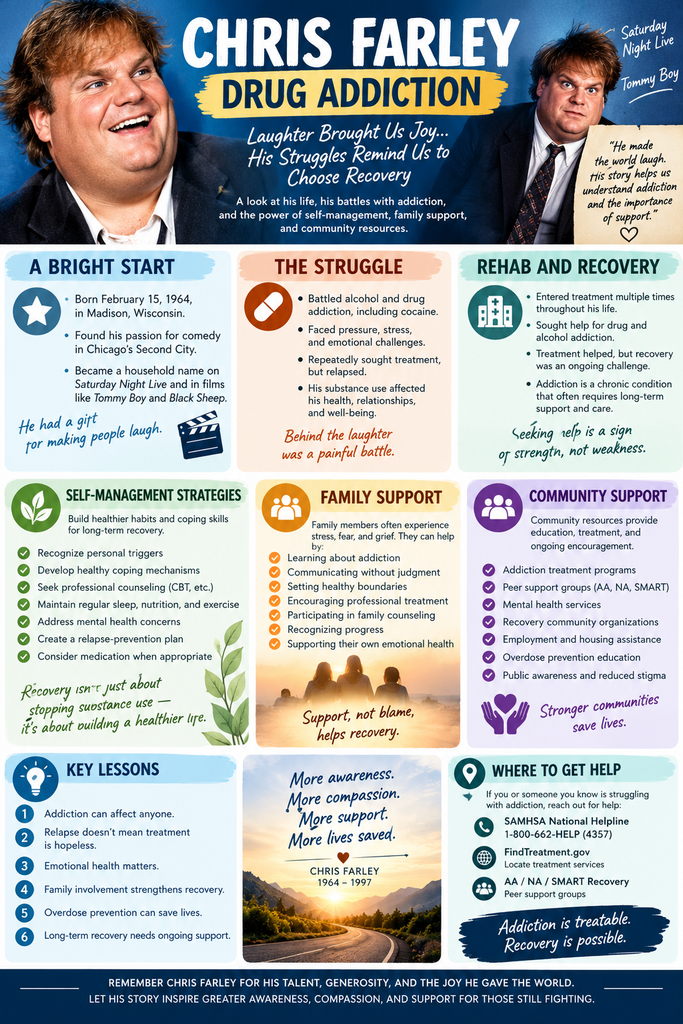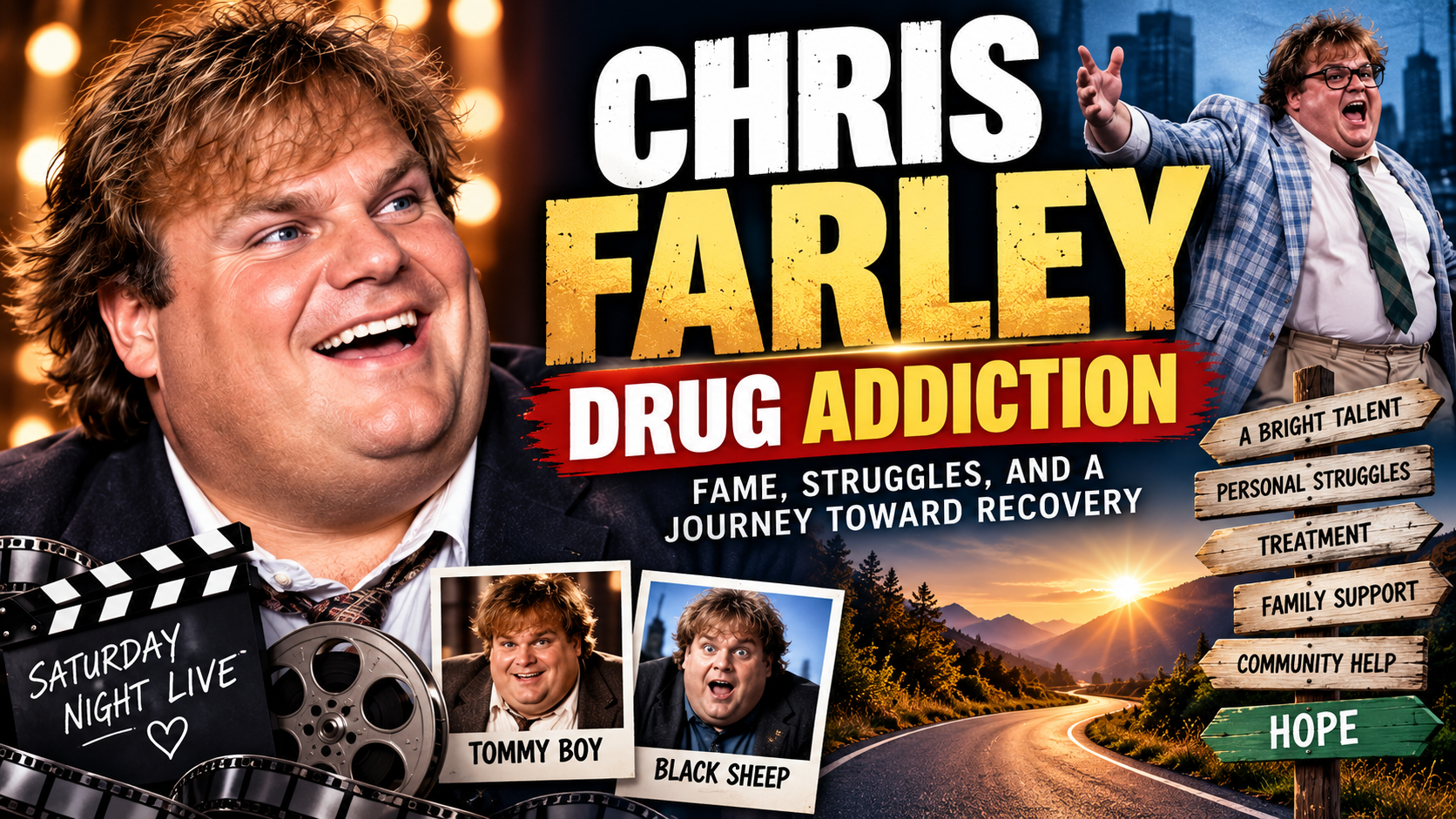
Chris Farley was one of America’s most beloved comedians, known for his energetic performances on Saturday Night Live, Tommy Boy, and Black Sheep. His larger-than-life personality, physical comedy, and ability to make audiences laugh earned him a lasting place in entertainment history. Behind the laughter, however, Farley struggled with substance use, emotional difficulties, and repeated attempts to overcome addiction.
Farley’s problems with alcohol and drugs, particularly cocaine and other substances, affected his health, relationships, and personal well-being. Despite seeking treatment multiple times, he experienced recurring substance use and died from an accidental drug overdose on December 18, 1997, at just 33 years old.
His story highlights the complexity of substance use disorders and the importance of comprehensive addiction treatment, self-management strategies, family involvement, and community support. It also reminds us that professional success, popularity, and financial stability cannot protect someone from the potentially devastating consequences of addiction.
Chris Farley’s Early Life and Rise to Fame
Born on February 15, 1964, in Madison, Wisconsin, Chris Farley grew up in a close-knit family and developed an early interest in entertaining others. His natural comedic talent eventually led him to Chicago’s Second City improvisational theater, where he developed the energetic performance style that would make him famous.
In 1990, Farley joined the cast of Saturday Night Live and became known for memorable characters such as motivational speaker Matt Foley. His performances often featured exaggerated physical comedy, shouting, and fearless slapstick.
His success continued with popular films such as Tommy Boy and Black Sheep. However, while his professional career flourished, he also faced significant personal challenges.
Farley’s story demonstrates that external success does not necessarily reflect an individual’s emotional or psychological well-being.
Chris Farley’s Struggles With Drug and Alcohol Addiction
Throughout his adult life, Farley experienced recurring problems with alcohol and drug use. Cocaine became a particularly dangerous substance in his life, and reports from friends, colleagues, and biographies describe repeated attempts to achieve sobriety.
His substance use occurred alongside pressures associated with celebrity, demanding entertainment schedules, and concerns about his body image and self-worth.
Although people close to Farley have discussed his emotional struggles, it is important not to assume that any single psychological factor caused his addiction.
Several factors may increase vulnerability to substance use disorders:
- Professional pressure: Demanding schedules and performance expectations can increase stress and unhealthy coping behaviors.
- Social environments: Frequent exposure to alcohol and drugs may increase opportunities for substance use.
- Emotional distress: Anxiety, low self-esteem, and other psychological difficulties can contribute to substance misuse.
- Social acceptance: Substance use may become normalized within certain professional or friendship circles.
- Recurring substance use: Repeated exposure can alter brain reward pathways and increase the risk of compulsive use.
- Fear of judgment: Shame and stigma can discourage individuals from discussing addiction or seeking treatment.
Farley’s experiences demonstrate how substance use can become increasingly difficult to manage, even when someone recognizes the dangers and wants to change.
Rehabilitation and Repeated Attempts at Recovery
Farley reportedly entered addiction treatment numerous times throughout his career. Accounts of his life describe repeated periods of abstinence followed by a return to substance use.
His experiences illustrate an important reality: addiction is often a chronic, relapsing condition that may require sustained and individualized treatment.
Treatment may initially help someone stop using substances, but maintaining recovery can be challenging without continued care and strategies to address cravings, emotional distress, and environmental triggers.
Important lessons from Farley’s treatment history include:
- Seeking rehabilitation is a meaningful step toward recovery.
- Completing treatment does not eliminate future relapse risk.
- Ongoing counseling and recovery monitoring may be necessary.
- Co-occurring mental health concerns should be assessed and treated.
- Adjust treatment plans when current approaches are not working.
- A return to substance use should prompt renewed engagement with care rather than shame or abandonment.
Farley’s repeated attempts to seek help should be recognized as evidence that he struggled with a serious health condition, not as proof that he lacked motivation or willpower.
Chris Farley’s Tragic Death and the Dangers of Polysubstance Use
On December 18, 1997, Farley was found dead in his Chicago apartment. The medical examiner determined that his death resulted from the combined effects of cocaine and morphine, with significant coronary artery disease identified as a contributing condition.
He was only 33 years old.
The combination of cocaine and opioids is particularly dangerous because the substances affect the body in different ways. Cocaine can increase heart rate, blood pressure, and cardiovascular stress, while opioids such as morphine can suppress breathing and consciousness.
Using multiple substances can increase the risk of fatal poisoning, cardiac complications, and unpredictable medical emergencies.
Farley’s death highlights several critical public health concerns:
- Combining stimulants and opioids can create life-threatening complications.
- A history of substance use does not protect someone from overdose.
- Tolerance can decrease during periods of abstinence, increasing overdose risk if substance use resumes.
- Existing cardiovascular disease may increase the dangers associated with stimulant use.
- Recognizing an overdose and obtaining immediate emergency care can save lives.
- Naloxone can reverse opioid-related respiratory depression, although it does not reverse cocaine toxicity.
His death should not overshadow his creativity, generosity, or accomplishments. Instead, it offers an opportunity to promote greater understanding of addiction and preventable overdose deaths.
Self-Management Strategies: Building a Foundation for Recovery
Self-management involves developing practical skills that help individuals recognize addiction-related behaviors, manage cravings, and maintain emotional stability. Although Farley struggled to sustain recovery, his experiences illustrate why ongoing self-management is an essential part of addiction treatment.
Recovery is not simply about avoiding drugs or alcohol. It also requires addressing underlying emotional difficulties, establishing healthy routines, and developing strategies to manage stressful situations.
Effective self-management strategies
- Recognize personal triggers: Identify emotions, situations, relationships, and environments that increase the desire to use substances.
- Develop healthier coping mechanisms: Replace substance use with exercise, creative activities, mindfulness, relaxation techniques, and meaningful hobbies.
- Seek professional counseling: Cognitive behavioral therapy (CBT) and other evidence-based approaches can help individuals recognize and change harmful behavioral patterns.
- Maintain consistent routines: Establish regular schedules for sleep, eating, and physical activity to support physical and emotional well-being.
- Address co-occurring mental health concerns: Obtain assessment and treatment for anxiety, depression, trauma, or other psychological conditions when present.
- Create a relapse-prevention plan: Identify warning signs and establish clear steps for obtaining support before substance use resumes.
- Build accountability: Stay in regular contact with treatment providers, recovery coaches, and trusted support people.
- Consider medication treatment: For opioid use disorder, medications such as buprenorphine or methadone can substantially reduce overdose risk. There are currently no FDA-approved medications specifically for cocaine use disorder.
For individuals with stimulant use disorders, contingency management is an evidence-based behavioral intervention that can improve treatment engagement and abstinence outcomes.
Farley’s experiences demonstrate that recovery often requires sustained support rather than isolated periods of rehabilitation.
Family Support: Understanding Addiction’s Impact on Loved Ones
Addiction affects more than the individual using substances. Family members frequently experience anxiety, frustration, grief, and uncertainty as they watch someone struggle with potentially dangerous behaviors.
Farley’s family witnessed his difficulties with addiction and attempts to achieve recovery. His brother, Tom Farley Jr., has spoken publicly about the family’s experiences and the emotional impact of Chris’s death.
Tom has also discussed his own recovery and the importance of family education, emotional honesty, and supportive relationships. In 2026, he reflected on wishing he and Chris could have experienced recovery together.
Family strategies that encourage recovery
Family members can help create an environment that encourages treatment while maintaining appropriate boundaries.
- Learn about addiction: Understand how substance use disorders affect brain function, behavior, decision-making, and emotional regulation.
- Communicate with compassion: Express concern without blame, humiliation, or judgment.
- Encourage professional treatment: Help loved ones locate addiction specialists, rehabilitation programs, and mental health services.
- Establish healthy boundaries: Avoid enabling harmful behaviors while continuing to offer emotional support.
- Participate in family counseling: Work to improve communication, rebuild trust, and address relationship difficulties.
- Recognize warning signs: Be aware of increased isolation, behavioral changes, missed responsibilities, and renewed substance use.
- Prepare for emergencies: Learn to recognize opioid overdose symptoms, administer naloxone, and contact emergency services.
- Seek support for family members: Encourage relatives to participate in counseling, peer support, or family recovery programs.
Families should understand that they cannot force someone to recover. However, consistent encouragement, access to treatment, and healthy relationships can strengthen recovery.
Community Support: Building Connections That Encourage Sobriety
Community support plays a critical role in addiction recovery by providing access to treatment, emotional encouragement, education, and practical assistance.
Individuals recovering from substance use disorders may struggle with loneliness, stigma, unstable employment, or difficulty maintaining relationships. Community resources can help address these challenges and provide meaningful opportunities for connection.
Farley’s brother Tom later became involved in addiction prevention and recovery advocacy. From 1999 to 2012, he led the Chris Farley Foundation, which used humor-based educational programs to promote substance abuse prevention among young people.
Community strategies that support recovery
- Accessible addiction treatment: Expand availability of outpatient care, residential programs, medications for opioid use disorder, and behavioral therapies.
- Peer recovery support: Encourage participation in Narcotics Anonymous, Alcoholics Anonymous, SMART Recovery, or other supportive recovery communities.
- Mental health services: Provide integrated treatment for substance use disorders and co-occurring psychological conditions.
- Recovery coaching: Connect individuals with trained peer recovery specialists who can provide encouragement and practical guidance.
- Overdose prevention education: Increase awareness of naloxone, emergency response, and the risks associated with combining substances.
- Employment and housing assistance: Address social and economic barriers that can interfere with recovery.
- Public education campaigns: Reduce stigma and challenge misconceptions about addiction.
- Long-term recovery programs: Provide continuing care and follow-up services after initial treatment.
Strong community networks can help individuals remain connected to treatment and reduce the isolation that may contribute to renewed substance use.
The Connection Between Comedy, Emotional Pain, and Addiction
Chris Farley was widely recognized for his ability to make people laugh. His comedic performances often featured exaggerated physical humor, self-deprecation, and a strong desire to entertain audiences.
Friends and colleagues described him as warm, generous, and deeply committed to making others happy. However, public accounts also suggest that he experienced insecurity and emotional distress.
His story raises an important question: Can someone who brings happiness to others struggle privately with emotional pain?
The answer is yes.
Humor can be a healthy coping mechanism, but it does not eliminate vulnerability to depression, anxiety, loneliness, or addiction. Some people use humor to connect with others while struggling to express their own emotional needs.
Important considerations include:
- Being funny or outgoing does not necessarily indicate emotional well-being.
- Public success may coexist with significant psychological distress.
- Self-deprecating humor can sometimes reflect underlying insecurity, although it is not inherently unhealthy.
- Individuals in entertainment professions may face pressure to maintain a cheerful public image.
- Mental health assessments should consider the whole person rather than relying on outward appearances.
Farley’s experiences remind us that emotional suffering may not always be visible, even in people who appear confident, energetic, and successful.
Lessons From Chris Farley’s Addiction Journey
Farley’s life provides several important lessons about substance use disorders, treatment, and the need for continued recovery support.
1. Addiction can affect anyone. Professional success, financial stability, and public admiration do not eliminate the risk of developing a substance use disorder.
2. Relapse does not mean treatment is hopeless. Recurring substance use may indicate that an individual’s treatment plan requires additional support, different interventions, or more intensive care.
3. Emotional health deserves attention. Addiction treatment should include appropriate screening for co-occurring mental health conditions and psychosocial stressors.
4. Family involvement can strengthen recovery. Education, compassionate communication, healthy boundaries, and family counseling can support both individuals and their loved ones.
5. Overdose prevention saves lives. Recognizing overdose symptoms, carrying naloxone when opioid exposure is possible, and seeking immediate emergency assistance can reduce preventable deaths.
6. Long-term recovery requires ongoing connections. Treatment, supportive relationships, peer recovery services, and community resources can help individuals maintain progress.
Turning Tragedy Into Addiction Awareness
Although Farley’s life ended tragically, his legacy continues through his comedy and the addiction awareness efforts inspired by his experiences.
His brother Tom has used public speaking, education, and recovery advocacy to help others understand the effects of substance use disorders on individuals and families.
These efforts demonstrate how families affected by addiction can contribute to prevention and recovery education while honoring the memory of a loved one.
Farley’s story also encourages communities to move beyond blaming individuals for addiction and toward expanding access to effective healthcare and compassionate support.
Conclusion: Remembering Chris Farley and the Importance of Recovery
Chris Farley brought laughter to millions of people through his unforgettable comedic performances. Behind his success, however, he struggled with substance use and repeated attempts to achieve lasting recovery. His death at 33 illustrates the potentially devastating consequences of addiction and polysubstance use.
His experiences emphasize the importance of recognizing harmful substance use, seeking professional treatment, developing healthier coping mechanisms, and maintaining supportive relationships. Family education, community resources, and evidence-based addiction care are essential components of effective recovery support.
Farley’s legacy should not be defined solely by his addiction or tragic death. He deserves to be remembered for his remarkable talent, generosity, and contributions to comedy.
His story reminds us that addiction is treatable, recovery is possible, and timely access to compassionate, comprehensive care can save lives.
Frequently Asked Questions and Answers
Understanding His Struggles, Treatment, and Legacy
1. Did Chris Farley struggle with drug addiction?
Yes. Chris Farley struggled with alcohol and drug addiction throughout much of his adult life. Despite becoming a successful comedian on Saturday Night Live and starring in popular movies such as Tommy Boy and Black Sheep, he experienced recurring substance use problems. His struggles demonstrate that addiction can affect anyone, regardless of fame, wealth, or professional success.
2. What drugs was Chris Farley addicted to?
Farley struggled with alcohol and cocaine use. His fatal overdose involved cocaine and morphine, an opioid. The combination of stimulants and opioids can be particularly dangerous because these substances affect the cardiovascular and respiratory systems differently, increasing the risk of serious medical complications and death.
3. How did Chris Farley die?
Chris Farley died on December 18, 1997, at age 33, from an accidental overdose involving cocaine and morphine. The medical examiner also identified significant coronary artery disease as a contributing condition. His death highlights the dangers of polysubstance use and the importance of overdose prevention, timely treatment, and continued recovery support.
4. How old was Chris Farley when he died?
Chris Farley was 33 years old when he died in his Chicago apartment on December 18, 1997. Despite his short life, he left a lasting legacy through his comedy and memorable performances.
5. Did Chris Farley attend drug rehabilitation?
Yes. Farley reportedly entered rehabilitation programs numerous times throughout his career. Although he experienced periods of sobriety, he also had repeated returns to substance use. His experiences illustrate why addiction treatment often requires continuing care, relapse-prevention planning, and long-term support.
6. Why did Chris Farley struggle with addiction?
Addiction develops through a complex combination of biological, psychological, social, and environmental factors. Farley faced pressures from fame, demanding professional responsibilities, and personal insecurities. However, no single factor can fully explain his addiction. His experiences demonstrate how substance use disorders can become difficult to manage even when individuals recognize their harmful consequences.
7. Did Chris Farley experience depression or emotional difficulties?
Friends and colleagues described Farley as someone who experienced personal insecurities and emotional challenges despite his outgoing personality. However, these accounts do not establish a specific psychiatric diagnosis. His story reminds us that individuals who appear happy, successful, or entertaining may still experience significant emotional distress.
8. How did addiction affect Chris Farley’s career?
Farley’s substance use created concerns about his health, reliability, and personal well-being. Despite these challenges, he continued performing and achieved considerable professional success. His experiences demonstrate that individuals may maintain successful careers while struggling with serious substance-related problems.
9. What role did Chris Farley’s family play in his addiction struggles?
Farley’s family was concerned about his substance use and attempted to support him through his difficulties. His brother, Tom Farley Jr., later became involved in addiction education and prevention advocacy. Family members can provide encouragement and help individuals access treatment, but they cannot control another person’s addiction or guarantee recovery.
10. What self-management strategies can help someone struggling with drug addiction?
Self-management involves building healthier coping mechanisms, recognizing triggers, and staying engaged in treatment.
Effective strategies include:
- Identifying emotional and environmental triggers.
- Seeking professional addiction counseling.
- Practicing stress management and mindfulness.
- Establishing healthy sleep, nutrition, and exercise routines.
- Developing a personalized relapse-prevention plan.
- Avoiding high-risk substance use environments.
- Participating in recovery support programs.
- Receiving appropriate medication treatment when indicated.
For stimulant use disorders, contingency management is an evidence-based behavioral treatment. For opioid use disorder, medications such as buprenorphine and methadone can substantially reduce overdose risk.
11. How can family members support someone recovering from addiction?
Families can support recovery by providing emotional encouragement, promoting treatment participation, and maintaining healthy boundaries.
Helpful approaches include educating themselves about addiction, communicating without judgment, participating in family counseling, recognizing warning signs, and encouraging ongoing recovery services.
Family members should also prioritize their own emotional health and seek professional support when needed.
12. Why is community support important in addiction recovery?
Community support helps reduce isolation and provides access to treatment, education, and meaningful relationships. Recovery communities can offer accountability, encouragement, and practical resources that help individuals maintain progress.
Organizations such as Narcotics Anonymous, Alcoholics Anonymous, and SMART Recovery provide peer support. Community mental health centers, recovery coaches, and addiction treatment programs can also help individuals address substance use and related challenges.
13. What is polysubstance use, and why is it dangerous?
Polysubstance use involves using more than one substance, either simultaneously or within a relatively short period. Combining cocaine with opioids such as morphine can increase the risk of cardiac complications, respiratory depression, and fatal overdose.
Stimulants do not reliably counteract the respiratory effects of opioids. A person may experience serious toxicity even if they believe one substance is balancing the effects of another.
14. Could Chris Farley’s overdose have been prevented?
It is impossible to determine with certainty whether a specific intervention would have prevented Farley’s death. However, evidence-based addiction treatment, continuing care, overdose education, and timely emergency intervention can reduce overdose risk.
Naloxone can reverse opioid-related respiratory depression, including that caused by morphine, but it does not reverse cocaine toxicity. Anyone witnessing a suspected overdose should immediately call emergency services and administer naloxone if available.
15. Why do some individuals relapse after completing rehabilitation?
A return to substance use can occur because of cravings, stress, environmental triggers, untreated mental health concerns, or insufficient continuing support. Addiction involves changes in brain circuits associated with reward, motivation, and behavioral control.
Relapse does not mean treatment is hopeless. It may mean the treatment plan needs reassessment or strengthening.
16. How can mental health treatment improve addiction recovery?
Mental health treatment can help individuals address psychological concerns that may contribute to substance use or interfere with recovery.
Integrated treatment may include cognitive behavioral therapy, motivational interviewing, trauma-informed care, and appropriate psychiatric treatment.
Addressing substance use and co-occurring mental health conditions together can improve treatment engagement and overall well-being.
17. What warning signs may indicate a serious drug addiction problem?
Warning signs may include:
- Increasing drug use or difficulty controlling consumption.
- Strong cravings or compulsive substance-seeking behaviors.
- Neglecting personal, family, or professional responsibilities.
- Continuing substance use despite harmful consequences.
- Changes in mood, sleep, or social relationships.
- Repeated unsuccessful attempts to stop using substances.
- Experiencing withdrawal symptoms or increasing tolerance.
- Returning to substance use after periods of abstinence.
A qualified healthcare professional can evaluate these symptoms and determine whether an individual meets diagnostic criteria for a substance use disorder.
18. What can people learn from Chris Farley’s repeated attempts at recovery?
Farley’s experiences demonstrate that addiction recovery is not always a straightforward process. Repeated treatment attempts may reflect the persistent nature of substance use disorders rather than a lack of motivation.
His story emphasizes the importance of individualized treatment, long-term follow-up, supportive relationships, and addressing barriers that interfere with sustained recovery.
19. How did Chris Farley’s death influence addiction awareness?
Farley’s death brought public attention to the dangers of substance misuse, particularly among celebrities. His brother, Tom Farley Jr., later helped establish addiction-prevention initiatives through the Chris Farley Foundation.
These efforts used education and humor to communicate prevention messages and encourage healthier decisions, particularly among young people.
20. What is the most important lesson from Chris Farley’s addiction journey?
Chris Farley’s story demonstrates that addiction is a serious health condition that can affect anyone, including individuals who appear successful and happy.
His experiences emphasize the importance of early intervention, evidence-based treatment, family understanding, and accessible community resources.
The most important lesson is that seeking help is never a sign of weakness. Addiction is treatable, recovery is possible, and compassionate support can make a meaningful difference.
Video: