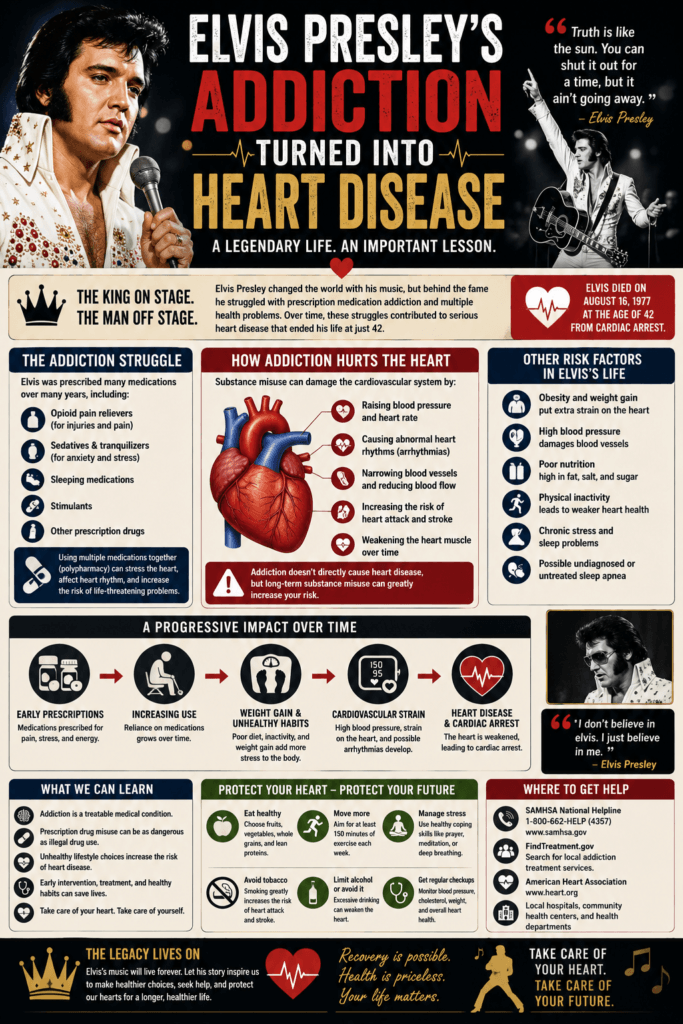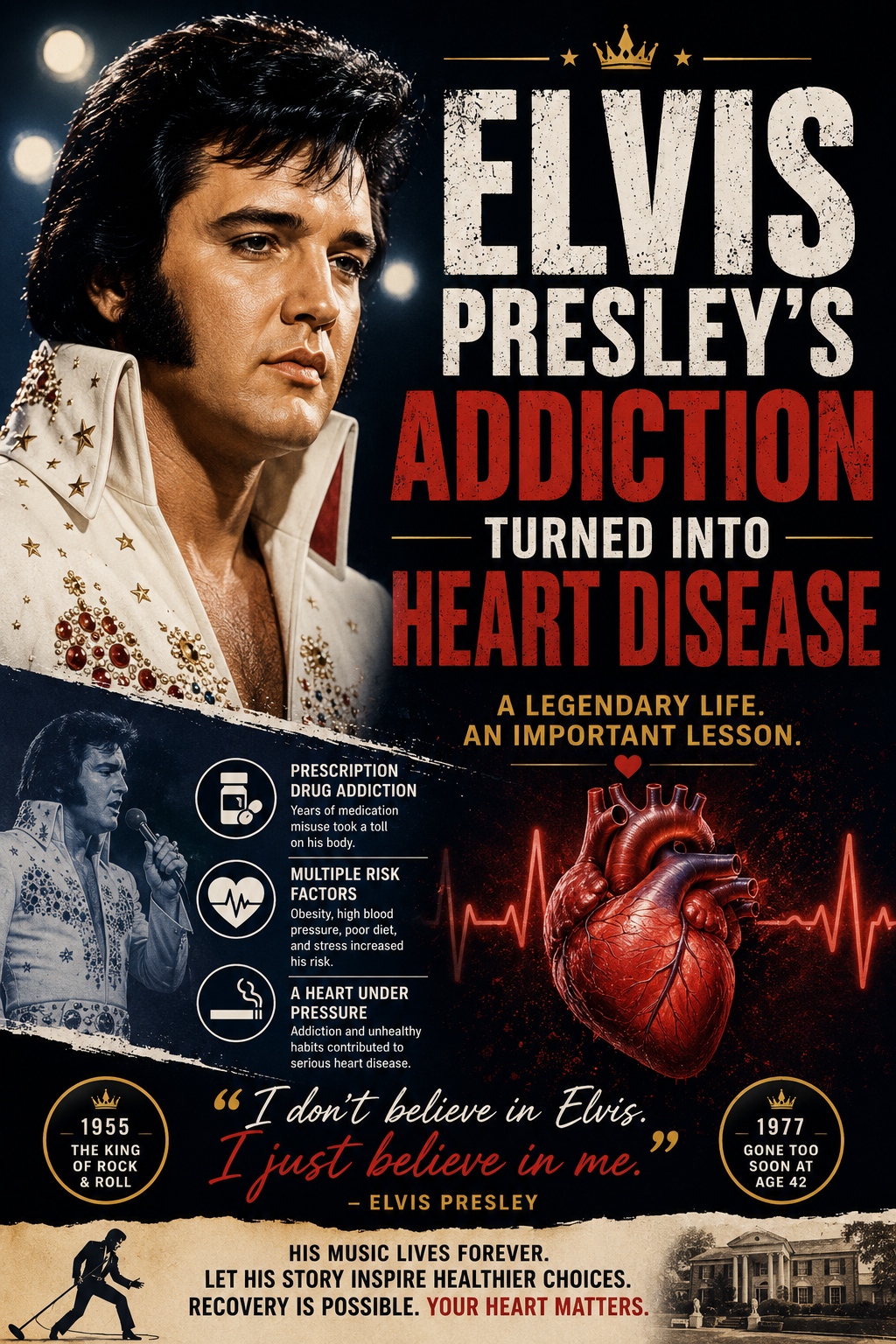
Elvis Presley, known as the “King of Rock and Roll,” remains one of the most influential entertainers in music history. Behind his extraordinary talent and worldwide fame, however, he struggled with long-term prescription medication misuse and multiple chronic health problems. Although addiction itself does not directly cause heart disease, prolonged misuse of certain substances, combined with other health factors such as obesity, high blood pressure, poor nutrition, and physical inactivity, can significantly increase the risk of serious cardiovascular complications. Elvis Presley’s health journey provides an opportunity to better understand how substance misuse and chronic medical conditions can interact to place tremendous strain on the heart. His story also highlights the importance of early intervention, comprehensive medical care, healthy lifestyle choices, and evidence-based addiction treatment in protecting cardiovascular health.
Elvis Presley’s Addiction and Heart Disease
Elvis Presley, known as the “King of Rock and Roll,” transformed popular music and remains one of the most influential entertainers in history. Behind his extraordinary success, however, Elvis struggled with numerous health problems, including long-term misuse of prescription medications. He died suddenly on August 16, 1977, at the age of 42. Although the official cause of death was cardiac arrest, medical experts believe that multiple chronic health conditions—including prescription drug misuse, obesity, high blood pressure, and cardiovascular disease—likely contributed to his death.
His story illustrates how untreated addiction and chronic medical conditions can work together to increase the risk of serious heart disease.
Elvis Presley’s Prescription Drug Addiction
Unlike many individuals with substance use disorders, Elvis primarily struggled with prescription medications that had been legally prescribed over many years. Reports indicate that he used multiple medications, including:
- Opioid pain medications
- Sedatives
- Sleeping medications
- Tranquilizers
- Stimulants
Taking several medications simultaneously (polypharmacy), especially without careful monitoring, can place tremendous stress on the cardiovascular system and other organs.
How Addiction Can Affect Heart Health
Addiction itself does not directly cause heart disease, but chronic misuse of certain substances can significantly increase cardiovascular risk.
Prescription drug misuse may contribute to:
- Abnormal heart rhythms (arrhythmias)
- Changes in blood pressure
- Reduced oxygen delivery
- Slowed breathing
- Increased strain on the heart
- Drug interactions affecting cardiac function
Over time, these effects may increase the likelihood of cardiovascular complications.
Other Health Conditions That Increased Elvis’s Risk
Elvis had several additional factors that likely contributed to his declining health:
Obesity
In later years, Elvis gained considerable weight. Obesity increases the risk of:
- Coronary artery disease
- High blood pressure
- Heart failure
- Diabetes
- Sleep apnea
High Blood Pressure
Long-standing hypertension damages blood vessels and forces the heart to work harder, increasing the risk of heart attack, stroke, and heart failure.
Poor Nutrition
Reports suggest Elvis often consumed meals high in saturated fat, sodium, and calories while eating few fruits, vegetables, and whole grains. Poor nutrition contributes to elevated cholesterol, obesity, and cardiovascular disease.
Physical Inactivity
As his health declined, Elvis became less physically active. Regular exercise helps maintain healthy blood pressure, cholesterol levels, body weight, and cardiovascular fitness.
Sleep Problems
Chronic sleep deprivation and possible untreated sleep apnea may also have placed additional stress on his cardiovascular system.
Polypharmacy and Cardiovascular Risk
One of the most important lessons from Elvis’s medical history is the danger of polypharmacy, the use of multiple medications at the same time.
Potential risks include:
- Dangerous drug interactions
- Excessive sedation
- Respiratory depression
- Cardiac rhythm disturbances
- Reduced alertness
- Increased overdose risk
Today, healthcare providers carefully monitor medication combinations to reduce these risks.
Modern Treatment Would Likely Be Different Today
With today’s medical knowledge, Elvis would likely receive coordinated care involving multiple healthcare professionals.
Modern treatment could include:
- Comprehensive addiction medicine evaluation
- Careful medication review and deprescribing when appropriate
- Supervised treatment for prescription drug dependence
- Cardiology evaluation
- Blood pressure management
- Nutritional counseling
- Weight management
- Physical therapy and exercise programs
- Mental health evaluation
- Sleep disorder assessment
- Ongoing monitoring by an interdisciplinary healthcare team
Preventing Addiction-Related Heart Disease
Individuals can lower their cardiovascular risk by:
- Taking medications only as prescribed
- Avoiding misuse of prescription drugs
- Quitting smoking if applicable
- Limiting or avoiding alcohol
- Exercising regularly
- Eating a heart-healthy diet
- Maintaining a healthy weight
- Managing blood pressure, cholesterol, and diabetes
- Seeking treatment early for substance use disorders
- Attending regular medical checkups
Lessons from Elvis Presley’s Story
Elvis Presley’s life reminds us that addiction and chronic medical conditions often occur together and can have serious consequences if left untreated. His experience demonstrates the importance of careful medication management, regular healthcare, healthy lifestyle habits, and early intervention for substance use disorders.
Modern addiction medicine recognizes substance use disorder as a treatable medical condition. Through evidence-based treatment, coordinated healthcare, lifestyle changes, and ongoing support, many people can recover from addiction while reducing their risk of heart disease and other life-threatening complications.
Self-Management Strategies to Understand How Addiction Can Lead to Heart Disease
Addiction can have a profound impact on heart health. While addiction itself does not directly cause heart disease, the repeated use of substances such as tobacco, alcohol, stimulants (such as cocaine and methamphetamine), opioids, and the misuse of certain prescription medications can damage the cardiovascular system over time. These substances may increase blood pressure, alter heart rhythm, damage blood vessels, weaken the heart muscle, and increase the risk of heart attack, stroke, and heart failure. By understanding these risks and adopting healthy self-management strategies, individuals can protect their heart, support recovery, and improve their overall quality of life.
1. Learn About How Different Substances Affect the Heart
Educate yourself about the cardiovascular effects of commonly misused substances:
- Tobacco damages blood vessels and greatly increases the risk of heart attack and stroke.
- Heavy alcohol use can weaken the heart muscle and cause abnormal heart rhythms.
- Cocaine and methamphetamine can cause dangerously high blood pressure, heart attacks, strokes, and sudden cardiac death.
- Opioids may slow breathing and reduce oxygen delivery to the heart.
- Misused prescription medications may affect heart rate, blood pressure, and heart rhythm.
Understanding these risks can motivate healthier choices.
2. Recognize That Addiction Is Treatable
Understand that addiction is a chronic, treatable medical condition rather than a personal failure. Seeking treatment early reduces ongoing damage to the heart and improves both physical and emotional health.
3. Seek Professional Addiction Treatment
Work with healthcare professionals to develop an individualized recovery plan that may include:
- Individual counseling
- Cognitive Behavioral Therapy (CBT)
- Motivational Interviewing
- Medications for substance use disorders when appropriate
- Peer recovery support
- Relapse prevention planning
Treatment reduces continued exposure to substances that harm the cardiovascular system.
4. Stop Using Tobacco Products
Quitting smoking or other tobacco use is one of the most important steps for protecting your heart. Smoking cessation lowers the risk of heart disease, stroke, and peripheral artery disease. Ask your healthcare provider about nicotine replacement therapy, prescription medications, counseling, or quitlines.
5. Reduce or Eliminate Alcohol Use
If alcohol use has become problematic, seek medical advice before stopping abruptly, as withdrawal can be dangerous for some individuals. Long-term recovery from alcohol use disorder lowers the risk of cardiomyopathy (weakening of the heart muscle), high blood pressure, and irregular heart rhythms.
6. Take Medications Only as Prescribed
Avoid misusing prescription medications or combining medications without medical supervision. Always:
- Follow prescribed dosages.
- Inform your healthcare provider about all medications and supplements you take.
- Never share prescription medications.
- Attend regular medication reviews.
Safe medication use reduces the risk of harmful cardiovascular effects.
7. Monitor Your Heart Health
Schedule regular medical checkups to monitor:
- Blood pressure
- Heart rate
- Cholesterol levels
- Blood sugar
- Weight
- Kidney function
- Heart rhythm when appropriate
Early identification of cardiovascular problems allows for timely treatment.
8. Eat a Heart-Healthy Diet
Choose foods that support cardiovascular health, including:
- Fruits and vegetables
- Whole grains
- Lean proteins
- Fish rich in omega-3 fatty acids
- Beans and legumes
- Nuts and seeds
- Low-fat dairy products
Limit sodium, added sugars, saturated fats, trans fats, and highly processed foods.
9. Stay Physically Active
Regular exercise strengthens the heart, improves circulation, lowers blood pressure, and supports recovery. Aim for at least 150 minutes of moderate-intensity physical activity each week, or follow your healthcare provider’s recommendations based on your health status.
10. Manage Stress in Healthy Ways
Chronic stress can contribute to both substance use and heart disease. Healthy stress-management techniques include:
- Deep breathing exercises
- Meditation
- Mindfulness
- Yoga
- Journaling
- Spending time outdoors
- Talking with trusted friends or a therapist
11. Get Adequate Sleep
Poor sleep increases the risk of high blood pressure, obesity, diabetes, and heart disease. Aim for 7–9 hours of quality sleep each night and discuss ongoing sleep problems with a healthcare provider.
12. Know the Warning Signs of Heart Disease
Seek immediate medical attention if you experience:
- Chest pain or pressure
- Shortness of breath
- Pain spreading to the arm, jaw, neck, or back
- Rapid or irregular heartbeat
- Fainting
- Sudden weakness
- Severe dizziness
- Unexplained swelling in the legs or feet
Prompt treatment can save lives.
13. Build a Strong Recovery Support Network
Surround yourself with supportive people, including:
- Family members
- Friends
- Healthcare providers
- Recovery coaches
- Peer support groups
- Faith or community organizations
Positive relationships encourage accountability and healthy decision-making.
14. Develop a Relapse Prevention Plan
Work with your treatment team to identify triggers and coping strategies. Include:
- Emergency contacts
- Stress management techniques
- Healthy daily routines
- Counseling appointments
- Support group meetings
- Plans for responding to cravings
Preventing relapse helps protect both recovery and heart health.
15. Focus on Lifelong Wellness
Recovery is a lifelong journey that includes caring for your entire body—not just avoiding substance use. Continue to:
- Attend medical appointments.
- Follow treatment recommendations.
- Maintain healthy eating and exercise habits.
- Monitor chronic medical conditions.
- Celebrate recovery milestones.
- Stay engaged with recovery support.
Key Takeaway
Addiction does not directly cause heart disease, but long-term misuse of substances such as tobacco, alcohol, stimulants, opioids, and certain prescription medications can significantly increase the risk of cardiovascular problems. Through education, evidence-based addiction treatment, smoking cessation, heart-healthy lifestyle choices, routine medical care, and strong recovery support, individuals can reduce their risk of heart disease while improving their overall health and quality of life. Every positive step toward recovery is also a step toward protecting the heart and building a healthier future.
Family Support Strategies to Understand How Addiction Can Lead to Heart Disease
Families play a critical role in supporting loved ones who are recovering from addiction while promoting long-term heart health. Although addiction itself does not directly cause heart disease, the long-term misuse of substances such as tobacco, excessive alcohol, stimulants (such as cocaine and methamphetamine), opioids, and certain prescription medications can significantly increase the risk of cardiovascular disease. These substances may contribute to high blood pressure, abnormal heart rhythms, heart attacks, heart failure, and stroke. By understanding these risks and working together with healthcare professionals, families can encourage healthier behaviors, support recovery, and help reduce the likelihood of serious heart-related complications.
1. Learn About the Connection Between Addiction and Heart Disease
Educate yourself about how different substances affect the cardiovascular system. Understanding that tobacco, heavy alcohol use, stimulants, and prescription drug misuse can damage the heart allows families to better support prevention and recovery.
2. Understand That Addiction Is a Treatable Medical Condition
Recognize that addiction is a chronic brain disorder, not a moral failing or lack of willpower. Viewing addiction as a medical condition encourages compassion, reduces stigma, and promotes evidence-based treatment.
3. Encourage Early Treatment
Support your loved one in seeking professional treatment as early as possible. Effective treatment may include:
- Individual counseling
- Cognitive Behavioral Therapy (CBT)
- Medications for substance use disorders when appropriate
- Peer recovery programs
- Relapse prevention planning
- Mental health treatment
Early intervention can reduce ongoing damage to the heart and improve long-term health.
4. Promote Tobacco Cessation
If your loved one smokes or uses other tobacco products, encourage quitting in a supportive, nonjudgmental manner. Families can:
- Help create a smoke-free home.
- Celebrate progress rather than focusing on setbacks.
- Encourage participation in smoking cessation programs.
- Support prescribed medications or nicotine replacement therapy when appropriate.
Quitting tobacco is one of the most effective ways to lower the risk of heart disease.
5. Encourage Healthy Alcohol Habits
Help reduce alcohol-related heart risks by:
- Planning alcohol-free family gatherings.
- Supporting participation in alcohol treatment programs.
- Avoiding enabling behaviors.
- Encouraging medical supervision if alcohol withdrawal is anticipated.
Reducing alcohol use lowers the risk of cardiomyopathy, high blood pressure, and irregular heart rhythms.
6. Support Safe Medication Use
Encourage your loved one to:
- Take medications only as prescribed.
- Attend regular medication reviews.
- Avoid mixing medications without medical guidance.
- Inform healthcare providers about all prescription, over-the-counter, and herbal products.
Safe medication practices help prevent harmful cardiovascular effects.
7. Promote Regular Medical Care
Encourage routine visits with healthcare providers to monitor:
- Blood pressure
- Cholesterol
- Blood sugar
- Weight
- Heart rhythm
- Kidney function
- Overall cardiovascular health
Regular checkups allow early detection and treatment of heart disease.
8. Encourage a Heart-Healthy Lifestyle
Families can improve everyone’s health by adopting healthy habits together:
- Preparing nutritious meals rich in fruits, vegetables, whole grains, and lean proteins.
- Limiting foods high in saturated fat, sodium, and added sugars.
- Taking family walks or participating in physical activities.
- Encouraging adequate sleep and hydration.
Healthy lifestyle changes support both recovery and heart health.
9. Learn the Warning Signs of Heart Disease
Family members should recognize symptoms that require prompt medical attention, including:
- Chest pain or pressure
- Shortness of breath
- Rapid or irregular heartbeat
- Fainting
- Pain radiating to the arm, jaw, neck, or back
- Sudden weakness or dizziness
- Swelling of the legs or feet
Early medical intervention can be lifesaving.
10. Offer Emotional Support Without Judgment
Recovery often involves setbacks. Listen with empathy, encourage open communication, celebrate recovery milestones, and avoid blaming or shaming your loved one. Emotional support can strengthen motivation and improve treatment engagement.
11. Avoid Enabling Behaviors
Healthy support includes setting appropriate boundaries. Avoid:
- Providing money that may be used to obtain substances.
- Ignoring ongoing substance misuse.
- Making excuses for unhealthy behaviors.
- Minimizing symptoms of addiction or heart disease.
Healthy boundaries encourage accountability while maintaining compassion.
12. Participate in Family Counseling
Family therapy can improve communication, rebuild trust, reduce conflict, and teach healthy coping strategies. It also helps family members understand addiction, heart disease risk factors, and effective ways to support recovery.
13. Encourage Stress Management
Stress can contribute to both substance use and cardiovascular disease. Families can practice stress-reduction techniques together, including:
- Deep breathing exercises
- Meditation
- Yoga
- Outdoor activities
- Shared hobbies
- Family meals and meaningful conversations
Reducing stress benefits both mental and heart health.
14. Support Long-Term Recovery
Recovery is an ongoing process. Continue encouraging:
- Attendance at follow-up appointments
- Participation in recovery meetings
- Healthy daily routines
- Medication adherence
- Regular physical activity
- Continued counseling when needed
Long-term support helps sustain recovery and protects cardiovascular health.
15. Take Care of Your Own Health
Family members should also prioritize their own well-being by:
- Maintaining regular medical checkups.
- Exercising regularly.
- Eating a heart-healthy diet.
- Getting adequate sleep.
- Seeking counseling or support groups if caregiving becomes overwhelming.
Healthy caregivers are better equipped to provide consistent, compassionate support.
Key Takeaway
Families are powerful partners in helping loved ones understand how addiction can increase the risk of heart disease through long-term exposure to harmful substances. By encouraging evidence-based treatment, supporting smoking cessation and healthier alcohol use, promoting heart-healthy lifestyle habits, recognizing warning signs of cardiovascular disease, and providing compassionate, nonjudgmental support, families can help reduce serious health complications. Working together with healthcare professionals creates a strong foundation for lasting recovery, improved heart health, and a better quality of life for everyone involved.
Community Resource Strategies to Understand How Addiction Can Lead to Heart Disease
Addiction and heart disease are major public health concerns that often overlap. While addiction itself does not directly cause heart disease, the long-term misuse of substances such as tobacco, excessive alcohol, stimulants (including cocaine and methamphetamine), opioids, and certain prescription medications can significantly increase the risk of cardiovascular problems. These substances may contribute to high blood pressure, abnormal heart rhythms, heart attacks, heart failure, stroke, and sudden cardiac death. Community resources play a vital role in educating individuals, preventing substance misuse, promoting heart-healthy lifestyles, supporting addiction recovery, and improving access to healthcare. Utilizing these resources can help individuals reduce their cardiovascular risk while building a healthier future.
1. Utilize Primary Healthcare Services
Primary care providers are often the first point of contact for individuals at risk for addiction and heart disease. They can:
- Screen for substance use disorders.
- Monitor blood pressure, cholesterol, and blood sugar.
- Assess cardiovascular risk.
- Provide smoking cessation counseling.
- Refer patients to addiction treatment and cardiology services when needed.
Routine healthcare visits help identify problems before serious complications develop.
2. Access Addiction Treatment Programs
Community addiction treatment centers offer evidence-based services that reduce ongoing exposure to substances harmful to the heart. Programs may include:
- Outpatient treatment
- Intensive outpatient programs (IOP)
- Residential treatment
- Medications for opioid use disorder (MOUD)
- Individual and group counseling
- Recovery coaching
- Relapse prevention planning
Successful recovery improves both cardiovascular and overall health.
3. Participate in Tobacco Cessation Programs
Many hospitals, pharmacies, health departments, and nonprofit organizations offer smoking cessation resources such as:
- Individual counseling
- Group classes
- Nicotine replacement therapy
- Prescription medications
- Telephone quitlines
- Mobile apps
- Online support communities
Quitting tobacco is one of the most effective ways to reduce the risk of heart disease and stroke.
4. Utilize Alcohol Recovery Services
Community alcohol treatment programs provide medical detoxification, counseling, behavioral therapies, and peer support. Reducing or eliminating excessive alcohol use lowers the risk of high blood pressure, cardiomyopathy (weakening of the heart muscle), irregular heart rhythms, and stroke.
5. Access Mental Health Services
Mental health disorders frequently coexist with addiction and can contribute to unhealthy behaviors that increase cardiovascular risk. Community mental health centers provide:
- Individual counseling
- Psychiatric care
- Trauma-informed therapy
- Stress management
- Crisis intervention
- Treatment for anxiety and depression
Managing mental health supports both recovery and heart health.
6. Participate in Heart Health Education Programs
Many community hospitals and public health organizations offer educational programs on:
- Heart disease prevention
- Blood pressure management
- Cholesterol control
- Healthy nutrition
- Physical activity
- Smoking cessation
- Weight management
- Diabetes prevention
These programs empower individuals to make informed health decisions.
7. Utilize Preventive Cardiovascular Screenings
Community health fairs, clinics, pharmacies, and healthcare organizations often provide free or low-cost screenings for:
- Blood pressure
- Cholesterol
- Blood glucose
- Body mass index (BMI)
- Heart rhythm assessments
Early detection allows healthcare providers to intervene before serious cardiovascular disease develops.
8. Participate in Community Wellness Programs
Many communities offer activities that support both addiction recovery and cardiovascular health, including:
- Walking clubs
- Exercise classes
- Yoga
- Tai Chi
- Nutrition education
- Stress reduction workshops
- Mindfulness training
Regular participation encourages lifelong healthy habits.
9. Utilize Peer Recovery Support Services
Recovery community organizations provide encouragement, accountability, and education through:
- Peer recovery coaches
- Recovery meetings
- Sober community events
- Mentorship programs
Peer support helps individuals maintain recovery while reducing ongoing cardiovascular risks associated with substance use.
10. Access Nutrition and Lifestyle Resources
Registered dietitians, community nutrition programs, and wellness centers can help individuals develop heart-healthy eating habits by promoting:
- Fruits and vegetables
- Whole grains
- Lean proteins
- Healthy fats
- Reduced sodium intake
- Weight management
Proper nutrition strengthens both heart health and recovery.
11. Participate in Family Education Programs
Community organizations often offer educational workshops that teach families about:
- Addiction as a medical condition
- Heart disease risk factors
- Healthy communication
- Relapse prevention
- Stress management
- Supporting long-term recovery
Educated families become valuable partners in improving health outcomes.
12. Address Social Determinants of Health
Community social service agencies assist individuals with challenges that may interfere with recovery and healthcare, including:
- Housing instability
- Food insecurity
- Transportation
- Employment assistance
- Financial counseling
- Health insurance navigation
Addressing these needs improves access to both addiction treatment and cardiovascular care.
13. Promote Community Awareness and Prevention
Public health campaigns that educate people about the connection between substance misuse and heart disease help reduce stigma and encourage early intervention. Community education can increase awareness about:
- Smoking risks
- Alcohol-related heart disease
- Stimulant-associated cardiac complications
- Healthy lifestyle choices
- Available treatment resources
14. Advocate for Healthy Community Policies
Support community efforts that:
- Expand access to addiction treatment.
- Promote tobacco-free public spaces.
- Increase availability of preventive healthcare.
- Improve access to nutritious foods and safe recreational spaces.
- Encourage workplace wellness initiatives.
Healthy communities make healthy choices easier.
15. Encourage Lifelong Preventive Care
Community healthcare systems should encourage individuals to maintain regular wellness visits, follow treatment recommendations, monitor cardiovascular health, remain engaged in recovery programs, and continue practicing healthy lifestyle habits throughout life.
Key Takeaway
Community resources are essential for reducing the cardiovascular complications associated with substance use disorders. By utilizing addiction treatment programs, smoking cessation services, mental health care, preventive cardiovascular screenings, wellness programs, nutrition services, peer recovery support, and family education, individuals can significantly reduce their risk of heart disease while supporting long-term recovery. Collaboration among healthcare providers, public health agencies, community organizations, families, and recovery networks creates a comprehensive system of care that promotes prevention, early intervention, healthier lifestyles, lasting recovery, and improved heart health.
How Elvis Presley’s Addiction Struggles Could Be Managed Using Today’s Treatment Strategies
Elvis Presley remains one of the most influential entertainers in history. Behind his remarkable career, however, he struggled with long-term misuse of prescription medications, chronic health problems, demanding work schedules, and significant stress. He died in 1977 from sudden cardiac arrest, with multiple chronic medical conditions and the use of several prescribed medications believed to have contributed to his declining health. While no one can know with certainty how modern treatment would have affected his outcome, today’s evidence-based addiction care offers strategies that may have improved his chances of recovery and reduced his risk of serious complications.
Understanding His Addiction
Modern addiction medicine recognizes that substance use disorder is a chronic brain disease influenced by biological, psychological, social, and environmental factors. In Elvis Presley’s case, several factors may have contributed to his addiction:
- Long-term use of prescribed opioids and sedatives
- Use of multiple medications simultaneously (polysubstance use)
- Chronic pain and physical health problems
- Severe insomnia
- Stress from constant touring and public attention
- Possible anxiety and mood-related symptoms
- Easy access to prescription medications
Today, healthcare professionals recognize that dependence on prescription medications can develop even when drugs are initially prescribed for legitimate medical reasons.
How Today’s Treatment Strategies Could Have Helped
1. Comprehensive Addiction and Medical Evaluation
Treatment would begin with a multidisciplinary assessment involving addiction medicine, primary care, psychiatry, and other specialists as needed.
The evaluation would include:
- Prescription medication review
- Substance use history
- Mental health screening
- Pain assessment
- Sleep evaluation
- Cardiovascular health
- Liver and kidney function
- Nutritional assessment
- Family and social support
- Recovery goals
This information would help create an individualized treatment plan.
2. Medication Review and Safer Prescribing
One of today’s most important strategies is careful medication management.
Healthcare providers would:
- Identify unnecessary medications
- Reduce high-risk drug combinations
- Coordinate prescribing among specialists
- Monitor for medication interactions
- Use the lowest effective doses when medications are necessary
- Consider safer alternatives whenever appropriate
Prescription Drug Monitoring Programs (PDMPs) also help clinicians identify overlapping controlled substance prescriptions.
3. Medically Supervised Tapering and Withdrawal Management
Because abrupt discontinuation of opioids, benzodiazepines, or certain sedatives can be dangerous, modern treatment emphasizes gradual, medically supervised tapering.
Care may include:
- Close medical monitoring
- Symptom management
- Hydration and nutrition
- Sleep support
- Transition into long-term addiction treatment
4. Medications for Opioid Use Disorder (When Appropriate)
If Elvis met the criteria for opioid use disorder, evidence-based medications might include:
- Buprenorphine to reduce cravings and withdrawal symptoms while lowering overdose risk.
- Methadone for individuals who benefit from structured daily treatment.
- Extended-release naltrexone for selected patients after completing detoxification.
These medications are associated with improved treatment retention and reduced opioid-related harms.
5. Non-Opioid Pain Management
If chronic pain contributed to medication misuse, today’s care would emphasize a multimodal approach that reduces reliance on opioids whenever possible.
Treatment options may include:
- Physical therapy
- Exercise programs
- Cognitive Behavioral Therapy (CBT) for pain
- Non-opioid medications
- Heat or cold therapy
- Interventional pain procedures when appropriate
- Occupational therapy
- Lifestyle modifications
6. Treatment for Sleep Problems
Elvis reportedly struggled with insomnia, which may have increased reliance on sedative medications.
Current approaches include:
- Cognitive Behavioral Therapy for Insomnia (CBT-I)
- Sleep hygiene education
- Regular sleep schedules
- Relaxation techniques
- Careful use of medications only when appropriate
- Evaluation for sleep disorders such as sleep apnea
CBT-I is considered the first-line treatment for chronic insomnia.
7. Treatment of Co-Occurring Mental Health Conditions
Integrated treatment addresses addiction alongside conditions such as:
- Anxiety
- Depression
- Chronic stress
- Trauma-related symptoms
Treatment may involve psychotherapy, psychiatric care, and medications when clinically indicated.
8. Family Involvement
Family therapy could help loved ones:
- Understand addiction as a medical condition
- Improve communication
- Encourage treatment participation
- Support medication adherence
- Recognize relapse warning signs
- Establish healthy boundaries
Supportive family involvement often improves long-term recovery outcomes.
9. Relapse Prevention and Recovery Coaching
Recovery plans today emphasize identifying high-risk situations before they lead to substance use.
Strategies include:
- Identifying triggers
- Developing coping skills
- Recovery coaching
- Peer support groups
- Regular counseling
- Stress management
- Emergency relapse plans
Recovery is viewed as an ongoing process rather than a single event.
10. Ongoing Medical Monitoring
Given Elvis Presley’s multiple health conditions, today’s care would likely include regular monitoring of:
- Heart health
- Blood pressure
- Weight
- Liver and kidney function
- Medication side effects
- Mental health
- Sleep quality
- Overall physical well-being
Routine follow-up helps detect complications early and allows treatment plans to be adjusted as needed.
How These Strategies Might Have Reduced Risk
Although no treatment can guarantee recovery, earlier or sustained engagement with today’s comprehensive addiction care might have:
- Reduced dependence on high-risk prescription medications
- Improved chronic pain management
- Treated insomnia with safer, evidence-based approaches
- Lowered the risk of dangerous medication interactions
- Improved cardiovascular monitoring
- Strengthened emotional coping skills
- Increased long-term recovery support
- Improved overall quality of life
Lessons for Others
Elvis Presley’s story reminds us that addiction can involve prescribed medications as well as illicit drugs, and that chronic pain, insomnia, and stress can all increase vulnerability to substance use disorders. Today, addiction treatment emphasizes coordinated medical care, safer prescribing practices, behavioral therapies, medications for opioid use disorder when appropriate, treatment of co-occurring mental health conditions, family support, and long-term follow-up. These evidence-based strategies have helped many individuals achieve recovery while reducing the risk of overdose and other serious health complications.
It is important to remember that this discussion is hypothetical. While modern addiction treatment has advanced significantly since Elvis Presley’s lifetime and has been shown to improve outcomes for many people, no one can know with certainty how any specific individual’s life would have unfolded. The goal is not to rewrite history but to learn from it and highlight the value of seeking timely, compassionate, evidence-based care.
Frequently Asked Questions
Here are some common questions:
1. Did Elvis Presley die from heart disease?
Elvis Presley died on August 16, 1977, after suffering a cardiac arrest. While cardiac arrest was the immediate cause of death, medical experts believe multiple health conditions—including prescription medication misuse, obesity, high blood pressure, and other chronic illnesses—likely contributed to the deterioration of his cardiovascular health.
2. Did addiction directly cause Elvis Presley’s heart disease?
No. Addiction itself does not directly cause heart disease. However, long-term misuse of prescription medications and other unhealthy lifestyle factors can increase the risk of cardiovascular problems that may eventually lead to heart disease.
3. What substances was Elvis Presley reportedly addicted to?
Elvis Presley reportedly misused several prescription medications over many years, including opioid pain relievers, sedatives, tranquilizers, sleeping medications, and stimulants. Using multiple medications simultaneously, known as polypharmacy, can place significant stress on the heart and other organs.
4. How can prescription medication misuse affect the heart?
Misusing prescription medications may:
- Raise or lower blood pressure
- Trigger abnormal heart rhythms (arrhythmias)
- Reduce oxygen delivery to the body
- Increase stress on the cardiovascular system
- Increase the risk of heart attack or sudden cardiac arrest
The risk is especially high when medications are taken in excessive amounts or combined without medical supervision.
5. What other health conditions contributed to Elvis Presley’s heart problems?
Several factors likely increased his cardiovascular risk, including:
- Obesity
- High blood pressure
- Poor diet
- Physical inactivity
- Chronic stress
- Sleep disturbances
- Long-term prescription medication misuse
These combined risk factors can significantly increase the likelihood of heart disease.
6. What is polypharmacy?
Polypharmacy refers to taking multiple medications at the same time. While necessary in some medical situations, inappropriate or excessive use increases the risk of dangerous drug interactions, overdose, abnormal heart rhythms, and other serious health complications.
7. Can addiction increase the risk of heart disease?
Yes. Although addiction itself is not a direct cause of heart disease, long-term use of substances such as tobacco, excessive alcohol, cocaine, methamphetamine, opioids, and misused prescription medications can damage the cardiovascular system and increase the risk of heart attacks, heart failure, stroke, and arrhythmias.
8. Could Elvis Presley have benefited from today’s addiction treatments?
Possibly. Modern addiction medicine offers comprehensive care that includes medication management, counseling, behavioral therapies, recovery support, mental health treatment, and coordinated medical care. Earlier access to these services may help reduce health complications for many people living with substance use disorders.
9. What are common warning signs of heart disease?
Warning signs may include:
- Chest pain or pressure
- Shortness of breath
- Rapid or irregular heartbeat
- Fatigue
- Dizziness or fainting
- Swelling of the legs or feet
- Pain radiating to the arm, neck, jaw, or back
Anyone experiencing these symptoms should seek prompt medical evaluation.
10. How can people reduce their risk of heart disease if they have a substance use disorder?
Helpful steps include:
- Seeking professional addiction treatment
- Taking medications only as prescribed
- Quitting tobacco use
- Limiting or avoiding alcohol
- Eating a heart-healthy diet
- Exercising regularly
- Managing blood pressure, cholesterol, and diabetes
- Attending routine medical checkups
11. What role does family support play in recovery?
Family members can encourage treatment, provide emotional support, promote healthy lifestyle changes, help recognize warning signs of heart disease, and encourage adherence to medical and recovery plans. Positive family involvement often improves long-term recovery outcomes.
12. What community resources are available for people at risk?
Many communities offer:
- Addiction treatment centers
- Smoking cessation programs
- Mental health counseling
- Cardiac rehabilitation programs
- Primary care clinics
- Peer recovery groups
- Nutrition and wellness programs
- Community health screenings
These resources support both recovery and cardiovascular health.
13. What is the most important lesson from Elvis Presley’s story?
Elvis Presley’s life demonstrates that untreated substance misuse, when combined with chronic health conditions and unhealthy lifestyle factors, can contribute to serious medical complications. His story highlights the importance of seeking early treatment, using medications safely, maintaining regular medical care, and adopting heart-healthy habits.
14. Is recovery possible for people with addiction and heart disease?
Yes. Many people successfully recover from substance use disorders while improving their cardiovascular health. Comprehensive treatment, healthy lifestyle changes, ongoing medical care, and strong family and community support can greatly reduce health risks and improve quality of life.
15. What message can we take away from Elvis Presley’s legacy?
Elvis Presley’s remarkable musical legacy continues to inspire generations around the world. His health journey reminds us that addiction is a treatable medical condition and that protecting heart health through prevention, early intervention, evidence-based treatment, and healthy living can help people lead longer, healthier, and more fulfilling lives.
Conclusion
Elvis Presley’s life serves as a powerful reminder that addiction can have widespread effects on both physical and mental health. While addiction alone did not directly cause his heart disease, the combination of long-term prescription medication misuse, multiple chronic medical conditions, and unhealthy lifestyle factors likely contributed to the cardiovascular problems that ultimately affected his health. Today, advances in addiction medicine, cardiology, and preventive healthcare provide individuals with far greater opportunities to recognize risks early, receive comprehensive treatment, and improve long-term outcomes. Elvis Presley’s legacy encourages us to view addiction as a treatable medical condition, to prioritize heart-healthy living, to seek professional help when needed, and to recognize that recovery and prevention can lead to healthier, longer lives.
Video: How Elvis’s Pills Destroyed His Heart #ElvisPresley #HealthFacts