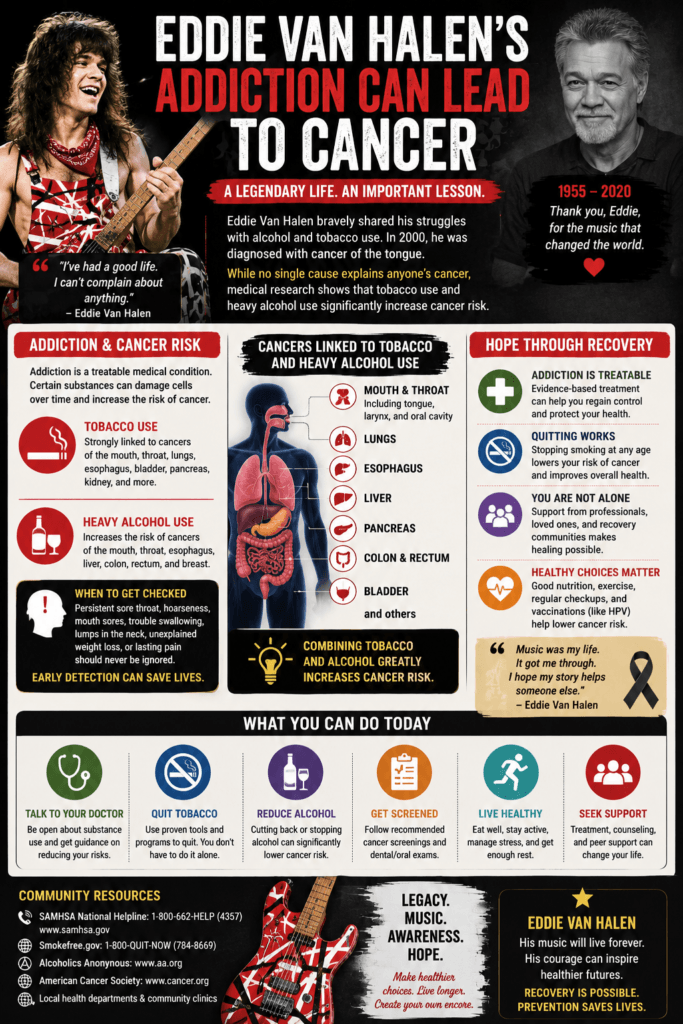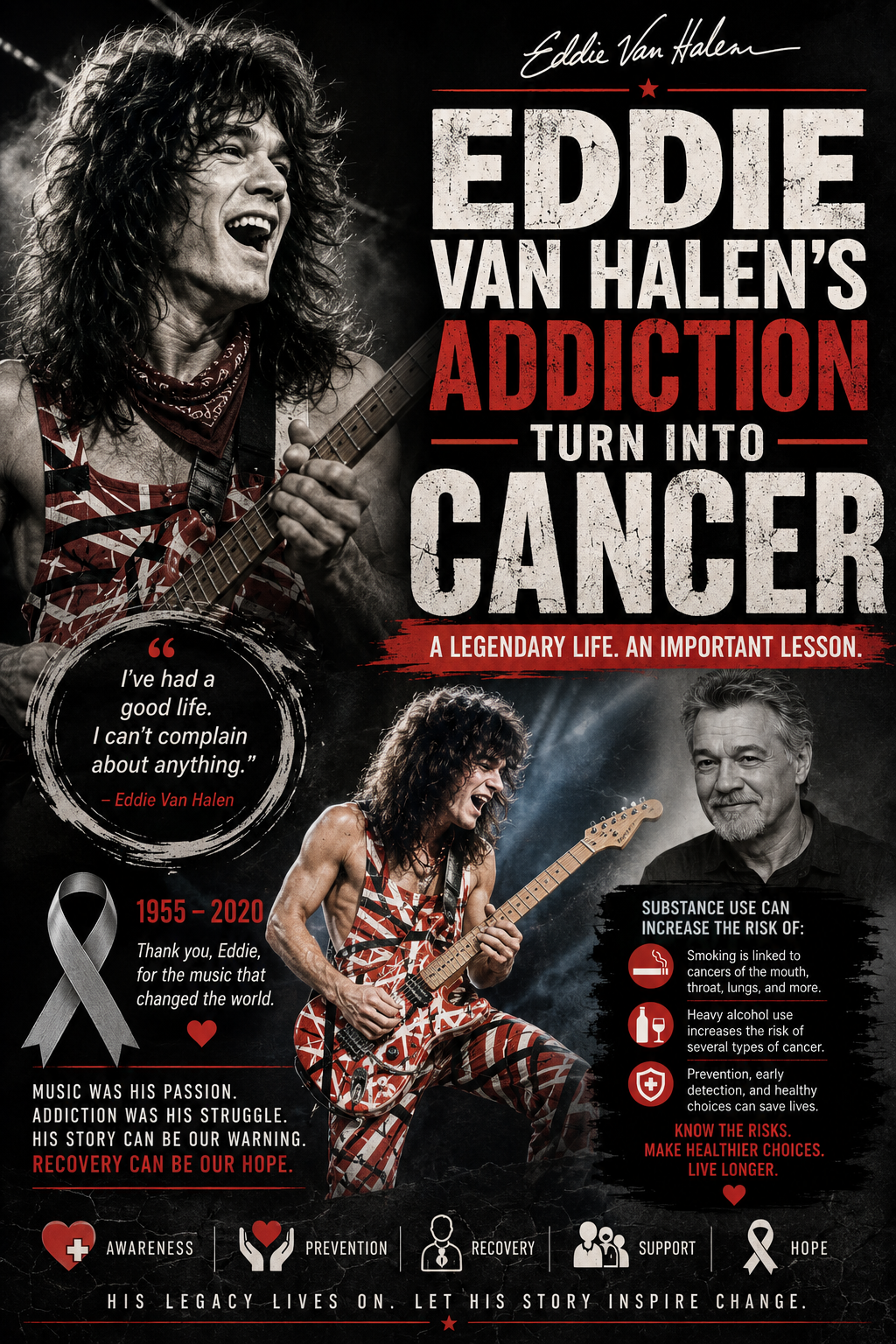
Eddie Van Halen was one of the most influential guitarists in rock music history, admired for his extraordinary talent and lasting impact on generations of musicians. Behind his remarkable success, however, he faced personal struggles with alcohol dependence and long-term tobacco use. In 2000, he was diagnosed with cancer of the tongue, and although no one can determine the exact cause of an individual’s cancer, medical research has consistently shown that tobacco use and heavy alcohol consumption significantly increase the risk of developing cancers of the mouth, throat, and other parts of the body. Eddie Van Halen’s story serves as a powerful reminder of the importance of understanding how substance use can affect long-term health. It also highlights the value of prevention, early detection, smoking cessation, addiction treatment, and regular medical care in reducing cancer risk and improving overall well-being.
Eddie Van Halen’s Addiction and His Cancer
Eddie Van Halen was widely regarded as one of the greatest rock guitarists of all time, but he also spoke openly about his long-term struggles with alcohol and tobacco use. In later years, he was diagnosed with cancer of the throat, specifically squamous cell carcinoma involving the tongue. His story highlights the importance of understanding cancer risk factors while recognizing that it is often impossible to identify a single cause of an individual’s cancer.
Eddie Van Halen’s History of Substance Use
Van Halen acknowledged struggling with alcohol for many years and also had a long history of cigarette smoking. He reportedly entered treatment for alcohol dependence and achieved periods of sobriety later in life. His willingness to discuss these struggles helped reduce stigma surrounding addiction and recovery.
Did Addiction Cause His Cancer?
There is no medical evidence that addiction itself directly causes cancer. However, certain substances commonly involved in addiction can significantly increase cancer risk.
Research has consistently shown that:
- Tobacco smoking is one of the strongest risk factors for cancers of the mouth, throat, larynx, lungs, and many other organs.
- Heavy alcohol use independently increases the risk of cancers of the mouth, throat, esophagus, liver, colon, and breast.
- Smoking and heavy alcohol use together have a synergistic effect, meaning the combined cancer risk is much greater than either exposure alone.
Because Eddie Van Halen had a history of both smoking and heavy alcohol use, these exposures may have contributed to his overall cancer risk. However, no physician can say with certainty that they were the sole cause of his cancer.
Other Possible Factors
Cancer develops through a combination of factors that may include:
- Tobacco exposure
- Alcohol consumption
- Genetics
- Environmental exposures
- Human papillomavirus (HPV) for some head and neck cancers
- Random genetic mutations that occur over time
Most cancers result from multiple interacting risk factors rather than a single event.
The Importance of Early Detection
Head and neck cancers may present with symptoms such as:
- A persistent sore throat
- Hoarseness lasting several weeks
- Difficulty swallowing
- Mouth sores that do not heal
- Ear pain
- A lump in the neck
- Persistent tongue pain or ulcers
Early evaluation by a healthcare professional can improve treatment outcomes.
Addiction Recovery Can Reduce Future Risk
One of the encouraging messages from modern medicine is that reducing or stopping harmful substance use can improve long-term health.
Evidence-based treatment may include:
- Smoking cessation programs
- Medications to help people stop smoking
- Treatment for alcohol use disorder
- Behavioral therapies such as cognitive behavioral therapy (CBT)
- Peer recovery support
- Regular medical follow-up and cancer screening when appropriate
Although some cancer risk from past tobacco or alcohol exposure cannot be completely reversed, quitting smoking and reducing or eliminating alcohol use lowers the risk of developing additional cancers and improves overall health.
Lessons From Eddie Van Halen’s Story
Eddie Van Halen’s life demonstrates that addiction can affect anyone, regardless of talent or success. His experience also reminds us that tobacco and heavy alcohol use are major, preventable risk factors for several types of cancer. At the same time, it is important not to oversimplify cancer by attributing it to one cause. Modern healthcare emphasizes prevention, early detection, smoking cessation, treatment of substance use disorders, and comprehensive medical care to reduce cancer risk and improve quality of life.
His legacy continues to inspire musicians around the world while also encouraging important conversations about addiction, recovery, and the protection of long-term health.
Self-Management Strategies to Understand How Addiction Can Lead to Cancer
Substance use disorders can have serious long-term effects on overall health, including an increased risk of certain types of cancer. While addiction itself does not directly cause cancer, repeated exposure to carcinogenic substances such as tobacco, excessive alcohol, and some other harmful chemicals can damage cells over time and increase the likelihood of cancer developing. Understanding these risks empowers individuals to make healthier choices, seek treatment, and reduce future health complications. The following self-management strategies can help individuals better understand the relationship between addiction and cancer while supporting recovery and long-term wellness.
1. Learn About Cancer Risk Factors
Educate yourself about how certain substances increase cancer risk. Tobacco use is strongly linked to cancers of the mouth, throat, lungs, esophagus, bladder, pancreas, kidney, and several other organs. Heavy alcohol use increases the risk of cancers involving the mouth, throat, esophagus, liver, colon, rectum, and breast. Understanding these risks can motivate healthier lifestyle changes.
2. Recognize That Addiction Is Treatable
Understand that addiction is a chronic, treatable medical condition—not a personal failure. Seeking treatment early can reduce continued exposure to harmful substances and lower the risk of future health complications, including certain cancers.
3. Quit Tobacco Use
Stopping smoking or using other tobacco products is one of the most effective ways to reduce cancer risk. Ask your healthcare provider about evidence-based smoking cessation treatments such as:
- Nicotine replacement therapy
- Prescription medications
- Behavioral counseling
- Quitlines
- Support groups
The body begins healing soon after quitting, and cancer risk decreases over time.
4. Reduce or Eliminate Alcohol Use
If you drink alcohol, discuss your drinking habits with a healthcare provider. Reducing or eliminating alcohol use lowers the risk of alcohol-related cancers and improves liver, heart, and brain health. Individuals with alcohol use disorder should seek medical guidance, as withdrawal can sometimes require supervised treatment.
5. Participate in Addiction Treatment
Engage fully in evidence-based treatment programs that may include:
- Individual counseling
- Cognitive Behavioral Therapy (CBT)
- Motivational Interviewing
- Medication-assisted treatment when appropriate
- Peer recovery support
- Relapse prevention planning
Recovery reduces ongoing exposure to cancer-causing substances.
6. Attend Regular Medical Checkups
Routine healthcare visits allow providers to monitor your overall health and identify potential problems early. Inform your healthcare provider about your substance use history so they can recommend appropriate screenings and preventive care.
7. Know the Warning Signs of Cancer
Seek medical evaluation if you experience symptoms such as:
- Persistent cough
- Hoarseness lasting several weeks
- Mouth sores that do not heal
- Difficulty swallowing
- Unexplained weight loss
- Blood in urine or stool
- Persistent lumps or swelling
- Changes in skin lesions
- Ongoing fatigue without explanation
Early detection often leads to more effective treatment.
8. Improve Your Nutrition
A healthy diet supports recovery and may reduce cancer risk. Focus on:
- Fruits and vegetables
- Whole grains
- Lean protein
- Healthy fats
- Limiting processed meats
- Reducing highly processed foods
- Staying well hydrated
Good nutrition also strengthens the immune system and supports tissue repair.
9. Stay Physically Active
Regular exercise improves overall health, helps maintain a healthy weight, reduces inflammation, and lowers the risk of several cancers. Aim for consistent physical activity appropriate for your health and fitness level.
10. Protect Your Mental Health
Stress, depression, anxiety, and trauma may contribute to substance use and interfere with recovery. Managing emotional well-being through therapy, mindfulness, stress reduction, and healthy coping strategies supports long-term sobriety and healthier decision-making.
11. Avoid Combining Tobacco and Alcohol
Using tobacco and heavy alcohol together significantly increases the risk of cancers involving the mouth, throat, and esophagus. Reducing or eliminating both substances provides greater health benefits than stopping only one.
12. Build a Strong Support Network
Surround yourself with people who encourage healthy choices and recovery. Support may include:
- Family
- Friends
- Healthcare providers
- Recovery coaches
- Peer support groups
- Faith or community organizations
Positive relationships improve accountability and resilience.
13. Follow Recommended Cancer Screenings
Depending on your age, personal history, and risk factors, your healthcare provider may recommend screenings such as:
- Lung cancer screening for eligible current or former heavy smokers
- Colon cancer screening
- Cervical cancer screening
- Breast cancer screening
- Skin examinations
- Oral health and dental evaluations
Following recommended screening guidelines can help detect cancer at an earlier, more treatable stage.
14. Practice Relapse Prevention
Develop a plan to manage cravings and avoid returning to substance use. Include:
- Identifying personal triggers
- Healthy coping skills
- Emergency contacts
- Counseling appointments
- Support group participation
- Stress management techniques
Preventing relapse also reduces repeated exposure to cancer-causing substances.
15. Focus on Long-Term Wellness
Recovery is about more than stopping substance use. Commit to lifelong healthy habits by:
- Getting adequate sleep
- Managing chronic medical conditions
- Staying physically active
- Eating nutritious meals
- Keeping medical appointments
- Continuing recovery support
- Celebrating progress and milestones
Key Takeaway
Addiction itself does not directly cause cancer, but prolonged exposure to substances such as tobacco and heavy alcohol can significantly increase the risk of developing several types of cancer. By learning about these risks, seeking treatment for addiction, quitting tobacco, reducing alcohol use, maintaining healthy lifestyle habits, participating in regular medical care, and following recommended cancer screenings, individuals can lower their future cancer risk and improve their overall health. Recovery offers an opportunity not only to overcome addiction but also to protect long-term physical well-being and enhance quality of life.
Family Support Strategies to Understand How Addiction Can Lead to Cancer
Families play a vital role in helping loved ones understand the long-term health consequences of addiction, including an increased risk of certain cancers. While addiction itself does not directly cause cancer, repeated exposure to harmful substances such as tobacco and excessive alcohol can damage cells over time and increase the likelihood of developing several types of cancer. Families who are informed, supportive, and actively involved in recovery can encourage healthier behaviors, promote early medical care, and create an environment that supports both addiction recovery and cancer prevention.
1. Learn About the Link Between Addiction and Cancer
Educate yourself about how tobacco products, heavy alcohol use, and other harmful substances increase the risk of cancers affecting the mouth, throat, lungs, liver, esophagus, colon, bladder, pancreas, and other organs. Understanding these risks helps families provide informed support and encourage preventive care.
2. Understand That Addiction Is a Treatable Medical Condition
Recognize that addiction is a chronic brain disorder rather than a moral failing or lack of willpower. Viewing addiction through a medical lens encourages compassion, reduces stigma, and helps families support evidence-based treatment.
3. Encourage Early Treatment
Support your loved one in seeking professional treatment as soon as possible. Early intervention can reduce continued exposure to cancer-causing substances and improve long-term health outcomes. Encourage participation in counseling, medication-assisted treatment when appropriate, behavioral therapies, and recovery programs.
4. Support Smoking Cessation
If your loved one uses tobacco, encourage quitting while avoiding criticism or shame. Families can:
- Celebrate progress and small successes.
- Encourage participation in smoking cessation programs.
- Support nicotine replacement therapy or prescribed medications when appropriate.
- Remove tobacco products from the home.
- Create a smoke-free environment.
Quitting tobacco is one of the most effective ways to reduce cancer risk.
5. Encourage Healthier Alcohol Use
Support efforts to reduce or eliminate alcohol use by:
- Avoiding alcohol-centered family gatherings.
- Encouraging participation in treatment programs.
- Offering enjoyable alcohol-free activities.
- Recognizing recovery milestones.
- Understanding that medical supervision may be necessary during alcohol withdrawal.
6. Promote Regular Medical Care
Encourage routine medical appointments, dental visits, and preventive health screenings. Healthcare providers can monitor recovery, assess cancer risk factors, recommend age-appropriate screenings, and identify health problems early when treatment is most effective.
7. Recognize Early Warning Signs
Help your loved one seek medical evaluation if symptoms develop, including:
- Persistent cough
- Hoarseness lasting several weeks
- Mouth sores that do not heal
- Difficulty swallowing
- Unexplained weight loss
- Persistent fatigue
- Lumps in the neck or other areas
- Blood in urine or stool
Early detection often leads to better treatment outcomes.
8. Encourage Healthy Lifestyle Habits
Support recovery by promoting healthy daily routines, including:
- Nutritious meals rich in fruits and vegetables
- Regular physical activity
- Adequate sleep
- Stress management
- Good hydration
- Routine dental care
Healthy habits strengthen overall health and may reduce cancer risk.
9. Participate in Family Counseling
Family therapy can improve communication, educate loved ones about addiction and recovery, address conflict, and strengthen relationships. Families also learn practical ways to support recovery without enabling unhealthy behaviors.
10. Avoid Enabling Harmful Behaviors
Supporting a loved one does not mean protecting them from the consequences of substance use. Avoid:
- Providing money that may be used for substances
- Making excuses for ongoing substance use
- Ignoring serious health concerns
- Minimizing the risks associated with tobacco or excessive alcohol use
Healthy boundaries encourage accountability and treatment engagement.
11. Offer Emotional Support Without Judgment
Recovery is often a long-term process. Listen with empathy, acknowledge your loved one’s efforts, celebrate progress, and encourage continued treatment. Compassionate support can strengthen motivation and reduce feelings of shame.
12. Build a Recovery-Oriented Home Environment
Create a home that encourages healing by:
- Maintaining smoke-free spaces
- Reducing stress and conflict
- Encouraging healthy meals and exercise
- Supporting medication adherence
- Participating in recovery-focused activities together
A positive home environment reinforces healthy choices.
13. Encourage Participation in Support Groups
Family members and loved ones can benefit from support groups designed for families affected by addiction. These groups provide education, coping strategies, emotional support, and opportunities to learn from others facing similar challenges.
14. Take Care of Your Own Health
Supporting someone with addiction can be emotionally demanding. Family members should also:
- Schedule regular medical checkups.
- Exercise regularly.
- Eat a balanced diet.
- Get adequate sleep.
- Seek counseling if needed.
- Maintain hobbies and social connections.
Healthy caregivers are better equipped to provide effective support.
15. Maintain Hope Throughout Recovery
Recovery is possible, even after years of addiction. Every positive change—whether quitting smoking, reducing alcohol use, attending treatment, or improving overall health—can lower future health risks and improve quality of life. Families who remain patient, informed, and supportive can have a meaningful impact on their loved one’s recovery journey.
Key Takeaway
Families play an essential role in helping loved ones understand how substance use can increase the risk of certain cancers while supporting long-term recovery. By encouraging evidence-based addiction treatment, smoking cessation, healthier lifestyle choices, regular medical care, cancer screenings, and compassionate communication, families can help reduce future health risks and promote lasting wellness. A supportive family environment, combined with professional healthcare and ongoing recovery resources, provides a strong foundation for healthier living and a brighter future.
Community Resource Strategies to Understand How Addiction Can Lead to Cancer
Addiction and cancer are significant public health concerns that often intersect through the long-term use of tobacco, excessive alcohol, and other harmful substances. While addiction itself does not directly cause cancer, repeated exposure to carcinogenic substances can increase the risk of developing cancers affecting the mouth, throat, lungs, liver, esophagus, pancreas, bladder, colon, and other organs. Community resources play an important role in educating the public, promoting prevention, supporting addiction recovery, encouraging early cancer detection, and improving overall health outcomes. Accessing these resources can help individuals reduce their cancer risk while supporting long-term recovery.
1. Utilize Primary Healthcare Services
Primary care providers serve as an important resource for education, prevention, and early intervention. They can assess substance use, discuss cancer risk factors, recommend smoking cessation programs, provide referrals to addiction treatment, and ensure patients receive appropriate preventive screenings.
2. Access Addiction Treatment Programs
Community addiction treatment centers provide evidence-based care that helps individuals reduce or eliminate substance use, thereby lowering future cancer risk. Services may include:
- Outpatient treatment
- Intensive outpatient programs (IOP)
- Residential treatment
- Medication-assisted treatment (MAT) or medications for opioid use disorder (MOUD)
- Individual and group counseling
- Recovery coaching
- Relapse prevention planning
3. Participate in Tobacco Cessation Programs
Many communities offer smoking cessation resources through hospitals, public health departments, pharmacies, and community organizations. These programs may provide:
- Individual counseling
- Group support
- Nicotine replacement therapy
- Prescription medications
- Telephone quitlines
- Mobile apps and online support
Quitting tobacco significantly reduces the risk of many cancers and other chronic diseases.
4. Utilize Alcohol Recovery Services
Community resources for alcohol use disorder include medical detoxification programs, outpatient counseling, recovery support groups, and behavioral therapies. Reducing or eliminating excessive alcohol use decreases the risk of alcohol-related cancers and improves overall health.
5. Access Mental Health Services
Mental health disorders frequently coexist with addiction. Community mental health centers provide counseling, psychiatric care, trauma-informed therapy, stress management, and crisis intervention. Treating mental health conditions supports recovery and reduces the likelihood of continued substance use.
6. Participate in Cancer Prevention Education
Public health organizations, hospitals, and nonprofit agencies often provide educational programs about:
- Tobacco-related cancers
- Alcohol-related cancer risks
- Healthy lifestyle choices
- Nutrition
- Physical activity
- Sun protection
- Human papillomavirus (HPV) vaccination
- Cancer screening recommendations
These programs empower individuals to make informed health decisions.
7. Take Advantage of Preventive Cancer Screenings
Community healthcare providers and screening programs help detect cancer early when treatment is most effective. Depending on individual risk factors, recommended screenings may include:
- Lung cancer screening for eligible current or former heavy smokers
- Breast cancer screening
- Cervical cancer screening
- Colorectal cancer screening
- Oral cancer examinations
- Skin cancer evaluations
Following recommended screening guidelines improves early detection and treatment outcomes.
8. Utilize Community Wellness Programs
Many communities offer wellness activities that support both addiction recovery and cancer prevention, including:
- Walking groups
- Fitness classes
- Yoga
- Tai Chi
- Nutrition workshops
- Stress reduction classes
- Mindfulness training
Healthy lifestyle programs strengthen both physical and emotional well-being.
9. Seek Support Through Peer Recovery Programs
Peer recovery organizations provide encouragement, education, and practical support from individuals with lived experience. Recovery coaches and peer support groups help reduce isolation, strengthen motivation, and encourage long-term healthy behaviors.
10. Participate in Family Education Programs
Community organizations often provide educational workshops that help families understand addiction, cancer risk factors, communication skills, relapse prevention, and healthy ways to support recovery. Educated families become stronger partners in long-term wellness.
11. Utilize Dental and Oral Health Services
Dentists and dental hygienists play an important role in identifying early signs of oral cancers, especially in individuals with a history of tobacco or heavy alcohol use. Regular dental examinations can lead to early diagnosis and timely treatment.
12. Address Social Determinants of Health
Community social service agencies assist individuals with challenges such as housing instability, food insecurity, transportation barriers, unemployment, and financial stress. Addressing these needs improves access to addiction treatment, healthcare, and cancer prevention services.
13. Advocate for Smoke-Free and Healthy Communities
Community members can support policies that reduce tobacco exposure, promote smoke-free public spaces, increase access to addiction treatment, and improve public awareness about cancer prevention. Community-wide prevention efforts benefit everyone.
14. Promote Public Awareness and Reduce Stigma
Community education campaigns help people understand that addiction is a treatable medical condition and that many cancer risk factors are preventable. Reducing stigma encourages individuals to seek help earlier without fear of judgment.
15. Encourage Lifelong Preventive Healthcare
Community healthcare systems should encourage regular wellness visits, vaccinations, routine screenings, healthy lifestyle education, and ongoing recovery support. Prevention remains one of the most effective strategies for reducing both addiction-related harm and cancer risk.
Key Takeaway
Community resources play a critical role in reducing the health consequences of addiction, including the increased risk of certain cancers associated with tobacco and excessive alcohol use. By utilizing addiction treatment services, smoking cessation programs, mental health care, preventive cancer screenings, wellness initiatives, family education, and peer recovery support, individuals can reduce harmful substance use, improve overall health, and lower their future cancer risk. Strong collaboration among healthcare providers, community organizations, public health agencies, and families creates a supportive environment that promotes prevention, early detection, lasting recovery, and healthier lives.
How Eddie Van Halen’s Addiction Struggles Could Be Managed Using Today’s Treatment Strategies
Eddie Van Halen was one of the greatest guitarists in rock history. Along with his extraordinary musical talent, he also struggled for many years with alcohol and tobacco use. He openly discussed drinking heavily to cope with stress, anxiety, and the demands of fame. Although no one can know with certainty how different treatments might have changed his life, today’s evidence-based addiction care offers many approaches that may have improved his chances of achieving long-term recovery and reducing the health risks associated with substance use.
Understanding His Addiction
Eddie Van Halen’s addiction likely resulted from multiple interacting factors rather than a single cause.
- Chronic stress from touring, recording, and maintaining worldwide success.
- Easy access to alcohol and a music culture where heavy drinking was often normalized.
- Possible genetic predisposition to addiction.
- Using alcohol as a coping mechanism for anxiety, stress, and emotional challenges.
- Long-term nicotine dependence through cigarette smoking.
Modern addiction medicine recognizes that addiction is a chronic medical condition involving changes in brain reward pathways, decision-making, stress responses, and impulse control—not simply a lack of willpower.
How Today’s Treatment Strategies Could Have Helped
1. Comprehensive Medical Assessment
Treatment would begin with a complete evaluation by an addiction medicine specialist.
This assessment would include:
- Alcohol use severity
- Nicotine dependence
- Mental health screening
- Sleep problems
- Anxiety or depression
- Nutritional deficiencies
- Liver function
- Cancer risk assessment
- Family history
- Motivation for recovery
Creating an individualized treatment plan is considered the cornerstone of successful recovery.
2. Medically Supervised Alcohol Detox
If Eddie had developed physical dependence on alcohol, stopping suddenly could have been dangerous.
Today’s medical detox programs provide:
- 24-hour monitoring
- Medications to prevent withdrawal seizures
- Management of elevated blood pressure
- Hydration
- Vitamin replacement (especially thiamine)
- Safe transition into ongoing treatment
Detox addresses the physical withdrawal but is only the first step in recovery.
3. FDA-Approved Medications for Alcohol Use Disorder
Several medications available today can reduce cravings and lower the risk of relapse.
These include:
- Naltrexone – helps reduce alcohol cravings and decreases the rewarding effects of drinking.
- Acamprosate – helps stabilize brain chemistry after stopping alcohol.
- Disulfiram – creates unpleasant reactions if alcohol is consumed, helping some highly motivated individuals avoid drinking.
Medication works best when combined with counseling and behavioral therapy.
4. Smoking Cessation Treatment
Long-term tobacco use greatly increases the risk of cancers involving the mouth, throat, and lungs.
Modern smoking cessation programs include:
- Nicotine replacement therapy
- Varenicline
- Bupropion
- Behavioral counseling
- Mobile quit-smoking apps
- Telephone quitlines
- Peer support
Early smoking cessation significantly lowers future cancer risk.
5. Cognitive Behavioral Therapy (CBT)
CBT helps individuals recognize:
- Triggers for drinking
- Negative thought patterns
- Emotional stressors
- Unhealthy coping behaviors
Patients learn healthier alternatives such as:
- Stress management
- Problem-solving
- Relaxation techniques
- Emotional regulation
- Healthy lifestyle habits
6. Motivational Interviewing
Rather than confronting someone, therapists use motivational interviewing to strengthen internal motivation for change.
This approach helps individuals:
- Explore personal goals
- Resolve ambivalence
- Build confidence
- Develop commitment to recovery
Many people in high-pressure careers respond well to this collaborative style of counseling.
7. Treatment for Co-Occurring Mental Health Conditions
Many people with addiction also experience:
- Anxiety
- Depression
- Sleep disorders
- Trauma-related symptoms
Modern integrated treatment addresses both addiction and mental health simultaneously, improving long-term recovery outcomes.
8. Stress Management Programs
Professional musicians experience unique stressors including:
- Constant travel
- Public expectations
- Financial pressures
- Performance anxiety
- Chronic fatigue
Today’s recovery plans often include:
- Mindfulness training
- Meditation
- Exercise
- Sleep hygiene
- Yoga
- Nutrition counseling
- Time management
- Healthy recreation
9. Family Therapy
Recovery improves when family members understand addiction.
Family therapy helps:
- Improve communication
- Reduce enabling behaviors
- Build healthy boundaries
- Strengthen support systems
- Repair damaged relationships
10. Long-Term Recovery Support
Modern recovery extends far beyond completing rehab.
Ongoing care may include:
- Outpatient counseling
- Recovery coaching
- Mutual-help groups
- Relapse prevention planning
- Telehealth appointments
- Recovery apps
- Regular medical follow-up
- Peer recovery specialists
Recovery is viewed as a long-term process requiring continued support.
How These Strategies Might Have Reduced Health Risks
Although no treatment can guarantee a particular outcome, earlier engagement with today’s comprehensive addiction care might have:
- Reduced heavy alcohol use
- Increased the likelihood of sustained recovery
- Improved emotional well-being
- Supported smoking cessation
- Lowered the risk of alcohol-related complications
- Reduced the risk of tobacco-related cancers
- Improved overall quality of life
- Increased opportunities for earlier detection and treatment of medical problems
Lessons for Others
Eddie Van Halen’s story reminds us that addiction can affect people regardless of talent, wealth, or success. Modern addiction treatment offers more effective and compassionate care than ever before. Recovery is possible through a combination of medical treatment, counseling, family support, behavioral therapies, medications when appropriate, and long-term follow-up. Seeking help early can reduce health risks, improve quality of life, and give individuals the best chance for lasting recovery.
Importantly, while it is reasonable to discuss how current treatment strategies might have helped, no one can say with certainty what the outcome would have been for Eddie Van Halen. Each person’s recovery journey is unique, and treatment improves the chances of recovery but does not guarantee it.
Frequently Asked Questions
Here are some common questions:
1. Who was Eddie Van Halen?
Answer:
Eddie Van Halen was a legendary guitarist, songwriter, and co-founder of the rock band Van Halen. He revolutionized rock guitar with his innovative playing style and inspired generations of musicians worldwide.
2. What type of cancer did Eddie Van Halen have?
Answer:
Eddie Van Halen was diagnosed with squamous cell carcinoma of the tongue, a form of head and neck cancer. He underwent multiple treatments over the years before passing away in 2020.
3. Did addiction directly cause Eddie Van Halen’s cancer?
Answer:
No. Addiction itself does not directly cause cancer. However, long-term exposure to substances associated with addiction—particularly tobacco and heavy alcohol use—can significantly increase the risk of developing several types of cancer, including cancers of the mouth, throat, and tongue.
4. What substances did Eddie Van Halen struggle with?
Answer:
Eddie Van Halen publicly acknowledged struggling with long-term alcohol dependence and tobacco use. These substances are well-established risk factors for numerous health problems, including certain cancers.
5. Why do smoking and alcohol increase cancer risk?
Answer:
Tobacco smoke contains many cancer-causing chemicals that damage DNA and healthy cells. Heavy alcohol use can also damage tissues and make it easier for harmful substances to penetrate cells. Together, smoking and heavy alcohol use greatly increase the risk of head and neck cancers.
6. Did doctors ever identify one exact cause of Eddie Van Halen’s cancer?
Answer:
No. It is impossible to determine the exact cause of cancer in any one individual. Cancer usually develops from a combination of factors, including tobacco use, alcohol consumption, genetics, environmental exposures, infections, and random genetic mutations.
7. Can quitting smoking reduce cancer risk?
Answer:
Yes. Quitting smoking at any age lowers the risk of developing many cancers and other chronic diseases. Although some damage from past tobacco use cannot be reversed, stopping tobacco use improves health and reduces future risk over time.
8. Does reducing alcohol consumption help?
Answer:
Yes. Limiting or avoiding alcohol lowers the risk of several cancers, including cancers of the mouth, throat, esophagus, liver, colon, and breast. It also improves liver and heart health, as well as overall well-being.
9. What symptoms of head and neck cancer should people watch for?
Answer:
Symptoms that should be evaluated by a healthcare professional include:
- Persistent sore throat
- Hoarseness lasting several weeks
- Mouth sores that do not heal
- Difficulty swallowing
- Persistent tongue pain
- A lump in the neck
- Ear pain
- Unexplained weight loss
Early diagnosis improves treatment outcomes.
10. Can addiction treatment help lower cancer risk?
Answer:
Yes. Effective addiction treatment reduces ongoing exposure to harmful substances. Treatment may include counseling, medications when appropriate, behavioral therapy, peer support, smoking cessation programs, and relapse prevention planning.
11. What role does regular healthcare play?
Answer:
Routine medical and dental examinations can detect early signs of disease before symptoms become severe. Individuals with a history of tobacco or heavy alcohol use should discuss appropriate cancer screenings and preventive care with their healthcare provider.
12. What can families do to help?
Answer:
Families can:
- Encourage professional addiction treatment.
- Support smoking cessation.
- Promote healthier lifestyle habits.
- Attend medical appointments when appropriate.
- Learn about cancer risk factors.
- Offer encouragement without judgment.
- Celebrate recovery milestones.
Supportive families often improve long-term recovery outcomes.
13. Is recovery possible after years of addiction?
Answer:
Yes. Many people successfully recover after years of substance use. Evidence-based treatment, ongoing medical care, healthy lifestyle changes, family support, and peer recovery programs can help individuals achieve lasting recovery and improve overall health.
14. What is the biggest lesson from Eddie Van Halen’s story?
Answer:
His story demonstrates that addiction can affect anyone, regardless of talent, fame, or success. It also emphasizes the importance of addressing substance use early, recognizing the health risks associated with tobacco and heavy alcohol use, and seeking evidence-based treatment and preventive healthcare.
15. What message should people remember?
Answer:
Eddie Van Halen’s legacy extends far beyond his extraordinary musical achievements. His experience reminds us that while addiction itself does not directly cause cancer, long-term tobacco use and heavy alcohol consumption can significantly increase cancer risk. Education, prevention, early detection, compassionate addiction treatment, and healthier lifestyle choices can help reduce these risks. Recovery is possible, and seeking help is a courageous step toward protecting both physical health and quality of life.
Conclusion
Eddie Van Halen’s life and legacy continue to inspire millions through his groundbreaking music, while his health journey provides important lessons about the long-term effects of substance use. His experience illustrates that although addiction itself does not directly cause cancer, prolonged exposure to tobacco and heavy alcohol use can substantially increase the risk of several types of cancer. His story underscores the importance of viewing addiction as a treatable medical condition that benefits from compassionate, evidence-based care. Through early intervention, smoking cessation, treatment for substance use disorders, healthy lifestyle choices, and routine medical screenings, individuals can reduce their cancer risk and improve their quality of life. Eddie Van Halen’s legacy reminds us that seeking help, making healthier choices, and embracing recovery can lead to a healthier and more hopeful future.
Video: The Cost of Smoking: Eddie Van Halen #cancer #smoking #shorts